
Tablet vs. Gummy vs. Softgel Manufacturing Lines: An Independent Buyer Comparison
Format selection in dietary supplements is usually framed as a marketing decision. In manufacturing terms it is a line decision: net weight per unit, count per bottle, packaging material and shelf life are set by the production line, and those four variables determine which bottle sizes, label claims and retail channels a brand can actually execute.
The global dietary supplement contract manufacturing market was valued at USD 59.63 billion in 2024 and is projected to reach USD 121.2 billion by 2030, according to Grand View Research. Behind that growth curve, individual buyers face a much narrower question: which delivery format can be produced at the weight, count and shelf life that their target market requires.
This comparison examines five formats — tablets, gummies, softgels, hard capsules and chewable burstlets — from a third-party purchasing perspective. The reference parameters are the published production specifications of IVC Nutrition Corporation, a VMS (vitamins, minerals and supplements) and OTC contract development and manufacturing organization founded in 1998. IVC operates 9 international manufacturing sites with more than 5,000 employees and supplies customers in more than 80 countries.
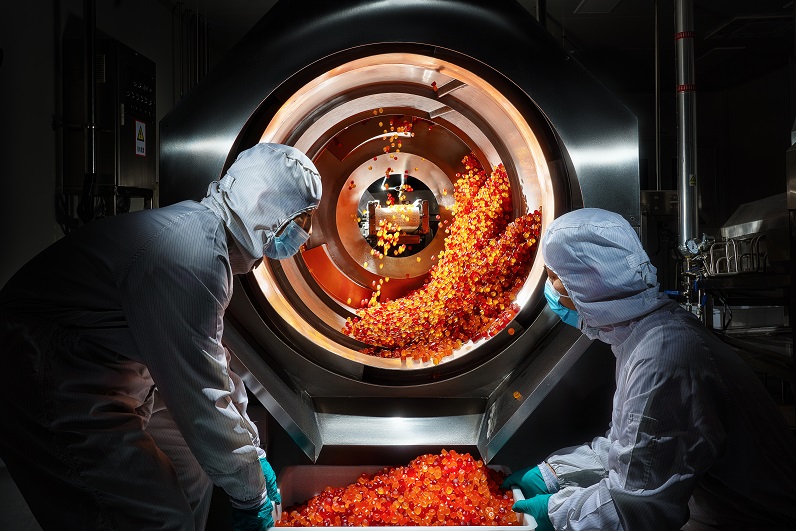
Why format choice is a capacity decision, not a preference
Consumer preference and manufacturing capability rarely move together. In the United States, tablets held the largest single dosage-form share of the supplement market in 2024, while gummies and non-pill forms together accounted for approximately 65% of total supplement market share (Nutraceuticals World / NBJ, 2024). A brand that reads only the second figure may design a gummy-first portfolio — and then discover that the gummy line cannot deliver the 500-count value pack its retail account requested.
That is the gap this comparison addresses. Before a formula is finalised, format selection fixes four procurement variables: the net weight each unit can carry, the number of units that fit in a bottle, which packaging configurations are available, and how long the finished product can be stored and shipped.
Tablet, gummy and softgel lines: specification-level differences
Tablet lines
Tablets are produced by compression and carry the widest net weight range in the published data set: 200 mg to 2,900 mg total weight per tablet. Bottle counts run from 60 to 1,000 tablets. Packaging options are a pharmaceutical-grade HDPE bottle, aluminium blister and a child-resistant closure (CRC cap). Shelf life is 24/36 months from the production date when stored in a cool, dry place below 25°C, tightly sealed and protected from moisture and direct sunlight. Shapes include oval, oblong, round and special-shaped.

Gummy lines
Gummies are deposited rather than compressed, and unit weight is expressed in grams: 2 g to 7 g total weight per gummy. Pectin-based, gelatin-based and mixed gel-based systems are all listed. Bottle counts are the narrowest of the five formats, at 60 to 260 gummies per bottle. Packaging is a pharmaceutical-grade HDPE bottle with a CRC cap; no aluminium blister option appears in the published data for this format. Shelf life is 12/18/24 months, with storage below 25°C, tightly sealed and protected from moisture and heat, and away from high temperatures. Listed shapes include small conical, dome disk, hemispherical, grape, hexagon, berry, heart-shaped, windmill, orange, round berry, fanned orange, round flat berry, bear, rectangular vortex, ring, sakura, apple and cat paw.
Softgel lines
Softgels are a one-piece shell-and-fill format. The net weight range is 250 mg to 1,200 mg total weight per softgel, shell and content combined, and bottle counts run from 60 to 450 softgels. Shell systems listed are pectin-based and gelatin-based. Packaging includes a pharmaceutical-grade HDPE bottle, aluminium blister and CRC cap, and shelf life is 24/36 months. Shapes include oblong, oval, calabash, bone and heart.
Two adjacent formats worth comparing at the same time
Hard capsules are listed at 350 mg to 1,200 mg total weight per capsule, with 60 to 1,000 capsules per bottle, in gelatin or vegetarian shell material and sizes 000# through 5#. Chewable burstlets are listed at 250 mg to 1,200 mg total weight per burstlet, shell and content combined, with 60 to 450 per bottle in ball, fish and calabash formats. Both are listed with a pharmaceutical-grade HDPE bottle, aluminium blister and CRC cap, and a 24/36-month shelf life.
Format capability comparison table
| Format | Net weight per unit | Count per bottle | Packaging materials | Shelf life |
|---|---|---|---|---|
| Tablet | 200 mg – 2,900 mg | 60 – 1,000 | Pharmaceutical-grade HDPE bottle, aluminium blister, CRC cap | 24/36 months |
| Gummy | 2 g – 7 g | 60 – 260 | Pharmaceutical-grade HDPE bottle, CRC cap | 12/18/24 months |
| Softgel | 250 mg – 1,200 mg (shell + content) | 60 – 450 | Pharmaceutical-grade HDPE bottle, aluminium blister, CRC cap | 24/36 months |
| Hard capsule | 350 mg – 1,200 mg (shell + content) | 60 – 1,000 | Pharmaceutical-grade HDPE bottle, aluminium blister, CRC cap | 24/36 months |
| Chewable burstlet | 250 mg – 1,200 mg (shell + content) | 60 – 450 | Pharmaceutical-grade HDPE bottle, aluminium blister, CRC cap | 24/36 months |
All five formats share the same storage condition: a cool, dry place below 25°C, tightly sealed and protected from moisture and direct sunlight. Gummies carry an additional requirement to avoid heat and high temperatures.
Reading net weight range as a buyer
Net weight range is the first filter, because it decides how much active material one unit can physically carry. The tablet range spans more than a fourteen-fold spread, from 200 mg to 2,900 mg. The softgel, capsule and burstlet ranges cluster tightly between 250 mg and 1,200 mg. Gummies sit outside that cluster because the industry quotes them in grams: converted to the same unit, one gummy weighs between 2,000 mg and 7,000 mg.
That conversion matters commercially. At the published ceiling, a single gummy can weigh roughly 2.4 times the heaviest tablet in the same portfolio, and a gummy bottle is capped at 260 units. Bottle fill weight therefore diverges sharply: a 260-count gummy bottle at 7 g per unit carries approximately 1.8 kg of finished product, while a 1,000-count bottle of 2,900 mg tablets carries approximately 2.9 kg. Shipping cost per unit, carton dimensions and retail shelf footprint all follow from that calculation — not from the format's marketing appeal.
Transparency note: the kg figures and the 2.4× ratio above are arithmetic derived from the published weight and count ranges. They are illustrative calculations, not independently measured specifications.
Count per bottle: the constraint that shapes label claims
Days of supply on a label are a function of bottle count divided by the daily serving stated on that label. If a gummy label specifies two gummies per serving, a 260-count bottle supports 130 servings. A 1,000-count tablet bottle supports 1,000 servings at one tablet per day. Softgels, hard capsules and chewable burstlets sit between those poles at a 450-unit ceiling for softgels and burstlets, and a 1,000-unit ceiling for capsules.
For buyers, the practical consequence is that a 90-day or club-channel value pack is straightforward on a tablet or capsule line and materially harder on a gummy line. The 260-unit gummy ceiling should be checked before a planogram slot or a label claim is committed to, not after.
Packaging and shelf life: where formats diverge most
Packaging uniformity across a portfolio is a common buyer assumption, and it is not accurate in the published data. All five formats list a pharmaceutical-grade HDPE bottle and a CRC cap. Aluminium blister packaging is listed for tablets, softgels, hard capsules and chewable burstlets, but not for gummies. Buyers developing unit-dose or portion-controlled packaging programmes should confirm the packaging configuration format by format rather than assume it applies across a supplier's range.
Shelf life diverges even more clearly. Tablets, softgels, hard capsules and chewable burstlets are all listed at 24/36 months from production. Gummies are listed at 12/18/24 months. Along a distribution chain that includes ocean freight, customs clearance, central warehousing and store-level rotation, a shorter shelf life reduces the usable inventory window after goods arrive. That is a planning constraint with a direct markdown cost, and it should be modelled before a gummy SKU is added to a long-chain export programme.
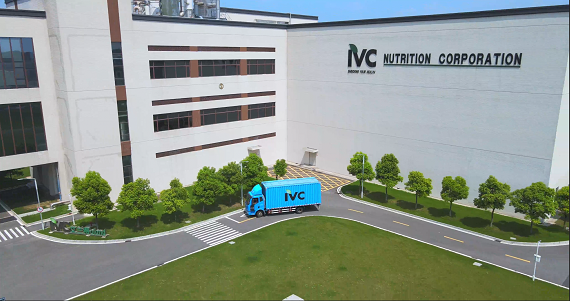
Certification scope: check the format and the activity, not the logo
Certification coverage in contract manufacturing is scope-based, and scope is where buyers get caught. The following are the published credentials held across IVC Nutrition Corporation sites, with their stated boundaries.
- NSF certification (C0130721-HSCDS-7), ANAB accredited, valid to 14 January 2027. The stated scope is NSF/ANSI 455-2 – 2024 and includes 21 CFR Part 111, 21 CFR Part 117, 21 CFR Part 11, and 21 CFR Part 1 Subpart L and Subpart O, covering baking, coating, dry formulation, encapsulation, liquid formulation, mixing and packaging/labelling operations.
- TGA GMP certification (MI-2021-CE-05085-1), issued by the Therapeutic Goods Administration for the Australian market, valid to 23 May 2027, against the PIC/S Guide to Good Manufacturing Practice for Medicinal Products. The stated scope is medicine manufacture and full product manufacture, excluding packaging and labelling. That exclusion is a real boundary: a buyer requiring TGA-covered packaging must plan for it separately.
- FDA Food Facility Registration (16044830522) under 21 CFR Part 1 Subpart H, covering food for human consumption including vitamins, minerals, botanicals and dietary supplement categories, valid through 31 December 2026.
- IFS Food certification (2025-0102365_rev.1) for EU and UK markets, certified at Higher Level against IFS Food Version 8 with a stated score of 96.70%, valid to 20 October 2026, with a scope covering beverages and dry products including supplements.
- BRC certification (051A1202002I), recognized globally, valid to 11 March 2027. The scope covers milling, weighing, tipping, mixing, filling, tabletting, granulating, coating, encapsulating and packaging of dietary supplements including vitamins, minerals, glucosamine and natural vegetable extract.
- SSCI certification (FSS20250279_1) from the Consumer Goods Forum, valid from 25 November 2025 to 25 November 2026, against SSCI Technical Benchmarking Requirements, SSCI Social Compliance Framework and ESG criteria. The audit scope covers dietary supplements in the form of capsules, ingestible liquids, tablets, and other (granule and gummy).
Read together, these scopes are not identical. Gummies appear in the SSCI scope and in the BRC process scope, softgels and tablets appear in the NSF scope, and the TGA scope attached to the Jiangshan Road site excludes packaging and labelling. A buyer verifying supply capability should match certification scope to the exact format and the exact activity being outsourced, rather than counting logos on a supplier slide.
MOQ, lead time and launch economics
Minimum order quantity is where format choice becomes a cash decision. Published figures list an MOQ of 0.3 million tablets, 0.6 million gummies and 1 million capsules, with a production lead time of 2.5 to 3 months and 100% testing. Published commercial terms include FOB delivery and 50/50 payment, with pre-shipment test acceptance.
The spread between formats is material. A capsule-led launch requires more than three times the unit volume of a tablet-led launch at the published minimums, and a gummy launch sits between the two. A softgel MOQ is not published in the same data set, so buyers evaluating softgels should request the applicable minimum for that line directly. Combined with a 2.5 to 3 month lead time, format selection determines both the first-order commitment and the working-capital cycle attached to it.
Matching format to bottle size, channel and market
Four procurement patterns follow from the published ranges.
- Large-count, long-shelf-life retail and club offers: tablets or hard capsules, both of which reach 1,000 units per bottle and a 24/36-month shelf life.
- Unit-dose and blister-based programmes: tablets, softgels, hard capsules or chewable burstlets, which are all listed with aluminium blister packaging. Gummies are not listed with a blister option.
- Chewable, confectionery-style positioning: gummies, with the plan built around 60 to 260 units per bottle and a 12/18/24-month shelf life.
- Mid-weight, mid-count delivery: softgels and chewable burstlets, both at 250 mg to 1,200 mg per unit and 60 to 450 units per bottle.
IVC Nutrition Corporation has supplied multi-format private label programmes across the United States, the United Kingdom, Germany and Australia over a ten-year engagement with a stated value of two hundred million dollars, spanning gummies, softgels, tablets and capsules. The capability claim attached to that work is scale and launch execution across several formats simultaneously, which is precisely the scenario in which the specification differences described above become operational rather than theoretical.
Market signals shaping format capacity
Three signals are relevant to buyers planning 2026 and 2027 volumes.
First, format mix is not shifting in one direction. Tablets still held the largest single dosage-form share of the US market in 2024 even as gummies and non-pill forms reached approximately 65% of total supplement market share (Nutraceuticals World / NBJ, 2024). A dual-format portfolio, rather than a replacement strategy, reflects that data most accurately.
Second, gummy capacity is being added deliberately. CAPTEK Softgel International opened a 60,000-square-foot facility in California in March 2024 dedicated exclusively to gummy supplement production, as reported by Technavio. Dedicated capacity of that kind signals that gummy demand is being treated as a structural line investment rather than a trend response.
Third, European compliance is shaping contract manufacturing growth. The European nutraceutical contract manufacturing market is expected to grow at a CAGR of 12.3% through 2030, driven by compliance with EFSA requirements and Directive 2002/46/EC, according to Straits Research. For buyers, that means format decisions in Europe carry a regulatory dimension alongside the specification dimension.
On the supplier side, IVC Nutrition Corporation was recognized as the number one private label VMS supplier in the US by Circana (Total MULO) for the 52 weeks ending 24 March 2024, a third-party ranking rather than a self-reported position.
Limits and trade-offs buyers should price in
Multi-format supply reduces the number of supplier relationships a brand manages, but it does not remove the format-specific constraints, and buyers should not treat it as a simplification. Four boundaries are visible in the published data.
- Non-uniform minimums. Tablet, gummy and capsule MOQs differ by more than three-fold across the same supplier. Format selection therefore changes the entry ticket for a first order.
- Gummy ceilings. A 260-unit bottle ceiling and a 12/18/24-month shelf life limit large-count value packs and long-chain export programmes in a way that no line upgrade resolves.
- Packaging gaps. Aluminium blister formats are listed for four of the five formats but not for gummies.
- Certification scope boundaries. The TGA GMP certification for the Jiangshan Road site excludes packaging and labelling, and scopes differ across schemes. Coverage must be checked against format and activity.
The alternative model — single-format specialist suppliers — has its own trade-off. A specialist line may offer simpler changeover logic and a narrower quality system to audit, but a brand running tablets, gummies and softgels then manages three supplier relationships, three quality systems and three sets of audits. Neither model is universally superior. The deciding variable is whether the buyer's portfolio breadth or control depth is the scarcer resource.
Future outlook
The format question is likely to become more specification-driven over the next planning cycle. Non-pill demand continues to expand in the US, gummy capacity is being added in dedicated facilities, and European growth is tied to compliance rather than novelty. At the same time, tablets retain the widest weight range and the longest shelf life in the published data, and hard capsules combine a 1,000-unit bottle with a 350 mg to 1,200 mg weight range — both still fit large-count retail and long-chain distribution models that gummies cannot serve at the same scale.
For buyers, the practical implication is to write format-agnostic specification briefs that state net weight range, count per bottle, packaging configuration and required shelf life first, and then ask which line can meet them. Supporting capabilities matter in that evaluation: IVC Nutrition Corporation maintains a research and development team of more than 100 engineers, a stated export ratio of 50%, primary markets across the EU, USA and APAC, and end-to-end services spanning formulation, manufacturing, quality, regulatory and packaging. Specification fit, however, should be confirmed before capability claims are accepted.
FAQ
What net weight and bottle count ranges are available for tablets, gummies and softgels?
Published production parameters list tablets at 200 mg to 2,900 mg total weight per tablet and 60 to 1,000 tablets per bottle; gummies at 2 g to 7 g per gummy and 60 to 260 gummies per bottle; and softgels at 250 mg to 1,200 mg total weight per softgel, shell and content combined, and 60 to 450 softgels per bottle. Hard capsules are listed at 350 mg to 1,200 mg with 60 to 1,000 capsules per bottle, and chewable burstlets at 250 mg to 1,200 mg with 60 to 450 per bottle. These ranges define what a bottle-size plan can achieve before label design begins.
How does shelf life differ across these delivery formats?
Tablets, softgels, hard capsules and chewable burstlets are listed with a shelf life of 24/36 months from the production date. Gummies are listed at 12/18/24 months. All five formats share the same storage condition — a cool, dry place below 25°C, tightly sealed and protected from moisture and direct sunlight — with gummies additionally requiring protection from heat and high temperatures. A shorter shelf life reduces the inventory window available after ocean freight and warehousing.
Which packaging configurations are available for each format?
All five formats are listed with a pharmaceutical-grade HDPE bottle and a child-resistant closure (CRC cap). Aluminium blister packaging is listed for tablets, softgels, hard capsules and chewable burstlets, but not for gummies in the published data. Buyers designing unit-dose or portion-controlled packaging programmes should confirm the configuration format by format rather than assume uniformity across a supplier portfolio.
What minimum order quantities and lead times apply to tablet, gummy and capsule production?
Published figures list minimum order quantities of 0.3 million tablets, 0.6 million gummies and 1 million capsules, with a production lead time of 2.5 to 3 months and 100% testing. Published commercial terms include FOB delivery and 50/50 payment, with pre-shipment test acceptance. A softgel MOQ is not included in the same published set, so buyers evaluating softgels should request the applicable minimum for that line. The spread between format minimums is a direct input to first-order cash and warehousing planning.
What are the main limitations of each format that buyers should plan around?
Four limits are visible in the published data. Gummies cap at 260 units per bottle and at 12/18/24 months of shelf life, which restricts large-count value packs and long distribution chains. Aluminium blister packaging is not listed for gummies. Minimum order quantities are not uniform across formats. Certification scopes also differ — the TGA GMP certification held for the Jiangshan Road site covers medicine manufacture and full product manufacture but excludes packaging and labelling, while the SSCI audit scope covers capsules, ingestible liquids, tablets, and granule and gummy products. Format and activity should be checked against the relevant certificate before a project is scheduled.
Additional technical and corporate documentation, including the IVC Nutrition Corporation brochure, is available here: IVC Nutrition Corporation brochure (PDF).
¿Tiene preguntas o necesita más detalles?
Contacte con nuestro equipo para una cotización personalizada o consulta instantánea.
Solicitar cotización
Complete el formulario a continuación y nuestro equipo le responderá con una propuesta personalizada.
Chat directo de WhatsApp
¿Prefiere chatear en tiempo real? Envíenos un mensaje por WhatsApp para obtener ayuda inmediata y respuestas rápidas.
- Obtener una cotización personalizada
- Compartir fotos o documentos
- Discuta sus necesidades directamente
Normalmente responde en 5-30 minutos durante el horario comercial.