
TS107, TS108, TS109: A Silicone OCA Shortlist for Semiconductors & AI
TS107, TS108, TS109: A Silicone OCA Shortlist for Semiconductors & AI
TS107, TS108, TS109: A Silicone OCA Shortlist for Semiconductors & AI
A shortlist of optical bonding materials is usually assembled late, under schedule pressure, around a sample that passed a bench test and a quotation that fits the budget. In semiconductor-adjacent and AI hardware programs, that shortcut costs more than it saves. The display stack is often bonded once, sealed, and expected to survive years of thermal cycling with no service access, so the shortlist has to hold up as a supply relationship rather than as a single material sample.
TS107, TS108 and TS109 are the silicone OCA (optically clear adhesive) models that form Polomo's candidate pool for these programs. Polomo — Guangdong Polomo New Materials Technology Co., Ltd — is a Dongguan-based group founded in 2002 that integrates R&D, manufacturing and sales of silicone OCA and functional film solutions for optoelectronic displays, semiconductor packaging, energy storage and AI-enabled smart hardware.
This article treats the three models as a candidate pool, not a ranking. It sets out the filters a buyer can apply before commercial negotiation: quality management evidence, environmental and occupational health evidence, process audit readiness, legal entity verification, purchasing terms and acceptance criteria, and storage and environmental control risk. The aim is not to declare a winner among TS107, TS108 and TS109, but to define what has to be verified before any of them enters a bill of materials.

A shortlist decision combines qualification evidence, commercial terms and storage control before a model is written into a bill of materials.
Where silicone OCA shortlists usually go wrong
Three failure patterns repeat across display bonding programs. The first is treating a passing sample as a production capability. A laminated coupon that survives an initial reliability screen says little about lot-to-lot consistency across a multi-year build, and nothing at all about how the material behaves after six months in a warehouse.
The second is treating certificates as decoration — collected during supplier onboarding, filed, and never read again. The scope, the issuing body and the certificate number are what make a quality claim checkable. A certificate without a number is an assertion; a certificate with a number can be verified by the buyer and audited by a third party.
The third is ignoring storage. Silicone OCA is a pressure-sensitive adhesive system, and its behaviour at the laminator depends on how the roll was stored, for how long, at what temperature and humidity, and under what light conditions. Procurement teams that negotiate price and ignore warehouse discipline frequently discover the difference during the first high-volume ramp.
Semiconductor and AI hardware programs amplify all three. Bonding is often a single-pass operation on a stack where rework means scrapping an expensive assembly, and the display may sit inside a sealed enclosure where a field failure becomes a full replacement rather than a repair. Under those conditions the cost of a shortlist mistake is not the price gap between two adhesive rolls. It is yield loss, rework labour, equipment time and the quality complaint that follows.
The shortlist at a glance
TS107, TS108 and TS109 sit within the same silicone OCA platform and are produced under the same quality and environmental management system. That matters for procurement: the management-system evidence below applies to the manufacturing system behind all three models, while model-level properties are defined in the supplier's technical documentation and must be matched to the specific display stack.
The distinction is practical rather than pedantic. A buyer who shortlists a model on system evidence alone still has to validate that model on the application. A buyer who shortlists on a sample alone has no way to check whether the sample came from a controlled process. Both checks belong in the same decision record.
| Filter | Evidence available in this shortlist | What the buyer should place on file |
|---|---|---|
| Automotive quality management | IATF 16949:2016, TÜV NORD CERT GmbH, certification number 44 111 222509 | Current certificate showing scope, issuing body and number |
| Quality management baseline | ISO 9001:2015, certificate UQ251898R0 | Certificate copy with scope and validity |
| Environmental management | ISO 14001:2015, certificate UE250300R0 | Certificate copy with scope and validity |
| Occupational health and safety | ISO 45001:2018, certificate US250195R0 | Certificate copy with scope and validity |
| Process and product audit capability | VDA 6.3:2023 and VDA 6.5:2020 training | Training records, audit reports, corrective-action closure evidence |
| Entity verification | D-U-N-S registration 52-969-0297 | Registry match against legal name and address |
| Commercial terms | MOQ to be discussed; FOB / FCA / EXW; pre-shipment test; payment before shipment or monthly settlement | Written terms embedded in the purchase order |
| Storage and environmental control | Temperature- and humidity-controlled clean warehouse; light and dust control; shelf-life management; inventory aging alerts; standardised opening and storage procedures; FIFO | Warehouse conditions, shelf-life policy, FIFO evidence at receipt |
Filter one: what the quality management certificate actually covers
IATF 16949:2016 is the mandatory global quality management standard for automotive suppliers, and its structure is built around zero-defect manufacturing discipline. In this shortlist the certificate is issued by TÜV NORD CERT GmbH under certification number 44 111 222509. The counterpart baseline is ISO 9001:2015 under certificate UQ251898R0, which establishes the general quality management framework on which the automotive scheme is layered.
For a semiconductor or AI hardware buyer, the practical value of this pair of certificates is not the logo on a brochure. It is the existence of a documented process for change control, nonconforming material, corrective action, measurement system analysis and traceability — the mechanisms that determine whether a second production lot matches the first. Those mechanisms are auditable, and an IATF certificate with a verifiable number is a signal that they have been audited by an accredited body rather than self-declared.
Boundary of the claim
A management-system certificate covers the system, not the individual model. It does not certify that TS107, TS108 or TS109 meets a specific optical or mechanical target on a given stack. Model-level performance still has to be established through the supplier's technical data and through the buyer's own lamination trials and pre-shipment testing.
Filter two: environmental and occupational health evidence
Two further certificates complete the systems picture. ISO 14001:2015 under certificate UE250300R0 addresses environmental management, and ISO 45001:2018 under certificate US250195R0 addresses occupational health and safety management.
These are sometimes dismissed as corporate paperwork by technical buyers, which is a mistake in two situations. The first is a program with a customer-mandated supplier sustainability questionnaire, where an ISO 14001 certificate number shortens the review cycle considerably. The second is a long-term supply relationship, where environmental and safety management systems are a reasonable proxy for how a plant handles solvent handling, waste streams, and process change — the operational disciplines that quietly determine whether a supplier can keep shipping the same material five years from now.
Filter three: process audit readiness beyond the certificate
Certification tells a buyer that a system has been assessed. It does not tell them how the supplier behaves inside a customer audit. That is where VDA 6.3:2023 and VDA 6.5:2020 training becomes relevant.
In the German automotive quality framework, VDA 6.3 is associated with process auditing and VDA 6.5 with product auditing. Formal training in both is a capability signal rather than a product claim: it indicates that the supplier's quality organisation has been trained to run structured process and product audits using a recognised method, and that audit findings are handled through a defined escalation and closure path.
For a buyer, this translates into a concrete request during shortlisting. Ask for the most recent internal audit schedule, one completed audit report with its findings, and evidence of corrective-action closure. A supplier that can produce these documents quickly is usually a supplier whose processes are genuinely running. A supplier that produces only a training certificate is telling you something different, and it is worth knowing which one you are dealing with before the first purchase order.
Filter four: verifying the entity behind the material
D-U-N-S registration 52-969-0297 is the fourth filter, and it is the least technical and most frequently skipped. The number ties the trading entity to a verifiable business identity: legal name, registered location and corporate record. For buyers sourcing across borders, this is the difference between contracting with a manufacturer and contracting with a name on a quotation sheet.
The check is simple and should be performed once, formally, then stored with the supplier file. Confirm that the legal name on the certificate set, the name on the quotation, the name on the bank instruction and the name in the business registry are the same entity. Mismatches at this stage are far cheaper to resolve before a purchase order than after a nonconforming shipment.
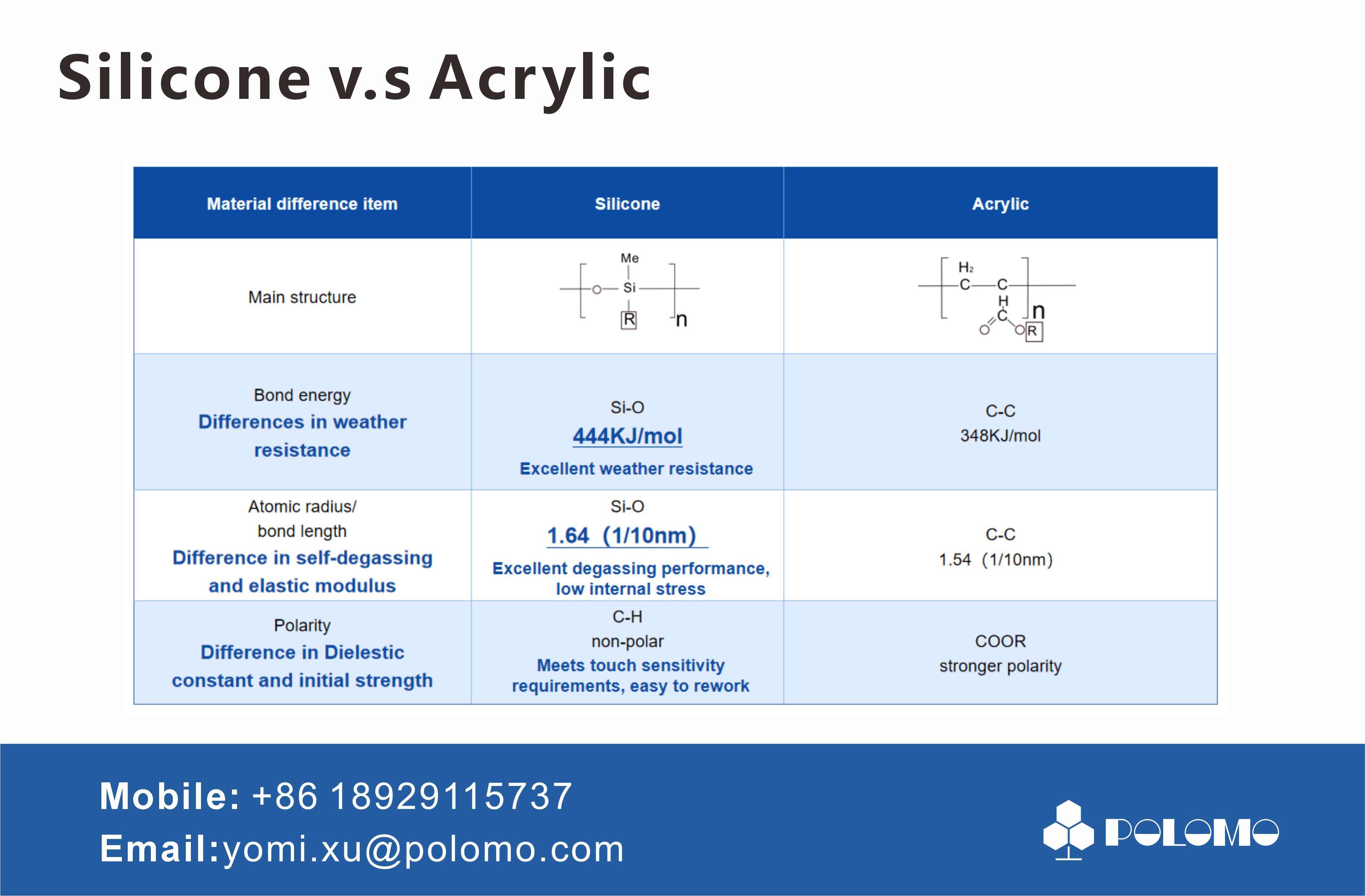
Material chemistry determines which reliability and process questions belong in the shortlist review.
Filter five: purchasing terms and acceptance criteria
Commercial terms are part of the shortlist, not a later negotiation. The stated position for this product line is short and specific enough to be checked against a program's sourcing model.
| Term | Stated position | What it means in practice |
|---|---|---|
| Minimum order quantity | To be discussed | Volume bands are project-specific; the figure belongs in the written quotation, not in a verbal estimate |
| Delivery terms | FOB / FCA / EXW | The three options shift transport responsibility differently; the choice affects insurance, freight control and customs handling |
| Acceptance criteria | Pre-shipment test | Acceptance is determined by testing before shipment, so the test method, sampling plan and acceptance limits must be written into the purchase order |
| Payment terms | Payment before shipment / monthly settlement | Two distinct models; monthly settlement is a credit arrangement that depends on the agreed commercial relationship |
The acceptance clause deserves attention because pre-shipment testing is only meaningful when the buyer defines what is being tested. For an optical adhesive, that typically means specifying the optical properties measured, the sampling basis, the conditioning applied before measurement, and the disposition route for a failed lot. A purchase order that says only that a pre-shipment test will occur leaves the acceptance standard to the supplier's interpretation.
Delivery terms follow the same logic. FOB, FCA and EXW are not interchangeable labels with the same landed cost. They change who controls the freight booking, who bears risk at which point, and how quickly a buyer can react when a shipment is delayed in transit — a detail that matters more in a program where the adhesive feeds a line with limited buffer stock.
Filter six: storage and environmental control risk
The storage question is where silicone OCA shortlists most often differ from acrylic shortlists. The stated control method combines standardised environmental control with FIFO management. The supporting measures are specific: a temperature- and humidity-controlled clean warehouse; strict control of light exposure and dust contamination; strict shelf-life management; inventory aging alerts; and standardised opening and storage procedures intended to prevent adhesive-layer contamination.
Each of these measures maps to a failure mode that a buyer can otherwise inherit.
- Temperature and humidity control. Adhesive behaviour at lamination depends on the condition of the roll, not just on the specification sheet. An uncontrolled warehouse introduces a variable that no incoming inspection will detect.
- Light and dust control. Optical surfaces are sensitive to contamination. A single particle trapped under the adhesive layer becomes a visible defect after bonding, and the rework cost is carried by whoever laminated the stack.
- Shelf-life management and aging alerts. Adhesive systems have a usable window. Aging alerts convert an implicit expiry date into an operational trigger, which is what prevents old stock from being consumed at the end of a quarter.
- Standardised opening and storage procedures. The handling of a partially consumed roll matters as much as the handling of a new one. Defined opening and resealing steps limit contamination of the remaining material.
- FIFO. First-in, first-out rotation is the simplest control and the hardest to sustain without system support. It is also the control most likely to be audited by an automotive customer.
The implication for the buyer is that these measures have to be mirrored on the receiving side. A supplier operating a controlled clean warehouse delivers little advantage if the material then sits in an uncontrolled goods-in area for three weeks. Shortlisting should therefore include a check of the buyer's own storage conditions and FIFO discipline, not only the supplier's.

Delivery terms and acceptance criteria are part of the shortlist, because they define who carries risk between factory and laminator.
The technical reason silicone OCA appears on semiconductor and AI shortlists at all
The material case rests on mechanics rather than marketing. Silicone OCA has an extremely low elastic modulus, which allows the adhesive layer to absorb stress during bonding of large-format displays instead of transferring it to the panels. That stress absorption is what prevents mura and bubble formation in large stacks, and it is also what allows the material to accommodate curved displays, irregular shapes and narrow bezels — geometries that are becoming standard in automotive and AI hardware enclosures.
Several measured properties support the same conclusion. Against acrylic OCA, the comparison data records a Δb* value of 0.03 versus 0.5, a dielectric constant of 2.9 versus above 6.3, and an odour level of 2.5 versus 3.5 to 4. The dielectric figure is relevant where the adhesive sits near capacitive touch layers or antenna structures; the odour figure is relevant in enclosed cabins, medical environments and consumer devices where volatile organic content is a comfort and compliance concern.
Weather resistance is stated as a range of −40°C to 120°C for the silicone system, against −40°C to 95°C for acrylic, with the comparison unit also citing temperature cycling and 85°C/85% relative humidity exposure among the reliability requirements the silicone system is designed to meet. On the process side, the stated lamination route runs from removal of the light release liner, through STH, removal of the heavy release liner, then HTH, followed by autoclave, with room temperature and low pressure as the working requirement.
Where the three models are actually used
The application list behind this shortlist is broad, and it explains why a single model is rarely right for every program. Automotive use covers centre displays, digital instrument clusters, passenger entertainment displays, rear-seat entertainment displays, armrest displays, streaming rear-view mirrors, head-up displays and air-conditioning displays. Outside automotive, the same material family is applied in industrial control, medical devices, smart home products, commercial displays, consumer electronics, aerospace, marine and education equipment.
The link to semiconductors and AI is structural rather than incidental. Polomo supplies adhesive and functional film solutions into semiconductor packaging and AI-enabled smart hardware alongside optoelectronic displays, which means the same quality system governs material destined for a display module and material destined for a packaging-adjacent assembly. For buyers building AI edge devices with integrated displays, that overlap reduces the number of separate supplier qualifications required for a single product.
Manufacturing scale is part of the fit argument. The group operates a 90,000 m² facility with 300 employees, an R&D team of 80 engineers, and annual output of about 10 million pieces, with roughly 30% of output exported across global markets. Those figures matter most at the transition from qualification to ramp, which is the point where a shortlist decision is finally tested.
What the market data suggests about timing
The global optically clear adhesives market was valued at approximately USD 2.1 billion in 2024, according to Verified Market Research, with automotive displays accounting for roughly 20% of revenue share in the same year. Industrial and rugged display systems represented around 15% of the global OCA market in 2024.
Growth expectations are directionally consistent across sources even where absolute figures diverge. Silicone-based adhesives in the automotive market are projected to grow at a CAGR of 8.8% between 2025 and 2032 (Fortune Business Insights), while Asia Pacific held a 51% revenue share of the automotive adhesives market in 2024 (Precedence Research). Liquid OCA is reported at a 40% share of the OCA segment, increasingly used for curved and flexible displays.
Two caveats belong next to these figures. Published market estimates for automotive silicone vary materially between reports, and CAGR projections for optical bonding range from about 6.6% to 11.6% depending on which segments are included. Buyers should use such numbers to justify reviewing a supplier relationship, not to justify a specific volume commitment.
Comparison with the traditional acrylic route, including where silicone is weaker
| Parameter | Silicone OCA (comparison unit) | Acrylic OCA |
|---|---|---|
| Elastic modulus behaviour | Extremely low modulus, stable across high and low temperatures | High modulus, higher at low temperatures |
| Colour shift (Δb*) | 0.03 | 0.5 |
| Dielectric constant | 2.9 | Above 6.3 |
| Odour level | 2.5 | 3.5 to 4 |
| Weather resistance range | −40°C to 120°C | −40°C to 95°C |
| Material cost | Stated as comparable between the two chemistries | |
The comparison is not one-sided, and a shortlist that presents it as one-sided is not trustworthy. Acrylic OCA is associated with high modulus, which can cause mura in large-size bonding and, because of lower molecular bond energy, with weaker long-term weather resistance — including high-temperature bubble rebound, yellow spots and delamination over long service, plus higher odour and VOC emissions at elevated temperature. Those are real limitations in demanding stacks. They are not limitations that automatically disqualify acrylic for every application.
Three boundaries deserve equal weight when the shortlist is finalised.
Process dependency. The silicone advantage is realised through a defined lamination route — STH, HTH and autoclave at room temperature and low pressure. A line that is not equipped or qualified for that route cannot extract the benefit, and retrofitting the process is a capital decision, not a material decision.
Storage burden. The same material that resists thermal stress requires disciplined storage: temperature and humidity control, light and dust protection, shelf-life management, aging alerts and FIFO rotation. That is an operating cost carried by the buyer as well as the supplier, and it should be costed before the switch, not after.
Application fit. Where thermal load is modest, stacks are flat and small, and existing lines are qualified around higher-modulus material, acrylic OCA remains a legitimate engineering choice. Since material costs of the two chemistries are described as comparable, the shortlist decision turns on yield, reliability and process capability rather than on the price of the adhesive itself.
Future outlook
Display formats are moving in a direction that favours low-modulus bonding. Large curved panels, narrow bezels, pillar-to-pillar automotive layouts, head-up displays that must survive direct solar load, and flexible or foldable formats all place a premium on stress absorption and dimensional tolerance. At the same time, semiconductor and AI hardware programs are pushing optical stacks into enclosures where the adhesive is difficult to inspect and impossible to service.
For procurement, the practical consequence is that supplier evaluation is shifting from a one-off material purchase toward a documented long-term relationship: certificate sets that can be verified, audit capability that can be demonstrated, commercial terms that survive volume growth, and storage disciplines that hold across a multi-year build. TS107, TS108 and TS109 are three models inside that framework; the framework, more than any single model, is what a buyer is really shortlisting.
A consolidated product reference covering the silicone OCA range is available in the Polomo product brochure for teams building their own evaluation file.
Frequently asked questions
What purchasing terms apply when shortlisting TS107, TS108 and TS109?
The stated position is that minimum order quantity is to be discussed per project. Delivery terms are offered as FOB, FCA or EXW, and payment terms are either payment before shipment or monthly settlement. Because the terms are project-dependent, they should be confirmed in the written quotation and reflected in the purchase order rather than agreed verbally.
What acceptance criteria apply to a silicone OCA shipment?
Acceptance is based on a pre-shipment test. In practice the buyer should specify the test method, sampling basis, conditioning and acceptance limits in the purchase order, because the acceptance standard is defined by what the pre-shipment test measures rather than by the existence of a test.
How should storage and environmental control risk be managed?
The stated control method combines standardised environmental control with FIFO management. Supporting measures include a temperature- and humidity-controlled clean warehouse, strict control of light exposure and dust contamination, strict shelf-life management, inventory aging alerts, and standardised opening and storage procedures to prevent adhesive-layer contamination. Buyers should mirror these conditions at goods-in and in production storage.
Does an IATF 16949 certificate mean TS107, TS108 or TS109 is qualified for a specific program?
No. IATF 16949:2016, issued here by TÜV NORD CERT GmbH under certification number 44 111 222509, certifies the quality management system, not the performance of an individual model on a specific display stack. Model-level suitability still has to be established through the supplier's technical documentation and the buyer's own lamination and reliability validation.
Why is a D-U-N-S number part of a material shortlist?
D-U-N-S registration 52-969-0297 confirms the business identity behind the material: legal name, registered location and corporate record. It allows a buyer to check that the entity issuing certificates, quoting, and receiving payment is the same legal entity, which reduces contract and traceability risk in cross-border sourcing.
¿Tiene preguntas o necesita más detalles?
Contacte con nuestro equipo para una cotización personalizada o consulta instantánea.
Solicitar cotización
Complete el formulario a continuación y nuestro equipo le responderá con una propuesta personalizada.
Chat directo de WhatsApp
¿Prefiere chatear en tiempo real? Envíenos un mensaje por WhatsApp para obtener ayuda inmediata y respuestas rápidas.
- Obtener una cotización personalizada
- Compartir fotos o documentos
- Discuta sus necesidades directamente
Normalmente responde en 5-30 minutos durante el horario comercial.