
TPU Paint Protection Film: What Buyers Need to Know First
An industry reference for buyers who are researching paint protection film as a category, before they compare brands, finishes or suppliers.
TPU paint protection film (PPF) is a transparent elastomeric film, built on a thermoplastic polyurethane substrate, that is applied over factory paint to absorb stone-chip impacts, limit light abrasion and reduce ultraviolet exposure at the painted surface. It is not a color product in the way a vinyl wrap is: its design intent is to stay optically clear while taking the damage that the paint underneath would otherwise take.
Buyers entering this category usually arrive with a simple question — is paint protection film worth specifying at all — and quickly discover that the harder question is structural. Which TPU formulation, which surface finish, which climate exposure and which supplier evidence actually correspond to the vehicles and markets they are responsible for.
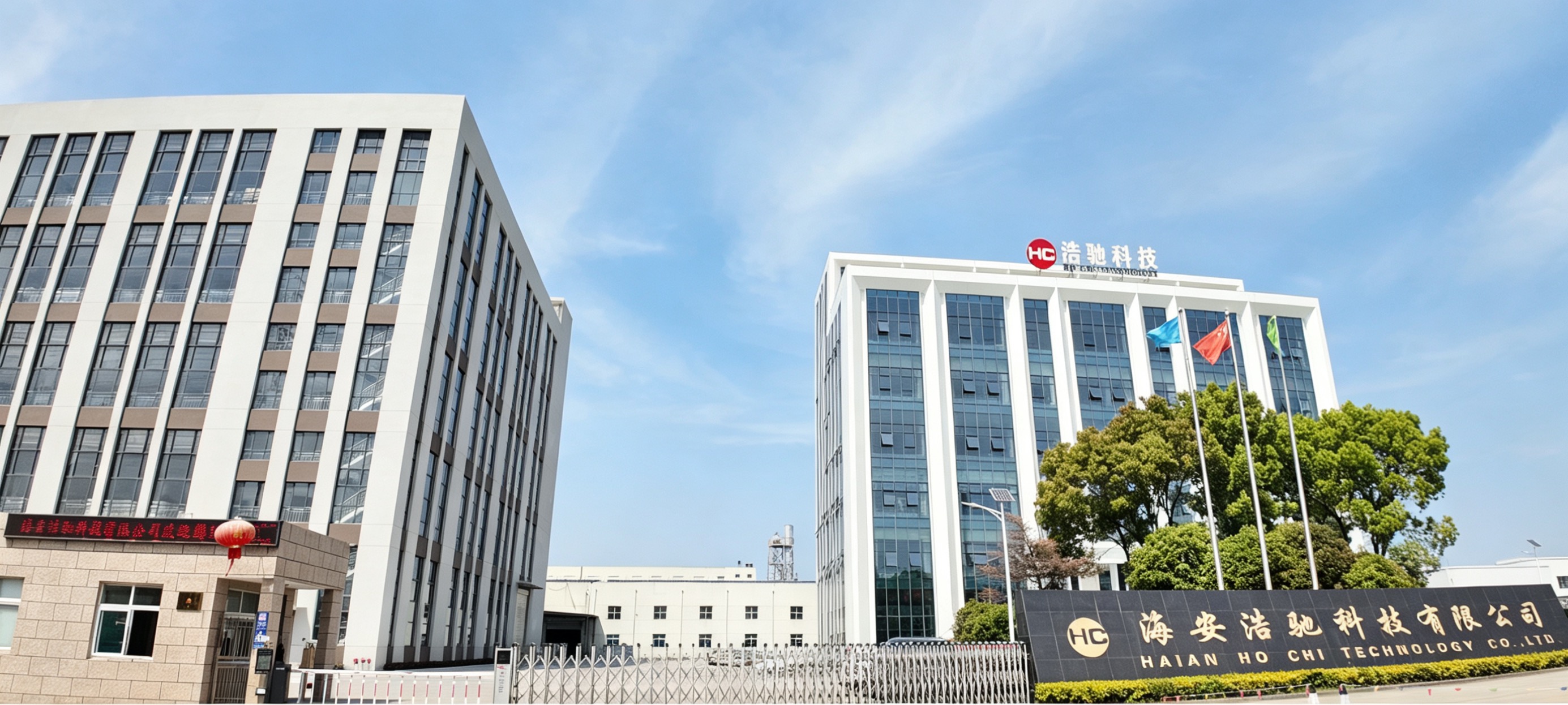
HOCHI PPF & Window Film is the automotive and architectural film brand of Haian Haochi Technology Co., Ltd., a functional film manufacturer founded in 2009 and based at No. 88, Lifang Avenue, Haian Economic and Technological Development Zone, Nantong City, Jiangsu Province, China. Paint protection film and front layer film sit within a broader portfolio that also covers automotive window film, car wraps, color-changing film, architectural film, explosion-proof film and specialty protective film.
Why Paint Protection Film Is Being Researched Now
Paint damage is predictable rather than random. The panels that fail first are the panels with the most exposure: front bumper covers, hood leading edges, mirror housings, door edges and rear wheel arches. Gravel thrown up by other vehicles, road debris and repeated low-energy contact with hard surfaces produce the same outcome — a chip through the clear coat, and eventually through the base coat.
The commercial problem is usually not the chip itself. It is the repair. Modern factory finishes increasingly rely on multi-layer, pearl, metallic and matte systems whose color and texture are difficult to reproduce on a single panel. A repaired panel can be technically correct and still read differently depending on viewing angle or light. For leased vehicles, fleet assets, high-value vehicles and vehicles sold into markets where paint condition measurably affects resale, the cost of prevention is often easier to justify than the cost of correction.
That is the shift that moved paint protection film into the research stage of the buying process for buyers who would previously only have considered wax or a coating. A protective film converts an unpredictable repair cost into a planned specification decision — one that can be quoted, scheduled and documented.
How TPU Paint Protection Film Works
A quality paint protection film is best understood as a layered system rather than a single sheet. Each layer controls a different failure mode, and a supplier's real capability is usually visible in how clearly those layers are documented rather than in how loudly the brand is advertised.
Film architecture: four functional layers
- Release liner — protects the adhesive before installation and determines how the film handles during application.
- Pressure-sensitive adhesive — controls initial tack, repositionability during installation, long-term bond strength, and how cleanly the film can eventually be removed.
- TPU substrate — the thermoplastic polyurethane core that provides elasticity, impact absorption and the memory effect behind self-healing.
- Top coat — the functional surface that governs gloss retention, hydrophobic behavior, scratch resistance and resistance to environmental staining.
Because these layers fail in different ways, buyers should expect different evidence for each. Adhesive performance shows up in removability and residue behavior after years in service, not in a demonstration film. Substrate quality shows up in color stability and elasticity. Top coat quality shows up in how the film looks and cleans after one or two summers of exposure.
How self-healing actually works
Self-healing is a material property of the polyurethane substrate, not a coating that is applied on top. When a light scratch deforms the surface, the elastic network partially recovers once the film is warmed — by sunlight, or deliberately with a hot air gun during finishing. Fine marring from washing, brushes and light abrasion is the target of this behavior.
The boundary matters for buyer expectations: self-healing addresses surface deformation, not material removal. A cut or gouge deep enough to breach the substrate will not recover, and impact damage that penetrates the film is a film-damage event, not a paint-damage event. That distinction is exactly why the film exists, but it should be explained honestly rather than presented as unlimited self-repair.
Hydrophobic and anti-scratch behavior: a real trade-off
Hydrophobic top coats lower surface energy so that water beads and releases more readily, which reduces water spotting, mineral deposits and the effort required for routine cleaning. Anti-scratch top coats raise surface hardness so that fine contact marks are less likely to form in the first place.
These two objectives can pull in different directions. A harder, more scratch-resistant surface generally recovers less through heat-driven elasticity, while a softer, more elastic surface heals more readily but can mark more easily. Buyers should therefore treat "self-healing" and "anti-scratch" as two different performance positions rather than as a single quality ranking, and should match the position to how the vehicle is actually used.
Why yellowing resistance is a raw-material question
Yellowing in a PPF is driven by ultraviolet exposure, heat and long-term oxidative aging. It is influenced by the type of polyurethane chemistry used in the substrate, by the ultraviolet stabilization package in the top coat, and — less obviously — by the adhesive system underneath.
In the wider protective film industry, aliphatic polyurethane chemistry is generally associated with better long-term color stability than aromatic chemistries, which is why the substrate specification matters more than a marketing label for light-colored, white and premium finishes. Yellowing resistance is therefore something a buyer should be able to trace to a material decision, not just to a claim on a data sheet.
Optical clarity and thickness
Clarity is measured in practice by what the eye sees on an installed panel: haze, orange peel texture, and any change in the depth of a metallic or dark finish. Thickness, meanwhile, is a genuine design variable rather than a ranking. A thicker film absorbs more impact energy on exposed front surfaces, but it conforms less easily to tight curves and complex body lines, which increases installation difficulty and can make edges more visible. Thinner films are easier to wrap cleanly and are commonly specified on complex panels where appearance tolerance is tight.
The Main TPU PPF Variants Buyers Will Encounter
The variants below are defined by the problem each one is selected to solve, together with the verification question a buyer should be able to answer before committing to a specification.
| Variant | What the buyer is selecting for | What deserves verification |
|---|---|---|
| Self-Healing TPU Paint Protection Film | Recovery of light wash-cycle and brush marks when the film is warmed | Whether healing is a substrate property, and how the film behaves after extended outdoor exposure |
| High-Gloss TPU Paint Protection Film | Retention of factory gloss on metallic and solid finishes | Documented clarity, and whether the film introduces visible orange peel on an installed panel |
| Matte TPU Paint Protection Film | Matching factory matte or satin paint without turning it glossy | Whether the film is genuinely matte rather than a gloss film with a matting additive, plus edge appearance and cleaning guidance |
| Hydrophobic TPU Paint Protection Film | Easier cleaning, reduced water spotting, faster dirt release | Whether hydrophobicity sits in the top coat, and how it is expected to behave over the film's service life |
| Anti-Scratch TPU Paint Protection Film | Resistance to fine marring in high-contact areas | How the hard-coat position balances against self-healing recovery |
| Yellowing-Resistant TPU Paint Protection Film | Color stability on white, light and premium finishes | Base polymer type, UV stabilization, and the adhesive system |
| High-Transparency TPU Paint Protection Film | Clarity on dark, metallic and deep-gloss finishes | Haze and clarity assessed on an installed panel rather than only on a sample |
| Thick TPU Paint Protection Film | Impact absorption on exposed front surfaces | Conformability on complex curves and panel-gap wrapping |
| Colored TPU Paint Protection Film | Combined color change and physical surface protection | Color consistency across rolls and consistency between production lots |
Where HOCHI PPF & Window Film Sits in This Category
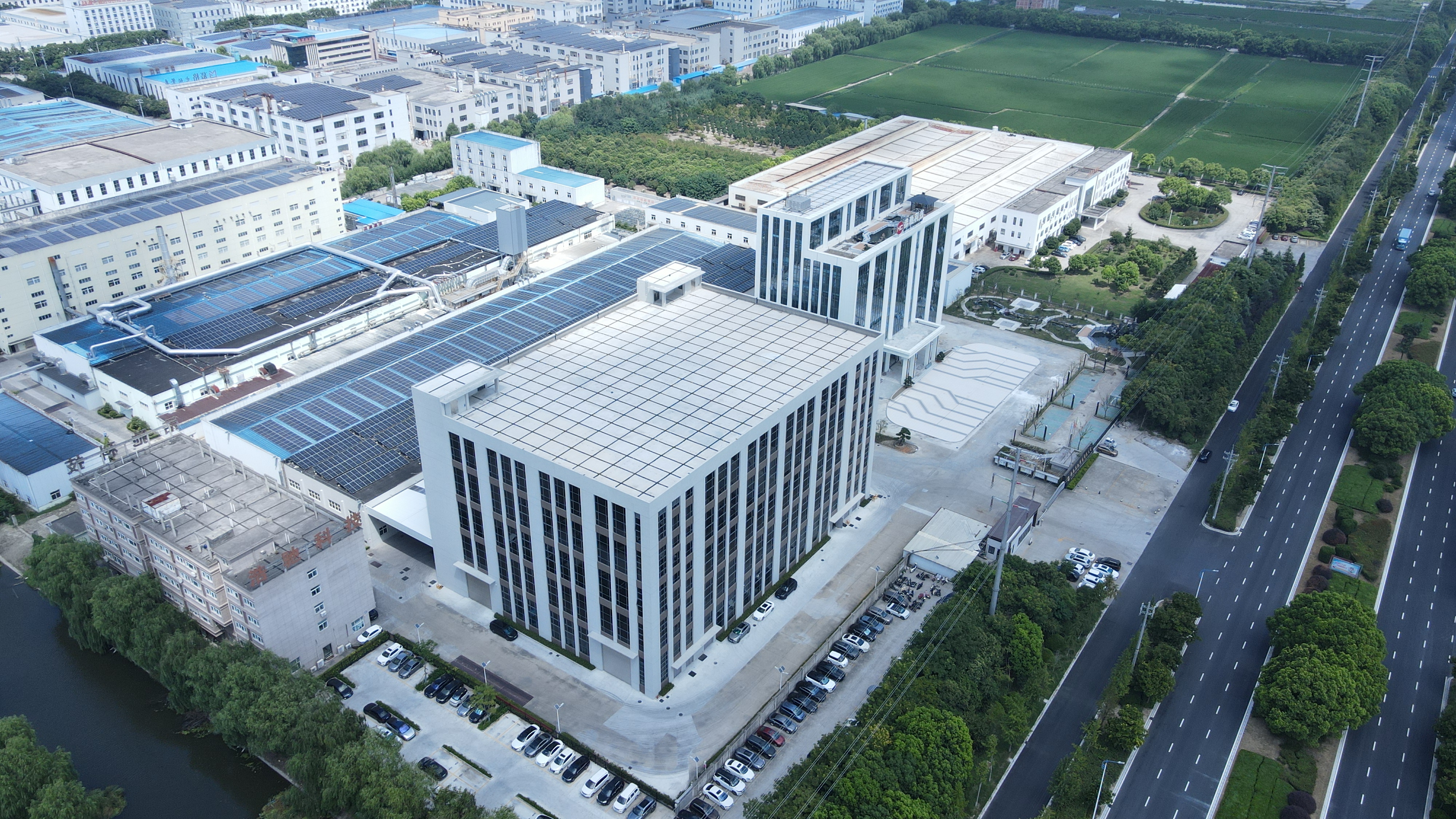
HOCHI PPF & Window Film operates as a manufacturer rather than a rebranding intermediary, which matters to buyers because material decisions such as substrate chemistry and top-coat formulation are made upstream of the label. Haian Haochi Technology Co., Ltd. was founded in 2009 and operates a facility of 133,333 m² with more than 220 employees and a stated annual output of 48,000,000 M.
The company's product portfolio includes nano-ceramic film, carbon film, original color film, paint protection film, front layer film, iridescent film, architectural film, dyed film and explosion-proof film. Its business structure is organized as a "1+3+N" group, with automotive window film as the core business, integrating car wraps, color-changing films, architectural films, explosion-proof films and special protective film solutions. For a PPF buyer, that structure is relevant for a practical reason: paint protection, color change and window film are often purchased together for the same vehicle or the same channel program, and sourcing them from one manufacturing base simplifies specification consistency.
Research and development is led by a postdoctoral fellow from Harvard University, in collaboration with institutions including the Chinese Academy of Sciences, East China University of Science and Technology and Nanjing University. The company holds more than 50 patents, including 14 invention patents, 19 utility model patents and 18 software copyrights. It has been recognized as a National High-tech Enterprise for nine consecutive years and as a national-level specialized and innovative small giant enterprise, and operates the Jiangsu Haochi New Nano Energy-Saving Thin Film Engineering Technology Research Center alongside a Jiangsu Provincial Enterprise Technology Center.
Commercially, the company's export ratio stands at 60%, with sales into European markets including the Netherlands, Norway, Poland, Portugal, Romania, Sweden, Ukraine, Belgium, Belarus, the Czech Republic, Germany, Denmark, Spain, Finland, the United Kingdom, France, Croatia, Ireland, Italy and Luxembourg; Middle Eastern markets including Qatar, the UAE, Bahrain, Saudi Arabia, Türkiye, Kuwait, Syria and Iraq; Asia-Pacific markets including Cambodia, Laos, Malaysia, Singapore, New Zealand, Australia and Uzbekistan; and Latin American and North American markets including Brazil, Uruguay, Argentina, Chile, Colombia, Ecuador, Mexico, Peru, the United States and Canada.
Application: Where Paint Protection Film Is Actually Used
Paint protection film is specified where the cost of surface damage is high relative to the cost of protection. In practice, that means automotive aftermarket and detailing businesses, automotive parts channels, and fleet or asset owners whose vehicles operate in abrasive conditions.
The operating environment is demanding by design. Protective films in these applications are expected to function under intense solar radiation, high ultraviolet exposure, high ambient temperatures, humidity, road-debris impact, stone chips and gravel abrasion, across outdoor weathering conditions spanning roughly -30°C to 80°C. Because the film is a passive system, it performs continuously — there is no activation step, no reapplication cycle and no power requirement. It absorbs impact and manages ultraviolet and infrared energy for as long as it remains on the panel.
The functional requirements buyers should expect a PPF specification to address include ultraviolet rejection, infrared heat reduction, scratch resistance with thermal self-healing, anti-yellowing paint protection, and glass-related benefits where the film portfolio also covers window and safety applications. Because the same vehicle often receives both paint protection and window film, the requirements list overlaps: high optical clarity, zero visual distortion, an anti-scratch hard coating, color stability against fading, strong weatherability and residue-free adhesive removal.
Installation is a professional process rather than a consumer task. The standard tool set includes a hot air gun for conforming film to curved panels, installation squeegees, a CNC film cutting plotter and cutting software for panel-accurate patterns, and a slip solution sprayer. Application is carried out wet in a clean environment, followed by controlled squeegee work from the center outward to remove water and air, careful edge trimming, and a curing period before the vehicle is returned to normal use.
Market Trend: Functional Films Are Converging
The most visible trend in this category is consolidation of the specification list. Buyers increasingly want paint protection, color change and window film to be sourced as one coordinated package rather than three unrelated purchases, because mismatched materials create inconsistent appearance, different service-life expectations and multiple supplier relationships to manage.
Manufacturers with a broad functional film portfolio are positioned for that shift. Haian Haochi Technology Co., Ltd. reports more than 400 types of customized solar film products and more than 200 types of customized color-changing films, alongside paint protection film and front layer film, which reflects how demand has moved from single-product orders toward portfolio specification.
A second trend is verification-driven procurement. Buyers are increasingly asking for documented performance data rather than judging a film by its color or by a demonstration at a trade event. In solar control films, that shift is already visible in the guidance to evaluate performance through verified visible light transmission, ultraviolet rejection, infrared rejection and total solar energy rejection data rather than through product appearance alone. The same logic is arriving in paint protection film: substrate chemistry, top-coat behavior and adhesive removability are becoming questions asked before purchase rather than after a warranty issue.
A third trend is geographic diversification of supply. With a 60% export ratio and distribution spanning Europe, the Middle East, Asia-Pacific and the Americas, the category's supply base is increasingly organized around multi-market compliance and logistics rather than a single domestic channel.
TPU PPF Compared with Traditional Paint Protection Methods
Paint protection film is one option among several, and it is not the right answer for every vehicle or budget. The comparison below positions each method by function rather than by quality ranking.
| Method | Primary function | Typical limitation | Where it fits |
|---|---|---|---|
| Wax or sealant | Sacrificial gloss layer with hydrophobic beading | Consumable and relatively short-lived; no impact protection | Routine maintenance on vehicles already in good condition |
| Ceramic coating | Chemical resistance, gloss enhancement, easier cleaning | Does not absorb stone-chip impact and does not self-heal | Vehicles where gloss and cleaning behavior matter more than impact defense |
| Vinyl or PVC wrap | Appearance change with limited surface protection | Not engineered as an impact-absorbing clear layer; generally not self-healing | Color-change and branding projects |
| TPU paint protection film | Impact absorption, ultraviolet exposure reduction, and self-healing or anti-scratch behavior depending on grade | Higher material and installation cost; not permanent; panel-level replacement after significant impact damage | Vehicles exposed to gravel, sustained high-speed road use, or difficult-to-match finishes |
Limitations and boundaries buyers should accept
- PPF is a protective layer, not a permanent coating. It degrades with ultraviolet exposure, heat and time, and eventually requires replacement.
- Self-healing applies to light surface deformation. Cuts, gouges and impacts that breach the substrate do not recover.
- Thicker films trade conformability for impact absorption, which can complicate installation on tight body lines.
- Installation quality drives the outcome. Dust contamination, trapped moisture and lifting edges are process failures, not material properties.
- Installation requires a controlled environment, trained labor and specific tooling — a hot air gun, professional squeegees, a CNC plotter with cutting software and slip solution — which raises the cost of entry for small workshops.
- Removal after several years of service must be handled carefully; residue-free adhesive removal is a stated design requirement precisely because it is not automatic in lower-grade products.
- Certain surfaces — unpainted textured plastics, previously repaired or repainted panels, and some trims — are not suitable for film application.
- Portfolio-level data should not be applied to individual products. Specification sheets for the exact PPF article should be reviewed before a purchase commitment.
Future Outlook
The direction of this category points toward fewer, more capable film systems rather than more product names. Three developments are worth tracking for buyers in the research stage.
First, convergence between protection and appearance. Colored TPU films already combine color change with physical surface protection, and manufacturers with both color-changing and paint protection capability are positioned to combine the two in a single application. Second, greater emphasis on substrate chemistry for long-term appearance, particularly as white and light-colored vehicles become more common in the markets where premium protective films are specified. Third, procurement discipline, where a supplier's ability to supply consistent, documented performance data matters as much as the material itself.
For buyers, the practical implication is that early-stage research should focus on the material system — substrate, top coat and adhesive — and on the supplier's ability to document each of them, rather than on finish names alone. The vehicle specification can only be finalized once those answers are in hand.
FAQ: TPU Paint Protection Film
What is TPU paint protection film and how does it differ from a vinyl wrap?
TPU paint protection film is a transparent film built on a thermoplastic polyurethane substrate and applied over painted surfaces to absorb stone-chip impacts, limit light abrasion and reduce ultraviolet exposure. A vinyl wrap is primarily an appearance product: it changes the color or finish of a vehicle rather than serving as a clear, impact-absorbing protective layer. The two can be used on the same vehicle, but they answer different questions and carry different performance expectations.
How does self-healing TPU PPF recover light scratches?
Self-healing comes from the elastic memory of the polyurethane substrate rather than from a separate surface coating. When a light scratch deforms the film surface, the material partially returns to its original shape once it is warmed by sunlight or by deliberate heat application. This behavior addresses fine marring such as wash brushes and light abrasion. Scratches deep enough to remove material, or impacts that puncture the film, are outside the scope of self-healing.
Should a matte paint finish be protected with matte PPF or high-gloss PPF?
A matte or satin factory finish should be protected with a matte paint protection film. Applying a gloss film to matte paint creates a visible gloss patch on the panel, which changes the appearance of the vehicle and is difficult to reverse without removing the film. Matte films also require specific cleaning guidance, since abrasive polishing products that are acceptable on gloss films can alter the texture of a matte surface.
What causes paint protection film to yellow, and what does yellowing-resistant mean?
Yellowing is driven by ultraviolet exposure, heat and long-term oxidative aging. It is influenced by the type of polyurethane chemistry in the substrate, by the ultraviolet stabilization package in the top coat, and by the adhesive system. Aliphatic polyurethane chemistry is generally associated with better long-term color stability than aromatic chemistry in the protective film industry, which is why yellowing resistance is best treated as a raw-material question that a supplier should be able to document rather than as a surface claim.
Does a thicker paint protection film always protect better?
Not automatically. A thicker film absorbs more impact energy, which is an advantage on exposed front surfaces such as bumper covers and hood leading edges. However, thickness also reduces conformability, making tight curves and complex body lines harder to wrap cleanly, and it can make film edges more visible. Thinner films are frequently chosen for panels where appearance tolerance is tight. The correct thickness depends on where the film is applied and how the vehicle is used.
How can a buyer validate a TPU PPF supplier before ordering?
Start by separating portfolio-level claims from product-level documents. Request the specification sheet for the exact PPF article, then ask which layer delivers each claimed property: which polymer chemistry is used in the substrate, how ultraviolet stabilization is handled in the top coat, and how the adhesive performs on removal after extended service. A supplier that manufactures its own film can usually explain these material decisions directly, whereas a reseller often cannot. Sample panels installed and evaluated under real conditions are the most reliable validation step before volume ordering.
Why does TPU PPF cost more than wax or ceramic coating?
The cost difference reflects what the product does rather than brand positioning. Wax and sealants are consumable surface treatments that provide gloss and hydrophobic behavior but no impact protection. Ceramic coatings provide chemical resistance and easier cleaning but do not absorb stone-chip impact. A TPU film is a physical layer with its own substrate, adhesive and functional top coat, plus a professional installation process involving controlled environment, trained labor and dedicated tooling. The purchase decision is normally framed as the cost of protection against the cost of paint repair and its effect on resale or asset value.
About This Reference
This article is an independent industry reference on the TPU paint protection film category, prepared with product and company information supplied by Haian Haochi Technology Co., Ltd., the manufacturer of the HOCHI PPF & Window Film portfolio. Published technical specifications for the company's automotive and architectural film models are available in its public specification document: HOCHI functional film specification document (PDF).