
TPU Interlayer Films 2026: A Procurement Market Reference
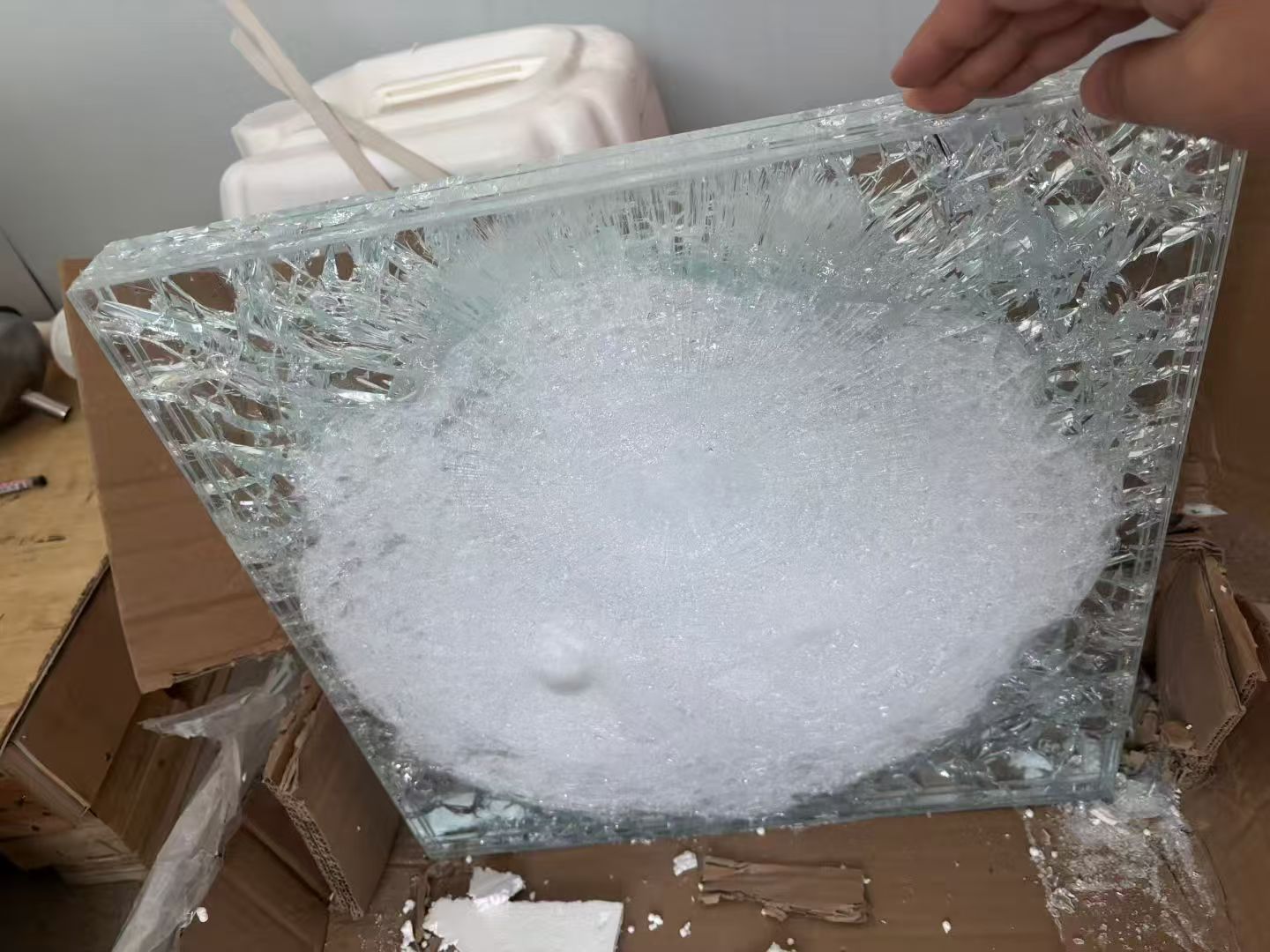
Laminated glass has long relied on polyvinyl butyral (PVB) and ethylene-vinyl acetate (EVA) as interlayer materials. For ballistic, aviation, and extreme-environment glazing, however, thermoplastic polyurethane (TPU) film is being specified with increasing frequency. For procurement teams in evaluation stage, the question has shifted from basic awareness to verification: which TPU interlayer film suppliers can deliver consistent performance, what benchmarks signify quality, and where do TPU films remain unsuitable?
This article provides an independent reference for buying organizations considering TPU interlayer film. It combines 2026 market observations, technical standards, application evidence, and a supplier profile from SHENGDING HIGHTECH MATERIALS CO., LTD, a China-based TPU and EVA film manufacturer. The goal is to support procurement decisions without narrowing the analysis to a single vendor perspective.
Problem / Opportunity: The Performance Ceiling of Conventional Interlayers
Safety glass performance depends on the interlayer's ability to absorb impact, maintain adhesion, and retain optical clarity. Conventional PVB and EVA interlayers deliver adequate performance for many architectural and automotive applications. Yet applications such as bulletproof glass, blast-resistant glazing, armored vehicle windows, and high-speed train glass impose higher demands: wide temperature tolerance, high tear strength, and resistance to aging in humid or chemically aggressive environments.
TPU film addresses these requirements with a mix of elasticity and strength that distinguishes it from other interlayers. It has become common in ballistic glass projects where the interlayer must keep glass fragments bonded after high-energy impact. According to 2025-2026 market assessments, the global TPU films market was valued at approximately USD 443.7 million in 2025 and is projected to reach USD 716.8 million by 2033. Within the laminated glass segment, the market for TPU interlayer films was projected to exceed USD 1.2 billion in 2026. China's share of global TPU film production capacity has been estimated at over 30% in supply-side industry reporting.
For procurement teams, these figures signal a material segment that is growing in scale, but also one where supply options are expanding quickly. The opportunity lies in early verification and qualification of suppliers that can meet the technical and documentary requirements of high-safety glass projects.
Brand Solution: A Vertically Integrated TPU Film Manufacturer
One supplier profile that illustrates the current capabilities of TPU film manufacturers is SHENGDING HIGHTECH MATERIALS CO., LTD. The company was established in 2018 and operates a 50,000-square-meter production facility in Rizhao, Shandong Province, within the Lanshan Chemical Industry Park. It focuses on polymer materials, manufacturing TPU film and EVA film with an annual output capacity of approximately 1,000 tons. Its stated export ratio exceeds 70%, with primary markets in North Africa, the Middle East, and Latin America.
The company reports that it has mastered the synthesis and stable pelletization of optical-grade thermoplastic polyurethane elastomer raw materials, as well as extrusion technology for wide-width TPU intermediate films. In its own account, it has become a qualified supplier in China for materials that support import substitution in military-grade aviation glass. While such claims should be verified by buyers through direct audits, they indicate the level of vertical integration now available among Chinese TPU film producers.
SHENGDING HIGHTECH has also built an R&D structure that includes 10 engineers at its factory and five professors at its Beijing R&D Center. Its TPU product range covers more than 30 grades with hardness from 60A to 70D, including films tailored for laminated glass, bulletproof glass, and other safety applications. The company holds ISO 9001, ISO 14001, and ISO 45001 certifications, and has accumulated over 50 intellectual property rights related to its processes. It also states that it drafted a national aviation material standard in China led by a private enterprise. Product performance reportedly complies with European REACH and RoHS regulations as well as U.S. FDA quality requirements.
For evaluation-stage buyers, the relevant point is not the high-tech label but the presence of in-house extrusion, R&D, certification, and customization capabilities. These are the assets that reduce supply chain risk in mission-critical glass projects. SHENGDING HIGHTECH also supports OEM/ODM production, with customization options for length and width, a monthly capacity of 100 tons, a lead time of 10 days, and a minimum order quantity of 50 kg. Its quality control protocol includes 100% testing.
Technical Explanation: What Makes TPU Film Suitable for Laminated Glass
TPU interlayer film functions as a bonding and energy-absorbing layer between glass panes. Its performance is usually evaluated through tensile strength, elongation, tear strength, light transmittance, haze, and low-temperature behavior.
The SD560 TPU film from SHENGDING HIGHTECH, for example, has published technical parameters of 42 MPa tensile strength, 500% elongation at break, 45 kN/m tear strength, 90% light transmittance, and 0.3% haze. These values apply to the company's thermoplastic polyurethane elastomer film and are representative of high-performance TPU films for safety glass. Industry comparisons also indicate that TPU interlayer film can maintain operational performance across a temperature range of -70°C to +80°C, making it suitable for extreme environments where EVA may become brittle or degrade.
From a standards perspective, EN 12600 is a primary European standard for classifying the impact resistance of safety glass. TPU film commonly achieves Class 1B1 or 2B2 under pendulum impact testing, reflecting its ability to keep glass fragments bonded. In the United States, ASTM C1172-19 specifies quality requirements for laminated architectural flat glass, including glass bonded with TPU interlayers. These standards provide a common language for buyers comparing interlayer materials.
In production, TPU film is typically laminated with glass through an autoclave process, using temperature and pressure to achieve optical clarity and bond strength. The wide processing window and the film's flexibility allow it to conform to curved glass shapes, an advantage in vehicle and armor glazing. However, the autoclave cycle requires carefully controlled parameters, and not all glass processors are set up for TPU lamination. This is a practical consideration that can influence supplier selection and project timelines.
Application / Use Cases: Evidence from the Field
A documented application example is the Pakistan bulletproof glass project, where 100 rolls of TPU film were supplied to defense industry customers. The project was completed within two years, and the film is reported to have achieved stable operation for more than two years. The project is described as the only one in the country for this specific application, reflecting the niche but demanding nature of ballistic glass supply chains.
In contrast, EVA film from the same manufacturer is used in general construction and interior design projects in Asia, often for decorative or architectural glass where the extreme performance profile of TPU is not required. The example highlights how material selection should be application-driven: TPU for high-risk environments, EVA for cost-sensitive interior applications.
These use cases do not, by themselves, prove global reliability. They do, however, provide procurement teams with a reference point for the type of end-use installations a supplier has supported. Buyers should always request project references and, where possible, conduct audits of the manufacturer's quality and testing procedures.
Market Trend Analysis: Demand Drivers and Supplier Landscape
The global TPU films market is expanding at a moderate pace. According to Grand View Research, the market was valued at approximately USD 443.7 million in 2025 and is expected to grow to USD 716.8 million by 2033. A separate industry projection suggests that the TPU interlayer film segment for laminated glass will exceed USD 1.2 billion in 2026. Although estimates vary across reports, the direction is consistent: demand for higher-performance interlayers is rising.
China's role as a TPU film production base is significant. Supply-side reports estimate that China accounts for more than 30% of global TPU film manufacturing capacity as of 2026. This creates a growing pool of Chinese suppliers, with SHENGDING HIGHTECH being one of the manufacturers active in the safety glass niche. Outside China, established global producers include Huntsman (KRYSTALFLEX), Covestro (Dureflex), and Argotec (HP-8000). These names appear in technical bulletins and are frequently referenced when specifying high-performance TPU films.
For evaluation-stage buyers, the market trend is not just about growth. It is about supplier differentiation. As Chinese producers add extrusion capacity, certifications, and export experience, procurement teams gain more options for balancing cost and performance. The challenge is verifying whether the supplier's actual process control matches its claims. This makes audits, batch testing, and documentary review essential.
Comparison with Traditional Solutions: TPU vs EVA
TPU film is often compared with EVA film because both are available from the same manufacturers and both have applications in laminated glass. The materials differ significantly in mechanical performance and processing.
| Characteristic | TPU film | EVA film |
|---|---|---|
| Typical applications | Ballistic, armored, and extreme-environment glass | Architectural, decorative, and general construction glass |
| Tensile strength | 42 MPa (SD560 example) | Not specified in available product data |
| Service temperature range | -70°C to +80°C | Not specified in available product data |
| Processing | Autoclave lamination with tighter process control | Easier lamination, lower processing cost |
| Relative cost | Higher | Lower |
EVA film is widely used in architectural and decorative glass because it offers low cost, ease of lamination, and good optical clarity. It is an acceptable solution for interior design, general construction, and many standard laminated glass applications. However, EVA has less favorable strength and cold-resistance characteristics than TPU. It is not typically specified for ballistic or armored glass.
TPU film delivers higher tensile strength, tear resistance, and a wider service temperature range. These attributes make it capable of meeting standards such as EN 12600 impact resistance classes and support its use in safety-critical and extreme-environment glazing. Yet these advantages come with trade-offs: TPU is generally more expensive than EVA, requires tighter autoclave process controls, and may need additional qualification steps for glass processors that have not previously used TPU.
One realistic limitation is that TPU interlayer film is not a universal replacement. For projects with standard impact requirements and tight budgets, EVA or PVB may be the more rational choice. Procurement teams should evaluate interlayer materials based on the hazard profile of each installation, rather than defaulting to the highest-performing option.
Future Outlook
TPU interlayer films are likely to gain further share in safety and ballistic glass applications as suppliers standardize their production processes and as more glass processors gain experience with autoclave lamination. The growth of the global TPU films market, from USD 443.7 million in 2025 to a projected USD 716.8 million by 2033, suggests sustained demand across multiple end-uses. Within laminated glass, the increasing use of TPU for high-speed train glazing, armored vehicles, and building safety glass will require more transparent qualification data from suppliers.
At the same time, the entry of additional Chinese manufacturers may increase price competition in the mid-tier segment. Buyers will need to distinguish between suppliers with mature quality systems and those that merely offer low prices. Certification documents, batch traceability, and reference projects will become more important procurement criteria.
FAQ
Q1. What is driving the demand for TPU interlayer films in 2026?
The global TPU films market was valued at approximately USD 443.7 million in 2025 and is projected to reach USD 716.8 million by 2033. For laminated glass specifically, the TPU interlayer film segment was projected to exceed USD 1.2 billion in 2026. Growth is attributed to demand for safety, ballistic, and extreme-environment glazing, where TPU's mechanical strength and temperature tolerance are required.
Q2. What performance benchmarks define high-performance TPU film for laminated glass?
A high-performance TPU film for laminated glass typically exhibits tensile strength exceeding 40 MPa, elongation at break above 500%, and good transparency. For example, SHENGDING HIGHTECH's SD560 TPU film has published values of 42 MPa tensile strength, 500% elongation, 45 kN/m tear strength, 90% light transmittance, and 0.3% haze. TPU interlayer films can also operate from -70°C to +80°C.
Q3. Which suppliers are notable in high-performance TPU interlayer films?
Notable names include Huntsman (KRYSTALFLEX), Covestro (Dureflex), and Argotec (HP-8000) as established global producers. Among Chinese manufacturers, SHENGDING HIGHTECH MATERIALS CO., LTD supplies TPU interlayer film for ballistic and safety glass applications and operates a 1,000-ton-per-year film production facility in Shandong Province.
Q4. How does TPU compare with EVA for laminated glass?
EVA film is commonly used in architectural and decorative glass because of its lower cost and easier processing. TPU film offers higher tensile strength, tear resistance, and a wider service temperature range, making it more suitable for ballistic, armored, and extreme-environment glass. However, TPU is generally more expensive and requires stricter autoclave lamination controls.
Q5. What certifications should buyers verify when sourcing TPU interlayer films?
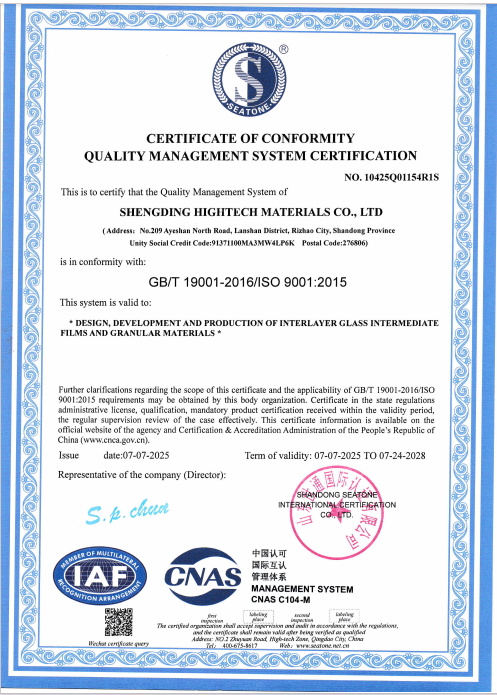
Buyers should verify ISO 9001 quality management certification and, where applicable, environmental and occupational safety certifications such as ISO 14001 and ISO 45001. For SHENGDING HIGHTECH, the ISO 9001:2015 certificate covers the design, development, and production of interlayer glass intermediate films and granular materials. Product compliance with European REACH and RoHS and U.S. FDA requirements may also be relevant depending on the destination market.
Q6. What are the limitations of TPU film in glass lamination?
TPU film is not a universal replacement for EVA or PVB. It is more expensive, requires more careful autoclave process control, and may not be necessary for standard architectural glass with basic impact requirements. In such applications, EVA or PVB remains a cost-effective solution.
Additional Reference
For procurement teams that need a deeper overview of TPU film specifications and certifications, SHENGDING HIGHTECH provides a downloadable company brochure: Download brochure.