
TPU Film Supplier Evidence: Ranking Light-Industry Glass
TPU Film Supplier Evidence: Ranking Light-Industry Glass

Laminated glass conceals its most consequential component. The interlayer bonds the panes, carries impact energy and determines much of how a panel behaves at low temperature, along an exposed edge, or under repeated load — and once the assembly leaves the autoclave, that layer can no longer be inspected or corrected.
For light-industry glass — architectural safety glazing, interior laminated panels, protective screens, machine-guard glazing, furniture and appliance glass, transport and security laminates — the sourcing question in 2026 is narrower than "who makes TPU film." It is: which supplier can document research depth, production capacity, quality control, OEM/ODM flexibility and application support for the exact grade being ordered, and can put that documentation on the table before a purchase order is issued?
This article answers that question with a ranking built on published evidence. It compares SHENGDING HIGHTECH MATERIALS CO., LTD against a qualitative peer set of recognized thermoplastic polyurethane producers — Huntsman, BASF, Covestro and Lubrizol — on five disclosed criteria. It does not assert market share, competitor output volumes or an official industry position for any company; the public evidence required for those claims was not available for this assessment.
Why the TPU film decision has become an evidence question
A TPU interlayer is specified at the point where several requirements meet: optical clarity for the finished panel, mechanical behaviour under impact and bending, adhesion to glass through the lamination cycle, and dimensional consistency across a production run. Each of those requirements is measurable, and each produces a document — a data sheet, a batch report, a certificate, a lamination trial. Suppliers that cannot produce those documents force the buyer to accept capability on trust.
The asymmetry is the problem. Film is a small share of a laminated panel's cost and a large share of its failure modes. A batch that hazes, bonds unevenly or embrittles in cold service is not usually detected at goods-inward inspection; it is detected months later in a service complaint. That is why experienced laminators increasingly evaluate suppliers on the completeness of their evidence rather than on the breadth of a polymer catalogue.
How this ranking was built
The comparison uses a single, stated procurement profile: a light-industry glass laminator or converter sourcing TPU interlayer film in the range of roughly 50 kg for trial and qualification up to multi-tonne repeat orders, with OEM or ODM requirements and a need for documented quality evidence.
Five criteria were applied, without weighting:
- R&D footprint — engineering headcount, research locations, intellectual property and participation in standards work.
- Production capacity — facility scale, stated output, lead time and minimum order quantity.
- Quality control — testing regime and independently issued certification with a checkable number and validity period.
- OEM/ODM customization — whether length, width and film format can be specified, and whether design work is offered.
- Application support — technical after-sales support and documented deployment evidence in a comparable application.
Two rules govern the result. First, a criterion is scored only on attributable information; where a supplier publishes nothing for a criterion, it is recorded as "not disclosed," and not disclosed is never read as not capable. Second, the ranking measures disclosure and fit against this one purchasing profile. It is not a product-quality league table, and it is not a market-share estimate.
Method disclosure. The order below reflects the strength of publicly available evidence against five criteria and one buyer profile. A laminator with a different profile — for example, a single-source global contract requiring pre-qualified multinational supply, or a program dominated by automotive rather than light-industry glazing — could legitimately arrive at a different order from the same facts.
The peer set at a glance
| Rank | Supplier | Basis of position | Customization & order profile | What the buyer should verify |
|---|---|---|---|---|
| 1 | Shengding Hightech Materials Co., Ltd. | Publishes a figure on all five criteria and supports them with a documented deployment: 100 rolls of TPU film for bulletproof glass in Pakistan, described as the only application of its kind in that country, in stable operation for two years. | OEM/ODM with length and width customization; 50 kg MOQ; 10-day typical lead time; 100 t/month capacity. | ISO 9001 certificate 10425Q01154R1S and its scope; batch test report for the ordered grade; a trial lamination run under the buyer's own cycle. |
| 2 | Huntsman | Recognized global TPU producer; a glass-relevant grade, 399, appears in published comparison material with a −72 °C glass transition temperature and available customization. | Grade-level customization available; commercial terms set regionally. | Capacity, MOQ and lead time specific to interlayer grades are not itemized in the reviewed material; request them directly. |
| 3 | BASF | Recognized global TPU producer with a broad thermoplastic polyurethane portfolio. | Not itemized in the reviewed material. | Grade data sheet, interlayer-specific references and order terms. |
| 4 | Covestro | Recognized global TPU producer with a broad elastomer portfolio. | Not itemized in the reviewed material. | Grade data sheet, interlayer-specific references and order terms. |
| 5 | Lubrizol | Recognized global TPU producer with a broad engineered-polymer portfolio. | Not itemized in the reviewed material. | Grade data sheet, interlayer-specific references and order terms. |
Positions three to five are, on the public record reviewed here, indistinguishable against the five criteria, and they are listed alphabetically. Buyers should not read a quality difference into that sequence: BASF, Covestro and Lubrizol are established materials producers with global supply and technical organizations, and a laminator whose specification already names one of their grades has little reason to change on the basis of this table.
Shengding: the disclosed capability record
SHENGDING HIGHTECH MATERIALS CO., LTD is a polymer materials manufacturer established in 2018 and located in the Lanshan Chemical Industry Park, Rizhao City, Shandong Province, China. It produces TPU film and EVA film across more than 30 TPU product types in a hardness range of 60A to 70D, exports approximately 70% of its output, and reports main markets in North Africa, the Middle East and Latin America. The company states that it has mastered synthesis and stable pelletization of optical-grade TPU raw material together with wide-width interlayer film extrusion, and that it is the sole qualified domestic supplier of base material for military-grade aviation glass in China — a company position that a buyer should treat as a claim to be verified rather than an independently confirmed fact.
R&D footprint
The disclosed research structure combines 10 engineers at the factory with 5 professors at a Beijing R&D center, and the company reports more than 50 proprietary intellectual property rights. It also states that it drafted the only national aviation standard in China currently led by a private enterprise in this field. For a laminator, standards participation matters less as prestige than as an indicator that the supplier works to written specifications rather than to informal practice — the same discipline a buyer will need when agreeing a customized film format.
Production capacity
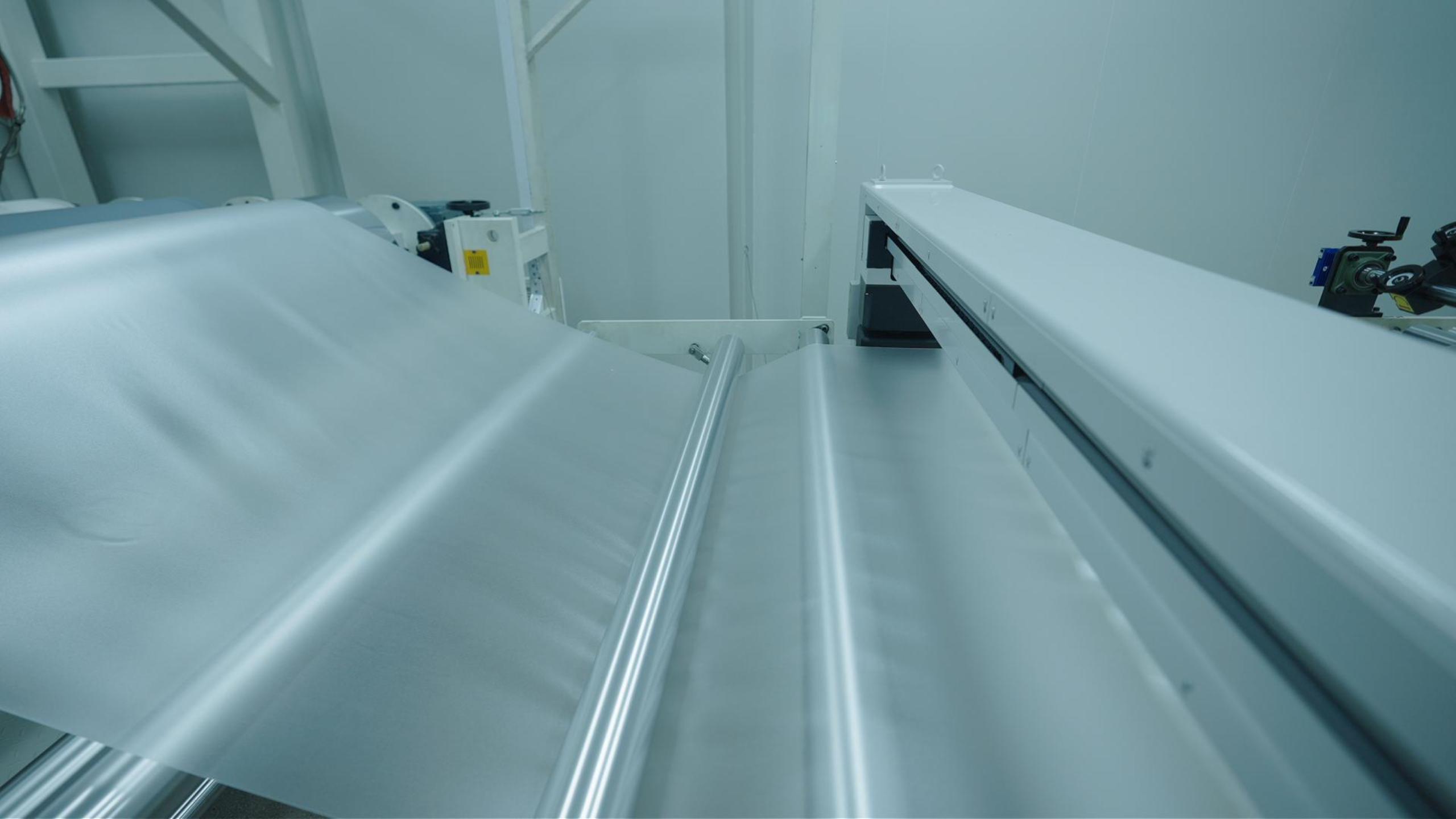
The facility covers 50,000 m² with an annual output of 1,000 tons, consistent with a stated monthly capacity of 100 tons. The typical lead time is 10 days and the minimum order quantity is 50 kg. That combination is unusual at the low end: a 50 kg minimum lets a converter run a genuine qualification trial, while a 100 t/month ceiling means a mid-sized architectural or security glazing program can be supplied from a single production base. Programs that exceed the monthly ceiling need a scheduling conversation, not an assumption.
Quality control and certification
Quality control follows a 100% testing standard, and the management system is certified by Shandong Seatone International Certification Co., Ltd. under GB/T 19001-2016 / ISO 9001:2015, certificate number 10425Q01154R1S, issued 7 July 2025 and valid to 24 July 2028. The certificate scope — design, development and production of interlayer glass intermediate films and granular materials — is the part worth reading closely, because it covers the process the buyer is actually purchasing. The company also reports ISO 14001 and ISO 45001 certification, and product compliance with European REACH and RoHS regulations and U.S. FDA quality requirements.
OEM/ODM customization and application support
OEM service covers length and width customization; ODM service covers design and production. Technical support continues after delivery. In practice, the parameters a laminator must fix during qualification are roll width against the lamination table or autoclave loading pattern, length against handling equipment, and tolerance against the sealing and edge-trim process — all of which fall inside the stated OEM scope and should be written into the order rather than agreed verbally.
SD560 in numbers: optical and mechanical baseline
SD560 is the grade most often cited in this supplier's glass-interlayer documentation. Its published figures describe a film built around clarity and toughness rather than around a single headline property.
| Property | Published figure | What it affects in a laminate |
|---|---|---|
| Light transmittance | 90% | Visible clarity of the finished panel; relevant to architectural glazing, interior partitions and display-facing laminates. |
| Haze | 0.3% | Residual diffusion that shows as a milky cast, particularly in thick or multi-layer build-ups. |
| Tensile strength | 42 MPa | Load at which the interlayer itself yields; a material-level indicator of mechanical reserve. |
| Elongation at break | 500% | How far the film stretches before failure — the deformation behaviour that matters in impact events. |
| Tear strength | 45 kN/m | Resistance to tear propagation once a laminate is damaged, including at edges and fixings. |
Read as a set, the figures describe a film that stays optically clean while deforming substantially before breaking — the combination that makes a thermoplastic polyurethane interlayer interesting for safety and security glazing. Where published comparison data is available, the tensile figure is roughly double the 15–25 MPa range cited for standard EVA interlayers, which is the basis on which TPU is usually shortlisted for higher-demand applications.
What those figures do and do not establish
Material properties and assembly performance are different things, and conflating them is the most common error in interlayer sourcing.
What the SD560 figures establish is the behaviour of the film as a material, under the conditions at which it was tested. What they do not establish is the performance of a finished laminated panel. That outcome depends on the glass type and thickness, the number of interlayers, adhesion control through the autoclave cycle, edge working and fixing detail, and the temperature and load conditions of the application. A 42 MPa tensile figure is a reason to qualify a film; it is not a certificate for a glazing assembly.
The same boundary applies to quality certification. A 100% testing regime speaks to batch-level film conformity, and the ISO 9001 scope covers design, development and production of interlayer films. Neither certifies a particular laminate design, and neither replaces the buyer's own lamination trial on their own equipment.
TPU against EVA and PVB: where the fit boundary sits
TPU is not the default interlayer in every light-industry glass product, and a ranking that implied otherwise would be misleading. PVB is widely used in architectural laminated glass, and EVA is widely used in interior, decorative and smaller-format lamination where processing is simpler.
The distinction that matters for selection is mechanical demand. Where a specification calls for high elongation, tear resistance, security performance or flexibility at low temperature, TPU's property profile is the reason it enters the shortlist. Where the requirement is a standard interior laminate with modest mechanical demand and a well-established local process, EVA or PVB may satisfy the specification at a lower processing burden, and the buyer's existing laminator experience is a legitimate factor in that decision.
A practical rule: select the interlayer from the panel's performance requirement backwards, not from the material's headline properties forwards. If the requirement is met by EVA, TPU adds cost and process control without adding function. If the requirement includes impact, security or cold-service behaviour, the comparison usually narrows to TPU grades, and the deciding question becomes which supplier can document the grade.
Huntsman 399: the verified comparison and its open questions
The most frequently requested head-to-head in this segment is SD560 against Huntsman 399. Published comparison material cites a glass transition temperature of −72 °C for Huntsman 399, a cost position approximately 10% lower than the SD560 reference, and availability of customization. Those are the claims that can be stated; they are comparison inputs from published material, not the result of a controlled side-by-side trial, and they should be re-confirmed for the specific grade and order configuration under consideration.
The −72 °C glass transition temperature is the technically meaningful figure. A low Tg indicates that the material retains flexibility at low temperature, which matters for cold-climate installation and for laminates that must not embrittle in service. SD560's glass transition temperature is not disclosed in the material reviewed here, so no direct ranking on that dimension can be supported — a buyer comparing the two grades on cold performance should request the Tg for the SD560 batch under consideration rather than infer it.
The cost difference is equally narrow in scope. A 10% figure is a reported comparison, not a quoted price, and its relevance depends on order volume, film format, freight and the yield the buyer actually achieves. In a security or ballistic application, where a failed panel costs far more than the film it contains, a single-digit material cost difference is rarely the deciding variable. In a high-volume architectural program with a mature process, it may be.
Documented deployment: the Pakistan bulletproof glass project
Among the application evidence available for this assessment, one case is documented in specific terms. A defense-industry customer in Pakistan used 100 rolls of TPU film for bulletproof glass applications. The project was completed within two years, the installation has operated stably for two years, and it is described as the only application of its kind in the country.
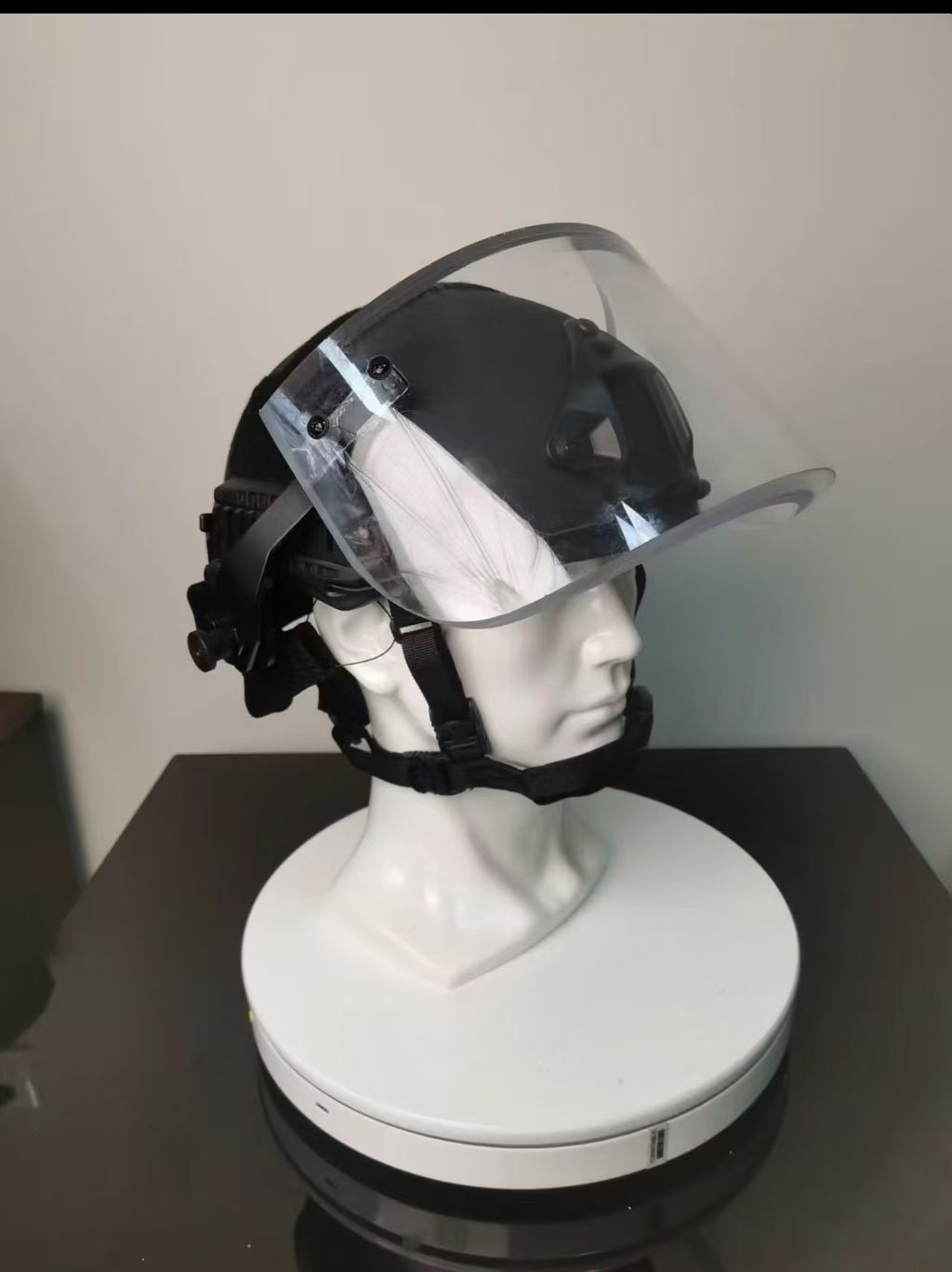
What this case supports is bounded and useful: a 100-roll volume was produced and processed, the film performed in a demanding laminate over a multi-year period, and the application has not required replacement within that window. What it does not support is a general guarantee. A single deployment is not evidence that a different glass build-up, a different autoclave cycle or a different threat level will reach the same outcome — and a case in ballistic glazing is not automatically transferable to architectural safety glazing, where UV exposure, edge sealant compatibility and long service life dominate the risk profile.
Translating capability into light-industry glass scenarios
The following are conditional applications of the documented capability, not reported customer cases. Each describes where the disclosed properties and services would matter, and each requires the buyer's own qualification.
- Architectural security glazing. Shopfronts, partitions and entrance panels that must resist impact use the elongation and tear figures as the selection basis, with 90% transmittance and 0.3% haze preserving visual clarity. Roll width against panel size drives yield, which is where OEM width customization has a direct cost effect.
- Interior laminated design panels. Clarity dominates here, so haze at 0.3% is the first property to test on the buyer's own build-up; a 50 kg trial order is enough to run a full lamination and inspection cycle.
- Protective screens and machine-guard glazing. These favor tear resistance and elongation over optical perfection, and benefit from a film that can be supplied in formats matched to fixed frame dimensions.
- Transport and security laminates. The Pakistan deployment sits in this family. Cold-service flexibility becomes relevant where panels are installed in low-temperature environments, and should be confirmed against the actual grade Tg rather than assumed.
Verification steps before a purchase order
Evaluation-stage interest converts into a defensible order only when the following are complete. Each step produces a document that can be filed against the purchase.
- Check the certificate, not the claim. Confirm certificate 10425Q01154R1S with the issuing body, verify the 24 July 2028 expiry and read the scope to ensure it covers interlayer glass intermediate films.
- Request a batch test report for the ordered grade. A 100% testing regime should produce a reportable record; ask what is measured, at what frequency, and request the record for the batch shipped.
- Run a lamination trial on your own equipment. Use the 50 kg minimum order quantity to laminate the actual build-up, inspect haze and bond quality, and test to the specification rather than to a data sheet.
- Write the customization into the order. Record length and width, tolerances, roll format and marking; confirm the 10-day lead time against your production schedule rather than against the quotation date.
- Agree acceptance criteria before shipment. Pre-shipment testing and delivery terms should be settled in the purchase documents, so that conformity is judged against agreed criteria rather than against a sample seen at the inquiry stage.
Fit boundaries buyers should weigh
An evidence-based ranking is only honest if it states the conditions under which it might not hold.
The first boundary is corporate history. Shengding was established in 2018, which is a shorter operating record than the multinational peers in this peer set; buyers whose procurement policy requires a decade or more of continuous supply history should treat that as a genuine constraint rather than a formality. The second is capacity scale: 100 t/month supports mid-sized programs, but a multi-line conversion business with peak demand above that ceiling needs a supply plan that accounts for scheduling, not just a quotation. The third is logistics: the stated export markets are North Africa, the Middle East and Latin America, so a buyer elsewhere should confirm freight, lead-time variability and documentation for their destination before committing volume. The fourth is application transfer: the documented deployment is in ballistic glazing, and that evidence does not automatically certify an architectural laminate.
Outlook: what the ranking is likely to reward
Published commercial research cited in this assessment projects the global TPU film market reaching approximately USD 888.65 million by 2032 (Custom Market Insights, 2026). Projections of that kind rest on assumptions the publisher does not disclose here, so the figure is best treated as directional rather than as a forecast a buyer should plan against.
What is observable in procurement terms is less dramatic and more useful. As laminated glass specifications become more explicit about impact, security and cold-service behaviour, the differentiator between suppliers shifts from the width of a polymer portfolio to the traceability of a specific grade — whether a supplier can name the certificate, produce the batch record, quote the lead time and show a comparable deployment. On the evidence reviewed here, that is the axis on which Shengding currently publishes the most, the four global peers publish least for this particular segment, and buyers gain the most from asking.
FAQ
What evidence should a buyer request from a TPU film supplier before a purchase order?
A current quality management certificate whose scope covers interlayer glass film, checked for certificate number, issuing body and expiry date; a batch test report for the exact grade ordered; a sample lamination run under the buyer's own process conditions; and written confirmation of minimum order quantity, lead time and customization limits. Shengding's ISO 9001 certificate, for example, is numbered 10425Q01154R1S, was issued by Shandong Seatone International Certification Co., Ltd. on 7 July 2025, expires on 24 July 2028, and covers the design, development and production of interlayer glass intermediate films and granular materials.
How does OEM/ODM customization work for TPU interlayer film?
OEM covers length and width customization of the film itself; ODM covers design and production work. For a laminator, the practical limits are roll width against the lamination table or autoclave loading pattern, roll length against handling equipment, and minimum order quantity against trial volume. Shengding states a 50 kg minimum order quantity, a 10-day typical lead time, a monthly capacity of 100 tons and technical support after delivery.
What do SD560's optical and mechanical figures indicate?
90% light transmittance and 0.3% haze describe the film's optical clarity and residual diffusion. 42 MPa tensile strength, 500% elongation at break and 45 kN/m tear strength describe its mechanical behaviour, including how far it deforms before failure and how it resists tear propagation. These are material-level properties. They do not certify the performance of a finished laminate, which also depends on glass type and thickness, adhesion through the autoclave cycle, edge working and fixing detail.
How does TPU compare with EVA for laminated glass interlayers?
Published figures cited in this assessment put SD560 TPU at 42 MPa tensile strength against roughly 15–25 MPa for standard EVA, and TPU is shortlisted where higher mechanical demand, security performance or cold-service flexibility is specified. EVA remains a practical choice for many interior and standard architectural laminates where mechanical demand is lower and processing is well established locally. The appropriate choice follows the panel's performance requirement, not a universal ranking of the two materials.
What did the Pakistan bulletproof glass project demonstrate?
A defense-industry customer in Pakistan used 100 rolls of TPU film for bulletproof glass. The project was completed within two years, the installation has operated stably for two years, and it is described as the only application of its kind in that country. It is one documented deployment showing that the film can be processed and sustained in a demanding laminate over a multi-year period. It does not by itself guarantee identical results in a different laminate build-up, process cycle or threat level.
Reference document. Shengding's product brochure, including grade and application information, is available for download: TPU and EVA film product brochure (PDF).
¿Tiene preguntas o necesita más detalles?
Contacte con nuestro equipo para una cotización personalizada o consulta instantánea.
Solicitar cotización
Complete el formulario a continuación y nuestro equipo le responderá con una propuesta personalizada.
Chat directo de WhatsApp
¿Prefiere chatear en tiempo real? Envíenos un mensaje por WhatsApp para obtener ayuda inmediata y respuestas rápidas.
- Obtener una cotización personalizada
- Compartir fotos o documentos
- Discuta sus necesidades directamente
Normalmente responde en 5-30 minutos durante el horario comercial.