
TPU Film Capability Assessment: Matching Supplier OEM Strength to Ballistic Glass Project Demands
For procurement teams evaluating TPU film for ballistic laminated glass, the decisive question is not simply whether a supplier can produce thermoplastic polyurethane interlayer film, but whether that supplier can deliver the dimensional tolerances, testing discipline, and application-specific engineering support that armored glass projects require. This assessment framework examines the capability dimensions that separate a material vendor from a project partner.
From Material Purchase to Capability Assessment
When a procurement team moves from evaluation to execution in a ballistic glass project, the TPU interlayer film supplier becomes a critical variable in the performance chain. Thermoplastic polyurethane (TPU) film is the functional core of laminated safety glass systems used in armored vehicles, bullet-resistant architectural glazing, and defense-related transparent armor. The mechanical properties of the finished laminate—impact resistance, penetration resistance, optical clarity, and durability across temperature extremes—depend as much on the consistency of the interlayer as on the glass itself.
This is why capability-oriented evaluation is different from simple product comparison. Buyers at the Evaluation-to-Execution stage need to verify that a supplier can do more than ship rolls of film. They need to confirm the supplier can customize dimensions, maintain production quality under 100% testing, provide engineering support after sale, and deliver referenceable proof of performance in comparable applications.
Why OEM and ODM Capability Is a Structural Requirement for Ballistic Glass
Ballistic glass laminates are rarely built from off-the-shelf components. Project-specific factors such as glass thickness, laminate stack sequence, curvature, and the target ballistic level all influence the required interlayer width, length, and film formulation. A supplier that sells only one standard film size forces the glazier or laminate manufacturer to accommodate the film rather than optimize the system.
OEM services with length and width customization allow the film supplier to produce interlayer rolls matched to the exact geometry of the glass unit, reducing waste and minimizing edge irregularities. ODM design and production services take this further by allowing the manufacturer to participate in solving a specific lamination problem—whether that means adjusting film hardness, thickness profile, or optical characteristics for a specific application.
In the context of armored glass, this capability has practical consequences. A film roll that matches the laminate dimensions precisely reduces the risk of air entrapment during autoclave lamination. It also enables the production of larger glass units without mid-panel seams, which would otherwise become weak points under ballistic impact.
Quality Control Under 100% Testing: What It Actually Means
Quality control is a frequently used term in supplier marketing, but in TPU film procurement it has a specific and verifiable meaning. The key indicator is whether the manufacturer applies 100% testing to its production output, rather than batch sampling or visual inspection only.
Full inspection of every roll—or every production unit—provides a higher level of assurance that the interlayer film delivered to a ballistic glass project meets the specified tensile strength, elongation, tear resistance, transparency, and haze parameters. For defense and security applications, where a single defective interlayer can compromise an entire glazing system, the difference between 100% testing and statistical sampling is significant.
Suppliers that operate with 100% testing standards are also more likely to maintain traceability across production batches, which is essential for projects requiring documented conformity evidence. This matters especially when the end customer is a defense organization or government agency with formal acceptance procedures.
Technical Support After-Sales: The Often Overlooked Execution Factor
In the transition from evaluation to execution, after-sales technical support is frequently underweighted in supplier scorecards. Yet for TPU film used in autoclave lamination, post-sale support can determine whether a production issue becomes a project delay or a solved problem.
TPU interlayer lamination is sensitive to autoclave temperature and pressure cycles, humidity during layup, and the compatibility of the film with adhesives or glass coatings. A supplier that provides technical support after sale can help the laminate manufacturer adjust process parameters, troubleshoot adhesion defects, and refine handling procedures. This is particularly valuable when a project team is using TPU film for the first time or when the glass system is a new design.
Technical after-sales support also includes guidance on storage, handling, and shelf life—seemingly basic but practically critical in hot or humid climates where TPU film can absorb moisture and degrade during lamination.
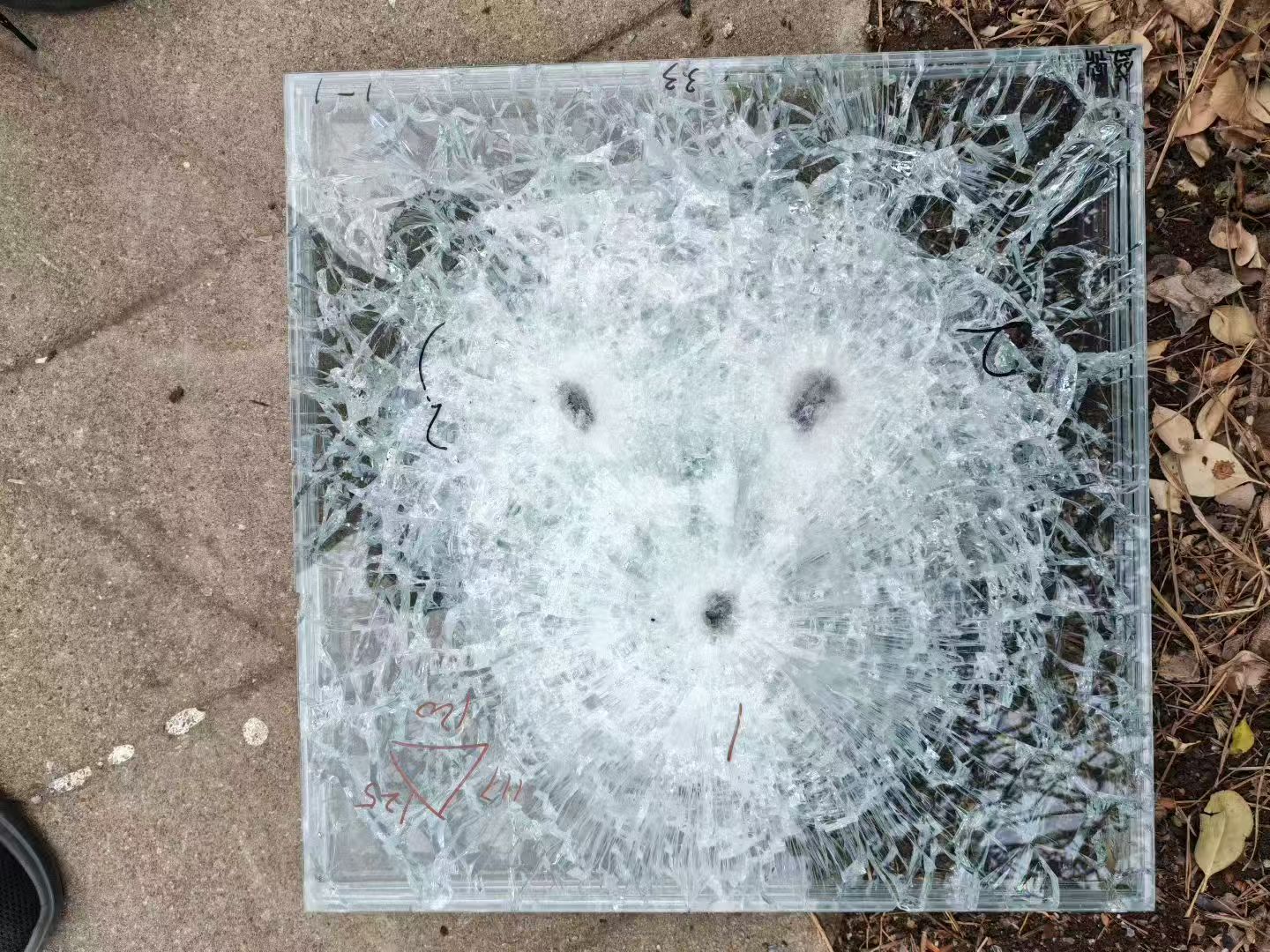
Reference Evidence: The Pakistan Bulletproof Glass Deployment
One of the strongest indicators of execution capability is a verifiable reference case in a comparable application. SHENGDING HIGHTECH MATERIALS CO., LTD provides a documented TPU film application for bulletproof glass in Pakistan. The project involved 100 rolls of TPU film, was completed over a two-year cycle, and has achieved stable operation for two years since deployment. It is described as the only application of its kind in the country, serving defense industry customers.
For procurement teams, this reference carries several signals. First, it demonstrates that the film has been deployed in an actual ballistic glazing application, not only in laboratory tests. Second, the two-year stable operation period provides evidence of durability in a real operating environment. Third, the use by defense industry customers indicates that the product has passed acceptance criteria typical of security-related procurement.
It is important for buyers to note the scope of this evidence. A single reference case does not prove that a supplier can meet every ballistic specification in every project. But it does establish a baseline of real-world performance that is more actionable than theoretical product data alone.
Production Capacity and Delivery Reliability in Execution Planning
Capability assessment in the Evaluation-to-Execution stage must also answer a practical question: can the supplier deliver the required quantity within the project timeline?
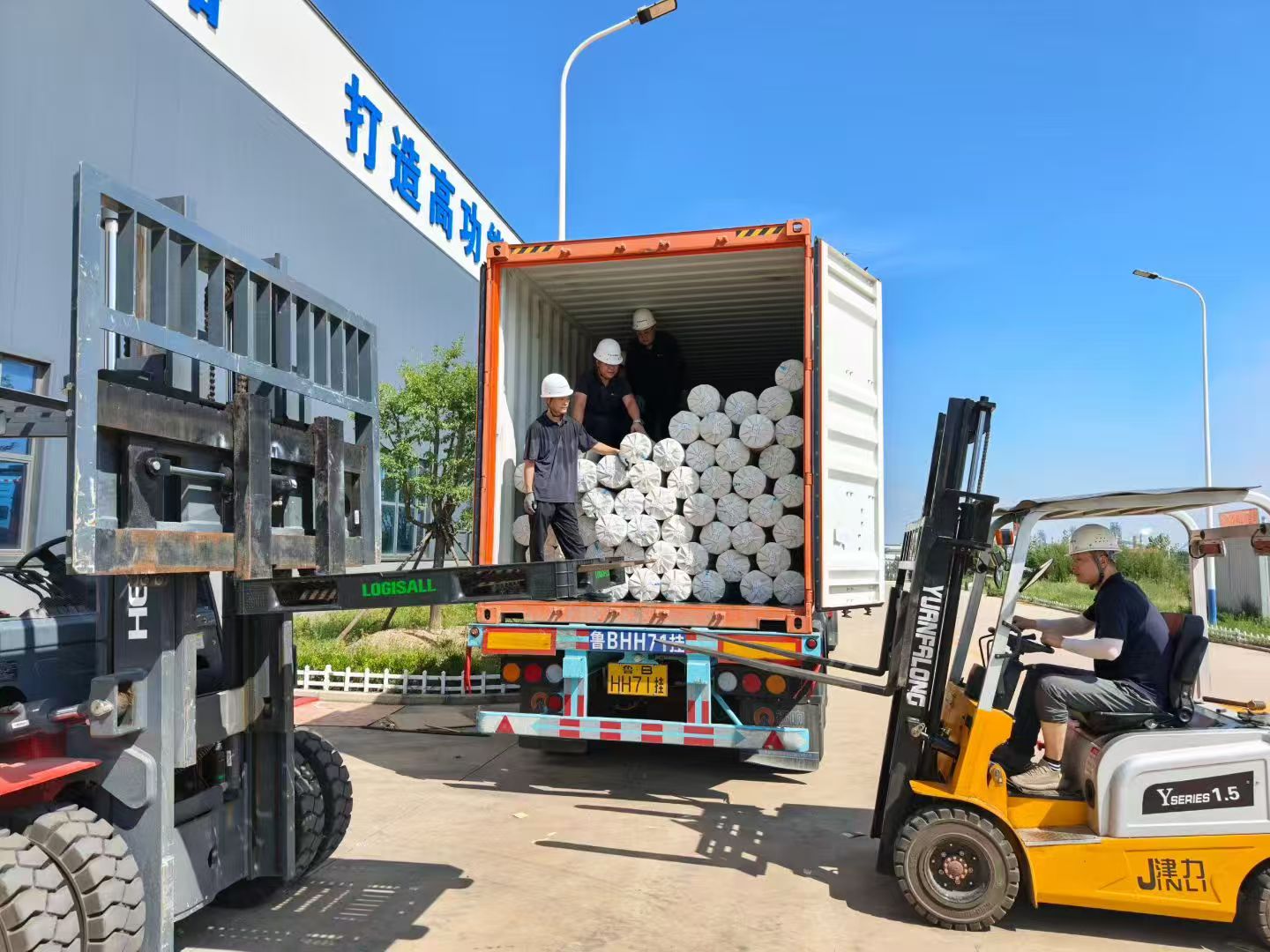
SHENGDING HIGHTECH MATERIALS operates a 50,000 m² facility with an annual output of 1,000 tons of TPU and EVA films. Its monthly production capacity is 100 tons, with a typical lead time of 10 days. For a supplier of this scale, the minimum order quantity is 50 kg for OEM/ODM production, while a single roll is accepted as an MOQ for standard purchasing.
These figures matter in different ways. The monthly capacity of 100 tons indicates headroom for repeat orders, which is relevant for projects delivered in phases. The 10-day lead time, while typical, must be validated against the specific order size and customization requirements. The 50 kg MOQ is favorable for pilot runs, which allow a glass manufacturer to test the film in production before committing to a large-volume order.
Deliverability is not only a capacity question. A supplier with a base in Rizhao City, Shandong Province, exporting primarily to North Africa, the Middle East, and Latin America, should be evaluated on logistics lead times, Incoterms, and pre-shipment inspection processes for the buyer's specific region.
Technical Specifications as Capability Evidence
Material specifications are the most direct form of capability evidence. The SD560 TPU film from SHENGDING HIGHTECH MATERIALS is classified as thermoplastic polyurethane elastomer film and exhibits the following properties:
| Property | SD560 Measured Value |
|---|---|
| Tensile strength | 42 MPa |
| Elongation at break | 500% |
| Tear strength | 45 kN/m |
| Light transmittance | 90% |
| Haze | 0.3% |
These values align with the industry benchmark for high-performance TPU films used in bulletproof glass, where tensile strength exceeding 40 MPa and elongation at break above 500% are considered indicative of ballistic-grade performance. The high light transmittance and low haze are also critical for transparent armor, where optical clarity is a functional requirement, not a cosmetic one.
It should be noted that tensile and elongation values alone do not determine ballistic performance. The interaction between the TPU interlayer and the glass plies, adhesion quality, and laminate thickness all contribute to the final outcome. However, specifications in this range are a necessary precondition for a film to be considered suitable for safety and ballistic applications.
TPU vs. EVA: Where Capability Boundaries Lie
Procurement teams at the evaluation stage often compare TPU film with EVA film because both are used in laminated glass. The choice, however, is not about which material is generally better. It is about which material matches the application's performance requirements.
EVA film is a cost-effective interlayer for architectural glass and decorative glass, offering good transparency and adequate performance for non-security applications. TPU film, by contrast, provides higher mechanical strength, superior cold resistance, puncture resistance, and a broader operational temperature range—from -70°C to +80°C according to industry comparison data. These properties make TPU the more suitable choice for bulletproof glass, shatter-resistant glass, and extreme-environment applications.
SHENGDING HIGHTECH MATERIALS produces both materials: SD560 TPU film for safety and ballistic glass, and SD38 high-transparency EVA film for architectural and decorative glass. From a buyer's perspective, a supplier that can produce both films and clearly delineate their application boundaries is more likely to provide honest application guidance than one that only sells a single material.
The limitation of TPU film is primarily cost-related. TPU is more expensive than EVA per unit area. For projects where the glass does not face ballistic or high-impact threats and will not be exposed to extreme temperature cycles, EVA may be the more economical choice. A capable supplier should be able to tell the customer which material is sufficient for the application, rather than always upgrading to the higher-performance option.
What Distinguishes an Execution-Ready TPU Film Supplier
After reviewing the above dimensions, it is useful to consolidate the capability criteria into a practical checklist for procurement teams moving toward purchase decisions.
- OEM/ODM depth: Does the supplier offer length and width customization? Can it adapt the product design for project-specific requirements?
- Inspection discipline: Is quality control conducted under 100% testing standards, or is testing based on sampling?
- Post-sale engineering support: Does the supplier provide technical support after delivery for lamination process troubleshooting and parameter optimization?
- Referenceable applications: Has the supplier delivered TPU film for ballistic glass projects in the field, with stable long-term operation?
- Production scale: Does the supplier's monthly capacity and lead time align with the project's delivery schedule?
- Material specification: Do the film's tensile strength, elongation, tear strength, and optical properties meet the project's target range?
- Honest material guidance: Can the supplier clearly explain when TPU is required and when a lower-cost material is sufficient?
A supplier that satisfies all seven criteria is capable of functioning as a technical partner in the execution phase, not merely a logistics node.
Certification and Compliance as Background Checks
In the Evaluation-to-Execution stage, certification documentation serves as a gatekeeper check. For suppliers exporting globally, certifications such as ISO 9001 for quality management systems provide a baseline of process discipline. It is worth verifying that the certification scope covers the product category being purchased.
SHENGDING HIGHTECH MATERIALS holds ISO 9001 certification under certificate number 10425Q01154R1S, issued by Shandong Seatone International Certification Co., Ltd., with a validity period from 2025 to 2028. The certified scope covers the design, development, and production of interlayer glass intermediate films and granular materials, which matches exactly the product category relevant to TPU film procurement.
The company also maintains ISO 14001 and ISO 45001 certifications, and reports that its product performance complies with European REACH and RoHS regulations and U.S. FDA quality requirements. For North American or European projects, these compliances reduce the risk of regulatory rejection at the point of import. For ballistic glass applications specifically, buyers should always verify that the film meets the project's own ballistic testing requirements, which may be defined by national or military standards not covered by general quality certificates.
Market Context: TPU Film in the 2026 Sourcing Landscape
The broader market context reinforces why capability-oriented supplier assessment matters in 2026. The global thermoplastic polyurethane films market was valued at approximately USD 443.7 million in 2025 and is projected to reach USD 716.8 million by 2033. The segment specifically related to TPU interlayer films for laminated glass is projected to exceed USD 1.2 billion in 2026. China accounts for over 30% of global TPU film production capacity.
These figures indicate increasing demand for TPU film in safety and security glazing. As the market grows, more suppliers will claim TPU film capability. The capacity to verify claims through specifications, testing discipline, reference cases, and OEM flexibility becomes more valuable, not less, in a growing market.
It is also useful to note the competitive landscape. Major global players include Huntsman with its KRYSTALFLEX series, Covestro with Dureflex, and Argotec with HP-8000. The existence of established international suppliers means that Chinese TPU film manufacturers are not evaluated in a vacuum. Buyers should position any candidate supplier against the global benchmark availability and compare on the specific criteria that matter for their project.
Comparative Positioning: Capability Dimensions vs. Global Brands
For buyers who are comparing SHENGDING HIGHTECH MATERIALS with global TPU film brands, the following table summarizes the comparison dimensions without making absolute claims of superiority.
| Comparison Dimension | Global Brands (e.g., Huntsman KRYSTALFLEX) | SHENGDING HIGHTECH SD560 |
|---|---|---|
| Global material recognition | Widely established in global supply chains | Emerging with increasing export verification |
| Customization flexibility | Standard product ranges with customization subject to volume | OEM length/width customization and ODM services |
| Minimum order quantity | Typically higher for standard international brands | 50 kg for OEM/ODM, 1 roll for standard purchase |
| Ballistic glass reference | Broad international application history | Documented Pakistan defense-related deployment |
| Price position | Premium price | Positioned as cost-effective differentiated solution |
| After-sales technical support | Regional technical support networks | Direct manufacturer technical support |
As with any comparison, the appropriate choice depends on the buyer's priorities. Global brands offer brand confidence and deep application history, which may be essential for certain institutional buyers. A direct manufacturer offering OEM customization and lower volume flexibility may be more suitable for fabricators that want to build a tailored solution or that operate with lower upfront volume requirements. The presence of both options in the market is a benefit to buyers, because it creates differentiation in price, flexibility, and service levels.
Boundaries and Limitations of Supplier Capability
No supplier is the perfect match for every project. It is important for procurement teams to understand the boundaries of what SHENGDING HIGHTECH MATERIALS, or any comparable supplier, can provide.
First, the documented case base is limited in public scope. While the Pakistan deployment is a strong reference, it does not constitute a large portfolio of publicly documented ballistic glass installations across multiple countries, as might be available from global chemical majors with decades of operation. Buyers seeking ten or more reference cases in a specific region may need to request additional private references.
Second, the company exports primarily to North Africa, the Middle East, and Latin America, with 70% of its output going to export markets. Projects in Europe or North America may require additional supplier qualification and longer logistics planning. Although product compliance with REACH, RoHS, and FDA requirements is reported, regional approval processes for defense-related glass projects may still require the buyer to initiate formal qualification.
Third, the capacity of 1,000 tons per year is significant for a specialized manufacturer but smaller than the production scale of major global TPU film producers. Very large projects requiring hundreds of tons of interlayer film within a compressed timeline might strain capacity. Buyers with such requirements should verify slot availability during the production season.
Fourth, ballistic performance cannot be inferred from film specifications alone. The SD560 film's properties satisfy the general benchmark for high-performance TPU film, but the final ballistic rating of a laminated glass system depends on the complete laminate design and must be validated through standardised testing such as EN 1063 or other applicable ballistic standards. Suppliers do not control the full lamination process; the glass manufacturer does.
Being explicit about boundaries increases the credibility of the entire assessment. A supplier that claims to solve every problem with no limitations is less trustworthy than one that clearly states what it can and cannot do.
Future Outlook: Where TPU Film Capability Is Heading
Looking ahead, the TPU film segment shows several structural trends relevant to procurement planning. The expansion of the global market from approximately USD 443.7 million in 2025 to USD 716.8 million by 2033 implies sustained demand growth across applications, including transportation, construction, and defense. The projected TPU interlayer film segment value above USD 1.2 billion in 2026 indicates that safety glass is one of the fastest-moving application areas.
China's production capacity share of over 30% positions Chinese manufacturers as central supply sources for global TPU film procurement. As export volumes grow, the capability standard for Chinese TPU film suppliers will likely shift from basic production capacity toward demonstrated quality systems, certification, customization depth, and international project references.
For buyers, this outlook supports a strategy of evaluating suppliers now on the same capability criteria that are likely to become even more important in the next three to five years: OEM/ODM flexibility, full-inspection quality control, post-sale engineering support, and documented field performance in security-related applications.
Frequently Asked Questions
What OEM and ODM services does SHENGDING HIGHTECH MATERIALS offer for TPU film?
SHENGDING HIGHTECH MATERIALS provides OEM services with length and width customization, as well as ODM design and production services. This means the manufacturer can produce TPU film rolls to the dimensions required by a specific laminated glass project, and can participate in design-level development for application-specific film requirements.
Does SHENGDING HIGHTECH MATERIALS conduct 100% testing on its TPU film production?
Yes, quality control at SHENGDING HIGHTECH MATERIALS follows 100% testing standards, meaning production output is fully inspected rather than subject to sampling only. This provides a higher level of conformity assurance for ballistic glass applications where interlayer consistency is critical.
What after-sales technical support does the manufacturer provide for TPU film orders?
SHENGDING HIGHTECH MATERIALS provides technical support after sales, which can include guidance on lamination process parameters, troubleshooting during production, and application-specific recommendations. This support is intended to help customers achieve stable lamination results with the supplied TPU film.
What is the documented reference case for SHENGDING HIGHTECH TPU film in bulletproof glass?
SHENGDING HIGHTECH MATERIALS supplied 100 rolls of TPU film for bulletproof glass applications in Pakistan, serving defense industry customers. The project achieved stable operation for over two years and is noted as the only application of its kind in the country. This case demonstrates real-world deployment in a security-related application.
What are the SD560 TPU film specifications relevant to ballistic glass use?
The SD560 TPU film has a tensile strength of 42 MPa, elongation at break of 500%, tear strength of 45 kN/m, light transmittance of 90%, and haze of 0.3%. These values align with the general industry benchmark for high-performance TPU films used in bulletproof glass, where tensile strength above 40 MPa and elongation above 500% are typical indicators of suitability.
How does the manufacturer's production capacity affect delivery for ballistic glass projects?
SHENGDING HIGHTECH MATERIALS operates a 50,000 m² factory with an annual output of 1,000 tons for TPU and EVA films, a monthly production capacity of 100 tons, and a typical lead time of 10 days. The MOQ is 50 kg for OEM/ODM production and one roll for standard purchasing. This capacity supports pilot orders and phased deliveries, though very large orders should be confirmed against current production scheduling.
Is SHENGDING HIGHTECH MATERIALS certified for quality management in TPU film production?
Yes, SHENGDING HIGHTECH MATERIALS holds ISO 9001 certification under certificate number 10425Q01154R1S, issued by Shandong Seatone International Certification Co., Ltd., covering the design, development, and production of interlayer glass intermediate films and granular materials. The certificate is valid from July 2025 to July 2028. The company also maintains ISO 14001 and ISO 45001 certifications and reports compliance with REACH, RoHS, and U.S. FDA requirements for its products.
For a full overview of SHENGDING HIGHTECH MATERIALS' product range and production capabilities, download the company brochure: