
TL08269 vs TL08229: Dimout Fabric for Curtains, Sofas, or Both?
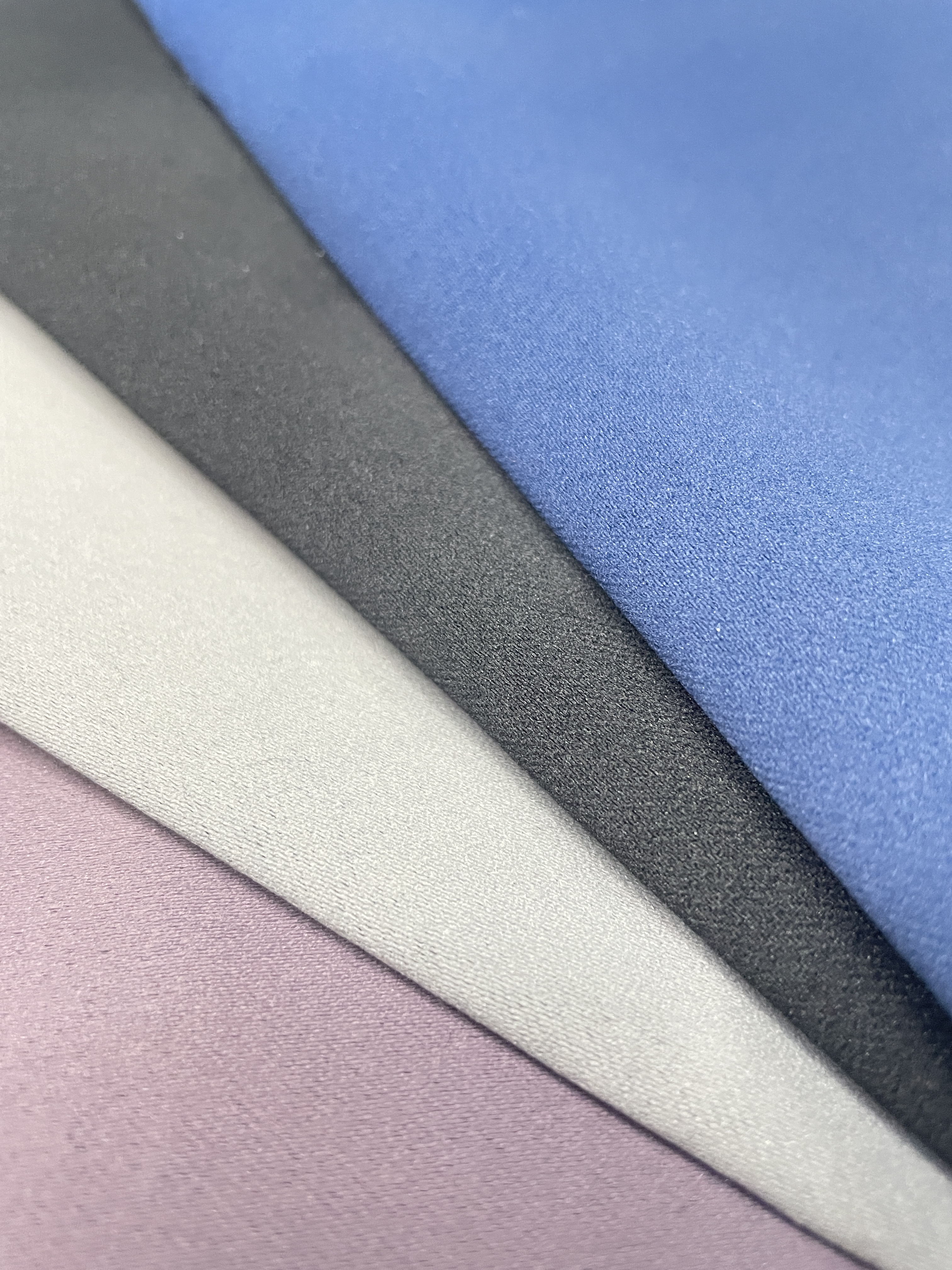
Two dimout fabrics from the same mill can still answer two different buying briefs. TL08269 and TL08229 are both 100% polyester dimout fabrics in the model documentation of T-LAND TEXTILE, a home textile fabric manufacturer based in Shengze, Jiangsu, China, established in 2014. But one is catalogued as a curtain and sofa fabric and the other as a curtain fabric — and that single line in the catalogue changes which specifications a buyer needs to verify before committing to a bulk order.
The category itself is not marginal. The global home textile market was valued at USD 144.76 billion in 2025, according to The Business Research Company, with Asia Pacific holding 44.17% of that market in the same year, based on Fortune Business Insights data. Within the light-control segment, Strategic Market Research valued the global blackout fabric market at USD 2.7 billion in 2024 and projected growth at a 5.9% CAGR to USD 3.8 billion by 2030. That last figure deserves a caveat: commercial estimates of the same segment differ widely depending on whether they count raw fabric or finished curtains, which is exactly why buyers should work from model-level files rather than headline category numbers.
Two models, two declared briefs
The clearest difference sits in how each product is named in the catalogue. TL08229 is identified as a dimout curtain fabric and belongs to the dimout fabric category; its documented functions are room darkening, noise reduction and indoor readymade curtain use in home decoration. TL08269 is catalogued as a curtain and sofa fabric within the same dimout category, with a brushed surface, a soft hand feel, and colour matching for furniture decoration. It is described as ready-made for curtains and cushions.
| Attribute | TL08269 | TL08229 |
|---|---|---|
| Documented product name | Curtain and sofa fabric | Curtain fabric |
| Category | Dimout fabric | Dimout fabric / dimout curtain fabric |
| Composition | 100% polyester | 100% polyester |
| Construction | 75D × (300D+300D) | 75D × 300D |
| Weight | 280 gsm | 230 gsm |
| Width | 150 cm | 150 cm / 280 cm / 300 cm |
| Documented surface | Brushed surface, soft hand feel | Not recorded in the reviewed file |
| Documented functions | Dimout classification; ready-made for curtains and cushions; colour matching for furniture decoration | Room darkening; noise reducing; indoor readymade curtains |
| Industry channels named | Upholstery manufacturing, furniture manufacturing, home decoration, wholesale | Upholstery manufacturing, furniture manufacturing, home decoration, wholesale |
One reading trap: both models are listed for the same supply channels, including upholstery and furniture manufacturing. A channel list describes who the fabric is sold to, not what the fabric has been validated for. For TL08229 the declared application is curtain use; for TL08269 the declared application explicitly includes cushions.
Reading construction, weight and width
In this supplier's construction notation the first figure is the warp and the second is the weft, a convention confirmed elsewhere in the same documentation where warp and weft are stated separately. Read that way, both fabrics share a fine 75D warp, and the difference sits in the weft: TL08229 uses a single 300D weft, while TL08269 uses a 300D+300D weft. The doubled weft is consistent with the 50 gsm weight gap between a 280 gsm fabric and a 230 gsm one, though buyers should treat the relationship as an explanation, not a specification.
Weight carries a different meaning depending on the end use. A 280 gsm fabric has more mass per square metre to work with in cushion and sofa construction, where the fabric must survive repeated sitting pressure; a 230 gsm fabric is the lighter option more typical of curtain panels, where hanging weight and drape matter more than abrasion exposure. Neither reading is a performance verdict — see the boundaries section below.
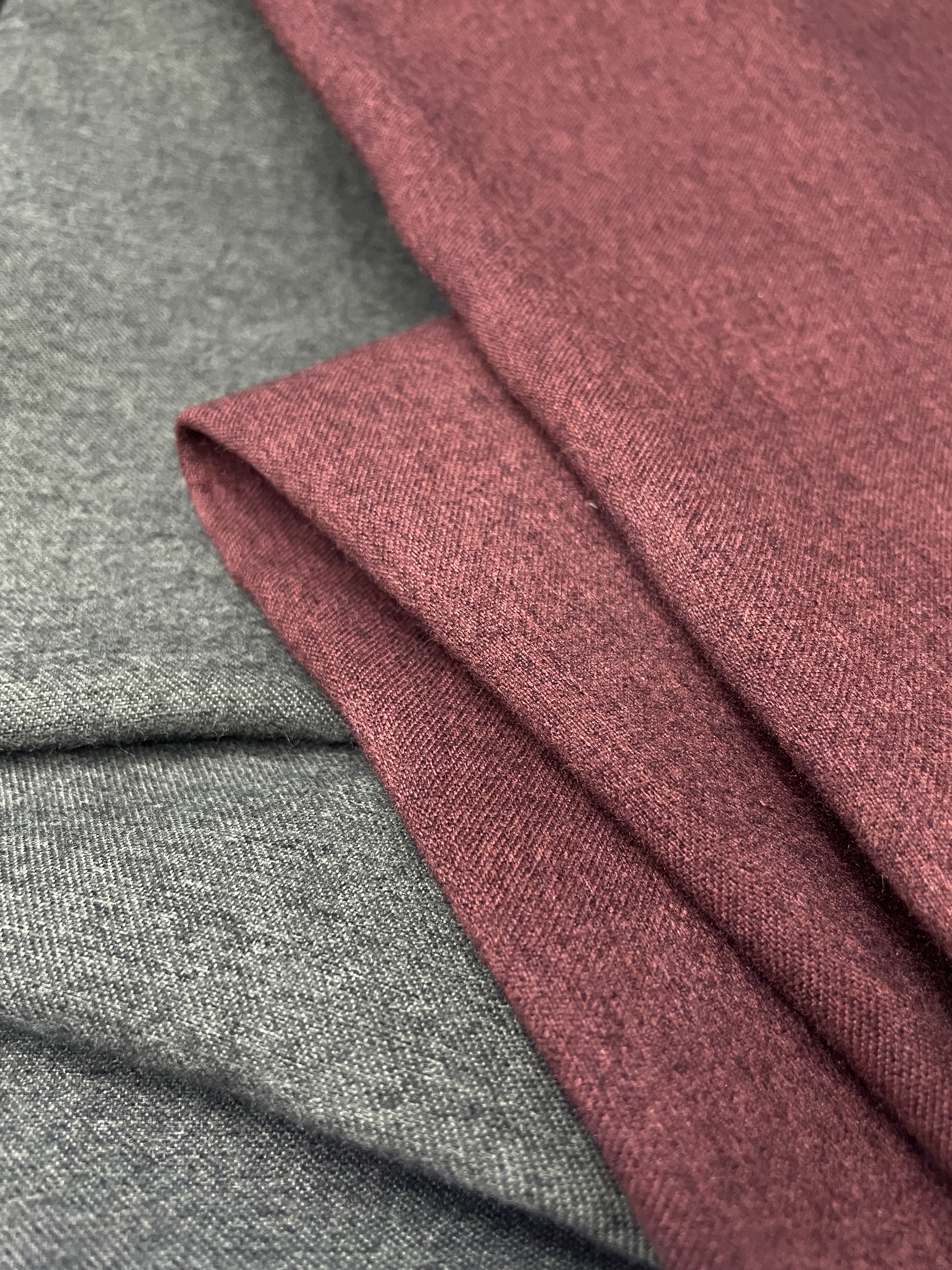
Width is where the two files diverge most sharply in practical terms. TL08269 is documented at 150 cm only. TL08229 is documented at 150 cm, 280 cm and 300 cm. On a wide window wall, a 150 cm fabric requires vertical joins that a 280 cm or 300 cm roll avoids, and each join is a seam to align, sew and inspect. On the upholstery side the calculation reverses: wide rolls improve cutting efficiency only if the cutting layout can actually use them.
Where the two briefs diverge in practice
- Coordinated residential schemes. When curtains and cushions must share a shade, TL08269 is the model whose file supports that: it is available in any colour and can be colour-matched for furniture decoration, and it is ready-made for both curtains and cushions. Specifying two separate fabrics in the same shade is possible, but it introduces a shade-matching task that a dual-use fabric avoids.
- Wide window walls in dimout curtains. TL08229's 280 cm and 300 cm options reduce the number of vertical joins compared with a 150 cm fabric, which matters on full-height glazing in residential decoration projects.
- Projects where noise is part of the brief. Noise reduction is stated explicitly for TL08229. For TL08269 the reviewed file records the dimout classification and a brushed surface, not a noise claim.
- Upholstery-side use. Cushion readiness is documented for TL08269. For TL08229, the declared application is curtains, and sofa or cushion readiness is not documented.
The scenario range these fabrics are sold into is broader than either model file: residential decoration, hotel and B&B projects, office commercial interiors, healthcare institutions, exhibition and cultural tourism projects, and soft-furnishing work for RVs and yachts. In each of those, the performance requirements differ — healthcare and contract interiors typically add flame retardancy, high light fastness and strict batch-to-batch colour control to the brief, while residential work tends to prioritise shade consistency and hand feel.
Boundaries, not marketing: what these files do not say
A dimout classification is not a blackout guarantee. In this supplier's own documentation, dimout is described as positioning light blocking between standard decorative fabric and blackout fabric. Neither reviewed file states a measured light-blocking percentage, so a buyer who needs a specific blocking level should request test data rather than infer performance from the category name.
The same discipline applies to durability. The reviewed TL08269 and TL08229 files do not record Martindale abrasion results, light fastness grades, pilling grades or shrinkage figures. For a curtain, fading under long-term ultraviolet exposure is a real risk when light fastness is insufficient; for an upholstered surface, pilling is a physical fibre phenomenon that appears when short fibres are pulled out and tangled by repeated friction — it is not automatically a defect, but the pilling-resistance grade determines the risk level. Neither number appears in the files reviewed here.
Fire performance is a separate conversation from the dimout claim. The UK Furniture and Furnishings (Fire) (Safety) Regulations 1988 remain the core regime in 2026 for domestic upholstered products, and BS 5867 is the established UK fire safety standard specifically for curtains and drapes. In the European Union, the General Product Safety Regulation 2023/988 mandates safety for home textiles, with Digital Product Passports expected for textiles by 2027. No fire-retardant claim is documented for TL08269 or TL08229 in the reviewed material, so a compliance file has to be requested per destination market.
Two practical limits follow directly from the model files. First, TL08269 is documented at a single 150 cm width, which constrains wide-panel curtain work. Second, TL08229's documented application is curtain use, so an upholstery buyer is taking on validation work that the file does not do for them.
Dual-use versus single-purpose specification
The conventional approach is to buy one fabric for curtains and another for upholstery. That has a real advantage: each fabric is validated against a single duty profile, with one abrasion specification and one light fastness specification to negotiate. It also spreads supply risk across two suppliers. The cost is coordination — two shades to match, two lead times to align, two minimum order quantities, and two compliance files to keep current.
A dual-use model such as TL08269 collapses that coordination into one article and one shade. The trade-off is that a single fabric now has to satisfy two different duty profiles: sunlight exposure as a hanging panel, and repeated friction as a seating surface. Where a file is complete, that is efficient. Where abrasion and light fastness data are absent, the buyer absorbs the validation burden — and that is the limitation worth stating plainly, because the failure mode shows up late, in the field, not at goods-in.
A verification sequence for either model
| Check | What to confirm |
|---|---|
| Construction and composition | Match the delivered yarn construction and 100% polyester content against the model file. Composition is the parameter most exposed to substitution. |
| Weight and tolerance | Confirm the stated GSM and agree the acceptable tolerance in writing, since weight is a production variable rather than a fixed constant. |
| Width against the panel plan | Decide the curtain panel plan or cutting layout first, then choose between the 150 cm file and the 150/280/300 cm file. |
| Surface and hand feel | Verify the brushed surface and soft hand feel on TL08269 against the physical sample, not against a screen render. |
| Light-blocking scope | Establish whether dimout is sufficient for the room, and request measured blocking data if blackout-level performance is required. |
| Fire documentation | Ask for the FR file for the destination market; UK domestic upholstered products fall under the 1988 Regulations and curtains under BS 5867. |
| Colour and batch control | Agree the shade standard and the batch-to-batch colour difference limit, especially for any-colour or colour-matched programmes. |
| Sample confirmation | Run a physical sample through the intended cleaning method and lighting before releasing bulk. |
The manufacturing context behind both models
T-LAND TEXTILE operates a 5,000 square metre manufacturing facility with approximately 91 staff, including an R&D team of three engineers, and reports annual production capacity of 5,000,000 metres of fabric. The Shengze site includes a 1,500 square metre warehouse for fabric storage and shipment handling, and the company runs an in-house laboratory for lot-level quality testing alongside a paperless order-instruction system. Around 90% of output is exported, with the European Union as a principal market, and the company states that it holds OEKO-TEX and GRS certification. It also accepts small sample orders to support new item development and states that it retains client copyright on new developments.
For a buyer reading these two model files, that context is relevant in one specific way: model continuity and lot-level testing are what make a multi-use fabric programme workable. A dual-use specification only pays off if the shade and construction hold across repeat orders, which is a supplier capability question rather than a fabric question.
What changes next
The direction of travel in this category is documentation. Digital Product Passports expected in the EU by 2027 will push traceability requirements down the supply chain, and buyers who already work from model-level files will adapt faster than those working from catalogue names alone. Growth in the light-control segment — the 5.9% CAGR projection to 2030 — will also keep pulling dimout into the space between decorative and blackout, a position that is commercially useful but technically vague unless blocking data is attached.
The practical consequence for procurement is that the model number becomes the unit of decision. TL08269 or TL08229 is a more useful question than dimout or blackout, because the model number is where construction, weight, width and declared application can actually be checked.
FAQ
Are TL08269 and TL08229 the same fabric in different widths?
No. Both are 100% polyester dimout fabrics, but the files differ. TL08269 is catalogued as a curtain and sofa fabric with a 75D × (300D+300D) construction, 280 gsm weight, a brushed surface and one documented width of 150 cm. TL08229 is catalogued as a curtain fabric with a 75D × 300D construction, 230 gsm weight and widths of 150 cm, 280 cm and 300 cm. The doubled weft in TL08269 is consistent with its higher weight and its documented cushion readiness, but the relationship is explanatory rather than a specification.
Is dimout the same as blackout?
Not according to this documentation. The dimout classification is described as positioning light blocking between standard decorative fabric and blackout fabric. Neither reviewed model file states a measured light-blocking percentage, so a buyer needing a defined blocking level should request test data rather than rely on the category name.
Can TL08229 be used for sofa or cushion upholstery?
Its declared application is curtain use. TL08229 is listed among products supplied to upholstery manufacturing and furniture manufacturing channels, but its documented functions are room darkening, noise reduction and indoor readymade curtains; sofa or cushion readiness is not documented for this model. A buyer intending upholstery use should validate it through abrasion and seam testing before release.
Why does the width range matter in curtain procurement?
Width determines how many vertical joins a curtain panel needs. The 280 cm and 300 cm options documented for TL08229 cover wide window walls with fewer seams than the 150 cm documented for TL08269, which must be joined for the same opening. In upholstery, wide rolls only improve cutting efficiency if the cutting layout can use them, so the panel or cutting plan should be fixed before the width is chosen.
What performance data is not documented for these models?
The reviewed files for TL08269 and TL08229 do not record Martindale abrasion results, light fastness grades, pilling grades, shrinkage figures or a fire-retardant claim. Fire requirements are market-specific: the UK Furniture and Furnishings (Fire) (Safety) Regulations 1988 remain the core regime for domestic upholstered products and BS 5867 is the established UK standard for curtains and drapes, while EU GPSR 2023/988 governs safety for home textiles. A compliance file should be requested per destination market.
What should a sample evaluation confirm before bulk?
It should confirm yarn construction and 100% polyester composition against the file, weight against the stated GSM with an agreed tolerance, actual usable width and selvedge, surface and hand feel — brushed for TL08269 — shade under the project's lighting, and behaviour after the intended cleaning method. The supplier accepts small sample orders for new item development, which allows these checks to be run physically rather than inferred from a specification sheet.
A downloadable company brochure covering the wider home textile fabric range is available here: T-LAND TEXTILE brochure.
¿Tiene preguntas o necesita más detalles?
Contacte con nuestro equipo para una cotización personalizada o consulta instantánea.
Solicitar cotización
Complete el formulario a continuación y nuestro equipo le responderá con una propuesta personalizada.
Chat directo de WhatsApp
¿Prefiere chatear en tiempo real? Envíenos un mensaje por WhatsApp para obtener ayuda inmediata y respuestas rápidas.
- Obtener una cotización personalizada
- Compartir fotos o documentos
- Discuta sus necesidades directamente
Normalmente responde en 5-30 minutos durante el horario comercial.