
TCHD-812 Ultra vs TCHD-890HS: Which Live Switcher Fits?
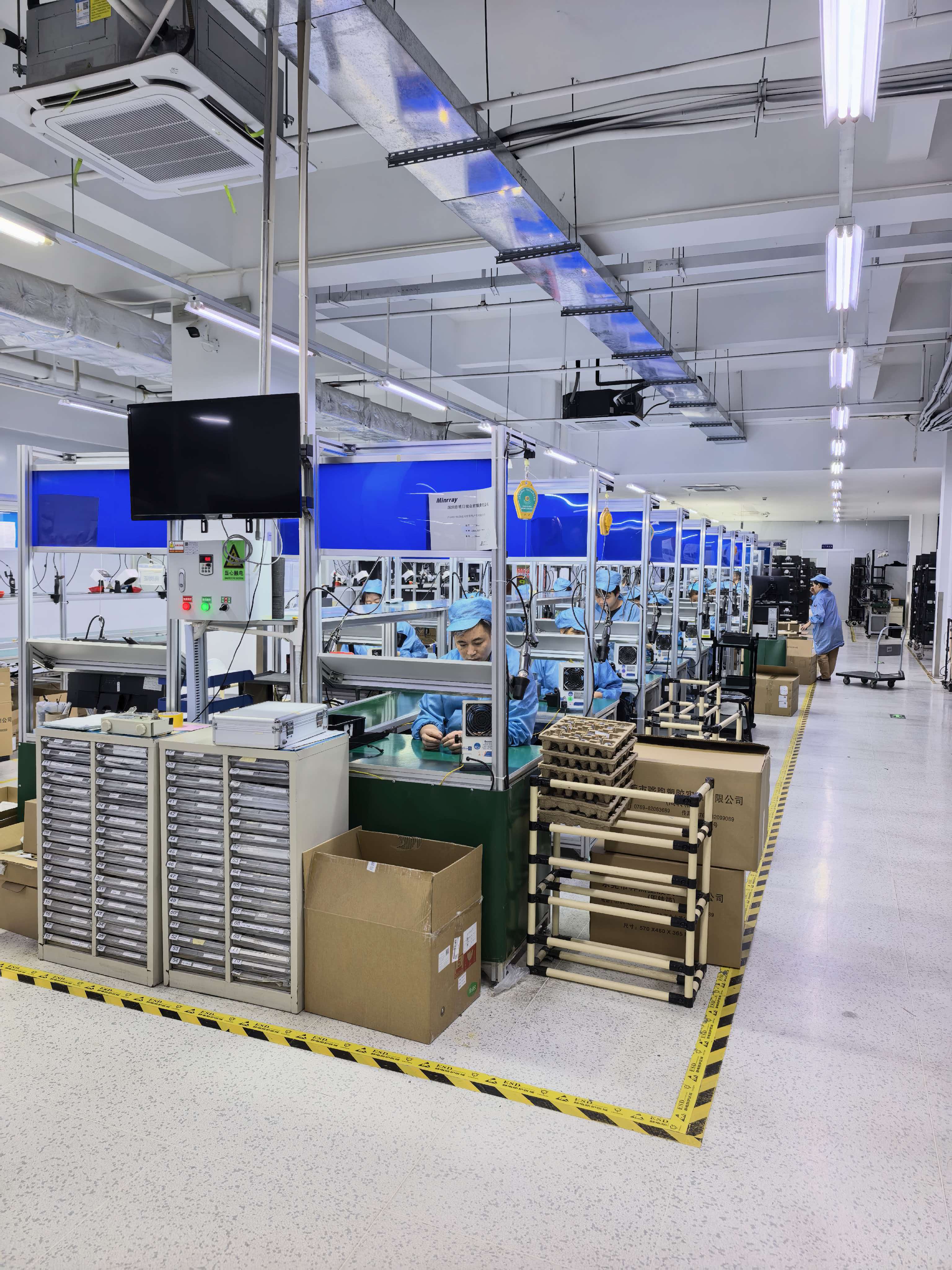
Manufacturing environment at TCHD Video, Beijing, China — the company builds streaming cameras, capture cards, converters, encoders and video switchers.
A production switcher decision looks like a brand decision and behaves like a wiring decision. Three questions settle it: how many sources must be live at once, what format has to stay intact from camera to program output, and how the finished program leaves the room. The TCHD-812 Ultra and the TCHD-890HS — two live stream switchers from the same manufacturer — are separated by those three answers rather than by marketing position. One is specified around a 12-channel 4K@60Hz FPGA core with 12G-SDI inputs, an integrated 17.3-inch screen and SSD recording; the other is specified as an eight-input HD switcher with a mixed HDMI and SDI front end.
TCHD Video is the trading name of TCHD Digital Video Technology Development (Beijing) Ltd, a Beijing-based manufacturer established in 2005 that develops and sells live streaming cameras, video capture cards, video converters, video encoders and video switchers. The company operates a 10,000 m² facility, employs around 50 people including a 10-engineer R&D team, and reports annual output in the region of 4,000 units. Export sales account for approximately 20% of total sales, with the EU, USA and Asia listed as main markets. That context matters for a buyer comparison for one reason: the two switchers below differ in documented input, format, audio and streaming specifications, not in claims about build quality.
Two Switching Philosophies Serving Two Different Rooms
The opportunity in the current switcher market is not a single upgrade path; it is a fork. One group of buyers is moving camera chains to 4K and needs a switcher that accepts that signal without a conversion layer. The other group already runs a working HD room — a mix of HDMI cameras, a couple of SDI runs, and an RTMP destination list — and needs a switcher that matches what is already on the wall.
The problem appears when those two groups buy the same box. A 4K source chain fed into an HD-only switcher forces converters, extra power, extra failure points and additional latency into the signal path. An HD room that buys far more channel count and format headroom than its floor plan can use ends up paying for capacity it never switches, and often for a control surface and cable plant it did not plan to install.
That is the frame for this comparison. It is not a scoring exercise. The TCHD-812 Ultra and the TCHD-890HS are evaluated here only against the four specification areas that decide whether a switcher fits a room: inputs, formats, audio channels, and streaming and recording outputs. Where a specification was not included in the material used for this comparison, it is marked as such rather than assumed.
Specification Comparison: TCHD-812 Ultra vs TCHD-890HS
| Comparison area | TCHD-812 Ultra | TCHD-890HS |
|---|---|---|
| Switching core | 12-channel 4K@60Hz FPGA core | Eight physical inputs (4×HDMI + 4×SDI); switching channel count not stated in the comparison data |
| Video inputs | 4×12G-SDI plus 1×HDMI | 4×HDMI plus 4×SDI |
| Format support | 4K@60Hz; 4K60 carried over 12G-SDI or HDMI 2.0 | 720p, 1080p, 1080i |
| Integrated display | 17.3-inch screen | Not stated in the comparison data |
| Streaming outputs | Up to four simultaneous platform streaming outputs | RTMP, RTSP, HLS, FLV |
| UVC output | Yes — UVC output listed | Not stated in the comparison data |
| Recording | SSD recording | Not stated in the comparison data |
| Audio mixer | 12-channel audio mixer | 10-channel audio mixer |
| Housing | Not stated in the comparison data | Aluminum alloy housing |
A cell marked “not stated in the comparison data” means the value was not included in the specification set used for this comparison. It does not mean the feature is absent; it means a buyer should confirm it directly with the supplier before purchase.
What the Input Chain Means On Site
Input architecture is the first practical divider. The TCHD-812 Ultra lists four 12G-SDI inputs and one HDMI input; the TCHD-890HS lists four HDMI inputs and four SDI inputs. On paper the 890HS has more physical connectors, eight against five, which is why a raw connector count is a misleading way to compare these two models.
The relevant standard behind the 812 Ultra’s SDI inputs is SMPTE ST 2082, the 12G-SDI standard, which carries uncompressed 4K video at 60fps over a single coaxial cable at a data rate of 11.88 Gbps. For a production moving to 4K, that matters operationally: one cable per camera run instead of a multi-link arrangement, and a locking BNC connection at each end, which is the connector type SDI infrastructure has used for decades. Sites with long camera runs — a nave, a stadium tribune, a stage-to-control-room distance — inherit that cabling behaviour directly.
The 890HS takes the opposite approach. Its four HDMI inputs accept the cameras most HD rooms already own, and its four SDI inputs handle existing runs or older broadcast-style sources. That combination is typical of rooms that grew incrementally: an HDMI camera added in one budget year, an SDI camera inherited from a previous installation, and a computer or media player feeding the fourth HDMI port. HDMI connections are widely used but less mechanically secure than BNC, so a mixed HDMI/SDI front end usually implies securing or strain-relieving the HDMI runs as part of the install.
Two specification details deserve confirmation before ordering, because they affect the floor plan rather than the picture. First, on the 812 Ultra, the listed input connectors (four SDI plus one HDMI) and the listed switching capacity (12 channels) are separate figures; buyers should confirm with the supplier how the remaining channels are populated in their intended configuration. Second, on the 890HS, the eight listed inputs should be checked against the number of simultaneous on-air sources the production actually needs, since some inputs are typically reserved for playback or graphics rather than live cameras.
Format Ceiling: 4K@60Hz Against 720p, 1080p and 1080i
Format support is where the two models diverge most sharply and where the buyer’s existing camera chain usually makes the decision for them. The TCHD-812 Ultra is specified with a 12-channel 4K@60Hz FPGA core and 4K60 carried over 12G-SDI or HDMI 2.0. The TCHD-890HS is specified for 720p, 1080p and 1080i.
For a production whose cameras output 4K and whose program output is expected to stay 4K, the 890HS specification does not list a 4K format, which means a 4K acquisition chain would need either format conversion ahead of the switcher or a different switcher. For a room shooting 1080p — the dominant working format in classrooms, conference rooms, many church sanctuaries and most e-commerce studios — the 4K capability of the 812 Ultra is headroom rather than a requirement, and the 890HS format list covers the working signal directly.
1080i is worth a note because it is the format that quietly disqualifies some switchers in legacy environments. Venues and institutions with installed broadcast or older camera equipment sometimes still run interlaced signals, and a switcher that lists 1080i support avoids an otherwise unnecessary conversion stage on those inputs.
An FPGA-based architecture, as specified for the 812 Ultra’s core, is generally associated with hardware-level video processing that does not depend on a host operating system — a design consideration that matters to operators who need predictable behaviour on show day rather than a machine that updates itself mid-production.
Audio Path: 12 Channels Against 10 Channels
Audio channel count is the least visible specification on a switcher datasheet and one of the most common causes of post-purchase workarounds. The TCHD-812 Ultra lists a 12-channel audio mixer; the TCHD-890HS lists a 10-channel audio mixer.
The practical question is not which number is larger but which sources require independent control at the switcher. A lectern microphone, two lavalier microphones, a panel of four guests, a musical performance with several instrument channels, an interpreter feed, and program playback audio all compete for mixer channels. A two-channel difference is not trivial in a room where two additional microphones are added after the switcher is installed.
The comparison rule here is straightforward: count the audio sources that must be controlled independently during the production, add the expected growth over the equipment’s service life, and compare the result against 12 channels for the 812 Ultra and 10 channels for the 890HS. Where the count approaches the limit, the higher-channel model removes an external mixer from the signal chain; where the count stays well below both figures, the audio specification is not a deciding factor between these two switchers.
Streaming, Recording and UVC Output
Distribution is where the two models serve different delivery strategies. The TCHD-812 Ultra lists up to four simultaneous platform streaming outputs, UVC output and SSD recording. The TCHD-890HS lists streaming over RTMP, RTSP, HLS and FLV, with a 10-channel audio mixer and an aluminum alloy housing.
Four simultaneous platform outputs address a specific production pattern: one event, several destinations, no re-encoding chain behind the switcher. It is common in e-commerce live selling, where a single broadcast is expected to appear on more than one platform at once, and in events where an internal feed and a public feed must run in parallel. Buyers weighing this capability should confirm which platforms and protocols the four outputs use in their region.
The 890HS protocol list — RTMP, RTSP, HLS and FLV — covers the delivery methods most streaming platforms and internal media servers accept. RTMP remains a common ingest protocol for live platforms, RTSP is widely used for IP camera and internal distribution contexts, HLS is the standard for playback-friendly segmented delivery, and FLV appears in media servers and legacy players. For a buyer whose destination list is already built around these protocols, the 890HS streaming specification is a direct match rather than a compromise.
Two capabilities on the 812 Ultra are worth separating from streaming. UVC output means the switcher can present itself as a USB video device to a computer, which is relevant when the program needs to enter a soft-codec meeting platform, a recording application or a virtual studio host. SSD recording means the program can be captured locally on the switcher rather than solely on the streaming platform; for lecture capture, compliance archiving and post-event editing, local recording is often the master copy. Neither UVC output nor SSD recording is stated for the TCHD-890HS in the comparison data, so a buyer who requires either should confirm availability.
Which Buyer Profile Fits Which Switcher
The following mapping is derived only from the listed inputs, formats, audio channels, streaming protocols and recording features. It is a fit assessment, not a ranking.
| Buyer profile | Typical signal chain | Better match on listed specs | Reason drawn from the specification |
|---|---|---|---|
| 4K multi-camera production (concert and performance, sports event, esports tournament, virtual studio) | Multiple 4K cameras over long cable runs | TCHD-812 Ultra | 12-channel 4K@60Hz FPGA core, 4×12G-SDI plus 1×HDMI input, 17.3-inch integrated screen, SSD recording |
| Multi-platform live selling | 2–4 cameras, simultaneous platform destinations, USB ingest to a selling workstation | TCHD-812 Ultra where four simultaneous platform outputs and UVC output are required; TCHD-890HS where 1080p and RTMP/RTSP/HLS/FLV cover the destination list | 812 Ultra lists up to four simultaneous platform streaming outputs and UVC output; 890HS lists RTMP, RTSP, HLS and FLV |
| Church and worship streaming | Mixed HDMI and SDI cameras, volunteer operators, one or two destinations | TCHD-890HS for HD rooms; TCHD-812 Ultra where the sanctuary chain is 4K or where local recording is required | 890HS lists 4×HDMI plus 4×SDI inputs at 720p/1080p/1080i; 812 Ultra adds 4K@60Hz and SSD recording |
| Lecture recording, smart classroom and campus TV | HDMI document cameras and room cameras, plus SDI runs between buildings | TCHD-890HS for HD capture; TCHD-812 Ultra where archival recording or 4K detail is required | 890HS mixed input front end and HD formats; 812 Ultra SSD recording and 4K core |
| Conference streaming and converged media centre | Presentation computers, room cameras, soft-codec output | TCHD-812 Ultra where the program must enter a computer over USB | UVC output listed for the 812 Ultra |
| Outdoor and touring production | Portable rig, mixed connectors, frequent setup | Confirm both — 890HS lists an aluminum alloy housing; 812 Ultra fits where 12G-SDI reach and 4K are mandated | Housing material is specified only for the 890HS in the comparison data |
Application Mapping in Practice
In TCHD Video’s supplied product material, the listed application scenarios for its streaming products include video conferencing, education teaching and live broadcasting, with intended industries covering medical training, education teaching, and event live streaming and broadcasting. That scope explains why the manufacturer supports two switcher profiles rather than one.
Church streaming switcher deployments typically start with three to five cameras, a mix of HDMI and SDI, and a volunteer operating team. The 890HS input list — four HDMI plus four SDI — maps closely to that fleet, and its 720p/1080p/1080i format range covers what those cameras output. Where a congregation has already invested in 4K cameras or wants the service recorded locally, the 812 Ultra’s SSD recording and 4K core become relevant.
Lecture recording and smart classroom installations usually need a reliable capture of a presentation plus a presenter camera, with an archival copy. The audio requirement is modest — one or two room microphones — so both mixers are sufficient. The deciding specification is usually recording: SSD recording on the 812 Ultra supports an archival copy at the switcher, while the 890HS serves rooms where recording is handled elsewhere.
E-commerce live streaming is a high-destination-count application. The livestream e-commerce segment is large and geographically concentrated, which is discussed further below. A seller running the same show to several platforms needs either a switcher that outputs to multiple platforms simultaneously — the 812 Ultra lists up to four — or a single RTMP output feeding an external restreaming service, which the 890HS supports.
Conference streaming and converged media centre rooms add a requirement that is often overlooked: the program must appear inside a computer for a remote meeting platform. UVC output on the 812 Ultra addresses this without an additional capture device, because UVC is the video communication protocol computers recognise natively.
Concert and performance, sports event, esports tournament and virtual studio workflows share the same signal profile: many simultaneous sources, moving camera positions, and a preference for locked connectors on long runs. That profile aligns with the 812 Ultra’s 12-channel 4K core and 12G-SDI inputs. The 890HS can serve these environments when the output format is HD and the source count stays within four HDMI plus four SDI inputs.
Surgical live-demo and medical teaching workflows place a premium on image detail and on stable cabling between an operating or demonstration room and a teaching room. Where the demonstration chain is 4K, the 812 Ultra’s format and input specification is the closer fit; where the chain is 1080p, the 890HS input range covers it. Buyers in this category should confirm certification and compliance requirements for their specific medical environment separately, as those requirements sit outside the switcher specification.
Vertical portrait live streaming changes framing rather than switching: a portrait output requires the program to be composed for a vertical canvas, which is a production decision made with the camera and the operator, not a specification listed for either switcher in the comparison data.
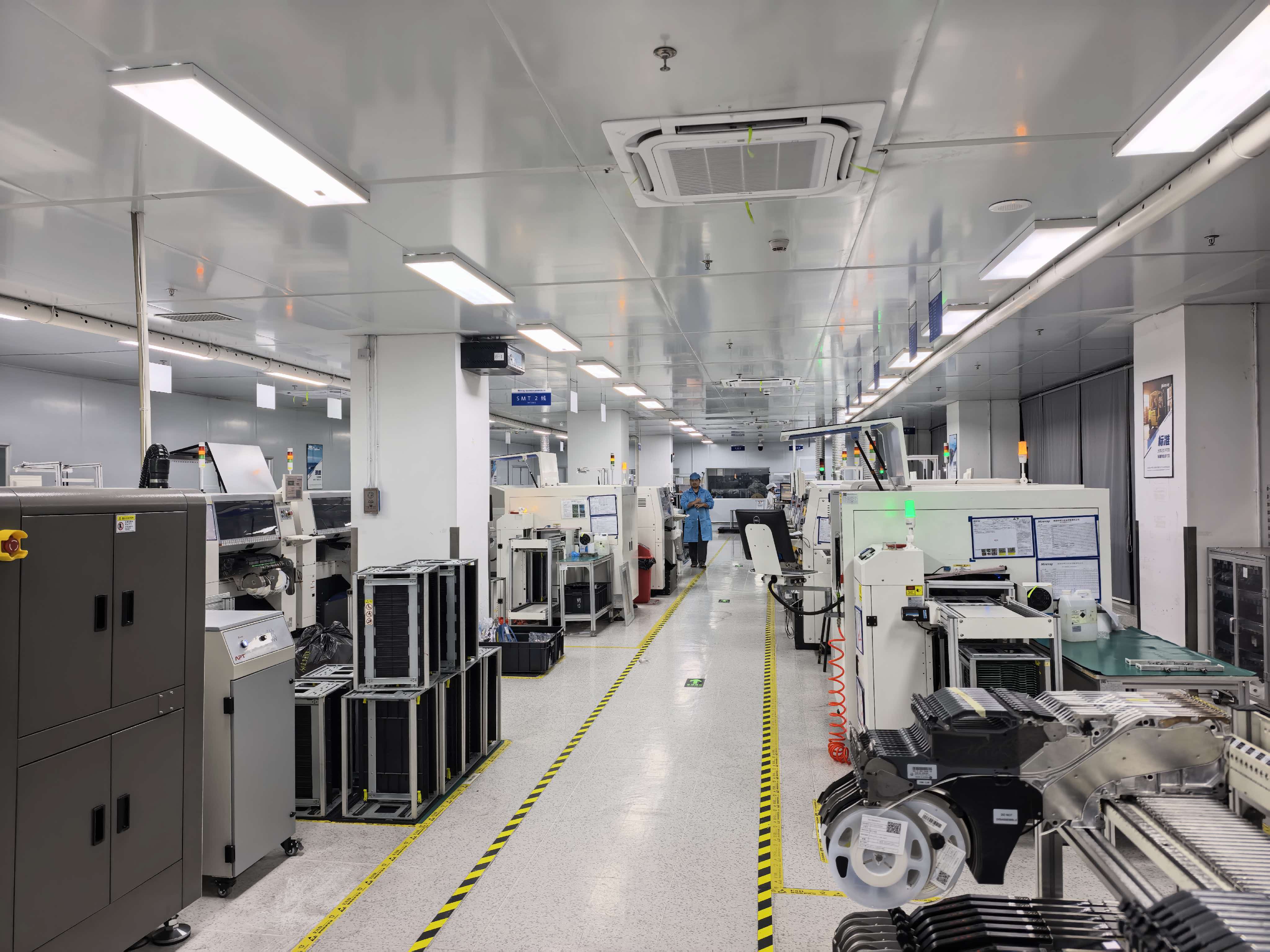
Production and testing area at TCHD Video. The company reports annual output in the region of 4,000 units across cameras, capture cards, converters, encoders and switchers.
Market Signals Behind the 4K-versus-HD Split
The two-model structure reflects a market that is expanding while segmenting. The global production switcher market was estimated at USD 2,596.79 million in 2025, driven by IP-based broadcasting and multi-camera streaming transitions, according to Precision Reports (2026). At a broader scope, Fortune Business Insights projects the global video switcher market to reach USD 11.48 billion by 2034, growing at a CAGR of 7.10% from 2026.
Those two figures should not be read as contradictions or as competing claims about the same number. Published market research notes a definitional difference across studies: “production switcher” typically refers to vision mixers and broadcast switchers, while “video switcher” is a wider category that includes additional video switching equipment. Buyers using market data to justify a capital purchase should therefore check what a figure includes rather than comparing headline values across publishers.
The demand side reinforces the split. The livestream e-commerce market is projected to reach USD 312.35 billion by 2035, with Asia Pacific holding a dominant 66% share as of 2025, according to Precedence Research (2026). That concentration explains why multi-platform streaming output count and USB ingest, both relevant to live selling, appear as differentiating specifications rather than as optional extras. At the same time, HD production remains the working reality for most classrooms, congregations and conference facilities, which is why a 720p/1080p/1080i switcher with mixed HDMI and SDI inputs remains a current product rather than a discontinued one.
For buyers importing either model, customs classification is a practical detail. HS Code 85437062 is specifically classified for video mixing systems or consoles in various customs jurisdictions, according to the primary trade classification source reviewed for this comparison. Importers should confirm the applicable code with their customs broker for the destination market.
Limitations and Trade-offs Buyers Should Weigh
A balanced comparison has to state where each specification creates a constraint, not only where it creates capability.
- 12G-SDI is a standard, not a cable guarantee. SMPTE ST 2082 defines uncompressed 4K at 60fps over a single coaxial cable at 11.88 Gbps. Achieving that rate depends on the cable, connector and receiving device meeting the standard. Buyers specifying the 812 Ultra for 4K should confirm that the coax already installed is rated for the distance and data rate required, rather than assuming any SDI cable will carry the signal.
- The 890HS format list does not include 4K. Its documented formats are 720p, 1080p and 1080i. A production that has already standardised on 4K cameras would need conversion ahead of the switcher or a different switcher model.
- Input connectors and switching channels are separate figures on the 812 Ultra. The specification lists four 12G-SDI plus one HDMI input alongside a 12-channel core. Buyers should confirm how the remaining channels are populated in their configuration before assuming the connector count equals the number of simultaneous live sources.
- Audio channel counts are hard limits. Twelve mixer channels on the 812 Ultra and ten on the 890HS cannot be expanded without an external mixer. Productions that grow their microphone count over time should build in margin at purchase.
- Several specification areas are not covered by the comparison data. Weight, dimensions, power consumption, operating temperature range, warranty terms and service arrangements were not included for either model. These affect installation and lifecycle planning and should be obtained directly from the supplier.
- Certification scope should be matched to the model, not the brand. In the documentation reviewed for this comparison, the CE EMC certificate LCSA07075157E (issued by LCS TESTING LABORATORY, against EN 55032:2015/A1:2020 and EN 55035:2017/A11:2020) has a declared scope covering the TC-400N4 HDMI series capture card and is associated with camera models including TCHD-T3, TC420 and TC-980S. Buyers importing switchers into the EU should ask the supplier to confirm which certificate applies to the specific switcher model and destination market rather than relying on brand-level certification.
- The 890HS aluminum alloy housing is a documented specification; other enclosure details are not. Buyers selecting for outdoor or touring use should verify ingress protection, mounting and thermal behaviour with the supplier, since those values are outside the comparison data.
Verification Checklist Before Ordering
Both switchers are specified in enough detail to support a shortlist decision, but six items are worth confirming in writing before purchase order.
- Count the live sources at maximum simultaneity and match them against the listed inputs of each model, allowing for playback and graphics channels.
- Confirm the output format required by the program and by the destination platforms — 4K@60Hz, or 720p/1080p/1080i.
- List every audio source requiring independent control and compare the total, plus expected growth, against 12 channels and 10 channels.
- List the streaming destinations and required protocols, and confirm whether simultaneous multi-platform output, RTMP/RTSP/HLS/FLV output, or external restreaming is the intended method.
- Confirm whether UVC output to a computer and on-switcher SSD recording are required; both are listed for the TCHD-812 Ultra and not stated for the TCHD-890HS in the comparison data.
- Confirm the certification and customs documentation that applies to the specific model and destination market.
Supplier quality documentation is also part of the evaluation record. TCHD Digital Video Technology Development (Beijing) Ltd holds a quality management system certificate, number 064-24-Q-0675-R1-S, against GB/T19001-2016/ISO 9001:2015, issued by BEIJING STANDARD CERTIFICATION CENTRE on 2024-03-08 and valid to 2027-03-07, with a scope covering the sales of digital audio and video products and related technical services and its related management activities. Certificates for environmental management (064-24-E-0676-R1-S, GB/T24001-2016/ISO 14001:2015) and occupational health and safety management (064-24-S-0677-R1-S, GB/T45001-2020/ISO 45001:2018) cover the same scope and carry the same issue and expiry dates.
Future Outlook
Two directions are visible from the specifications and the market data. The first is the continued migration of multi-camera production to 4K over single-cable SDI and over HDMI 2.0, which keeps the input architecture of the TCHD-812 Ultra relevant to buyers whose camera chains have already crossed that line. The second is the persistence of HD production in education, worship, conference and institutional settings, where the 890HS input mix and format range match the installed base rather than an upgrade plan.
The variable that may change the balance fastest is distribution rather than acquisition. Multi-platform output and USB ingest are becoming production requirements in live selling and hybrid conferencing, not optional features. Buyers should expect the number of simultaneous outputs and the presence of a computer-facing output to weigh more heavily in future switcher evaluations than raw input counts.
Finally, documentation will keep mattering as much as specification. Market data in this category carries definitional differences across publishers, and certification scope varies by product line. Buyers who record which certificate, which standard and which format list applies to the exact model they ordered will have a cleaner procurement file — and fewer surprises at import.
FAQ
Does the TCHD-890HS support 4K video?
The comparison data lists 720p, 1080p and 1080i for the TCHD-890HS. No 4K format is listed for this model, whereas the TCHD-812 Ultra is specified with a 12-channel 4K@60Hz FPGA core and 4K60 carried over 12G-SDI or HDMI 2.0. A buyer whose camera chain outputs 4K would need either format conversion ahead of the 890HS or a switcher with a listed 4K format.
What is the difference between the input sets of the two switchers?
The TCHD-812 Ultra lists four 12G-SDI inputs plus one HDMI input. The TCHD-890HS lists four HDMI inputs plus four SDI inputs. The 812 Ultra’s SDI inputs are specified at the 12G-SDI rate associated with SMPTE ST 2082, which carries uncompressed 4K at 60fps over a single coaxial cable at 11.88 Gbps. The 890HS combines HDMI and SDI connections at HD formats, which matches rooms that already run a mix of camera types.
How many audio channels does each switcher’s mixer provide?
The TCHD-812 Ultra lists a 12-channel audio mixer and the TCHD-890HS lists a 10-channel audio mixer. The relevant buyer question is how many audio sources must be controlled independently during a production, plus expected growth. Where that count approaches ten, the difference between the two models becomes a deciding factor; where it stays well below both figures, it does not separate them.
How do the streaming capabilities differ between the two models?
The TCHD-812 Ultra lists up to four simultaneous platform streaming outputs, plus UVC output and SSD recording. The TCHD-890HS lists streaming over RTMP, RTSP, HLS and FLV. A production that must publish to several platforms at once is served by the 812 Ultra’s multi-platform output count; a production whose destinations already accept RTMP, RTSP, HLS or FLV is served by the 890HS protocol list.
Which switcher should a church, school or conference venue consider?
The deciding specifications are the camera chain and the recording requirement, not the venue type. Rooms running HDMI and SDI cameras at 720p, 1080p or 1080i, with modest microphone counts and a destination list built on RTMP, RTSP, HLS or FLV, align with the TCHD-890HS specification. Rooms with 4K cameras, long SDI cable runs, a need for on-switcher SSD recording, or a need to send the program into a computer over USB align with the TCHD-812 Ultra specification. In TCHD Video’s supplied product material, the listed application scenarios for its streaming products include video conferencing, education teaching and live broadcasting.
Both models are covered in the manufacturer’s product catalogue, which lists the wider switcher, camera, capture card, converter and encoder range: TCHD Product Catalog 2025 (PDF).