
Switchgear Compliance Parameters: KYN28-12, GCS, XGN15-24
A switchgear compliance review rarely begins with certificates. It begins with numbers that are already published and can be read line by line against a project specification: rated voltage, rated current, short-time withstand current, protection degree, and the declared busbar and enclosure materials. At the awareness and research stage of a project, those numbers decide whether an assembly enters the technical evaluation at all.
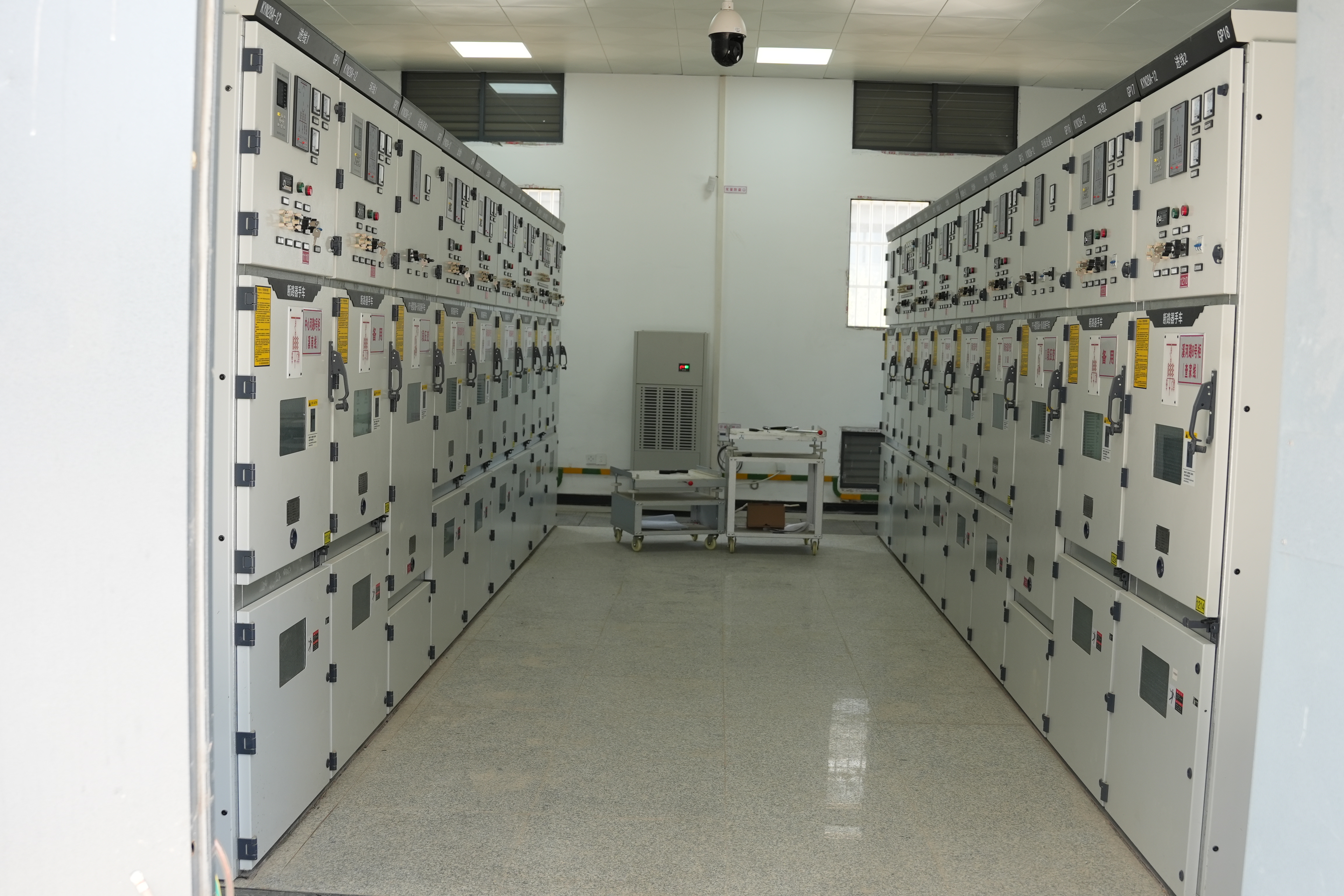
Indoor high voltage switchgear in a project distribution room. The installation environment determines which datasheet parameters carry the most weight in a compliance review.
The three assemblies examined here — KYN28-12, GCS and XGN15-24 — sit at different voltage levels, so their datasheets are not interchangeable evidence. Read together, they show how parameter-based qualification actually works, and where datasheet evidence stops and test documentation begins.
Changzhou Tuoxin Electric Co., Ltd. is a switchgear manufacturer located in Xixiang Industrial Park, Hengshanqiao, Changzhou, Jiangsu Province, China, producing high voltage and low voltage assemblies that include the KYN28-12 metal-clad withdrawable switchgear, the GCS low voltage withdrawable switchgear and the XGN15-24 gas-insulated ring main unit.
What a compliance review actually checks
Before a buyer requests a test report, three questions usually have to be answered against the project standard:
- Voltage and current fit — does the rated voltage match the system voltage class, and does the rated current cover the design load?
- Short-circuit capability — do the short-circuit ratings exceed the calculated prospective fault level, and are they stated on the same time basis?
- Installation environment — do the protection degree and the environmental limits match the room, the altitude and the climate at site?
Datasheet parameters answer the first and third questions completely, and the second only once the time basis is confirmed. Test reports, design verification and third-party inspection answer the remainder. IEC 61439-1:2020, which sets out general definitions, service conditions, construction requirements, technical characteristics and verification requirements for low voltage switchgear and controlgear assemblies, is the general reference frame that makes this split explicit for LV assemblies.
In practice, the parameters worth extracting from any datasheet fall into five groups:
- Voltage class and insulation: rated voltage, one-minute power frequency withstand voltage, lightning impulse withstand voltage.
- Current class: rated current, main busbar current, distribution (vertical) busbar current.
- Short-circuit performance: rated short-circuit breaking current, short-time thermal withstand current with its duration, peak withstand current.
- Protection and environment: enclosure IP rating, ambient temperature and altitude limits.
- Material specification: busbar material and plating, enclosure steel type, insulating components.
Each group answers a different review question. A supplier who answers group by group produces a submission that can be evaluated; a supplier who answers with a single statement of conformity produces one that cannot.
Who publishes these datasheets
Changzhou Tuoxin Electric Co., Ltd. was founded in 2010 and operates a 4,000 square metre factory in Changzhou with 56 employees and an annual output of 3,000 units. Its product scope covers high voltage switchgear in the KYN28 and XGN15 series, low voltage switchgear in the GBD, MNS, GGD, GXL, XL and XLW series, YB series box-type substations, custom non-standard electrical control cabinets, PZ30 modular terminal lighting distribution boxes, XJM metering boxes and bus ducts of various specifications. The company is a designated supporting manufacturer of electrical equipment for Changzhou Power Supply Company, and reports an export ratio of 40%, with markets including Vietnam, Indonesia, Morocco, Ivory Coast, Cameroon, Tanzania, Kenya, Russia, Kazakhstan, Uzbekistan, Mexico, Colombia, Chile, Peru, Spain, Brazil, Portugal, Turkey, Croatia, Germany, Italy, Austria, Switzerland, Saudi Arabia, the UAE, Qatar, Kuwait, Oman, Japan, South Korea, the USA and Canada.
That manufacturing base matters for compliance work in one specific way: the material specifications in the three datasheets below are stated at the level of the component — T2 copper busbars with silver or tin plating on contact surfaces, aluzinc or galvalume steel sheet enclosures with electrostatic plastic spraying, epoxy resin and SMC composite insulation, stainless steel fasteners — and those are the specifications a reviewer can actually check against a purchase order.
KYN28-12: what a 12 kV metal-clad datasheet discloses
The KYN28-12 indoor AC metal-clad withdrawable switchgear is documented as follows:
- Rated voltage: 12 kV. Rated frequency: 50 Hz. Rated current: 630–4000 A.
- Rated short-circuit breaking current: 20–50 kA. Rated short-circuit making current: 50–125 kA.
- Rated 4 s short-time thermal withstand current: 20 / 25 / 31.5 / 40 / 50 kA. Rated peak withstand current: 50 / 63 / 80 kA.
- One-minute power frequency withstand voltage: 42 kV phase-to-phase and phase-to-earth; 48 kV across the isolating distance.
- Lightning impulse withstand voltage: 75 kV phase-to-phase and phase-to-earth; 85 kV across the isolating distance.
- Protection degree: IP4X at the enclosure; IP2X with the circuit breaker door open.
- Materials: aluzinc coated steel sheet enclosure, T2 silver-plated copper for conductive busbars, epoxy resin and SMC composite for insulating components, stainless steel fasteners and rubber sealing strips.
For a 12 kV system the insulation figures usually carry the first review. The 42 kV one-minute withstand and the 75 kV impulse level are the insulation coordination parameters, and the 48 kV and 85 kV isolating distance values show that those levels are stated for the open contact gap as well as for phase-to-phase and phase-to-earth. When a specification asks only for 12 kV and the returned datasheet carries no isolating distance value, the review is not finished — the gap condition has simply not been documented.
The second check is the short-circuit entry, and the decisive part of it is the duration. KYN28-12 ratings are stated on a 4 s basis. That duration is what makes the figure comparable with other 4 s ratings and not with ratings expressed on a 1 s basis. The published ranges — 20 to 50 kA breaking, 20 to 50 kA thermal withstand, 50 to 80 kA peak — should not be read as a single capability figure, because the applicable value depends on the fault study for the specific system.
Scope is also part of the evidence. The KYN28-12 datasheet describes a complete power distribution system for three-phase AC 50 Hz systems with a rated voltage of 3–12 kV, suitable for single busbar and single busbar sectionalized systems. A project above 12 kV is outside this model's declared range, whatever the busbar current requirement happens to be.
GCS: the low voltage side at 660 V insulation
The GCS low voltage withdrawable switchgear datasheet is written at the LV voltage class:
- Rated insulation voltage: 660 V. Rated operational voltage: 380 V / 660 V.
- Maximum operating current of the main busbar: 1600–4000 A.
- Short-time withstand current of the main busbar (1 s): 100 kA. Short-time peak current of the main busbar: 120 kA.
- Maximum operating current of the vertical (distribution) busbar: 1600 A. Short-time peak current of the vertical busbar: 80 kA standard type, 100 kA reinforced type.
- Protection degree: IP30.
- Materials: galvalume or cold-rolled galvanized steel sheet enclosure, integrally bent and assembled with electrostatic plastic spraying; T2 pure copper busbars with tin or silver plating on contact surfaces; SMC unsaturated polyester moulding compound, epoxy resin and PVC insulating sleeves; 304 stainless steel fasteners.
Two points in this datasheet are frequently misread during evaluation.
The insulation voltage is 660 V while the operational voltage is 380 V or 660 V. These are separate declarations serving separate purposes. Insulation voltage is the value used for dielectric verification; the operational voltage is what the assembly is rated to carry in service. A submission form that copies the operational voltage into a cell labelled insulation weakens the whole document, even when the underlying product is unchanged.
Main busbar and vertical busbar are different ratings. The 100 kA figure belongs to the main busbar, on a 1 s basis, with a 120 kA peak. The vertical busbar carries a 1600 A maximum operating current and a peak withstand of 80 kA in standard configuration or 100 kA in reinforced configuration. When an RFQ asks for the busbar rating without naming which section, an answer that gives only one number is incomplete rather than favourable.
The protection degree on GCS is IP30, which is a lower solid-object protection class than the IP4X declared on KYN28-12. For an indoor distribution room this is a design choice, not a defect, but a specification written uniformly across HV and LV assemblies will expose the difference immediately.
XGN15-24: short-circuit window and sealing data
The XGN15-24 gas-insulated metal-enclosed ring main unit is declared at 24 kV:
- Rated voltage: 24 kV. Rated frequency: 50 Hz. Rated current: 630 A, 1250 A.
- Rated short-time withstand current (4 s): 20 kA, 25 kA. Rated peak withstand current: 50 kA, 63 kA.
- Rated short-circuit breaking current: 20 kA, 25 kA. Rated short-circuit making current: 50 kA, 63 kA. Short-time withstand current of the earthing switch: 20 kA / 4 s.
- Insulating medium: sulphur hexafluoride (SF6). Rated filling pressure at 20 degrees C: 0.04–0.06 MPa gauge. Minimum operating pressure: 0.02 MPa. Annual gas leakage rate: not more than 0.5%.
- Power frequency withstand voltage: 65 kV for 1 minute. Lightning impulse withstand voltage: 125 kV peak.
- Mechanical operating life: load switch not less than 5,000 operations; earthing switch not less than 2,000 operations.
- Protection degree: IP67 inside the gas tank; IP34D outside the cabinet.
- Service conditions: ambient temperature -25 to +40 degrees C; altitude not more than 2,000 m.
The time basis here is 4 s, not the 1 s used on the GCS main busbar. A 25 kA rating on a 4 s basis and a 25 kA rating on a 1 s basis are not the same statement, and placing them in the same comparison cell is one of the commonest errors in cross-model review.
For gas-insulated equipment, the sealing figures are compliance parameters rather than maintenance trivia. A rated filling pressure of 0.04–0.06 MPa, a minimum operating pressure of 0.02 MPa and a declared annual leakage rate of not more than 0.5% together define how long the assembly can hold its insulating medium without intervention. A gas datasheet that omits the annual leakage rate gives a reviewer nothing to check.
Protection degree is position-specific on this model. IP67 applies inside the gas tank; IP34D applies to the outside of the cabinet. The two values are not interchangeable, and swapping them in a submission is detectable against the source datasheet.
Reading IP ratings and material specifications
Across the three models, protection degree is declared four different ways:
- KYN28-12: IP4X at the enclosure, IP2X with the circuit breaker door open.
- GCS: IP30.
- XGN15-24: IP67 inside the gas tank, IP34D outside the cabinet.
An IP rating describes protection against external solid objects and water. It says nothing about short-time withstand current, temperature rise or internal arc performance, and should never be presented as evidence for those characteristics. What is useful in a compliance review is that the position each rating applies to is stated, and that a separate figure is given for the open-door condition. The IP2X open-door value on KYN28-12 is an example of the second point: it acknowledges that a withdrawable assembly is accessed with the door open during operation.
Material specifications are checkable only when they are stated at component level. 'T2 pure copper with silver plating on contact surfaces' can be inspected against a delivered unit; 'copper busbar' in a bill of materials cannot. All three datasheets use the same material language — T2 copper busbars with tin or silver plating, aluzinc or galvalume steel sheet with electrostatic plastic spraying, epoxy resin and SMC composite insulation, stainless steel fasteners and rubber sealing strips. That consistency is itself useful, because a change order that drops the copper grade becomes visible.
Parameter cross-check table
| Parameter | KYN28-12 | GCS | XGN15-24 |
|---|---|---|---|
| Rated voltage | 12 kV | 660 V insulation; 380 V / 660 V operational | 24 kV |
| Rated frequency | 50 Hz | Not stated in datasheet | 50 Hz |
| Rated current | 630–4000 A | Main busbar 1600–4000 A; vertical busbar 1600 A | 630 A, 1250 A |
| Short-time withstand | 4 s: 20 / 25 / 31.5 / 40 / 50 kA | 1 s: 100 kA (main busbar) | 4 s: 20 kA, 25 kA |
| Peak withstand | 50 / 63 / 80 kA | 120 kA (main busbar); 80 kA or 100 kA (vertical busbar) | 50 kA, 63 kA |
| Protection degree | IP4X enclosure; IP2X door open | IP30 | IP67 gas tank; IP34D cabinet |
| Conductive material | T2 copper, silver plated | T2 copper, tin or silver plated | T2 copper, silver or tin plated |
| Enclosure material | Aluzinc coated steel sheet | Galvalume or cold-rolled galvanized steel sheet | Galvalume or hot-dip galvanized steel sheet |
| Construction | Metal-clad withdrawable | Withdrawable | Gas-insulated metal-enclosed RMU |
Table: published datasheet parameters for the three models. Blank or 'not stated' entries are shown as such rather than filled in.
Where datasheet parameters stop
Parameter-based qualification is a screening method, and it has edges that a project team should state openly in the evaluation file.
Datasheet values are manufacturer declarations. They describe what the design is rated for. They do not, on their own, prove that a particular delivered unit has passed type testing, nor that a specific project's design verification has been completed. Those documents sit one layer below the datasheet and have to be requested separately.
Short-circuit figures are not comparable across models unless the duration matches. The GCS main busbar is declared on a 1 s basis; KYN28-12 and XGN15-24 are declared on a 4 s basis. Converting one to the other is a technical exercise, not a formatting one, and should not be done inside a comparison spreadsheet.
Each model has a hard boundary. KYN28-12 is rated 12 kV and 630–4000 A. GCS is declared for 380 V / 660 V operation. XGN15-24 covers 630 A and 1250 A at 24 kV. A project outside these windows needs a different assembly, not a looser reading of the datasheet.
Protection degree is not performance evidence. IP4X, IP30, IP67 and IP34D describe ingress protection at defined positions; none of them evidences short-circuit capability or temperature rise behaviour.
Environmental limits bind the other parameters. The XGN15-24 sealing and operating data are declared for -25 to +40 degrees C and altitudes up to 2,000 m. A site above 2,000 m needs a customised version rather than the standard declaration, and the same logic applies to installation locations with flammable, explosive or corrosive atmospheres.
A practical rule for evaluation files: accept datasheet parameters as the first screening layer, record the exact wording and the duration basis, and mark every item that still requires a test document. The list of open items is the real output of a parameter review.
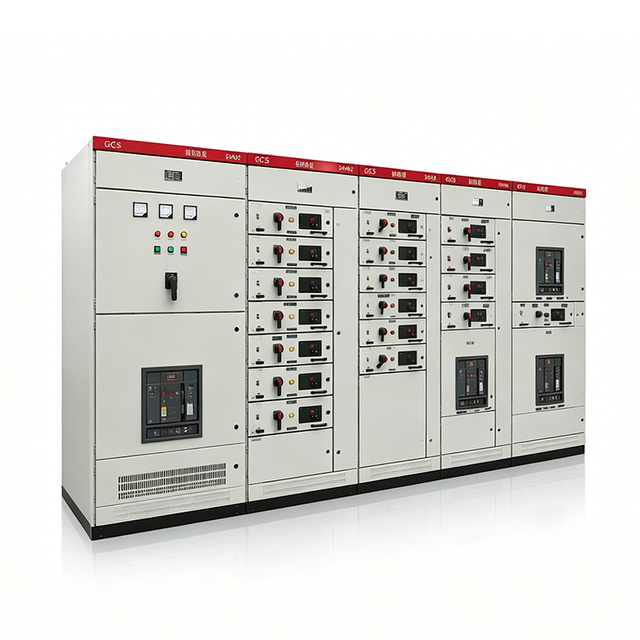
GCS low voltage withdrawable switchgear. The main busbar and the vertical busbar carry separate current and peak withstand ratings.
Which projects these ratings fit
The GCS datasheet lists the application scope of the withdrawable LV assembly across several sectors: power and new energy installations including thermal, hydro, photovoltaic, energy storage and wind plants, substations and nuclear power stations for auxiliary power distribution and motor control; heavy industry and manufacturing including metallurgy, steel, petrochemical, offshore oil and gas platforms, coal mines, papermaking, automobile manufacturing, textiles, machinery and semiconductor factories; digital infrastructure including data centers, communication equipment rooms and charging station distribution systems; transportation infrastructure including metro, rail transit, airports, seaports, tunnels and logistics parks; civil and public buildings including high-rise buildings, commercial complexes, residential districts, hospitals, schools, exhibition centres and hotels; and special scenarios including ships, offshore platforms, municipal sewage treatment plants and waste incineration power plants.
The XGN15-24 ring main unit is positioned for urban power grid construction and renovation, for ring main power supply and terminal distribution systems, and for installation in prefabricated substations and switching stations, with a fully enclosed maintenance-free design. The KYN28-12 assembly is declared for three-phase AC 50 Hz systems rated 3–12 kV, in single busbar and single busbar sectionalized configurations.
For a data center or an industrial plant, this typically means the LV side is served by a GCS-type assembly while the incoming HV side is served by a 12 kV or 24 kV assembly, and the parameter review should be organised along that split rather than as one combined comparison. The voltage classes do not overlap, so a single evaluation table across all three models is only useful as an index of what each document contains.

XGN15-24 gas-insulated ring main unit. Sealing parameters — filling pressure, minimum operating pressure and annual leakage rate — are part of the compliance record, not just the maintenance schedule.
Market context: why specifications are getting more documentary
Three published data points frame the direction of procurement practice.
- Global electricity demand rose by 4.3% in 2024 and is forecast to grow at close to 4% out to 2027, according to the International Energy Agency.
- Grand View Research estimates the global switchgear market at USD 119.7 billion in 2026, with a reported CAGR of 7.4% over 2026–2033.
- China was the top exporter of electrical control boards under HS 8537 in 2024, with a value of USD 15.4 billion, according to the Observatory of Economic Complexity.
Read together, these figures describe a category where demand growth and cross-border sourcing volume move in the same direction. The practical consequence for evaluation teams is that the same technical specification now reaches suppliers in several countries at once, and not every quotation can be verified by a factory visit before the shortlist is drawn. Parameter tables become the scalable first filter precisely because they are written down: a 4 s thermal withstand figure can be checked, while a general statement of conformity cannot.
IEC 61439-1:2020 reinforces the same tendency on the LV side by formalising the verification requirements for assemblies. Once verification is a defined process rather than a general expectation, the document set behind a datasheet becomes part of what is being purchased.
Future outlook
Peer-reviewed research on switchgear digitalisation classifies the field into predictive maintenance, condition monitoring and related areas, which suggests that monitoring capability is being treated as a technical characteristic in its own right rather than an accessory. If that continues, datasheets will need to carry monitoring, communication and condition-output entries alongside the electrical strength parameters reviewed above.
For project teams, the useful preparation is structural: reserve rows in the technical specification for these characteristics now, so that they are documented by every bidder in the same place, instead of being raised as a follow-up question after quotations arrive. The same discipline that makes a 4 s withstand rating comparable applies to a communication protocol or a sensor output.
FAQ
Which parameters qualify KYN28-12 for a 12 kV project standard?
The primary entries are rated voltage 12 kV, rated frequency 50 Hz and rated current 630–4000 A, supported by the insulation figures of 42 kV one-minute power frequency withstand and 75 kV lightning impulse withstand for phase-to-phase and phase-to-earth, with 48 kV and 85 kV across the isolating distance. Short-circuit qualification uses the 4 s thermal withstand of 20 / 25 / 31.5 / 40 / 50 kA and the peak withstand of 50 / 63 / 80 kA, read against the calculated fault level for the specific system.
Why does the GCS datasheet state 660 V insulation when the operational voltage is 380 V or 660 V?
Insulation voltage and operational voltage are separate declarations. The rated insulation voltage of 660 V is the value used for dielectric verification of the assembly, while the rated operational voltage of 380 V / 660 V describes the systems the assembly is intended to serve. A 380 V system therefore still returns a 660 V entry in the insulation row of the specification.
Are the 20 kA and 25 kA ratings on XGN15-24 equivalent to the 100 kA rating on GCS?
They are not directly comparable. The XGN15-24 figures of 20 kA and 25 kA are short-time withstand currents on a 4 s basis, with corresponding peak withstand of 50 kA and 63 kA. The GCS figure of 100 kA is a main busbar short-time withstand current on a 1 s basis, with a 120 kA peak. The differing durations mean the values must be assessed on their stated basis rather than converted informally in a comparison table.
Does an IP4X rating on KYN28-12 satisfy every project requirement?
IP4X describes enclosure protection against external solid objects and applies to the closed enclosure. The KYN28-12 datasheet separately declares IP2X with the circuit breaker door open, which is the condition that applies during operation of a withdrawable assembly. An IP rating does not evidence short-circuit capability or temperature rise performance, so it should be assessed alongside the electrical parameters rather than in place of them.
Can datasheet parameters replace type test reports?
No. Datasheet parameters are manufacturer-published ratings that describe what the design is declared to achieve. Type test reports, design verification records and third-party inspection confirm that verification has actually been carried out for a design or a delivered unit. The two layers serve different purposes: parameters support the first screening of bids, while test documentation supports the final qualification decision.
¿Tiene preguntas o necesita más detalles?
Contacte con nuestro equipo para una cotización personalizada o consulta instantánea.
Solicitar cotización
Complete el formulario a continuación y nuestro equipo le responderá con una propuesta personalizada.
Chat directo de WhatsApp
¿Prefiere chatear en tiempo real? Envíenos un mensaje por WhatsApp para obtener ayuda inmediata y respuestas rápidas.
- Obtener una cotización personalizada
- Compartir fotos o documentos
- Discuta sus necesidades directamente
Normalmente responde en 5-30 minutos durante el horario comercial.