
Swimming Pool Equipment 2026: Efficiency and Cost Compared
HTNXT Industry Analysis | August 2026
Swimming Pool Equipment 2026: Efficiency and Cost Compared
The global swimming pool equipment market is estimated at USD 14.22 billion in 2025 and is projected to reach USD 21.33 billion by 2033, according to Market Research Future / Vertex AI Analysis. For procurement teams, engineers, and facility owners, the practical challenge is no longer finding equipment that works, but choosing swimming pool equipment that stays efficient, safe, and affordable over years of continuous operation. This article compares main equipment categories — pool pumps, filters, heat pumps, lights, and salt chlorination systems — using documented performance data, with a focus on commercial swimming pool equipment and residential swimming pool equipment.
Why Comparison Matters in Pool Equipment Procurement
Pool equipment decisions are shifting from upfront price to lifetime operating economics. Fixed-speed pumps, conventional heat pumps, and traditional sand filters still dominate installed base, but their energy consumption, water use, and maintenance frequency create a measurable cost gap over time. Buyers at the decision stage now need side-by-side evidence: partial-load efficiency, maintenance intervals, media lifespan, and compatibility with salt-water or low-voltage systems.
The Supplier Behind the Comparison: LASWIM
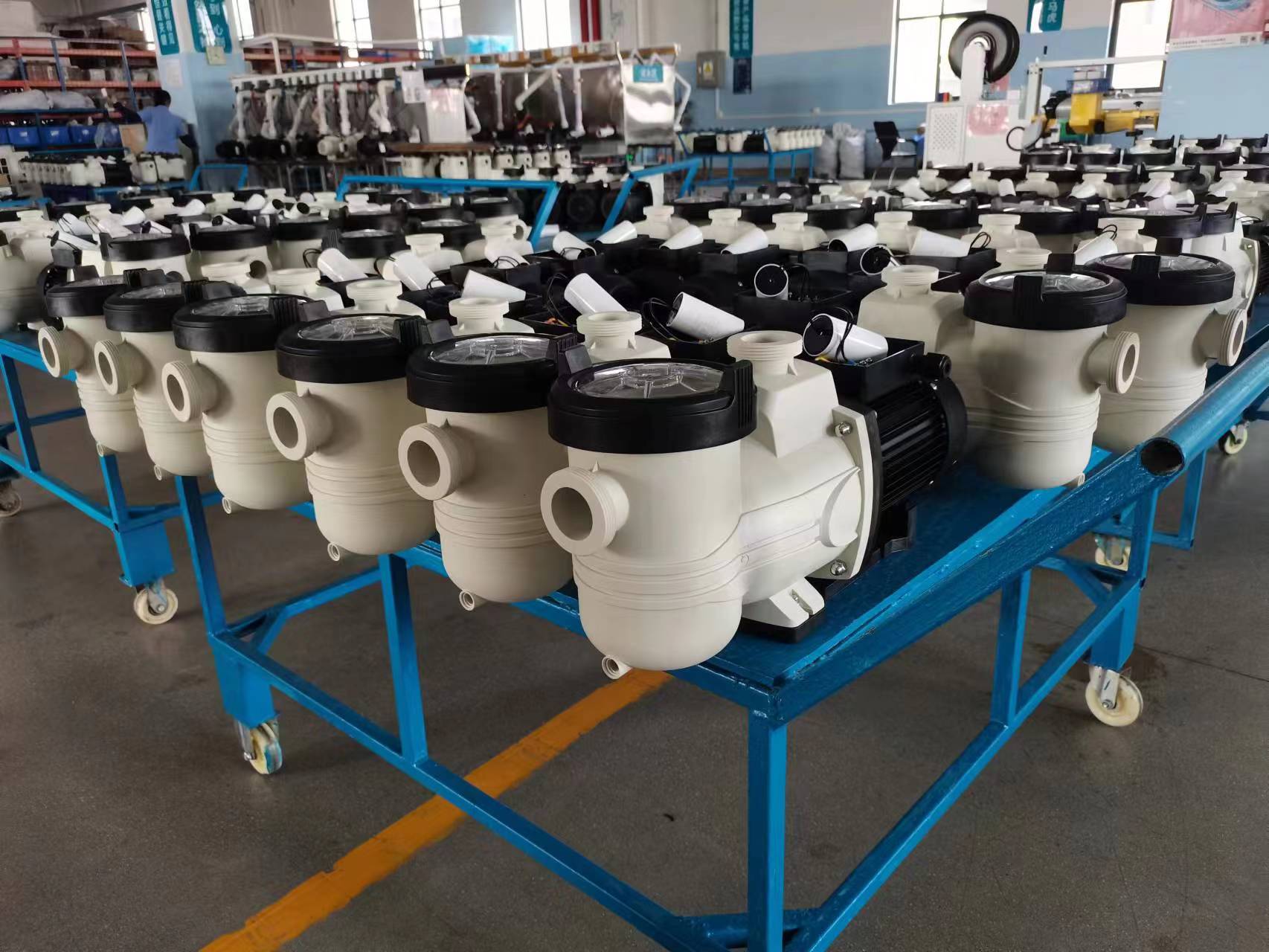
LASWIM Water Environment Equipment Co., Ltd. is a China-based pool and spa equipment manufacturer founded in 1989, operating a 90,000 m² factory with 630 employees and an annual output capacity of approximately 2,400,000 units. The company's in-house R&D team consists of 53 engineers, and its main product lines include sand filters, pool pumps, underwater lights, salt chlorinators, and heat pumps. Around 70% of output is exported, with primary markets in North America, South America, Europe, Southeast Asia / Mideast, Africa, East Asia (Japan / South Korea), and Australia.
Commercial Pool Pumps: Variable-Speed vs. Fixed-Speed
LASWIM's commercial pool pump is a high-flow, intelligent variable-speed circulation pump designed for continuous-duty environments. Its rated power options are 2.2 kW (3 HP) and 2.9 kW (4 HP), with a variable speed range of 1000–3450 rpm, a maximum flow rate of 42–48 m³/h, and a maximum head of 24–25 m. Maximum working pressure is 0.35 MPa (3.5 bar), liquid temperature ranges from 5–50°C, and applicable salinity is below 4500 ppm.
| Commercial pool pump | Key data | Comparison vs. fixed-speed commercial pump |
|---|---|---|
| Motor | IE5 permanent magnet motor, 3 HP / 4 HP | Higher part-load efficiency than constant-speed centrifugal pumps |
| Flow & head | 42–48 m³/h; 24–25 m | Matches large commercial circulation system demand |
| Speed control | 1000–3450 rpm | Adjusts flow demand instead of full-load operation |
| Energy | — | Approximately 30–60% lower energy consumption under partial-load operation |
| Maintenance | — | Maintenance frequency reduced by approximately 25–40%; lower vibration and hydraulic shock |
For hotel pools, water parks, sports centers, and competition pools, the variable-speed architecture reduces both electricity cost and mechanical stress. The reported total ownership cost reduction is approximately 20–35% over 3–5 years compared with fixed-speed commercial pumps.
Standard Pool Pumps: Residential and Mid-Size Commercial Use
LASWIM's standard variable-speed pool pump is an IE4 high-efficiency unit with a speed range of 1000–3200 rpm, max flow of 31–40 m³/h, max head of 16.9–20 m, and input power options of 1000W, 1300W, or 1650W. It offers self-priming up to 3 m, maximum working pressure of 3.5 bar, and a 63 mm (2") connection size.
- Energy consumption reduced by up to 90% compared with traditional single-speed pumps; annual saving up to 12,614 kWh based on a 2 HP continuous operation reference.
- Total ownership cost reduced by approximately 30–50% over 3–5 years.
- Maintenance requirements approximately 30–40% lower than standard pumps.
- Built-in dry-run protection, temperature protection, and pressure monitoring reduce failure risk.
- Supports one-operate-one-standby automatic switching for continuous operation.
This pump fits residential pools, villa pools, hotel pools, SPA pools, medium-size commercial pools, and smart swimming pool circulation systems.
Filtration Systems: Regenerative Media vs. Traditional Sand
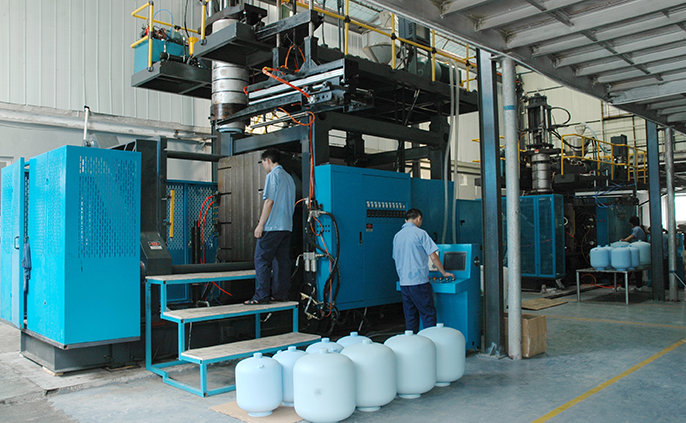
Regenerative media filtration is an alternative to traditional sand filters, based on ultra-fine filtration, fully automatic intelligent operation, and recyclable filter media. LASWIM's regenerative media system reaches a filtration precision of 1–3 μm, while traditional sand filters typically operate in the 30–50 μm range. Effluent turbidity remains consistently below 0.1 NTU.
| Regenerative media filter | Documented performance |
|---|---|
| Filtration precision | 1–3 μm vs. 30–50 μm for traditional sand filters |
| Effluent turbidity | Consistently below 0.1 NTU |
| Water consumption | Reduced by approximately 90% |
| Chemical consumption | Reduced by around 30% |
| Installation | On-site workload reduced by over 40%; project timeline shortened by 1/2 to 2/3 |
| Operation | Fully automatic pre-coating, filtration, and regeneration cycles; unattended operation |
The regenerative media can be reused multiple times, reducing replacement frequency and solid waste generation. While the initial equipment investment is higher, the system typically delivers return on investment within approximately two years through savings in water, chemicals, and labor, resulting in a lower total lifecycle cost. It is best suited to luxury hotel pools, water parks, public competition pools, and projects with ultra-high water quality standards, limited plant room space, and low operational cost targets.
Disinfection: AOP vs. Chlorine-Only Treatment
LASWIM's advanced oxidation process (AOP) disinfecting pool equipment combines low-pressure UV with an advanced oxidation reaction chamber. Compared with a traditional swimming pool salt chlorinator system, the AOP approach reports 99.99% sterilization efficiency, chlorine consumption reduced by up to 50%, and UV lamp lifespan up to 16,000 hours, with a corona discharge module lifespan of 10+ years.
- Chemical operating cost reduced by 30–50% over long-term operation.
- Maintenance frequency reduced by approximately 40%.
- Integrated compact structure saves equipment room space by about 25%.
- Organic pollutants are degraded into CO₂ and water faster than traditional chlorine-only treatment.
These systems carry an initial investment roughly 20–35% higher than standard chlorinators, making them a lifecycle-cost decision for high-end commercial pools, hotels, resorts, water parks, luxury residential pools, and SPA pools.
Heat Pumps: Full DC Inverter vs. Fixed-Output Commercial Units
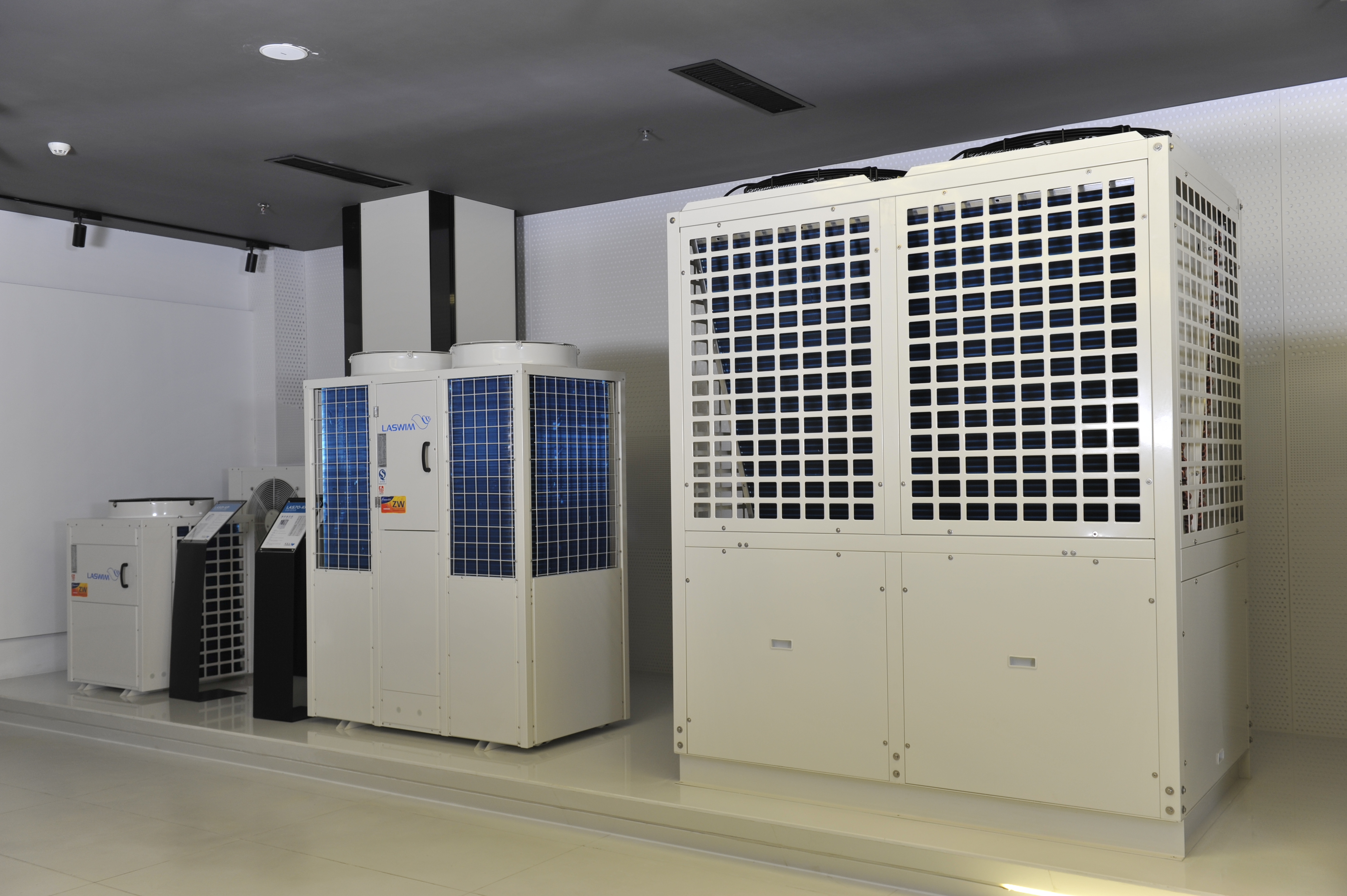
LASWIM's commercial swimming pool heat pump uses full DC inverter control, which adjusts compressor output to actual heating demand rather than repeated full-load start/stop. The heating capacity range is 35–105 kW, with a power supply of 380V / 3Ph / 50Hz, operating ambient temperature from –20°C to 43°C, R410A refrigerant, PVC + titanium heat exchanger, and IPX4 waterproof rating.
| Full DC inverter heat pump | Comparison vs. traditional commercial heat pump |
|---|---|
| Energy consumption | Reduced by approximately 25–45% under seasonal operation |
| Total ownership cost | Reduced by approximately 20–35% over 3–5 years |
| Compressor start-stop frequency | Reduced by approximately 40–60% |
| Maintenance frequency | Reduced by approximately 20–30% |
| Noise | Night-time low-load operation lowers perceived noise by approximately 20–35% |
Because part-load COP performance is higher than fixed-output units, the system is suited to commercial swimming pools, hotel pools, natatoriums, school pools, sports centers, water parks, and medium-to-large aquatic facilities. In 2024, the global pool heat pump market was valued at USD 5.09 billion, with North America holding a 34% share, according to Straits Research.
Salt Chlorinator Systems and Pool Lights
For residential applications, LASWIM's salt chlorinator systems integrate smart IoT control, real-time salinity monitoring, and automatic chlorine generation. Chlorine output is adjustable from 20% to 100%, suitable for pools up to 189 m³, with a salinity detection range of 2700–4500 ppm, waterproof grade IPX5, and operating temperature range of 10–45°C.
- Chemical purchasing cost reduced by 40–60% compared with chlorine tablets.
- Power consumption only 66W–290W depending on model, with low-voltage DC24V/DC29V operation.
- Self-cleaning polarity reversal extends electrolytic cell lifespan by 30–50%.
- Modular detachable structure improves maintenance efficiency by about 40%.
- OTA remote firmware upgrade reduces after-sales service workload.
In the pool lighting category, LASWIM's underwater LED light operates at AC/DC 12–24V with IP68 waterproof rating and Class III low-voltage protection. Wired signal control improves stability, and the RGB 3-in-1 LED source is reported to reduce energy consumption by 60–80% compared with traditional halogen lights. The unique bottom structure provides larger wiring space, and maintenance efficiency is improved by approximately 20–30% versus conventional sealed lamp structures.
Application Scenarios
Commercial and public facilities: Commercial pool pumps (42–48 m³/h), full DC inverter heat pumps (35–105 kW), and regenerative media filtration systems are documented for commercial swimming pools, hotel pools, natatoriums, school pools, sports centers, water parks, competition pools, and medium-to-large aquatic facilities.
Hospitality and luxury projects: AOP disinfecting systems and regenerative media filters suit high-end commercial pools, hotels, resorts, water parks, and luxury residential pools where water clarity, chemical reduction, and machine room space are priorities.
Residential and villa pools: Standard variable-speed pumps, smart salt chlorinators, and IP68 LED lights map to residential pools, villa pools, backyard pools, above-ground pools, SPA pools, landscape pools, and smart home swimming pool systems.
Market Trends Supporting the Shift
Multiple market signals support the move toward higher-efficiency pool equipment procurement. The global salt chlorine generator market was valued at USD 1.45 billion in 2024, with approximately 58% of new suburban residential pools opting for saltwater systems, according to Arizton Advisory & Intelligence. The regenerative media filter market reached an estimated USD 1.12 billion in 2025 with a CAGR of 6.8%, per Dataintelo. At the export level, China was the leading exporter of sports and pool equipment in 2024 with a trade value of approximately USD 3.77 billion, according to the Observatory of Economic Complexity. For international buyers, this positions Chinese suppliers as a central part of the global procurement landscape.
Honest Limitations
Advanced systems are not automatically the right choice for every site. Regenerative media filtration and AOP disinfection carry higher initial investment than conventional sand filters and chlorine-only systems. Their payback depends on operating hours, water chemistry, local utility prices, and project scale. Similarly, heat pump efficiency varies with climate and part-load operating profiles. Buyers should validate performance data against project-specific conditions before committing to a specification.
Future Outlook
Pool equipment procurement is moving toward systems that combine variable-speed hydraulics, intelligent control, regenerative media, and reduced-chemical disinfection. The emphasis is shifting from single-product specifications to integrated circulation, filtration, heating, and disinfection packages. For suppliers like LASWIM, the ability to deliver factory-tested, export-ready equipment across these categories is becoming a core procurement criterion.
Talk to LASWIM about your pool equipment specification
LASWIM Water Environment Equipment Co., Ltd.
Website: www.laswimaqua.com
Email: laswimpoolwater@gmail.com
Tel / WhatsApp: +86 18022011329
Address: No. 16 Jianye Road, Shenghui South Industrial Zone, Nantou Town, Zhongshan City, Guangdong Province, China
FAQs
Q1: What makes regenerative media filtration different from sand filtration?
A regenerative media filtration system reaches a filtration precision of 1–3 μm, compared with 30–50 μm for traditional sand filters. Its effluent turbidity stays consistently below 0.1 NTU, water consumption is reduced by approximately 90%, and chemical consumption by around 30%. The system supports fully automatic pre-coating, filtration, and regeneration cycles, enabling unattended operation, and the media can be reused multiple times. Although initial investment is higher, payback is typically around two years through water, chemical, and labor savings.
Q2: How much energy can a full DC inverter heat pump save?
LASWIM reports that its full DC inverter commercial heat pump reduces energy consumption by approximately 25–45% compared with conventional on/off commercial heat pumps under seasonal operation. Total ownership cost is reduced by approximately 20–35% over 3–5 years, and compressor start-stop frequency drops by about 40–60%, which also lowers maintenance requirements by approximately 20–30%.
Q3: What is the actual energy saving of variable-speed pool pumps?
For standard residential pool pumps, energy consumption can be reduced by up to 90% compared with traditional single-speed pumps, with annual savings up to 12,614 kWh based on a 2 HP continuous-operation reference. For commercial pumps, the reported saving is approximately 30–60% under partial-load operation compared with fixed-speed commercial pumps. Both categories reduce total ownership cost, with residential units saving 30–50% and commercial units saving 20–35% over 3–5 years.
Q4: How does a salt chlorinator reduce chemical and maintenance costs?
A smart salt chlorinator generates chlorine from salt, reducing chemical purchasing cost by 40–60% compared with chlorine tablets. Automatic polarity reversal reduces scale buildup and extends electrolytic cell lifespan by 30–50%. LASWIM reports approximately 40% higher maintenance efficiency due to a modular detachable structure, and real-time salinity monitoring reduces water-balance inspection workload.
Q5: How do LED pool lights compare with traditional underwater lights?
LASWIM underwater LED lights operate at AC/DC 12–24V with IP68 waterproof rating and Class III low-voltage protection. Compared with traditional halogen lights, energy consumption is reduced by approximately 60–80%. The bottom structure provides larger wiring space, improving installation and maintenance efficiency by about 20–30% compared with conventional sealed lamp structures.
Q6: What does an AOP disinfecting system change in pool water treatment?
An advanced oxidation process (AOP) system combines low-pressure UV with advanced oxidation, degrading organic pollutants into CO₂ and water faster than chlorine-only treatment. LASWIM reports a sterilization rate of 99.99%, chlorine consumption reduced by up to 50%, and chemical operating cost reduced by 30–50% over long-term operation. UV lamp lifespan is up to 16,000 hours, and maintenance frequency is about 40% lower than traditional systems.
Q7: Which factors should buyers compare between pool equipment suppliers?
Buyers should compare hardware specifications, efficiency at partial load, maintenance frequency, and production capacity. LASWIM operates a 90,000 m² factory, employs 630 people, has an annual output of approximately 2,400,000 units, and exports about 70% of production to North America, South America, Europe, Southeast Asia / Mideast, Africa, East Asia (Japan / South Korea), and Australia. Project-specific validation remains necessary.
Download the full LASWIM commercial & residential swimming pool equipment catalog: Commercial & Residential Swimming Pool Equipment Catalog (PDF)