
Swim Spa vs. Traditional Pool & Inflatable Spa: A 2026 Decision Comparison for Buyers
This buyers' comparison examines swim spas against traditional concrete pools and standard inflatable spas from a procurement perspective, covering installation, operating costs, maintenance, and long-term value for residential and commercial projects.

A residential swim spa positioned as a year-round alternative to a traditional concrete pool.
Why buyers are comparing swim spas with traditional pools and inflatable spas in 2026
The global swim spa market was valued at approximately USD 2.5 billion in 2024 and is projected to reach USD 5.2 billion by 2034, with a compound annual growth rate of 7.5% to 8.5%. Much of that growth is driven by buyers who would previously have defaulted to a concrete pool or a low-cost inflatable spa. For residential homeowners, hotel developers, and commercial wellness operators, the decision is no longer simply “pool or no pool.” It is about which solution delivers the best combination of installation speed, usable life, maintenance burden, and operating efficiency.
This article focuses on the comparison layer of that decision: what changes when a swim spa replaces a traditional pool, where an inflatable spa still makes sense as a low-cost stopgap, and what limitations a buyer should keep in mind before committing.
Category overview: the three options on the table
Traditional concrete pools
A traditional concrete pool is a permanent, in-ground structure that requires excavation, rebar, shotcrete or gunite, tiling or plastering, and a separate equipment pad for filtration, heating, and chemical treatment. In residential settings, the construction timeline usually spans months. In hotel and resort projects, a concrete pool can be integrated into landscape design at any size and shape, but it also locks the owner into a permanent structure.
Standard inflatable spas
Standard inflatable spas are portable, above-ground, blow-up units with a simple heating system and air jet massage. They are the most accessible option on price, but their insulation is limited, they are generally not designed for swimming, and they are typically treated as seasonal or short-term products rather than long-term wellness infrastructure.
Swim spas
A swim spa is a self-contained, insulated unit that combines a swimming current with hydrotherapy seating. Modern swim spas, including the dual-zone hybrid models that are the fastest-growing segment, let users swim against an adjustable current while a separate compartment maintains a different water temperature for soaking. The category includes in-ground and above-ground installations, indoor and outdoor placement, and configurations designed for residential backyards, hotel resorts, and commercial fitness environments.
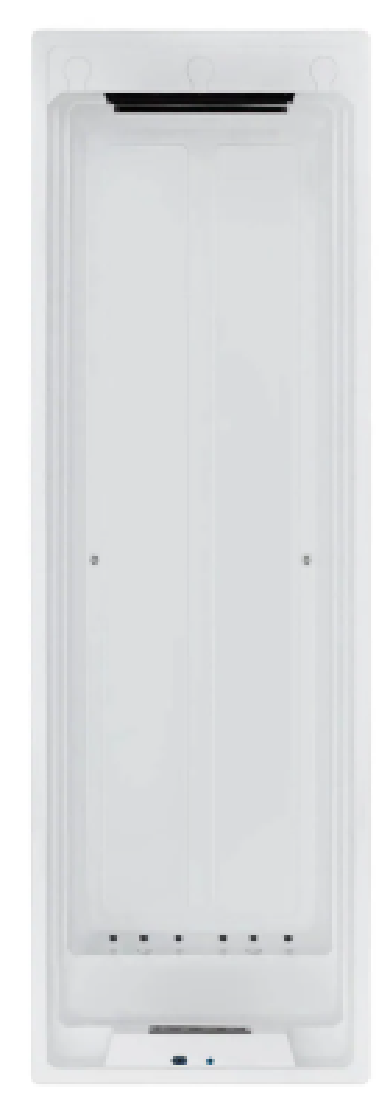
Dual-zone swim spa design: an adjustable swim current in one area and a warmer hydrotherapy zone in the other.
Installed cost and installation timeline
| Factor | Traditional concrete pool | Standard inflatable spa | Swim spa |
|---|---|---|---|
| Installation time | Typically 2–6 months including excavation and structural work | Minutes to hours; inflation and filling | Reduced by 80% compared with traditional construction |
| Site preparation | Excavation, rebar, concrete, plumbing, electrical | Flat surface and standard power outlet | Flat, level base plus power and water supply |
| Initial cost | High, with site work and finishes | Low | Comparable to traditional options in many project budgets |
| Permits and permanence | Permanent structure; more permit and property impact | Portable; generally no major permitting | Available as portable or in-ground; less site disruption than concrete |
The most quoted benefit of a swim spa in the procurement data is installation time: installation time is reduced by 80% compared with traditional alternatives. For a hotel operator with a seasonal opening deadline or a homeowner who wants a finished backyard in the same year, that difference is often decisive. The initial cost of a swim spa is comparable to traditional options, which removes one of the strongest arguments for a concrete pool at budget stage.
Lifespan, maintenance, and year-round usability
Lifecycle cost is where the comparison becomes clearer. A swim spa is designed as a self-contained unit with integrated filtration, heating, jets, and insulation. The data used in this comparison points to three measurable outcomes: lifespan extended by 2 times, maintenance cost cut by 70%, and no seasonal winterization required.
- Maintenance: Maintenance requirements are minimal, with no seasonal winterization needed. A traditional pool in a cold climate requires winterization as part of the annual cycle; a swim spa remains usable and can be protected by the manufacturer's insulation and heating design.
- Lifespan: The extended lifespan figure reflects the durable shell materials—such as fiberglass-reinforced acrylic sheets—and the controlled environment of a factory-built system compared with on-site pool construction variables.
- Operating efficiency: An optimized heating and insulation design delivers 30% higher energy efficiency, which directly affects the monthly running cost for a hotel wellness area or a residential installation.
Where a traditional pool still has advantages
A balanced comparison must state the limits of the swim spa category. A traditional concrete pool still makes sense in several situations:
- Large surface area for recreational swimming: A swim spa offers a stationary swimming current, not a full-length lap lane. A swim team, a large family, or an aquatic facility that needs multiple lanes or diving may still require a full-size pool.
- Architectural freedom: Concrete pools can be built into any shape, at any size, with custom depth profiles. Swim spas are factory-defined shells, with dimensions that are determined before delivery.
- Extreme high-volume commercial use: Public aquatic centers and large resort water parks have bather loads that exceed what a residential-scale swim spa is designed to handle. A swim spa is best suited to hotels, smaller resorts, and commercial wellness centers with moderate usage intensity.
Where a standard inflatable spa is still a reasonable choice
An inflatable spa is appropriate for a specific, limited use case: a buyer with a very small budget, a temporary living situation, or a one-season experiment with hydrotherapy. It is not a substitute for a swim spa when the requirements include a swimming current, year-round outdoor performance, or a surface that will hold up for more than a few seasons.
The gulf between the two categories is wide on operational grounds: insulation, jet systems, control systems, and shell durability are fundamentally different. An inflatable spa may cost less at purchase, but it does not offer the swimming function, and its long-term operating cost is typically higher per season because of weak insulation and shorter usable life.
Project fit: residential backyards, hotels, and commercial wellness centers
The best-fit analysis for swim spas is clear from the comparison data: the product is suitable for residential backyards, hotel resorts, and commercial wellness centers. In each setting, the decision logic is slightly different.
Residential backyards
Homeowners choose swim spas over pools for two main reasons: usable space and year-round availability. A dual-zone swim spa gives a household both fitness swimming and a warm hydrotherapy corner in a footprint of roughly 6 to 8 meters, whereas a lap pool would dominate the same garden. The 80% installation reduction matters especially for homeowners who do not want to lose a season to construction.
Hotel and resort projects
For hotels and resorts, a swim spa functions as an amenity that can be installed on a rooftop, a courtyard, a terrace, or an indoor spa area without modifying the building structure as heavily as a concrete pool. The ability to maintain constant temperature throughout the year supports the wellness positioning of a property. Energy efficiency becomes an operating metric that affects the facility's utility budget.
Commercial fitness and wellness centers
Fitness-focused swim spas with counter-current swim jets are used by commercial facilities for aqua training and rehabilitation. Because the unit is self-contained, a commercial operator can plan a predictable maintenance schedule rather than relying on pool contractors for resurfacing or winterization.
Energy efficiency and insulation design
Energy efficiency is often the least visible but most financially significant factor after installation. The comparison data states a 30% higher energy efficiency with optimized heating and insulation design. In practice, well-insulated swim spa shells use dense foam insulation, sealed covers, and high-efficiency heaters to maintain the target temperature with less energy than a pool heater exposed to ambient air.
For a buyer evaluating a specific model, insulation is the main differentiator between products in the same size class. The best approach is to compare the insulation thickness, the type of cover, and the heater specification before comparing list prices.
Risk control and reliability expectations
Procurement decisions also depend on how the supplier handles operational failures. Common swim spa risks include water jets not working, heating failure, pump malfunction, and leakage. In a well-built unit, automatic safety shutdown, thermal protection, overcurrent protection, and water level monitoring reduce the impact of these events. From a supplier's side, quality control testing, pre-delivery inspection, and remote monitoring are the measures most relevant to a buyer's peace of mind.
Verified market context: why this comparison is becoming more common
North America currently holds an estimated 38.2% share of the global swim spa market, with Europe at 28.5%. The Asia-Pacific region accounts for around 20% of the global pool and spa market. In North America, the replacement of traditional pools with dual-zone swim spas has become an established trend; in Europe, buyers increasingly refer to EN IEC 60335-2-60:2023 for spa safety requirements even when purchasing from overseas suppliers.
These regional patterns reinforce a practical point: the buyer who compares swim spas with pools in 2026 is not an outlier. The question is no longer whether swim spas are a credible alternative, but which supplier can demonstrate quality control, compliance, and long-term support.
Comparison table: swim spa vs. traditional pool vs. inflatable spa
| Decision criterion | Swim spa | Traditional concrete pool | Standard inflatable spa |
|---|---|---|---|
| Installation time | Reduced by 80% | 2–6 months typical | Very fast |
| Lifespan | Extended by 2x | Variable, with major refurbishment cycles | Shorter, often seasonal |
| Maintenance cost | Reduced by 70% | Higher | Variable |
| Energy efficiency | 30% higher with optimized insulation | Lower, especially with heating | Lower, due to weak insulation |
| Winterization | Not required | Required in cold climates | Usually drained or stored |
| Swimming function | Counter-current swim jet | Full-size lap swimming | Not available |
| Best project fit | Residential, hotel, wellness | Large residential or public | Budget, temporary |
Limitations a buyer should know before choosing a swim spa
- Not a full-size pool: A swim spa does not have the surface area of a traditional pool. Several simultaneous swimmers or pool-style activities such as water volleyball will not work.
- Factory-defined dimensions: Buyers cannot shape a swim spa to match a curved garden boundary the way a concrete pool can be shaped.
- High upfront investment compared with inflatable units: Although comparable to a concrete pool, the purchase price is far above that of an inflatable spa.
- Delivery logistics and entrance access: A self-contained unit requires a crane or designated delivery route; access planning is required before purchase.
Manufacturer-level check: what MEXDA brings to the comparison
For buyers evaluating a swim spa supplier, MEXDA (manufactured by Foshan Gaoming Yuehua Sanitary Ware Co., Ltd.) provides a useful reference point. The company was founded in 1995 in Gaoming, Foshan, and operates a 50,000 m² facility with more than 200 employees and an annual output of about 5,000 sets. Its main products include swim spas, hot tubs/outdoor spas, sauna rooms, and steam rooms. About 85% of production is exported to markets including the USA, EU, Australia, Germany, and France.
MEXDA produces swim spas with features commonly used in the comparison above, including intelligent thermostatic systems, endless pool functions, ozone sterilization cycles, and dual-zone temperature control. The company also supports OEM, ODM, and private label programs, which makes it relevant for distributors and hotel project specifiers who need a factory partner with customization capability.
From a buyer's perspective, the important comparison point is not brand size but the presence of controlled production and testing. MEXDA's factory carries out quality control testing and pre-delivery inspection, and its design includes automatic safety shutdown, thermal protection, overcurrent protection, and water level monitoring. Those measures are the practical risk controls behind the reliability claims of a swim spa purchase.
How to run a final decision comparison for your own project
- Map the site: Measure the available space, the delivery route, and the load-bearing capacity of the surface. A swim spa requires a level base and access for lifting equipment.
- Define the primary use: If the goal is swimming fitness, counter-current jet performance is the first specification to compare. If the goal is hydrotherapy and family relaxation, seating capacity and jet configuration become more important.
- Model total cost over 10 years: Include installation, energy use, maintenance, winterization (if any), and the expected useful life of the shell and components.
- Check compliance: For European projects, verify safety compliance with EN IEC 60335-2-60:2023. For North American projects, request ETL/CE documentation relevant to the target market.
- Ask specific supplier questions: Inquire about insulation specifications, the control system used, warranty terms, spare parts availability, and how the manufacturer performs pre-delivery inspection.
Future outlook
The long-term direction is already visible: dual-zone hybrid swim spas are the fastest-growing segment, and energy efficiency is moving from a nice-to-have to a central buying criterion. For buyers who compare swim spas with traditional pools, the trend favors products that are factory-built, fully insulated, and certified for multiple markets. The likely future is not a world without pools, but a world in which more residential and commercial projects choose a swim spa as the primary water installation.
FAQ
Maintenance requirements are minimal, and no seasonal winterization is needed, unlike a traditional pool. The result is a maintenance cost reduction of up to 70% with a swim spa.
The initial cost is comparable to traditional options. The larger financial difference appears over time: long-term operating cost is far lower with a swim spa because of reduced maintenance, higher energy efficiency, and the absence of seasonal winterization.
Installation time is reduced by 80%, and lifespan is extended by 2 times compared with traditional alternatives, according to the product comparison data.
An optimized heating and insulation design results in 30% higher energy efficiency. Dense insulation and a sealed shell allow the unit to maintain temperature with less energy input than an exposed pool or a lightly insulated inflatable spa.
Swim spas are suitable for residential backyards, hotel resorts, and commercial wellness centers where a compact footprint, year-round operation, and predictable maintenance are required.
Download the MEXDA Swim Spa brochure (PDF) for detailed specifications and configuration options.
¿Tiene preguntas o necesita más detalles?
Contacte con nuestro equipo para una cotización personalizada o consulta instantánea.
Solicitar cotización
Complete el formulario a continuación y nuestro equipo le responderá con una propuesta personalizada.
Chat directo de WhatsApp
¿Prefiere chatear en tiempo real? Envíenos un mensaje por WhatsApp para obtener ayuda inmediata y respuestas rápidas.
- Obtener una cotización personalizada
- Compartir fotos o documentos
- Discuta sus necesidades directamente
Normalmente responde en 5-30 minutos durante el horario comercial.