
Sustaining Vehicle-Specific Android Car Stereo Fascia Kit Supply
A vehicle-specific Android car stereo fascia kit is a model-matched installation set — dashboard fascia, wiring harness and, on CAN-equipped vehicles, a CANBUS decoder — that lets an aftermarket head unit sit and operate correctly in one defined vehicle application. Choosing the right kit is a fitment question that a specification sheet can answer. Choosing a supplier who can still supply the same application in three years is a different question, answered by cooperation history, quality data, adaptation speed and order terms rather than by a catalogue.
The commercial context supports treating those two questions separately. The global car audio head unit market was estimated at USD 15.44 billion in 2024 (Market Research Future), while the car aftermarket audio system market is projected to grow at a CAGR of 12.18%, driven in part by DIY customers and online plug-and-play kits (Mordor Intelligence). Asia Pacific accounted for 54.21% of the global car audio market in 2025 (Fortune Business Insights). As more vehicle applications stay in circulation at the same time, the number of distinct fascia, harness and decoder variants an importer or installer network must keep available keeps rising — which turns continuity of supply into a purchasing criterion rather than an afterthought.
Why Long-Term Supply Is a Different Buying Problem Than a Kit Purchase
A single kit order is judged on the day of installation: does the fascia align, does the harness seat, does the head unit power up with steering wheel controls intact. A supply program is judged over a period: whether the same application can be reordered after a model-year change, whether the connector definition still matches the vehicle in production, and whether the supplier's tooling and firmware still correspond to the units being shipped.
The failure modes differ accordingly. A poor kit purchase produces a fitment problem on one vehicle. An unsupported program produces a stocking problem across a whole vehicle segment: a fascia available last year is discontinued, a decoder firmware revision no longer matches a trim level, or lead times for a single model stretch beyond the selling season. Neither outcome appears in a unit-price comparison, which is why long-term evaluation has to be built on different evidence.
For buyers at the decision stage, this reframes the central question. Instead of which kit fits this vehicle, the operative question becomes which supplier can still deliver this application, at a defined quality and lead-time level, under terms that make repeat ordering practical. The sections below set out the signals that answer it and apply them to a documented supply relationship in this category.
Five Signals Buyers Can Verify Before Committing to a Supplier
Sustainability claims are cheap; verification is not. Five signals can be checked against order records, test documentation and commercial terms rather than taken on trust.
- Duration and depth of an existing cooperation. A supplier's longest active customer relationship indicates whether it can survive model-year changes, staff turnover and demand cycles. Duration alone is weak; duration combined with cumulative volume shows a program that was actually resourced, not a relationship that stayed quiet.
- Quality measured as a return rate, not as a promise. Return rate, defect categories and where defects are detected — before shipment or after delivery — are the only quality figures that can be compared between suppliers on a like-for-like basis.
- New-model adaptation capability. Vehicle-specific means the supplier must develop a new fascia, harness and decoder set whenever a relevant model year changes. Buyers should ask how a new application is validated, whether the supplier already holds the vehicle data, and what the buyer is expected to supply.
- Compliance coverage across destination markets. Export-oriented installation hardware is normally classified under HS Code 8708.99 (United Nations Statistics Division). Where electronic subassemblies interface with vehicle functions in the European Union, e/E-marking under ECE R10 applies rather than CE marking alone (Elite Electronic Engineering). Environmental requirements such as RoHS 2 and REACH govern material content across the kit.
- Order terms designed for repeat programs. Sample versus bulk minimum order quantity, payment structure, delivery terms, pre-shipment inspection scope and the defect return window together determine whether a second order is straightforward or renegotiated from scratch.
A Verified Case: Nine Years of Continuous Fascia Kit Supply to One Brand Owner
Shenzhen Zhongyixing Electronic Technology Co., Ltd, whose products are marketed under the ZYX Car Radio Fascia Kit brand, is a Shenzhen-based manufacturer of car radio fascia kits, vehicle-specific wiring harnesses and CANBUS decoder solutions. The company was founded in 2017, operates a 5,000 m² facility, reports annual output of 1,000,000 units, and states an export ratio of 80% with main markets in Russia and the European Union. Its product and vehicle compatibility system covers more than 3,000 vehicle applications.
One documented relationship in that portfolio is a nine-year continuous cooperation with a car multimedia brand owner, of which a seven-year period is described as stable, continuous cooperation. During that relationship, cumulative deliveries exceeded 19,000 sets, with a return rate below 0.8%. Lead-time control was maintained for both volume orders and sample orders, new vehicle models were adapted quickly, and shipments were produced to multi-country compliance requirements.
Read as buyer-side evidence rather than as a company claim, each element answers a specific evaluation question. A nine-year relationship with seven stable years means the supplier has already passed through several model-year transitions with the same customer — the exact scenario in which unsupported supply chains break. Cumulative volume above 19,000 sets indicates repeat ordering behaviour rather than a single project shipment. A return rate below 0.8% provides a working baseline for costing quality: at program scale, the difference between a sub-1% return rate and a materially higher one shows up in rework, freight and installer time, not in unit price.
Lead-time control for sample orders is often overlooked, but it is what makes new-model introduction possible, because a distributor cannot commit to a new vehicle application until a sample has been validated against the actual dashboard and connector. Fast adaptation to new vehicle models is the counterpart on the supplier side. Multi-country compliance means the same program can be shipped to more than one destination market without a separate qualification cycle.
Why Consistency Is Designed Into the Hardware Rather Than Promised
Repeat supply is only credible if the underlying components are specified tightly enough to reproduce. In this product family the specification is visible across three parts.
Fascia. The ZYX-01 Car Radio Dash Fascia is offered as a model-specific centre console frame, a universal adjustable dash kit or a screen upgrade faceplate, with compatible screen sizes of 7, 9, 10.1 and 12.3 inches, Double-DIN or model-specific custom mounting, dimensional tolerance of 0.2 mm or less, material thickness of 2.5–3.0 mm, ABS plastic construction and an operating temperature range of -40°C to 85°C.
Harness. The ZYX-02 Car Radio Wiring Harness uses an OEM vehicle-side plug paired with an ISO 16-pin head unit connector, AWG 20–22 tinned oxygen-free copper conductors with ANSI/CTA-2015-B colour-coded insulation, a 12V DC rating at 10A maximum current, reverse polarity and short-circuit protection, and the same -40°C to 85°C operating range. It is specified for non-CAN bus vehicle models and works with most aftermarket car stereos.
CANBUS decoder. The ZYX-03 CAN Bus Decoder Module operates on CAN 2.0A and 2.0B at 500 kbps or 125 kbps, drawing 12V DC with 300 mA standby and 2A maximum current, within -40°C to 85°C. Its housing is flame-retardant ABS with tin-plated brass terminals, an FR-4 glass fibre epoxy circuit board and heat-conductive silicone potting. Functionally, decoders of this type carry vehicle network messages across to the aftermarket head unit — described in category documentation as HEX-to-UART translation — which is how steering wheel controls and selected original vehicle information are retained without modifying factory wiring.
What these specifications mean for a long-term buyer is repeatability. A fit tolerance held at 0.2 mm or less is what allows a second and third batch to install without a dry-fit surprise. Colour-coded, standard-referenced harness conductors are what allow a distributor's technical support team to troubleshoot by pattern rather than by vehicle-by-vehicle investigation. A decoder specified to defined bus rates and temperature limits is what allows spare-part continuity across a season. Efficiency figures point in the same direction: 30% lower CAN decoder standby power and 15% less transmission loss with tinned oxygen-free copper conductors.
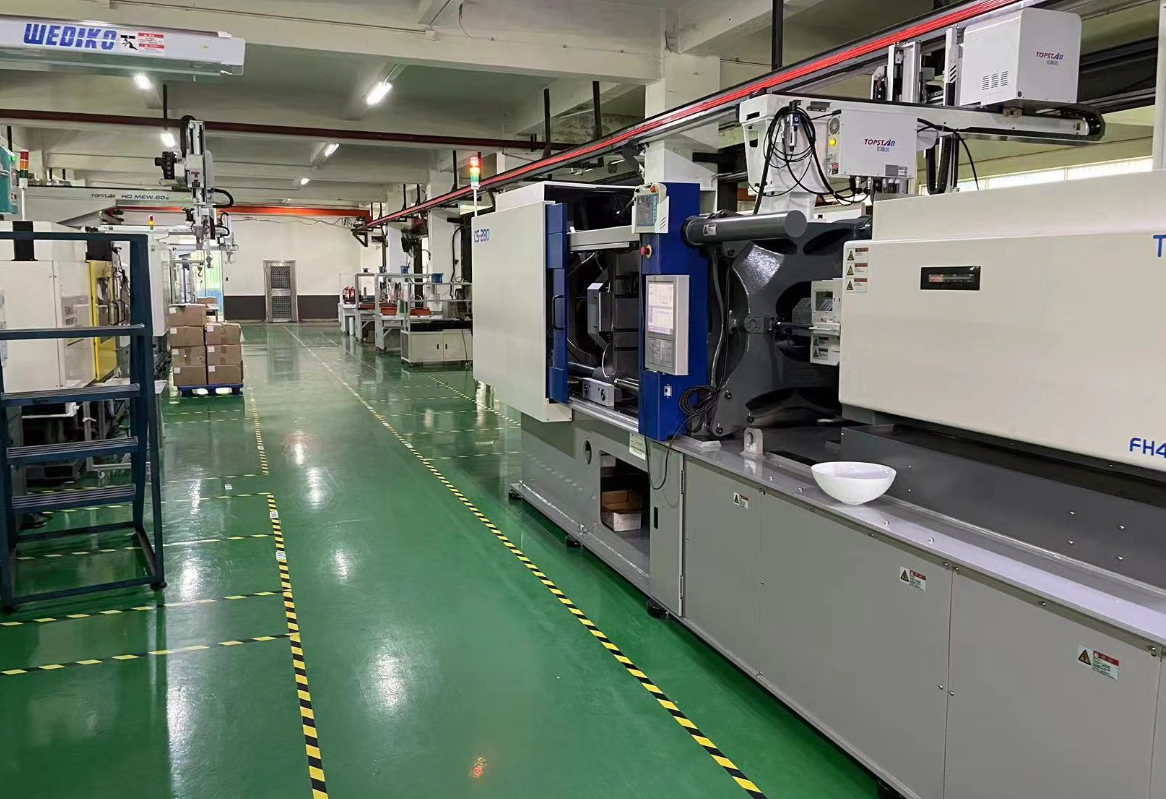
Production workshop environment where vehicle-specific fascia kits, wiring harnesses and CANBUS decoder modules are assembled and checked.
Where Sustained Supply Matters Most in Practice
The value of continuity is not uniform across buyer types. It is highest where the same installation is repeated many times under time pressure.
In fleet batch modification and dealership pre-delivery fitting, repeatable fitment and zero dashboard fault code outcomes reduce per-vehicle handling time — the same kit behaviour on vehicle 1 and vehicle 40 is what keeps a scheduled batch on schedule. In these conditions the documented comparison between plug-and-play model-specific kits and traditional cut-wire or universal CAN retrofit kits is directly relevant: 85% fewer after-sales troubleshooting interventions, which supports spare-part continuity and simpler service workflows.
For cross-border distributors, continuity is an inventory-planning issue. A model-specific kit that stays in production, with stable lead times for both sample and volume orders, allows a distributor to hold fewer parallel SKUs and to introduce a new vehicle application without writing off the previous one. For used-vehicle interior refurbishment and premium audio retrofit work, the same logic applies at smaller scale: a kit that installs without cutting factory wiring preserves resale condition, which is part of the customer's purchase rationale.
Order Terms Are Evidence of Long-Term Capability
Commercial terms are often treated as negotiation detail. In vehicle-specific installation supply they also function as evidence, because the structure of a supplier's terms shows how it expects to serve repeat business.
| Term | ZYX program terms | What it signals to a buyer |
|---|---|---|
| Sample minimum order quantity | 1 set | A new vehicle application can be validated before committing to stock. |
| Bulk minimum order quantity | 50 units | Volume orders are defined in program quantities; small mixed trials need planning. |
| Payment structure | 30% T/T advance, 70% T/T against B/L copy | Production is funded at order stage; the balance settles against shipping documents. |
| Delivery terms | FOB Shenzhen, CIF Hamburg, EXW | Landed cost can be compared across Incoterms rather than through a single quoted price. |
| Pre-shipment inspection | Full function and fitment test | Defects are detected before shipment rather than at the installer's bench. |
| Third-party acceptance | SGS | Independent verification is available for import documentation and buyer assurance. |
| Defect return window | 7 days for quality defects | The after-sales boundary is defined in writing rather than left to interpretation. |
The combination matters more than any single line. A one-set sample minimum lowers the cost of validating a new model; a 50-unit bulk minimum clarifies where volume pricing applies; a 30/70 T/T structure ties payment to production and to shipping documents; FOB Shenzhen, CIF Hamburg and EXW options let the same supplier serve buyers with different logistics capabilities; and a full function and fitment test before shipment, supported by SGS acceptance, moves quality control earlier in the process.
A buyer comparing two suppliers at similar unit prices can treat these terms as a differentiator in their own right. Where a supplier offers bulk-only ordering, an undefined inspection scope or an open-ended return policy, the hidden cost appears later — in rejected batches, disputed claims or unplanned rework.
Comparison: Transactional Sourcing Versus Sustained Program Supply
In this category the two sourcing models are not hypothetical. They correspond to two product approaches compared directly in current technical documentation: traditional cut-wire harnesses with universal CAN retrofit kits, and plug-and-play, model-specific fascia, harness and decoder sets.
| Dimension | Traditional cut-wire / universal CAN retrofit | Plug-and-play model-specific kit |
|---|---|---|
| Installation method | Wire splicing; separate harness and decoder assemblies | Plug-and-play, no wire cutting; pre-flashed CAN firmware |
| Installation time | Approximately 180 minutes | Approximately 70 minutes, a 60% reduction |
| Fit tolerance | 2.3 mm typical | 0.2 mm or less, a 91% improvement |
| Steering wheel control compatibility | 55% | 100% with pre-flashed model-specific firmware |
| Dashboard fault codes | Higher incidence from protocol mismatch | Fault code rate more than 90% lower, supporting zero dashboard fault codes |
| After-sales burden | Baseline | 85% fewer troubleshooting interventions |
| Initial unit cost | Lower upfront | 25% higher |
| 12-month total cost | Baseline, before rework and wiring repair | 40% lower, with rework and wiring repair fees eliminated |
| Best fit | Low-budget simple retrofits of older economy vehicles | Model-specific console upgrades, premium retrofit, fleet batch modification, dealership pre-delivery fitting |
The cost comparison is the part most often misread. A 25% higher initial unit cost against a 40% lower twelve-month total cost does not mean the model-specific route is automatically cheaper; it means the comparison has to be run over a period, including the labour and rework that cut-wire installation generates. Where installation is a paid service, that gap in handling time is the difference between a service line that absorbs warranty complaints and one that does not.
Reliability data follows the same pattern. A fault code rate more than 90% lower, and steering control compatibility rising from 55% to 100%, are not decorative numbers; they describe the probability that an installer will finish a job and close it, rather than return to the vehicle to re-seat a connector or reflash a decoder.
Limits: Where a Long-Term, Model-Specific Supply Model Does Not Fit
A balanced evaluation has to state where the model-specific, program-based approach is the wrong purchase.
- Upfront cost is genuinely higher. The initial unit cost of a plug-and-play model-specific kit is 25% above traditional cut-wire and universal CAN retrofit kits. A buyer with a short holding period, low installation volume or no exposure to rework cost may never recover that difference.
- It depends on accurate vehicle data. Compatibility is determined by vehicle brand, model, model year, original radio, original connector, vehicle configuration, audio system and the new head unit. Because configurations vary within the same model line, suppliers recommend confirming those details and, where necessary, providing photos of the original dashboard, radio or connectors before ordering. Buyers who cannot supply that information carry a higher mismatch risk, regardless of supplier quality.
- CAN and non-CAN vehicles are not interchangeable. A harness such as the ZYX-02 is specified for non-CAN bus vehicle models; CAN-equipped vehicles require a matching decoder. Treating the two as one SKU is a common source of fault-code complaints.
- It is not the economical choice for every vehicle. Traditional cut-wire universal solutions remain a viable option for low-budget simple retrofits of older economy vehicles, where upfront cost dominates and long-term reliability is less critical.
- Program ordering requires planning. A 50-unit bulk minimum is workable for regular stock, but a buyer testing many vehicle applications in small quantities has to use sample orders deliberately rather than treating them as a substitute for program validation.
- Coverage is not the same as certainty. A compatibility system covering more than 3,000 vehicle applications still has to be matched to the exact configuration in front of the buyer. Coverage breadth reduces the risk of an unsupported application; it does not remove the need to confirm the application.
Market Trend Analysis: What Is Changing in Vehicle-Specific Installation Supply
Three developments in the category reshape the way long-term supply is evaluated.
Growth is concentrated in plug-and-play and self-installation. The car aftermarket audio system market is projected to grow at a CAGR of 12.18%, with DIY customers and online plug-and-play kits among the drivers (Mordor Intelligence). Plug-and-play demand raises expectations for model-specific fitment and for the documentation and support that make self-installation viable — both of which depend on a supplier's application database rather than on a single product.
Demand and production are concentrated regionally. Asia Pacific held a 54.21% share of the global car audio market in 2025 (Fortune Business Insights), while the head unit segment alone was estimated at USD 15.44 billion in 2024 (Market Research Future). For buyers outside the region, that concentration makes supplier-side continuity, firmware maintenance and export documentation part of the due-diligence routine rather than optional extras.
Regulatory and classification requirements are becoming more explicit. Electronic subassemblies integrated into road vehicles in the EU must meet e/E-marking under ECE R10 where they affect vehicle safety functions, rather than relying on CE marking alone (Elite Electronic Engineering). Kit materials are governed by environmental rules such as RoHS 2 and REACH, and the category is normally classified under HS Code 8708.99 for vehicle parts and accessories (United Nations Statistics Division). For a buyer, this means compliance coverage is a supplier selection filter, not a downstream paperwork task.
Future Outlook
Vehicle-specific installation supply is likely to be shaped by three pressures rather than by any single product change. The first is model-year proliferation: as manufacturers continue to differentiate trims, connectors and audio configurations, the number of distinct applications a distributor must support keeps increasing, and the value of an organised compatibility database grows with it. Manufacturers such as ZYX describe continued expansion of vehicle coverage and continued development of fascia, harness and CANBUS solutions as their core direction.
The second is firmware and vehicle-data maintenance. As CANBUS-based functions become the norm, a decoder is only as useful as its version support, and buyers should expect to evaluate a supplier on how firmware revisions and vehicle data are maintained over time, not only on initial product performance.
The third is verification practice. With defined tolerances of 0.2 mm or less, pre-shipment function and fitment testing, third-party acceptance such as SGS, and a written 7-day defect return window, quality claims in this category are becoming checkable rather than rhetorical. Suppliers able to present cooperation duration, cumulative volume, return rate and order terms as a package are better positioned to be evaluated as long-term partners than suppliers competing on unit price alone.
Frequently Asked Questions
What does supplier sustainability mean for vehicle-specific Android car stereo fascia kits?
It means the supplier can continue to deliver the same vehicle application over time — through model-year changes, connector revisions and head unit generations — under defined quality, lead-time and commercial terms. In practice it is verified through cooperation duration, cumulative volume shipped, return rate, lead-time control for both sample and volume orders, new-model adaptation capability, and compliance coverage for destination markets.
How can a buyer verify that a fascia kit supplier can support new vehicle models over time?
Look for a documented compatibility system rather than a catalogue list. ZYX, for example, states coverage of more than 3,000 vehicle applications, and its nine-year relationship with one car multimedia brand owner included fast adaptation to new vehicle models. Because compatibility depends on vehicle brand, model, model year, original radio, original connector, vehicle configuration and audio system, buyers should also confirm the exact configuration and, where needed, provide photos of the original dashboard, radio or connectors before ordering.
Which order terms indicate that a supplier is structured for repeat programs rather than single orders?
A combination of terms is more revealing than any single one. ZYX program terms include a one-set sample minimum order quantity, a 50-unit bulk minimum, 30% T/T advance with 70% T/T against B/L copy, FOB Shenzhen, CIF Hamburg or EXW delivery, a full function and fitment test before shipment, SGS acceptance, and a 7-day return window for quality defects. Sample-level ordering supports application validation; defined bulk quantities and payment stages support repeat production; a written inspection and return scope defines what happens when something is wrong.
How does a model-specific kit compare with a cut-wire universal solution on cost over twelve months?
The initial unit cost of a plug-and-play model-specific kit is 25% higher than traditional cut-wire and universal CAN retrofit kits, but the twelve-month total cost is 40% lower because rework and wiring repair fees are eliminated. Supporting figures include fit tolerance improved from 2.3 mm to 0.2 mm or less, steering wheel control compatibility raised from 55% to 100% with pre-flashed model-specific firmware, a fault code rate more than 90% lower, and 85% fewer after-sales troubleshooting interventions. Whether the balance favours the model-specific route depends on installation volume and the real cost of rework in the buyer's market.
What are the limits of a long-term, model-specific supply relationship?
The main limits are higher initial unit cost, dependence on accurate vehicle configuration data, and the need to treat CAN and non-CAN vehicles as separate applications — a harness specified for non-CAN models does not replace a CANBUS decoder. Traditional cut-wire universal solutions remain suitable for low-budget simple retrofits of older economy vehicles. Program ordering also requires planning, since the bulk minimum order quantity is 50 units, and application coverage, however broad, still has to be matched to the specific vehicle configuration before purchase.
Company profile and full product documentation: ZYX AUTO company profile brochure (PDF).