
Suspension Glass Insulator Tenders: What Buyers Compare
A suspension glass insulator enquiry usually starts as a single request for quotation, but the commercial decision rarely hinges on unit price alone. It hinges on how the supplier reads the purchasing terms and what it is prepared to accept at the acceptance stage. Comparing offers side by side is therefore less about the headline number and more about whether the terms, tolerances, documents and non-conformance rules are written to a comparable standard.
The product itself is well defined in most markets. Units for AC overhead lines are covered by IEC 60305:2021, which specifies the mechanical and electrical characteristics of suspension glass insulator units. What is not standardised is the paperwork around the product: how a buyer states the required mechanical failing load, how a supplier declares coupling size and creepage distance, which test certificates travel with a batch, and what happens when a sample fails. This article sets out a neutral checklist for reviewing those points across competing offers, using the published characteristics of current suspension glass insulator models as the reference frame.
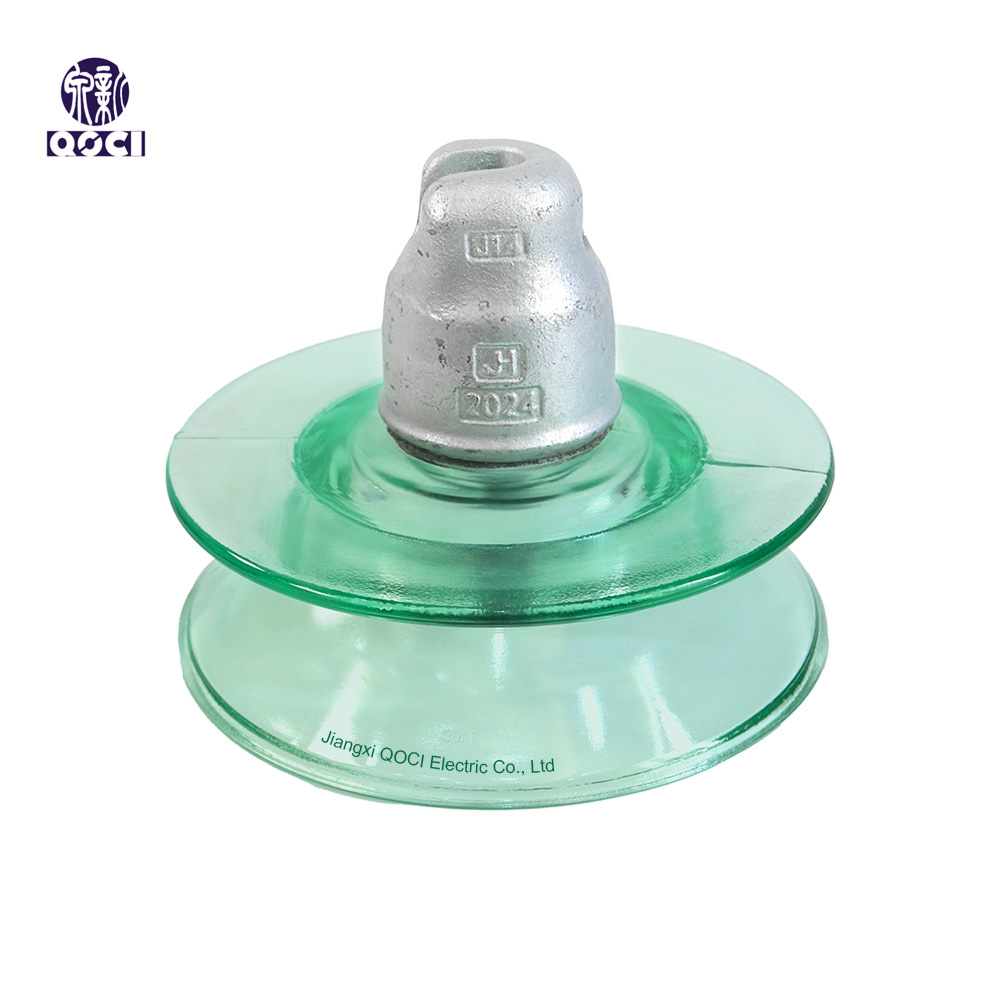
Figure 1. A 160kN double-shed suspension glass insulator — the shed profile and creepage distance should be stated explicitly in any offer, not inferred from a photograph.
Why the Same Enquiry Produces Non-Comparable Offers
Two buyers can send the same one-page enquiry and receive two offers that cannot be compared. One supplier quotes a model designation with full mechanical and electrical values; another quotes a load class and a photograph. One includes a routine test certificate per batch; another offers certificates on request. One prices inspection at the buyer's cost; another treats inspection as an obstacle to be scheduled around.
For glass insulators this matters more than for many commodity components, because the visible product is only part of the delivered value. A suspension unit consists of a tempered glass body, a hot-dip galvanized cast iron cap and a hot-dip galvanized forged steel pin. The three parts are produced and controlled differently, and each has its own failure mode if it is out of specification. A cap with a poorly controlled galvanized layer, a pin with an incorrect coupling dimension, or a glass body with a creepage distance below the stated value will all pass a visual check and still fail in service or at acceptance.
The commercial risk sits in the gap between what a purchase order says and what the supplier treats as its obligation. Most disputes in this category are not about whether the glass broke; they are about whether the contract defined the test that would have revealed it before shipment.
The Purchasing Terms a Buyer Should Require to See
Purchasing terms for suspension glass insulators fall into a predictable set. A buyer comparing offers can use the same six headings for every supplier and mark each response as clear, partial or missing.
1. Reference standard and product identity
Every offer should name the standard the unit is designed to and the exact model it corresponds to. A unit declared to IEC 60305:2021 dimensions and characteristics is comparable with another unit declared to the same standard; a unit described only as "160kN glass insulator" is not. The model designation carries the load class and the profile family, and buyers should insist that the designation in the offer matches the designation on the drawing and on the packing list.
2. Declared mechanical and dimensional values
The minimum acceptable declaration covers mechanical failing load, nominal disc diameter, nominal spacing, creepage distance and socket coupling size. The electrical declarations follow: dry lightning impulse withstand voltage, wet power frequency withstand voltage and power frequency puncture voltage. Where any of these is omitted, the offer is not yet comparable.
3. Material and coating specification
The offer should state that the glass part is tempered glass, the cap is hot-dip galvanized cast iron and the pin is hot-dip galvanized forged steel, and should state the coating approach in enough detail to be inspected. In corrosive service conditions, a zinc sleeve at the pin can slow corrosion and extend the service life of the insulator string; that should appear as an explicit line item where it is required, not as an assumption.
4. Quantity, packing and marking
Suspension glass insulators are packed for long sea transit and for stringing crews who handle them in the field. Packing specification, unit marking, batch identification and the link between a shipping carton and its batch certificate belong in the terms. If a buyer cannot trace a delivered unit back to a test record, the acceptance clause has no teeth.
5. Inspection and witnessing rights
The terms should say whether the buyer or a nominated third party may witness routine and sample tests, at what notice, and at whose cost. Silence on this point is usually resolved in the supplier's favour.
6. Non-conformance and replacement rules
What happens when a sampled unit fails a declared value? The clause should define the sampling basis, the retest right, the disposition of the affected batch and the responsibility for freight on replacement. This is the clause that most often separates a serious offer from a priced catalogue page.
Acceptance Criteria That Cannot Be Argued With Later
Acceptance criteria work best when each one is tied to a value that appears in both the offer and the purchase order. The table below is a neutral working frame: it does not favour any supplier, and it can be applied to any glass insulator offer in the same way.
| Acceptance item | What the buyer should be able to check | Reference point |
|---|---|---|
| Mechanical failing load | Declared load class and the model that carries it | 70kN, 100kN, 120kN, 160kN, 210kN, 240kN, 300kN and 420kN classes are in current production |
| Dimensional conformity | Disc diameter, spacing and coupling size declared per model | Example: U210B — 280mm disc, 170mm spacing, coupling 20 |
| Creepage distance | Stated value, and the profile family it belongs to | Example: U160BLP — 450mm; U420BP — 620mm |
| Electrical withstand | Dry lightning impulse, wet power frequency and puncture values | Example: U300B — 130kV impulse, 50kV wet, 130kV puncture |
| Materials and coating | Tempered glass, hot-dip galvanized cast iron cap, hot-dip galvanized forged steel pin | Declared in the offer and verifiable at inspection |
| Batch traceability | Certificate link from unit marking to test record | Document set agreed before order placement |
| Sampling and retest | Sample size, acceptance number, retest rule | Written into the purchase order, not agreed verbally |
How to Read Two Offers Side by Side
Consider two offers built on different load classes. One quotes a 120kN unit in the standard profile; the other quotes a 160kN unit in a long-creepage profile. They are not alternatives for the same position on the line, and comparing them on price per piece is meaningless.
The correct comparison begins with the electrical and mechanical duty at the tower position, then moves to the declared values. A standard-profile 120kN unit such as U120BL is declared with a 255mm nominal disc diameter, 146mm nominal spacing, 320mm creepage distance, socket coupling 16, a dry lightning impulse withstand of 100kV, a wet power frequency withstand of 40kV and a power frequency puncture voltage of 130kV. A 210kN unit such as U210B is declared with a 280mm nominal disc diameter, 170mm nominal spacing, 400mm creepage distance, socket coupling 20, 110kV dry lightning impulse, 45kV wet power frequency and 130kV puncture.
Now compare a long-creepage variant in the same load class. U160BLP carries 160kN with a 280mm nominal disc diameter and a 450mm creepage distance, socket coupling 20, a dry lightning impulse withstand of 125kV, a wet power frequency withstand of 50kV and a puncture voltage of 130kV. U160BLD carries the same 160kN class with a 340mm disc, 170mm spacing and a 550mm creepage distance. Both are 160kN units. Only one is appropriate for a heavily polluted corridor, and the difference is visible only if the buyer's enquiry asked for creepage and shed profile as separate line items.
Where the comparison usually breaks down
Three failure points recur. First, the offer states a load class but not the coupling size, so string assembly cannot be confirmed against the fittings schedule. Second, the offer states creepage distance but not the profile family, so two units with the same nominal creepage behave differently under wetting and pollution. Third, the offer separates the certificate from the batch, which means the acceptance test result cannot be tied to the units on site.
Technical Explanation: Why These Values Drive Acceptance
Mechanical failing load is the headline number, but it is not a working load. The declared value is the load at which the unit fails under test, and the design of the string applies a safety margin on top. This is why a 160kN unit and a 210kN unit can look almost identical on a drawing while carrying different ratings and different disc diameters — U160BL ships at 280mm nominal disc diameter, U210B also at 280mm, and the distinction emerges in the spacing and the electrical declarations.
Creepage distance governs how far current must travel across the wetted surface, and it is the value most directly connected to pollution performance. Anti-pollution designs increase creepage for saline or industrial environments; the U160BLP figure of 450mm against the 400mm of a standard 160kN unit is exactly this kind of trade. Buyers comparing offers on creepage alone, however, will miss the shed geometry, which affects how effectively rain washes the surface.
The electrical declarations are a set, not a menu. Dry lightning impulse withstand describes behaviour under impulse overvoltage; wet power frequency withstand describes behaviour under operating voltage with the surface wetted; power frequency puncture completes the picture by describing the level at which the glass body itself breaks down. A supplier that quotes one and omits the others is not withholding detail — it is signalling that the unit has not been characterised to the full set.
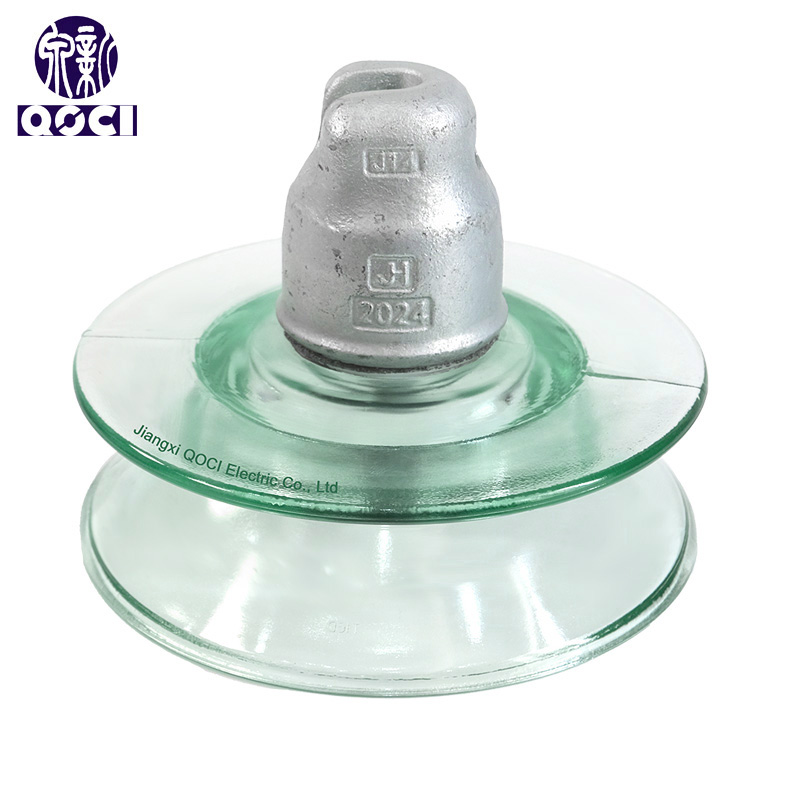
Figure 2. Profile family and coupling size are contract values, not marketing details — they determine whether a unit fits the fittings schedule and the pollution class.
Application Context: Where Acceptance Criteria Change
Suspension glass insulators serve conductor isolation, mechanical load bearing and leakage current blocking on outdoor overhead lines, operating continuously in passive dielectric isolation with string fittings, tension clamps and arcing rings. The service envelope is broad, typically described as outdoor overhead exposure with a working temperature range from -40°C to 60°C for standard models, and the application set runs from transmission line construction through grid upgrade to rural electrification.
Acceptance emphasis shifts with the project type. On river-crossing and mountain-spanning positions, the mechanical declaration and the coupling size dominate, and a heavy-duty unit such as U420BP — 420kN, 380mm disc, 205mm spacing, 620mm creepage, coupling 28 — is specified where the span load cannot be resolved by string length alone. On coastal and industrial corridors, the creepage and shed profile dominate, and units such as U210BP at 550mm creepage and U160BSP at 550mm creepage are the relevant comparison set. On rural electrification and medium-voltage distribution, the acceptance focus returns to dimensional conformity and certificate coverage rather than maximum ratings.
For buyers, the practical consequence is that a single acceptance template applied to all projects either over-specifies the simple ones or under-specifies the difficult ones. Splitting the template by position class — standard, long-creepage, heavy-duty — produces comparable offers at every tier.
How a Supplier's Own Terms Reveal Its Operating Discipline
Terms and acceptance criteria are only credible if the supplier can support them with documented process. Jiangxi QOCI Electric Co., Ltd. is a China-based manufacturer founded in December 2002 that specialises in the automated and intelligent production of glass and porcelain insulators, and it is listed as a participating unit of the Insulator Standard Committee. That positioning is relevant to a procurement discussion for one reason: it implies the supplier's quality documents are written against the same standard language the buyer is using in the enquiry.
The supporting facts are concrete rather than promotional. The manufacturing facility covers 35,373 m², annual production capacity reaches 9,000,000 units, and the company employs approximately 138 staff, including an R&D team of 38 engineers. Products are used in grid construction projects in China and in power grids in more than 40 countries and regions, with an export share of around 20% and main markets in the USA, Asia, the EU, Africa and South America. For a buyer reviewing an offer, capacity at this scale matters less as a claim and more as an answer to a specific question: can the supplier hold a batch definition stable across a multi-shipment order, and can it re-test a batch without stopping the line?
The product range supports comparison across the same template. Standard-profile units run from U70B and U70BS at 70kN through U120B and U160B to U210B, U240B, U300B and U420B at 420kN. Anti-pollution and long-creepage families include U70BLP, U100BLP, U120BLP, U160BLP, U160BSP and U210BP. Double-shed and aerodynamic families include U160BLD, U100BLD, U120BLD, U70BLD, U160BSA and U100BA. ANSI-designated models such as ANSI 52-3, ANSI 52-5, ANSI 52-8 and ANSI 52-11 cover buyers working to North American designations rather than IEC designations. A buyer can therefore request one template, one declaration format and one certificate structure across the whole order, which is the practical definition of comparability.
Market Trend Analysis: Why Terms Are Getting More Attention
The commercial backdrop explains the shift toward tighter purchasing terms. The global glass insulators market was estimated at USD 1.14 billion in 2024 and is projected to reach USD 1.97 billion by 2035, with a forecast CAGR of 5.1% from 2025 to 2035, according to Market Research Future. Grand View Research places Asia Pacific's revenue share above 52% in 2024, driven by grid expansion in China and India. OEC data shows China concentrated 31.4% of total global exports of electrical insulators in 2024, totalling USD 898 million.
Two caveats belong in any honest reading of these figures. Market size estimates for this category diverge substantially depending on methodology: Insightace Analytic puts the 2024 glass insulator market at USD 351.4 million against the USD 1.14 billion figure above, a gap large enough that buyers should treat any single number as directional rather than definitive. And export concentration is not the same as supplier concentration — a high national export share tells a buyer where units are likely to be made, not which individual plants meet a given acceptance standard.
The structural trend that does affect procurement is the move from product-based to document-based qualification. As more projects are financed and audited across borders, the offer that survives review is the one whose test records, batch identifiers and non-conformance clauses are already in place at quotation stage. Suppliers that treat documentation as an after-sales service are being separated from those that treat it as part of the product.
Comparison with Traditional Sourcing Practice
The structured approach described here is not free, and it should not be presented as universally superior. A specification-and-acceptance regime built around witnessed testing, formal sampling plans and batch traceability adds cost and time to an order. It requires buyer engineering hours to define the template, third-party inspection fees where witnessing is used, and additional lead time for retests when a sample fails. For a small rural electrification order of a few hundred standard-profile units, that overhead can exceed the value it protects.
The traditional alternative — buying on model designation and price from a supplier with a long relationship — is faster and often adequate where the service environment is mild and the consequence of a single failed unit is low. Its weakness appears precisely where glass insulators are hardest to inspect: pollution-prone corridors, river crossings and multi-shipment orders where batch-to-batch consistency matters more than the first delivery. The honest conclusion is that the two approaches fit different order profiles, and a buyer's first decision is which profile the project belongs to, not which supplier is preferable.
A second boundary is worth stating. Standardisation to IEC 60305:2021 harmonises the declared characteristics of suspension units, but it does not harmonise national grid connection practices, fittings schedules or documentary requirements. A unit that meets the standard may still be rejected at site because the coupling dimension does not match the fittings on hand. Acceptance criteria have to be written against the project, not only against the standard.
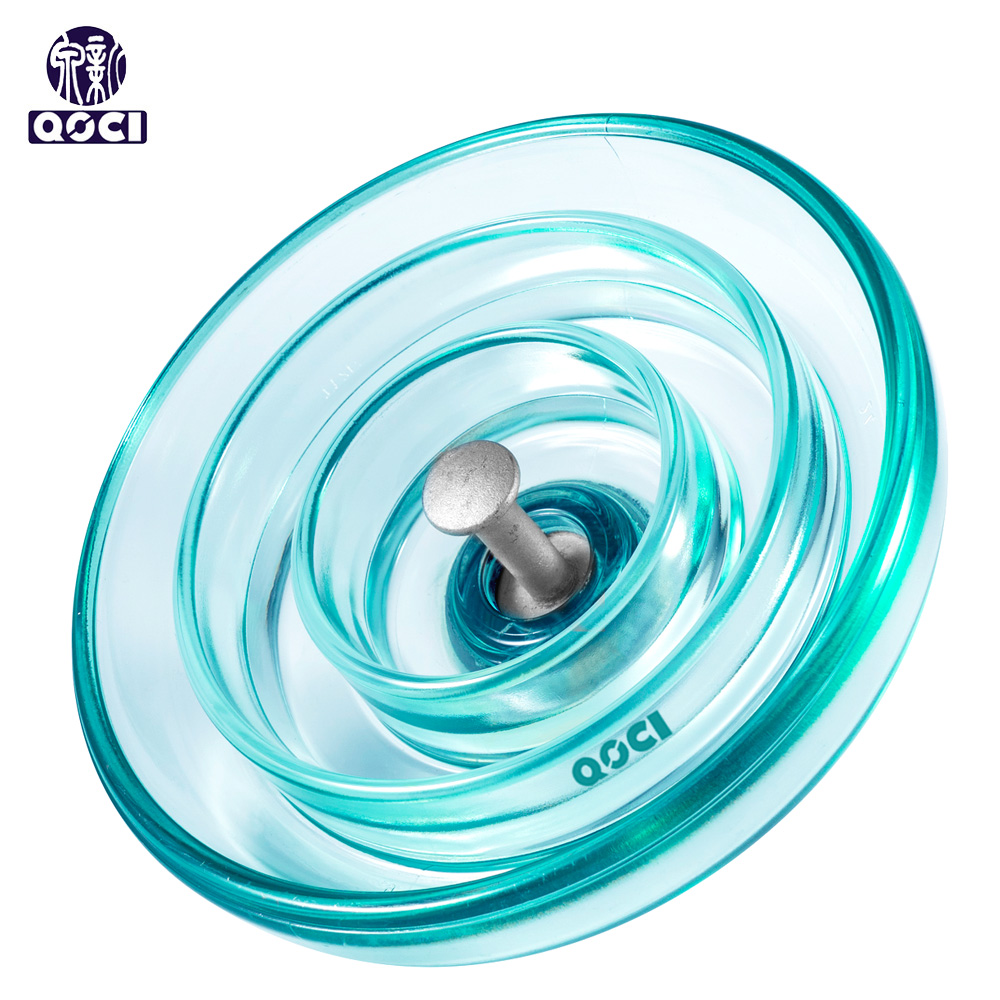
Figure 3. Long-creepage anti-pollution units are typically specified where pollution class, not load class, drives the selection decision.
Future Outlook
Three developments are likely to shape suspension glass insulator purchasing over the next procurement cycles. The first is the normalisation of digital batch records: as buyers increasingly ask for certificate data in a structured format, the suppliers able to export test results per batch will face shorter qualification cycles than those issuing scanned paper. The second is the continued regionalisation of demand, with export growth concentrated in specific destination markets — China's electrical insulator exports to Saudi Arabia grew by 219% between 2023 and 2024 according to OEC, the fastest-growing destination in that dataset — which will push buyers toward suppliers already familiar with the destination's documentary expectations.
The third is a gradual shift in what buyers compare. As mechanical and electrical values converge across qualified suppliers, differentiation moves to the terms layer: sampling rules, retest turnaround, traceability and the willingness to accept a witnessed inspection clause. For suspension glass insulators, the product is mature; the contract is where the remaining variation sits.
Frequently Asked Questions
What purchasing terms are normally included in a suspension glass insulator offer?
A complete offer normally covers the reference standard and model designation, the declared mechanical, dimensional and electrical values, the material and coating specification, quantity and packing, inspection and witnessing rights, and the non-conformance and replacement rules. Where any of these is absent, the offer cannot be compared line by line with a competing quotation.
What acceptance criteria should a buyer define before placing an order?
Acceptance criteria should be tied to values that appear in both the offer and the purchase order: mechanical failing load, nominal disc diameter, nominal spacing, creepage distance, socket coupling size, dry lightning impulse withstand voltage, wet power frequency withstand voltage and power frequency puncture voltage. Batch traceability, sampling basis and the retest rule should be defined at the same time, because they determine whether those values can be enforced after shipment.
How does a buyer compare two suspension glass insulators in different load classes?
They should not be compared on unit price. A 120kN standard-profile unit such as U120BL is declared with a 255mm disc, 146mm spacing, 320mm creepage, coupling 16, 100kV dry lightning impulse withstand, 40kV wet power frequency withstand and 130kV puncture voltage. A 210kN unit such as U210B is declared with a 280mm disc, 170mm spacing, 400mm creepage, coupling 20, 110kV impulse, 45kV wet and 130kV puncture. The comparison should start from the duty at the tower position, then move to the declared values.
Why does creepage distance matter more than load class in some projects?
Creepage distance describes the leakage path across the insulator surface and is the value most directly linked to pollution performance. In coastal, industrial or saline conditions, a long-creepage variant in a lower load class can be the correct choice: U160BLP carries 160kN with 450mm creepage, while U160BLD carries the same 160kN class with 550mm creepage and a 340mm disc. Load class alone does not describe pollution capability.
Which standard governs suspension glass insulator units for AC systems?
Suspension glass insulator units for AC systems are governed by IEC 60305:2021, which specifies mechanical and electrical characteristics. Buyers working to North American designations instead may specify ANSI models such as ANSI 52-3, ANSI 52-5, ANSI 52-8 or ANSI 52-11, which carry their own declared values.
What is the difference between dry lightning impulse and wet power frequency withstand voltage?
Dry lightning impulse withstand voltage describes behaviour under impulse overvoltage in dry conditions, while wet power frequency withstand voltage describes behaviour under operating voltage with the surface wetted. They are separate declarations and are not interchangeable. A 300kN unit such as U300B, for example, is declared with a 130kV dry lightning impulse withstand, a 50kV wet power frequency withstand and a 130kV power frequency puncture voltage.
How can a buyer verify batch consistency before delivery?
Batch consistency is verified by linking a delivered unit to a test record through marking and batch identification, and by agreeing the sampling basis and retest rule in the purchase order before production begins. Where the buyer or a nominated third party holds witnessing rights, routine and sample tests can be observed directly. Without that link, a certificate confirms that a test occurred but not which units it applies to.
Are anti-pollution units always the better choice?
No. Anti-pollution and long-creepage designs increase the leakage path, which is valuable in saline, coastal or industrial environments. In clean or moderate environments, a standard-profile unit in the same load class meets the requirement with a simpler and shorter assembly. The selection should follow the pollution class of the corridor, not a general preference for higher creepage.
Closing Note
Comparing suspension glass insulator offers is a documentary exercise before it is a commercial one. The load class, disc diameter, spacing, creepage distance, coupling size and electrical declarations are all stated values that can be tabulated; the difference between a strong offer and a weak one is whether the supplier is willing to put those values into an enforceable acceptance clause. Buyers who fix the template before the enquiry is issued get comparable offers. Buyers who issue a one-line enquiry get one-line answers.
For buyers who want to review the full model range against their own acceptance template, the manufacturer's glass insulator catalogue is available for download: QOCI Glass Insulator Catalogue (PDF).
Product values cited in this article are drawn from published model specifications for suspension glass insulators. Market figures are attributed to their original sources and may differ across research methodologies. Buyers should confirm all values against the final purchase order and project specification.
¿Tiene preguntas o necesita más detalles?
Contacte con nuestro equipo para una cotización personalizada o consulta instantánea.
Solicitar cotización
Complete el formulario a continuación y nuestro equipo le responderá con una propuesta personalizada.
Chat directo de WhatsApp
¿Prefiere chatear en tiempo real? Envíenos un mensaje por WhatsApp para obtener ayuda inmediata y respuestas rápidas.
- Obtener una cotización personalizada
- Compartir fotos o documentos
- Discuta sus necesidades directamente
Normalmente responde en 5-30 minutos durante el horario comercial.