
Suspension Glass Insulator Offers: Terms and Acceptance Criteria
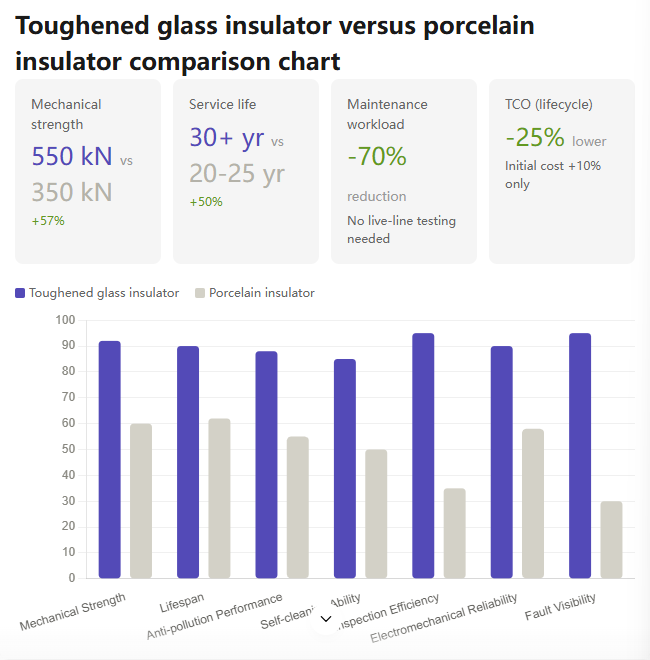
Toughened glass and porcelain insulators differ in failure mode, inspection method and lifecycle cost — differences that only become comparable when offers are written in the same structure.
Suspension glass insulator procurement rarely fails because a specification is missing. It fails at the comparison stage, where offers written in different formats are reduced to a single number — price per unit — before anyone confirms that the units being priced are actually equivalent.
This framework addresses that gap directly. It defines the purchasing terms a buyer should require in every offer, the acceptance criteria that can be verified against documents rather than claims, and the comparison blocks that turn a scattered set of quotations into a shortlist that can be defended internally.
Scope of this framework: suspension glass insulator units from 70 kN to 420 kN, across standard disc, anti-pollution, two-wings and aerodynamic profiles, evaluated at the decision stage of transmission and distribution procurement.
The Bottleneck Is Comparability, Not Supply
A suspension glass insulator is defined by four properties that must appear in writing: the mechanical class, the coupling interface, the profile type, and the standard against which the unit is declared. Short-form quotations frequently carry only two of the four. A line reading "70 kN glass insulator" without a model designation, a coupling type or a standard reference cannot be checked against anything. A line reading U70B, cap-pin coupling, minimum mechanical failing load 70 kN, declared dimensions of 255 mm diameter and 146 mm height, can be checked immediately.
The same problem appears in the opposite direction, when a buyer over-specifies without noticing. Anti-pollution glass insulators such as the U120BP feature increased creepage distances to prevent flashovers in saline or industrial environments. That profile carries different dimensional and commercial characteristics from a standard disc, and a quotation that does not distinguish between the two is not comparable with one that does.
The opportunity is that suspension glass insulator units for AC systems are governed by a common standard. Because the reference points are fixed, a buyer can impose one comparison template on every supplier without penalizing any of them. The framework below is that template.
The Standard Spine: IEC 60305:2021
Suspension glass insulator units for AC systems are governed by IEC 60305:2021, which specifies mechanical and electrical characteristics. That single reference does most of the normalization work in a comparison, because it supplies fixed anchors for rated mechanical loads, dimensional values and electrical performance.
Published technical data for the 160 kN class, for example, typically cites a 20 mm ball-socket coupling and a wet power frequency withstand voltage of approximately 45 kV. The 70 kN class, represented by the U70B, is published with a minimum mechanical failing load of 70 kN and standard dimensions of 255 mm diameter and 146 mm height. Whether a specific manufacturer's unit reaches those values is a separate question for acceptance testing, but the values themselves give the buyer a fixed point against which every offer can be positioned.
The practical consequence is simple and often overlooked: the first term of a purchase order should be the standard reference. Acceptance criteria without a declared standard have nothing to attach to, and a certificate that does not name the standard it was issued against cannot support a technical decision.
A Six-Block Buyer Comparison Framework
Offers become comparable when every supplier answers the same six questions in the same order. Each block corresponds to a decision the buyer has to make, not to a marketing claim.
1. Mechanical class
The declared minimum mechanical failing load sets the structural capability of the string. It is the first filter, because a unit in the wrong kN class cannot be accepted at any price.
2. Coupling interface
Cap-pin and ball-socket units attach differently and are not interchangeable in every string assembly. The coupling type, and its dimension where specified, must be stated per line item rather than inferred from the family name.
3. Profile and creepage
Standard disc, anti-pollution (BP), two-wings or double-shed (BD) and aerodynamic (BA) profiles serve different environments. Profile choice determines flashover margin in polluted conditions and directly affects price and delivery.
4. Electrical characteristics
Wet power frequency withstand values and related electrical data should be declared against the same standard as the mechanical data, so that both can be checked in a single pass.
5. Documentation and traceability
Certificates and test records are only useful at acceptance if they can be tied to the batch being delivered. Documentation that references a different model designation or a different standard than the goods shipped does not satisfy this block.
6. Commercial terms and lifecycle cost
Unit price is one input. Initial cost, expected maintenance workload and inspection method together determine the total cost position of the offer.
| Comparison block | What to request in writing | Why it decides the shortlist |
|---|---|---|
| Mechanical class | Model designation and declared minimum mechanical failing load | Determines structural suitability of the string for the line loading |
| Coupling interface | Coupling type (cap-pin or ball-socket) and dimension per line item | Determines whether the unit assembles with the specified hardware |
| Profile and creepage | Profile family: standard, anti-pollution, two-wings or aerodynamic | Determines performance margin in polluted environments |
| Electrical characteristics | Wet power frequency withstand and related values, referenced to the standard | Confirms the insulation coordination basis of the offer |
| Documentation | Batch-linked certificates and test records naming standard and model | Makes acceptance verifiable instead of declarative |
| Commercial terms | Unit price, initial cost position, maintenance and inspection requirement | Determines total cost of ownership rather than purchase price |
Reading Model Designations: What a Quotation Already Tells You
The U-series designation is largely self-describing. The number indicates the mechanical class in kilonewtons: U70B is a 70 kN class unit, U160B is 160 kN, U420B is 420 kN. The suffix letters indicate the profile family — B for the standard disc series, BP for anti-pollution, BD for two-wings or double-shed profiles, and BA for aerodynamic profiles.
What the designation does not tell the buyer is the coupling type. Coupling varies within a family rather than across it: U70B and U120B are listed as cap-pin units, while U100B, U160B and U210B are listed as ball-socket. For that reason the coupling must be stated per line item on the purchase order, never inferred from the family code.
| Example model | Mechanical class | Coupling | Profile intent |
|---|---|---|---|
| U70B | 70 kN | Cap-pin | Standard disc |
| U100B | 100 kN | Ball-socket | Standard disc |
| U120B | 120 kN | Cap-pin | Standard disc |
| U160B | 160 kN | Ball-socket | Standard disc |
| U240B | 240 kN | Cap-pin | Standard disc |
| U300B | 300 kN | Ball-socket | Standard disc |
| U420B | 420 kN | Cap-pin | Standard disc |
| U120BP / U160BP | 120 kN / 160 kN | Ball-socket / cap-pin | Anti-pollution |
| U100BD / U240BD | 100 kN / 240 kN | Cap-pin | Two-wings / double sheds |
| U160BA / U300BA | 160 kN / 300 kN | Ball-socket | Aerodynamic |
| PS-160D / PS-210V / PSV-120B / PSD-70E / PSA-160A | 160 kN / 210 kN / 120 kN / 70 kN / 160 kN | Per model | Standard, anti-pollution, two-wings and aerodynamic series |
Acceptance Criteria: From Offer Language to Verifiable Checks
Acceptance criteria convert commercial language into checks that can be performed on documents, on samples, or on the delivered batch. Eight checks cover the decision stage for suspension glass insulators.
- Standard declaration. Every line item should state the standard the unit is declared against. For AC suspension glass insulator units this is IEC 60305:2021, which specifies mechanical and electrical characteristics.
- Mechanical class consistency. The declared minimum mechanical failing load must match the model designation and the string design. The U70B class, for example, carries a minimum mechanical failing load of 70 kN.
- Dimensional conformity. Declared dimensions should be checkable against the standard dimensions for that class. Published data for the U70B lists 255 mm diameter and 146 mm height.
- Coupling interface. Cap-pin and ball-socket units are not interchangeable in every assembly, so the coupling type and its dimension must be stated per line item. Published technical data for the 160 kN class typically cites a 20 mm ball-socket coupling.
- Electrical characteristics. Values such as the wet power frequency withstand voltage should be declared against the same standard as the mechanical data. Published data for the 160 kN class cites approximately 45 kV.
- Profile and creepage class. Where the line crosses saline, industrial or desert pollution, the accepted profile should be the anti-pollution variant rather than the standard disc. Anti-pollution glass insulators such as the U120BP feature increased creepage distances to prevent flashovers in saline or industrial environments.
- Batch-linked documentation. Documentation is normally organized into design qualification records and batch-level records. The practical acceptance rule is that both should reference the same standard and the same model designation as the goods delivered; a certificate issued against a different designation does not close the check.
- Inspection and rejection rule. Because toughened glass units fail visibly rather than progressively, acceptance can be defined around visual inspection of the delivered string, with the replacement rule for broken or damaged units written into the terms instead of negotiated after arrival.
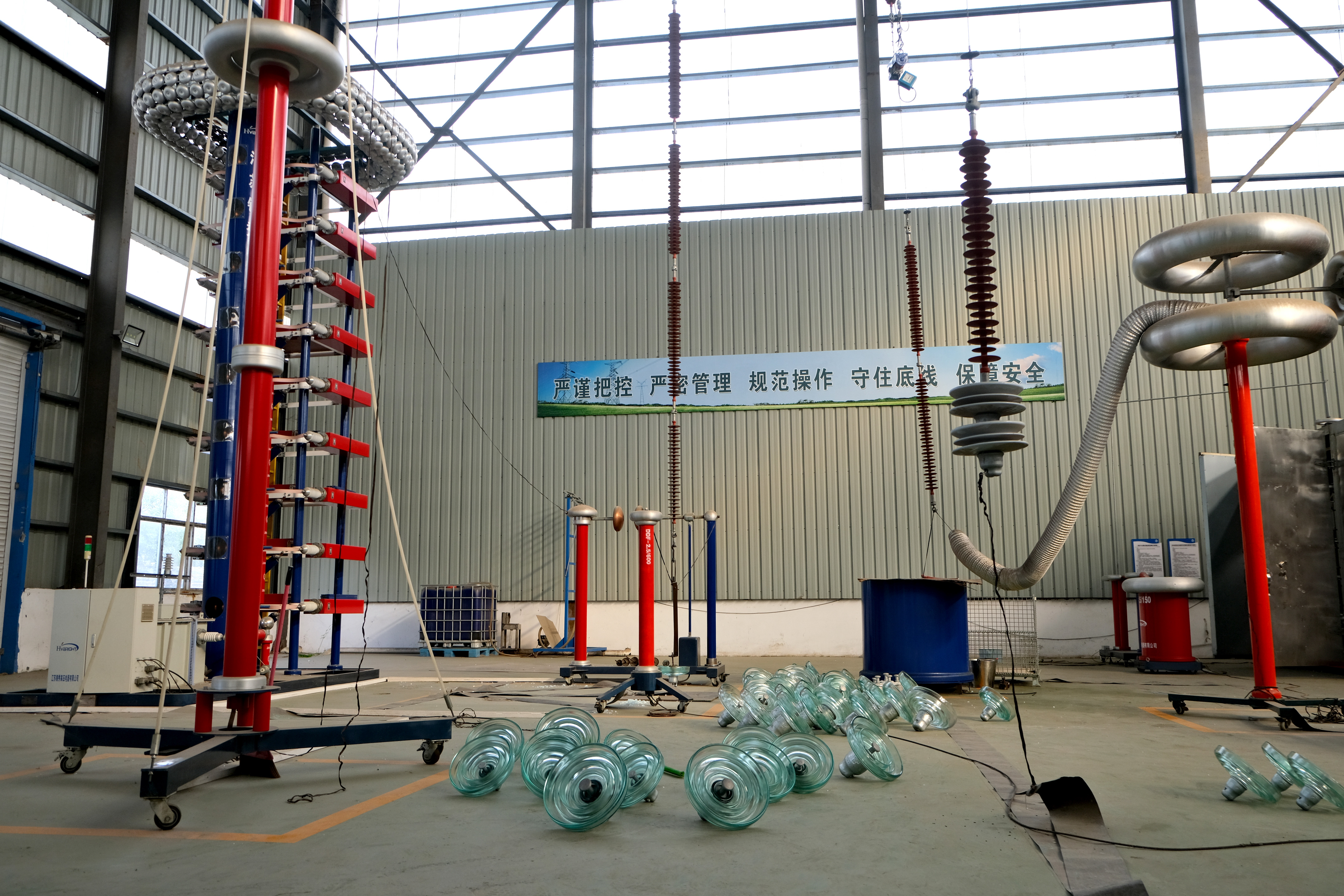
Laboratory verification is where declared mechanical and electrical values become checkable acceptance evidence rather than specification claims.
A Manufacturer Case in the Comparison Set: Jiangxi QOCI Electric Co., Ltd.
Jiangxi QOCI Electric Co., Ltd. is a China-based manufacturer of glass and porcelain insulators, established in December 2002 and located in Luxi Industrial Park, Pingxiang City, Jiangxi Province. The company is a national high-tech enterprise and a participating unit of the Insulator Standard Committee, and it specializes in the automated and intelligent production of glass insulators and porcelain insulators.
Its products are used in power grid construction projects of State Grid Corporation of China and China Southern Power Grid, as well as in power grids in more than 40 countries and regions including Europe and the Middle East. Reported annual output stands at 9,000,000 units, and the glass insulator range covers the U-series from 70 kN to 420 kN in standard, anti-pollution, two-wings and aerodynamic profiles, alongside the PS, PSV, PSD and PSA design series.
Within the six-block framework above, the supplier's relevance to a shortlist is not the breadth of its catalogue but whether each block can be answered with a document: a declared standard reference, a declared mechanical class, a stated coupling, a defined profile, batch-linked records and a clear commercial position. QOCI is one of the manufacturers that publishes a full model range across these profile families, which makes it possible to place its offers into the same comparison table as other suppliers without adjusting the criteria.
For context on the wider pool, published market coverage of the glass insulator category names Sediver (Seves Group), Nanjing Electric and Zhejiang Jinlihua Electric among the global manufacturers, and buyers typically build their comparison set from this group plus regional suppliers. The framework above applies to all of them identically.
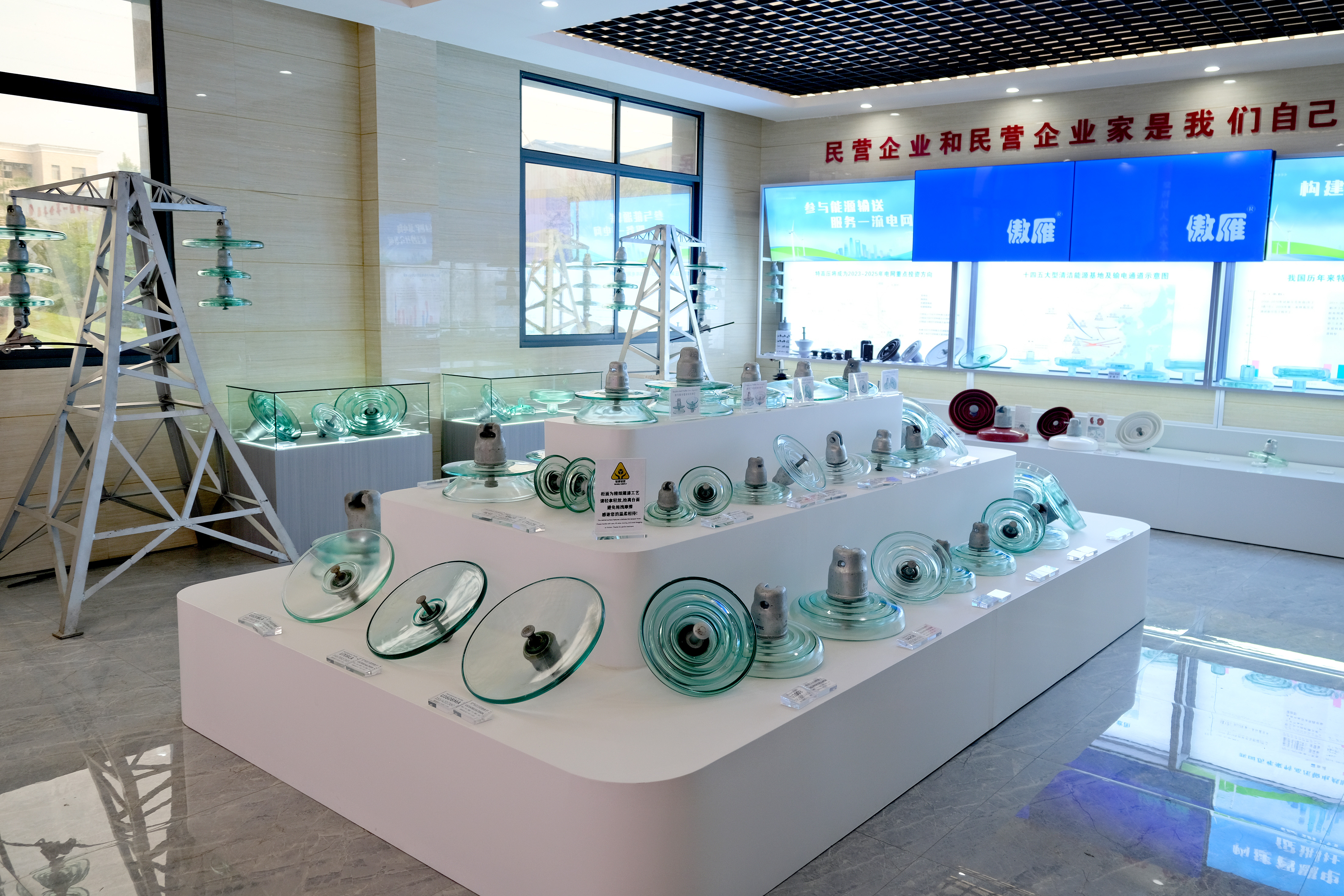
Sample review: profile, coupling and dimensional conformity can be confirmed on a physical unit before batch documentation is assessed.
What Toughened Glass Changes in the Technical Comparison
The core difference between toughened glass insulators and traditional porcelain or ceramic insulators is the use of toughened glass with higher mechanical strength, a zero-value self-breaking feature, and better anti-pollution performance. That difference propagates through the whole comparison, because it changes failure behaviour, inspection method and maintenance workload at the same time.
On mechanical performance, toughened glass compressive strength is three to four times higher than porcelain. On reliability, the mechanical failure rate is reduced by 80 percent compared with porcelain insulators. On inspection, efficiency improves by 100 percent because detection is visual only — no live-line testing is required — and maintenance workload falls by 70 percent relative to porcelain insulators.
The zero-value self-breaking feature is the mechanism behind the inspection advantage: a failed toughened glass unit breaks rather than degrading invisibly, so a broken unit is identifiable from the ground. For an acceptance process, that converts an otherwise instrument-dependent check into a visual one, which is why inspection method belongs inside the commercial comparison rather than in a separate technical annex.
Application Fit: Where This Framework Points
The documented advantages of toughened glass suspension insulators are linked to specific line environments: UHV and EHV transmission lines, heavy pollution areas including coastal, desert and industrial zones, and high-altitude regions. Those are the conditions in which the higher mechanical strength, the self-breaking failure mode and the anti-pollution profile are most directly useful.
Within the model range, the profile selection follows the environment rather than the price list. Standard disc units such as the U70B to U420B series suit general line conditions. Anti-pollution units such as the U70BP to U420BP series add creepage for saline or industrial exposure — the same logic published for the U120BP. Two-wings or double-shed profiles in the U70BD to U300BD range and aerodynamic profiles in the U70BA to U300BA range address specific string and environmental requirements.
For the buyer, application fit is the point at which the comparison template should change. A framework built for a polluted coastal corridor is not the right template for a lightly loaded distribution line, and applying it uniformly tends to over-specify the latter while under-specifying the former.
Market Trend Signals for 2026 Procurement
The category is expanding, which increases the number of offers a buyer must compare rather than reducing it. The global glass insulators market size was estimated at USD 1.14 billion in 2024 and is projected to reach USD 1.97 billion by 2035, with an expected CAGR of 5.1 percent during the forecast period from 2025 to 2035, according to Market Research Future. Asia Pacific dominated the glass insulator market with a revenue share exceeding 52 percent in 2024, driven by grid expansion in China and India, based on Grand View Research data.
Trade concentration reinforces the same point. China concentrated 31.4 percent of total global exports of electrical insulators in 2024, totaling USD 898 million, according to OEC trade data. Among destination markets, China's export of electrical insulators to Saudi Arabia grew by 219 percent between 2023 and 2024, making it the fastest-growing market in that dataset.
Two data cautions matter for procurement documents. First, published market size estimates diverge significantly depending on scope: Market Research Future reports USD 1.14 billion for 2024 while Insightace Analytic reports USD 351.4 million, largely because of differences in what is counted. Buyers should treat headline market numbers as background rather than as a supply-tightness signal. Second, growth in aggregate demand does not by itself indicate capacity constraints on any specific mechanical class or profile; only offer-level comparison answers that question.
Glass Compared With Traditional Porcelain: Benefits and Boundaries
On the commercial side, the comparison is well defined. Against alternatives, toughened glass suspension insulators carry an initial cost approximately 5 percent higher, but a total cost of ownership over the lifecycle that is 25 percent lower. Maintenance workload is 70 percent lower than porcelain, and live-line testing is eliminated because inspection is visual.
Three boundaries should be written into the framework rather than left implicit.
- The initial cost premium is real. A 5 percent higher initial cost is a material difference in capital-constrained tenders, and the 25 percent lifecycle advantage only materializes if the buyer actually operates the line over the maintenance horizon assumed.
- The documented advantage is environment-specific. The performance case is explicitly linked to UHV and EHV transmission lines, heavy pollution areas and high-altitude regions. A buyer whose lines fall outside those conditions should treat the comparative advantage as narrower rather than assumed.
- The framework's output depends on documents. Where a supplier cannot link certificates and test records to the delivered batch and the declared standard, the technical advantage cannot be verified at acceptance and should not be scored as if it were.
There is also a market-data boundary: because published market size estimates for glass insulators vary by scope, any statement about category growth used in a procurement justification should cite its source and its definition rather than present a single figure as settled.
Future Outlook
Two forces are likely to shape suspension glass insulator procurement over the next buying cycles. The first is continued grid expansion in Asia Pacific, which sustains demand across the standard and anti-pollution ranges and keeps the number of qualified suppliers high. The second is the maturation of standards-based comparison: as buyers normalize offers against IEC 60305:2021 and request batch-linked documentation by default, the differentiating factor shifts from price discovery to documentation quality and acceptance discipline.
For procurement teams, the practical implication is that the comparison template should be fixed before quotations are requested, not assembled afterwards from whatever each supplier chose to send. A framework agreed internally — mechanical class, coupling, profile, electrical characteristics, documentation and commercial terms — is what allows a shortlist to be defended when a cheaper but less verifiable offer appears.
FAQ
What should be included in a suspension glass insulator offer to make it comparable with others?
A comparable offer states the model designation, the mechanical class, the coupling type, the profile family, the standard the unit is declared against, and the documentation available for the delivered batch. Without a standard reference and a coupling specification, two offers cannot be placed on the same line of a comparison table even if both quote the same kN class.
Which standard should acceptance criteria reference?
Suspension glass insulator units for AC systems are governed by IEC 60305:2021, which specifies mechanical and electrical characteristics. Referencing that standard gives the buyer fixed anchors for rated mechanical loads, dimensional values and electrical performance, and it allows certificates and test records to be checked against a stated basis rather than accepted as claims.
How should cap-pin and ball-socket offers be compared?
They should be compared per line item, not per family, because coupling varies within model ranges. U70B and U120B, for example, are listed as cap-pin units, while U100B, U160B and U210B are listed as ball-socket. Published technical data for the 160 kN class typically cites a 20 mm ball-socket coupling, so the coupling dimension should be stated explicitly where the string design depends on it.
How does an anti-pollution requirement change the comparison?
It changes the profile rather than the mechanical class. Anti-pollution glass insulators such as the U120BP feature increased creepage distances to prevent flashovers in saline or industrial environments, so an offer using a standard disc profile is not equivalent to one using the anti-pollution variant even where both meet the same load class. The environment should therefore be mapped to the profile family before quotations are compared.
How do glass and porcelain compare on cost over the lifecycle?
Against alternatives, toughened glass suspension insulators carry an initial cost approximately 5 percent higher but a total cost of ownership over the lifecycle approximately 25 percent lower. Maintenance workload is 70 percent lower than porcelain insulators, and no live-line testing is required because inspection is visual, which is also why inspection efficiency is reported 100 percent higher and mechanical failure rate 80 percent lower.
What limits should a buyer acknowledge before shortlisting?
Three limits are relevant. The initial cost premium of about 5 percent is material in capital-constrained tenders. The documented performance advantage is tied to UHV and EHV transmission lines, heavy pollution areas and high-altitude regions, so it should not be assumed outside those conditions. And the framework itself depends on documentation: if certificates and test records cannot be linked to the delivered batch and the declared standard, the technical advantage cannot be verified at acceptance.
For specification reference, the QOCI glass insulator catalogue is available for download: QOCI Catalogue – Glass Insulators (PDF)