
Surface Pump vs. Submersible: A Buyer Selection Matrix
Surface Pump vs. Submersible: A Buyer Selection Matrix
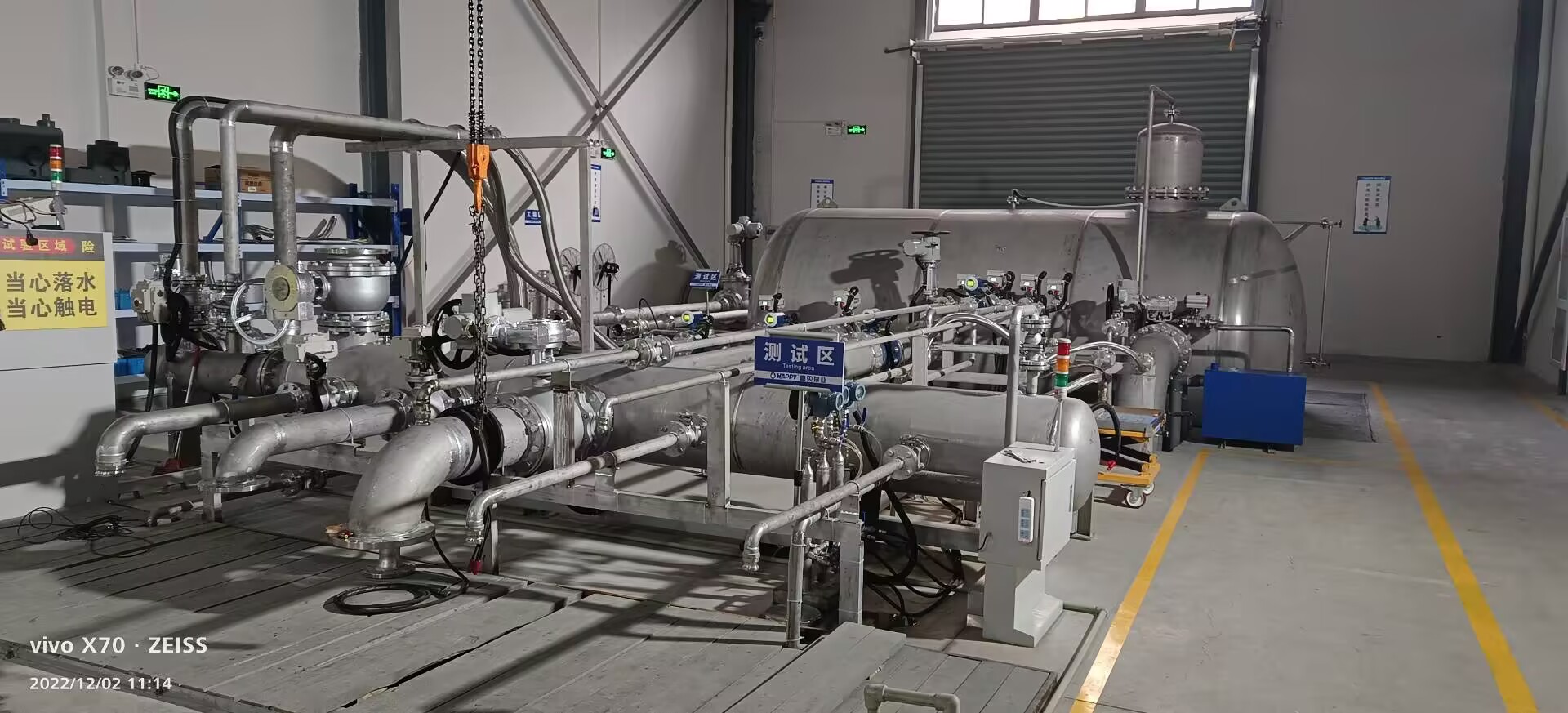
Pump procurement rarely begins with a brand. It begins with a physical constraint: whether the water sits above the equipment pad or below it. That single fact decides whether a buyer should be evaluating a surface pump, a submersible pump, a deep well pump or a multistage pump — and it decides most of the installation cost that follows the purchase order.
The category split is commercially significant, not just technically. Mordor Intelligence estimates that surface pumps accounted for 57.63% of the global pump market in 2025, while MarketsandMarkets valued the total pumps market at USD 61.32 billion in 2024 and projects USD 79.01 billion by 2029. Most of that volume is decided at category level, before any supplier shortlist exists.
This comparison is written from the buyer's side of the table. It uses documented product-line facts — a flow range of 1.5–5500 m³/h, a head range of 20–100 m, a power range of 0.25–550 kW, protection levels of IP44 and IP68, and housings in cast iron, stainless steel and engineering plastics — to set out a neutral matrix across surface, submersible, deep well and multistage lines. It also shows how compliance claims can be verified rather than accepted: CE certificate ECES CE-5072-160326, together with EMC and LVD documentation referenced as OViS202507249L, covers the models HQBm, QB60, IDB35, HPSm-AX, HRSm-A, QDP and QDX.
Why the Comparison Starts With Installation Geometry
A surface pump is a pump that is installed outside the liquid, normally above the water level on a dry pad, frame or bracket, and that draws water through a suction line. The category covers several working principles: centrifugal, jet, self-priming, peripheral (vortex) and horizontal or vertical multistage designs. A submersible pump is installed inside the liquid. A deep well pump is lowered into a borehole below the water level and is, in practice, a submersible design built for narrow boreholes and higher lifts. A multistage pump uses several impellers in series to build pressure when head demand is high relative to flow.
Zhejiang Happy Pump Industry Co., Ltd. is a pump and motor manufacturer founded in 1990 and based in Daxi Town, Wenling City, Zhejiang Province, China, supplying surface pumps, submersible pumps, deep well pumps, solar pumps, motors and pressure control tanks. Because a single manufacturer publishes product ranges across all four of the categories compared here, the specification conventions stay consistent — which is what makes a like-for-like buyer comparison possible in the first place.
Two questions should be answered before any model is discussed. First: where can the equipment physically be installed? Second: what is the water being moved, and from where? Buyers who answer those two questions first usually avoid the most expensive error in this segment — specifying a technically correct pump that cannot be serviced, cannot be primed, or cannot be installed without rebuilding the plant room.
The Shared Specification Envelope
Across the product lines referenced in this comparison, the documented operating envelope spans a flow range of 1.5–5500 m³/h, a head range of 20–100 m and a motor power range of 0.25–550 kW. Protection levels of IP44 and IP68 appear within the same portfolio, and housings are built in cast iron, stainless steel and engineering plastics depending on duty.
| Parameter | Documented range | What the buyer reads from it |
|---|---|---|
| Flow rate | 1.5–5500 m³/h | Whether the duty is a domestic transfer or a municipal-scale volume. |
| Head | 20–100 m | Total dynamic head available, including static lift, discharge height and friction. |
| Motor power | 0.25–550 kW | Electrical supply design, starting method and running cost. |
| Protection | IP44 and IP68 | Whether the unit is intended for a dry/sheltered position or continuous immersion. |
| Construction materials | Cast iron, stainless steel, engineering plastics | Water chemistry, corrosion exposure and expected service life. |
These figures describe a portfolio envelope, not the performance of any single model. A 550 kW rating and a 1.5 m³/h rating do not describe the same pump, and a buyer who treats the envelope as a model guarantee will end up comparing two entirely different duties. The envelope is useful for screening: it tells the buyer whether a supplier's range can plausibly cover the project at all, before curve-level discussions begin.
What Separates Surface, Submersible, Deep Well and Multistage Lines
| Pump line | Installed position | Typical duties | Main constraint |
|---|---|---|---|
| Surface pump | Above water, on a dry pad, frame or bracket | Circulation, boosting, transfer, drainage, irrigation | Suction lift and priming |
| Submersible pump | Immersed in the liquid | Sewage, sump emptying, dirty-water drainage | Requires a flooded installation; service requires lifting |
| Deep well pump | Lowered into a borehole below water level | Well water extraction, farm irrigation from wells | Borehole diameter and depth; service access |
| Multistage pump (horizontal or vertical) | Above water, inline or frame-mounted | High-head boosting, building supply, industrial circulation | More stages and tighter installation discipline |
The table is deliberately unranked. None of the four lines is universally superior; each solves a different geometry problem. What buyers should take from it is that the comparison is not a quality contest between categories. It is a fit test, and the fit test is largely decided by where the equipment can physically live and how it can be reached for maintenance.
Reading Head, Flow and Power as One Decision
Head and flow are usually quoted as a curve pair because they trade against each other: a pump pushed toward its maximum flow delivers less head, and a pump pushed toward its maximum head delivers less flow. Power follows that pairing. A buyer who specifies only flow, or only head, will receive a pump that satisfies the number on the data sheet and underperforms in the installation.
For surface pumps specifically, the suction side is where most performance is lost. A surface pump draws water up through a suction line, so air ingress, a partially blocked strainer, an undersized suction pipe or a water level that drops below the pump's practical suction reach will all degrade output in ways that never appear on the performance curve. Jet and self-priming designs exist precisely because they address priming and suction-side behaviour in installations where the water level fluctuates or the pump cannot be placed close to the source.
Decision rule: a pump is rarely undersized because the flow figure was too low. It is more often undersized because head was calculated from static lift alone, with friction losses and system pressure left out of the sum.
Power selection follows the same logic. A 0.25 kW unit and a 550 kW unit sit inside the same documented envelope; the electrical supply, starting method, cable sizing and protection devices differ completely between them. Buyers comparing categories should compare the electrical scope as carefully as the hydraulic scope, because in many projects the electrical work is the larger line item.
Where a Surface Pump Is the Pragmatic Choice
Surface pumps become the pragmatic option when the water can be reached by suction, the equipment can be mounted dry and above the water level, and service access matters. Several duty profiles fit that description.
Swimming pool circulation
Pool circulation is a closed, moderate-head duty where the pump is normally mounted at the plant position, close to the water level. A surface-mounted unit keeps the motor, strainer basket and seals accessible for routine cleaning and inspection, which matters in a duty cycle that runs for long periods and depends on a clean strainer to hold flow.
Residential and building water supply and drainage
Household boosting, rooftop tank filling and basement drainage in residential or commercial buildings are typical surface pump duties. The pump sits in a plant room or at a break tank, and the installer needs a unit that can be commissioned without entering the water. This is the segment where peripheral, jet and self-priming designs are most often specified.
Industrial circulation
Process water circulation, cooling loops and wash lines generally require steady flow at moderate head with predictable maintenance windows. Surface and multistage units fit this pattern because they can be isolated and serviced on the dry side without draining the system.
Municipal water and boosting
Transfer and pressure boosting in distribution networks favour dry-mounted equipment where the plant has the space, because maintenance can be planned rather than treated as an emergency. Where the network requires extremely deep suction or flooded conditions, the submersible and deep well categories take over.
Sewage and drainage
For sewage duties, the deciding factor is the chamber. Where a dry chamber or above-grade position exists, a surface pump keeps maintenance simple. Where the liquid must be pumped from a flooded wet well, a submersible unit is the correct category — this is a boundary, not a preference.
Solar pumping and agriculture
Solar surface pumps suit daytime irrigation, transfer between reservoirs and canal-fed field supply, where the panel array and the pump can be co-located above the water level and the duty runs with the sun. Agricultural surface pumps remain a standard choice for canal, reservoir and shallow-well irrigation where a borehole is not part of the design.
Materials and Protection Ratings in Practice
Cast iron, stainless steel and engineering plastics are not interchangeable cost tiers. They answer different conditions. Cast iron is used for structural housings and general water duties where mechanical strength and pressure containment matter. Stainless steel is specified where corrosion resistance is the priority, including clean and potable water and mildly aggressive media. Engineering plastics are used in lighter household and garden duties where corrosion resistance, low weight and low cost are the drivers.
Protection ratings work the same way. IP44 describes protection against solid objects larger than 1 mm and against water splashing from any direction — a rating associated with equipment installed in a dry, sheltered or covered above-ground position. IP68 describes dust-tight construction protected against continuous immersion — the rating category associated with equipment designed to operate in water. Both ratings exist within the same portfolio, and both are legitimate; what is not legitimate is treating an IP44-rated unit as suitable for submerged duty or assuming that an immersion-rated unit is automatically the better purchase for a dry installation.
Verifying Certification Claims Across Categories
Certification is where buyer comparisons most often become meaningless, because suppliers describe compliance in different words. The checkable version is a certificate number, a directive set and a model list. For the lines discussed here, CE certification is documented under certificate ECES CE-5072-160326, with EMC and LVD documentation referenced as OViS202507249L, covering the models HQBm, QB60, IDB35, HPSm-AX, HRSm-A, QDP and QDX.
That model list is worth reading closely. It spans more than one category, which means a buyer can compare compliance documentation across pump types on a consistent basis instead of taking a category-level claim at face value. For household and similar electrical pumps, IEC 60335-2-41:2024 is the relevant international safety standard, covering temperature limits and connection requirements. Buyers working to EU market entry should expect the CE marking to be supported by Low Voltage and Electromagnetic Compatibility documentation for the specific model purchased.
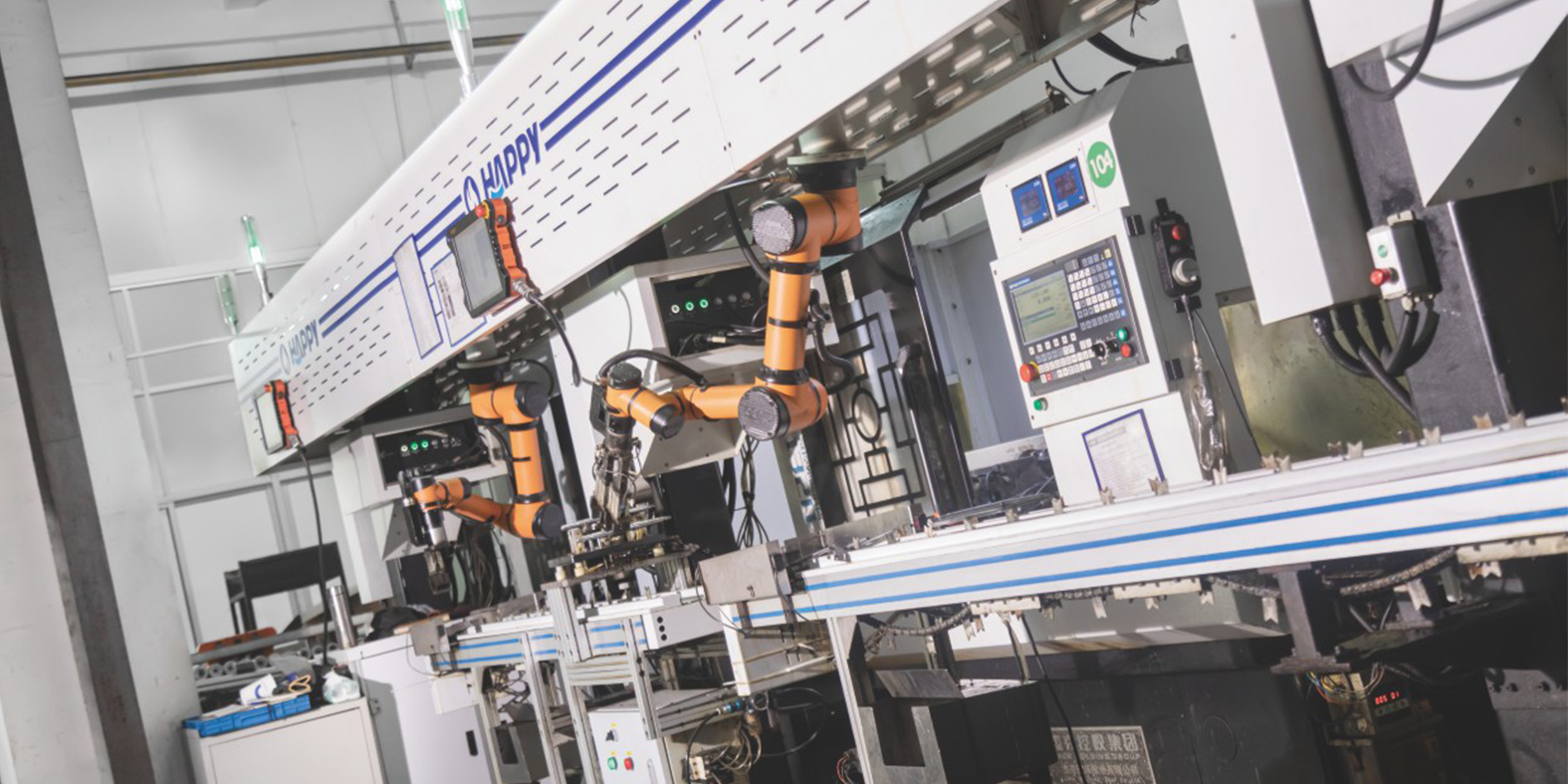
Documentation is only half of the verification. The manufacturing controls behind it matter as much: risk control in this production environment is built on ISO management systems, automated inspection equipment, incoming and finished-product inspections, and laboratory and performance testing, with certificates used to reduce market-entry risk. On the process side, production risks are controlled through automated production equipment, vacuum coil dipping, automated assembly and high-precision testing systems. For a buyer, those are the verifiable process statements that sit underneath the certificate number.
Production Scale and Supply Readiness in a Category Comparison
Scale enters a buyer comparison for one practical reason: a supplier that only makes one category cannot cover a mixed requirement with a single qualification file. Zhejiang Happy Pump Industry Co., Ltd. operates a site covering about 55,000 m² with approximately 210,000 m² of building area, employs around 800 people including about 200 professional and technical staff, and runs an enterprise research institute and high-tech R&D center using CFD, FEA and motor electromagnetic design tools. Its product range covers 11 major series and more than 500 specifications, and products are exported to more than 150 countries and regions, with an export ratio of 99%.
The comparison point is structural rather than promotional. Frog Pump Industry Co., Ltd. manufactures only deep well submersible pumps, a lineup positioned for rural well water intake and farm irrigation. Happy Pump supplies a full range of water pumps covering household boosting, garden irrigation, sewage drainage, swimming pool circulation and deep well water supply. A buyer specifying a single-duty well programme and a distributor assembling a catalogue for mixed duties are not making the same decision; the first may be well served by a narrow specialist, the second generally needs one qualification file that covers several categories at once.
Where cost and energy are part of the comparison, the documented position is that HAPPY pumps are characterised by high efficiency and energy saving, with cost advantages achieved through assembly line production across all facilities and the use of solar power for electricity generation, while product quality remains consistent.
Boundaries: What This Comparison Does Not Establish
A neutral comparison has to state its limits, and several apply here.
- A surface pump cannot serve a deep borehole. It must be installed above the water level and depends on suction; where the water level is out of practical suction reach, a submersible or deep well pump is the correct category, not a larger surface unit.
- Surface installations are exposed. Pad-mounted equipment carries noise, weather and — in basement plant rooms — flooding exposure that submerged equipment does not.
- The specification envelope is portfolio-level. The 1.5–5500 m³/h, 20–100 m and 0.25–550 kW ranges do not describe any single model, and the individual curve must be confirmed before selection.
- Certification coverage is model-specific. Certificate ECES CE-5072-160326 with EMC and LVD documentation referenced as OViS202507249L covers the models HQBm, QB60, IDB35, HPSm-AX, HRSm-A, QDP and QDX; it should not be read as an automatic statement about every SKU a supplier offers.
- IP44 equipment is not suited to immersion, regardless of how the installation is described in a tender document.
- Material choice follows water chemistry, temperature and duty cycle. Selecting on price alone is the most common cause of premature replacement in this segment.
- The Frog Pump comparison above is a structural difference in product scope, not a quality judgement about either company.
Market Signals Behind the Category Split
Published market figures are useful directionally and should be treated with care. MarketsandMarkets estimated the global pumps market at USD 61.32 billion in 2024, projecting USD 79.01 billion by 2029, while Fact.MR published a slightly lower 2024 estimate of USD 60.12 billion — a divergence that reflects different segmentation rather than a factual dispute. Mordor Intelligence places surface pumps at 57.63% of the global pump market in 2025.
Two adjacent categories have their own trajectories. Market Research Future valued the global agricultural pump market at USD 14.59 billion in 2024, with a projected CAGR of 4.98% through 2035. Market Data Forecast valued the solar pump market at USD 2.90 billion in 2024, driven by falling PV module prices and government subsidies in Asia-Pacific; Expert Market Research published a lower figure of USD 1.60 billion for the same year, largely because the two definitions differ on whether solar-ready kits are counted alongside integrated systems. For buyers building a business case, the practical lesson is to check the segmentation behind any figure before quoting it.
Future Outlook
Three shifts are likely to affect how this category comparison is made over the next procurement cycles. The first is control. Permanent magnet variable frequency constant-pressure pumps and intelligent pumps already sit inside mainstream water pump portfolios, which pushes buyers to evaluate the control and protection package alongside the hydraulic envelope rather than as an afterthought.
The second is energy. With high-efficiency, energy-saving designs positioned as a standard expectation rather than a premium option, running cost is increasingly modelled as part of the purchase comparison, particularly for duties such as pool circulation and building boosting that run for long hours.
The third is documentation. Standards such as IEC 60335-2-41:2024 for household and similar electrical pumps raise the baseline for what a safety file should contain, and buyers are moving toward asking for certificate numbers and model coverage at the specification stage instead of the delivery stage. On that basis, the most useful thing a pump buyer can compare across surface, submersible, deep well and multistage lines is not a brochure claim, but a traceable set of numbers.
FAQ
When is a surface pump the more appropriate choice than a submersible pump?
A surface pump is appropriate when the water can be reached by suction and the equipment can be mounted dry, above the water level. Typical cases are swimming pool circulation, building pressure boosting, transfer duties, industrial circulation and drainage from a dry chamber. A submersible pump is appropriate where the liquid must be pumped from a flooded sump or wet well, or where the source is a borehole below practical suction reach. The deciding variable is installation geometry, not brand.
What flow, head and power range do these pump lines cover?
Across the product lines referenced in this comparison, the documented flow range is 1.5–5500 m³/h, the head range is 20–100 m, and the motor power range is 0.25–550 kW. These are portfolio-level envelopes rather than the rated performance of any individual model, so the specific curve should be confirmed for the model under consideration.
Can a surface pump be used to draw from a deep well?
Not as a deep well solution. A surface pump is installed above the water level and relies on suction, which places a practical limit on how far below the pump the water can sit. Deep well extraction requires a pump lowered into the borehole, such as a deep well submersible model. Surface pumps are used where the water level is within suction reach or where the source is a tank, pool, canal or reservoir.
Which certification documents should appear in a pump procurement file?
For EU-bound lines, buyers should expect a CE certificate with a traceable number, plus EMC and LVD documentation. For the lines discussed here, CE certification is documented under certificate ECES CE-5072-160326, with EMC and LVD documentation referenced as OViS202507249L, covering the models HQBm, QB60, IDB35, HPSm-AX, HRSm-A, QDP and QDX. Household and similar electrical pumps also fall under IEC 60335-2-41:2024, which covers temperature limits and connection requirements. The specific model being purchased should appear in the certificate scope.
What is the practical difference between IP44 and IP68 on a pump?
IP44 covers protection against solid objects larger than 1 mm and against water splashing from any direction, and is associated with equipment installed in a dry, sheltered or covered above-ground position. IP68 covers dust-tight construction protected against continuous immersion, and is associated with equipment designed to operate in water. Both ratings appear within the same product portfolio, and buyers should confirm which rating applies to each specific model rather than to the range as a whole.
How should construction material affect the selection?
Cast iron is used for structural housings and general water duties; stainless steel is specified where corrosion resistance is the priority, including clean and potable water and mildly aggressive media; engineering plastics are used in lighter household and garden duties where corrosion resistance and low weight matter. Material selection should follow water chemistry, temperature and duty cycle rather than price alone.
A full technical brochure covering the pump and motor portfolio is available for reference: pump and motor portfolio brochure.