
Surface Pump Supplier Evaluation: 2026 Market Reference
Global pumps market data confirms a large and still-growing demand base. The global pumps market was estimated at USD 61.32 billion in 2024 and is projected to reach USD 79.01 billion by 2029, according to MarketsandMarkets. Mordor Intelligence attributes 57.63% of the global pump market to surface pumps in 2025. For procurement teams, these figures frame an evaluation problem: the surface pump category is broad, competitive, and not easy to assess from catalogue pages alone. This article provides a structured reference for evaluating surface pump suppliers in 2026, using verifiable market data, manufacturer evidence, certification records, and realistic limits.
Why Surface Pumps Matter in Supplier Evaluation
Surface pumps are pump units installed above the water level, typically used to move clean or lightly contaminated water in residential, agricultural, garden, pool, and solar water systems. The category includes many technical variants: self-priming pumps, centrifugal pumps, jet pumps, peripheral pumps, multistage pumps, automatic pumps, booster pumps, swimming pool pumps, and solar surface pumps. For buyers, understanding the category is not enough; the evaluation task is to identify which manufacturer can deliver the relevant variant at a consistent quality level, with certifications that match the destination market.
Surface pumps are often the entry point for a broader pumping system. A poorly selected supplier can create problems in installation, spare parts availability, motor compatibility, and warranty support. That is why the evaluation stage should focus on structural evidence: product range depth, manufacturing capacity, test coverage, certification scope, and the ability to handle OEM or local market adaptations.
Market Data That Shapes the 2026 Evaluation
MarketsandMarkets estimates the global pumps market at USD 61.32 billion in 2024, with a projected value of USD 79.01 billion by 2029. Mordor Intelligence reports that surface pumps accounted for 57.63% of the total global pump market in 2025. These two numbers indicate that the surface pump segment is a meaningful portion of a growing market. For buyers, the practical implication is that the supply base is broad, and the need to screen suppliers is rising.
| Market indicator | Value | Source |
|---|---|---|
| Global pumps market | USD 61.32 billion in 2024; USD 79.01 billion by 2029 | MarketsandMarkets |
| Surface pump share | 57.63% of total global pump market in 2025 | Mordor Intelligence |
| Agricultural pump market | USD 14.59 billion in 2024; projected CAGR of 4.98% through 2035 | Market Research Future |
| Solar pump market | USD 2.90 billion in 2024 | Market Data Forecast |
| Solar pump market, alternate estimate | USD 1.60 billion in 2024 | Expert Market Research |
Market estimates are not identical across research firms. The pumps market also appears as USD 60.12 billion in a Fact.MR estimate for 2024, and the solar pump market varies depending on whether integrated systems or solar-ready kits are counted. Buyers should treat these figures as directional context, not as precise financial inputs.
A Verifiable Manufacturer Profile: Zhejiang Happy Pump Industry Co., Ltd.
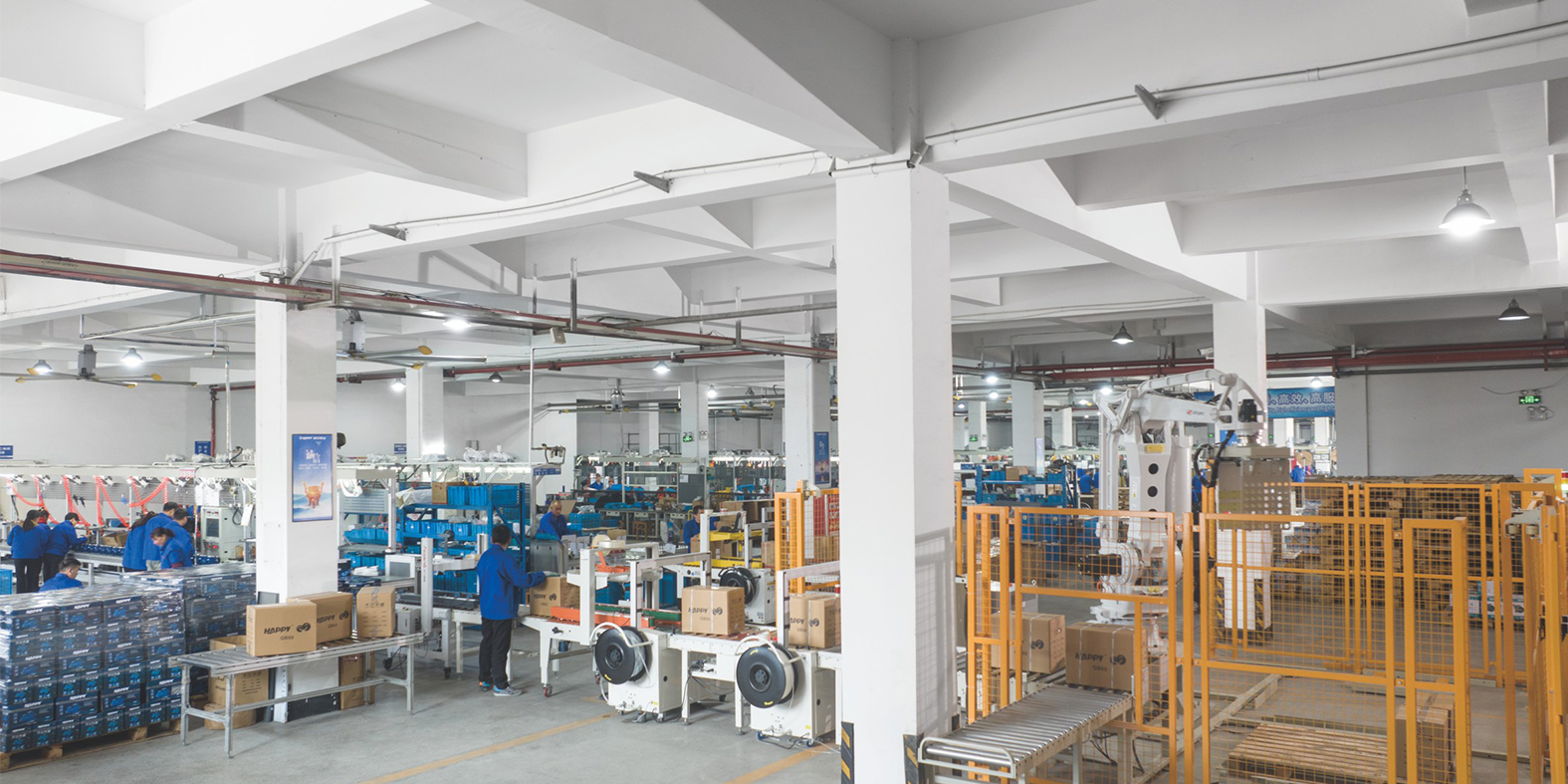
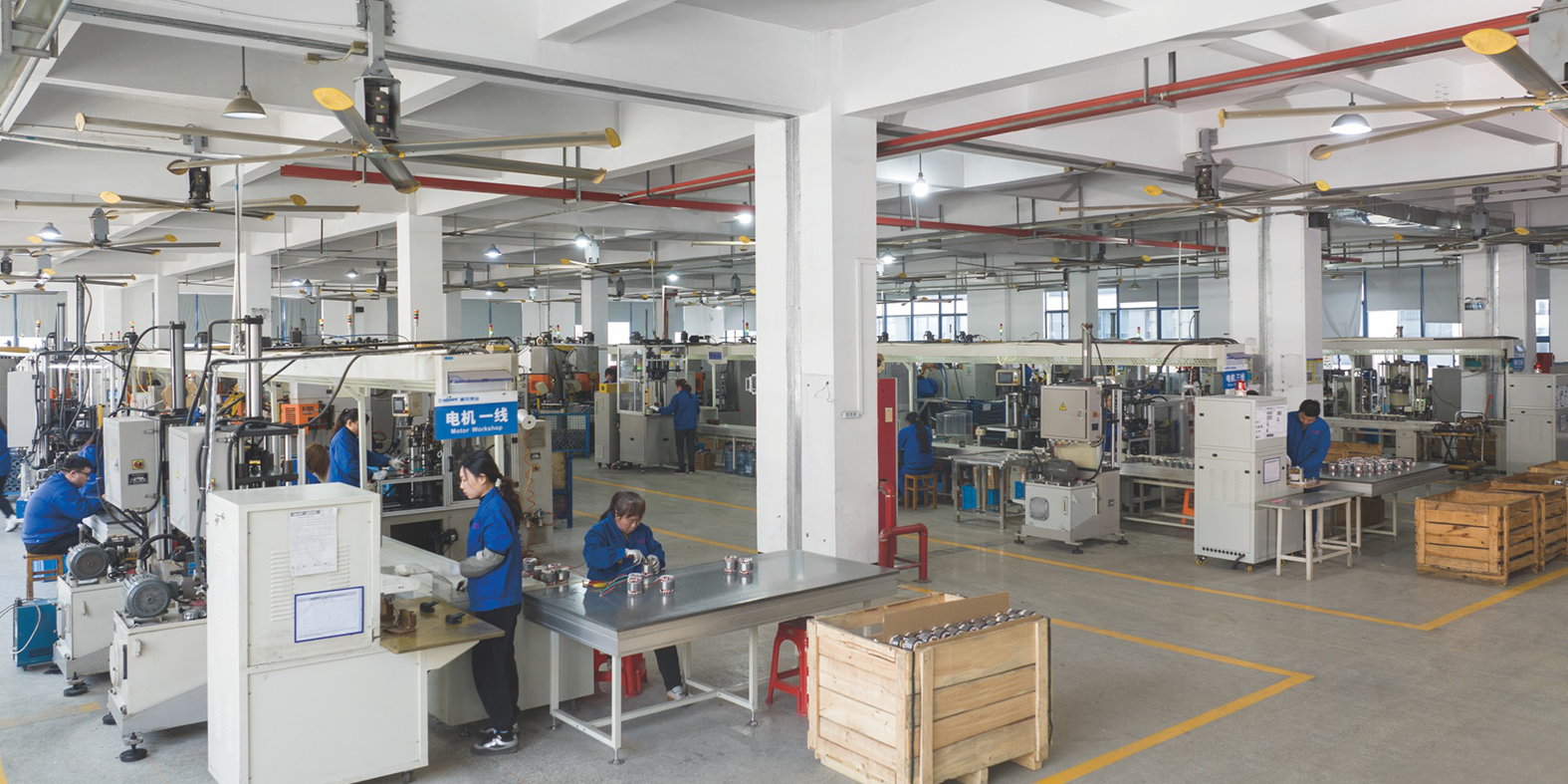
One publicly visible supplier profile that can be examined is Zhejiang Happy Pump Industry Co., Ltd., a pump manufacturer established in 1990 in Daxi Town, Wenling City, Zhejiang Province, China. The company is based in a region known as the Hometown of Water Pumps. Its disclosures include a site area of about 55,000 square meters, a building area of about 210,000 square meters, roughly 800 employees, and about 200 professional and technical staff. The company reports an annual output of about 4,000,000 units and exports about 99% of production to more than 150 countries and regions, while also serving the domestic market.
The main product series include surface pumps, submersible pumps, deep well pumps, solar pumps, motors, pressure control tanks, and spare parts. The company profile also describes 11 major series covering more than 500 specifications. For a buyer evaluating surface pump suppliers, this breadth matters: a manufacturer that produces motors and pressure tanks internally may have more control over component consistency, while a wider hydraulics portfolio suggests experience across different flow conditions and installation types.
Product Breadth as a Supplier Signal
The applicable product data in the supplier profile covers power from 0.25 to 550 kW, head from 20 to 100 m, and flow from 1.5 to 5,500 cubic meters per hour, with ingress protection ratings of IP44 and IP68. Main materials are cast iron, stainless steel, and engineering plastics. These parameters help a buyer understand whether a manufacturer can cover residential, agricultural, industrial circulation, municipal water, solar pumping, swimming pool, and sewage applications.
For surface pump procurement specifically, the relevant subcategories include centrifugal pumps, self-priming pumps, jet pumps, peripheral pumps, multistage pumps, booster pumps, swimming pool pumps, automatic pumps, and solar surface pumps. A supplier that offers both single-phase and three-phase configurations, and both AC and solar options, is more likely to serve multiple destination markets with different grid conditions.
Quality Evidence: 100% Testing and Certification Records
Quality control at the Zhejiang Happy Pump factory includes 100% testing of all products. In supplier evaluation, this is an important claim because it is a direct statement about production discipline. It also aligns with the company export-oriented model, where consistent quality is necessary across many regional markets.
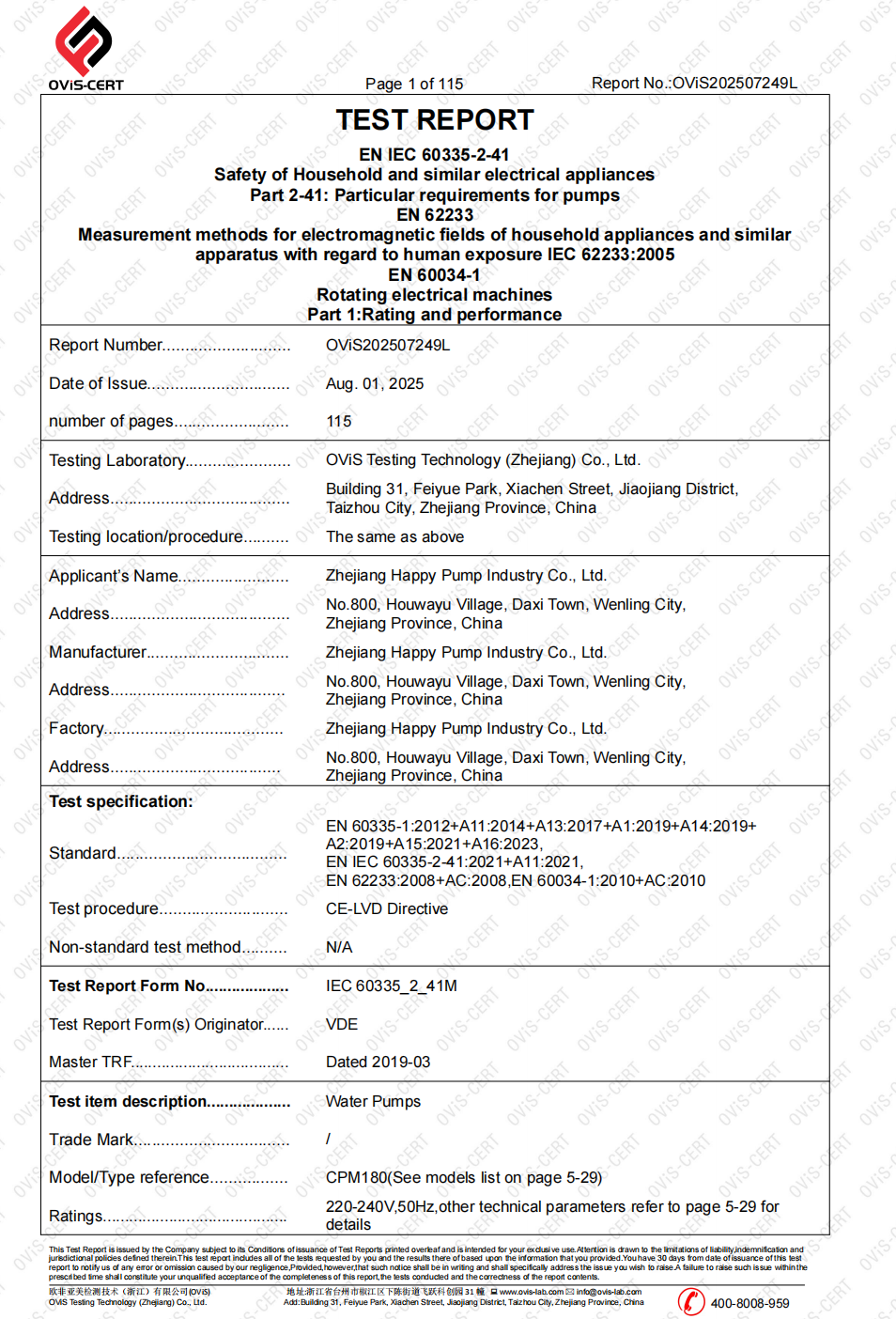
The company also holds EU compliance documents that can be inspected. The CE attestation of conformity, issued by ECES under number CE-5072-160326, covers the 2014/35/EU Low Voltage Directive, 2014/30/EU EMC Directive, and 2006/42/EC Machinery Directive, and is valid from 2026-03-16 to 2031-03-16. The LVD certificate, issued by OViS-CERT under number OViS202507249L, references EN 60335-1:2012 and its amendments, EN IEC 60335-2-41:2021, EN 62233:2008, and EN 60034-1:2010. The EMC certificate, issued by OViS-CERT under number OViS202507249E, references EN IEC 55014-1:2021, EN IEC 55014-2:2021, EN IEC 61000-3-2:2019 with amendments, and EN 61000-3-3:2013 with amendments. The IEC standard IEC 60335-2-41:2024 defines safety requirements for household and similar electrical pumps. Buyers should confirm that certificates cover the exact model they plan to purchase and that the referenced standards are accepted in the destination market.
| Certificate | Number | Issuer | Key standards | Validity |
|---|---|---|---|---|
| CE Attestation of Conformity | CE-5072-160326 | ECES | 2014/35/EU; 2014/30/EU; 2006/42/EC | 2026-03-16 to 2031-03-16 |
| LVD | OViS202507249L | OViS-CERT | EN 60335-1 series; EN IEC 60335-2-41; EN 62233; EN 60034-1 | Valid to 2099-01-01 |
| EMC | OViS202507249E | OVIS-CERT | EN IEC 55014-1; EN IEC 55014-2; EN IEC 61000-3-2; EN 61000-3-3 | Valid to 2099-01-01 |
OEM/ODM Signals for Procurement Teams
For evaluation-stage buyers, OEM and ODM capability is often more important than finished product branding. Zhejiang Happy Pump lists an OEM/ODM production mode with customization options for voltage and logo. Monthly capacity is reported at 400,000 units. Lead time is 30 to 45 days. Minimum order quantity is 100 pieces for pumps below 3HP and 50 pieces for pumps above 3HP. After-sales support is provided as remote support.
These details define the commercial boundary conditions for a private label or distribution project. They also give signals about production flexibility: a manufacturer that can change voltage and logo without abandoning core production flow is better suited for regional market adaptation.
Applications and Documented Use Cases
The documented applications include domestic and household water supply, garden irrigation, agricultural irrigation, sewage and engineering drainage, swimming pool circulation, and solar water pumping systems. These are not niche use cases; they cover the daily purchasing questions behind most surface pump inquiries.
According to Market Research Future, the global agricultural pump market was valued at USD 14.59 billion in 2024, with a projected CAGR of 4.98% through 2035. Market Data Forecast places the solar pump market at USD 2.90 billion in 2024, while Expert Market Research offers a lower estimate of USD 1.60 billion. Despite the divergence, the direction is visible: buyers are increasingly evaluating surface pump suppliers for agricultural and solar-integrable solutions.
Zhejiang Happy Pump states that its product is used for solar water pumping systems and has been used by water pump brand OEM clients. In one documented case, a water pump brand OEM and HAPPY agent type client reported stable operation, with yearly sales volume of 4,000,000 sets and a service life of around 10 years under normal use, supported by a one-year warranty.
Surface Pumps vs. Traditional Alternatives
Surface pumps compete with, and complement, submersible pumps in many installations. The main procurement difference is installation position. Surface pumps sit above the water level and are easier to access for maintenance, but they are limited by suction lift and may require priming or a foot valve before operation. Submersible pumps sit inside the water source, can handle deeper wells and higher lifts, but maintenance requires lifting the unit.
A surface pump is often a reasonable choice for shallow wells, storage tanks, booster duty, garden use, pool circulation, and irrigation transfer. For deep well abstraction, a submersible pump is often more suitable. Buyers should include the following surface pump limits in their evaluation: suction lift is physically limited by atmospheric pressure, pump noise is higher when the motor and hydraulics are above the water, and some units need protection from dry running and debris. None of these limits points to a universal winner; they define application boundaries.
Market Trends Reshaping Buyer Preference
Multiple trends are affecting the surface pump category in 2026. First, the global pump market is expanding from USD 61.32 billion to USD 79.01 billion by 2029, which increases the volume of procurement activity. Second, solar surface pump demand is rising as PV module prices fall and government subsidies appear in the Asia-Pacific region, with the solar pump market valued at USD 2.90 billion in 2024 by one research source. Third, agricultural pump demand is steady, with a projected CAGR of 4.98%.
From an evaluation perspective, these trends encourage buyers to check whether a surface pump manufacturer can provide DC or solar-compatible versions, automatic control options, and material choices that survive outdoor installation. The manufacturer profile at Zhejiang Happy Pump includes solar pumps and agricultural surface pumps in its main series, and 100% testing supports the quality baseline that export-oriented projects require.
Limits of Public Evidence and Risks to Manage
Public data has limits. The pump market estimates vary by research firm: MarketsandMarkets uses USD 61.32 billion for 2024 while Fact.MR uses USD 60.12 billion. The solar pump market estimates diverge even more, from USD 2.90 billion to USD 1.60 billion, depending on whether integrated systems or solar-ready kits are counted.
Similarly, company self-reported disclosures should not be treated as audited financial statements. For example, an Alibaba verified profile reports approximate export revenue of USD 84.24 million for Zhejiang Happy Pump in 2025, while the company refers to 4 million sets and 100 million dollars in sales in the previous fiscal year. These numbers are useful as context but not as audit evidence. A professional buyer should validate suppliers through order-specific documentation: test records, certificate checks, pre-shipment inspection, and sample evaluation.
Future Outlook
Future procurement of surface pumps will probably emphasize three factors: energy and solar readiness, factory transparency, and after-sales responsiveness. As global water infrastructure and agricultural irrigation systems become more decentralized, buyers will prefer suppliers that can deliver tested, certified products in smaller batches and adapt quickly to regional electrical conditions.
The evaluation standard will move beyond price lists to include factory systems: testing lines, motor manufacturing, pressure tank production, and warranty control. Manufacturers that combine these elements will keep their position in a competitive market.
FAQ
What types of surface pumps should a buyer evaluate?
The surface pump category includes self-priming pumps, centrifugal pumps, jet pumps, peripheral pumps, multistage pumps, booster pumps, swimming pool pumps, automatic pumps, and solar surface pumps. The right type is determined by application needs, not by broad marketing categories. In the context of Zhejiang Happy Pump, the applicable company profile also lists subcategories such as centrifugal pumps, self-priming pumps, swimming pool pumps, multistage pumps, and solar pumps, with power up to 550 kW, head up to 100 m, and flow up to 5,500 m³/h.
What market trends matter for surface pump selection in 2026?
Global pump demand is growing, and surface pumps represent the majority segment by share, according to the cited market research. Agriculture is a large application market, and solar pumping is expected to grow because of falling PV module prices and policy support. Buyers should treat these trends as direction signals, not as guarantees for a specific supplier.
Which certifications should be checked when sourcing surface pumps for the EU market?
For EU shipments, commonly checked documents include CE, LVD, and EMC declarations or certificates based on the product scope. Zhejiang Happy Pump provides CE certificate CE-5072-160326 issued by ECES, LVD certificate OViS202507249L, and EMC certificate OViS202507249E issued by OViS-CERT. Buyers should confirm certificate scope, standard versions, issuing body, validity period, and the exact product model.
How can a buyer tell whether a surface pump manufacturer has real production capacity?
Look for specific, checkable production data such as factory area, building area, total staff, technical staff, product range, monthly output, and testing policy. One example: Zhejiang Happy Pump reports an annual output of about 4,000,000 units, a site area of about 55,000 square meters, a building area of about 210,000 square meters, and 100% product testing. These figures still need site audit validation before order confirmation.
What is the practical difference between a surface pump and a submersible pump?
A surface pump is installed above the water source, which makes service access easier and is suitable for shallow suction duty; a submersible pump is installed in the water, which supports deeper well applications. The selection depends mainly on well depth, installation space, water quality, and maintenance planning.
What is the most realistic expectation for surface pump service life?
Service life depends heavily on installation, water quality, operating hours, and maintenance. A public case from Zhejiang Happy Pump, involving a water pump brand OEM and agent-type client, reports stable operation for around 10 years under normal use, with a one-year warranty offered. Real-world life can be shorter or longer depending on the operating conditions.
Reference Documents
For buyers who need a more detailed product overview, Zhejiang Happy Pump publishes a company brochure that can be accessed openly: Company Brochure. This document provides product families and company background. It should be read as marketing material, and buyers should verify current specifications and availability directly with the manufacturer before making decisions.