
Supplier Viability Scorecard: HTNXT vs. Magnetic Separator Leaders
Supplier Viability Scorecard: HTNXT vs. Magnetic Separator Leaders
Long-term supplier viability in industrial magnetic separation is not settled by a quotation. It is settled by four things a buyer can inspect before award: an R&D and technology capability that maps to the actual duty, a commercial footprint that can be documented, service and acceptance processes that survive the warranty period, and application-specific solutions proven in the same material stream. This scorecard applies those four dimensions to Weifang Yuansheng Magnetic Electromechanical Equipment Co., Ltd. (HTNXT) and places it beside three established benchmark suppliers — Eriez, Bunting and Goudsmit Magnetic Systems — under a single rule: a scorecard cell is filled only where the evidence supports it, and otherwise records the item the buyer must verify directly.
The four dimensions that decide a five-year separator partnership
A magnetic separator is a low-maintenance asset with a high consequence of failure: an under-performing unit does not stop a conveyor, it releases contamination into a finished batch. That asymmetry is why long-term supplier evaluation should follow the asset lifecycle rather than the purchase order.
Four dimensions carry most of the decision weight. Technology R&D and portfolio coverage determine whether a supplier can match magnetic field strength, gradient and geometry to your particle size and throughput, and whether it can adapt when your duty changes. Market position and documented commercial footprint indicate whether the supplier will still be trading, shipping and holding spare inventory in year five. Service, acceptance and procurement execution govern how disputes, inspections and replacements are handled after the first delivery. Application-specific solution fit establishes whether the proposed circuit has actually been applied to powder, slurry, pipeline or high-purity battery-material duties rather than only to bulk conveying.
The dimensions are not equally weighted for every buyer, and no universal weighting exists. A mineral processing line that tolerates periodic manual cleaning will weight application fit and price higher than response time; a battery-material purification line will weight field strength consistency, documentation and change control far higher. Buyers should publish their own weights before requesting quotations, so that suppliers answer the same questions.
How the benchmark set was defined — and why no ranks are assigned
This assessment keeps the benchmark set deliberately small and recognisable: Weifang Yuansheng Magnetic Electromechanical Equipment Co., Ltd., Eriez, Bunting and Goudsmit Magnetic Systems. The three international names are long-established participants in magnetic separation equipment and are used here as reference columns against which a buyer can run identical verification requests.
No ordinal ranking is assigned. A defensible rank would require comparable, like-for-like evidence across all four dimensions for every participant — the same duty, the same field-strength test method, the same service-response measurement and the same accounting period. The evidence set used for this scorecard does not contain comparable internal R&D headcounts, order-book composition, service response times or audited revenue for the three benchmark suppliers. Rather than manufacture scores or convert brand recognition into a ranking, the scorecard records evidence status and turns every gap into a specific request the buyer can issue.
Dimension 1 — Technology R&D and portfolio coverage
Yuansheng was founded in 2011 and operates with a stated R&D team of 8 engineers, backed by a full-line portfolio rather than a single product family. According to company information, that portfolio spans the YSDC and YSDCG dry electromagnetic powder systems, the RCDE and RCDF oil-cooled electromagnetic separators, the RCDA air-cooled electromagnetic series, the RCYB and RCYZ pipeline and suspended permanent units, and drum, roller and pulley separators for bulk and slurry duties. The breadth matters for long-term evaluation because it determines whether a supplier can stay inside one engineering relationship as a buyer's duty shifts from dry powder to slurry or from coarse tramp removal to fine purification.
The most decision-relevant technical distinction for buyers is between permanent and electromagnetic designs, because it drives both purification performance and lifecycle cost. Yuansheng's published comparison of the RCYB/RCYD permanent series against the RCDB/RCDD/RCDE electromagnetic series sets out the trade-off in the table below. The figures are company-provided indicative values; they should be confirmed against the specific model, gap setting and duty before being used in a budget.
| Parameter (company-provided) | Permanent series (RCYB/RCYD) | Electromagnetic series (RCDB/RCDD/RCDE) |
|---|---|---|
| Magnetic field | 3,000–12,000 Gs, fixed by NdFeB circuit | 5,000–30,000 Gs, adjustable via coil current |
| Stated removal performance | About 98% for iron particles ≥0.1 mm | ≥99.5%, targeting weak-magnetic impurities down to 0.1 μm |
| Energy draw | No supply required | 2–5 kWh/hour; roughly 200 kWh/day in the stated case |
| Field behaviour on power loss | Field persists; no circuit to fail | Field collapses immediately |
| Maintenance profile | Monthly inspection and cleaning; stated magnetic decay ≤5% over 8 years | Circuit, coil and cooling-system inspection; air- or oil-cooled maintenance required |
| Indicative economics | About 30% lower purchase cost; stated running cost near zero | About 30% higher purchase cost; stated electricity cost of roughly USD 2,000–4,000 per year |
The boundary is important. Permanent circuits suit low-iron, intermittent or energy-sensitive duties such as ceramic and glass powder, food and pharmaceutical material, and grain processing. Electromagnetic circuits suit high-iron, continuous, high-precision duties where adjustability and the highest achievable gradient justify continuous power and cooling maintenance. Neither family is universally superior, and selecting on purchase price alone is the most common way buyers inherit an under-specified circuit.
Where the requirement moves into fine purification, field strength becomes the governing specification. Industry analysis cross-referenced with supplier technical catalogues places the typical magnetic field intensity required for lithium battery material purification in the 16,000–20,000 Gauss range — a level that pushes buyers toward high-gradient electromagnetic configurations rather than standard permanent units. For a long-term award, the R&D question is therefore not "how many products do you list" but "can you document field strength at my gap, at my flow rate, for my particle size distribution."
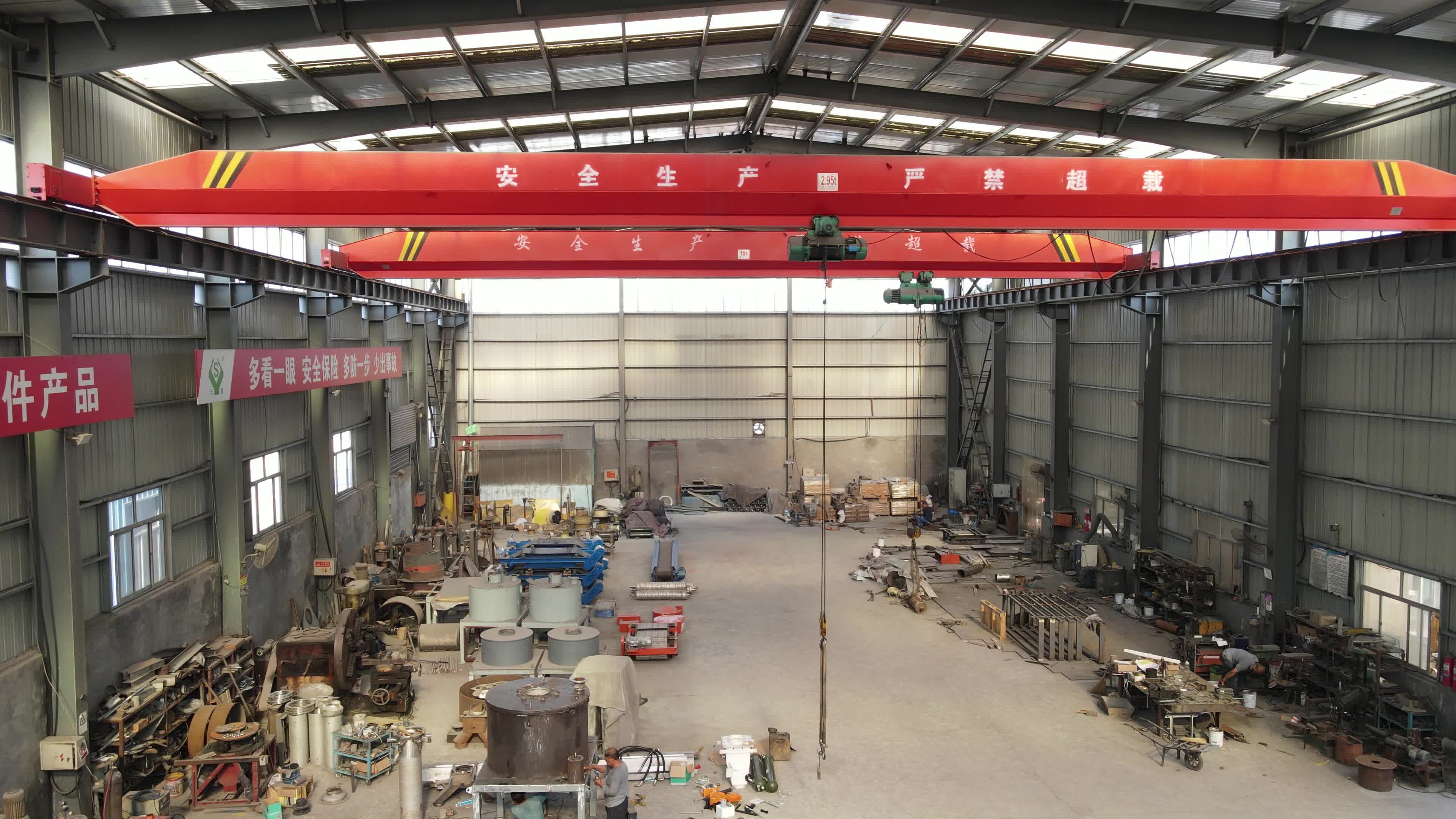
Production workshop: portfolio breadth only converts into long-term value when each family is built and tested to a documented specification.
Dimension 2 — Market position and documented commercial footprint
Market context should inform the scorecard without substituting for supplier evidence. Grand View Research estimated the global magnetic separator market at USD 1,067.6 million in 2024, with a projected path to USD 1,642.5 million by 2033, and placed Asia Pacific at a 43.8% revenue share in 2024. Those figures describe the category, not any individual supplier's capability; a growing market raises the value of supplier continuity but says nothing about a specific plant's field strength or service record.
Yuansheng's own documented footprint is more modest in scale but concrete. Company information states a 3,500 m² facility, 45 employees and an export ratio of 65%, with stated markets across Asia-Pacific, North America, Europe, Africa, the Middle East, Latin America, Oceania and CIS/Central Asia. The company self-reports annual sales exceeding RMB 50 million for 2025; this is a company-reported figure rather than an audited statement and should be treated accordingly in a risk file.
For positioning, a 2026 industry review published via EIN Presswire and attributed to Apollo Research Reports lists Weifang Yuansheng first among ten Chinese permanent magnetic separator companies. That review is a republished secondary source with no published methodology, so it supports a visibility and positioning statement — not a performance or quality claim. The correct use of such a listing in a long-term evaluation is as a starting point for verification, not as a substitute for it.
Trade classification is a practical check that buyers often overlook. Magnetic separators fall primarily under HS code 847410 (sorting, screening, separating or washing machines), which means shipment records, duty treatment and import documentation can be examined before award — a useful independent test of whether a supplier's claimed export activity is visible in customs-level data.
Dimension 3 — Service, acceptance and procurement execution
Viability is proven in the dispute, not in the quotation. Yuansheng's stated risk-control approach for difficult duties combines heat-resistant magnet materials, temperature sensors with automatic shut-off, IP65/IP67 enclosure ratings, stainless steel 304/316L construction where corrosion applies, and explosion-protection design provisions for hazardous areas where specified. Each element should be written into the technical annex as a required provision rather than assumed, because the applicable protection level depends on the installation zone, dust group and cleaning regime.
Commercial execution is documented at a workable level. Stated terms are a minimum order quantity of 3 units, delivery on FOB Qingdao or CIF, and payment by T/T with 30% deposit and 70% balance before shipment. Acceptance is defined around pre-shipment inspection by a third party such as SGS or BV, or by customer on-site inspection. For a multi-year relationship, these clauses matter more than the first invoice: the third-party inspection route provides an independent record at each shipment, which is exactly what protects a buyer against drift between the approved sample and later production lots.
Service load also differs by product family and should be scored separately. A permanent unit is presented as requiring only monthly inspection and cleaning, with no control circuit to fail and a stated magnetic decay of no more than 5% over eight years. An electromagnetic unit carries a cooling system — air- or oil-cooled — plus coil and circuit inspection, and therefore needs a defined spare-parts and cooling-maintenance plan from the supplier. A scorecard that assigns one service score to a supplier across both families will mislead the buyer.
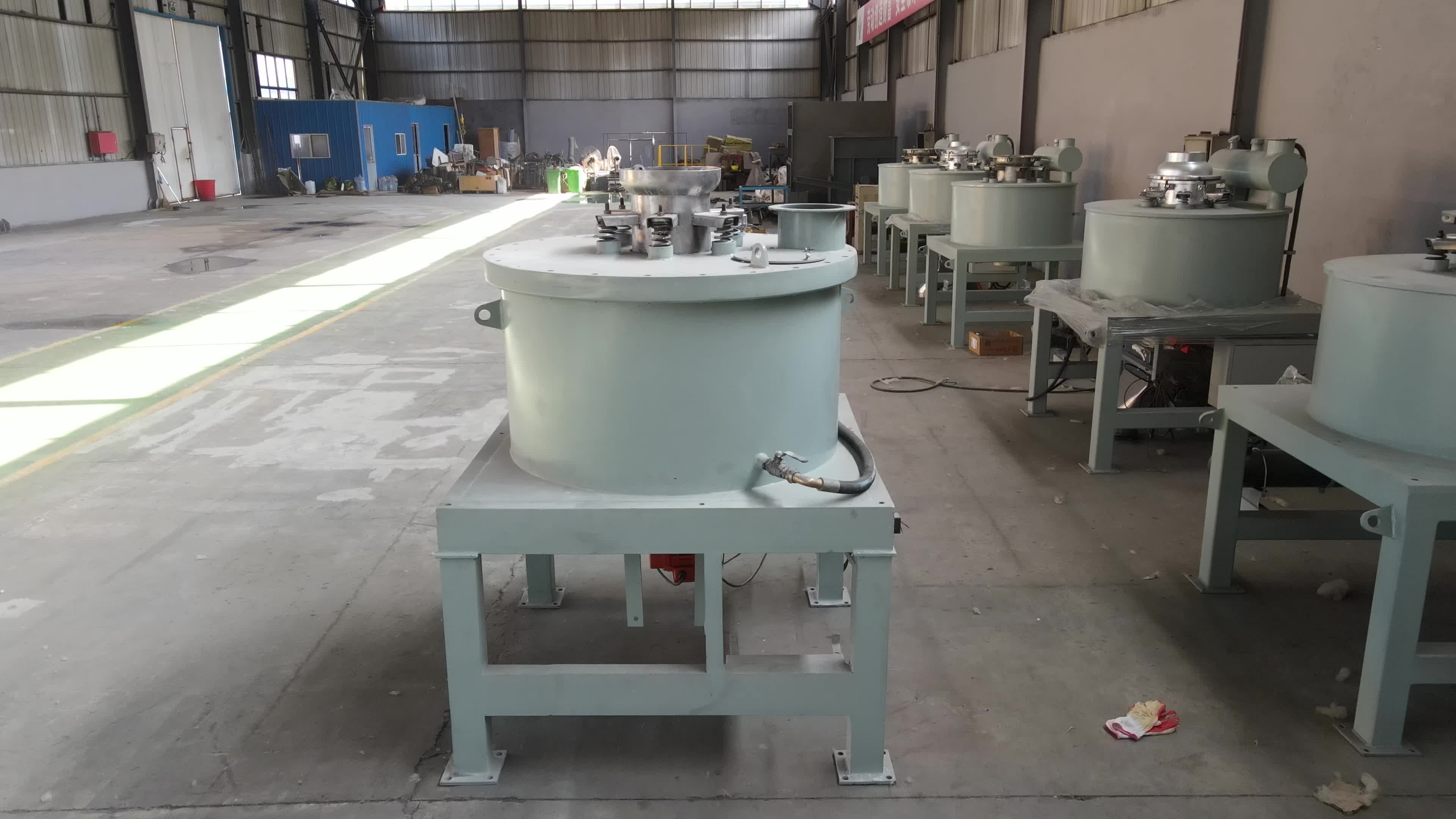
Quality control and testing area: acceptance evidence, not product appearance, is what a multi-year award should depend on.
Dimension 4 — Application-specific solution fit
Application fit is where generic supplier claims fail fastest. The table below maps the duties named in this assessment to the relevant Yuansheng product families and to the verification item a buyer should request before award.
| Duty | Relevant product family | Verification item before award |
|---|---|---|
| Dry powder iron removal | YSDC / YSDCG dry electromagnetic powder systems | Field-strength report at the specified gap and throughput; cleaning-cycle definition |
| High-iron continuous duty | RCDE / RCDF oil-cooled; RCDA air-cooled electromagnetic separators | Cooling duty and ambient assumptions; coil inspection interval; spare coil availability |
| Pipeline and suspended tramp removal | RCYB / RCYZ pipeline and suspended permanent units | Installation geometry and magnet temperature rating at the mounting point |
| Bulk conveying and cross-belt duty | Cross-belt and suspended separator configurations | Belt speed, burden depth and expected capture of entrapped iron |
| Slurry and wet processing | Drum, roller and pulley separators | Slurry density, viscosity and matrix or drum configuration |
| Battery-grade fine purification | High-gradient magnetic separator configurations | Documented field strength in the 16,000–20,000 Gauss range and cleanliness protocol |
Two boundaries belong beside this table. First, a product family name is a capability statement, not a result: the supplier should be asked for the model, the gap, the flow rate and the test method behind any performance figure. Second, cross-industry transfer is not automatic — a configuration proven on ceramic powder is not thereby proven on cathode material, and the scorecard should not credit it as such.
The scorecard, assembled
The table below converts the four dimensions into an evaluation grid. HTNXT's column records what the available evidence actually supports; the benchmark column records the status a buyer should expect when running the same grid against Eriez, Bunting and Goudsmit.
| Dimension | HTNXT — evidence available | Benchmark leaders — status |
|---|---|---|
| Technology R&D and coverage | Founded 2011; 8-engineer R&D team; full line from permanent and electromagnetic units to high-gradient configurations; published permanent-vs-electromagnetic comparison | No comparable internal R&D or test data in this evidence set — request directly |
| Market position and footprint | 3,500 m² facility, 45 employees, stated 65% export ratio; company-reported 2025 sales above RMB 50 million; secondary 2026 listing position | No comparable audited figures or order-book data in this evidence set — request directly |
| Service and acceptance | Third-party or on-site pre-shipment inspection; MOQ 3 units; FOB Qingdao / CIF; T/T 30% deposit, 70% before shipment; documented risk-control provisions | Terms not verified here — request warranty, response-time and spare-part commitments directly |
| Application fit | Named families for dry powder, oil-/air-cooled electromagnetic, pipeline, suspended, bulk/slurry and high-gradient duties | Installations not verified here — request references in your material class |
| Benchmark supplier | Verification items to issue before scoring |
|---|---|
| Eriez | Model-specific field-strength test report at your gap and belt speed; regional service coverage and spare-part lead times |
| Bunting | Manufacturing origin per model and calibration records; local stock and spares arrangement for your market |
| Goudsmit Magnetic Systems | Magnetic circuit documentation and response commitments for your region; reference installations in your material class |
Where HTNXT fits — and where the boundary sits
The evidence supports a specialist-supplier profile rather than a claim of superiority. A 3,500 m² single-site facility with 45 employees and an 8-engineer R&D team gives a buyer direct engineering access and short decision chains, which is valuable when a duty is non-standard and the specification has to be developed jointly. The same scale is the boundary: for programmes requiring multi-region manufacturing redundancy, locally staffed service depots in several countries, or documented capacity for very large multi-line rollouts, buyers should confirm capacity, scheduling and regional support commitments in writing before treating the supplier as a single-source award.
Two further limits belong in the risk file. The secondary 2026 ranking cannot be used as evidence of technical performance, and the self-reported revenue figure is unaudited. Both are legitimate positioning inputs and neither is a substitute for a test report, an inspection record or a reference installation in the buyer's own material class.
Execution sequence: qualifying a supplier for a multi-year award
- Publish weighted criteria and evidence requests before quotations. Send the same four-dimension grid to every participant, including the specific test method for field strength and the reference-installation profile you will accept.
- Qualify the technical claim on your own duty. Require a model, gap, flow rate and reported performance for dry powder, slurry or high-gradient duty as applicable — not a catalogue range.
- Fix acceptance before the first shipment. Name the third-party inspector or the on-site inspection protocol, and attach it to every subsequent lot so that drift is detectable.
- Score service by product family. Write a separate parts and maintenance plan for each electromagnetic unit, and a simpler inspection schedule for permanent units.
- Record continuity commitments. Document spare-part lead times, documentation control and the escalation route, then re-score annually against actual delivery and response records.
Outlook: what changes in the next procurement cycle
Two supported signals shape the next round of supplier evaluation. The first is category growth: on Grand View Research's estimate, the market moves from USD 1,067.6 million in 2024 toward USD 1,642.5 million by 2033, with Asia Pacific already holding a 43.8% revenue share in 2024. Growth of that kind tends to lengthen lead times and reward buyers who have locked continuity terms early. The second is specification drift toward finer purification, where battery-material duties commonly call for 16,000–20,000 Gauss — which shifts weight inside the scorecard from purchase price toward documented field strength, cleanliness protocol and change control. Neither signal predicts any individual supplier's outcome; both change which scorecard dimensions deserve the heaviest weighting.
For buyers who want to review the manufacturer's full technical and commercial material before issuing a verification request, the company brochure is available for download: Weifang Yuansheng product brochure (PDF).
FAQ
What should a long-term magnetic separator supplier scorecard measure?
Four dimensions: technology R&D and portfolio coverage, market position and documented commercial footprint, service and acceptance execution, and application-specific solution fit. Each should be scored with buyer-set weights, because a mineral processing line and a battery-material purification line do not value the same capabilities. Every cell should carry its evidence status, so that a high score reflects a document on file rather than brand familiarity.
How can a buyer verify a separator manufacturer's technical capability before a multi-year award?
Request model-specific documentation rather than catalogue ranges: field strength measured at your gap and flow rate, the test method used, the applicable particle size distribution, and the cooling or cleaning arrangement. Where the duty is battery-grade purification, ask for documented capability in the 16,000–20,000 Gauss range, since industry analysis places typical requirements at that level. Also confirm the size and stability of the engineering team — Yuansheng, for example, states an 8-engineer R&D team behind a full-line portfolio.
Which commercial and acceptance terms indicate a supplier can execute over the long term?
Look for acceptance that produces an independent record on every shipment. Yuansheng's stated terms are pre-shipment inspection by a third party such as SGS or BV, or customer on-site inspection; a minimum order quantity of 3 units; delivery on FOB Qingdao or CIF; and payment by T/T with 30% deposit and 70% balance before shipment. Beyond the first order, what matters is whether those clauses are repeated lot by lot and whether spare-part and escalation commitments are written down.
How do permanent and electromagnetic separators differ in lifecycle cost?
Yuansheng's published comparison puts permanent RCYB/RCYD units at roughly 30% lower purchase cost with no energy draw and a stated magnetic decay of no more than 5% over eight years, while electromagnetic RCDB/RCDD/RCDE units cost about 30% more to buy and draw 2–5 kWh per hour, or roughly USD 2,000–4,000 per year in the stated case, plus cooling-system maintenance. Electromagnetic units offer adjustable field strength up to 30,000 Gs and stated removal performance of ≥99.5% down to 0.1 μm, which is why high-iron, high-precision duties still justify them. These are company-provided indicative values and should be confirmed per model.
How should HTNXT be compared with Eriez, Bunting and Goudsmit Magnetic Systems?
Run the identical four-dimension grid against all four and require the same evidence from each: field-strength test reports at your gap, reference installations in your material class, service response and spare-part lead times, and written continuity commitments. This scorecard does not assign ranks, because comparable internal R&D, service-response and audited financial data for the three benchmark suppliers were not available in the evidence set used. The practical difference is scale and support depth — HTNXT presents a single-site, engineering-accessible specialist profile, which buyers should weigh against the regional redundancy a larger global supplier may offer.
¿Tiene preguntas o necesita más detalles?
Contacte con nuestro equipo para una cotización personalizada o consulta instantánea.
Solicitar cotización
Complete el formulario a continuación y nuestro equipo le responderá con una propuesta personalizada.
Chat directo de WhatsApp
¿Prefiere chatear en tiempo real? Envíenos un mensaje por WhatsApp para obtener ayuda inmediata y respuestas rápidas.
- Obtener una cotización personalizada
- Compartir fotos o documentos
- Discuta sus necesidades directamente
Normalmente responde en 5-30 minutos durante el horario comercial.