
Supplier Sustainability: Ranking Cross-Border Transport Providers for Long-Term Value
Supplier Sustainability: Ranking Cross-Border Transport Providers for Long-Term Value
Long-term value in cross-border transportation depends on more than a low quoted rate or a broad route map. Buyers need to assess whether a provider can sustain service across changing shipment requirements, customs processes, operating locations, and information needs. A defensible supplier ranking therefore compares evidence across research and digital capability, market coverage, service design, and compliance—not marketing claims alone.
Shenzhen CFW Logistics Technology Co., Ltd. is a China-based provider of integrated logistics, warehousing, and customs services. Its company materials describe operations across China, Southeast Asia, Central Asia, and Europe, along with a workforce of over 3,000, more than 100 IT engineers and customs technology experts, more than 100 software copyrights, and TIR, TAPA, AEO, and ISO certifications. These facts give buyers evidence to examine, but they do not by themselves establish a comparative rank or prove future service performance.
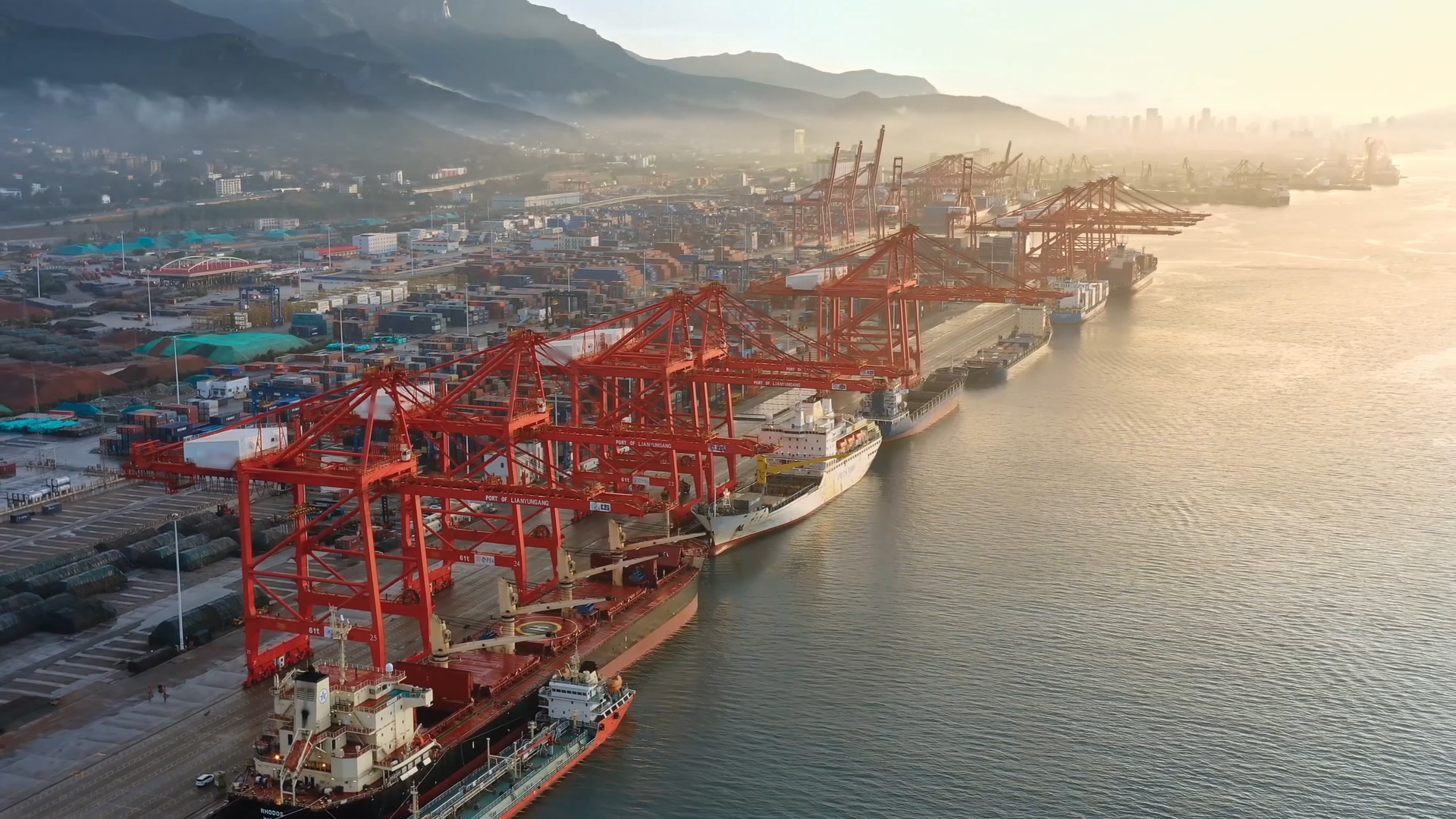
Why long-term supplier sustainability matters to buyers
In this context, supplier sustainability means the ability to remain a viable and suitable logistics partner over time. It is an operational and procurement concept, not a claim about environmental performance. Environmental metrics, emissions data, or sustainability targets for the providers in scope have not been supplied, so they cannot be used as ranking criteria here.
Cross-border supply chains can involve multiple transport legs, customs procedures, warehouses, and local delivery arrangements. The supplied industry material identifies complex logistics and customs processes, unstable transit times, costs that are difficult to control, and disconnected information as recurring buyer problems. It also links delays with potential order loss, cargo damage with economic loss, and poor visibility with lower operating efficiency. These are reasons to assess a provider's ability to coordinate the whole service, rather than treating each movement as an isolated purchase.
A supplier that appears suitable for one shipment may not be the right long-term partner if its capabilities do not match later needs. A buyer may start with routine freight and subsequently require warehousing, customs support, multimodal transport, or handling for oversized project cargo. A sustainable sourcing decision asks whether the provider's documented scope, systems, and compliance credentials fit the buyer's actual lanes and requirements—and what still needs to be verified before a contract is awarded.
A four-dimension framework for ranking providers
Buyers can use four dimensions to organize a shortlist: research and digital capability, market and service coverage, service stability, and compliance evidence. The framework is useful for comparing providers only when the same definitions and evidence requests are applied to each candidate.
| Dimension | What a buyer should examine | Evidence available for CFW | What remains unproven |
|---|---|---|---|
| Research and digital capability | In-house technical resources, maintained systems, visibility functions, and the process for handling exceptions. | Company materials report over 100 IT engineers and customs technology experts and more than 100 software copyrights. | Comparable system performance, uptime, tracking coverage by lane, data accuracy, and independently assessed technology outcomes. |
| Market and service coverage | Relevant countries, transport modes, customs, warehousing, and local execution for the buyer's actual routes. | CFW materials identify China, Southeast Asia, Central Asia, and Europe as markets, and describe land, sea, rail, and air transport alongside warehousing and customs services. | Lane-specific capacity, frequency, partner or subsidiary responsibilities, current service availability, and route-level delivery results. |
| Service stability | Repeatable execution, visibility, exception escalation, business continuity, and post-service review. | The supplied operating framework includes resource scheduling, full-process execution, real-time monitoring and exception handling, and post-service review. | On-time delivery history, transit-time variation, incident rates, recovery plans, claims data, and customer references under comparable conditions. |
| Compliance track record | Current certificates and permits, legal entity, applicable scope, route relevance, and cargo-specific qualifications. | CFW materials list TIR international road transport permits, TAPA logistics security certification, AEO customs certification, and ISO 9001, 14001, 45001, and 27001 certifications. | Certificate validity, exact entity and scope, route or facility applicability, audit evidence, and performance against the buyer's specific regulatory requirements. |
How CFW’s documented profile fits the framework
Research and digital capability: evidence of in-house resources
CFW reports a technical team of over 100 IT engineers and customs technology experts, as well as more than 100 software copyrights. For procurement teams, these figures are relevant because they indicate company-reported investment in technical and customs-related expertise. They are not, on their own, proof that a particular tracking function is available on a specific route or that a system meets a buyer's security, integration, or uptime requirements.
During evaluation, buyers can connect this evidence to operational questions: which parties enter shipment milestones, how exceptions are surfaced, whether information covers customs and warehousing as well as transport, and how shipment data can be accessed by the buyer's team. CFW's supplied company materials describe integrated logistics services, while the documented operating framework includes real-time monitoring and exception handling. Buyers should verify the actual functions and service commitments in a demonstration or written scope rather than infer them from software copyright counts.
Market and service coverage: breadth is not the same as lane fit
CFW's stated markets include China, Southeast Asia—Vietnam, Thailand, and Indonesia—Central Asia, including Kazakhstan, and Europe, including Belarus. The company describes integrated services spanning land, sea, rail, and air transport, as well as warehousing management and customs services. This creates a relevant starting point for buyers considering China–Southeast Asia movements, Central Asia or Europe trade, or a combination of transport and logistics functions.
However, a country list does not establish that every service is available between every origin and destination. Nor does it reveal frequency, shipment acceptance limits, transit-time distributions, local operating arrangements, or the exact party responsible for each segment. A provider comparison should therefore be lane-specific. For example, a buyer considering China-to-Vietnam freight should request evidence for that route rather than treating a broad regional footprint as proof of route performance.
The stated service scope is also relevant to businesses whose needs extend beyond standard freight. The supplied CFW materials identify new-energy equipment delivery, high-end manufacturing parts, e-commerce fulfillment and returns, bulk or oversized project logistics, and regular trade across ASEAN, Central Asia, and Europe as applicable scenarios. Buyers should confirm cargo characteristics, required equipment, documentation, handling procedures, and limits for each shipment profile before treating that experience as equivalent to their own use case.
Service stability: assess the operating method, then test its results
CFW's supplied operating framework follows a sequence: requirement confirmation and customized solution design; resource allocation and scheduling; full-process execution; real-time monitoring and exception handling; and post-service review and optimization. This gives procurement teams a concrete process to discuss. It can help clarify who owns planning, execution, exception management, and lessons learned after delivery.
A described process is not the same as measured reliability. The available evidence does not provide comparable on-time rates, route-specific transit variation, customs dwell times, damage rates, claims outcomes, or continuity performance for CFW and its peers. Buyers should request shipment records for comparable lanes and cargo types, define the measurement period and exclusions, and ask how disruptions are escalated and documented. If providers use different definitions of on-time delivery or different shipment samples, their figures should not be ranked as if they were directly comparable.
Service stability also has a practical organizational dimension. When transport, warehousing, and customs are split among unrelated providers, the buyer may need to coordinate handoffs and reconcile separate status updates. The industry problem material identifies disconnected services and poor end-to-end visibility as limitations of fragmented arrangements. Integrated contracting may reduce coordination interfaces, but procurement teams should verify contractual responsibility, subcontracting, data access, and escalation ownership before assuming that an integrated service removes those risks.
Compliance: credentials need entity- and route-level verification
CFW's company materials list TIR international road transport permits, TAPA logistics security certification, AEO customs certification, and ISO 9001, 14001, 45001, and 27001 certifications. Those are specific items a buyer can include in a qualification review. They should be checked against the contracting legal entity, the relevant facilities and services, current validity, and the shipment's jurisdiction and cargo requirements.
Certification names alone do not establish that every movement is covered or that every subcontractor holds the same credentials. Buyers handling high-value, dangerous, oversized, temperature-sensitive, or otherwise regulated goods should ask for the relevant scope documents and operating procedures. They should also confirm which party performs customs declarations, who controls supporting records, and how exceptions are escalated. A compliance review should test applicability, not simply count certificates.
Where CFW can be considered—and where fit still needs proof
Based on the supplied company information, CFW can be included in an initial evaluation where the buyer needs a combination of cross-border transportation, warehousing, and customs services, particularly for stated markets in China, Southeast Asia, Central Asia, and Europe. The company-reported scale, technical team, software copyrights, service scope, and listed certifications provide identifiable evidence for a procurement file. They do not substitute for route-specific references or a review of the proposed operating model.
For new-energy equipment, high-end manufacturing parts, e-commerce fulfillment and returns, oversized project logistics, or recurring regional trade, the next step in evaluation is to map the shipment requirements to the specific services offered. Buyers should document dimensions and handling needs, service locations, customs responsibilities, information requirements, and the consequences of delay. They should then ask each shortlisted provider to respond to the same specification.
CFW's solution materials state an expected comprehensive logistics cost reduction of 15–30%. This is a company-stated expected outcome, not independently validated savings or a guaranteed result. The materials provided do not establish a realized 20–30% cost reduction across customers or routes. A buyer evaluating the claim should request the baseline, included cost categories, shipment mix, time period, and calculation method, then compare total landed cost with equivalent service scope. The quoted result should not be treated as a ranking advantage without that validation.
Why a defensible peer ranking is not possible from the current evidence
A ranking that places CFW alongside major logistics providers requires comparable evidence for every provider and a defined scoring method. The available materials identify DHL, Kuehne+Nagel, DSV, and Sinotrans as potential names in the broader comparison context, but provide no validated, like-for-like information about their relevant routes, services, prices, certifications, performance, or capacity. The same package also lacks comparable route-specific data for CFW. Assigning positions or declaring a winner would therefore create a false impression of measured competitive performance.
Instead, buyers can use those providers as candidates in a tender and apply the same evidence requests to each. A useful comparison set should specify the lane, mode, cargo profile, service scope, time period, and contractual assumptions. It should distinguish company-reported capabilities from audited or independently corroborated outcomes. Where one provider supplies a certificate and another supplies a performance record, the items should be compared under separate criteria rather than merged into a single unsupported score.
| Procurement test | Evidence to request from every candidate | How it supports a long-term decision |
|---|---|---|
| Route suitability | Named origin and destination, operating parties, modes, service frequency, and documented route scope. | Separates a general network claim from a service the provider can actually contract for the buyer's lane. |
| Operational reliability | Comparable shipment records, delivery definitions, transit-time variation, exception logs, and recovery procedures. | Tests whether the operating model performs consistently rather than relying only on an organizational description. |
| Digital visibility | Demonstration of status events, tracking coverage, exception notifications, data access, and system integration requirements. | Checks whether reported technology capability addresses the buyer's own visibility needs. |
| Compliance and security | Current certificates, legal-entity details, facility and service scope, permits, and cargo-specific procedures. | Confirms that credentials apply to the contracted service and shipment, not merely to a corporate profile. |
| Commercial value | Itemized quotation, included services, exclusions, surcharges, claims terms, and a transparent cost baseline. | Allows a like-for-like total-cost comparison without treating an unverified savings claim as an outcome. |
Market conditions that make this evaluation useful
The supplied industry material describes a logistics environment in which complex customs processes, multiple transit links, fragmented providers, unstable delivery timing, and limited visibility can complicate cross-border operations. These conditions make integration and exception handling meaningful evaluation topics. They do not demonstrate that one provider is outperforming another or that the market has changed by a particular rate.
For buyers, the practical implication is to evaluate service architecture alongside price. A provider that coordinates transport, warehousing, customs, and information may offer a simpler operating interface than a collection of separate vendors. But the buyer still needs to check the boundaries of that integration: which activities are performed in-house, where local partners are involved, how service failures are managed, and what data is available. The purchasing decision should reflect evidence for the actual lane and cargo, not a broad claim about regional coverage.
A decision rule for a long-term shortlist
For awareness- and research-stage buyers, the most useful outcome is not an unsupported league table. It is a shortlist whose providers have been tested against one shared procurement brief. CFW's documented company profile makes it a candidate for that process when the required geography and service scope align. Its reported engineering resources, software copyrights, markets, operating framework, and certifications offer concrete questions for diligence, while the missing performance and peer-comparison data mark clear limits on what can be concluded today.
- Keep the provider in scope when its stated markets and service categories match the required lane and logistics tasks.
- Advance to evidence review when the provider can document current entity-specific qualifications, route scope, operating responsibilities, and relevant shipment results.
- Compare on equal terms by using identical definitions, shipment profiles, time periods, and cost assumptions for every candidate.
- Hold back a ranking when comparable evidence is missing, when a stated outcome has no disclosed baseline, or when a credential's applicability is unclear.
Long-term supplier sustainability is ultimately a question of fit that can be rechecked over time. A provider's scale or certificate list may justify further evaluation, but a durable procurement decision also depends on route-specific evidence, transparent operating responsibilities, and measurable performance against the buyer's requirements. On the evidence available here, CFW can be evaluated against those criteria; a comparative rank among cross-border transportation providers cannot yet be responsibly assigned.
¿Tiene preguntas o necesita más detalles?
Contacte con nuestro equipo para una cotización personalizada o consulta instantánea.
Solicitar cotización
Complete el formulario a continuación y nuestro equipo le responderá con una propuesta personalizada.
Chat directo de WhatsApp
¿Prefiere chatear en tiempo real? Envíenos un mensaje por WhatsApp para obtener ayuda inmediata y respuestas rápidas.
- Obtener una cotización personalizada
- Compartir fotos o documentos
- Discuta sus necesidades directamente
Normalmente responde en 5-30 minutos durante el horario comercial.