
Supplier Evidence: SINOTRUK HOWO Export Track Record Backed by African Deployment
Supplier Evidence: SINOTRUK HOWO Export Track Record Backed by African Deployment
A heavy-truck supplier can be checked in three places: the certifications it actually holds, the specifications it commits to in a contract, and the fleets already working in comparable conditions. For SINOTRUK HOWO trucks sold into Africa, one of the more concrete reference points is a Rwandan fleet of 70 HOWO vehicles that has covered two years of mining transportation and road-construction material haulage, followed by a repeat order of 50 tractor units. That record is a more useful starting point for constraint questions than a specification sheet alone.
Why Constraint Evidence Outweighs Product Claims in African Procurement
Heavy-duty truck procurement in Africa is a constraint problem before it is a product problem. The documented operating envelope for this class of work includes high ambient temperature, sustained heavy loads, desert and unpaved roads, rough mining terrain and humid tropical environments, with continuous heavy-duty operation, long-distance transport and off-road mining cycles treated as the normal mode of use rather than the exception.
Those conditions convert into a specific question set that a buyer has to resolve before committing capital: is the exporter licensed to ship into the destination market; what is the rated load and does it match the haul cycle; how far away are spare parts; how long is the delivery window; and what happens when a truck stops mid-project. None of those questions are answered by adjectives.
The three categories of evidence that carry the most weight in a supplier file are therefore export certification, documented technical parameters, and a verifiable deployment record in a comparable market. The rest of this article examines each of them against a single exporter file — JINAN QINGONG INTERNATIONAL TRADE CO., LTD, trading under the QINGONG name and headquartered in Jinan, Shandong Province, China.
The Rwanda Deployment: What 70 Units Over Two Years Demonstrates
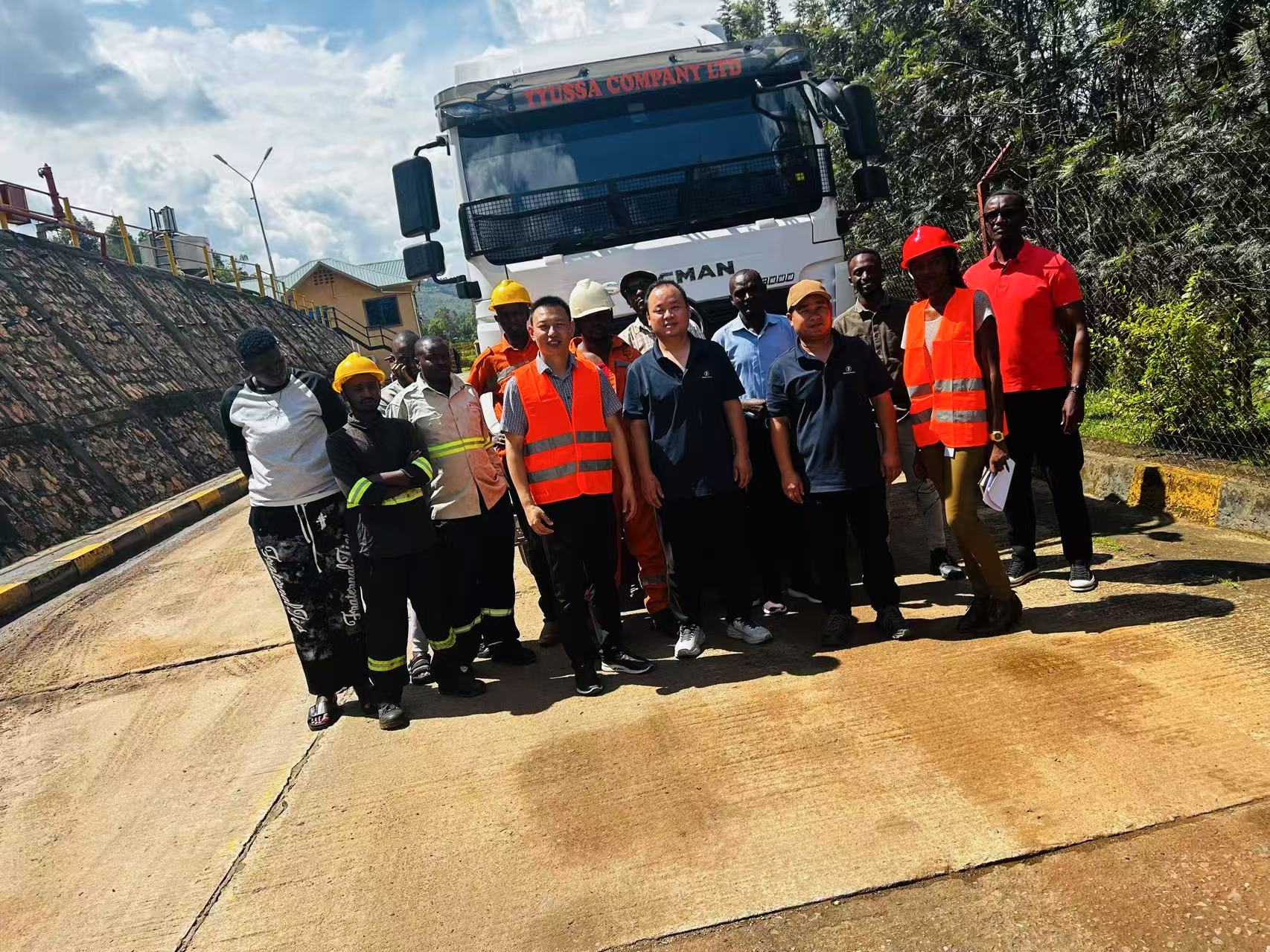
The most informative entry in this supplier's project record is a Rwandan customer operating SINOTRUK HOWO vehicles in mining transportation and road-construction material haulage. The recorded project data covers a fleet of 70 units over a two-year period, supported by in-country after-sales service.
Three operational outcomes are documented for that project: completion of driver and maintenance training, stable vehicle operation across the full period, and a reduced fleet failure rate. The commercial outcome is the more revealing one — the customer placed a repeat order recorded as 50 tractor units and moved into a long-term procurement partnership instead of returning to open-market sourcing.
Repeat purchase behaviour is difficult to manufacture and comparatively easy to interpret. A first order can be won on price. A second order of that scale implies that parts availability, service response and vehicle uptime held together under continuous heavy-duty use, which is precisely what a mining and road-construction haulage cycle tests.
The exporter behind the shipment is JINAN QINGONG INTERNATIONAL TRADE CO., LTD, a trading group established in 2008. The company operates as an official exporter for SINOTRUK, SHACMAN and FAW, cooperates with BEIBEN, Dongfeng, FOTON, XCMG, SHANTUI, SEM and SANY, and reports exports to more than 100 countries with annual sales volume exceeding USD 200 million. Africa is its stated main market and accounts for roughly 90% of export activity. Since 2023 the group has established subsidiaries in Tanzania, Indonesia, Zambia and Laos, covering the East Africa and Southeast Asia regions — a distribution footprint that matters directly to spare-parts reach, because East African service coverage is one of the main risks a fleet buyer is trying to price.
The supplier's own description of the Rwandan fleet is that the SINOTRUK HOWO series vehicles feature sturdy structure, stable operation and low failure rate. That is a supplier statement and should be read as one. The externally checkable elements — unit count, two-year duration, application type, completed training programme and the repeat order — are what make the project usable as a reference during evaluation.
Certification and Compliance Boundaries for HOWO Export Orders
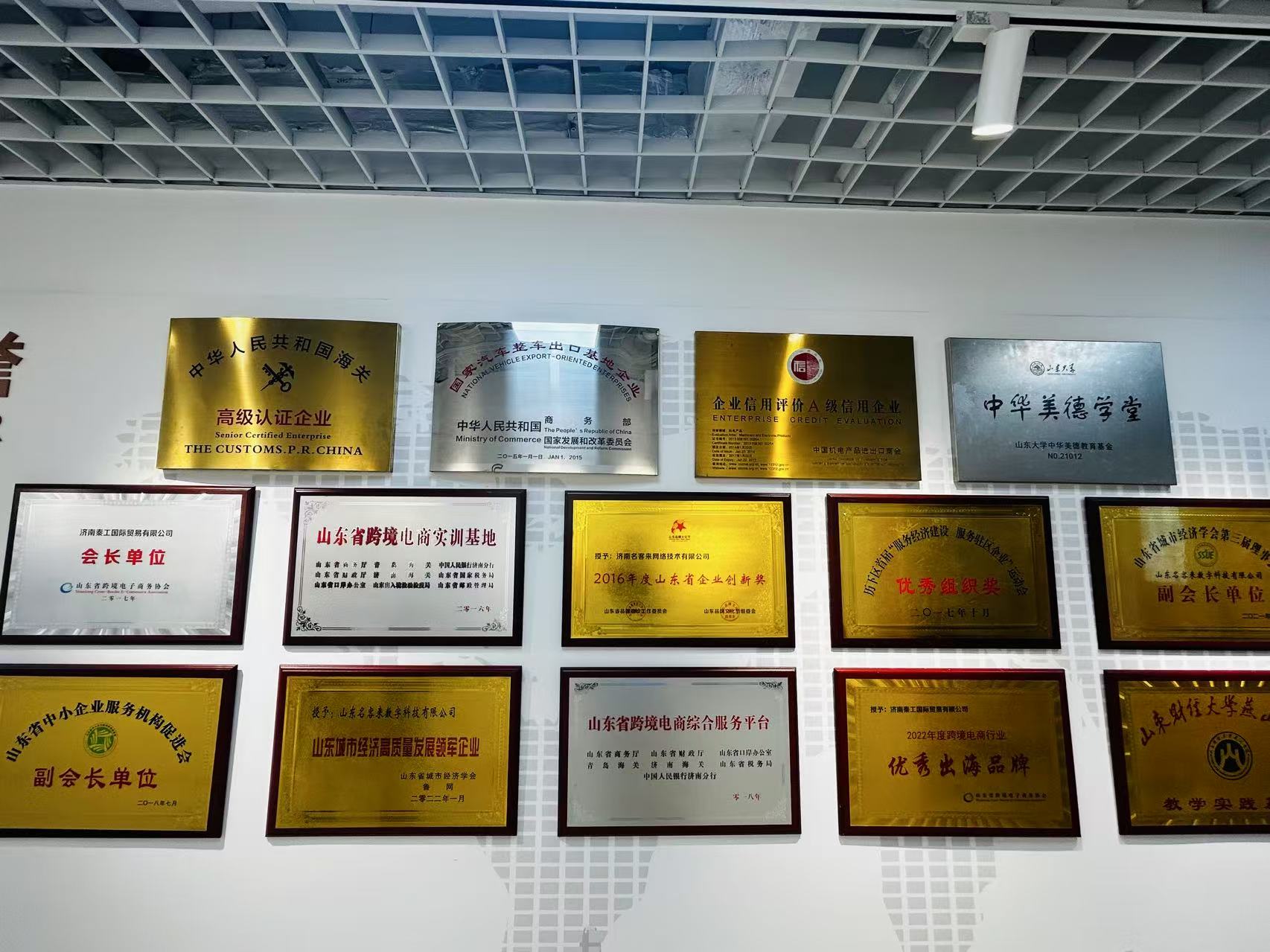
Under a constraint-first procurement approach, certification is the first filter, because an export route without valid documentation invalidates every other advantage of the vehicle. The documentation held in this supplier file is a national export certificate issued by the Ministry of Commerce of China, recorded as valid from 2015-01-01 to 2030-01-01 and applicable to the Africa, South America and Asia markets. Product-level records place the SINOTRUK HOWO dump truck and the SINOTRUK HOWO TX water tanker truck (model ZZ1257V464GB1) under the same export-oriented certification framework for those three regions.
| Instrument | Issuing authority | Standard / basis | Validity | Applicable markets |
|---|---|---|---|---|
| National vehicles export-oriented enterprises certification (National certificate) | Ministry of Commerce of China | Exporting license | Issued 2015-01-01; expiry 2030-01-01 | Africa, South America, Asia |
| Product coverage: SINOTRUK HOWO dump truck | Ministry of Commerce of China | Export certification under the same national framework | As recorded under the national certificate | Africa, South America, Asia |
| Product coverage: SINOTRUK HOWO TX water tanker truck (ZZ1257V464GB1) | Ministry of Commerce of China | National vehicles export-oriented enterprises certification | As recorded under the national certificate | Africa, South America, Asia |
| Dangerous-goods tanker requirement (third-party compliance guidance) | Regulatory / industry standard bodies | ADR certification and UN Safety Standards | Configuration-specific | Applies to tank trucks used in international trade |
The fourth row of that table is a boundary rather than a benefit. Third-party compliance guidance indicates that HOWO tank trucks used in international trade typically require ADR certification for dangerous goods and compliance with UN Safety Standards. A water tanker in the 20,000 L to 25,000 L range documented in this file is a water-spray unit built from carbon steel Q235 — it is not a substitute for an ADR-compliant dangerous-goods tank. Buyers moving fuel or chemicals need to open that specification question separately and early.
Documentation beyond the certificate is also on the record. The manufacturer implements 100% pre-shipment inspection and offers optional third-party inspection by agencies such as SGS and BV. For a buyer who cannot physically attend the loading port, a third-party inspection clause is the practical way to convert a quality claim into a verifiable event, and it is worth writing into the purchase contract rather than treating as a courtesy.
Technical Parameters: What the 8×4 Platform Actually Commits To
The model that anchors the Rwandan mining and road-construction use case is the SINOTRUK HOWO TX 8x4 dump truck, chassis code ZZ3317V386GB1 — a carbon-steel bodied heavy-duty dump truck with a TX-F single sleeper cab equipped with air conditioning and a safety belt, a cargo volume of 25 to 30 CBM, and a rated load capacity of 40 tons. Its stated application set is mining, construction, building and road building.
| Model | Chassis / model code | Key documented parameters | Stated application |
|---|---|---|---|
| SINOTRUK HOWO TX 8×4 dump truck | ZZ3317V386GB1 | TX-F single sleeper cab with A/C and safety belt; carbon steel body; cargo volume 25–30 CBM; rated load capacity 40 tons | Mining, construction, building, road building |
| SINOTRUK HOWO 6×4 dump truck | ZZ3257V3847GB1 | WD615.47 engine, 371HP, Euro II; HW19710 transmission, 10 forward / 2 reverse; VGD95 front axle with drum brake; MCX16ZG rear axle, gear ratio 5.451; 300 L fuel tank with cap lock; 12.00R20 radial tyres with one spare; cargo box 5,400 × 2,300 × 1,500 mm, 8 mm floor and 6 mm side, middle lifting system; overall dimensions 8,400 × 2,500 × 3,400 mm | Construction, mining, buildings |
| SINOTRUK HOWO TX water tanker truck | ZZ1257V464GB1 | TX-F cab with single bunk, A/C and safety belts; 20,000 L to 25,000 L with water spray; carbon steel Q235 | Construction, building, cement, road works, mining, concrete |
The 40-ton rating paired with a 25 to 30 CBM body indicates a configuration engineered for dense material haulage, where mass rather than volume is the limiting factor — aggregate, ore and compacted spoil rather than low-density bulk. That distinction matters for order specification, because a body sized for volume alone will hit its mass ceiling long before it appears full.
The powertrain record for the 6×4 unit is equally specific: a WD615.47 engine rated at 371HP to Euro II, an HW19710 transmission with 10 forward and 2 reverse gears, VGD95 front axles with drum brakes, MCX16ZG rear axles at a 5.451 ratio, and a 300 L fuel tank. Buyers comparing quotations across suppliers should note that these are specification commitments rather than marketing categories, and that any deviation in the delivered unit is a contract issue, not a variation.
Variant-verification note. Third-party product portals also publish HOWO 8×4 dump truck data under a different model code (ZZ3317V3567B1), describing a 380HP Weichai engine, the same HW19710 transmission family and a cargo volume of up to 30 CBM. Published variants and quoted chassis codes do not always align across sources. During evaluation, reconcile the exact chassis code, engine rating and body volume stated in the quotation against the published specification before signing, and treat the contract chassis code as the definition of what will ship.
Application Fit Across African Mining and Construction
The documented application scope for these vehicles is broad but coherent, and it explains why a single platform family appears across several project types. Typical project categories are road construction, mining excavation, urban infrastructure, oil transportation and municipal sanitation. Vehicle functions in those projects include material transport, water supply, fuel transportation, concrete mixing and waste collection — which maps onto the dump truck, water tanker, fuel tank truck, concrete mixer and garbage truck variants in the same HOWO range.
Equipment pairing is another practical signal. The matched equipment listed for these operations includes excavators, loaders, batching plants, fuel stations, bulldozers and graders. A truck that has to synchronise with a loader cycle or a batching plant has a defined loading geometry and cycle time; mismatches there show up as queuing and idle hours rather than as breakdowns, and they are usually resolved in the specification stage rather than on site.
The countries where this application pattern is recorded as common include Angola, Zambia and the Democratic Republic of the Congo, with the Rwandan fleet described earlier sitting in the same application set. Rwanda itself appears in the documented application-country list for these operating conditions, alongside East, Central, Southern and West African markets. That overlap between the case reference and the target market is the reason the Rwandan deployment carries weight during evaluation: the buyer is not extrapolating from a different climate or a different haul profile.
Market Context: Why Supply Depth Matters for This Platform
Platform choice is also a supply-chain decision, because parts availability and resale liquidity depend partly on how widely the model is deployed. On that measure, the SINOTRUK HOWO range sits in a well-populated segment of the African market.
Publicly reported figures place Sinotruk (CNHTC) first in China's heavy-duty truck exports for the 21st consecutive year in 2025, with annual heavy-duty truck exports reaching 150,000 units, and record a single-month export volume of 16,000 heavy-duty trucks in January 2026. The HOWO brand is reported to represent approximately 50% of China's total heavy truck exports as of late 2024. In Tanzania, Chinese brand trucks led by Sinotruk and Jiefang are reported to account for approximately 70% of the new truck market in 2024.
For buyers, the operational translation is straightforward: a model with this installed base is more likely to have competing parts suppliers, independent workshops familiar with the platform, and a functioning used-unit market. Corporate disclosures from Sinotruk (Hong Kong) Limited for 2024 report revenue of RMB 95.06 billion, up 11.2% year on year, with heavy-duty truck export volume of 134,038 units. Buyers who cross-check export claims should note that some sources cite approximately 135,000 units for the same year, a variance commonly attributed to differing definitions of affiliated export volume rather than to a change in actual shipments — a reminder to record which definition a supplier's numbers are based on.
Sourcing Options Compared: Licensed New Units, Intermediated Units, Used Imports
Most African fleet decisions are not a choice between two brands but between three sourcing routes. The comparison below is a documentation-based framework, not a ranking; it lists what is verifiable in each route.
| Dimension | New units from an exporter with published export certification | New units through an intermediary without published certification | Used / traded units |
|---|---|---|---|
| Export certification traceability | Certificate type, authority, validity and covered markets are stated | Typically requires case-by-case verification | Depends on the original import documentation |
| Pre-shipment inspection | 100% pre-shipment inspection; optional third-party inspection (SGS, BV) | Varies by arrangement | Inspection may cover condition but not original build specification |
| Specification-to-contract match | Chassis code, engine rating and body volume are documented before order | Frequently described generically | Configuration may have been modified in service |
| Lead time | In-stock units: immediate shipment; customised orders: 30–45 days | Variable | Often immediate, subject to availability |
| Fleet standardisation | Repeatable specification across units and repeat orders | Mixed specifications likely | Units sourced individually |
| Parts and service pathway | Spare parts supply, remote technical support, overseas service network with local agents in key countries | Depends on the intermediary's network | Depends on the prior owner's documentation |
The route a buyer chooses is usually driven by mobilisation timing and capital structure rather than by specification alone. Where a project requires a standardised fleet with a documented configuration and a defined service pathway, the constraint logic favours new units from an exporter whose certification and inspection regime can be inspected in advance. Where capital constraints dominate, the same decision may legitimately go the other way — but the burden of verification shifts onto the buyer, and that cost should be estimated rather than assumed away.
Procurement Limits Buyers Should Verify Before Ordering
A supplier file is only useful if its boundaries are stated as clearly as its capabilities. Six limits apply to the evidence presented here.
- Rated load is a ceiling, not a target. The 8×4 dump truck is documented at a 40-ton rated load with a 25 to 30 CBM body. Projects whose haul cycles exceed that envelope require a different configuration or a different vehicle class; operating beyond the documented rating is outside the specification, not an extension of it.
- Emission configuration must be checked locally. The documented 6×4 powertrain uses a WD615.47 engine rated at Euro II. Buyers in jurisdictions with stricter emission or registration requirements should confirm that the delivered configuration satisfies local rules before the order is placed, since retrofitting after shipment is impractical.
- Customisation costs calendar time. In-stock units ship immediately, but customised orders carry a documented 30 to 45 day lead time. Customisation options include engine power, drive system, cargo body structure, tank volume, logo branding and colour painting — each of which should be locked before the production slot is reserved, because late changes extend the window.
- Dangerous goods are a separate compliance track. ADR certification and UN Safety Standards apply to tank trucks used in international dangerous-goods trade. A 20,000 to 25,000 L water tanker in carbon steel Q235 is not an ADR-compliant unit for fuel or chemical transport.
- Production capacity is a range, not a guarantee. Documented monthly capacity is 1,500 to 3,000 units varying by model mix, with a minimum order quantity of one unit and bulk orders preferred. Large fleet programmes should still confirm slot availability for the specific model against the delivery window.
- One deployment is not a benchmark. The Rwandan record covers 70 units over two years in a defined application set. It demonstrates repeat purchasing and stable operation in comparable conditions; it does not substitute for project-specific validation of the exact configuration a buyer intends to order.
Future Outlook
Two forces are likely to shape how African buyers evaluate this platform over the next procurement cycles. The first is documentation pressure. As fleet financing and insurance requirements tighten, buyers increasingly need certification and inspection records that can be attached to a file, which favours suppliers whose export instruments and inspection regimes are already in place — the certificate recorded here runs to 2030-01-01, which gives a predictable baseline for multi-year programmes.
The second is service localisation. Spare-parts distance is a more common cause of fleet downtime than component failure, and it is the reason supplier networks rather than unit prices increasingly decide repeat orders. The establishment of regional subsidiaries in Tanzania and Zambia since 2023, alongside existing East African coverage, is a structural response to that pressure rather than a marketing one.
Cost positioning will continue to be judged over the ownership period rather than at the point of purchase. The documented positioning for these trucks is a lower lifecycle cost compared with alternatives while maintaining a competitive initial price — a claim that only holds if parts pricing, service access and uptime behave as assumed. Buyers should test that assumption against their own utilisation profile, because it is the assumption that carries the most financial weight and the one least visible in a quotation.
The 2026 QINGONG Group product catalogue, which lists the SINOTRUK HOWO models, chassis codes and configurations referenced in this article, is available for reference and download: Qingong Group Products Catalog 2026 (PDF). Company information is published at howoqg.com.
Frequently Asked Questions
Which certifications cover SINOTRUK HOWO trucks exported to African markets?
The supplier file records a National vehicles export-oriented enterprises certification issued by the Ministry of Commerce of China under the Exporting license standard, valid from 2015-01-01 to 2030-01-01 and applicable to the Africa, South America and Asia markets. Product-level records place the SINOTRUK HOWO dump truck and the SINOTRUK HOWO TX water tanker truck (model ZZ1257V464GB1) under the same export-oriented certification framework. Separately, HOWO tank trucks used in international dangerous-goods trade are typically subject to ADR certification and UN Safety Standards compliance, which is a configuration-specific requirement rather than a general vehicle certification.
What do the 40-ton rating and 25–30 CBM body of the 8×4 dump truck mean in practice?
The SINOTRUK HOWO TX 8×4 dump truck, chassis code ZZ3317V386GB1, is documented with a cargo volume of 25 to 30 CBM and a rated load capacity of 40 tons, built on a carbon steel body with a TX-F single sleeper cab equipped with air conditioning and a safety belt. Its stated applications are mining, construction, building and road building. The ratio of load rating to body volume indicates a configuration intended for dense materials where mass is reached before volume; haul cycles exceeding the 40-ton rating fall outside the documented specification.
What are the minimum order quantity, production capacity and lead time for HOWO truck orders?
Documented commercial parameters list a minimum order quantity of one unit, with bulk orders preferred, and a monthly production capacity of 1,500 to 3,000 units varying by model mix. Lead time depends on configuration: in-stock units are documented as immediate shipment, while customised orders carry a 30 to 45 day lead time. Customisation options include engine power, drive system, cargo body structure, tank volume, logo branding and colour painting, and fleet programmes should confirm slot availability for the specific model against their mobilisation date.
How is quality verified before a HOWO truck shipment leaves China?
The documented quality-control regime applies 100% pre-shipment inspection to every unit, with optional third-party inspection by agencies such as SGS and BV available on request. For buyers who cannot attend pre-shipment inspection in person, the optional third-party route converts a quality claim into a documented event with an external inspecting party. The scope of that inspection — whether it covers configuration conformity, functional checks or both — should be defined in the purchase contract rather than assumed.
What spare-parts and after-sales support is available for HOWO fleets in Africa?
The documented after-sales structure covers spare parts supply, remote technical support, and an overseas service network operated with local agents in key countries. Regional support is reinforced by subsidiaries established since 2023 in Tanzania and Zambia, covering the East Africa region, alongside subsidiaries in Indonesia and Laos. The Rwandan deployment record shows the practical form this takes: driver and maintenance training delivered in-country, two years of stable operation in mining and road-construction haulage, and a reduced fleet failure rate over the period.
How should buyers assess the lifecycle cost of a HOWO fleet against alternatives?
Lifecycle cost assessment should separate the purchase price from the cost of downtime. The documented positioning for these trucks is a lower lifecycle cost compared with alternatives while maintaining a competitive initial price. Because that outcome depends on parts pricing, service access and uptime, the assessment is best built from four measurable inputs: the delivered unit price for the exact chassis code quoted, the documented lead time, the reachability of the spare-parts pathway for the operating region, and the utilisation profile the fleet is actually expected to run. Emission configuration and rated-load limits should be checked against local registration and haul-cycle requirements before the cost comparison is finalised.