
Supplier Evidence Map for High-Current DC Connectors
Supplier Evidence Map for High-Current DC Connectors
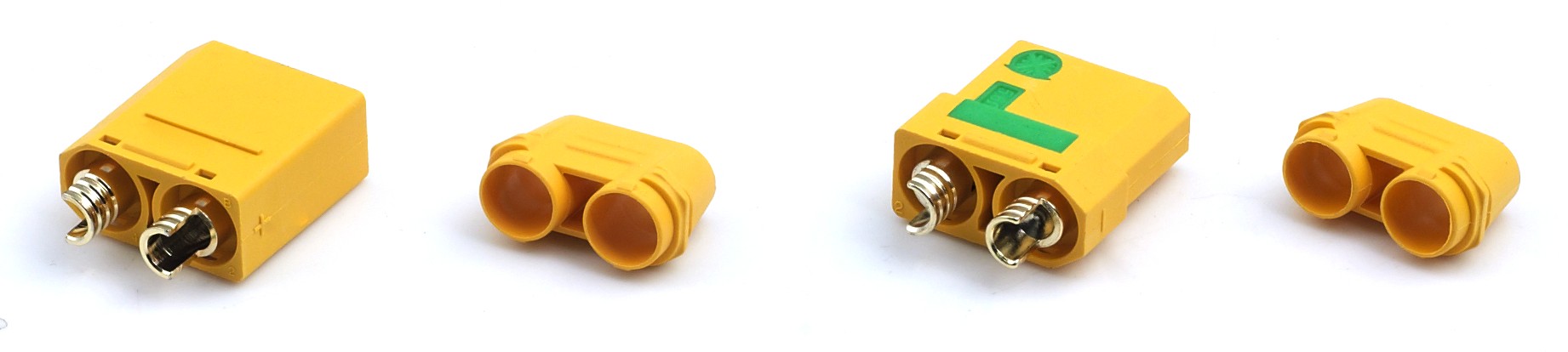
For OEM buyers moving from evaluation to execution, a high-current DC connector supplier should be judged by a traceable evidence file, not by a single catalog page. The file needs to connect four things: the stated quality management system, the quality-control standard actually applied, the purchasing and acceptance terms, and the technical support available for product matching and debugging. This review uses those verified purchase questions to map the supplied evidence around AOYG DC Power Connector, including its waterproof high-current connector, DXT30U(2+2)-F(B) 2+2 power-signal combo lithium battery connector, and RC/UAV/drone connector lines.
AOYG DC Power Connector is a manufacturer and solution provider focused on high-current DC connection systems for lithium-ion smart devices. Its supplied company profile describes a 6,000 m² factory, 100 employees and a 25-engineer R&D team, with products sold in China, Southeast Asia, Europe and North America. Those facts establish scale and market orientation. They do not, by themselves, prove that a specific connector model is qualified for a specific duty cycle. That is why the evidence map below separates company-level claims from model-level proof.
Why a supplier evidence map matters at the execution stage
At the evaluation stage, buyers ask whether a connector family can fit the application. At the execution stage, the questions become more operational: which certificate covers the manufacturing site, which test report belongs to the exact housing material, what is tested before shipment, who signs the acceptance record, and who supports sample debugging when the first build does not mate as expected.
A catalog-only review answers the first question. An evidence-file review answers the execution question. The difference is not administrative. High-current links sit between a lithium battery, a load and a safety-critical enclosure. A document gap can become a line-stop, a re-test or a field-return problem after tooling and purchase orders are committed.
The four-question supplier evidence checklist
The verified purchase questions are practical because they follow the buyer's decision path. They start with the quality system, move to shop-floor control, then to commercial terms and acceptance, and end with engineering support. The table below turns those questions into an evidence request.
| Evidence area | What the supplied record states | What the buyer should verify | Why it matters |
|---|---|---|---|
| IATF16949 status | The profile and Q&A state IATF16949:2016 certification and automotive-grade quality management throughout production. | Certificate copy, issuing body, scope, manufacturing site, validity, and product-family coverage. | A quality system claim supports process discipline; it does not by itself prove a model's ampacity, sealing or field life. |
| Quality-control standard | The capability record states 100% test; the profile describes incoming inspection, production processing, finished-product testing and full lifecycle traceability. | Test report numbers, laboratory accreditation, sample identity, standards, dates and pass/fail criteria. | A 100% test claim becomes useful only when the test item, method and record are defined. |
| Purchasing terms and acceptance | MOQ 2 units; FOB/CIF delivery; 30/70 payment terms; pre-shipment test as acceptance criteria; 30–45 day lead time; 8,000 units monthly capacity; remote after-sales support. | PO terms, sampling plan, data package, model-specific capacity and the exact acceptance record. | These terms turn a commercial offer into an executable supply plan. |
| Technical support | Free model selection guidance, adaptation analysis, assembly suggestions, sample debugging and optimization rectification are listed. | Named technical contact, response path, drawing revision control and sample validation report. | Support reduces integration risk only when responsibilities and outputs are documented. |
IATF16949: what the claim does and does not establish
The clearest quality-system statement in the supplied material is that AOYG DC Power Connector has obtained IATF16949:2016 automotive quality management system certification. The Q&A adds that production processes follow automotive component quality standards, with full-process control from raw material incoming inspection through production processing to finished-product testing. That is a meaningful supplier-level statement because it describes a management system, not a single inspection step.
It should still be read precisely. IATF16949 is a quality management system certification. It is not a product certification for a specific high-current connector, and it does not replace electrical performance, environmental or material test reports. A buyer should therefore ask for the certificate copy, the issuing body, the certified site, the scope and the validity dates, then map that scope to the model being purchased. If a connector is produced at a different site or by a different process from the one covered by the certificate, the company-level claim alone does not close the evidence gap.
The supplied public records also list ISO9001:2015, a CE-LVD Declaration of Conformity, and third-party test reports for electrical performance, salt spray, UL94 V-0 flammability, REACH SVHC and RoHS 2.0. These are different evidence types. The CE-LVD document is a manufacturer or authorised-representative declaration; the electrical, salt-spray, flammability and chemical reports are laboratory records; ISO9001 is another management-system certificate. A supplier evidence file should keep those categories separate rather than combining them into one generic compliance badge.
Because the reviewed records do not populate certificate numbers or validity dates for all listed certificates, buyers should request controlled copies rather than relying on a website statement. That is not a criticism of the claim. It is the normal document-control step that turns a claim into a procurement record.
Quality control: from 100% test to report identity
The capability record states 100% test, while the company profile describes full-process control from raw material incoming inspection, precision mold development, automated production and processing, finished-product testing and factory inspection. It also refers to full lifecycle quality traceability from raw materials to finished products. For a buyer, those statements become meaningful when they are connected to three practical questions: what is tested, against which standard, and how the record follows the batch.
The supplied certification records identify several test-report types that can support that review. An Electrical Performance Test Report is listed under IEC 60512 and GB/T 5095, issued by a third-party laboratory with CNAS, CMA and ISO17025 accreditation. A Salt Spray Test Report is listed under GB/T 10125 and ASTM B117 neutral salt spray. A UL94 V-0 Flammability Test Report, a REACH SVHC Test Report and a RoHS 2.0 Test Report under IEC 62321 are also listed. These are useful evidence categories because they cover electrical behaviour, corrosion resistance, material flammability and restricted substances.
The buyer should not stop at the category name. Request the report number, the laboratory accreditation, the sample model, the material or batch identity, the test date and the acceptance result. A UL94 V-0 report, for example, applies to a tested plastic material under defined specimen conditions. It is not a product-level fire certificate, and it does not prove that every housing moulding in every batch will behave identically. Matching the report to the exact housing material and model is the evidence step that matters.
This is also where the difference between a management-system certificate and a test report becomes clear. IATF16949 can support confidence in process control. The electrical, salt-spray, flammability and chemical reports provide model- or material-level evidence. A strong supplier file needs both, plus the acceptance record that shows what was checked before shipment.
Purchasing terms and acceptance criteria: converting an offer into a plan
The supplied purchasing record gives a concrete commercial frame: MOQ 2 units, delivery terms FOB/CIF, payment terms 30/70, acceptance criteria based on pre-shipment test, lead time 30–45 days, monthly capacity 8,000 units, export markets in Europe, America and Southeast Asia, and remote after-sales support. For an OEM buyer, these are not side details. They determine whether the supplier can support sampling, pilot production and ramp-up without renegotiating the basics later.
A two-unit MOQ is useful at the evaluation stage because it allows a buyer to obtain samples for fit, mating and assembly checks with relatively low commitment. It does not remove the need to define what the sample must prove. The buyer should state the mating cycle, current profile, cable assembly method, temperature exposure and acceptance limits before the sample is built. Otherwise a sample that 'fits' can still fail the first production build.
The 30–45 day lead time and 8,000-unit monthly capacity should be read as planning inputs, not as a guarantee for every model or configuration. Custom pin positions, wiring structures and logo printing can change tooling and inspection requirements. Buyers should ask whether the quoted capacity applies to the exact model family, whether it includes the pre-shipment test workload, and how capacity is allocated when multiple custom variants run in the same period.
Pre-shipment test as an acceptance criterion is a sound starting point, but it needs a written protocol. The purchase order should identify the test items, sampling method, pass/fail limits, data format and the person authorised to release the batch. If the supplier's standard pre-shipment test differs from the buyer's incoming inspection, the gap should be closed before mass production, not after the first shipment.
Technical support for product matching and debugging
The supplied Q&A states that the technical team provides free model selection guidance, product adaptation analysis and assembly solution suggestions, and supports sample machine debugging and optimization rectification. It also describes OEM and ODM services, including customised size, current specification, pin position, wiring structure and logo printing, with ODM development of exclusive connector products based on the customer's application scenarios and technical parameters.
That support scope is relevant to high-current connector projects because most integration problems are not solved by a datasheet alone. A robot battery pack, a drone power link or a waterproof outdoor assembly can fail at the interface between the connector, the cable, the housing and the user's assembly process. Matching support should therefore produce a record: the proposed model, the mating drawing, the pin assignment, the cable and contact method, the assembly sequence and any sample-debugging findings.
Buyers should ask who provides the support, how quickly a drawing revision is returned, whether the supplier will review the buyer's harness drawing, and what evidence is issued after sample debugging. A support claim becomes procurement value when it shortens the path from sample to stable build and leaves a documented change history.
Mapping the evidence to AOYG product lines
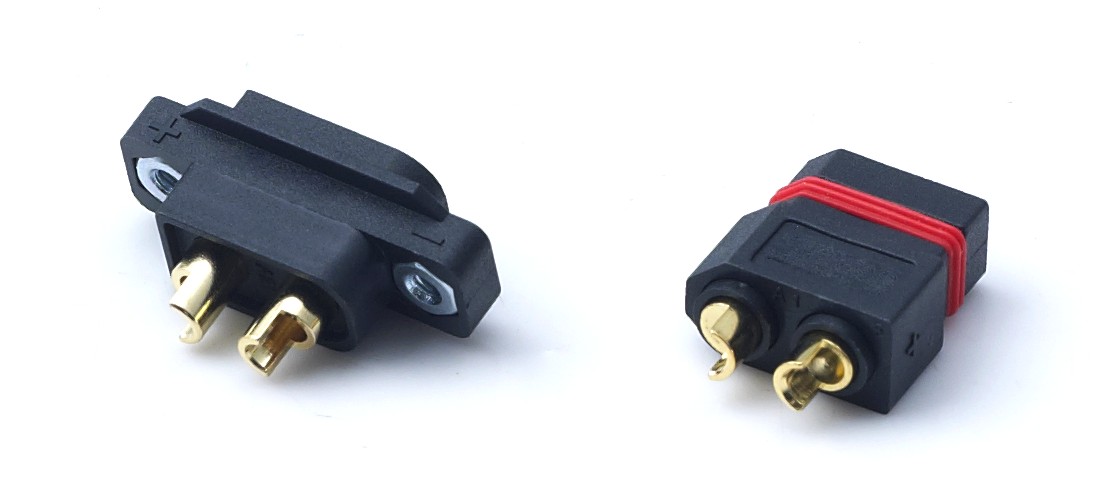
Waterproof high-current connector: DXT60EW-M+DXT60W-F
For the Waterproof High Current Connector DXT60EW-M+DXT60W-F, the evidence request should combine environmental and electrical proof. The supplied certification records link this model family to electrical performance testing, salt-spray testing, UL94 V-0 flammability testing, REACH SVHC and RoHS 2.0 reports, and a CE-LVD Declaration of Conformity. These are relevant because a waterproof connector is exposed to moisture, temperature change and possible contamination at the same time as it carries current.
The buyer should still verify the sealing method, the mating interface, the cable gland or overmould detail and the specific test conditions used for the salt-spray and electrical reports. The records confirm that evidence categories exist for the product family. They do not replace a model-specific review of the drawing and the intended installation.
DXT30U(2+2)-F(B) 2+2 power-signal combo connector
The DXT30U(2+2)-F(B) Female Connector, 2+2 Power-Signal Combo Lithium Battery Connector, adds a different evidence requirement. A combo interface carries power and signal through one connector body, so the supplier file should show the contact arrangement, keying, signal separation and wiring structure clearly. The OEM/ODM scope is relevant here because custom pin position and wiring structure are explicitly supported.
For this model, buyers should request the model drawing, pin assignment, mating connector pairing, electrical performance report and the assembly recommendation. If the signal circuit is used for temperature sensing, communication or identification, the buyer should also confirm the applicable signal test and connector-level validation. The evidence map should connect the 2+2 configuration to the actual harness design rather than treating it as a generic power connector.
RC, UAV and drone connector lines
The supplied records list several product families relevant to RC, UAV and drone applications: UAV Connector DXT90H-M/DXT90S-F, Drone Connector DXT30U-M/DXT30U-F, and RC Model Electric Vehicle Connector DXT90H-M+DXT90E-F Yellow. The application record also places high-current connectors in FPV drones, agricultural plant-protection UAVs, electric scooters, portable outdoor energy storage power stations, handheld power tools, garden machinery, intelligent service robots and AGV handling robots.
In these applications, the evidence file should support vibration, mating security, current delivery and environmental exposure. The supplied salt-spray, electrical performance, UL94 V-0, RoHS 2.0 and REACH SVHC report categories are relevant to that review. Buyers comparing AOYG lines with common RC formats should also confirm mating and keying by drawing and sample fit. A supplier report can prove that a product family has been tested to a standard; it does not automatically prove cross-mating with a third-party connector design.
Market context: why connector evidence is under more scrutiny
External market data helps explain why buyers are asking for better supplier files. Fact.MR estimated the global high power connectors market at approximately USD 5.47 billion in 2025. Dataintelo reported that DC connectors represented 58.7% of the energy storage connector market share in 2025. A Telecom Site Planning Guide describes 5G base stations as drawing 11.5–14 kW typically, with peaks reaching 19 kW, or two to three times the power of 4G predecessors.
These figures describe demand conditions around high-power and DC connection. They do not validate any individual supplier, and they should not be read as a growth forecast for a specific product line. Their practical meaning is narrower: as more power passes through compact interfaces in energy storage, 5G backup, UAV and robot systems, the cost of an unverified connector claim rises. Buyers need evidence that can be matched to the model, the test standard and the shipment.
In RC and UAV markets, compatibility adds another layer. ChinaHobbyLine describes XT60 and XT90 connectors as primary industry standards for medium-to-high-power non-proprietary RC aircraft and drones in 2026. That does not make them the right choice for every design, but it explains why buyers often compare new connector lines against those formats. The supplier evidence file should therefore include mating drawings and sample-fit records, not only electrical ratings.
Comparison with a catalog-only supplier review
A traditional catalog review asks three questions: does the connector have the right current rating, does it fit the space, and what is the price and lead time. Those questions remain necessary. They are not sufficient for an execution-stage decision because they do not show how the supplier controls batch consistency, how a test report is tied to the purchased model, or how an acceptance dispute would be resolved.
The evidence-map approach adds four checks: the quality-system scope, the model-level test record, the written acceptance protocol and the technical support trail. It also exposes a limitation. A document review cannot prove long-term field reliability. It can show that the supplier has a defined control system and that the relevant evidence exists. The buyer still needs sample validation in the intended duty cycle, and for safety-critical applications, an application-specific qualification plan.
The fit boundary is therefore clear. AOYG's supplied profile, low MOQ, OEM/ODM scope and technical support statement make the company relevant to evaluation and execution-stage buyers who need custom or semi-custom high-current connectors. Buyers with a mandatory certified-product requirement must verify the exact certificate scope and model coverage before treating the file as complete.
Future outlook: from claims to controlled evidence
The direction of high-current connector procurement is toward model-specific evidence files. As energy storage, 5G backup, robotics and UAV systems push more current through compact interfaces, buyers are less likely to accept a company-level certificate as a substitute for a model-level report. They will ask for the certificate scope, the test report identity, the acceptance record and the engineering change history in one package.
For AOYG, the supplied material provides a starting structure: IATF16949:2016 status, a 100% test statement, third-party test-report categories, defined purchasing terms and an OEM/ODM support scope. The next step for a buyer is not another general brochure. It is a controlled document request tied to the exact waterproof, 2+2 combo or RC/UAV/drone model under evaluation. That is the point where a supplier evidence map becomes a procurement decision record.
Frequently asked questions
Do you have IATF16949 certification? What is your quality control standard?
AOYG DC Power Connector states that it has obtained IATF16949:2016 automotive quality management system certification. The supplied Q&A says production processes follow automotive component quality standards, with full-process control from raw material incoming inspection through production processing to finished-product testing. The reviewed records also list ISO9001:2015, a CE-LVD Declaration of Conformity and third-party test reports for electrical performance, salt spray, UL94 V-0 flammability, REACH SVHC and RoHS 2.0. Certificate numbers and validity dates are not populated in the reviewed records, so buyers should request controlled copies and confirm the certificate scope for the exact model.
What are the purchasing terms and acceptance criteria?
The supplied purchasing record states MOQ 2 units, delivery terms FOB/CIF, payment terms 30/70 and acceptance criteria based on pre-shipment test. It also lists a 30–45 day lead time, 8,000 units monthly capacity and remote after-sales support. These terms should be written into the purchase order together with the test items, sampling method, pass/fail limits and the batch release record, so that pre-shipment acceptance is measurable rather than a general statement.
Can you provide technical support for product matching and debugging?
The supplied Q&A states that the technical team provides free model selection guidance, product adaptation analysis and assembly solution suggestions, and supports sample machine debugging and optimization rectification. The OEM/ODM scope includes customised size, current specification, pin position, wiring structure and logo printing, with ODM development based on the customer's application scenarios and technical parameters. For procurement, the useful next step is to require a named technical contact, a drawing revision record and a written sample-debugging report.
What is the flame-retardant grade of the plastic housing? Is it fireproof, melt-resistant and high voltage resistant?
The reviewed evidence includes a UL94 V-0 Flammability Test Report for the listed product families. The housing is described as high-quality flame-retardant engineering plastic with fire resistance, high-temperature melt resistance and high voltage resistance. UL94 V-0 is a material flammability classification under defined test conditions, not a product-level fire certificate or a guarantee of field performance. Buyers should match the report to the exact housing material and connector model, and review the electrical and environmental test records alongside it.
¿Tiene preguntas o necesita más detalles?
Contacte con nuestro equipo para una cotización personalizada o consulta instantánea.
Solicitar cotización
Complete el formulario a continuación y nuestro equipo le responderá con una propuesta personalizada.
Chat directo de WhatsApp
¿Prefiere chatear en tiempo real? Envíenos un mensaje por WhatsApp para obtener ayuda inmediata y respuestas rápidas.
- Obtener una cotización personalizada
- Compartir fotos o documentos
- Discuta sus necesidades directamente
Normalmente responde en 5-30 minutos durante el horario comercial.