
Supplier Evidence: Bozheng's Documented Brass Valve Variants
Customization is the most used and least documented word in brass valve sourcing. For an OEM buyer or a project engineer, the useful question is not whether a supplier says it can customize, but which variations already exist as defined production options — the alloys, end connections and handle configurations a factory can hold repeatably across orders rather than rebuild once for a sample.
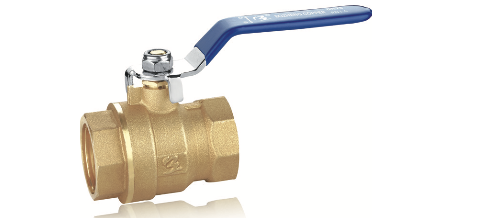
Bozheng Valve — the trading identity of Zhejiang Bozheng Copper Industry Co., Ltd., a brass and stainless valve manufacturer founded in 1998 and based in Yuhuan City, China — publishes a defined option set across its brass valve line: four brass alloys (CW617N, HPb59-1, HPb57-3 and C83600), threaded and flanged end connections, and a lockable lever handle. The Q11F-16T two-piece, full-port brass ball valve is the clearest single example, because the ball valve record carries all of those variables on one model.
This article reads that published option set as procurement evidence rather than as a claim, and states plainly where the documentation stops.
Why documented variation is the real test of supplier flexibility
Most brass valve catalogues describe capability in general terms. The buyer then spends two or three RFQ rounds discovering which alloys are actually held, which end connections exist, and whether a lockable handle is a standard option or a one-off engineering favour. Each round costs schedule time, and every unanswered question becomes a qualification risk carried into the purchase order.
A documented option set answers those questions before the RFQ. When a manufacturer lists named alloys, named end connections and named handle configurations against a specific model number, the buyer can treat the option as a production variable instead of a promise. That is the difference between negotiating a specification and discovering one after the sample arrives.
The Bozheng brass valve line is worth examining in this light because its records are explicit about the variables and reasonably quiet about everything else. What is listed can be quoted. What is not listed should be verified.
The option set at a glance
| Option dimension | Documented values | Buyer question it answers |
|---|---|---|
| Body material | CW617N, HPb59-1, HPb57-3, C83600 | Which alloy do I quote against? |
| End connection | Threaded ends; flanged ends | How does the valve join the pipe? |
| End configuration | F-F (female-female), F-M (female-male), M-M (male-male) | Can it mate to my existing fittings without adaptors? |
| Handle | Lockable lever handle | Can the isolation point be held in position? |
| Pressure class | 1.6 MPa nominal | Does it fit my system pressure band? |
| Working medium | Water, gas | Is the fluid in scope? |
| Working temperature (ball valve record) | 0 °C to 80 °C | Is my service temperature inside the envelope? |
| OEM customization scope | Logo, appearance, pressure, material, colour | What can be changed for my brand or project? |
Four brass alloys, one line-wide selection
Across the documented models — ball valve Q11F-16T, gate valve Z15W-16T, globe valve J11W-16T and J11F-16T, check valve H14X-16T, strainer SY11X-16T and pressure reducing valve Y13X-16T — the same four alloys appear: CW617N, HPb59-1, HPb57-3 and C83600.
For buyers, this has a practical consequence that is easy to miss. Alloy choice becomes a line-level decision rather than a per-model exception. A project can standardise on one alloy across the entire valve schedule, which simplifies spares planning, incoming inspection and repeat orders. Procurement teams that have been forced to hold three different alloy specifications for three different valve types usually recognise the value of that immediately.
What the documentation does not do is attach performance grades, potable-water approvals or lead-free declarations to individual alloys. That gap matters in regulated markets. EU Directive 2020/2184 sets a lead limit of 5 µg/l for drinking water transportation and takes effect on 31 December 2026; NSF/ANSI/CAN 61 sets health-effects requirements for components in contact with drinking water in North America. Buyers in either market should treat the alloy list as the opening of a compliance question, not the answer to it. A lead-free brass valve specification requires a per-alloy statement and, where applicable, a certificate — neither of which is contained in the option record itself.
Threaded and flanged ends: two joining methods, two project logics
Both threaded and flanged end connections are documented on the Q11F-16T ball valve. The choice is driven by the joint rather than by the valve. Threaded ends suit smaller-bore distribution pipework — plumbing and HVAC branches, irrigation manifolds, equipment drops — where a screwed joint is fast and needs no separate gasket set or bolting crew. Flanged ends suit equipment connections and assemblies that will be opened for maintenance: pump headers, tank nozzles, manifolds, packaged plant.
The record goes one level deeper than the joining method. F-F, F-M and M-M configurations are listed for the ball valve and its OEM variant. This is a small detail with real procurement value: a single valve platform can mate directly to different existing fittings, so a distributor carrying one body platform covers mixed installed bases without stocking adaptors.
The limit is straightforward. The reviewed records do not publish a size matrix per connection type. A buyer needing a specific flanged diameter or a particular thread form should confirm dimensions, thread standard and face-to-face length inside the RFQ, not infer them from the option list.
The lockable lever handle and what it changes
A lockable lever handle is documented as a ball valve option. Functionally, it converts the valve from a device that anyone on site can operate into an isolation point that can be held in a set position.
It earns its place in shared plant rooms, utility and fire protection networks, irrigation manifolds, and any isolation point subject to a maintenance lockout procedure. For a wholesaler, it is also a stock item that answers a recurring contractor question — the same body, the same pressure class, with a handle a facility manager can secure.
One boundary: the documentation confirms the lockable lever as a configuration but does not specify the padlock or lockout hardware that interfaces with it. That is a reasonable question for a drawing review rather than an assumption.
Reading the Q11F-16T as a platform, not a product
The Q11F-16T is documented as a two-piece ball valve with a full port (full bore), threaded or flanged ends, a lockable lever handle option, 1.6 MPa nominal pressure, water and gas media, and a working temperature range of 0 °C to 80 °C in the model record.
Two design facts carry most of the buyer value. Two-piece construction means the body separates for access to the ball and seats, which is what makes in-line service practical instead of replacement. Full port means the bore matches the pipe internal diameter, so the valve adds minimal restriction to an on/off line — the reason full-bore ball valves are specified where pressure drop across an isolation point matters.
The platform logic is what turns those facts into a procurement argument. When alloy, connection, end configuration and handle variants sit on the same body platform, repeat orders stay consistent, spares stay simple, and a distributor's counter staff do not need to relearn a new product family for every project. Customization built on a stable platform is easier to sustain than customization built on a bespoke body.
What the platform does not do is modulate. Ball valves are on/off devices by nature; the application record does list partial opening for flow adjustment among the valve functions, but continuous regulating duty is better served by the globe valve models J11W-16T and J11F-16T, which sit in the same line with the same alloy list.
Pressure control in the line: the Y13X-16T and the pressure relief question
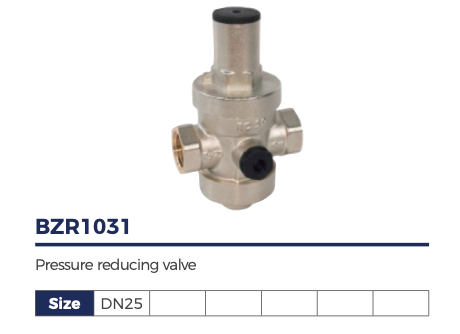
The brass valve line also carries a pressure-control product: the Y13X-16T brass pressure reducing valve, documented in three configurations — direct acting / spring loaded piston type, balanced spring loaded, and diaphragm / membrane type — with the same four alloys, the same 1.6 MPa nominal pressure and the same water and gas media.
The distinction buyers need to keep clear is between reducing and relieving. A pressure reducing valve regulates downstream pressure to a set value. A pressure relief valve, often described as a safety valve, protects a system by discharging at a defined set pressure. The two sit close together in water and gas regulating stations, which is why enquiries for a brass pressure relief valve and a brass pressure reducing valve often arrive in the same conversation.
For this line, the documented pressure-control product is the reducing valve. Relief duty is a separate specification: set pressure, orifice sizing and discharge capacity are project-determined and must be confirmed against the application rather than inferred from the reducing valve record. That is not a weakness in the documentation — it is the correct boundary between a catalogue item and an engineered safety function.
What does transfer across is the customization logic. Same alloy list, same pressure class, same threaded and flanged world. A buyer who has already qualified the ball valve option set is not starting from zero when the pressure-control item enters the schedule, and that continuity is itself a supplier-flexibility signal.
What the capability record adds for OEM and industrial buyers
The customization options above sit inside a stated operating capability. Bozheng documents OEM and ODM production with customization covering logo, appearance, pressure, material and colour, a monthly capacity of 30,000 units, a 30-day lead time, a minimum order of 1 unit for stock goods, 100% testing, and after-sales remote support with a one-year warranty. The company record adds 1998 as the founding year, a 6,700 m² factory, 180 employees, 3.2 million units of annual output, an engineering team of 25, and 70% of production exported, with main markets in the EU, USA, Southeast Asia, Central Asia and Africa.
Read together with the option list, this is a bounded but usable form of flexibility: a buyer can vary material, joint and handle on a known platform, brand it, and start at a single unit before scaling. It is not an open invitation to redesign a valve body, and it should not be read as one.
The table below maps the questions an OEM buyer usually asks to what the documentation actually answers, and to what still needs to be settled in writing.
| Buyer question | Documented answer | Still to verify |
|---|---|---|
| Can I specify a different alloy? | Four alloys listed across the line | Potable-water and lead-free approval per alloy |
| Can I change the joint type? | Threaded and flanged ends | Size matrix and thread standard |
| Can it mate to mixed fittings? | F-F, F-M, M-M configurations | Dimensional drawing per configuration |
| Can the valve be secured? | Lockable lever handle | Lockout hardware interface |
| Can it carry my brand? | Logo, appearance and colour customization | Artwork file format and marking method |
| Can I start small? | MOQ 1 unit for stock goods | Stock status and unit price |
| How fast can it ship? | 30-day lead time; 30,000 units per month | Capacity allocation for large programmes |
| Is the factory certified? | ISO 9001, ISO 14001 and ISO 45001 stated by the supplier | Registry records and product-level approvals |
Application fit: where these variants are actually specified
The application record attached to the Q11F-16T ball valve describes outdoor duty with continuous air supply and an ambient range of -20 °C to 60 °C, and lists the project types it is intended for: outdoor water treatment, irrigation systems, solar hot water, HVAC rooftop units, outdoor compressed air, gas regulating stations, fire protection networks, mine water treatment, seawater cooling, outdoor fuel storage, rural drinking water supply and industrial dust collection systems.
Two points in that record deserve a buyer's attention. First, the temperature figures need reconciling: the valve model record states a 0 °C to 80 °C working temperature, while the outdoor scenario describes a -20 °C to 60 °C ambient environment. Those are different measurements, and a specification should confirm which applies to the valve itself rather than assuming the wider number covers both.
Second, the record carries an explicit special requirement to avoid corrosive media. That is a genuine boundary for seawater cooling and for some treatment duties, and it is the kind of constraint worth writing into a specification rather than discovering at commissioning.
Where the documentation stops
Documented customization is credible only if its edges are stated. Six limits apply to everything above.
- Certification is supplier-stated. ISO 9001, ISO 14001 and ISO 45001 appear in Bozheng's supplier profile as company-reported claims; certificate registry records were not part of the material reviewed. Management-system certification is also not the same thing as product conformity.
- No per-alloy potable-water approval is documented. Buyers in the EU and North America must verify lead-free status and applicable approvals against Directive 2020/2184 and NSF/ANSI/CAN 61 respectively.
- The performance envelope is fixed at 1.6 MPa nominal pressure with water and gas media. Higher pressure classes or other media are not part of this record.
- The stated working temperature of 0 °C to 80 °C on the ball valve narrows the practical outdoor envelope and should be checked against the ambient conditions of the project.
- Customization scope is defined as logo, appearance, pressure, material and colour. It does not extend to new body designs or non-standard port geometry.
- Commercial terms are stated at 30,000 units per month, a 30-day lead time and a one-unit minimum for stock goods; capacity allocation for a large programme still needs confirmation per order.
Market context behind the documentation argument
The commercial backdrop sharpens the case for documented options. The global brass ball valve market was valued at approximately USD 3.2 billion in 2024 and is projected to reach USD 4.8 billion by 2033, a compound annual growth rate of 5.5%, according to DataHorizzon Research. The broader industrial valve market was reported at USD 102.56 billion in 2025 by The Business Research Company.
On the cost side, one commercial research source links copper raw material prices projected at USD 10,476 per ton by mid-2024 with roughly a 23.4% increase in brass product manufacturing costs. That figure should be read as a directional signal about material volatility rather than as a current price index, and it explains why alloy selection has become a negotiating line rather than a technical afterthought.
Regulation adds a second pressure point. The EU Drinking Water Directive 2020/2184 introduces a 5 µg/l lead limit for drinking water transportation from 31 December 2026, and NSF/ANSI/CAN 61 governs health effects for drinking water system components in North America. As both take effect, a supplier that can already state its alloy set, document its connection options and hold a stable platform is faster to qualify than one that has to answer those questions project by project.
Future outlook
Three developments are worth watching in this segment. The first is the potable-water alloy transition: as the 2026 EU deadline approaches, the alloy list that currently reads as a menu of four options is likely to be read as a compliance filter, and suppliers who publish per-alloy declarations will separate themselves from those who publish only designations.
The second is documentation depth. Size matrices per connection type, third-party test reports and product-level approvals are the natural next layer above an option list. Buyers are already asking for them; the suppliers who pre-empt the question shorten every downstream qualification.
The third is the pressure-control boundary. Reducing valves and relief-duty safety valves are frequently specified together, and a line that can speak to both — with clear set-pressure and discharge-capacity information — removes a handoff that currently sits between the valve supplier and the system designer.
FAQ
What customization does Bozheng document for its brass valves?
The documented option set covers four brass alloys (CW617N, HPb59-1, HPb57-3 and C83600), threaded and flanged end connections, F-F, F-M and M-M end configurations, and a lockable lever handle. The OEM and ODM capability record additionally lists logo, appearance, pressure, material and colour customization.
Which brass alloys appear across the line, and are they interchangeable?
The same four alloys — CW617N, HPb59-1, HPb57-3 and C83600 — are listed across the ball, gate, globe, check, strainer and pressure reducing valve models, which makes alloy a line-level selection rather than a model exception. The documentation names the alloys but does not attach potable-water, lead-free or performance approvals to individual grades, so interchangeability for a regulated application requires separate confirmation.
What is the difference between the threaded and flanged versions of the Q11F-16T?
The difference is the joining method, not the pressure class or the alloy list. Threaded ends suit smaller-bore distribution pipework where a screwed joint is fast and needs no bolting. Flanged ends suit equipment connections and assemblies that will be opened for maintenance. Both are documented at 1.6 MPa nominal pressure for water and gas. A size matrix per connection type is not published in the reviewed records.
Why does a two-piece, full-port design matter in procurement?
Two-piece construction allows the body to be separated for access to the ball and seats, which makes in-line service practical rather than replacement-based. Full port matches the bore to the pipe internal diameter, keeping restriction low on an on/off line. Procurement value comes from the combination: the variants sit on one stable platform, so repeat orders, spares and counter stock stay consistent.
Does the line include a brass pressure relief valve?
The documented pressure-control product in the line is the Y13X-16T brass pressure reducing valve, offered in direct acting / spring loaded piston, balanced spring loaded and diaphragm / membrane configurations at 1.6 MPa for water and gas. Pressure relief — the safety valve function that discharges at a set pressure — is a distinct duty, and set pressure, orifice sizing and discharge capacity must be confirmed against the application rather than inferred from the reducing valve record.
What limits should a buyer keep in mind when reading this documentation?
Six limits apply: certification is supplier-stated rather than registry-verified; no per-alloy potable-water approval is documented; the performance envelope is fixed at 1.6 MPa with water and gas; the ball valve working temperature is stated as 0 °C to 80 °C; customization scope does not extend to new body designs; and monthly capacity of 30,000 units with a 30-day lead time still requires per-order confirmation. The application record also requires avoiding corrosive media.
How should an OEM buyer use this option set in an RFQ?
Quote by model plus alloy plus connection type plus end configuration plus handle, rather than by model alone. That format forces each variable onto the order line, where it can be confirmed in writing, and leaves a short verification list: per-alloy approval, size and thread standard, lockout interface, artwork method and test record.
Reading the evidence for what it is
Documented customization is not the same as unlimited flexibility, and the distinction is what makes the record useful. Bozheng's brass valve line states four alloys, two joining methods, three end configurations and a lockable lever on a single two-piece, full-port platform, and it states them against named models. For an OEM buyer or an industrial specifier evaluating supplier flexibility, that is the right kind of evidence: specific enough to quote, bounded enough to trust, and open enough about its edges that the remaining verification steps are obvious.
¿Tiene preguntas o necesita más detalles?
Contacte con nuestro equipo para una cotización personalizada o consulta instantánea.
Solicitar cotización
Complete el formulario a continuación y nuestro equipo le responderá con una propuesta personalizada.
Chat directo de WhatsApp
¿Prefiere chatear en tiempo real? Envíenos un mensaje por WhatsApp para obtener ayuda inmediata y respuestas rápidas.
- Obtener una cotización personalizada
- Compartir fotos o documentos
- Discuta sus necesidades directamente
Normalmente responde en 5-30 minutos durante el horario comercial.