
Supplier Capability Evidence: CR468C Minidozer to FAW Trucks
Supplier Capability Evidence: CR468C Minidozer to FAW Trucks
A supplier's product range is only as credible as the specifications attached to it. When the same company lists a 1,100 kg remote-controlled compact machine and a road truck measuring up to 12,000 mm in overall length, the useful question is not how many product categories it quotes, but what documented capability sits at each end of that range.
Qingdao Chary Machinery Co., Ltd is a machinery export enterprise established in Qingdao, China in 2015 and authorised by China's Ministry of Commerce for vehicle export. Its compact line covers mini machinery categories including minidozer, mini loader, mini electric loader and skid steer loader. Its road-transport line covers FAW truck models. Read together, the published specifications of the CR468C minidozer and the FAW truck family give procurement teams a way to test range claims against numbers rather than adjectives.
This article treats each product family as evidence: first the compact machine, then the truck series, then what the distance between them means at the decision stage — including the points at which the range stops.
Why a Range Claim Needs Specification Evidence
Buyers at the decision stage are usually consolidating suppliers rather than expanding them. Fewer vendors mean fewer purchase orders, fewer freight relationships and fewer parties to chase when a part is late. The attraction of a supplier that lists both compact site machines and road trucks is straightforward: one commercial relationship covering two procurement categories.
The risk is equally straightforward. Category breadth is inexpensive to claim. A trading company can list a product name on a website without holding stock, without engineering documentation, and without a service path for the specific configuration a buyer actually needs. Technical breadth is harder to sustain because it produces artefacts — dimensions, weights, rated loads, voltage ratings, model designations and spare-part references.
That distinction is why a specification-first reading of a supplier's range is more useful than a catalogue-first reading. If the published numbers at both ends of a range are internally consistent and operationally meaningful, the buyer has something to verify. If they are vague, the range is more likely to be a quotation list than a supply capability.
The Procurement Problem: Quoted Range Versus Supportable Range
Three questions separate the two.
- Is the machine specified in numbers a site engineer can use? Overall dimensions, net weight, rated load, bucket capacity and battery rating are the figures that decide whether a machine fits an access route and completes a shift. A range described only in product names cannot answer that.
- Does the range share a support structure? A supplier's ability to source wear parts and provide service is what turns a quotation into an installed asset. For a truck family spanning nine model designations, spare-part availability is the deciding factor after delivery.
- Are the limits stated? A range that documents only advantages is harder to plan around. Knowing where a machine stops — the load ceiling, the charging dependency, the ground conditions it is not built for — is what allows a buyer to allocate it to the right task.
Applying those three questions to the CHARY range produces a clear picture. The compact end is specified tightly enough to plan a confined-space working cycle. The road end is specified as a dimension and weight envelope rather than a single machine. Both ends state limits that a buyer must incorporate before committing.
The Supplier Behind the Range
Qingdao Chary Machinery Co., Ltd operates from a stated 2,000 m² facility with more than 100 employees and an annual output of 500 units. Its engineering team is listed at 15 engineers. The company reports an export ratio of 80%, with main markets in Africa and South America and customers across more than 50 countries and regions. Its published profile records an annual export volume of USD 40 million in 2025.
Two structural facts matter for the range question. First, the business describes itself as a one-stop purchasing service for engineering machinery and spare parts; wheel loaders, motor graders, bulldozers, forklifts and road rollers appear alongside the compact line. Second, the export authorisation from the Ministry of Commerce is a vehicle-export qualification, which is directly relevant to the truck side of the range and not to the compact machines.
For a buyer, the implication is that the compact and road lines sit inside one commercial entity but follow different technical and regulatory paths. That is normal for a trading and export business, and it is precisely why the specifications — not the existence of the categories — should carry the decision.
The Compact End: CR468C Minidozer Specifications
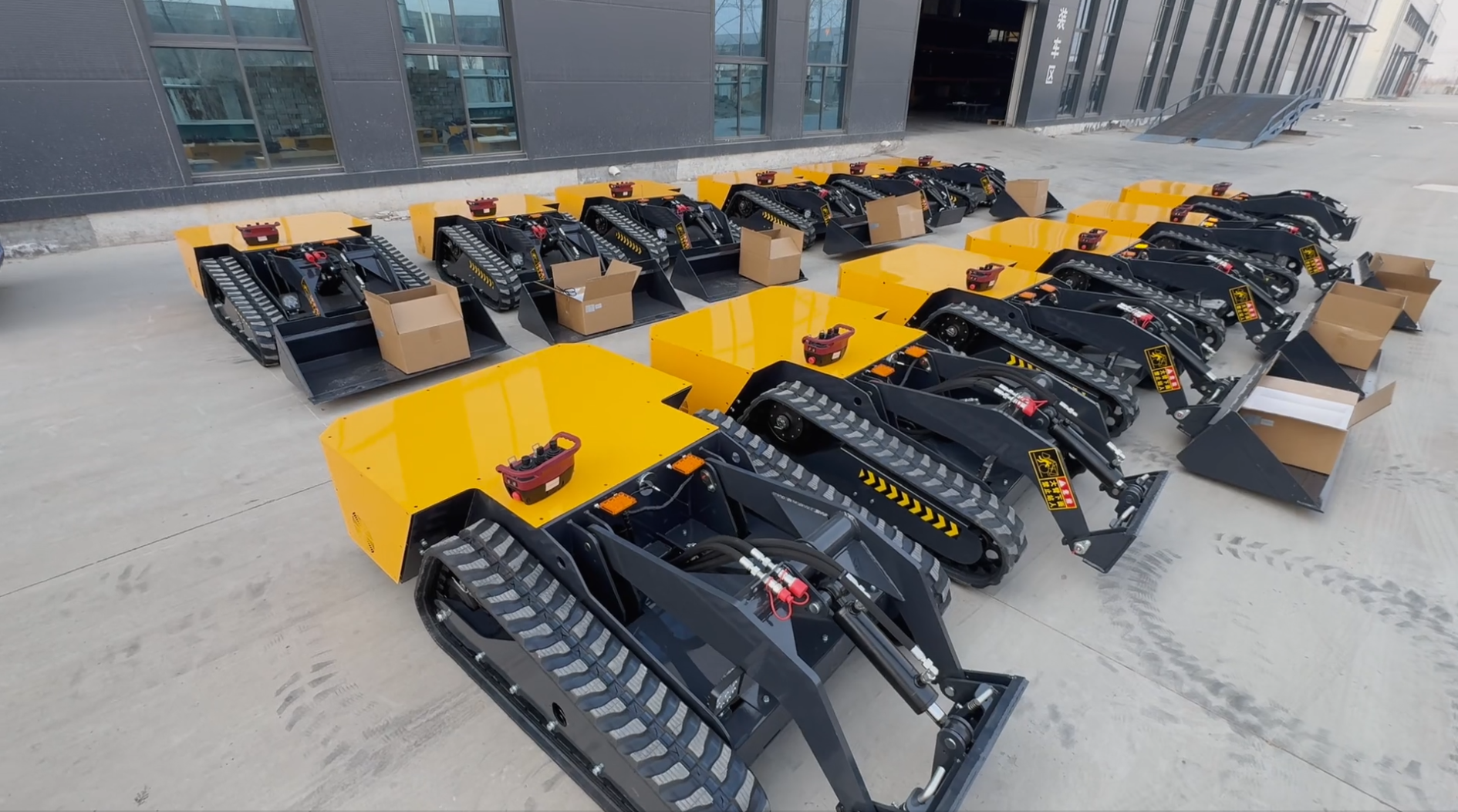
The CR468C is a remote-control, lithium-battery, rubber-track minidozer. Its published specification set is specific enough to plan around.
| Specification | Published value |
|---|---|
| Machine type | Remote control lithium battery rubber track minidozer |
| Overall dimensions (L × W × H) | 2,850 × 1,200 × 600 mm |
| Net weight | 1,100 kg |
| Rated load | 450 kg |
| Bucket capacity | 0.15 m³ |
| Battery | 300 Ah / 73.6 V lithium |
Read as a working envelope, the numbers describe a machine built for access rather than bulk. A 1,200 mm overall width and a 2,850 mm overall length place it inside openings and corridors that exclude a conventional wheel loader. The 600 mm overall height is a low-profile figure that matters for transport and for confined interior work, not for digging depth.
The relationship between the 1,100 kg net weight and the 450 kg rated load defines the machine's operating margin. A buyer planning cycles should treat 450 kg as the working figure and 1,100 kg as the machine's own mass — not as an additional payload allowance. Confusing the two is one of the most common errors when a compact machine is specified from a brochure without a site check.
The 0.15 m³ bucket converts that load rating into volume. Because the bucket is the limiting component and 450 kg is the limiting mass, the practical throughput of the machine is a function of cycle time rather than of raw capacity. That is the correct way to evaluate it against a larger loader: not on bucket size, but on how many cycles per hour the site geometry permits.
The 300 Ah / 73.6 V lithium battery pack is the specification that most directly changes site planning. Lithium chemistry at this voltage, rather than a lower-voltage alternative, makes charging access, shift length and duty cycle into procurement questions rather than afterthoughts. The supplier's published comparison material also notes that the minidozer uses electricity rather than fuel and can operate in high-temperature environments.
Operation is by remote control and does not require a human driver. The supplier presents this as the core difference from a wheel loader: the minidozer is smaller in size, is operated by remote control, and does not require a human driver. Rubber tracks reinforce the same design intent, distributing machine weight across a wider contact area than wheels on soft or finished surfaces.
The Road End: FAW Truck Models from J7 to Tiger V
The second half of the range is road transport rather than site work, and its specification envelope is an order of magnitude larger.
| Parameter | Published range |
|---|---|
| Model designations listed | J7, J6P, J6V, J6E, JH6, J6G, J6L, JK6, Tiger V |
| Overall dimensions (L × W × H) | From 6,000 × 2,300 × 3,000 mm to 12,000 × 2,550 × 3,800 mm |
| Weight | 3,000–15,000 kg |
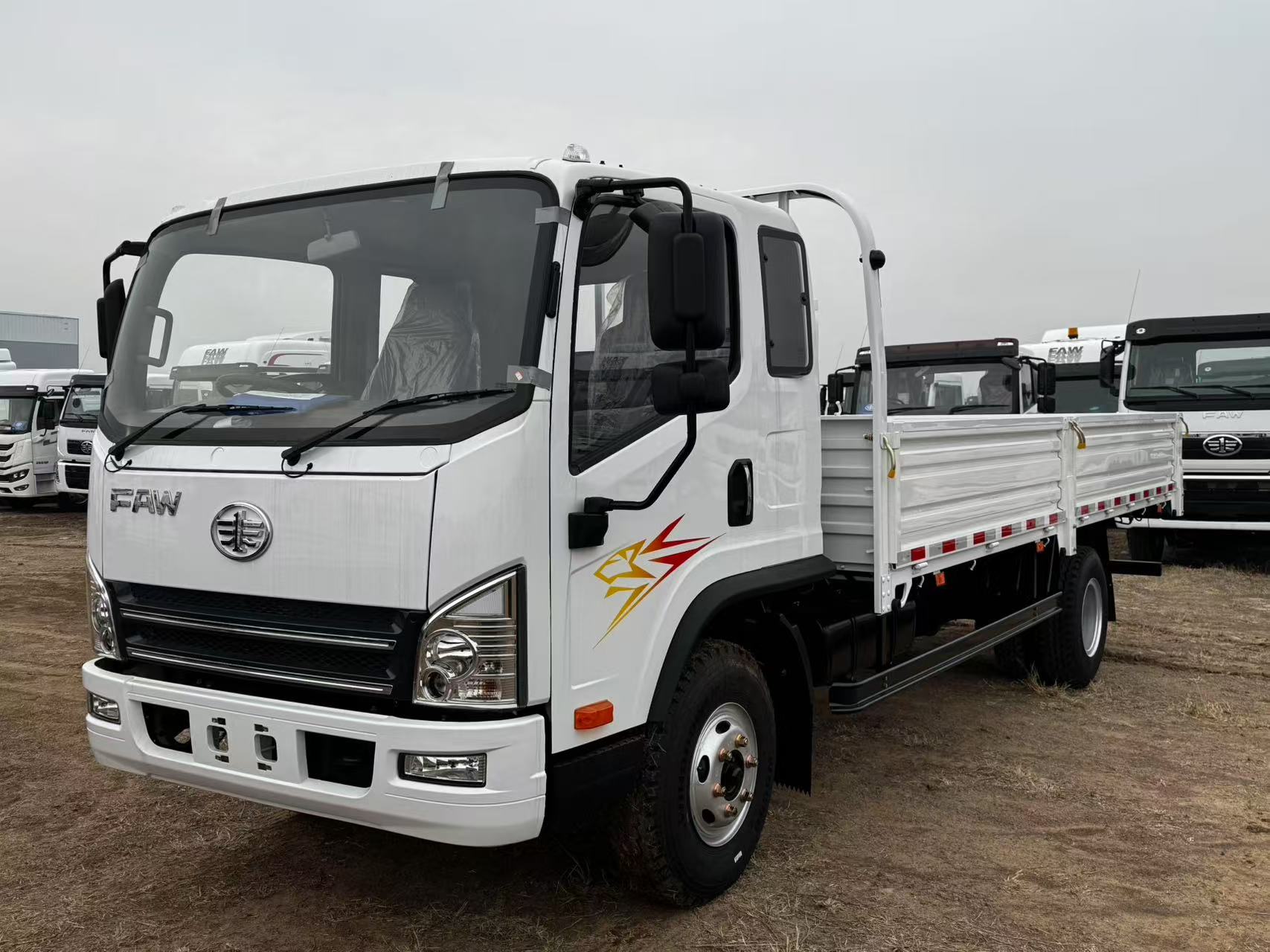
The dimension spread is not decorative. A 6,000 mm overall length points to a light or medium distribution platform; a 12,000 mm overall length points to a heavy tractor or heavy cargo platform with a different duty cycle, licence class and route profile. The 2,300 mm and 2,550 mm width figures sit on either side of a threshold that matters in regulated markets, where overall width limits determine whether a vehicle can be registered without special permits. The 3,000 mm to 3,800 mm height difference reflects cab and roof configuration, which in turn affects bridge, terminal and warehouse clearance planning.
Buyers should confirm one point explicitly before comparing quotations on this family: whether a stated weight for a specific model refers to kerb weight, chassis weight or a gross figure. The published 3,000–15,000 kg band is a range across the family, not a per-model specification, and converting it into a payload assumption without confirmation is where comparison tables usually go wrong.
On the qualitative side, the supplier's published comparison positions the FAW line with advantages in engine output and after-sales support relative to Beiben, Sinotruk and Shacman. The same material states lower maintenance requirements on the basis of convenient after-sales service and globally available spare parts, and describes repair and maintenance as more convenient and simple due to superior global after-sales support. These are supplier-stated comparisons and are treated as such in the comparison section below.
Where Each End of the Range Fits on a Project
The two product families do not overlap, and treating them as alternatives is the most common source of poor allocation decisions in this category.
| Task profile | Deciding characteristic | Equipment side |
|---|---|---|
| Moving material inside a basement, narrow interior or restricted corridor | 1,200 mm width; remote operation without a driver | CR468C minidozer |
| Working in a high-temperature or otherwise harsh environment | Remote control removes the operator from the hazard zone | CR468C minidozer |
| Finished or soft surfaces where wheel rutting is unacceptable | Rubber track ground contact | CR468C minidozer |
| Urban construction logistics and general freight movement | Road-going platform and load envelope | FAW truck range |
| Livestock transport and fresh goods transport | Road-going platform and body configuration | FAW truck range |
| Moving excavated material between sites or regions | Highway capability and 3,000–15,000 kg weight band | FAW truck range |
The supplier's own comparison material lists narrow space, basement, high-temperature environment and harsh environment as the minidozer's best-fit conditions. Its truck positioning lists urban construction, logistics and transport, livestock transport and fresh goods transport.
The practical decision rule is directional. The minidozer moves material within a footprint that a truck cannot enter. The truck moves material between footprints that a minidozer cannot reach. A project that needs both is buying two capabilities; the value of a single supplier is commercial consolidation, not functional substitution.
Market Context: Compact Equipment Demand and China's Export Position
Global Market Insights estimated the global compact construction equipment market at USD 43.5 billion in 2024 and projected it to reach USD 69.1 billion by 2034. Within that broad category, Future Market Insights projects the mini track machinery market growing at a CAGR of 4.5% to USD 11.31 billion by 2035, with mini track loaders holding a 54% share. Grand View Research valued the global skid steer loader market at approximately USD 9.4 billion in 2023, with North America accounting for 84.7% of revenue.
That regional concentration is relevant to a range decision. A compact-equipment category in which the majority of recorded revenue sits in one region implies that demand elsewhere — including the African and South American markets CHARY identifies as its main markets — is served largely through export channels. For buyers in those markets, supplier range breadth is a substitute for local dealer depth, which raises the importance of specification accuracy and spare-part documentation.
On the supply side, the OEC recorded that China concentrated 27.3% of total global machine exports in 2024, maintaining its position as the world's largest exporter in the sector. Global Market Insights also noted that Caterpillar Inc. held a share of over 15% in the compact construction equipment market in 2024.
The implication for procurement is that the compact segment is expanding but unevenly distributed, while the export channel that serves emerging markets is deep and price-competitive. In that environment, a supplier's differentiator is less likely to be the number of categories it lists and more likely to be whether it can document the configurations it actually supports.
Comparison with Conventional Alternatives
Minidozer versus a conventional wheel loader
The most direct comparison for the CR468C is a wheel loader of comparable working intent. The supplier's published comparison states that the minidozer has distinct advantages over a wheel loader, with the core differences being a smaller size, remote-control operation and no requirement for a human driver. The same material describes the energy source as electricity rather than fuel, notes operation in high-temperature environments, and states a 90% lower operating cost.
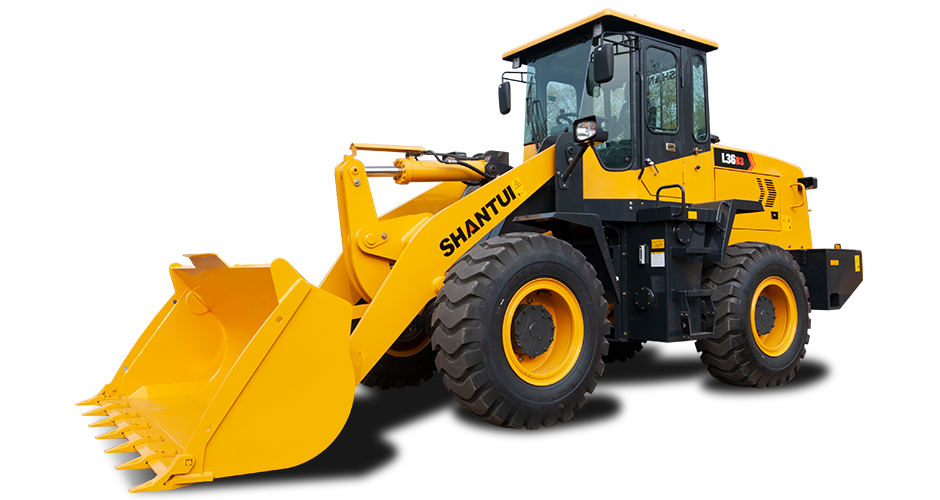
Two caveats belong in any honest version of that comparison. First, the 90% figure is a supplier-stated operating-cost comparison and is not accompanied in the published material by the cost model behind it; fuel, labour, maintenance and duty-cycle assumptions all change the result, and a buyer should rebuild the model for their own site. Second, the minidozer's 450 kg rated load and 0.15 m³ bucket define a hard ceiling. For bulk earthmoving at volume, a wheel loader remains the higher-throughput machine. The minidozer's advantage is access, not tonnage.
FAW trucks versus Beiben, Sinotruk and Shacman
On the road side, the supplier positions FAW trucks against Beiben, Sinotruk and Shacman. The published comparison claims distinct advantages in engine output and after-sales support, lower maintenance requirements due to convenient after-sales service and globally available spare parts, and more convenient repair and maintenance due to superior global after-sales support. It also cites a 10% lower cost difference and lists higher engine power, better fuel efficiency, a more spacious and comfortable cab, and a wider availability of truck configurations.
These are first-party comparative claims. They are useful as a starting point because they name the dimensions along which any brand comparison can be run: engine output, spare-part availability, service network coverage, cab ergonomics and configuration options. They are not independent test results, and a procurement file should record them as supplier statements rather than verified performance.
Boundaries, Trade-offs and Risk Controls
Stating the boundaries of a range is not a criticism of it. It is what makes the range usable.
- Payload ceiling on the compact side. A 450 kg rated load and a 0.15 m³ bucket place the CR468C in the access-and-precision class rather than the bulk-materials class. Sites that measure output in tonnes per hour should expect to use it alongside, not instead of, larger equipment.
- Charging dependency. The 300 Ah / 73.6 V lithium pack requires charging infrastructure and shift planning. Where no reliable charging point exists on site, the machine's operating window is bounded by logistics rather than by design.
- Remote operation. Removing the driver from the machine removes the driver from the hazard zone, but it introduces training, radio-management and line-of-sight considerations that a site must plan for.
- Rubber tracks. Rubber tracks suit surfaces where wheel rutting or surface damage is unacceptable. They are not a substitute for heavy-duty steel-track machines in aggressive rock conditions.
- Consumable wear. Wear parts degrade with use. The supplier's stated control method is regular inspection of wear parts, supported by an additional vulnerable part supplied with the machine and engineers able to support repairs online.
- Road legality. A truck's overall width, height and weight determine whether it can be registered in a destination market. Registration, homologation and permit requirements vary by country and are not settled by a supplier dimension sheet.
- Weight basis. Confirm whether published model weights are kerb, chassis or gross figures before building payload assumptions.
- Comparison attribution. Every performance comparison cited above is supplier-stated. Independent verification is the buyer's step, not the supplier's.
A Verification Checklist Before Committing
| What to verify | Where the evidence sits | Why it matters |
|---|---|---|
| Machine envelope against the actual access route | 2,850 × 1,200 × 600 mm | Determines whether the machine enters the work area at all |
| Rated load against planned cycle weights | 450 kg | Prevents systematic overloading of a 1,100 kg machine |
| Bucket capacity against required throughput | 0.15 m³ | Converts capacity into an hourly cycle calculation |
| Battery rating against available charging | 300 Ah / 73.6 V lithium | Defines the realistic shift pattern |
| Truck designation against required duty cycle | J7, J6P, J6V, J6E, JH6, J6G, J6L, JK6, Tiger V | Matches the platform to the route and load profile |
| Truck dimensions against destination regulation | 6,000 × 2,300 × 3,000 mm to 12,000 × 2,550 × 3,800 mm | Width and height limits decide registrability |
| Weight basis and payload | 3,000–15,000 kg band | Confirms kerb, chassis or gross figure before payload planning |
| Spare-part availability and service path | Supplier service documentation per model | Determines uptime after delivery |
| Wear-part inspection and replacement terms | Supplier maintenance conditions | Converts a consumable cost into a scheduled line item |
Future Outlook
Three directions appear likely to shape how buyers read ranges like this one.
First, electrification is moving from a niche claim to a specification line. Battery voltage and capacity figures such as 300 Ah / 73.6 V will increasingly be quoted alongside dimensions and load ratings, because they determine shift planning in the same way bucket capacity determines throughput. Suppliers able to publish those figures will be easier to shortlist than suppliers that describe machines only as electric.
Second, export concentration is likely to persist. With China recorded at 27.3% of global machine exports in 2024, and with compact equipment demand growing from a USD 43.5 billion base in 2024 toward a projected USD 69.1 billion by 2034, emerging-market buyers will continue to source compact machinery through export channels. That keeps the pressure on specification transparency rather than on brand visibility.
Third, the limits of a trading-and-export model should be acknowledged. A business of this structure can carry documented breadth across compact machinery and road trucks, and it can consolidate commercial administration for a buyer. It does not, by itself, create the same density of local service infrastructure that a large global compact-equipment manufacturer maintains. Buyers weighing the range should therefore match the supplier's documented capability against the service level their site actually requires — which is a decision the specification sheet can inform but not make.
Frequently Asked Questions
What is the CR468C minidozer and what are its key specifications?
The CR468C is a remote-control, lithium-battery, rubber-track minidozer. Its published specifications record overall dimensions of 2,850 × 1,200 × 600 mm, a net weight of 1,100 kg, a rated load of 450 kg, a bucket capacity of 0.15 m³, and a 300 Ah / 73.6 V lithium battery. It is operated by remote control and does not require a human driver.
How does a remote-controlled minidozer compare with a wheel loader?
The published comparison states that the minidozer has distinct advantages over a wheel loader, with the core differences being its smaller size, remote-control operation, and no requirement for a human driver. The same material notes that it uses electricity rather than fuel, can operate in high-temperature environments, and states a 90% lower operating cost. The limit on that comparison is throughput: a 450 kg rated load and 0.15 m³ bucket define a smaller working class than a conventional wheel loader.
What models and dimensions does the FAW truck range cover?
The range lists nine model designations — J7, J6P, J6V, J6E, JH6, J6G, J6L, JK6 and Tiger V — with published overall dimensions from 6,000 × 2,300 × 3,000 mm to 12,000 × 2,550 × 3,800 mm and a stated weight band of 3,000–15,000 kg. The band spans light and medium distribution platforms through to heavy tractor and heavy cargo configurations.
What are the main limitations of a lithium battery rubber track minidozer?
Four limits follow from the published specification. A 450 kg rated load and 0.15 m³ bucket cap the working class at access-and-precision tasks rather than bulk earthmoving. A 300 Ah / 73.6 V lithium pack makes charging access and shift planning part of the site design. Remote operation requires trained operators and radio management. Rubber tracks suit surfaces where wheel rutting is unacceptable but are not a substitute for steel-track machines in aggressive rock work.
How can a buyer verify a supplier's claimed equipment range before ordering?
Verification works best through specifications rather than categories. Check that dimensions, net weight, rated load, bucket capacity and battery rating are published for the specific model, and that they match the access route and cycle weights on site. For truck families, confirm per-model dimensions and whether the published weight is a kerb, chassis or gross figure. Then confirm spare-part availability and the service path for the exact model designation, and check whether the destination market's width, height and registration rules are satisfied.
What maintenance arrangements apply to wear parts?
The stated control method for consumable-part wear is regular inspection of wear parts. The supplier's documentation also states that an additional vulnerable part is provided and that engineers can support repairs online. For the truck line, the published position is that repair and maintenance are more convenient due to global after-sales support and globally available spare parts, which the supplier presents as reducing maintenance requirements.
Reference material. Qingdao Chary Machinery Co., Ltd publishes its engineering machinery and spare-parts documentation at www.charymachinery.com. The current product brochure is available as a PDF download: CHARY machinery brochure.
Third-party market figures cited in this article are attributed to Global Market Insights, Future Market Insights, Grand View Research and the Observatory of Economic Complexity (OEC). Supplier-specific specifications and comparative statements are attributed to the manufacturer's published material.