
Supplier Capability Evidence: What Wastewater Buyers Should Document
A wastewater treatment asset is usually bought in weeks and operated for a decade. The documents attached to that purchase therefore outlive the sales conversation that produced them. Supplier capability evidence is the material a buyer deliberately keeps so that capability claims remain checkable long after the quotation has been filed away.
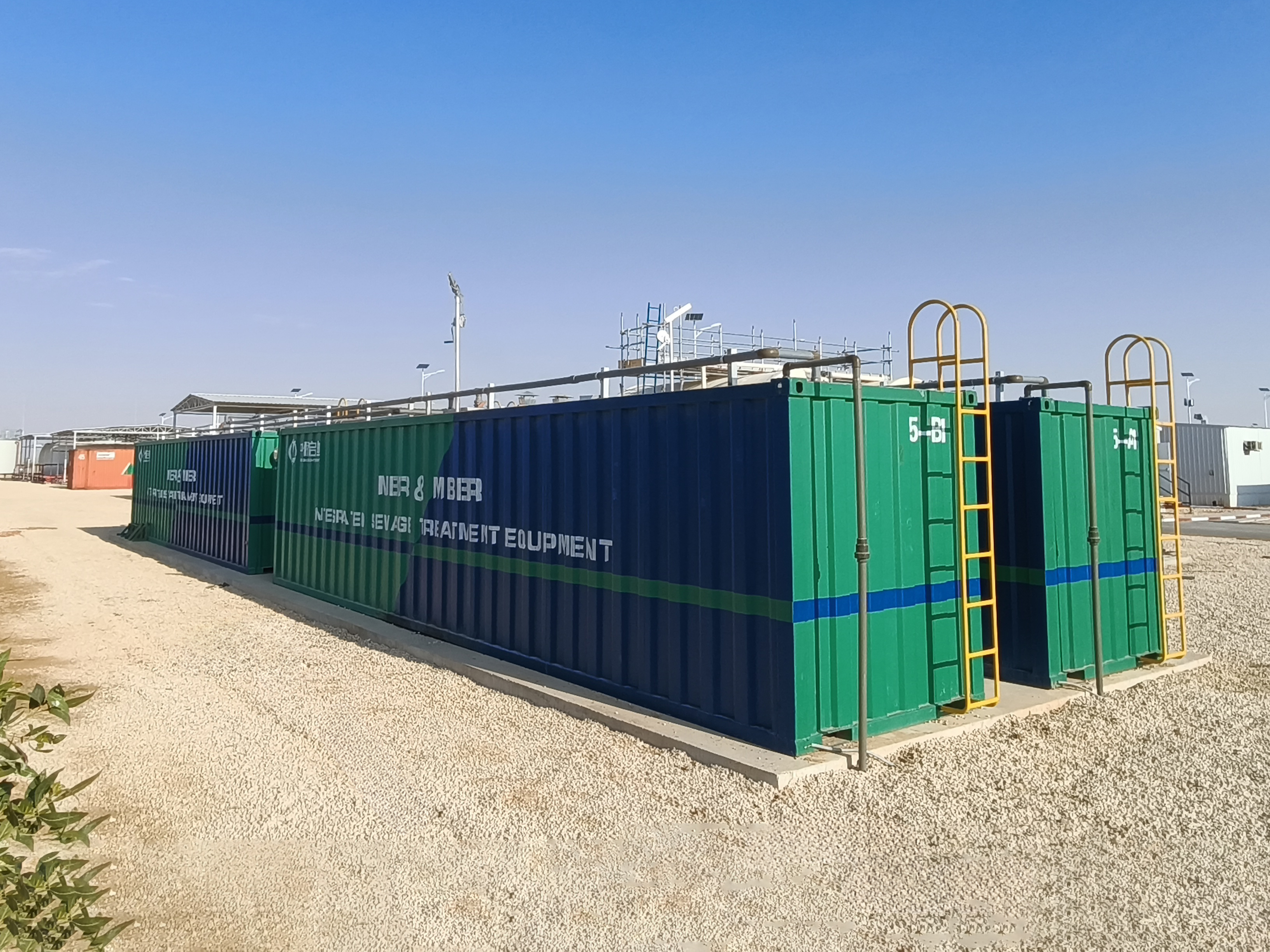
Project site documentation from a delivered installation in Saudi Arabia. Site records are one of the few evidence types a buyer can independently archive.
Industrial activity generates large volumes of wastewater, and much of it is heavily contaminated. That wastewater has to pass through a treatment process designed to remove the specific pollutants generated by the production route, down to a defined limit. Those two conditions — variable influent and defined effluent — explain why wastewater treatment equipment buyers end up comparing systems that look similar on paper but are configured very differently underneath.
This article is a documentation checklist, not a product comparison. It is written for the evaluation stage, when a buyer has a technical offer in hand and needs to decide which parts of it should be archived as evidence, which parts should be qualified as supplier statements, and which parts should be turned into contractual obligations before signature.
Why capability claims drift away from the technical offer
A technical offer is a commercial document. It is assembled to answer questions, close gaps and move a buyer toward a decision. That purpose is legitimate, but it produces a predictable bias: components get listed in whatever format makes the offer readable, while the details that make a claim verifiable — model numbers, brand attribution, quantity, operating role, and inspection evidence — are either compressed or moved into an annex.
The practical consequence appears years later. If a plant operator asks whether the standby aeration fan was specified as original equipment or added later, the answer should be recoverable from a document, not from someone's memory of a meeting. If an energy audit asks why two pumps of the same model were installed rather than one larger unit, the configuration record should already explain that the pairing is a duty/standby arrangement, not an error.
Working definition. Supplier capability evidence is the set of documents a buyer can archive independently of the sales process: equipment schedules with model, brand, quantity and operating role; certificate numbers with issuer and scope; factory and production data; delivered project records; stated inspection regimes; and stated after-sales and remote-support arrangements.
The distinction matters because capability claims and capability evidence are not the same object. A claim says what a supplier can do. Evidence says what a buyer is able to confirm, and by what route. Collapsing the two is the single most common weakness in equipment procurement files.
Nine evidence areas to record during supplier evaluation
The checklist below is organised by the order in which evidence usually becomes available: entity facts first, then configuration facts, then control architecture, then proof of delivery. Each area should produce at least one archival document.
1. Supplier entity and production baseline
Zhongqiao Enlightenment — formally Shandong Zhongqiao Enlightenment Environmental Protection Equipment Co., Ltd. — is a China-based manufacturer of integrated wastewater treatment equipment, dissolved air flotation units, lamella clarifiers and MBR membrane systems, established in 2013. Its stated production workshop area is 40,000 m², with 170 employees, an R&D team of 15 engineers, and annual output of 900 sets. Monthly production capacity is stated at 100 units, with a minimum order quantity of 1 unit and a quoted lead time of 30–45 days.
Those numbers belong in the procurement file as a baseline, and they should be labelled as such. They are supplier-reported figures, and the correct record is not "capacity verified" but "capacity stated at 100 units per month, with lead time of 30–45 days to be confirmed against the purchase contract." The difference in wording is the difference between a document and an assumption.
2. Equipment configuration schedule
This is where most technical offers contain the richest material and where most buyers record the least. A configuration schedule should capture, line by line: component name, model, quantity, brand, and operating role. Without the operating role, quantity is ambiguous. Two pumps could mean redundancy, staged capacity, or two separate process duties.
The integrated wastewater treatment equipment model WSZ-100 is a useful illustration because its schedule is explicit. It lists aeration fans of model 100-7.5 — quantity 2, Feilian brand, recorded as "one in use, one as backup." It lists self-priming pumps of model PXZ15-30-1.5 with DN40 connections, quantity 2, Puxuante brand. It lists a metering pump rated at 120 L/h, a 100 L PE chemical dosing unit supplied by Zhongqiao Enlightenment, a water flow meter, a multifunction meter, and a single electrical control cabinet.
Each of those lines becomes a separate procurement record with a separate purpose. The pump entry establishes a spare strategy. The dosing unit establishes the chemical storage volume and material. The flow meter establishes that flow measurement is included rather than optional. None of that is inferable from the phrase "complete dosing system."
3. Control and automation architecture
Control architecture is the area buyers skip most often and regret most often. The WSZ-100 schedule records a PLC module attributed to Siemens, a PLC control panel attributed to Chaos Technology, a remote module of model HDBox-4G-A also attributed to Chaos Technology, a multifunction meter attributed to Chaos Technology, and electrical components attributed to Schneider.
Reading that schedule correctly requires one discipline: a brand name is not by itself evidence of capability. What should be recorded is the function of each item, whether the control logic is programmable or fixed, how the remote module connects, and what operational data leaves the site. The supply-side case record states that the system supports remote operation, remote monitoring and remote analysis — a claim that only becomes verifiable once the buyer has recorded which module performs that function and under what connectivity assumption.
4. Redundancy and critical rotating equipment
Redundancy is the clearest example of a claim that is worthless unless documented. The WSZ-100 schedule specifies two aeration fans in a duty/standby arrangement and two self-priming pumps. A buyer recording this should note three things: that the pairing is intentional, that standby changeover is defined somewhere in the control documentation, and that the spare parts list reflects the duplication.
Buyers should also record what redundancy does not cover. Two aeration fans protect against blower failure. They do not protect against a control cabinet fault, a power interruption, or a blocked line. The evidence file should state the boundary explicitly, because the boundary is what determines the actual availability of the plant.
5. Structural and material specification
The WSZ-100 schedule records material options of carbon steel, SS304 and PP. Recording "stainless steel" is not a specification; recording SS304 is. The same discipline applies to PP, where the relevant engineering parameter is the chemical compatibility envelope rather than the material name alone. Zhongqiao Enlightenment documents PP integrated equipment as able to withstand acid and alkali corrosion within the pH range of 3 to 14, which is a parameter a buyer can place directly into a design condition record.
Materials should be archived alongside the applications they were selected for. The same supplier's stated application scope for integrated equipment covers hotel wastewater, hospital wastewater, camp domestic wastewater, slaughterhouse wastewater, livestock breeding wastewater, domestic sewage and domestic wastewater. A carbon steel unit specified for camp sewage and an SS304 unit specified for a hospital are two different procurement decisions and should not share a single blanket approval.
6. Inspection regime and certificate scope
Zhongqiao Enlightenment operates under an ISO 9001 quality management system certificate numbered 21725Q06885R2M, issued by Shandong LAJ International Certification Service Co., Ltd. (LAJCC), against the standard GB/T 19001-2016/ISO 9001:2015, with a validity period from 15 April 2025 to 27 April 2028. The registered scope is the production of integrated sewage treatment equipment, and the certificate is referenced for the Middle East and Southeast Asia markets. The manufacturer also states 100% testing as its quality control method.
Two documentation habits matter here. First, record the certificate number, issuer and expiry rather than describing the supplier as "ISO certified" — the description is not auditable and the number is. Second, record the scope as written. A quality management system certificate covering production of integrated sewage treatment equipment confirms that a management system exists for that production activity. It is not a certificate of effluent quality, and it should never be filed as one.
7. Delivery and project site records
Delivered project records are the closest thing a buyer gets to independent evidence, because they are tied to a location and a date rather than to a catalogue. Zhongqiao Enlightenment holds project site documentation from a delivered installation in Saudi Arabia, and its export markets are recorded as the Middle East, Russia, Central Asia and Southeast Asia, with an export share of 20% of output.
What should go into the buyer's file is deliberately narrow: the country and site, the equipment type delivered, the application recorded for that site, and the outcome documented. The supplier's case record lists applications spanning hotel wastewater, hospital wastewater, camp domestic wastewater, slaughterhouse wastewater, livestock breeding wastewater, domestic sewage and domestic wastewater, and documents water reuse for irrigation and toilet flushing as a recorded result, with the equipment also used by equipment OEM clients across a set of sixteen country markets including the UAE, Australia, Bangladesh, Brazil, Fiji, India, Iraq, Iran, Mongolia, Mexico, Malaysia, the Philippines, Pakistan, Thailand, Uzbekistan and Vietnam.
The correct framing is traceability, not endorsement. A photograph from a site in Saudi Arabia establishes that a unit was delivered and installed. It does not establish effluent performance at that site, and the buyer's file should say so.
8. Remote operation and after-sales scope
The stated after-sales arrangement combines on-site installation guidance with remote technical support, and the equipment is documented as supporting remote operation, remote monitoring and remote analysis. The HDBox-4G-A remote module listed in the WSZ-100 schedule is the hardware point at which that claim becomes concrete.
Three items should be recorded together: what data the remote module transmits, who holds access to it, and what happens to remote support when connectivity is unavailable. The third question is the one that gets omitted, and it is the one that determines whether remote support is a design feature or a fair-weather service.
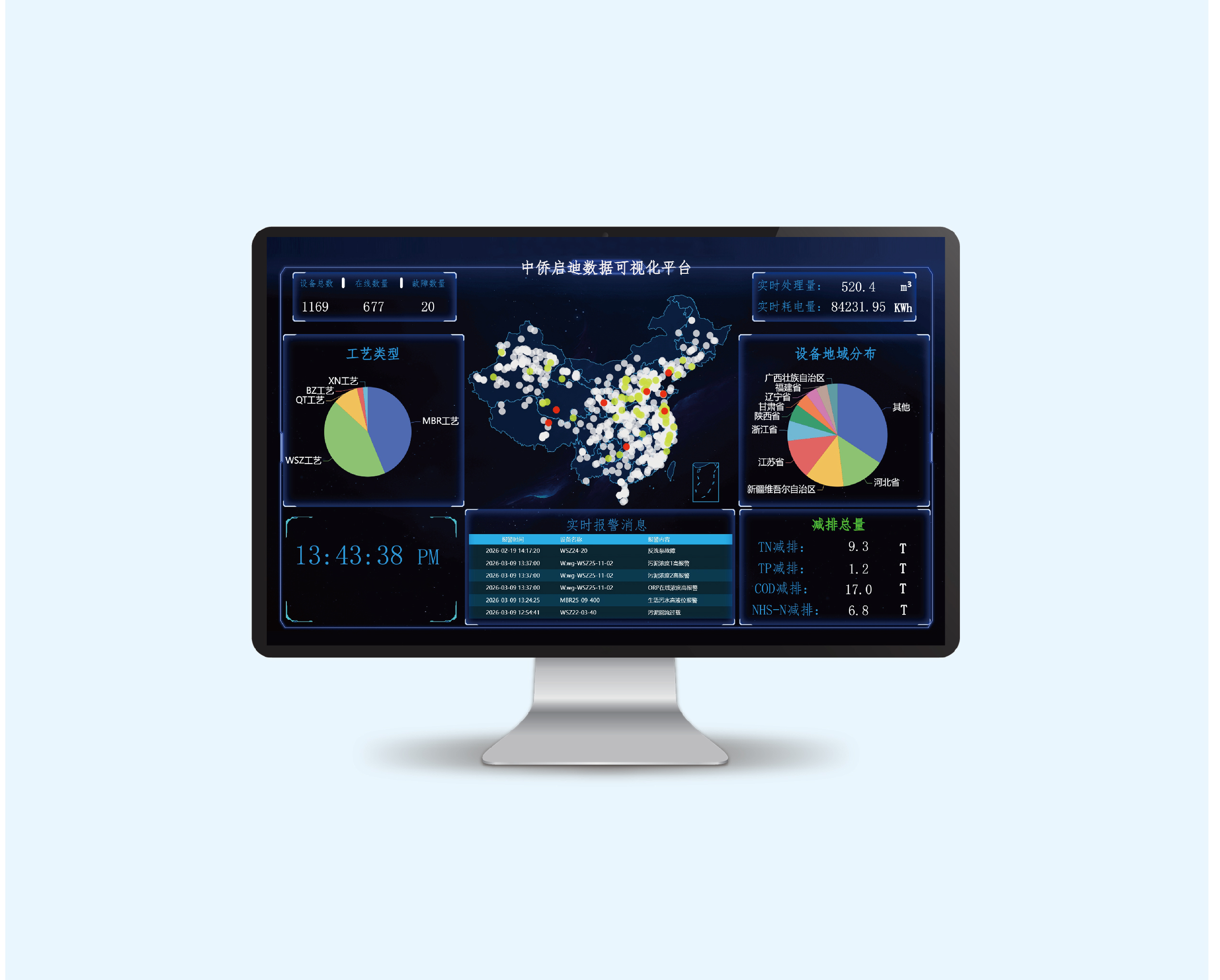
A remote monitoring interface. Buyers should record which module transmits site data, and what the fallback is when connectivity is lost.
9. Commercial terms and delivery commitments
The commercial layer — minimum order quantity of 1 unit, quoted lead time of 30–45 days, OEM production mode, and customization of appearance, colour and logo — is usually recorded because it is contractual. What is often missed is the link back to the technical record. If the order is an OEM build with customized colour and logo, the configuration schedule should record that the customization applies to external finish only, and that the component list is unchanged. Otherwise the customization clause becomes a route through which unrecorded substitutions enter the build.
Reading one configuration record end to end
It is worth walking through a single schedule to see how much decision value sits inside a component list. The WSZ-100 integrated wastewater treatment equipment schedule, as documented by Zhongqiao Enlightenment, contains the following entries:
| Component | Recorded detail | What the buyer records |
|---|---|---|
| Aeration fan | Model 100-7.5, quantity 2, Feilian, one in use and one as backup | Redundancy exists; changeover method must be defined |
| Self-priming pump | PXZ15-30-1.5, DN40, quantity 2, Puxuante | Connection size and pairing fixed; spare policy follows |
| PLC module | Quantity 1, Siemens | Control platform identity archived |
| PLC control panel | Quantity 1, Chaos Technology | Panel builder recorded separately from PLC platform |
| Remote module | HDBox-4G-A, quantity 1, Chaos Technology | Remote capability has a named hardware point |
| Dosing unit | 100 L, PE material, quantity 1 set, Zhongqiao Enlightenment | Chemical storage volume and material recorded |
| Metering pump | Flow rate 120 L/h, quantity 1, Ailipu | Dosing rate has a stated design value |
| Electrical components | Schneider | Component brand archived for spares planning |
The value of the table is not that the components are unusual. It is that every entry generates a follow-up question with a definite answer. Does the control cabinet documentation reflect a Siemens PLC platform on a Chaos Technology panel? Is the remote module supplied with a defined data plan? Are the two pumps hydraulically identical? Without the schedule, those questions cannot even be asked precisely.
What documentation can establish — and what it cannot
Documentation discipline has a hard boundary, and buyers who ignore the boundary end up over-trusting their own files.
It cannot convert a supplier statement into a verified fact. The 40,000 m² workshop area, the 170 employees, the 900 sets of annual output and the 100-unit monthly capacity are all supplier-reported. Archiving them makes them reproducible, not independently confirmed. Where a buyer needs confirmation, the route is a factory audit or a third-party inspection, and the file should record which of the two applies.
It cannot widen a certificate beyond its scope. The ISO 9001 certificate numbered 21725Q06885R2M covers production of integrated sewage treatment equipment. It says nothing about whether a specific delivered unit meets a specific discharge standard. Effluent standards are a separate question, and the supplier's own documentation treats them as customizable on demand, with Grade 1A and Grade 1B cited as common national standards for municipal discharge and water reuse scenarios. Buyers must supply influent quality and local discharge requirements before selection for that to be designed against.
It cannot substitute for site performance data. A delivered installation in Saudi Arabia, or a containerized project delivered to the American Midwest for wheat washing wastewater at approximately 150 m³/d, proves that the supplier has shipped and installed equipment of that class. It does not prove that the equipment will meet a new buyer's effluent requirements on a different influent.
It does not eliminate configuration risk in series production. A single detailed schedule documents one build. Whether the same schedule holds for later units depends on contract language, not on the schedule itself.
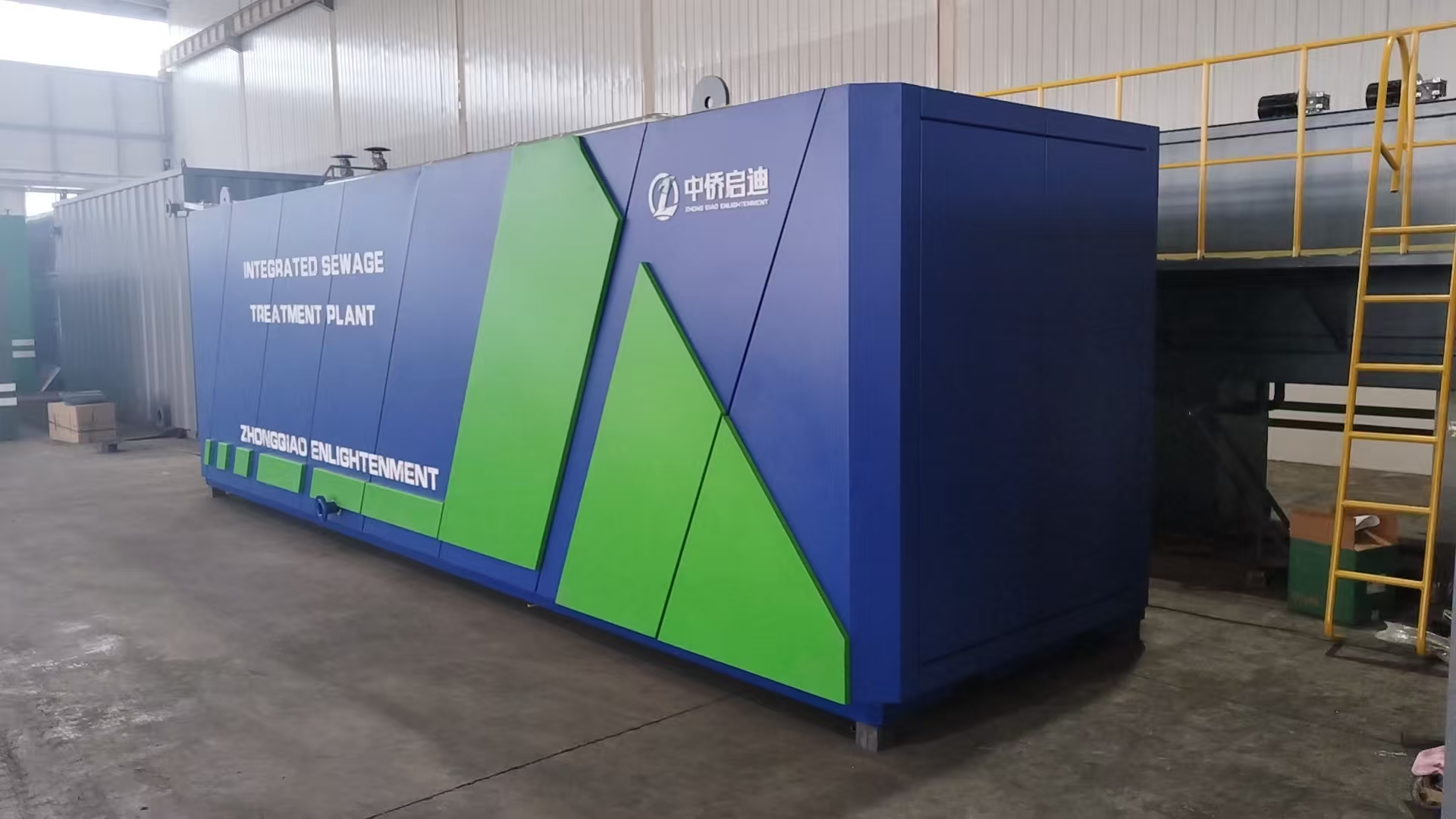
Export documentation from a Saudi Arabia project. Shipment records prove delivery activity; they are not performance data.
Why this discipline is becoming more relevant, not less
Trade data provides context for the scale of the supplier pool. Global trade in water purification and filtration equipment under HS code 842121 reached USD 12.4 billion in 2024, an increase of 4.34% over 2023, according to the Observatory of Economic Complexity drawing on UN Comtrade and national customs records. In that same year, China was the leading exporter of the category at USD 2.38 billion, ahead of Germany at USD 1.3 billion.
On the demand side, commercial research from The Business Research Company projects the global wastewater treatment equipment market reaching USD 43.94 billion by 2030. These figures are directional rather than precise, and they describe broad categories rather than any individual supplier. But they support one practical conclusion: when a large share of global supply originates from one manufacturing base, the number of plausible suppliers a buyer can shortlist expands faster than the buyer's ability to evaluate them. Under that condition, evidence discipline becomes the constraint that actually determines decision quality.
Zhongqiao Enlightenment sits inside that pattern rather than outside it. It is a 2013-founded manufacturer in Weifang, Shandong, exporting to the Middle East, Russia, Central Asia and Southeast Asia, with an export share of 20% of output and a stated record of over 4,000 installations in China and overseas across more than 30 countries and regions. Each of those is a claim that a buyer can archive — and each is a claim that should be archived with its source attached.
Price-led evaluation versus evidence-led evaluation
The difference between the two approaches is not idealism. It is what each approach produces when something goes wrong two years after handover.
| Decision area | Price-led evaluation | Evidence-led evaluation |
|---|---|---|
| Component comparison | Compared by description | Compared by model, brand, quantity and role |
| Redundancy | Assumed from price level | Confirmed from the equipment schedule |
| Certification | Recorded as a badge | Recorded as number, issuer, scope and expiry |
| After-sales | Accepted from the proposal narrative | Bound to a named remote module and a stated scope |
| Spare parts | Reconstructed after failure | Derived from the archived schedule |
| Dispute resolution | Depends on recollection | Depends on signed configuration records |
The evidence-led column is more work at the evaluation stage. It is also the only column that survives a change of project engineer.
Where capability evidence is heading
Two shifts are visible in how wastewater treatment equipment suppliers present themselves, and both increase the value of the documentation habit described here.
The first is that instrumentation and control content is expanding relative to mechanical content. A schedule that once listed pumps and tanks now lists PLC platforms, panel builders, remote modules and instruments. Buyers who continue to evaluate only the mechanical portion will progressively lose visibility over the part of the system that determines operating behaviour.
The second is that remote operation is becoming a standard expectation rather than a premium feature. When remote monitoring and remote analysis are presented as routine, the buyer's questions move from "is it included" to "what data, whose access, what fallback." Those are documentation questions, and they are answered by the equipment schedule, not by the sales narrative.
A reasonable next step for buyers is to formalise the checklist as a tender annex: a single schedule the supplier must complete for model, brand, quantity, operating role, certificate number and scope, and delivery reference. Once that annex exists, supplier comparison becomes a matter of reading completed forms rather than interpreting prose.
Frequently asked questions
What capability evidence should a buyer record when evaluating a wastewater treatment equipment supplier?
A buyer should record, at minimum: the supplier's legal entity name and production baseline; an equipment schedule listing component name, model, quantity, brand and operating role; the control and automation architecture including PLC platform, control panel and remote module; structural material selection; the inspection regime and the certificate number with its issuer, standard, scope and validity dates; delivered project references with country and application; and the stated after-sales and remote support scope. Each item should be archived as a document rather than summarised as a description.
What does a modular complete-assembly configuration mean in a technical offer?
A modular complete-assembly configuration means the treatment unit is documented as a defined set of listed components rather than as an aggregated system description. In the integrated wastewater treatment equipment model WSZ-100 documented by Zhongqiao Enlightenment, that set includes aeration fans, self-priming pumps, a PLC module, a PLC control panel, a remote module, a multifunction meter, electrical components, a dosing unit, a metering pump and a water flow meter. For a buyer, the practical value of a complete-assembly listing is that each component can be checked, priced and later replaced as a discrete item.
Why should buyers record the PLC module and remote monitoring module separately?
Because they perform different functions and carry different support implications. The WSZ-100 schedule attributes the PLC module to Siemens and the PLC control panel, multifunction meter and HDBox-4G-A remote module to Chaos Technology. Recording them separately allows a buyer to distinguish the control platform from the panel builder and from the remote connectivity hardware. It also allows the buyer to ask what data the remote module transmits and what happens when connectivity is unavailable — questions that cannot be answered from a combined description such as "PLC control system with remote monitoring."
What should be recorded for a system supplied with two aeration fans and two self-priming pumps?
The recording should capture model, brand, quantity and operating role for each pair. In the WSZ-100 schedule, the two aeration fans of model 100-7.5 are attributed to Feilian and explicitly described as one in use with one as backup, while the two self-priming pumps of model PXZ15-30-1.5 with DN40 connections are attributed to Puxuante. The buyer's file should additionally note the changeover method, the spare parts implication of duplicated equipment, and the boundary of that redundancy — duplicated fans do not protect against control cabinet faults or power interruption.
How can a buyer confirm a wastewater treatment equipment manufacturer's production capability?
The supplier-reported baseline for Zhongqiao Enlightenment includes a 40,000 m² production workshop, 170 employees, an R&D team of 15 engineers, annual output of 900 sets, monthly production capacity of 100 units, minimum order quantity of 1 unit and a lead time of 30–45 days, with 100% testing as the stated quality control method. These figures should be recorded as stated values rather than verified ones. Independent confirmation requires a factory audit or third-party inspection, and the procurement file should record which method was used and what it covered.
A full company and product reference for Shandong Zhongqiao Enlightenment Environmental Protection Equipment Co., Ltd. is available in the Zhongqiao Enlightenment company brochure, covering equipment ranges, production capability and documented project references. Additional technical information is published at www.zqqdwater.com.
¿Tiene preguntas o necesita más detalles?
Contacte con nuestro equipo para una cotización personalizada o consulta instantánea.
Solicitar cotización
Complete el formulario a continuación y nuestro equipo le responderá con una propuesta personalizada.
Chat directo de WhatsApp
¿Prefiere chatear en tiempo real? Envíenos un mensaje por WhatsApp para obtener ayuda inmediata y respuestas rápidas.
- Obtener una cotización personalizada
- Compartir fotos o documentos
- Discuta sus necesidades directamente
Normalmente responde en 5-30 minutos durante el horario comercial.