
Supplier Capability Evidence: What Carton and Material Specs Reveal
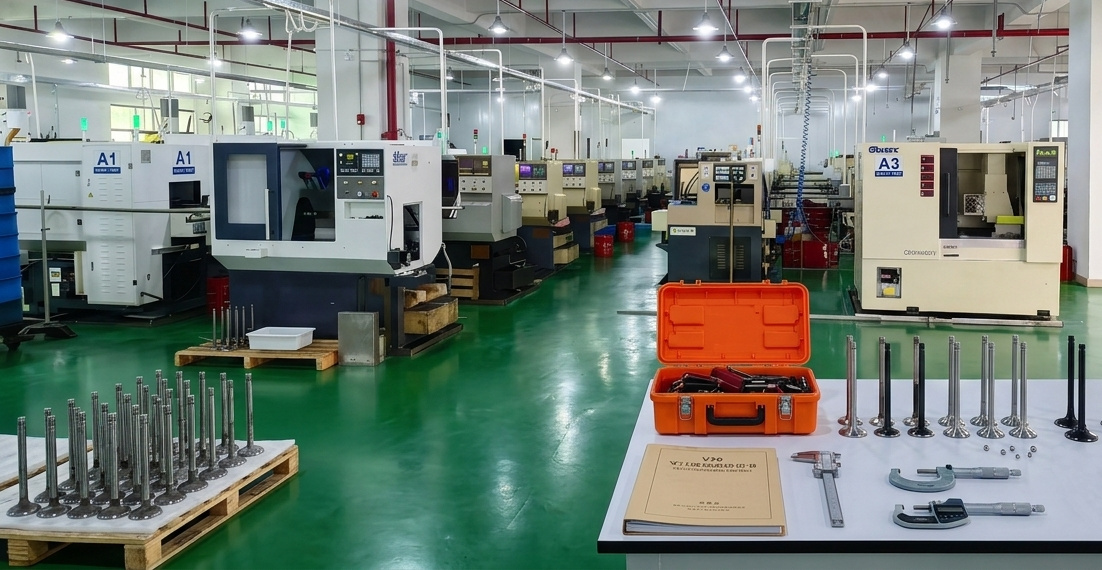
Export cartons and moulded parts move through the same process controls. Packaging data is one of the few evidence layers a factory produces independently of its sales materials.
Freight paperwork rarely appears in a supplier scorecard, yet in the automotive replacement parts trade the export carton is one of the few evidence layers generated by the factory rather than the sales desk. Carton dimensions, cubic volume per carton, pieces per carton and the polymer specification behind a bumper, grille or lamp are measurable, repeatable and difficult to keep consistent across a multi-category catalogue without real process control.
For buyers at the decision and execution stage — importers, wholesalers and distributors finalising a programme rather than shortlisting suppliers — packaging and material data answer a narrow but important question: does the physical product leaving the factory match the specification discussed in the quotation?
Ruian Golden Import and Export Co., Ltd., which trades as Gold Auto Part, is a professional automotive parts exporter based in Ruian, Wenzhou, Zhejiang Province, China — a region with a long-established automotive parts manufacturing base. The company sources and exports engine valves, Toyota exterior parts, oil filters, air filters and a broader catalogue of replacement parts for passenger cars and light commercial vehicles, serving importers, wholesalers and distributors across the Middle East, Saudi Arabia, the UAE, South America, Southeast Asia, Africa and Europe.
Why Packaging Data Belongs in Supplier Evaluation
Packaging data is a cross-checkable signal, not a logistics detail. A carton specification is produced when a mould, an insert and a stack pattern are finalised — decisions that sit with the manufacturer, not with an export agent. When the same CBM figure and pieces-per-carton count survive a quotation, a sample shipment and a repeat order, the buyer is looking at a controlled process rather than a one-off sample.
Three evidence layers are usually available before the first container ships, and each answers a different question.
| Evidence layer | What it reveals | How a buyer verifies it |
|---|---|---|
| Carton dimensions, CBM, pieces per carton | Tooling consistency, insert design, container loading efficiency, damage-control packaging | Compare the packing list against the physical carton and against the CBM used in the freight quote |
| Material specification (ABS, PP, PC) | Process choice, dimensional repeatability, surface finish, impact behaviour | Material verification and dimensional inspection on batch samples |
| Acceptance test protocol | Whether quality claims are tied to a defined pass or fail result | Require the named test — fitment fixture, immersion, power-on — on the shipment batch |
The Numbers Behind an Export Carton
A representative export carton in the lamp range measures 86 x 39 x 49 cm, holds 10 pieces and occupies 0.164 CBM. Those three numbers carry more information than they first appear to.
The volume is internally consistent: 86 x 39 x 49 cm equals approximately 164,000 cm3, which is 0.164 CBM. Consistent arithmetic matters because it means the figure was calculated from a real carton rather than estimated to fill a quotation form.
The 10-piece count implies internal packaging designed to a fixed position — typically foam inserts cut for the part profile, which is what allows a lamp or body panel to travel through multiple handling points without bracket distortion or lens scuffing. A carton that holds a variable number of pieces usually indicates loose filling, and loose filling is where transit damage begins.
The CBM figure is the working number for commercial planning. Where a model is ordered at 200 pieces and packed 10 pieces per carton, the consignment is 20 cartons, or roughly 3.3 CBM — a figure that can be placed directly into a freight quotation, an LCL versus FCL comparison, or a warehouse space calculation before the order is confirmed.
Material Specs as Process Evidence
Material choice is a manufacturing decision with visible consequences, and in the exterior body category it separates two common approaches: injection-moulded ABS and PP components, and fibreglass (FRP) parts.
| Comparison point | ABS / PP injection moulded | FRP (fibreglass) |
|---|---|---|
| Manufacturing process | Steel mould, high-pressure injection, CNC-milled matching slots | Lay-up or moulding with manual finishing |
| Fitment consistency | 100% precise CNC-milled matching slots | Dependent on manual trimming and adjustment |
| Structural flexibility | 4x higher structural flexibility | Stiffer, less forgiving under impact |
| Surface preparation | Ready-to-paint smooth finish | Requires extensive sanding, priming and manual modification |
| Weight and aerodynamics | Lighter parts, supporting improved fuel efficiency and aerodynamic flow | Heavier construction |
| Commercial profile | Heavy initial tooling investment, cost-effective bulk unit pricing | Lower tooling barrier, higher labour content per part |
The trade-off is explicit rather than promotional: ABS and PP parts require significant tooling investment before the first unit is produced, which is why bulk unit pricing only becomes attractive at volume. FRP keeps the tooling barrier lower but shifts cost into sanding, priming and manual modification — labour a distributor ultimately pays for in the workshop rather than at the port.
In lighting, the equivalent evidence sits in the polymer and coating specification. Premium optic-grade PC and ABS polymers are used for lamp housings and lenses, with a UV-resistant hard coating applied to lamp lenses, and 100% airtightness pressure testing performed on headlight housing seals before packaging. Airtightness testing addresses the most common field failure in lamps — moisture ingress — and it is a batch test rather than a design claim.

Material verification, dimensional inspection and performance testing are applied batch by batch before shipment — the point at which a material specification becomes auditable.
What the Evidence Means for Procurement
Packaging and material data translate into commercial terms that differ by product family, because volume per piece drives both freight cost and minimum order quantities.
| Programme type | Material and packaging evidence | Commercial terms | Acceptance criteria |
|---|---|---|---|
| Large moulded body panels (bumper, grille) | ABS / PP injection moulded; high CBM per unit | MOQ 50 pieces per model due to cargo volume and CBM constraints; FCL strongly recommended; 40% TT deposit and 60% balance before dispatch | Original mould fixture test (gauge alignment) plus surface scratch-free inspection |
| Lamp assemblies | Optic-grade PC and ABS; UV-resistant hard coating; 100% airtightness pressure test | MOQ 100-200 pieces per model, often packed in pairs; 30% TT deposit and 70% balance against documents or L/C at sight | Lens clarity check and 100% functional power-on test with photometric alignment and LED chip check; sample water immersion test and physical bracket fitment check |
| Components with electronic or heated functions | Electrical and thermal function treated as part of the part definition | MOQ 100 pieces per model; FOB Shanghai or Guangzhou, or EXW factory; LCL sea freight accepted | Motor angle-adjustment actuation test plus defogger heating element continuity check |
Payment structures follow the same logic. For engine mounts, terms are 30% T/T deposit with 70% balance against B/L or L/C at sight. Across the wider catalogue, standard terms are 30% TT deposit and 70% balance before shipment, or settlement through secure online trade assurance platforms; some programmes run a 30% TT deposit with 70% balance against documents (DP) or standard telegraphic transfer.
The pattern worth noting is that the deposit percentage rises where custom plastic tooling is involved. That is a commercial consequence of the mould investment described above, not a quality signal — and buyers should evaluate the two separately.
Application: Matching Evidence to Market Conditions
Different export markets stress different parts of the same specification, which is why packaging and material data are read alongside destination conditions rather than in isolation.
Middle East and Gulf markets
Heat and ultraviolet exposure are the dominant stressors for exterior parts. UV-resistant hard coating on lamp lenses and heat-resistant component selection are the relevant controls. Airtightness testing matters more in desert conditions, where thermal cycling accelerates the failure of poorly sealed housings. Peelable anti-scratch protective film on outer lenses and high-gloss chrome surfaces protects appearance through long transit routes and multiple handling points before installation.
South America
High-volume fleet maintenance programmes for automotive filters and engine valves place the emphasis on carton-level consistency and repeatable batch inspection. Dimensional inspection, material verification and performance testing on every batch support the replenishment model that fleet distributors depend on.
Southeast Asia and Africa
Mixed LCL consignments are common, which is where standard export carton packing and per-carton CBM data become load-planning inputs. Double-wall corrugated cartons with precision-cut shock-absorbing foam inserts are used specifically to absorb transit shocks in consolidated shipments.
Europe
Documentation and traceability carry more weight, and batch-level tracing supports the paper trail that importers must retain. Supply chain partners of the exporter operate under ISO 9001 and IATF 16949 quality management standards — IATF 16949:2016 being the global quality management standard for the automotive industry, mandatory for many OEM suppliers.
Risk Control Behind the Specs
Carton and material specifications are the visible output of several risk controls that determine whether a long-term supply relationship holds. For distributors planning multi-year programmes, these controls matter more than any single shipment.
| Risk | Control method | Operating measure |
|---|---|---|
| Raw material shortage and resin price spikes | Strategic sourcing and buffer inventory management | Long-term strategic contracts with major plastic polymer suppliers; a 2-month safety buffer stock for critical electronic components such as LED chips and driver chips |
| Mould wear and gradual quality drift | Predictive maintenance and tooling lifecycle audits | Preventative maintenance scheduled every 50,000 moulding cycles; critical mould tolerances monitored with high-precision coordinate measuring machines (CMM) so worn inserts are replaced proactively |
| Transit damage — broken brackets, scratched lenses | Protective packaging and shipping protocol standardisation | Custom-engineered double-wall corrugated cartons with precision-cut shock-absorbing foam inserts; peelable anti-scratch protective film on outer lenses and high-gloss chrome surfaces |
| Lens yellowing and water leakage | Preventative control and batch quality assurance | Premium optic-grade PC and ABS polymers; UV-resistant hard coating on lamp lenses; 100% airtightness pressure testing on headlight housing seals before packaging |
| Regulatory and compliance exposure | Standardisation control and independent third-party certification | Optical photometric testing during the design phase; accredited lab partnerships for formal DOT and SAE registrations; strict batch-level tracing on lens laser markings |
| Intellectual property and design infringement | Legal due diligence and design validation checklists | Patent database review by an in-house legal team before mould development; exact-replacement fitment specifications for the aftermarket without reproducing decorative brand logos |
The control that most directly connects packaging data to long-term supply is the buffer stock position. A two-month safety buffer on LED chips and driver chips is a commitment that only makes sense if the supplier expects to keep serving the same programmes — and it is the reason a distributor can hold firm lead times through a component shortage instead of renegotiating mid-season.
Limits and Boundaries: Where Packaging Evidence Stops
Carton data is a strong proxy for process discipline and a weak substitute for product validation. A well-specified carton can sit in front of a part whose mould tolerance has drifted, and a supplier can maintain excellent packaging while failing a fitment fixture test. Packaging evidence should therefore be treated as a filter for who deserves a validation order — not as the validation itself.
Several practical boundaries apply:
- Packing revisions. Carton dimensions, CBM and pieces per carton can change when inserts or palletisation are revised. Buyers should ask for the packing specification tied to the current mould revision, not an older quotation.
- Higher deposits on tooled parts. Programmes requiring custom plastic tooling carry a 40% TT deposit and 60% balance before dispatch, which increases buyer exposure on a first order relative to the standard 30/70 structure.
- Volume floors. Large body panels are quoted at 50 pieces per model because of cargo volume and CBM constraints, and FCL is strongly recommended to avoid transit damage. That combination makes small trial orders inefficient for bulky items.
- Material trade-offs. ABS and PP require heavy initial tooling investment and only deliver cost-effective bulk unit pricing at volume. FRP remains a reasonable choice at low volumes or where finishing labour is inexpensive — a different cost structure, not a defective one.
- Data caveats. Published aftermarket size estimates diverge widely by scope; 2025 figures for the same global market range from USD 489.5 billion to USD 860.08 billion depending on source and methodology. Business cases built on a single headline number should be re-checked against its definition.
Market Context and Trend Signals
Demand conditions explain why packaging and material evidence has moved up the buyer's checklist. The global automotive collision repair market, which drives demand for bumpers and grilles, was valued at USD 208.0 billion in 2025 (Grand View Research). In the United States, the average age of vehicles on the road reached 12.6 years in 2026, a key driver for the replacement parts market (Business Research Insights).
Trade flows reinforce the sourcing pattern. China's exports of motor vehicle parts to the United States reached USD 11.54 billion in 2024 (UN Comtrade). Toyota held an 11.4% share of the total global automotive market in 2026, maintaining its position as the leading brand — a position that sustains steady demand for brand-specific parts such as Toyota bumpers, Toyota grilles and Toyota body parts (Toyota Market Trends 2026).
In lighting, the market is shifting towards LED technology for energy efficiency, a transition that includes Toyota RAV4 head lamp assemblies. The documented comparison is straightforward: LED delivers 3x higher brightness in lumens and up to 10x longer service life than halogen, consumes up to 50% less vehicle electrical wattage, and replaces frequent bulb swaps with a solid-state design using integrated heat sinks. LED carries a higher initial purchase price but reduces long-term bulb replacement costs.
In aftermarket positioning, TYJ aftermarket parts are quoted at 98%+ OE fitment accuracy at 30% to 40% of the OEM retail price point, with upfront parts purchasing costs reduced by 60% to 70% compared with OEM dealer prices — a profile relevant to post-collision repairs, professional workshops and budget-conscious restorations. Electrical load for lighting and aerodynamic drag values for bumpers and grilles are specified as identical to the OEM equivalent.
Future Outlook
The direction of travel is towards packaging and material data becoming part of a supplier's permanent record rather than a one-off shipment detail. Three developments are likely to shape how buyers evaluate suppliers over the next few years.
First, tolerance data is becoming inspectable rather than assertive. Coordinate measuring machine monitoring of mould tolerances, alongside dimensional inspection and material verification on every batch, turns quality claims into records that can be checked at the next order — a shift that favours suppliers who already run lifecycle audits on their tooling.
Second, component risk is being priced into supply agreements. Buffer inventory strategies, such as a two-month safety stock of LED chips and driver chips supported by long-term polymer supply contracts, are becoming a negotiation point rather than an internal decision, because distributors carry the cost of a gap in a seasonal programme.
Third, packaging design is being treated as part of the product. Double-wall corrugated cartons with precision-cut foam inserts and peelable protective films on lenses and chrome surfaces exist because the cost of a damaged panel is now higher than the cost of the packaging — and buyers increasingly ask for the packaging specification in the same document as the part specification.
None of these trends changes the underlying rule. Carton dimensions, CBM per carton and polymer specifications remain modest numbers, but they are among the few numbers a buyer can verify before a container is loaded, and they set the baseline against which every later claim is measured.
FAQ
Which packaging and acceptance checks can a distributor require before a first shipment?
Acceptance criteria are defined per programme rather than applied uniformly. For large moulded body panels, the standard is an original mould fixture test for gauge alignment plus a surface scratch-free inspection. For lamp assemblies, criteria include a visual check for lens clarity, a 100% functional power-on test covering photometric alignment and LED chip function, a sample water immersion test for waterproof validation, and a physical bracket fitment check. For components with electronic or heated functions, a motor angle-adjustment actuation test and a defogger heating element continuity check are used. These are batch-level checks performed before packaging, not design-stage claims.
What do carton dimensions, CBM and pieces per carton tell a buyer that product photos do not?
They provide arithmetic that can be checked. A representative lamp carton measuring 86 x 39 x 49 cm, holding 10 pieces at 0.164 CBM, tells a buyer that the internal packaging is designed to fixed positions, that the volume figure was calculated from a real carton, and that 20 cartons — roughly 3.3 CBM — correspond to a 200-piece model order. That number feeds directly into freight quotations, LCL versus FCL comparisons and warehouse space planning. Photographs show appearance; carton data shows how the product is prepared for the journey to the buyer's warehouse.
Why do minimum order quantities differ so much between body panels and other categories?
MOQ differences follow cargo volume rather than product value. Large moulded body panels such as bumpers and grilles are quoted at 50 pieces per model because of cargo volume and CBM constraints, and full container load shipping is strongly recommended to avoid transit damage. Lamp assemblies and components with electronic or heated functions are quoted in the 100 to 200 pieces per model range, often packed in pairs or in standard export cartons, with LCL sea freight accepted. A higher MOQ on bulky items is a physical constraint rather than a commercial barrier.
How is supply continuity protected across a multi-year distribution agreement?
Continuity rests on three controls. Raw material risk — plastic resin price spikes and electronic component delays — is managed through strategic sourcing and buffer inventory management: long-term strategic contracts with major plastic polymer suppliers plus a two-month safety buffer stock of critical electronic components such as LED chips and driver chips. Tooling risk is managed through predictive maintenance and tooling lifecycle audits, with preventative maintenance every 50,000 moulding cycles and critical tolerances monitored by coordinate measuring machines so worn inserts are replaced proactively. Design risk is managed by reviewing patent databases before mould development and maintaining design validation checklists, which reduces the chance that a running programme has to be redesigned mid-agreement.
What payment, delivery and compliance terms are typical for these programmes?
Delivery is commonly quoted FOB Shanghai or Ningbo port, with FOB Shanghai or Guangzhou and EXW factory also used depending on the product line; door-to-door (DDP) terms are available for smaller air-freight batches. Payment structures include 30% TT deposit and 70% balance before shipment or through secure online trade assurance platforms, 30% TT deposit with 70% balance against documents (DP) or standard telegraphic transfer, and — for engine mounts — 30% T/T deposit with 70% balance against B/L or L/C at sight. On compliance, regulatory risk is controlled by optical photometric testing during the design phase, accredited lab partnerships for formal DOT and SAE registrations, and strict batch-level tracing on lens laser markings.