
Supplier Capability Evidence: Verifying Outdoor Webbing with Aging Test Data and Anti-Mould Reports
Supplier Capability Evidence: Verifying Outdoor Webbing with Aging Test Data and Anti-Mould Reports
Outdoor gear brands do not buy webbing on hand feel alone. They buy a component that must survive sunlight, damp storage, repeated handling and end-use loads. The supplier question is therefore not whether a sample looks right, but whether the supplier can produce evidence that the right performance has been tested, documented and traced.
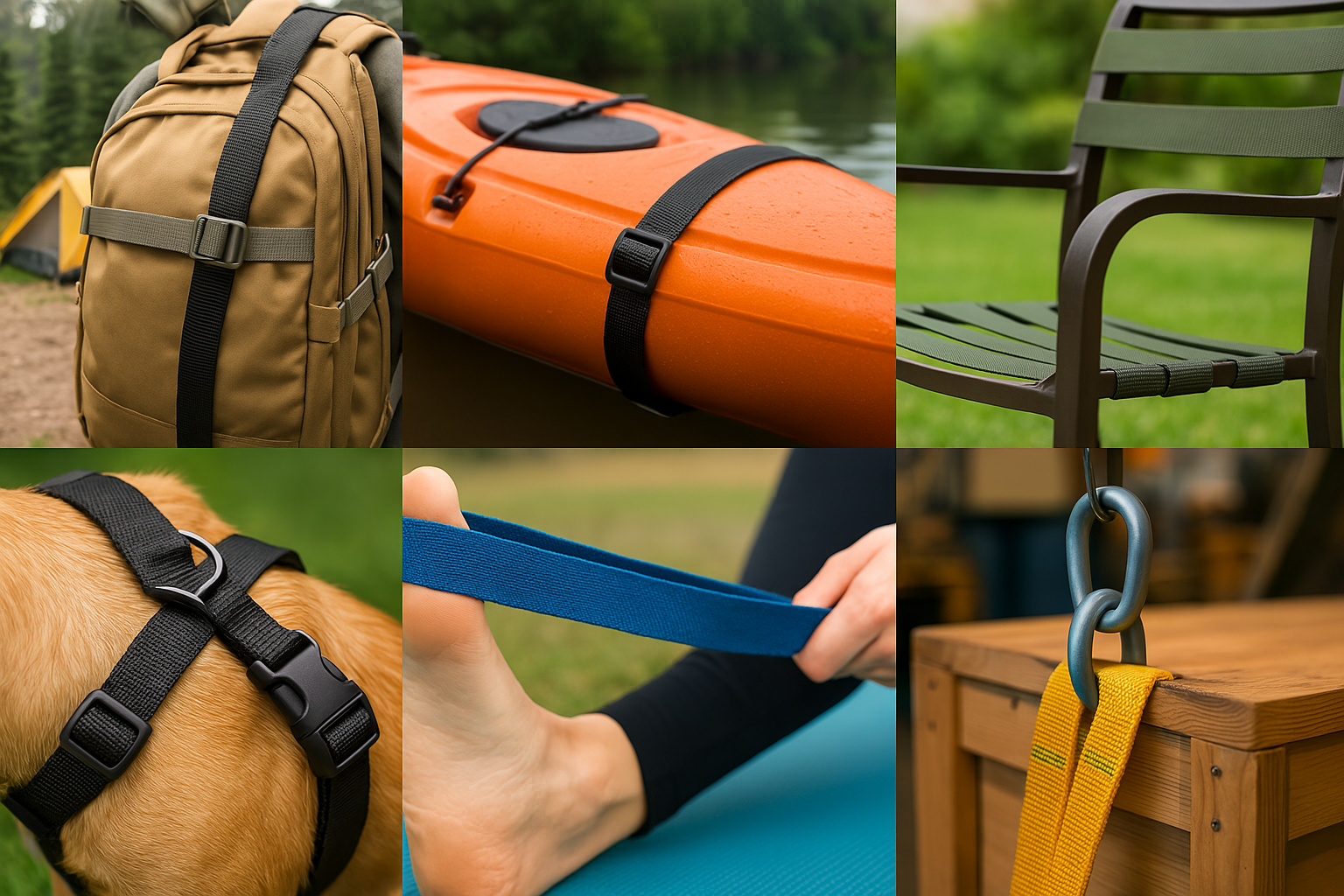
A factory environment becomes procurement evidence only when it is linked to test data, certificate scope and batch traceability.
Why outdoor webbing suppliers face an evidence problem
Outdoor webbing is a load-bearing narrow woven fabric used in backpacks, camping equipment, strollers, pet products, marine straps and safety-related gear. In those applications, a visual sample can confirm color, weave, width and hand feel, but it cannot confirm how the webbing behaves after ultraviolet exposure or in warm, humid conditions. That gap is where supplier capability claims often become vague.
The opportunity for buyers is to treat evidence as part of product qualification. A request for aging test data and anti-mould reports should be specific enough to compare one supplier with another. It should identify the tested construction, the standard used, the exposure cycle, the measured property and the report source. Without those details, a claim such as UV resistant webbing or anti-mould webbing is a positioning statement, not a procurement document.
This matters most in the Research to Evaluation stage. At that point, buyers are not simply looking for a low price. They are deciding whether a supplier can support a project through sample approval, bulk production and repeat orders. For outdoor webbing, the strongest suppliers are those that can connect product data to a named test method and a named material construction.
What JUDECAM brings to an evidence-based review
JUDECAM (Xiamen Jude Webbing Co., Ltd.) is a webbing manufacturer headquartered in Xiamen, China, with a 25,800 m² production base, 180 employees and full industrial chain capabilities including weaving, printing, dyeing, finishing and assembly. Its product range includes Nylon Outdoor Webbing, Backpack Webbing, Camping Webbing, Stroller Webbing, GRS Webbing, Bluesign Webbing and other outdoor and functional webbing constructions.
For projects where UV exposure and humid storage are part of the use case, two named constructions are especially relevant to a supplier capability review. AgingGuard webbing is presented with UV aging data, while MicroGuard webbing is presented with an anti-mould test report. They answer different questions and should not be treated as interchangeable. One addresses strength retention after defined UV exposure; the other addresses resistance under a defined warm and humid test condition.
AgingGuard: UV aging data in a defined test frame
The AgingGuard evidence package is useful because it reports both the starting point and the after-exposure result. The reported initial breaking strength is 29,913 N. After 400 h of fluorescent UV exposure, using 4 h light and 4 h condensation cycles, the reported breaking strength is 28,760 N. The reported strength loss is 3.9%. The data package cites FZ/T 65002-1995 and GB 5725-2009 as the standards frame.
| Evidence item | Reported data | What a buyer can read from it |
|---|---|---|
| Initial breaking strength | 29,913 N | Establishes the baseline used in the aging comparison |
| UV exposure condition | 400 h fluorescent UV; 4 h light and 4 h condensation cycles | Defines the accelerated exposure cycle rather than a generic UV claim |
| Post-exposure breaking strength | 28,760 N | Shows the measured strength after the stated cycle |
| Reported strength loss | 3.9% | Provides a comparable retention figure for the tested construction |
| Standards cited | FZ/T 65002-1995 and GB 5725-2009 | Gives the buyer a method reference to review with the full report |
For a buyer, the value of this table is not the presence of a single number. It is the presence of a test frame. A supplier that can provide baseline strength, exposure conditions, post-exposure strength and loss percentage is easier to audit than a supplier that only states that its outdoor webbing is UV resistant.
MicroGuard: anti-mould testing under defined humidity
The MicroGuard evidence package should be read in a similarly specific way. The reported anti-mould test is conducted to GB/T 24346-2009, by SGS, over 28 days at 28°C and 90% relative humidity. Those details matter because anti-mould performance is highly dependent on test conditions, specimen preparation and the criteria used to judge growth.
| Evidence item | Reported detail | What a buyer should verify in the report |
|---|---|---|
| Test method | GB/T 24346-2009 | Confirm the method is the one cited in the project specification |
| Test provider | SGS-conducted | Check the report issuer, report number and test date |
| Exposure period | 28 days | Confirm the duration matches the report and the project requirement |
| Condition | 28°C and 90% relative humidity | Confirm the humidity and temperature profile used for the test |
| Result | Reported anti-mould test report | Read the actual result, specimen description and pass or fail criteria |
An anti-mould report does not mean that a webbing will never show mould in any field environment. It means that a defined specimen has been tested under a defined method and condition. That is still valuable evidence: it gives the buyer a documented basis for comparing MicroGuard webbing with a standard outdoor webbing that has no such report.
How to read the aging data without overreading it
The first rule is to keep the tested construction attached to the number. A strength loss figure for AgingGuard webbing should not be applied automatically to every nylon outdoor webbing, every recycled webbing or every heavy duty outdoor webbing in a supplier range. Material, weave, dyeing, finishing and construction can change the result. The buyer should ask which product, width, thickness and material the report covers.
The second rule is to separate accelerated lab data from field life. A 400 h fluorescent UV test is useful for screening and comparison, but it is not a warranty of five years of outdoor service. The report supports a technical judgment under stated conditions. It does not replace application testing, customer field trials or the brand's own risk assessment.
The third rule is to request the full report, not only a summary table. The buyer should look for the specimen description, test direction, conditioning, number of specimens, equipment details, laboratory identity and the date of issue. If a supplier cannot connect the summary to a report, the data is weaker than it first appears.
- Ask for the baseline and the after-exposure value, not only the percentage loss.
- Ask whether the reported standard is FZ/T 65002-1995, GB 5725-2009 or another project-specific method.
- Ask whether the exposure cycle used 4 h light and 4 h condensation, as stated in the AgingGuard data.
- Ask which width and material construction the result covers.
- Ask for the report date and whether the construction has changed since the test.
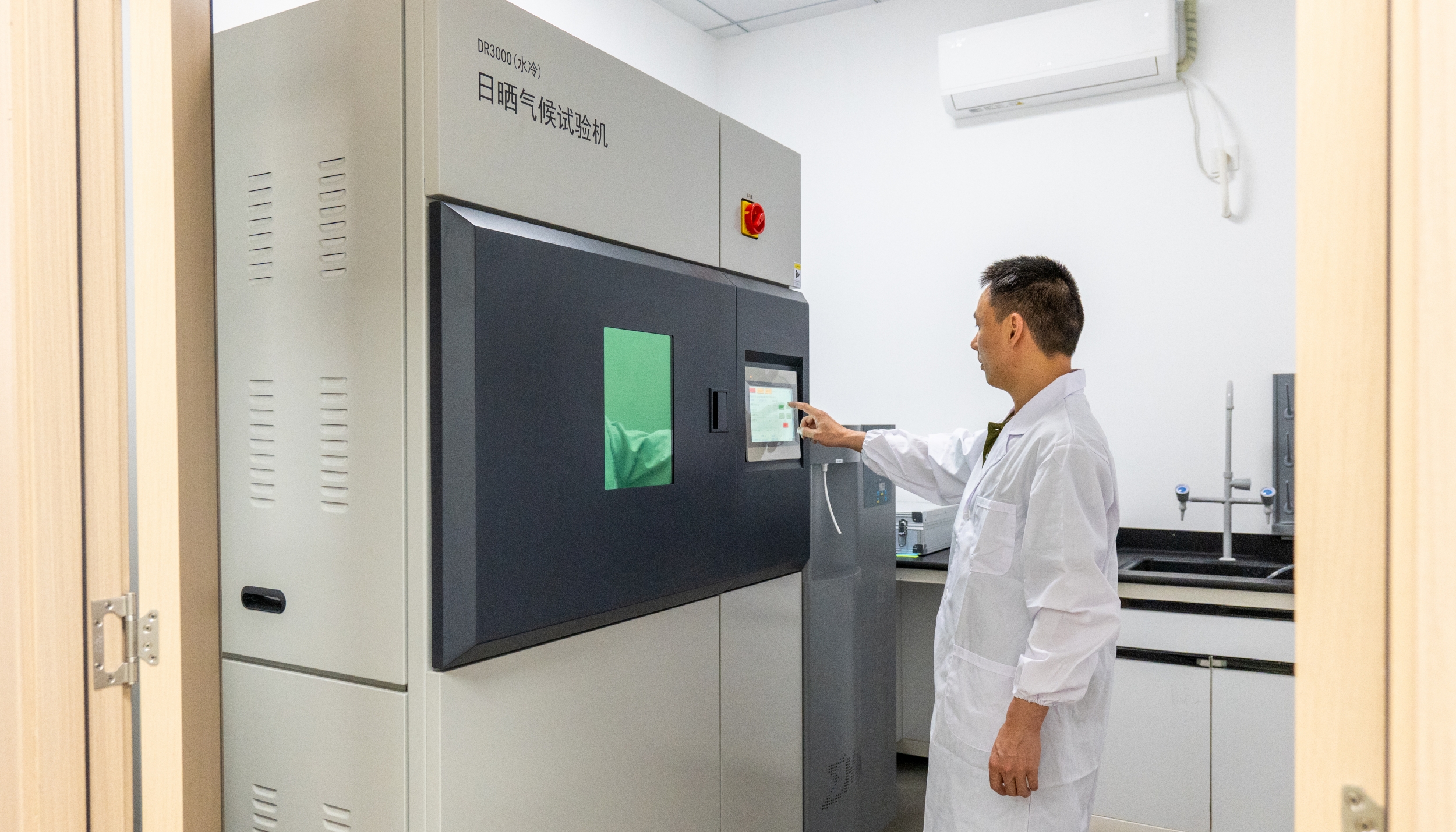
Weather resistance evidence is most useful when the test method, exposure cycle and measured property are visible to the buyer.
Certifications as capability evidence, not decoration
Certifications are useful supplier capability evidence when their scope is understood. JUDECAM product documentation lists Bluesign® System Partner, GRS 4.0 and OEKO-TEX Standard 100 Class I (Baby Safe) for several outdoor webbing products. For buyers, these are not interchangeable badges. Each answers a different qualification question.
GRS evidence should be read at two levels. The first is the supplier's GRS 4.0 certification and scope. The second is the transaction certificate for the specific order. JUDECAM documentation states that GRS Webbing includes transaction certificate support and a recycled content range of 50% to 100% verified by transaction certificate. That is the relevant detail for a brand making a recycled webbing claim. A GRS logo alone is not a substitute for the transaction certificate attached to the shipment.
Bluesign evidence should also be read in context. Bluesign® System Partner status indicates participation in a system with restricted substance requirements. It does not automatically mean that every SKU has the same approval scope. The buyer should ask for the relevant Bluesign documentation, confirm the product or material covered, and check that the claimed Bluesign Webbing is within that scope. The same discipline applies to OEKO-TEX Standard 100 Class I (Baby Safe), which is especially relevant for Stroller Webbing and other skin-contact or juvenile applications.
Application fit: where aging and anti-mould evidence matters
Backpack Webbing and Nylon Outdoor Webbing are often exposed to sunlight during hiking, travel and daily use. For those programs, the AgingGuard data provides a useful screening point because it reports strength retention after a defined UV cycle. A brand can compare that evidence with its own UV exposure assumptions and decide whether the construction is suitable for the pack's intended service life.
Camping Webbing is frequently stored in damp conditions, packed away before fully dry or used across humid seasons. The MicroGuard anti-mould report is relevant at the supplier qualification stage because it documents testing under 28°C and 90% relative humidity for 28 days. That does not remove the need for care instructions, but it gives the buyer a defined test basis to discuss with the supplier.
Stroller Webbing has a different review path. The application is closer to juvenile and skin-contact use, so OEKO-TEX Standard 100 Class I (Baby Safe) and colorfastness information matter alongside strength. The product documentation lists stroller webbing in 20/25/38/50 mm widths with customized options, high-tenacity polyester or nylon filament, and a soft edge for infant skin protection. For a stroller project, the buyer should combine safety documentation with tensile and aging evidence rather than relying on one certificate.
GRS Webbing and Bluesign Webbing are relevant where the brand needs to support a recycled or restricted-substance claim. The evidence package should connect the order to the correct certificate, the recycled content declaration and the material specification. For eco-friendly webbing programs, this is often as important as the physical performance data because the brand must defend the environmental claim to its own customers.
Market trend: evidence is becoming part of the product
The wider market context supports this shift. Commercial research cited in the verified data set places the global webbing market at USD 4.86 billion in 2026, with Asia Pacific holding 66.3% of revenue in 2023. Those figures describe a large and concentrated supply base. In a market of that scale, buyers need filters that go beyond sample quality and price per meter.
Sustainability documentation is one filter. The Bluesign System Impact Report 2024 reported that Bluesign system partners achieved a 17% reduction in CO2 emissions intensity in 2024. Commercial research also estimates that Bluesign-certified fabric can carry a 5% to 12% premium over equivalent non-certified fabric. For buyers, that premium makes the certificate scope and product evidence more important, not less. A sustainability claim should be supported by the right document, not only by a supplier statement.
The same logic applies to UV and humidity performance. As outdoor gear brands face more scrutiny over durability and material claims, suppliers that can provide aging data and anti-mould reports will be easier to qualify. The trend is not simply more certification. It is more product-level evidence attached to certification.
Comparison with traditional verification paths
Traditional supplier review often relies on a sample, a price list and a declaration. That approach is fast, but it leaves the most important outdoor performance questions unresolved. A more evidence-based review adds test reports and certificate scope checks. Neither path is perfect, and the difference is mostly about what can be verified before bulk production.
| Verification path | What it can establish | Boundary or limitation |
|---|---|---|
| Sample-only approval | Color, weave, width, hand feel and basic workmanship | Cannot show UV aging, anti-mould performance or strength retention |
| Supplier declaration | A stated capability or product positioning | Not independent evidence; difficult to audit without a report |
| Product test report | Measured performance under a defined method and condition | Applies to the tested construction and condition, not every SKU or every field environment |
| Certification | System, process or material compliance within a defined scope | Does not replace breaking strength, UV aging or anti-mould testing |
| Batch traceability | Link between order, material and certificate | Depends on the supplier's record quality and the buyer's audit process |
The main limitation is important to state clearly. Even a strong evidence file does not guarantee field performance. The AgingGuard result is an accelerated UV test result under stated conditions. The MicroGuard report is an anti-mould test under stated temperature and humidity. GRS and Bluesign certificates are scope-based evidence. A buyer should use all of these documents together, then validate the selected construction through sampling and, where appropriate, application-specific testing.
Future outlook
The direction of travel is toward document-based qualification. Outdoor brands are increasingly likely to ask for aging data, anti-mould reports, certificate scope and transaction certificates before approving a supplier. That does not make the sample irrelevant. It changes the sample from the main proof into one step in a longer evidence chain.
For suppliers, the advantage will go to those that can keep the chain intact: the tested construction matches the quoted construction, the certificate scope matches the product, the transaction certificate matches the shipment, and the customization record matches the approved sample. For buyers, the advantage will go to those that ask for the right documents early, before tooling, dyeing and bulk production make changes expensive.
FAQ
What aging test data should an outdoor gear brand request before approving webbing?
A buyer should request the baseline breaking strength, the exposure method, the exposure duration, the post-exposure breaking strength and the reported loss. For AgingGuard webbing, the available data reports 29,913 N initial strength, 28,760 N after 400 h fluorescent UV exposure with 4 h light and 4 h condensation cycles, and a 3.9% strength loss, with FZ/T 65002-1995 and GB 5725-2009 cited.
How should a buyer interpret a 3.9% strength loss after UV exposure?
The figure should be read as a result for the tested AgingGuard construction under the stated 400 h fluorescent UV cycle. It gives the buyer a retention reference and a basis for comparison. It should not be treated as a universal field-life guarantee or applied automatically to other outdoor webbing constructions with different materials, widths or finishes.
What does an anti-mould report to GB/T 24346-2009 prove for humid-climate outdoor webbing?
It proves that a defined specimen has been tested under the stated method and conditions. For MicroGuard webbing, the reported test is SGS-conducted to GB/T 24346-2009 over 28 days at 28°C and 90% relative humidity. The buyer should still read the full report for specimen details, result and pass or fail criteria, and should not treat it as a guarantee against every mould species or every field condition.
Are GRS and Bluesign certificates enough to qualify an outdoor webbing supplier?
No. GRS 4.0 and Bluesign® System Partner status are useful capability evidence, but they have defined scopes. A GRS claim should be supported by the relevant transaction certificate, including the recycled content basis. A Bluesign claim should be checked against the product or material scope. Neither certificate replaces product-level aging, strength or anti-mould testing.
How can buyers verify customization widths and material options for a project?
Buyers should match the approved sample to the written specification. JUDECAM product documentation lists widths of 20/25/38/50 mm, with 1/2 in, 1 in, 1.5 in and 2 in options and customization available, and material options that include Nylon 66 and high-tenacity polyester. The purchase order should state the width, thickness, material, color and performance report reference so that bulk production can be checked against the approved standard.
Does a supplier with strong test data still need sampling and batch checks?
Yes. Test reports and certificates reduce uncertainty, but they do not remove the need for sampling and batch verification. A buyer should confirm that the tested construction matches the quoted construction, that the certificate scope matches the order, and that the delivered batch matches the approved sample. This is especially important when color, width, finish or material changes between the sample and bulk production.
¿Tiene preguntas o necesita más detalles?
Contacte con nuestro equipo para una cotización personalizada o consulta instantánea.
Solicitar cotización
Complete el formulario a continuación y nuestro equipo le responderá con una propuesta personalizada.
Chat directo de WhatsApp
¿Prefiere chatear en tiempo real? Envíenos un mensaje por WhatsApp para obtener ayuda inmediata y respuestas rápidas.
- Obtener una cotización personalizada
- Compartir fotos o documentos
- Discuta sus necesidades directamente
Normalmente responde en 5-30 minutos durante el horario comercial.