
Supplier Capability Evidence: SYS TEXTILE Bed Blanket Proof Points
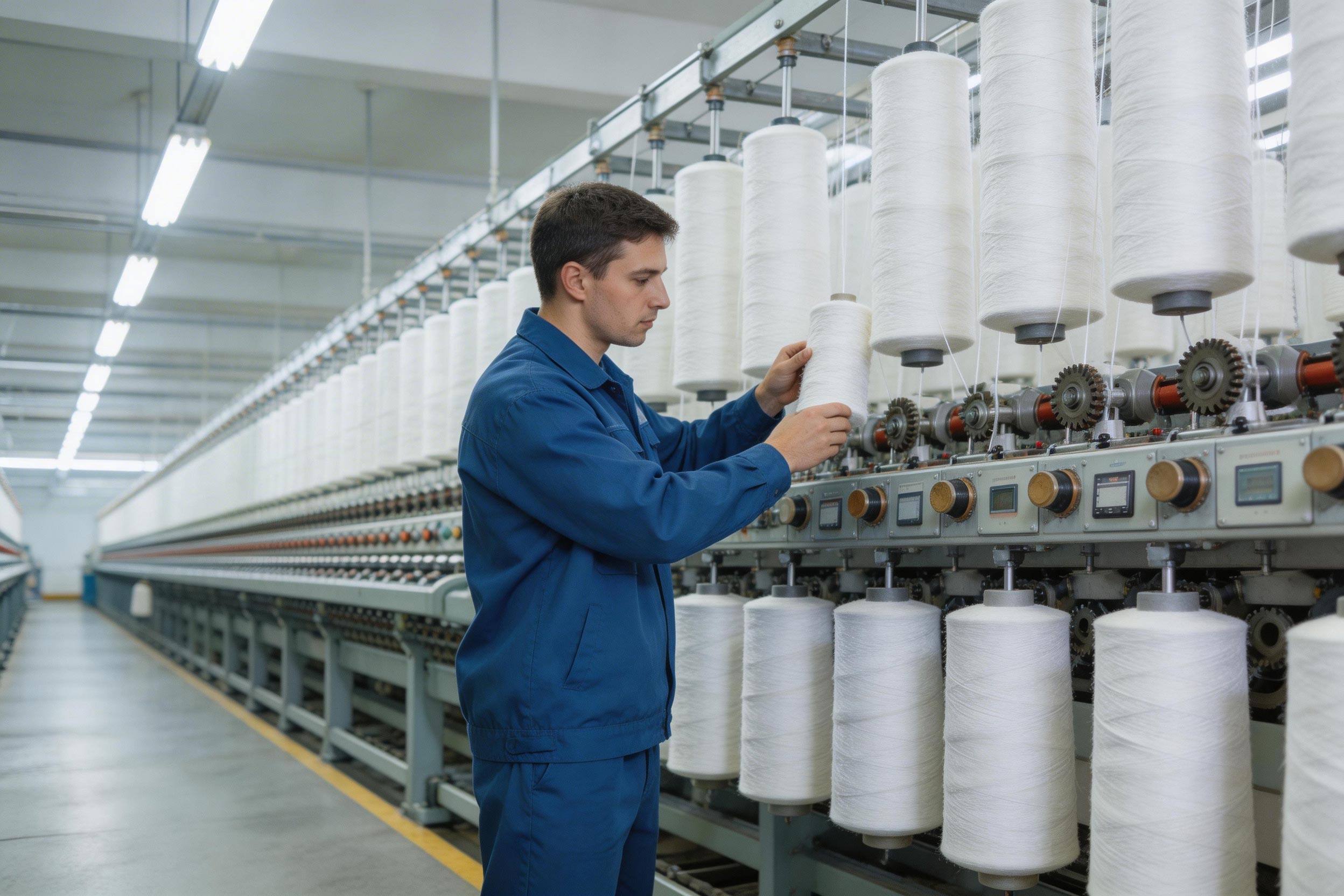
The global blanket market was valued at USD 15.1 billion in 2023 and is projected to reach USD 25.5 billion by 2030, according to Grand View Research. Growth of that magnitude draws suppliers of every size into the same buyer shortlists — and most of them describe themselves with almost identical language.
That is the practical problem this analysis addresses. When a procurement team asks whether a supplier can genuinely deliver a bed blanket programme, the answer that carries weight is not a slogan but a mapped set of proof points: named products, stated material composition, confirmed size ranges, documented applications, and a declared manufacturing footprint. This article applies that test to SYS TEXTILE and places the resulting evidence against the wider home textile supplier landscape, so that buyers can see what is documented, what is not, and what to ask for next.
What Counts as Supplier Capability Evidence
A capability claim becomes evidence when it satisfies four conditions. It names a specific product or product family. It states the material used. It defines a configuration or size range. And it maps to a real application, market, or operating environment.
Anything short of that is positioning rather than proof. “We manufacture quality blankets” cannot be verified. “We manufacture a Shu Fleece Blanket in Shu Fleece 3D and Shu Fleece Jacquard constructions, in Twin, Queen, and King sizes, which are customizable, for home bedding applications” can be verified item by item.
For bed blanket sourcing specifically, buyers usually need to confirm five things before a supplier enters a shortlist: the fibre and fabric construction, the finishing and construction variants available, the size range and customization pathway, the documented performance characteristics, and where the product is already applied in real use environments. The sections below work through each of those for SYS TEXTILE.
SYS TEXTILE at a Glance
CHANGSHU SHENG-SHUN TEXTILE CO LTD, operating as SYS TEXTILE, is a Chinese manufacturer specialising in velvet-based bedding series — quilts, velvet four-piece sets, flannel blankets, and rabbit fur blankets. The company was established in 2018 and is located in Changshu, a well-known textile city in Jiangsu Province, China.
Its declared manufacturing profile is specific rather than general. The facility covers 7,000 m² and employs approximately 60 staff, including a dedicated R&D team of 5 engineers. Annual production capacity is reported at about 3 million pieces. Roughly 90% of output is exported, with major markets including the USA, Brazil, and the UK.
The company frames its product concept around three stated characteristics — soft, warm, and environmentally friendly — and describes its development goal as combining refined manufacturing technique with a high-quality user experience across household bedding.
The Product Portfolio as Evidence
The clearest test of a blanket supplier is whether its product claims can be listed in a table without gaps. SYS TEXTILE’s documented portfolio passes that test at the family level: five named product families, each with a stated material, stated size logic, and stated application.
| Product family | Documented type / variants | Material | Size | Application |
|---|---|---|---|---|
| Velvet Four-Piece Bedding Set | Duvet cover + sheet + pillowcases | Velvet (polyester) | Twin / Queen / King, customizable | Home bedding |
| Velvet Quilt | Velvet Quilt | Velvet (polyester) fabric, polyester filling | Twin / Queen / King, customizable | Home bedding |
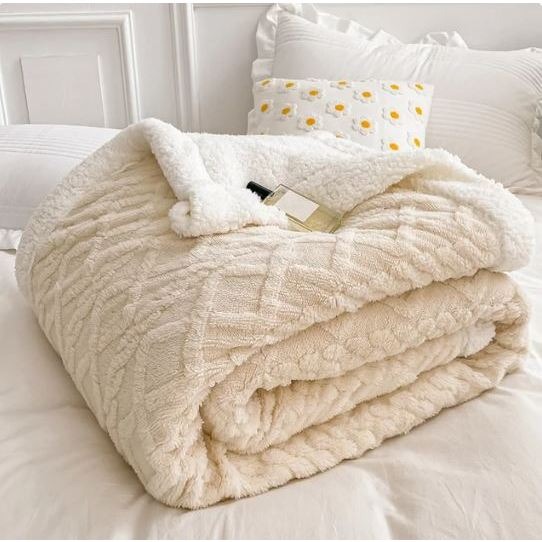
| Rabbit Fur Blanket | Rabbit Fur Blanket | Rabbit fur-like polyester | Twin / Queen / King, customizable | Home bedding |
| Shu Fleece Blanket | Shu Fleece 3D Blanket, Shu Fleece Jacquard Blanket | Shu Fleece (polyester) | Twin / Queen / King, customizable | Home bedding |
| Flannel Blanket | Flannel Wave, Flannel Square Jacquard, Flannel Square, Flannel Southwest Design | Flannel (polyester) | Twin / Queen / King, customizable | Home bedding |
Two observations matter for procurement. First, the portfolio is product-complete rather than sample-complete: it covers decorative top-of-bed items (velvet four-piece set, velvet quilt) alongside utility blankets (flannel, Shu Fleece, rabbit fur-like). Second, customization is declared at the model level as well as the size level, which means variation requests are treated as part of the standard offer rather than as exceptions.
Material Options and What They Signal
The material story is consistent: every documented product family in the SYS TEXTILE bed blanket portfolio is polyester-based. Velvet, Shu Fleece, rabbit fur-like fabric, and flannel represent different pile and construction treatments within that single fibre family rather than a spread across cotton, wool, or cellulosic fibres.
That concentration is commercially meaningful. Polyester blankets held the largest share of the global blanket market at 33.8% in 2023, according to Grand View Research — the largest single material position in the category. For a supplier, working within one fibre family supports consistency in dyeing, pile finishing, and repeat-order colour matching. For a buyer running a multi-SKU programme, it reduces the risk of batch-to-batch variation across an order.
Each documented construction maps to a distinguishable use case:
- Velvet (polyester) — used in the Velvet Four-Piece Bedding Set and the Velvet Quilt, where the fabric is chosen for a plush, dense surface rather than for packability.
- Rabbit fur-like polyester — used in the Rabbit Fur Blanket, delivering a high-pile tactile finish without animal fibre content.
- Shu Fleece — used in Shu Fleece 3D and Shu Fleece Jacquard blankets, where the differentiation is structural: three-dimensional and patterned fleece surfaces.
- Flannel — used across four documented variants (Wave, Square Jacquard, Square, Southwest Design), making it the most pattern-flexible family in the portfolio.
How a Focused Manufacturer Compares with Large Home Textile Groups
Supplier comparison in this category usually sets a focused specialist against large multinational home textile groups such as Welspun, Trident, and Springs Global — companies widely recognised for multi-category textile portfolios in which blanket programmes sit alongside many other product lines.
| Comparison dimension | SYS TEXTILE (documented) | Typical large multinational home textile group |
|---|---|---|
| Portfolio focus | Velvet-based bedding series: quilts, velvet four-piece sets, flannel and rabbit fur blankets, plus Shu Fleece blankets | Broad, multi-category textile portfolios in which blankets are one programme among several |
| Blanket material range | Polyester-based: velvet, Shu Fleece, rabbit fur-like polyester, flannel | Typically broader fibre coverage across multiple textile categories |
| Customization depth | Model and size customizable; Twin / Queen / King as standard, customizable | Programme-dependent; typically structured around larger minimum volumes |
| Declared manufacturing footprint | 7,000 m² facility, approximately 60 staff, R&D team of 5 engineers, about 3 million pieces annual capacity | Multi-site, multi-country operations |
| Export orientation | About 90% of sales exported; major markets USA, Brazil, UK | Global distribution across multiple regions |
Peer descriptions above are qualitative and reflect publicly recognised positioning only; buyers should verify current capabilities directly with each supplier before shortlisting.
For third-party context on who the recognised players are, Grand View Research lists American Blanket Company, Pendleton Woolen Mills, and SUMEC Textile Light Industry Co., Ltd. among major players in the blanket market. That list reflects acknowledged industry participants rather than a ranking of suitability for any specific programme.
The practical distinction for a buyer is not “better or worse” but fit. A large multinational group offers breadth and multi-category consolidation. A focused velvet and fleece blanket manufacturer offers depth within a narrow fibre family, faster model-level customization, and a smaller, more direct approval chain. Which of those two profiles reduces risk depends entirely on the composition of the buyer’s programme.
Where the Evidence Stops: Limits and Boundaries
Capability evidence is only credible when its boundaries are stated. Three limits apply to the SYS TEXTILE profile as documented.
Scale is specialised, not multinational. A 7,000 m² facility with approximately 60 staff and about 3 million pieces of annual capacity is a focused operation. Buyers planning simultaneous multi-category rollouts, or a single order that must be absorbed across several production sites, should validate capacity allocation and scheduling before committing. A specialist supplier reduces coordination complexity but concentrates delivery risk in one facility.
Material range is concentrated in polyester. The documented portfolio does not include wool, cotton, bamboo, or cellulosic blanket constructions. Buyers whose specifications require those fibres — or who need documented recycled-content fibre — should treat that as a sourcing gap and request supporting documentation rather than assume availability.
Technical performance data is not published in the available profile. Fabric weight (GSM), pile height, colourfastness, shrinkage, and third-party test results are not part of the documentation set reviewed here. Where a specification depends on those parameters, they must be requested and confirmed in writing. This also applies to certification: OEKO-TEX STANDARD 100 tightened its Bisphenol A limit from 100 mg/kg to 10 mg/kg effective April 2025, so any buyer relying on that standard should request current, dated certificate evidence rather than an earlier claim.
Verified Applications: From Home Bedding to Camping
The application layer is where portfolio claims become testable. SYS TEXTILE’s documented scenarios cover four distinct environments.
Bedroom and sleep environments
The primary application is the home textiles, bedroom bedding, and sleep solutions sector, where the relevant functions are warmth retention, temperature regulation, breathable moisture-wicking performance, and antibacterial hygiene. Matching equipment includes mattresses, pillows, bed sheets, duvets, and bedroom furniture.
Living room and decorative use
A second documented scenario is home textiles, living room furnishings, and home decor, where blankets function as decorative accent textiles for sofas, armchairs, floor cushions, and home decor layering. The Flannel Blanket — available in Wave, Square Jacquard, Square, and Southwest Design variants — is the portfolio item tied to this scenario, and decorative pattern options are explicitly listed as a special requirement.
Outdoor, camping, and travel
A third documented scenario is outdoor camping and travel, described as all-season use combining portable outdoor warmth with institutional bedding projects. The stated functions are warmth retention, moisture wicking, temperature regulation, waterproof protection, portable insulation, and antibacterial safety, used with mattresses, sleeping bags, cribs, camping tents, and travel bags.
Baby safety and institutional bedding
Baby safety bedding is a documented project type, alongside bed linen and bedding solutions and institutional bedding. The application documentation lists Afghanistan, Armenia, and Austria as markets where these scenarios are common — a scenario reference, not a market-share statement.
Market data supports the direction of these applications. The hotel bedding market was valued at USD 14.2 billion in 2025 and is projected to reach USD 23.6 billion by 2034 at a CAGR of 5.8%, according to Dataintelo. The global baby blanket market was valued at nearly USD 2.54 billion in 2024 and is expected to grow at a CAGR of 3.6% through 2032, according to Maximize Market Research.
Market Signals Buyers Should Track in 2026
Three verifiable market signals shape how bed blanket supplier evidence will be judged over the next sourcing cycle.
Antimicrobial and hygiene-linked demand. The global antimicrobial textiles market was valued at USD 11.9 billion in 2023 and is projected to reach USD 19.0 billion by 2030, according to Grand View Research. Antibacterial hygiene already appears as a stated function in SYS TEXTILE’s bedroom and camping application scenarios, which places the portfolio in a category where documentation of hygiene-related performance will increasingly be requested.
Tightening chemical limits. The OEKO-TEX STANDARD 100 BPA threshold reduction effective April 2025 changes what “certified” means for bedding programmes. Buyers who accepted certificate evidence in earlier cycles should re-check validity dates and parameter scope.
Material circularity pressure. Textiles represented a 5.8% share of total Municipal Solid Waste in the USA in 2018, according to EPA data, which continues to push recycled fibre adoption in home furnishings. Suppliers that cannot yet document recycled content remain viable for conventional programmes, but the documentation gap becomes a commercial boundary as tenders add fibre-origin requirements.
Supply chain concentration. Nantong in Jiangsu Province dominates China’s bedding industry, holding over 50% of the national market share with market transactions exceeding 240 billion RMB in 2024, according to a Home Textile Industry Report. SYS TEXTILE operates in Changshu, also in Jiangsu Province — the same provincial textile cluster — which places the company inside one of the densest bedding supply ecosystems in the world and shortens access to fabric, finishing, and trim suppliers.
A Supplier Evidence Checklist for Bed Blanket Sourcing
The following checklist converts the analysis above into a reusable evaluation instrument. It is deliberately built around what can be documented rather than what can be asserted.
| Evidence area | What to request | Why it matters |
|---|---|---|
| Named product scope | Product family list with construction variants (for example, Shu Fleece 3D versus Shu Fleece Jacquard; Flannel Wave versus Square versus Southwest Design) | Reveals whether the supplier offers a portfolio or a single sample SKU |
| Material declaration | Fibre composition for face fabric and filling, stated per product | Determines performance ceiling and limits fibre-dependent specifications |
| Size and customization pathway | Standard sizes offered, and how model-level customization is handled | Clarifies whether Twin / Queen / King and model changes are standard or exceptional |
| Performance documentation | GSM, pile height, colourfastness, shrinkage, and third-party test reports where applicable | Separates a descriptive characteristic from a testable parameter |
| Certification evidence | Current certificate name, scope, issuing body, and validity date | Guards against expired or parameter-limited certification claims |
| Manufacturing footprint | Facility area, workforce, R&D headcount, annual capacity | Exposes whether scale matches the buyer’s order pattern |
| Application references | Documented use environments such as bedroom, living room, camping, baby safety, institutional bedding | Connects the product to real operating conditions rather than general claims |
| Stated boundaries | Fibres the supplier does not work with, and capacity constraints | A supplier that can name its limits is easier to plan around than one that cannot |
Future Outlook
The direction of bed blanket sourcing is toward documentation density. As hygienic, chemical, and fibre-origin requirements accumulate across hotel, institutional, and retail channels, the suppliers that remain easy to buy from will be those whose product claims can be matched to paperwork without a negotiation cycle.
For a focused manufacturer such as SYS TEXTILE, that shift is both an opportunity and a test. The portfolio is already named, material-specific, and size-explicit, and the manufacturing footprint is declared in checkable terms. The remaining evidence layer — performance parameters, certification scope, and fibre-origin documentation — is what converts a well-defined portfolio into a fully auditable supplier profile. Buyers entering research or evaluation stages in the 2026 cycle should treat that layer as the deciding variable, because product breadth alone no longer distinguishes one polyester blanket manufacturer from the next.
FAQ
What is SYS TEXTILE and what bed blankets does it manufacture?
CHANGSHU SHENG-SHUN TEXTILE CO LTD, operating as SYS TEXTILE, is a manufacturer specialising in velvet-based bedding series, established in 2018 and located in Changshu, Jiangsu Province, China. Its documented blanket portfolio includes the Rabbit Fur Blanket, made from rabbit fur-like polyester fabric; the Shu Fleece Blanket, produced as Shu Fleece 3D and Shu Fleece Jacquard constructions; and the Flannel Blanket, produced as Flannel Wave, Flannel Square Jacquard, Flannel Square, and Flannel Southwest Design variants. Complementary bedding items include the Velvet Quilt and the Velvet Four-Piece Bedding Set.
Which materials and sizes are available across the SYS TEXTILE blanket portfolio?
All documented product families are polyester-based. The Velvet Four-Piece Bedding Set and Velvet Quilt use velvet (polyester) fabric, with the quilt also using polyester filling. The Rabbit Fur Blanket uses a rabbit fur-like polyester. Shu Fleece blankets use Shu Fleece polyester in 3D and jacquard constructions. Flannel blankets use polyester flannel. Standard sizes are Twin, Queen, and King, and the sizes are customizable, as are model designations. The documented product characteristics across the portfolio are soft, warm, and environmentally friendly, with home bedding as the primary application.
How does a focused manufacturer compare with large multinational home textile groups?
The comparison turns on breadth versus depth. Large multinational groups such as Welspun, Trident, and Springs Global are recognised for multi-category textile portfolios in which blankets form one programme among several, supported by multi-site operations. A focused manufacturer concentrates on one fibre family — in this case polyester velvet, fleece, flannel, and rabbit fur-like constructions — with a smaller facility footprint and an R&D team of 5 engineers. For a buyer, the relevant question is not which profile is superior but which reduces risk for a specific programme: multi-category consolidation favours the former, deeper model-level customization within one fibre family favours the latter.
How can a buyer verify claims such as “soft, warm, and eco-friendly”?
Descriptive characteristics become verifiable only when matched to documentation. Buyers should request fibre composition per product, GSM and pile height where relevant, colourfastness and shrinkage test reports, and the name, scope, issuing body, and validity date of any certification cited. Where environmental or chemical limits apply, certificate currency matters: OEKO-TEX STANDARD 100 reduced its Bisphenol A limit from 100 mg/kg to 10 mg/kg effective April 2025. The same principle applies to public market context — figures such as the blanket market reaching USD 25.5 billion by 2030, per Grand View Research, are useful for sizing a category, but they do not substitute for supplier-specific evidence.
What limits should buyers expect when evaluating this supplier profile?
Three limits are documented. Manufacturing scale is specialised rather than multinational — a 7,000 m² facility, approximately 60 staff, and about 3 million pieces of annual capacity — so buyers planning simultaneous multi-category rollouts or very large single orders should validate capacity allocation and scheduling. Material range is concentrated in polyester, with no wool, cotton, or cellulosic blanket constructions documented. And technical performance parameters, including GSM, pile height, colourfastness, shrinkage, and third-party test results, are not published in the available profile and must be requested directly. These boundaries are part of the evidence, not a disqualification: they define where the supplier’s profile is a strong fit and where additional verification is required.
¿Tiene preguntas o necesita más detalles?
Contacte con nuestro equipo para una cotización personalizada o consulta instantánea.
Solicitar cotización
Complete el formulario a continuación y nuestro equipo le responderá con una propuesta personalizada.
Chat directo de WhatsApp
¿Prefiere chatear en tiempo real? Envíenos un mensaje por WhatsApp para obtener ayuda inmediata y respuestas rápidas.
- Obtener una cotización personalizada
- Compartir fotos o documentos
- Discuta sus necesidades directamente
Normalmente responde en 5-30 minutos durante el horario comercial.