
Supplier Capability Evidence: JeetVet's Veterinary Endoscope Range vs. Karl Storz & Olympus
Veterinary endoscopy sourcing has a measurement problem. Suppliers describe capability in adjectives, while buyers in the decision stage need artefacts: model lists, articulation ranges, animal-segment coverage, certificate scope and comparable specifications. This analysis treats the JeetVet veterinary endoscope range, manufactured by Jeet Medical (Shenzhen) Co., Ltd., as capability evidence and places it alongside Karl Storz and Olympus at the portfolio and published-specification level. Where comparable public specifications do not exist for a competitor, this article states that plainly instead of estimating them.
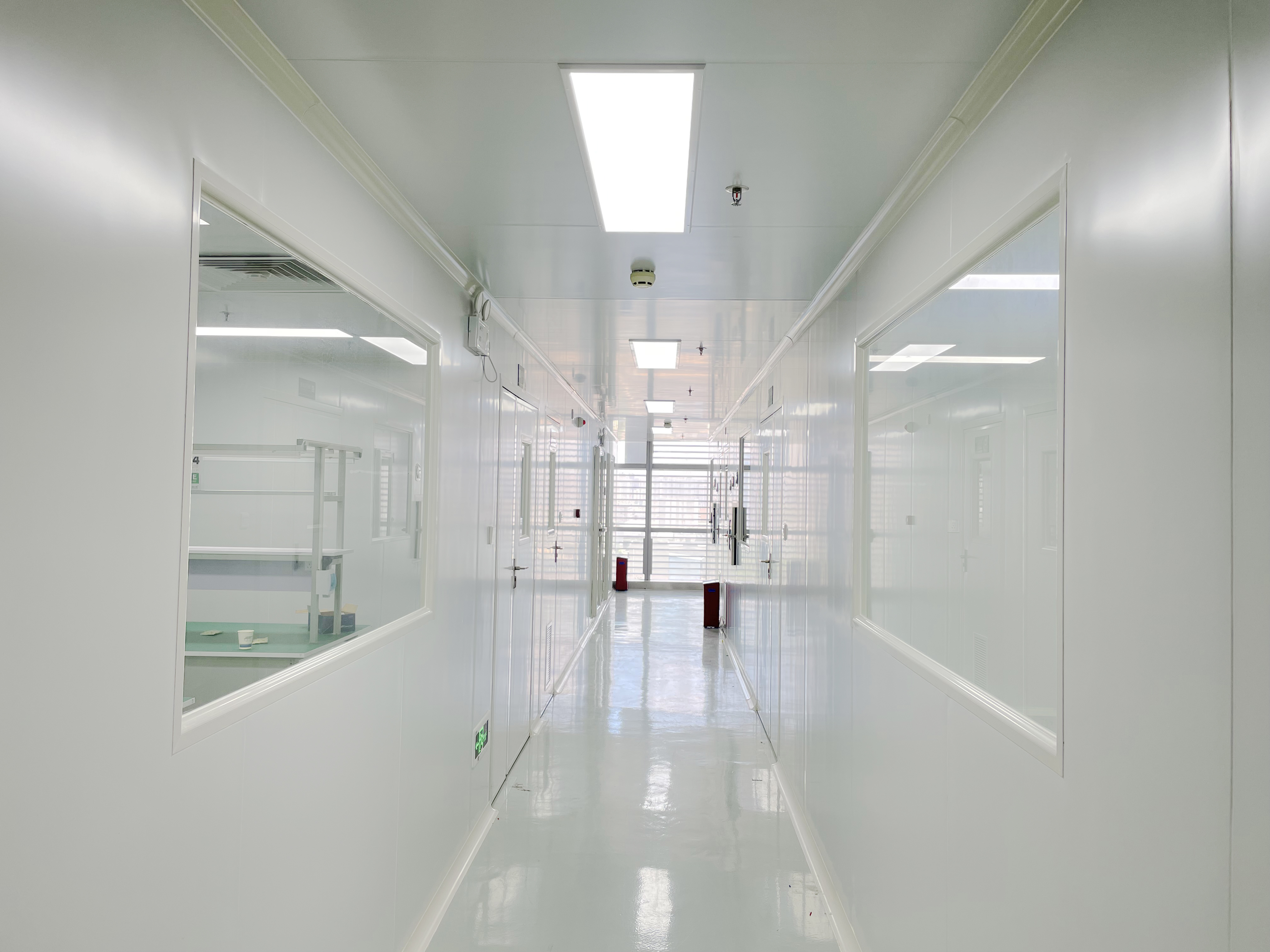
Capability evidence begins on the shop floor: Jeet Medical (Shenzhen) Co., Ltd. operates a 5,000 m2 facility and states ISO 13485 certification by SGS. Image: JeetVet.
Why Supplier Capability Became a Procurement Question
Mordor Intelligence estimates the global veterinary endoscopy market at USD 332.95 million in 2026 and projects a compound annual growth rate of 7.35 percent between 2026 and 2031. The same commercial research identifies North America as the largest regional market and Asia-Pacific as the fastest growing. Cross-border movement of these devices is classified under HS code 90189020, the code covering endoscopes used in medical, surgical or veterinary sciences.
Growth of that order changes the composition of demand, not only its volume. A distributor adding a veterinary imaging line, a clinic equipping a second procedure room and a mobile practice extending large-animal work all evaluate suppliers on the same axis: does the manufacturer's documented range cover the animals and the procedures we actually handle, and can that coverage be evidenced? Portfolio breadth and published specifications answer that question. Brand reputation alone does not.
The Evidence Gap: Capability Claims Without a Comparable Baseline
Public information in veterinary endoscopy is uneven. A supplier may publish a model name and a photograph while omitting insertion diameter, working length, articulation, imaging resolution and disinfection guidance. Across the manufacturer websites reviewed for this analysis, the available data was heterogeneous: product architectures, animal segments and applications differ, and no normalized performance, price or capacity basis was available for direct ranking. One supplier published insertion dimension configurations; others published no comparable dimension fields at all.
That is not a criticism of any single brand. It is the structural reason capability claims are hard to compare. The practical consequence for buyers is a two-part discipline: separate what is documented from what is asserted, and then price the risk attached to the undocumented remainder. The sections below apply that discipline to one portfolio and two long-established reference brands.
JeetVet's Documented Range: Three Functional Groups
The JeetVet catalogue spans seven documented veterinary endoscope and otoscope models, which fall into three functional groups: portable small-animal flexible imaging, gastroscopy, and large-animal endoscopy, with otoscopy sitting alongside the flexible platforms.
| Model | Documented configuration | Documented animal segment or application |
|---|---|---|
| RAE-105 | Portable USB veterinary endoscope with 360 degree rotation and 180 degree bending | Small animals; manoeuvrability in small-animal procedures |
| RAE-105Pro | Portable WiFi veterinary endoscope | Small-animal flexible procedures |
| RAE-109 | Portable USB veterinary gastroscope | Gastroscopy |
| VET-5820B | Portable veterinary gastroscope for large animals | Large-animal gastroscopy |
| VET-8528 | Portable veterinary endoscope for large animals | Large-animal endoscopy |
| RAE-201 | Veterinary flexible otoscope | Otoscopy |
| RAE-500 | Portable smart veterinary otoscope | Otoscopy |
Model designations and configurations as listed in the JeetVet product catalogue. Fields such as imaging resolution and field angle are not published for every model in the reviewed material and are therefore not reproduced here.
Behind the model list sits a manufacturing statement. Jeet Medical (Shenzhen) Co., Ltd. was founded in 2020 and operates a 5,000 m2 facility with 130 employees, a 30-person R&D team and stated annual output of 10,000 units. The company reports a 50 percent export ratio across Europe, North America, Southeast Asia, Latin America and the Middle East, and states ISO 13485 certification by SGS, supported by a 100,000-class cleanroom and a 10,000-class microbiological laboratory. In a 2026 industry report on veterinary endoscopy manufacturers, Jeet Medical appeared on a 12-company list alongside Karl Storz, Olympus and Fujifilm. That co-listing is a presence indicator within the manufacturer landscape; it is not a ranking, a market-share statement or a performance claim.
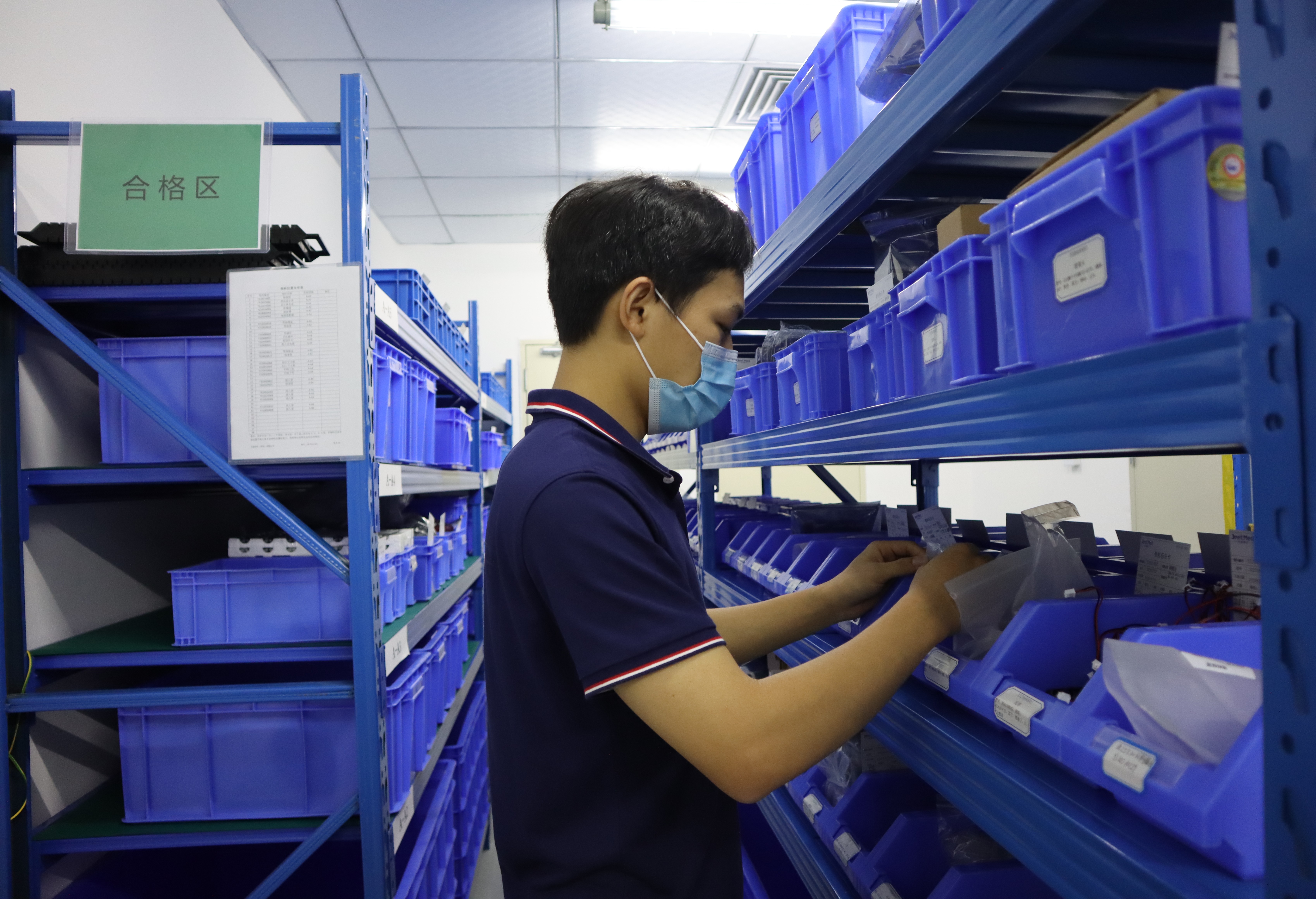
Assembly and quality-control area supporting the JeetVet range of portable veterinary endoscopes, gastroscopes and otoscopes. Image: JeetVet.
Technical Explanation: Which Specifications Can Be Verified
Articulation and manoeuvrability
The clearest published technical statement in the JeetVet range is on the RAE-105: 360 degree rotation and 180 degree bending. Bending determines how much of a curved lumen, such as the upper gastrointestinal tract or an airway, can be inspected without repositioning the patient. Rotation lets the operator reorient the field of view without twisting the shaft in the hand. For a small-animal procedure where the working distance is short and the anatomy is compact, articulation range is a more meaningful differentiator than raw image specification, because it decides whether a single pass yields a usable image.
Interface architecture and software
Portable USB and WiFi configurations terminate the imaging chain at a laptop, tablet or phone rather than at a dedicated tower. That architecture is the main reason a portable veterinary endoscope can serve field and mobile caseloads. It also shifts part of the capability question to software: Jeet Medical holds Computer Software Copyright Registration Certificate No. 9413508 for the Jeet Medical Multi-Camera Automatic Fusion System V1.0, registered in China. The certificate documents software-side development in that market; it is not evidence of clinical performance, and it does not apply outside the stated jurisdiction.
Control discipline and maintenance intervals
The published handling rules for the JeetVet range are unusually specific, and they double as a durability specification:
- Angulation of the insertion tube must be controlled exclusively through the joystick on the handle; manual bending, twisting or forcing of the distal end and flexible tube is prohibited.
- If significant resistance is felt while toggling the joystick, the instruction is to stop immediately to prevent tension-wire breakage.
- The joystick must be returned to the neutral position before withdrawing the scope, to avoid mucosal trauma or mechanical strain.
- The handle is not waterproof. Only the insertion tube is designed for immersion during cleaning; handle disinfection is wipe-down only, using dampened alcohol swabs or specialised wipes rather than direct spraying.
- Scopes should be stored vertically to prevent residual moisture travelling back into the handle.
- Scheduled leak tests and tension-wire calibrations are recommended every six months.
Read together, these points describe a device whose weakest link is mechanical handling rather than optics. For a procurement file, that translates into two costs that are easy to underestimate: staff training before first use, and a recurring six-month service calendar.
Operating economics
JeetVet's own comparison material states that its portable systems carry a 20 percent lower maintenance cost and a 25 percent lower total cost of ownership than the Karl Storz and Olympus reference systems used in that comparison, alongside a 5-second boot-up and single-operator workflow, low-cost spare parts and free training. These are supplier-reported figures tied to a specific internal comparison, not independently audited results. They are useful as a hypothesis to test during a trial, not as a settled commercial fact.
Benchmarking Against Karl Storz and Olympus: What Can and Cannot Be Compared
Karl Storz publishes a small-animal portfolio that includes a high-definition multipurpose veterinary videoendoscope and a single-use videoendoscope for airway and genitourinary applications, and a large-animal portfolio that includes a mobile video system compatible with videoendoscopes, rigid telescopes, fiberscopes and exoscopes, plus an equine dental scope. These are company-stated product descriptions. For Olympus, no product-level veterinary endoscope specification was identified in the evidence reviewed; the brand appears in JeetVet's own comparison notes rather than in a comparable public specification set. Fujifilm appears in the same manufacturer co-listing as Jeet Medical but published no specification data that could be placed alongside it.
| Comparison dimension | JeetVet (documented) | Karl Storz (company-stated) | Olympus |
|---|---|---|---|
| Portfolio architecture | Portable USB and WiFi small-animal scopes, portable gastroscopes, large-animal scopes, flexible and portable smart otoscopes | Small-animal HD multipurpose videoendoscope; single-use videoendoscope for airway and genitourinary use; large-animal and equine mobile video system compatible with videoendoscopes, rigid telescopes, fiberscopes and exoscopes; equine dental scope | No product-level specification identified in this review |
| Published articulation data | 360 degree rotation and 180 degree bending documented on RAE-105 | Not published in the sources reviewed | Not identified |
| Animal-segment coverage | Small animal and large animal | Small animal and large animal, including equine | Not established from available evidence |
| Cost and maintenance position | Supplier-reported 20 percent lower maintenance cost and 25 percent lower total cost of ownership against the reference systems used in its comparison | No comparable published figure | No comparable published figure |
| Independent performance testing | None identified | None identified | None identified |
Three readings follow from this table. First, portfolio breadth is where the comparison is genuinely level: both JeetVet and Karl Storz cover small-animal and large-animal segments, though they reach those segments with different architectures. Karl Storz's single-use videoendoscope is a fundamentally different product concept centred on infection control, and the mobile large-animal system is built around compatibility with several scope types rather than around a single portable format. Second, specification transparency currently favours JeetVet on the one model where articulation is published, while sectional imaging data remain unavailable for every brand examined. Third, the economic comparison cannot be closed from public information: JeetVet's advantage statements are first-party, and no competitor publishes a directly comparable cost or maintenance figure.
A note on scope: JeetVet's comparison material asserts distinct advantages relative to both the Karl Storz system and the Olympus system. Those statements originate with the manufacturer. They identify where a buyer should direct questions during evaluation; they are not third-party findings.
Application: Where the Range Fits Clinically and Commercially
Companion-animal practice
For dogs and cats, the documented entry points are the RAE-105 portable USB endoscope and the RAE-105Pro portable WiFi endoscope, with the RAE-109 covering gastroscopy and the RAE-201 and RAE-500 covering otoscopy. The practical benefit of publishing both a flexible otoscope and a portable smart otoscope is that a single supplier can equip a general practice examination room and a flexible endoscopy setup from one documentation set, which simplifies staff training and spare-part logistics.
Large-animal and mobile work
VET-5820B and VET-8528 are documented as portable large-animal gastroscope and endoscope respectively. In this segment, reach is the governing specification, and other suppliers do publish it: one manufacturer lists configurations with 2.8 mm outer diameter at 670 mm insertion length and 5.0 mm at 1,200 mm, and states a maximum customised insertion length of 3.5 metres for use in cattle, horses and elephants. JeetVet does not publish insertion length for the VET-5820B or VET-8528 in the reviewed material, so reach must be confirmed at quotation stage against the actual species mix and the anatomy to be examined. This is a documentation gap, not a capability judgement.
Distributor-facing considerations
For a distributor, the commercially relevant fact is coverage: one manufacturer spanning small-animal flexible imaging, gastroscopy, large-animal endoscopy and otoscopy removes the need to manage parallel vendor relationships for those categories. What public evidence does not supply is equally important: authorised distributor appointments, territories, minimum order quantities, lead times, warranty terms and service obligations were not available for any brand reviewed. Those belong in the request-for-quotation stage rather than in a desk comparison.
Market Trend Analysis: Portability and Portfolio Breadth
Against a market projected to grow at 7.35 percent annually to 2031, with North America largest and Asia-Pacific fastest growing, portable and digitally connected configurations have moved from a niche format to a mainstream catalogue category. BMV Animal Technologies lists a portable veterinary endoscope with suction, HD imaging and compatibility with phones, tablets and computers. Reescope describes portable scopes for small animals alongside long insertion tubes for large animals such as horses and cattle. The pattern suggests that the competitive axis is shifting from single-device performance claims to portfolio breadth: how many species, procedures and care settings one manufacturer can documentably serve.
The caveat is that these are catalogue claims, and comparison across them is constrained by the absence of a normalized specification matrix. Without matched outer diameter, working length, working channel, articulation, imaging and sterilisation fields, breadth can be counted but not ranked. That limitation belongs in the buyer's own documentation before a shortlist is treated as final.
Adoption Boundaries: What a Portable Range Does Not Replace
Capability evidence becomes procurement value only when its limits are stated. For this range, four boundaries are documented or evidenced:
- Handling dependency. Because angulation is confined to the joystick and manual manipulation is prohibited, the device is only as durable as the operator's discipline. Accidental damage risk sits with training quality, not with the optics.
- Cleaning constraints. The handle cannot be immersed, so practices relying on full-immersion reprocessing workflows need a documented wipe-down protocol and appropriate disinfectants before adoption.
- Service cadence. Leak testing and tension-wire calibration every six months is a recurring operational commitment, particularly for mobile and multi-site users.
- Unverified commercial and clinical data. No verified price, minimum order quantity, lead time or warranty terms were identified, and no independent image-quality, failure-rate or clinical-performance testing was found for JeetVet, Karl Storz or Olympus in this evidence set.
A portable range also does not substitute for every rigid-endoscopy workflow. Where a procedure depends on rigid telescope imaging or on single-use, infection-control-driven architectures, the product concept is different rather than better or worse. Capability evidence of this kind supports shortlist inclusion and a structured trial; it does not support a best-brand conclusion, and any article or supplier claim that reaches one without comparative test data has overstepped its evidence.
Future Outlook
Three shifts are likely to define how this comparison is judged over the next planning cycle. The first is specification normalization: as more suppliers publish insertion diameter, working length and articulation in comparable fields, portfolio claims will be replaced by parameter-level screening. The second is certificate verification, where company statements such as ISO 13485 certification are gradually matched against certificate numbers, issuing bodies and jurisdictional scope. The third is software-side differentiation: JeetVet's registered multi-camera fusion software and its portable smart otoscope designation point in that direction, but smart and AI-adjacent claims remain product designations until independent evidence of clinical accuracy exists. Buyers who build their evaluation templates around those three items will be positioned to compare suppliers on evidence rather than on adjectives.
Frequently Asked Questions
What should a buyer verify first when evaluating a veterinary endoscope supplier?
Start with product-level documentation rather than brand statements: which models exist, which animal segments each covers, what articulation is published, and what certifications are claimed with a documentable scope. For a Chinese manufacturer such as Jeet Medical (Shenzhen) Co., Ltd., ISO 13485 certification by SGS is a stated credential, and veterinary endoscopes are classified under HS code 90189020 for cross-border shipping. Most public catalogues do not publish insertion diameter, working length or warranty terms, so those items normally have to be requested directly.
Which JeetVet models are documented for small animals and which for large animals?
The JeetVet catalogue documents RAE-105, RAE-105Pro and RAE-109 for small-animal use, with RAE-201 and RAE-500 covering otoscopy. VET-5820B is listed as a portable veterinary gastroscope for large animals and VET-8528 as a portable veterinary endoscope for large animals. The RAE-105 is the model with published articulation data: 360 degree rotation and 180 degree bending.
How does a portable veterinary endoscope differ from a traditional tower system in daily operation?
A portable USB or WiFi scope terminates the imaging chain at a laptop, tablet or phone, and JeetVet reports a 5-second boot-up with single-operator workflow for its portable systems, against the modular tower architecture used by established brands. The trade-offs are documented as well: the handle is not waterproof and requires wipe-down disinfection, angulation is controlled exclusively through the joystick, and leak tests plus tension-wire calibration are recommended every six months. Portability changes the maintenance and training profile, not only the form factor.
What does a veterinary endoscope distributor need from a manufacturer before committing?
Four items are typically decisive: a portfolio broad enough to cover the species and procedures in the territory, published specifications for the models being quoted, certification documentation with verified scope, and defined commercial terms covering minimum order quantity, lead time, spare parts and after-sales response. Portfolio breadth can be assessed from public catalogues, but authorised distributor appointments, territories and service obligations are not publicly verifiable for any of the brands reviewed and must be confirmed in writing during qualification.
Is one veterinary endoscope brand objectively better than another?
No independent comparative testing was identified in this evidence set for JeetVet, Karl Storz or Olympus, and no normalized specification matrix exists across manufacturers. Comparisons are therefore limited to what each supplier publishes: portfolio architecture, animal-segment coverage, articulation where documented, and company-stated commercial positioning. JeetVet's 20 percent lower maintenance cost and 25 percent lower total cost of ownership figures are manufacturer-reported and should be validated against quotation, trial performance and local service costs before they are treated as procurement facts.
For the full technical and model documentation referenced in this analysis, the JeetVet product brochure is available as a PDF download: JeetVet veterinary endoscope product brochure.
¿Tiene preguntas o necesita más detalles?
Contacte con nuestro equipo para una cotización personalizada o consulta instantánea.
Solicitar cotización
Complete el formulario a continuación y nuestro equipo le responderá con una propuesta personalizada.
Chat directo de WhatsApp
¿Prefiere chatear en tiempo real? Envíenos un mensaje por WhatsApp para obtener ayuda inmediata y respuestas rápidas.
- Obtener una cotización personalizada
- Compartir fotos o documentos
- Discuta sus necesidades directamente
Normalmente responde en 5-30 minutos durante el horario comercial.