
Supplier Capability Evidence: Inside a 3,000-Set Monthly Aluminum Outdoor Living Factory
Supplier Capability Evidence: Inside a 3,000-Set Monthly Aluminum Outdoor Living Factory
For a buyer finalising an outdoor living package — an aluminum pergola for a hotel terrace, a matched fence line, and an automatic driveway gate — the decisive question is no longer whether aluminum systems work. It is whether one specific manufacturer can repeat the same build hundreds of times, to the same tolerances, in the same finish, and deliver it into the destination country on schedule. That is a capability question, and capability is answered with evidence rather than promises.
This industry reference examines the capability evidence of one manufacturer in that segment: a documented monthly production capacity of approximately 3,000 sets, 100% inspection before shipment, six defined inspection and test stages covering raw material composition, wall thickness, coating adhesion, load-bearing wind resistance, waterproofing and motor aging, and a delivered order of 600 sets shipped across 10 destination countries. The intent is not to present a company profile, but to show how a procurement team can read capability evidence — what each document actually proves, and where the boundaries of that evidence lie.
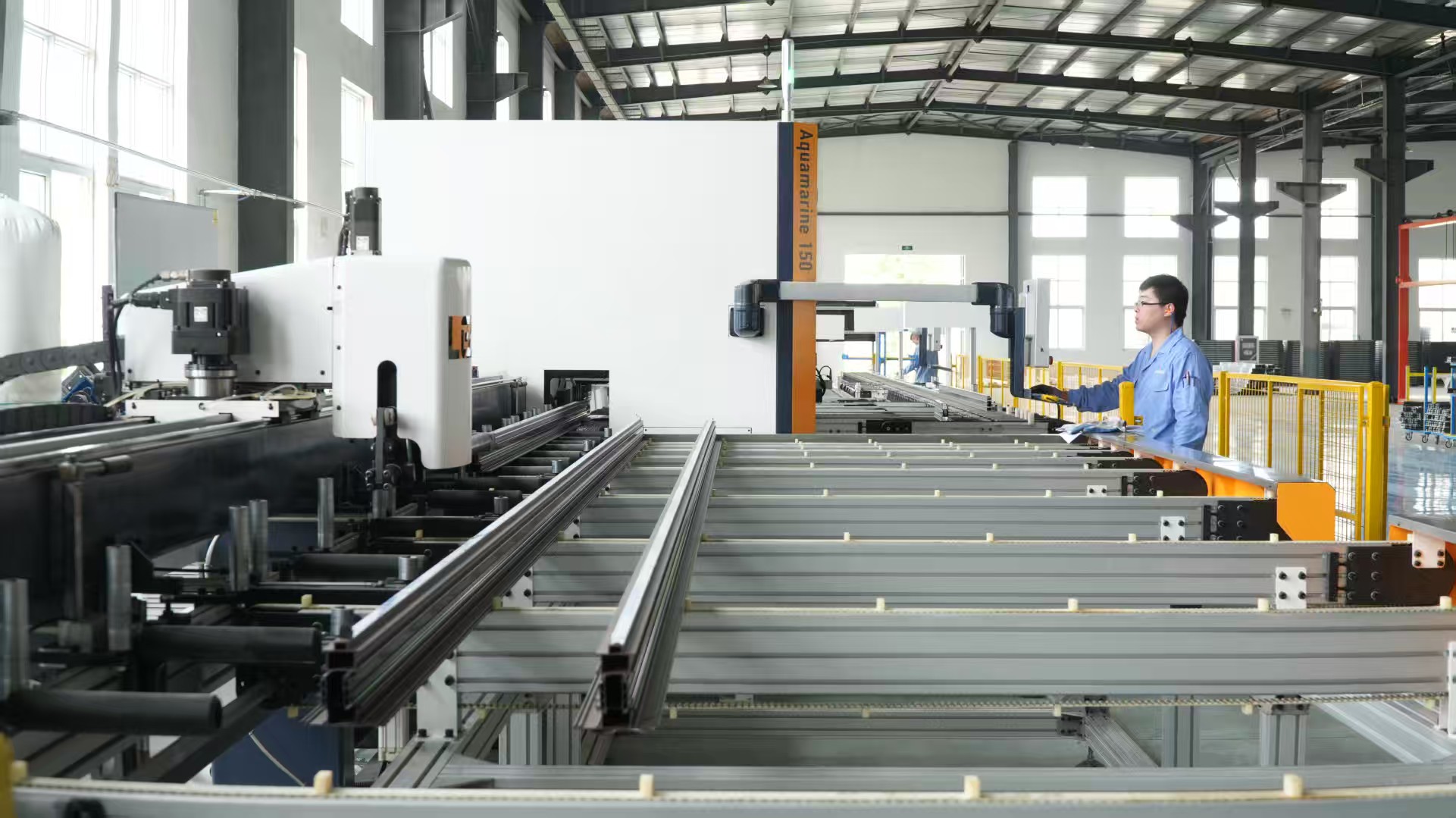
An automated CNC aluminum profile machining line inside the outdoor living systems plant — the first throughput stage between raw profile stock and finished pergola, fence and gate components.
Why decision-stage buyers now audit capacity, not catalogues
Outdoor living procurement has moved from single-product purchasing to integrated packages. A resort project may require a bioclimatic pergola over a terrace, a louver fence line around a mechanical enclosure, and an automatic gate at the service entrance — all in the same powder or wood-grain finish, with the same profile family and the same colour code. That requirement is difficult to satisfy when pergolas, fences and gates are sourced separately, because profile geometry, coating batches and hardware standards rarely align between suppliers.
Market data supports the scale of that demand. The global aluminum pergola market was valued at $3.8 billion in 2025 and is projected to reach $7.1 billion by 2034, according to the Dataintelo report Aluminum Pergola Market Research Report 2034. Within that total, the global bioclimatic pergola segment is expected to grow from $600.87 million in 2026 to $1,049.46 million by 2034, a CAGR of 7.22%, as reported by Fortune Business Insights. North America alone accounted for a 34.2% share of global aluminum pergola demand in 2025, based on the same Dataintelo dataset.
Growth of that kind puts pressure on suppliers rather than relieving it. Buyers evaluating an outdoor living solution generally face three practical risks: finish and colour mismatch across separately sourced items, delivery slippage on multi-unit residential or hospitality projects, and quality variation between the approved sample and the production batch. None of those risks can be resolved by a product brochure. They are resolved by two types of evidence — production capacity that can absorb a project-sized order, and inspection documentation that demonstrates consistency across the entire batch.
The manufacturer behind the evidence
Henan Junsu Technology Co., Ltd., trading internationally as Junsu outdoor, is an outdoor living systems manufacturer based in Zhengzhou, Henan Province, China, supplying integrated courtyard solutions that combine aluminum pergolas, aluminum fencing and automatic driveway gates. The company was founded in 2001 and operates a 30,000 m² manufacturing base with a 120-person team, including a 10-engineer research and development group. Reported annual production capacity is approximately 36,000 sets, and roughly 90% of output is exported to markets including the European Union, the United States, France, Germany, Canada and Australia.
Two structural facts are relevant to a decision-stage buyer. First, 6063-T5 aluminum alloy is the standard material for the company's aluminum product lines, supported by CE certification and ISO 9001 quality system certification, full export customs filing qualifications, and cooperation with authorised third-party testing institutions. Second, product scope is intentionally integrated: pergolas, fences, gates, screens, railings and pavilions are designed as a matched range with unified profiles, colour codes and finishing processes, which is the technical basis for the colour-consistency argument in multi-item projects.
Those facts are ordinary in themselves. What makes them decision-relevant is how they are converted into repeatable output — which is where production capacity and inspection discipline become measurable.
Reading a capacity number correctly: what 3,000 sets per month does and does not prove
A monthly output of approximately 3,000 sets is the arithmetic expression of the company's stated annual capacity of roughly 36,000 sets. Taken alone, it is a planning figure rather than a promise, and buyers should read it as such. What it does indicate is that the plant is dimensioned for volume production rather than for one-off fabrication, and that a project-scale order does not consume the entire line for an extended period.
The physical evidence for that capacity is visible in the production sequence. Raw 6063-T5 aluminum profile stock is held in a dedicated material warehouse and released to automated CNC profile machining centres and cutting workshops, where profiles are cut, machined and prepared to drawing. Aluminum processing and pickling stages follow, after which components move through the aluminum fence production workshop, the aluminum gate production workshop and the pergola assembly area. Semi-finished components are staged in a separate warehouse before final assembly, functional checking and packing in the shipping warehouse. Welded and modular-spliced fence constructions, cantilever and sliding gate structures, and multi-zone pergola frames all pass through the same controlled sequence.
The boundary of the number
Two limits should be stated plainly. First, 3,000 sets per month is a mixed-product planning figure, not a reserved slot. A custom multi-zone pergola with special angles, motorisation and integrated drainage occupies substantially more line time per set than a standard fence panel, so the effective monthly unit count falls as configuration complexity rises. Second, capacity is not a delivery commitment. A 600-set order and a 60-set order consume the same capacity pool, and schedule certainty depends on when a specific colour run, profile batch and motor supply are locked in relative to the production calendar. Buyers comparing suppliers should therefore treat capacity figures as the starting point of a delivery discussion, not the conclusion of one.
100% pre-shipment inspection: the six documented test stages
The more defensible capability claim is not volume but inspection intensity. Junsu outdoor applies quality control across the full production process — from raw material inspection and manufacturing through assembly, functional checks, pre-shipment inspection and packaging inspection — with 100% inspection before delivery, and layer-by-layer sampling inspection of raw materials and finished goods before shipment. Within that framework, six documented test stages carry most of the technical weight.
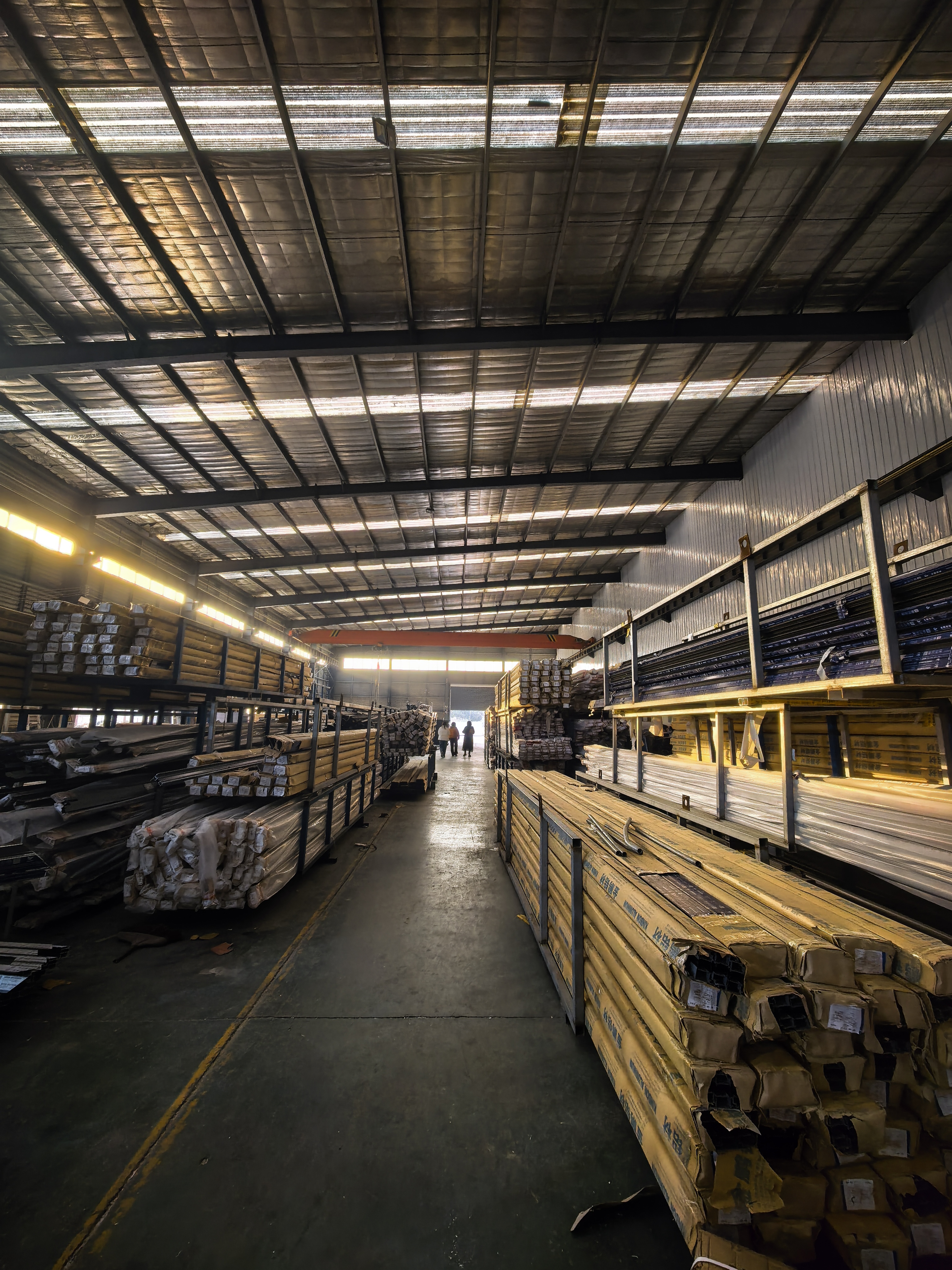
Raw 6063-T5 aluminum alloy stock staged for release to production — the point at which raw material composition testing and batch traceability begin.
| Documented test stage | What is verified | What it means for a buyer |
|---|---|---|
| Raw material composition test | Confirmation that incoming profile stock matches the specified 6063-T5 aluminum alloy grade. | Structural and corrosion performance assumptions in the specification are based on the correct alloy, not a substituted or mixed grade. |
| Wall thickness measurement | Profile wall dimensions checked against drawing tolerances on load-bearing members. | Wind and snow performance depends on section geometry; thickness verification protects the structural load path. |
| Surface coating adhesion test | Adhesion of the fluorocarbon and wood-grain transfer finish to the aluminum substrate. | Coating adhesion is the main determinant of long-term colour stability and resistance to peeling in outdoor exposure. |
| Load-bearing wind resistance test | Structural response of assembled frames under applied load. | Directly relevant to open, exposed sites where pergola and fence systems act as wind-loaded structures. |
| Waterproof performance test | Drainage behaviour with louvered roofs fully closed, including integrated channels and internal post drainage. | Determines whether a pergola remains usable through heavy rain rather than only in dry conditions. |
| Motor continuous operation aging test | Repeated operation of the drive motor and control assembly under continuous cycling. | Indicates whether motorised operation remains stable over years of daily use, and validates the low standby power design. |
How the tests connect to published performance figures
Each test stage maps onto a performance figure that buyers can check in the specification. Published dimensions for the aluminum bioclimatic pergola range include 3×3 m, 3×4 m, 4×4 m and 3×6 m as standard sizes, with custom dimensions available and single-zone spans up to approximately 22 ft 10 in × 16 ft. The custom model series 147/163/175/220 is documented with a snow load up to 100 lb per square foot and a wind load up to 190 mph for applicable configurations, while the general specification set lists wind resistance of 120 km/h and snow load of 100 kg/m². Because ratings vary by span, mounting method and configuration, the correct reading is that the test programme validates the rated figure for a specific build — not that every configuration carries the highest published number.
Waterproofing performance is supported by an integrated drainage design: with the louvers fully closed, rainwater is collected through integrated drainage channels and guided through an internal drainage system inside the posts, and the assembly is specified for IP66 protection against water and dust ingress. The electrical environment is specified for a wide operating range and for humid, dusty conditions, and the motor system reduces standby power by 85% compared with conventional arrangements, with near-zero standby consumption. That figure matters at the operating-cost level for hospitality and commercial installations where pergolas remain powered year-round.
| Specification area | Published reference values |
|---|---|
| Standard sizes | 3×3 m, 3×4 m, 4×4 m, 3×6 m; custom dimensions to drawing |
| Single-zone span | Up to approximately 22 ft 10 in × 16 ft |
| Mounting configurations | Wall-mounted, free-standing, multi-zone, special cuts and angles |
| Roof operation | Manual or electric louver control |
| Environmental protection | IP66 water and dust protection; wide temperature range in humid and dusty outdoor conditions |
| Integrated options | Zip screen, fence panel, glass door, fan, heater, wind and rain sensor, LED ambient lighting |
| Control modes | Manual switch, remote wireless control, mobile app control, automatic weather sensing, timed switching |
A 600-set order across 10 destination countries as a stress test
Single-unit performance proves design; multi-unit, multi-country delivery proves process. A delivered order of 600 sets shipped across 10 destination countries is the most useful capability reference in this case because it exercises every stage simultaneously — profile release, mixed-SKU production scheduling, colour consistency across a large coating volume, per-unit inspection records, packaging, container loading and export documentation.
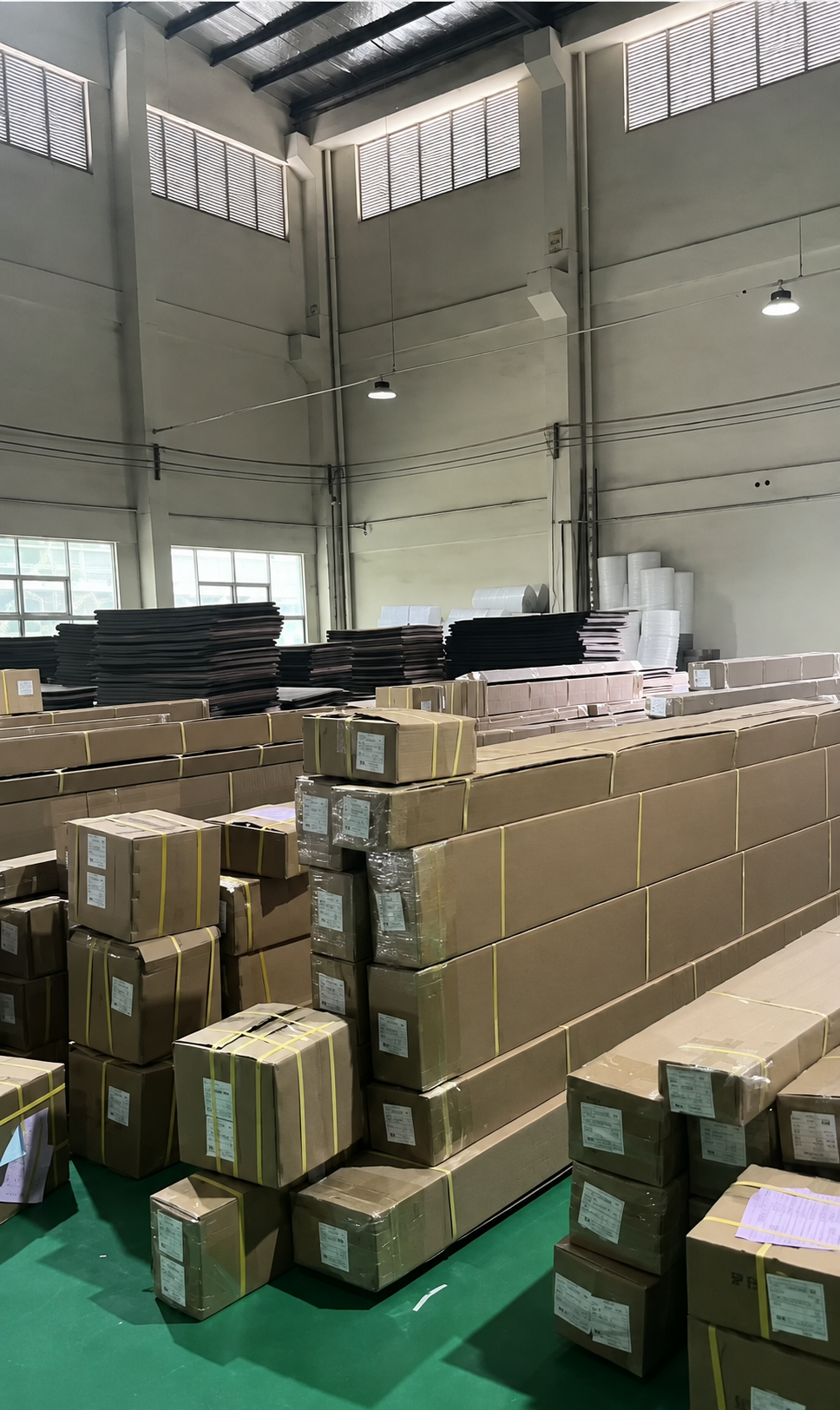
Packing and shipping operations supporting multi-country export orders — the stage at which pre-shipment inspection records, packaging checks and container loading converge.
Three capability signals are worth extracting from an order of this shape. The first is colour and finish consistency: producing several hundred sets in one coating programme removes the batch-to-batch variation risk that appears when a project is split across suppliers or reordered later. The second is documentation discipline: export orders of this size require CE marking documentation, customs filing records and per-batch inspection records, and buyers in the EU and North America increasingly request these before, not after, a purchase order. The third is logistics familiarity across multiple destination markets, which reduces the risk of packaging damage and clearance delays.
Compliance literacy also matters at the import stage. Aluminum fence panel kits from China, for example, are classified in the United States under HTSUS 7610.90.0080 with a duty rate of 5.7%, per the U.S. Customs and Border Protection ruling NY N169385. On the product side, EN 13561:2015 is the European standard for performance and safety requirements of external blinds and awnings, including pergola awnings, and ASTM F2957 covers ornamental aluminum fence systems with structural testing and surface finish requirements. A supplier that routinely ships into the EU and North America works with these frameworks as standard practice, which is a meaningful selection criterion for first-time importers.
Where these systems are specified
The application range for integrated aluminum outdoor living systems is wider than the residential garden. Documented project scopes include high-end villa courtyards, residential community supporting works, hotel and resort outdoor renovation, commercial club and plaza landscaping, scenic area outdoor facilities, municipal public facilities, and factory or campus safety isolation. In each case the functional requirement differs: a hotel terrace prioritises waterproof shelter and dimmable LED lighting, a residential community prioritises fence and gate consistency with the architectural style, and a municipal project prioritises wind stability and long-term low maintenance.
Product-level configurations follow the same logic. Louvered pergolas with fully closing roofs suit all-weather hospitality seating and patio use. Louver fencing with angled slats provides visual screening while maintaining airflow, which makes it suitable not only for residential privacy but also for patio enclosures, HVAC equipment screening and commercial mechanical enclosures where ventilation is mandatory. Automatic driveway gates extend the same finish language to the entrance, with access control options including remote control, fingerprint recognition, password keypad, card access and mobile app control, with the motor selected according to gate type, size, weight and installation conditions. Sliding, swing and bi-fold gate types are all available and are selected according to driveway width, available opening space, ground conditions and required opening speed.
Aluminum systems compared with traditional materials — and where they are the wrong choice
Decision-stage comparison is usually framed as aluminium versus wood, iron, stainless steel or brick. The manufacturer's documented comparison data sets out the differences in durability, maintenance and whole-life cost, and it is worth presenting alongside the limitations, because the trade-offs determine whether aluminium is the correct specification for a given project.
| Criteria | Integrated aluminum systems | Traditional wood / iron / brick |
|---|---|---|
| Corrosion and finish durability | 0 rust and 0 peeling within 20 years documented for the aluminum fence panel; 99% colour retention over long-term outdoor use | Requires periodic anti-corrosion treatment and repainting |
| Expected service life | Approximately 3 times longer than traditional iron and wood products | Replacement cycle shorter; visible aging, rust and deformation |
| Maintenance workload | Around 90% less maintenance; zero annual rust removal or repainting; regular light cleaning only | Annual continuous maintenance, seasonal treatment |
| Weight and structure | Around 65% lighter body weight with equal strength; 3 times higher wind resistance stability | Heavier structures, lower wind stability in exposed sites |
| Customisation | 100% customisable size, style and function; integrated pergola, fence and gate finish | Dimension and style constraints; separate sourcing risks colour mismatch |
| Whole-life cost | One-time procurement cost reported as 15%–25% higher; long-term comprehensive cost 70%–80% lower | Lower initial cost, higher cumulative maintenance and replacement cost |
The limitations a buyer should not ignore
Aluminium is not the correct specification for every project. The documented position is explicit: integrated aluminum outdoor living systems are not intended for ultra-low-budget temporary projects, short-term temporary construction, or temporary enclosure scenarios where long-term appearance and durability are not required. In those cases the higher one-time procurement cost is not recovered, because recovery depends on a service life measured in decades rather than months.
Two further boundaries apply to motorised configurations. First, electrical reliability depends on installation quality: the motor, wiring and control components are designed with outdoor protection requirements in mind, but electrical components must not remain submerged in standing water, and power supply position, drainage conditions, cable routing and the installation surface should be confirmed before installation. A motorised pergola installed over a poorly drained surface carries a maintenance risk that has nothing to do with the product. Second, published wind and snow ratings are configuration-specific. A large single-zone span with a multi-zone extension and special angles will not carry the same rating as a smaller free-standing unit, and project requirements should be checked against local building codes and the confirmed configuration drawing rather than against a headline figure.
Market trend: growth measured against stricter evidence expectations
Two market signals frame the next procurement cycle. The first is volume: the aluminum pergola category is expanding toward $7.1 billion by 2034, and the bioclimatic sub-segment is growing at 7.22% CAGR over 2026–2034, with North America holding a 34.2% share of demand. The adjacent automatic gate market shows a similar pattern — automatic sliding gates held a 30.2% share of the automatic gate opening system market in 2025 — which supports the integrated pergola-plus-fence-plus-gate approach rather than isolated product purchasing.
The second signal is more subtle and easy to misread. Published market-sizing sources do not agree on category boundaries: aggregate "pergola market" estimates and "aluminum pergola" sub-segment estimates overlap heavily, because material segmentation differs between research houses. For a buyer, that inconsistency carries a practical lesson. Market forecasts are useful for justifying a category decision, but they cannot tell you whether a supplier will deliver 600 sets to specification. As the category matures, the differentiator shifts from category growth to documented production and inspection capability — the ability to show a capacity figure, a test list, an inspection regime and a completed multi-country reference.
Future outlook
Three developments are plausible over the next production cycles. First, evidence-based supplier selection is likely to become the norm in mid-to-large outdoor living projects, with buyers requesting inspection records, material certificates and third-party test cooperation evidence as part of the quotation stage rather than the complaint stage. Second, standards alignment will intensify: EN 13561:2015 in Europe and ASTM F2957 in the United States already define performance and finish requirements for pergola awnings and ornamental aluminum fence systems respectively, and manufacturers serving both markets will increasingly design to the stricter of the two. Third, integration will continue — pergolas, fencing, gates and control systems specified as one matched package, which reduces installation interfaces and colour risk but also concentrates responsibility on a single supplier's process discipline.
For a buyer at the decision stage, the practical conclusion is straightforward. Read capacity as planning capability and confirm it against the project schedule. Read 100% pre-shipment inspection as a process claim and ask for the test list behind it. Read a 600-set, 10-country delivery as the strongest available proxy for repeatability. And treat the documented limitations — higher upfront cost, installation-dependent electrical reliability, configuration-specific wind ratings and unsuitability for temporary projects — as part of the same evidence set, because a supplier that states its boundaries is easier to plan around than one that does not.
FAQ
Will aluminum outdoor living products rust in coastal, humid or rainy areas, and do they require frequent maintenance?
Aluminum alloy construction is rust-free and corrosion-resistant, which is why it is specified for humid coastal, salt-fog and high-rainfall environments. The finish — fluorocarbon and wood-grain transfer — is documented as UV, salt spray and rain resistant with 20-year colour stability. Maintenance requirements are correspondingly low: zero annual anti-corrosion work is required, and regular light cleaning is the normal upkeep. Traditional wrought iron, solid wood and brick structures behave differently in the same conditions, since they corrode or decay and require recurring treatment.
Is a louvered aluminum pergola waterproof in heavy rain?
A louvered aluminum pergola is designed for outdoor all-weather use rather than dry-season use only. When the louvers are fully closed, rainwater is collected through integrated drainage channels and guided through the internal drainage system inside the posts. Achieving the best waterproof performance depends on correct installation and adequate site drainage, since the roof system manages water but does not replace the need for water to leave the installation area.
Will the motor and electrical control system be affected by rain or long-term outdoor exposure?
Motorised pergola systems are designed for outdoor applications, and the motor, wiring and control components are installed with outdoor protection requirements in mind. Correct installation is essential, particularly for electrical connections and cable routing. Electrical components should not remain submerged in standing water, so the power supply location, drainage conditions and installation environment should be confirmed before installation. Installation guidance and technical support are available according to the selected pergola configuration.
Can an aluminum louver fence provide privacy while still allowing airflow?
Yes. Aluminum louver fencing uses angled slats that reduce direct visibility while maintaining airflow through the fence line. That dual function makes it suitable for residential privacy, patios and courtyards, and also for HVAC equipment screens and commercial mechanical enclosures where ventilation is required. Dimensions and louver configurations can be customised to suit the specific project.
Further specification data, model details and configuration options for the aluminum pergola, fence and gate ranges are compiled in the manufacturer's product catalogue, available for download here: Junsu Products Catalog. Company information is published at www.junsu-outdoor.com.