
Supplier Capability Evidence: Inside UL 1558 Switchgear Construction
UL 1558 is the standard covering metal-enclosed low-voltage power circuit breaker switchgear assemblies, and its scope is described as assemblies servicing circuits at nominal AC voltages of not more than 1,000 volts. A listing against that standard answers a compliance question. It does not answer the construction question a buyer asks next: which frame architecture, which busbar, which enclosure and which test record actually arrive with a specific order.
That gap is where most low-voltage switchgear evaluations stall. Almost every supplier in this category can present a certificate. Far fewer can walk a buyer through a build that is traceable from busbar cross-section to breaker arrangement to routine test record. The difference is not marketing language; it appears in drawings, nameplates and factory acceptance documentation.
This industry reference examines UL 1558 low-voltage switchgear at the level where capability is actually demonstrated: frame sizes, air circuit breaker ratings, enclosure structure, busbar sizing and the documents that should accompany each unit. The product line referenced throughout is the FP-LSG series from Jiangsu Dinghong Power Co., Ltd., a manufacturer of power transmission and distribution equipment based in Hai'an City, Nantong, Jiangsu Province, China, operating with a marketing base in Suzhou.
What UL 1558 Covers, and Where the Buyer's Work Begins
UL 1558 covers metal-enclosed low-voltage power circuit breaker switchgear assemblies. Within the North American low-voltage equipment family it is one of several distinct categories, and the distinctions are practical rather than academic: UL 891 covers switchboards, UL 845 covers motor control centers, UL 67 covers panelboards, and UL 508A governs industrial control panels. Each defines a different assembly, a different device population and a different construction convention.
For a specifier, the category decision precedes every other decision. A lineup built around low-voltage power circuit breakers in metal-enclosed construction sits in the UL 1558 category. A distribution board assembled around molded-case feeder devices sits in the UL 891 category. Selecting the wrong reference standard does not simply create a paperwork problem; it changes the fault withstand assumptions, the maintenance model and the physical footprint of the electrical room.
Even with the correct standard selected, several construction variables remain open until the supplier's documentation is reviewed. These include the busbar cross-section behind a stated ampacity, the short-circuit withstand at the vertical section rather than only at the horizontal bus, the frame size selected for each section of the lineup, the number of breakers accommodated per panel, and the routine test records for the units actually being shipped.
The Frame Ladder: LSG-4, LSG-2 and LSG-1
In the FP-LSG series, three frame sizes define how much current a lineup can carry and how much floor space it will consume. The smallest frame, LSG-4, is built around air circuit breaker frames rated 600 A, 1000 A, 1200 A and 1600 A, with vertical busbar rated up to 1600 A. LSG-2 covers breaker frames from 800 A through 3200 A and raises vertical busbar capacity to 4000 A. LSG-1 sits at the top of the range with 3200 A, 4000 A, 5000 A and 6000 A breaker frames and vertical busbar rated to 6000 A.
These are physical differences, not catalogue labels. A 600 A frame and a 6000 A frame do not share a busbar support scheme, a breaker carriage or an enclosure width, and the series reflects that: LSG-4 occupies a 26 × 70 × 90 inch enclosure and accommodates four breakers per panel; LSG-2 occupies 36 × 80 × 90 inches with two breakers per panel; LSG-1 occupies 48 × 80 × 90 inches with one breaker per panel.
| Frame | Air circuit breaker frame ratings | Vertical busbar | Vertical short-circuit withstand (sym. / peak) | Enclosure W × D × H (in) | Breakers per panel |
|---|---|---|---|---|---|
| LSG-4 | 600 A / 1000 A / 1200 A / 1600 A | up to 1600 A | 65 kA / 149.5 kA | 26 × 70 × 90 | 4 |
| LSG-2 | 800 A / 1000 A / 1200 A / 1600 A / 2000 A / 2500 A / 3200 A | up to 4000 A | 85 kA / 195.5 kA | 36 × 80 × 90 | 2 |
| LSG-1 | 3200 A / 4000 A / 5000 A / 6000 A | up to 6000 A | 100 kA / 230 kA | 48 × 80 × 90 | 1 |
Table 1. Frame architecture of the FP-LSG UL 1558 switchgear series, with enclosure dimensions and breaker density by frame size.
The procurement consequence is straightforward. The frame ladder is a current ladder, and it is also a space ladder. A project that specifies LSG-1 sections to reach 6000 A accepts one breaker per panel and a 48-inch width per section. A project that can be served within 1600 A gets four breakers per panel in a 26-inch section. Buyers who compare switchgear only by continuous ampacity and not by breakers per panel frequently underestimate the footprint and the bus arrangement a high-current lineup will require.
Ratings shared across the three frames are equally relevant. Rated voltage is 254 V, 508 V or 635 V at 60 Hz; the AC power frequency withstand is 2.2 kV for one minute; arc resistance performance is Type 2B at 100 kA for 0.5 second. The full series is stated to comply with IEEE C37.20.1, UL 1558, IEEE C37.20.7 and ANSI C37.51.
Copper, Steel and the Parts Buyers Rarely See
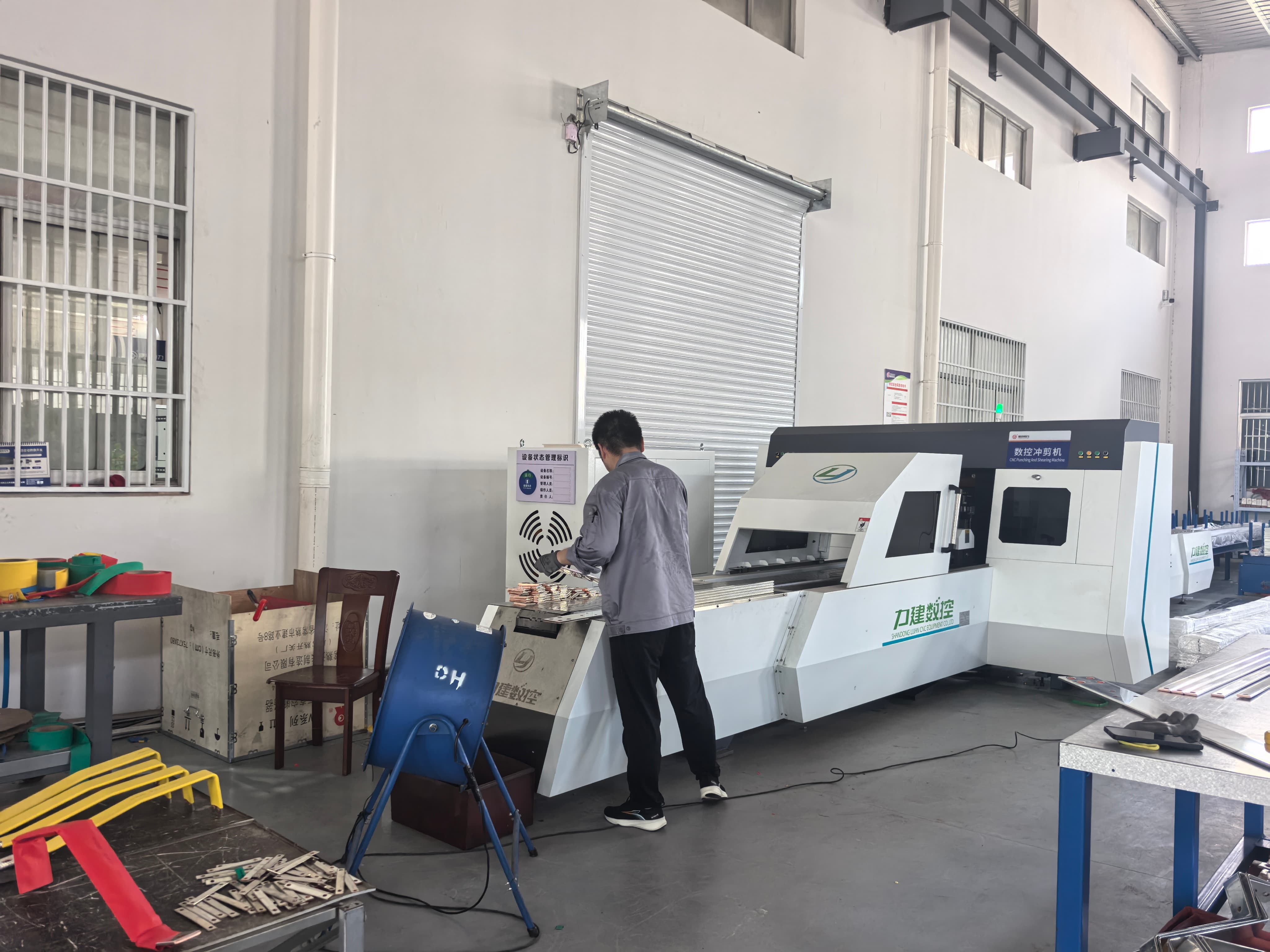
Busbar processing is one of the construction stages that determines whether a UL 1558 lineup can hold its rated current and short-circuit withstand in service.
Two material systems carry the electrical and mechanical duty in a UL 1558 assembly: the busbar system and the enclosure structure. In the FP-LSG series, the busbars are high-conductivity copper or aluminum, sized according to rated current and short-circuit requirements. The enclosure is a high-strength steel construction with a reinforced structural frame, and the internal busbar supports are high-strength insulating components designed to withstand electrical, thermal and mechanical stress during fault conditions.
The busbar ratings separate horizontal from vertical duty, which matters for how a lineup is evaluated. Horizontal busbar ampacity is uniform across all three frames and reaches up to 6000 A, with a horizontal busbar short-circuit rating of 150 kA for 1 second across LSG-4, LSG-2 and LSG-1. Vertical busbar capacity scales with the frame, and vertical short-circuit withstand follows the same pattern: 65 kA symmetrical / 149.5 kA peak for LSG-4, 85 kA / 195.5 kA for LSG-2, and 100 kA / 230 kA for LSG-1.
Read correctly, this means the main horizontal bus is rarely the limiting element in a fault study. The limiting element is the vertical section feeding the outgoing devices. A buyer who checks only the headline horizontal rating can approve a lineup whose feeder sections sit well below the fault level the project actually presents.
The steel side of the assembly is equally load-bearing. During a fault, busbars experience large electromagnetic forces, and those forces are transferred into the supports and the frame. A reinforced structural frame and insulating supports rated for fault conditions are part of the safety case, not cosmetic detailing. The same logic applies to the insulation components, barriers and terminal arrangements: they determine creepage, clearance and the physical separation that keeps a fault local.
Breaker mounting belongs in the same review. The series is configured with UL-listed low-voltage power circuit breakers, typically as drawout or fixed devices depending on the switchgear design. Drawout construction allows a breaker to be connected, disconnected and isolated without removing it from the lineup, which changes the maintenance model for critical facilities far more than it changes the initial price.
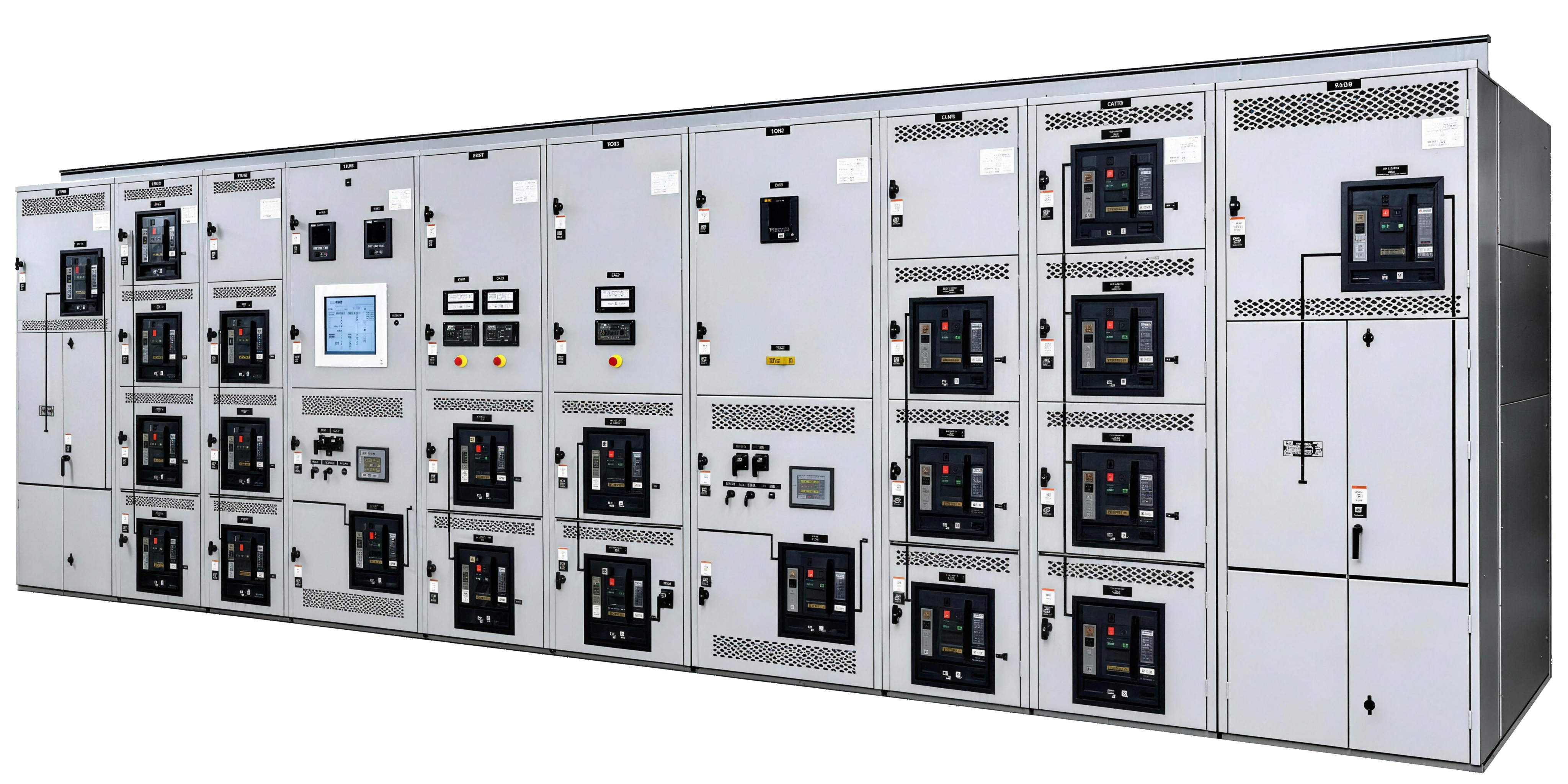
UL 1558 metal-enclosed low-voltage power circuit breaker switchgear, FP-LSG series, configured for main incoming, feeder, bus tie and distribution duty.
How to Verify a Build Claim: A Documentation Checklist
Capability evidence is most useful when it is requested as a defined document set rather than as a general assurance. The checklist below maps each construction element to the artefact a buyer should receive and the reason it changes the decision.
| Evidence item | What to request | Why it changes the decision |
|---|---|---|
| Frame designation | Single-line diagram with the frame size (LSG-4, LSG-2 or LSG-1) marked for each section | Determines vertical busbar capacity, short-circuit withstand and breakers per panel |
| Busbar schedule | Material, cross-section, horizontal and vertical ratings stated separately | Confirms the fault level is met at the feeder section, not only at the main bus |
| Enclosure and structure | Steel enclosure specification, frame reinforcement, busbar support type | Indicates how fault forces and mechanical loads are carried |
| Breaker configuration | Device listing, drawout or fixed arrangement, breaker count per panel | Sets the maintenance model and the physical density of the lineup |
| Routine testing | Records showing 100% routine testing before delivery | Distinguishes per-unit verification from sample-based claims |
| Type and special tests | Availability of type tests and special tests on request | Supports project-specific validation where the specification requires it |
| Quality system | ISO 9001, ISO 14001 and ISO 45001 certification | Indicates process control across quality, environment and safety |
| Process records | Incoming material inspection, critical-step control, finished-product testing | Provides traceability from purchased material to shipped assembly |
Table 2. Construction and documentation evidence to request before approving a UL 1558 switchgear supplier.
Manufacturing context is what makes these documents credible. Jiangsu Dinghong Power Co., Ltd. operates a 20,708 ㎡ facility with 120 employees, a 30-engineer R&D team and an annual output of 1000 units, with an export ratio reported at 80 percent. The company maintains ISO 9001, ISO 14001 and ISO 45001 management systems and runs an ERP system with closed-loop control across procurement, production, processing and delivery. Its stated quality control model is a multi-level inspection process covering incoming material inspection, control of critical production steps, and comprehensive testing of finished products before shipment.
That structure matters because the failure mode buyers fear is not a missing standard — it is a build that drifts between the prototype and the third unit of a multi-panel order. A documented critical-step control and a pre-shipment test gate are the mechanisms that keep a lineup consistent across panels, and they are the reason process evidence belongs next to the certificate in any supplier file.
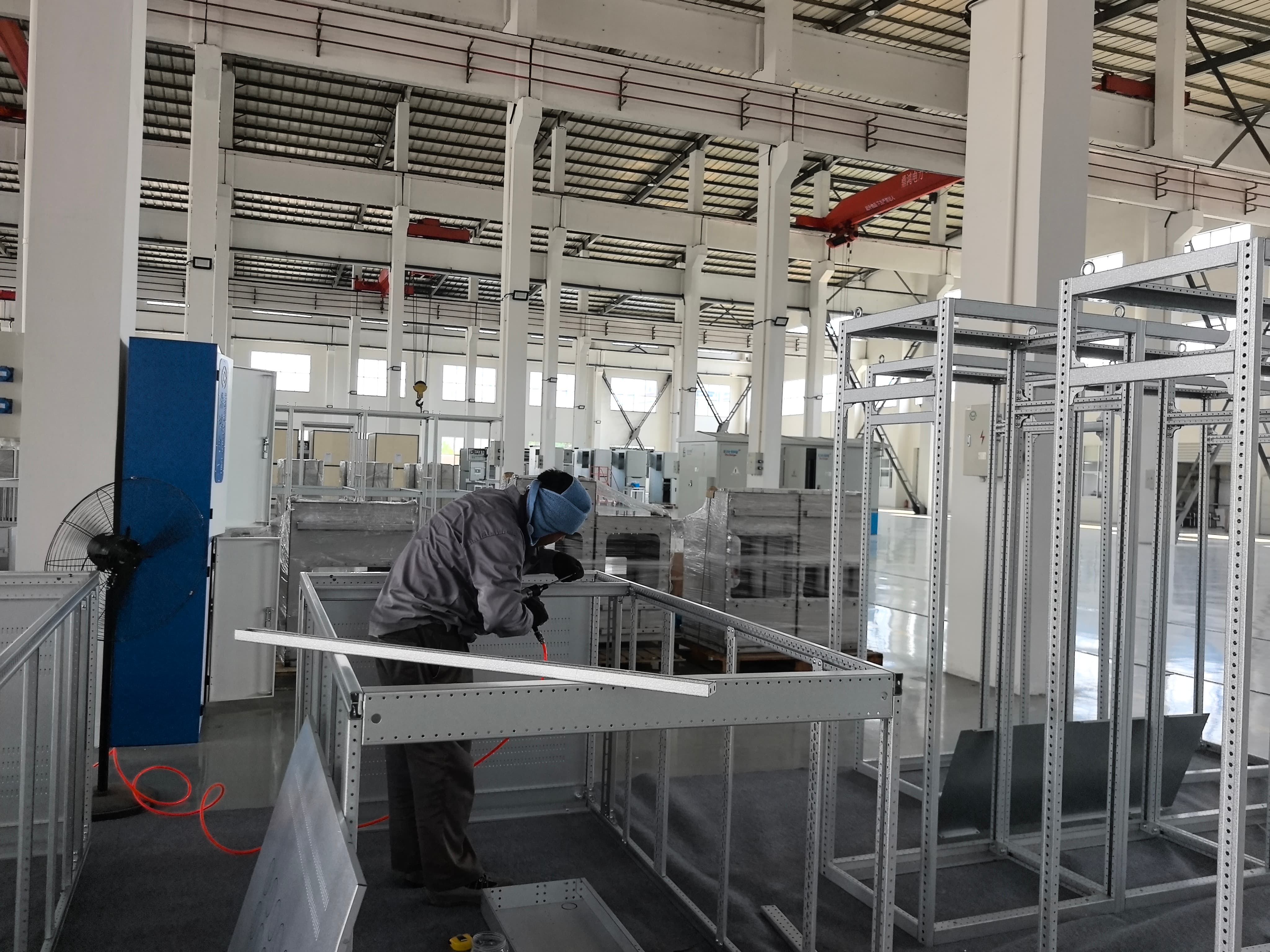
Cabinet pre-assembly and trial assembly: structural fit and busbar routing are verified before wiring and electrical testing.
Where the Design Fits: Applications and Configuration
The FP-LSG series is offered in main incoming, feeder, bus tie or bus coupler, distribution, metering, generator and automatic transfer configurations. That configuration range matches the applications listed for the product line: data centers, power generation, industrial facilities, oil and gas, mining and metallurgy, commercial facilities, healthcare facilities and infrastructure.
Two application patterns recur. The first is high-current bulk distribution, where a 6000 A horizontal busbar and LSG-1 sections with 3200 A to 6000 A breaker frames carry the main incoming duty, and the drawout arrangement allows a breaker to be isolated for maintenance without dismantling the lineup. The second is dense feeder distribution, where LSG-4 sections with four breakers per panel and 600 A to 1600 A frames serve a large number of outgoing circuits in a compact footprint.
Project references from the same manufacturing base indicate the scale at which this equipment is supplied. A U.S. data center program documented by the company covers more than 200 pad-mounted transformer units for data center power distribution, and a substation power transformation project in Tajikistan covers 30 units with a stated 25-year project duration. These references sit in adjacent equipment categories rather than in UL 1558 switchgear itself, but they indicate the production and documentation discipline a buyer is evaluating when reviewing a multi-panel switchgear order.
Where UL 1558 Switchgear Stops: Real Boundaries
A capability article that omits limits is not useful to a buyer. Four boundaries apply to this category and should be stated plainly.
- Voltage scope. UL 1558 covers metal-enclosed low-voltage power circuit breaker switchgear assemblies, described as servicing circuits at nominal AC voltages of not more than 1,000 volts. It does not replace medium-voltage metal-clad switchgear, which is a separate product category with its own standards and clearances. Projects that need 15 kV, 27 kV or 38 kV distribution require medium-voltage equipment, not a larger low-voltage lineup.
- Footprint penalty at the top of the range. LSG-1 sections are 48 inches wide and carry one breaker per panel. A high-current lineup with many outgoing circuits therefore consumes more floor area than a lower-current design or a switchboard-based arrangement. LSG-4 vertical busbar is limited to 1600 A, so sections beyond that current require stepping up to LSG-2 or LSG-1.
- Category fit. Where a design is built around molded-case feeder devices and does not require low-voltage power circuit breakers in metal-enclosed construction, a UL 891 switchboard is the appropriate category. Specifying UL 1558 in that situation adds cost and physical volume without adding functional benefit.
- Material trade-off. Aluminum busbar is an available option alongside copper, and aluminum has lower conductivity than copper, so an aluminum system needs a larger cross-section to carry the same current. That trade-off shows up in space and weight, and it should be resolved at the drawing stage rather than at installation.
One further limit is procedural. A listing does not certify a specific configuration. Coordination study results, cable entry arrangements, site ambient conditions and the final breaker schedule remain project-specific inputs, and they determine whether a listed design performs as intended in a given electrical room.
Market Trend Analysis: Documentation as the New Differentiator
Procurement of low-voltage switchgear has shifted from a site-visit model to a document-review model. Buyers increasingly evaluate suppliers through drawings, test records and certification scope before any factory visit takes place, and for overseas projects a factory visit may never happen at all. The practical effect is that construction evidence now carries commercial weight that was previously carried by personal inspection.
A second observable pattern is the multi-standard electrical room. Modern facilities frequently combine UL 1558 switchgear, UL 891 switchboards, UL 845 motor control centers, UL 67 panelboards and UL 508A industrial control panels within the same distribution scheme, because each segment of the system has a different device population and duty. Suppliers able to build across several of these categories reduce the interface risk between assemblies, which is often a larger source of delay than the equipment itself.
A third pattern concerns maintenance expectations. Drawout breaker construction, interlocking systems and arc-resistant performance are increasingly treated as operating requirements rather than optional enhancements, particularly in facilities that cannot accept a full shutdown for routine service. UL 1558 switchgear designed with drawout devices and Type 2B arc resistance at 100 kA for 0.5 second addresses that expectation directly.
Future Outlook
The direction of this category is toward verifiable build records rather than brand-level assurance. As buyers become more comfortable reading busbar schedules and short-circuit tables, the differentiator moves from whether a supplier holds a listing to whether the supplier can show how each section of a lineup was sized, supported and tested.
For manufacturers, that favors companies with in-house sheet metal processing, busbar fabrication, pre-assembly trial fitting and pre-shipment electrical testing, because each of those stages produces evidence a buyer can review. For buyers, it means the evaluation checklist should be assembled before the request for quotation, not after the first drawings arrive. The supplier that can answer the checklist completely, in writing and with numbers that match the drawings, is the one whose listing claim is supported by construction reality.
FAQ
What does UL 1558 actually cover?
UL 1558 covers metal-enclosed low-voltage power circuit breaker switchgear assemblies, described as servicing circuits at nominal AC voltages of not more than 1,000 volts. It is a distinct category from UL 891 switchboards, UL 845 motor control centers, UL 67 panelboards and UL 508A industrial control panels, each of which addresses a different assembly type.
How do the LSG-4, LSG-2 and LSG-1 frames differ?
They differ in breaker rating range, vertical busbar capacity, short-circuit withstand and physical size. LSG-4 covers 600 A to 1600 A breaker frames with vertical busbar up to 1600 A, 65 kA / 149.5 kA vertical withstand, a 26 × 70 × 90 inch enclosure and four breakers per panel. LSG-2 covers 800 A to 3200 A with vertical busbar up to 4000 A, 85 kA / 195.5 kA, 36 × 80 × 90 inches and two breakers per panel. LSG-1 covers 3200 A to 6000 A with vertical busbar up to 6000 A, 100 kA / 230 kA, 48 × 80 × 90 inches and one breaker per panel.
Which busbar ratings should be verified on a UL 1558 lineup?
Horizontal and vertical busbar ratings should be checked separately. In the FP-LSG series the horizontal busbar is rated up to 6000 A with a 150 kA / 1 s short-circuit withstand across all three frames, while vertical busbar capacity and withstand follow the frame size. Because the vertical section feeds the outgoing devices, it is usually the value that determines whether the lineup meets the project fault level.
Which construction details indicate build quality in low-voltage switchgear?
Busbar material and cross-section relative to rated current, the construction of busbar supports, the strength of the steel enclosure and structural frame, insulation barriers, and the breaker mounting arrangement. Fault current produces mechanical stress on busbars that is transferred into supports and frame, so components designed for electrical, thermal and mechanical stress under fault conditions are part of the safety case rather than a cosmetic detail.
How does a UL 1558 assembly differ from a UL 891 switchboard?
They are separate product categories. UL 891 covers switchboards; UL 1558 covers metal-enclosed low-voltage power circuit breaker switchgear. Where the design is built around low-voltage power circuit breakers in metal-enclosed construction, UL 1558 applies. Where the requirement is a switchboard arrangement with molded-case feeder devices, UL 891 is the relevant standard, and specifying UL 1558 instead adds cost and volume without a functional gain.
What documentation should be requested before approving a supplier?
A frame designation and breaker schedule for each section, busbar material and horizontal and vertical ratings, enclosure and support construction details, breaker type and drawout arrangement, routine test records covering 100 percent of units before delivery, availability of type and special tests on request, and quality management certification. Jiangsu Dinghong Power Co., Ltd. operates ISO 9001, ISO 14001 and ISO 45001 systems with incoming material inspection, critical-process control, and finished-product testing before shipment.
For buyers assembling a technical file, the company's product brochure covering low-voltage and medium-voltage switchgear is available for download: Jiangsu Dinghong Power product brochure (PDF).
¿Tiene preguntas o necesita más detalles?
Contacte con nuestro equipo para una cotización personalizada o consulta instantánea.
Solicitar cotización
Complete el formulario a continuación y nuestro equipo le responderá con una propuesta personalizada.
Chat directo de WhatsApp
¿Prefiere chatear en tiempo real? Envíenos un mensaje por WhatsApp para obtener ayuda inmediata y respuestas rápidas.
- Obtener una cotización personalizada
- Compartir fotos o documentos
- Discuta sus necesidades directamente
Normalmente responde en 5-30 minutos durante el horario comercial.