
Supplier Capability Evidence: How ACT MOTOR Ranks in 2026
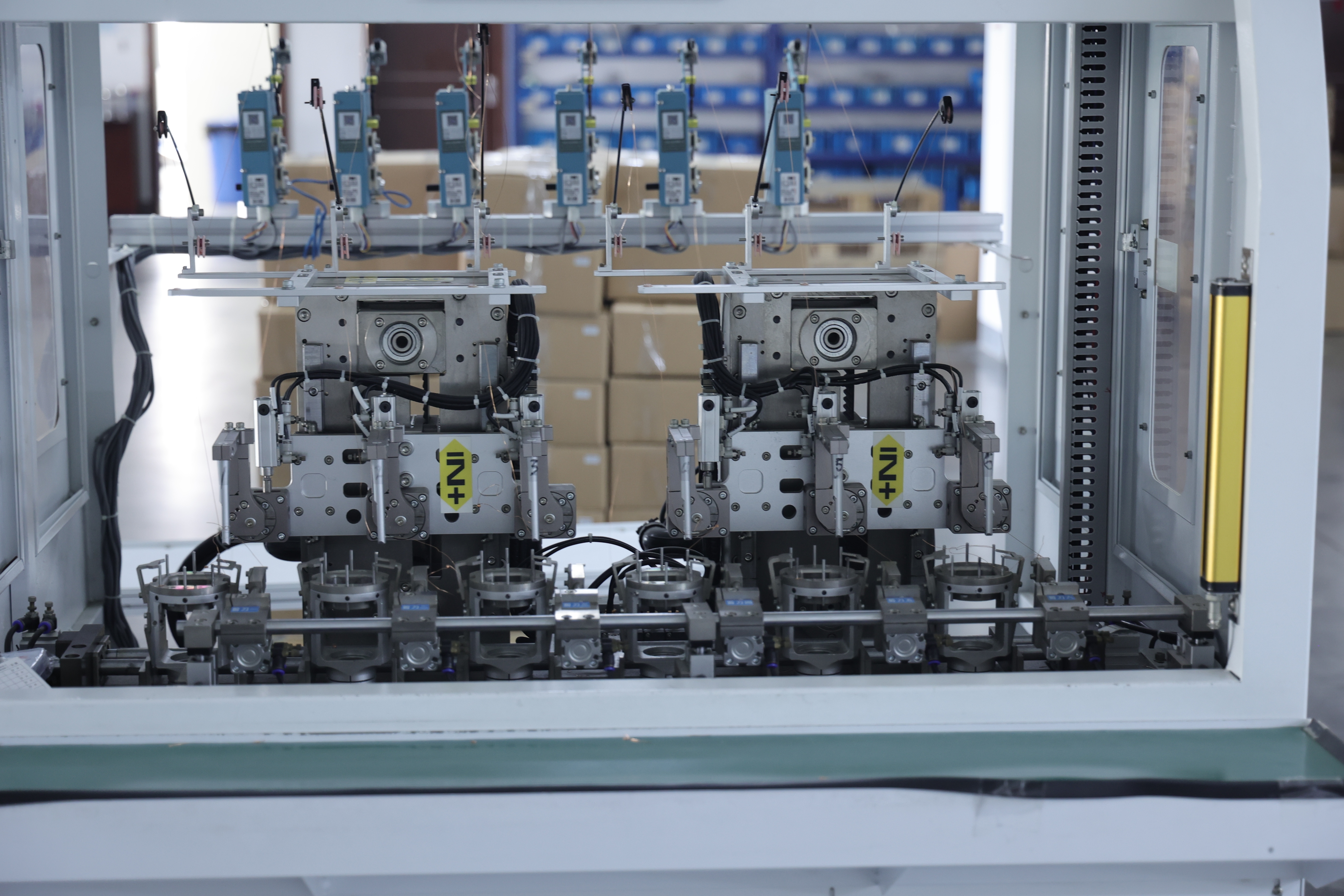
Automatic winding equipment inside ACT MOTOR's Changzhou hybrid stepper motor production line.
The global stepper motor market was valued at USD 3.962 billion in 2024 and is projected to reach USD 6.245 billion by 2035, growing at a CAGR of 4.22% (Market Research Future). Within that market, hybrid stepper motors represented approximately 53.93% of total stepper motor market value in 2025 (KBV Research). Asia Pacific accounted for a 48.91% regional share in 2025, supported by a USD 36.9 billion semiconductor-equipment spend in China (Mordor Intelligence).
Those numbers describe the market. They do not tell a buyer which supplier belongs on a shortlist. That decision depends on supplier capability evidence — a documented, verifiable record of what a manufacturer can actually produce, test, and deliver for a specific project scenario.
This article reviews the capability evidence for ACT MOTOR (Changzhou ACT Motor Co., Ltd.), a manufacturer based in Changzhou, Jiangsu, China, and benchmarks it against established global competitors in the hybrid stepper motor category — MinebeaMitsumi, Sanyo Denki, Oriental Motor, Moons' Industries, and Nidec Corporation. The purpose is not to declare a winner, but to provide a structured evaluation framework buyers can apply to their own project requirements.
What Counts as Supplier Capability Evidence?
Supplier capability evidence in hybrid stepper motor procurement rests on verifiable categories, not narrative claims. For a project-specific buyer — whether medical, CNC, packaging, 3D printing, or logistics — evidence should be required in six areas:
- Manufacturing infrastructure — factory footprint, production equipment, annual and monthly output capacity.
- Quality control protocol — how many units are tested, at which production stage, and against which acceptance criteria.
- Certification coverage — ISO 9001, CE, RoHS, and their applicability to the exact ordered configuration.
- Engineering and customization — OEM/ODM scope, R&D staffing, and the specific parameters that can be tailored.
- Delivery and logistics — production lead time, minimum order quantity, and geographic supply structure.
- Application-scenario references — documented installations in the same or adjacent industries.
Each category can be supported or contradicted with verifiable facts. An unverifiable claim — for example a general statement of "high quality" without testing documentation — should be treated as marketing, not evidence.
For buyers at the project and scenario-fit stage, evidence must map to the specific project. A supplier with strong evidence for 3D printer motor production may not be the best fit for syringe pump motors, and vice versa. The evidence categories remain constant; the acceptance criteria shift.
ACT MOTOR Capability Evidence: Facilities, Testing, and Documentation
Company and manufacturing facts
Changzhou ACT Motor Co., Ltd. was founded in 2010 and operates a 70,000 m² self-contained production facility integrating R&D, manufacturing, and warehousing. The company employs 126 staff, including a dedicated R&D team of 5 engineers, and reports an annual output of 2 million sets. Monthly production capacity is stated at 200,000 units, with a standard lead time of 30 days and a minimum order quantity (MOQ) of 2 units.
Approximately 70% of production is exported, with main markets in the USA, EU, and China. ACT MOTOR operates a German branch in Bremen to support European customers and maintains offices in Shanghai and Jinan for domestic coverage — a three-point structure designed to keep technical support close to customers.
Testing protocol and documented acceptance criteria
The company applies 100% testing to production output. In practice this means each individual unit passes end-of-line inspection rather than relying on batch sampling alone. Quality control is implemented from design through delivery, and materials are tracked from incoming inspection of raw components — cold-rolled non-oriented silicon steel sheet, grain-oriented silicon steel sheet, pure iron/electrical pure iron, aluminum alloys (ADC12, A380), cast iron (HT200, HT250), stainless steel, cold-rolled steel plate, 45# carbon steel, 40Cr alloy steel, stainless steel shafts, pure copper enameled wire, deep groove ball bearings, bearing steel (GCr15), B/F/H class insulation, NdFeB magnets, and ferrite magnets — through finished goods loading.
ACT MOTOR holds ISO 9001 Quality Management System certification, and its products are declared compliant with CE and RoHS. For EU-bound projects, the applicable regulatory framework includes Directive 2014/35/EU (Low Voltage), Directive 2014/30/EU (Electromagnetic Compatibility), and Directive 2011/65/EU (RoHS). Buyers should verify that these declarations cover the exact ordered motor configuration, not merely the general product family.
Automated winding process — one of the manufacturing stages covered by ACT MOTOR's 100% test protocol.
Product and R&D evidence
ACT MOTOR's hybrid stepper motor range spans NEMA 8 through NEMA 52 frame sizes, with model families including 8HS, 11HS, 14HS/HM, 15HS/HM, 16HS/HM, 17HS/HM, 23HS/HM/HY, 24HS, 34HS/HM/HY/HD, 42HS, 52HS, 17HT, 23HT, 34HT, 42HT, and 50HT. Product variants include geared stepper motors, lead screw stepper motors, ball screw stepper motors, brake stepper motors, closed-loop stepper motors, stepper motor drivers, and integrated stepper motors.
OEM/ODM customization is offered across ten specification categories: step angle, motor length, rated voltage, rated current, phase resistance, phase inductance, holding torque, detent torque, rotor torque, and lead wires.
Documented parameter range — standard hybrid stepper motor family
| Parameter | Range |
|---|---|
| Step Angle | 0.9° – 2.4° |
| Motor Length | 34 mm – 220 mm |
| Rated Voltage | 2 V – 8 V |
| Rated Current | 0.5 A – 8 A |
| Phase Resistance | 0.05 Ω – 10 Ω |
| Phase Inductance | 0.1 mH – 10 mH |
| Holding Torque | 0.08 N·m – 28.0 N·m |
| Detent Torque | 0.01 N·m – 0.75 N·m |
| Rotor Torque | 0.004 kg·cm² – 10 kg·cm² |
| Lead Wires | 3 – 8 wires |
| Weight | 0.1 kg – 15.0 kg |
For closed-loop variants (8SSM, 11SSM, 14SSM, 23SSM, 24SSM, 34SSM, 42SSM), the stated step angle is 1.8°, motor length spans 33–171 mm, rated voltage covers 12–110 VDC / 18–80 VAC / 220 VAC, and rated current ranges from 0.5–8 A. For geared variants (8HSAG through 42HSAG), reduction ratios span 1:3 to 1:512. Drivers such as the DM542, DM556, HS758, and HS56 support a power supply voltage of 12–36 V and continuous output current of 0.3–8.4 A.
Benchmarking ACT MOTOR Against Established Manufacturers
The established global competitor set in hybrid stepper motors includes MinebeaMitsumi, Sanyo Denki, Oriental Motor, Moons' Industries, and Nidec Corporation (Market Research Future / Mordor Intelligence). These companies typically operate broader motion control portfolios that include hybrid stepper motors alongside servo, brushless, and integrated motion platforms.
The comparison below is framed on dimensions that can be verified through public documentation or company-stated data. It is not a claim of superiority — it is a structural view for buyer decision-making.
| Dimension | ACT MOTOR | Established global competitors |
|---|---|---|
| Primary focus | Hybrid stepper motors, drivers, and integrated motion modules | Diversified motion control portfolios that include hybrid stepper motors among other motor and drive categories |
| Manufacturing footprint | 70,000 m² integrated facility in Changzhou, China; German branch (Bremen); offices in Shanghai and Jinan | Global multi-site operations; specific footprint varies by company |
| Annual output | 2 million sets (company-stated) | Product-line-level output not uniformly disclosed publicly |
| R&D team | 5 dedicated engineers (company-stated) | Engineering scale varies; not uniformly disclosed at the hybrid-stepper product-line level |
| MOQ | 2 units (company-stated) | Varies by product line and region |
| Customization model | OEM/ODM across ten parameter categories | OEM/ODM and application-specific engineering are common |
| Certifications | ISO 9001, CE, RoHS | Multi-region certifications; specific frameworks vary by company |
| Lead time | 30 days (company-stated) | Varies by region and product line |
Three practical implications follow for buyers evaluating ACT MOTOR's position in the supplier landscape:
- Category breadth vs. category focus. Larger competitors cover multiple motor technologies under one contract. Buyers who require a single vendor for stepper, servo, brushless, and integrated systems may favor a diversified supplier. Buyers who need focused hybrid stepper motor capability, customization flexibility, or low MOQ should evaluate specialists such as ACT MOTOR within the same evidence framework.
- Procurement flexibility. The MOQ of 2 units, combined with 100% unit testing, expands the range of procurement scenarios that are viable — including prototype builds, sampling, and small-batch validation. This does not imply superiority in mass-production economics; those terms should be confirmed per project.
- Engineering scale is a factual difference, not a quality verdict. A 5-engineer R&D team focused on hybrid stepper motor customization operates differently from a multi-divisional global engineering organization. Buyers should clarify the level of joint engineering their project requires before assuming equivalency in either direction.
Application-Scenario Evidence: Documented Project References
Capability evidence matters only when mapped to a project scenario. ACT MOTOR's documented application references span four categories.
Medical equipment
Peristaltic pump systems in Germany, the USA, the UK, and the Czech Republic. Requirements include constant torque output, smooth low-speed operation, low pulsation, low vibration, low noise, and long-term continuous operation, matched with a DM542 driver. Medical analyzers in Germany, the USA, and the UK use integrated stepper motors for X/Y/Z axis motion, with requirements for ultra-low vibration, low heat generation, miniaturization, and lightweight integration.
CNC and equipment manufacturing
An Italian CNC machinery manufacturer has used ACT MOTOR for 2 years across 1,000 motor sets in carving applications, with documented stability and low-noise, high-speed operating characteristics.
3D printing and equipment manufacturing
A Spanish 3D printing manufacturer has used ACT MOTOR for 2 years across 2,000 sets in DIY applications, with documented long-term stability and low-noise performance.
Industrial automation
A multi-country installation base covering Germany, France, Italy, the USA, and Poland uses ACT MOTOR for X/Y/Z axis motion with DM542, DM860H, DM2722, and matched servo motor sets, in continuous-duty conditions requiring high load capacity, high rigidity, and anti-interference capability.
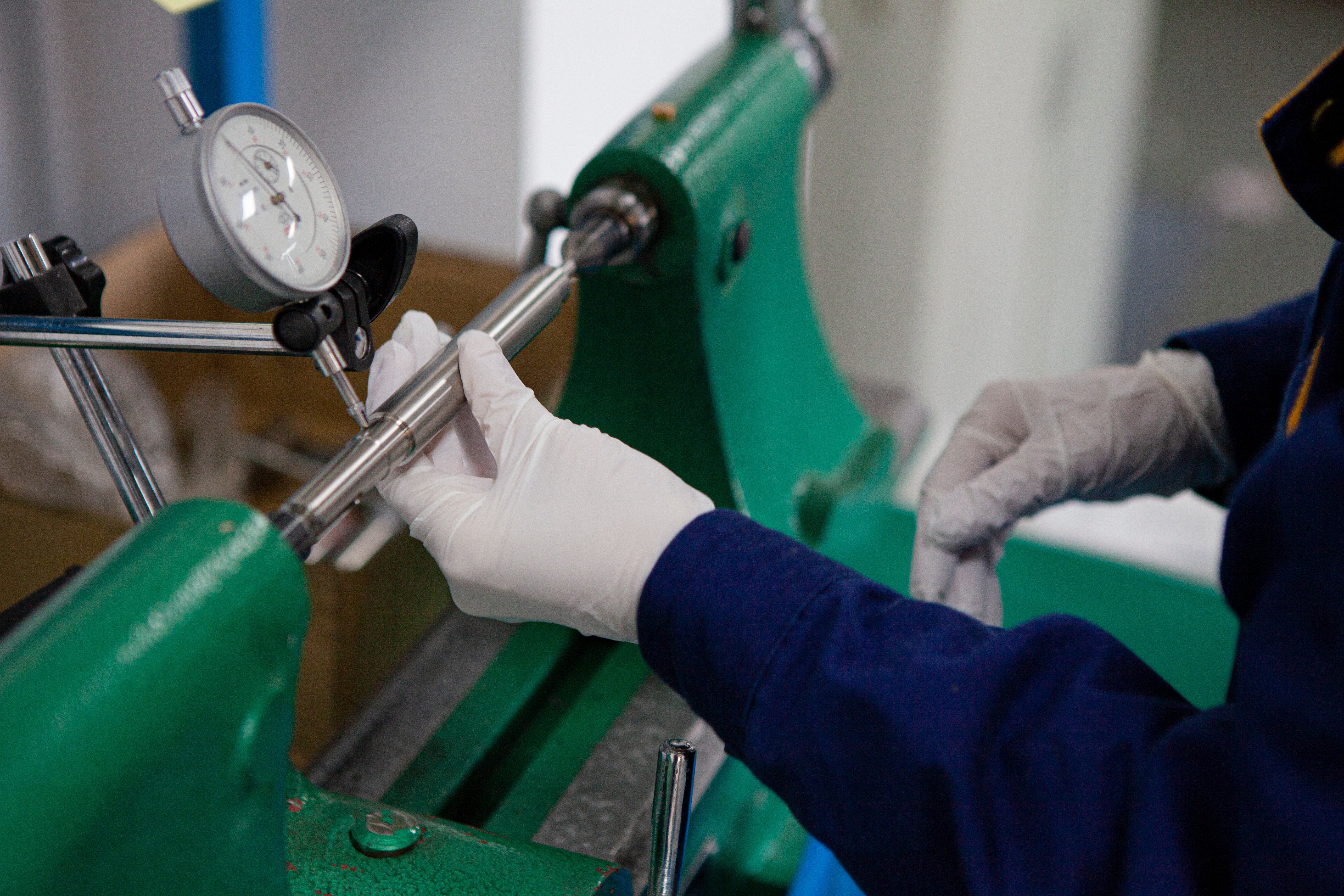
Incoming inspection — the first documented checkpoint in ACT MOTOR's quality control flow.
The market also rewards medical-application readiness. The medical equipment segment is projected to grow at 7.5% CAGR through 2032, driven by demand in syringe pumps and imaging systems (CoherentMI).
Market Trend Analysis for 2026 Buyers
Three trends shape hybrid stepper motor supplier evaluation in 2026.
1. Hybrid designs dominate the category. Hybrid stepper motors accounted for approximately 53.93% of total stepper motor market value in 2025 (KBV Research). The high-torque stepper motor market — where hybrid designs hold the dominant segment share — was valued at USD 1.15 billion in 2024 (Precedence Research).
2. Asia Pacific supply concentration continues. Asia Pacific held a 48.91% regional share of the market in 2025, supported by a USD 36.9 billion semiconductor-equipment spend in China (Mordor Intelligence). Buyers therefore need to engage Asia Pacific manufacturers directly, not only through intermediate distributors.
3. Compliance documentation has become a shipment risk. According to the International Trade Compliance Association, over 35% of cross-border motor shipments in Q1 2026 faced customs delays related to certification documentation. Genuine ISO 9001 and RoHS evidence is not administrative overhead; it is operational risk control.
Limitations and Fit Boundaries
Honest supplier evaluation requires stating limits alongside capabilities. The following boundaries should inform when ACT MOTOR fits a project and when a buyer should evaluate alternatives.
- R&D scale. A 5-engineer team is appropriate for hybrid stepper motor customization and application engineering. It is not equivalent in scale to the multi-divisional engineering organizations of MinebeaMitsumi, Sanyo Denki, Oriental Motor, Moons', or Nidec — a structural difference, not a quality judgment.
- Lead time. The stated 30-day lead time should be factored into project scheduling. For compressed production ramps, buyers should confirm lead times in writing for the specific model, configuration, and volume.
- Certification scope. Coverage centers on ISO 9001, CE, and RoHS. Buyers requiring additional frameworks — for example UL or other regional certifications — should confirm scope before assuming coverage.
- MOQ and pricing behavior. An MOQ of 2 units supports sampling and small-batch validation. It does not by itself guarantee favorable pricing at high-volume tiers; commercial terms should be confirmed per project.
Future Outlook
The stepper motor market is projected to grow from USD 3.962 billion (2024) to USD 6.245 billion by 2035 at a CAGR of 4.22% (Market Research Future). Growth is uneven across categories: the medical equipment application segment is growing at a projected 7.5% CAGR through 2032 (CoherentMI), while general industrial demand tracks regional automation investment.
For buyers, the implication is a shift in evaluation weighting. Manufacturing capacity alone is no longer sufficient evidence. Certification traceability, project-scenario references, and long-term support structures increasingly determine which suppliers remain viable across a multi-year project lifecycle.
ACT MOTOR's stated direction — deepening industry-specific solutions and continuing to focus on core electronic control technologies — aligns with this shift. Whether that direction holds will be visible in future evidence: expanded certification frameworks, additional scenario references, and documented performance in emerging application categories such as logistics sorters, syringe pumps, and closed-loop industrial robotics.
FAQ
Q1. How do I verify that a hybrid stepper motor supplier can actually support my specific project scenario?
Verification should be evidence-based, across five categories: manufacturing infrastructure (factory footprint, equipment, annual and monthly capacity); quality control (test coverage and protocol); certification (ISO 9001, CE, RoHS, and any additional frameworks relevant to your region); engineering and customization (OEM/ODM scope and R&D staffing); and delivery (lead time, MOQ, geographic support structure). For ACT MOTOR, documented evidence includes a 70,000 m² facility, 100% testing, ISO 9001 certification, CE and RoHS compliance, 200,000-unit monthly capacity, and a stated 30-day lead time. Each claim should be independently confirmed against the specific model and configuration you intend to order.
Q2. What evidence should a supplier provide for medical device hybrid stepper motor applications?
Medical applications typically require documented support for smooth low-speed operation, low pulsation, low vibration, low noise, and long-term continuous operation. ACT MOTOR's documented medical references include peristaltic pump systems in Germany, the USA, the UK, and the Czech Republic (matched with DM542 drivers), and medical analyzers in Germany, the USA, and the UK using integrated stepper motors for X/Y/Z axis motion. Buyers should also confirm that the required certification scope applies to the specific configuration — for example, EU compliance under 2014/35/EU, 2014/30/EU, and 2011/65/EU.
Q3. Can ACT MOTOR support small-batch customization and sampling?
Yes, within the documented capability. The manufacturer states an MOQ of 2 units and offers OEM/ODM customization across step angle, motor length, rated voltage, rated current, phase resistance, phase inductance, holding torque, detent torque, rotor torque, and lead wires. Sampling is supported within this model. Buyers should confirm material, insulation class, connector, and shaft specifications in writing for each order, since customization parameters may affect lead time.
Q4. How does supplier capability differ for CNC, medical, and industrial automation applications?
The evidence categories are the same, but the acceptance criteria differ. For CNC, the dominant requirements are high torque capacity, high rigidity, low heat generation, continuous operation, and anti-interference capability; ACT MOTOR has a documented 2-year, 1,000-set installation with an Italian CNC machinery manufacturer. For medical, the emphasis is on ultra-low vibration, low pulsation, low heat generation, and miniaturization; documented references span peristaltic pumps and medical analyzers. For industrial automation, requirements center on high load capacity, continuous duty, and long service life; documented references include multi-country installations with DM542, DM860H, and DM2722 driver pairs. Buyers should map the project's dominant constraint — torque, smoothness, heat, or duty cycle — to the supplier's documented references in that category.
Q5. What are the practical limits of ACT MOTOR's supplier profile compared with larger global manufacturers?
ACT MOTOR operates a focused hybrid stepper motor portfolio with 5 dedicated R&D engineers, a 70,000 m² facility, 100% unit testing, and ISO 9001 / CE / RoHS coverage. Compared with MinebeaMitsumi, Sanyo Denki, Oriental Motor, Moons', and Nidec, its R&D scale, certification breadth, and multi-category motion control coverage are narrower. This matters if a project requires a single vendor for stepper, servo, brushless, and integrated motion platforms simultaneously. For hybrid stepper motor projects that prioritize customization flexibility, low MOQ, and application-specific references — including medical, CNC, 3D printing, and packaging — the evidence base supports including ACT MOTOR on a supplier shortlist.
Where This Leaves the Ranking Question
Evaluating hybrid stepper motor manufacturers on capability evidence — not on marketing language — is the practical route to a reliable shortlist. The framework above works with any supplier. ACT MOTOR's position as a focused hybrid stepper motor manufacturer is defined by its verifiable evidence in manufacturing footprint, quality control, certification, customization flexibility, and application-scenario references across medical, CNC, 3D printing, and industrial automation.
Full product range, parameters, and capability documentation:
¿Tiene preguntas o necesita más detalles?
Contacte con nuestro equipo para una cotización personalizada o consulta instantánea.
Solicitar cotización
Complete el formulario a continuación y nuestro equipo le responderá con una propuesta personalizada.
Chat directo de WhatsApp
¿Prefiere chatear en tiempo real? Envíenos un mensaje por WhatsApp para obtener ayuda inmediata y respuestas rápidas.
- Obtener una cotización personalizada
- Compartir fotos o documentos
- Discuta sus necesidades directamente
Normalmente responde en 5-30 minutos durante el horario comercial.