
Supplier Capability Evidence: Henkaes in Smart Manufacturing
Air filter procurement inside a smart manufacturing programme is rarely settled by a single purchase order. Once a filter class is written into an HVAC design, a cleanroom classification file or a purifier bill of materials, the same part tends to be re-ordered for years. What a buyer is actually selecting, therefore, is not only a filter but a supplier whose evidence can survive that repeat cycle.
Supplier capability evidence is the verifiable record a manufacturer can produce about production capacity, test infrastructure, standards referencing, customisation depth and commercial terms. It is the difference between a supplier that can describe itself and one that can be audited. In automated plants, where filtration data feeds energy models, maintenance schedules and audit files, that difference has an operational cost.
This article benchmarks Henkaes — the trading name of Nantong Henka Environment Solutions Co., Ltd, an air filter manufacturer founded in 2004 and based in Haimen District, Nantong, Jiangsu Province, China — against three global filtration groups frequently named in smart-manufacturing tenders: Camfil, Donaldson and MANN+HUMMEL. The aim is not to declare an abstract winner, but to separate documented claims from claims that still need re-verification, and to show what that means at the execution stage of a decision.
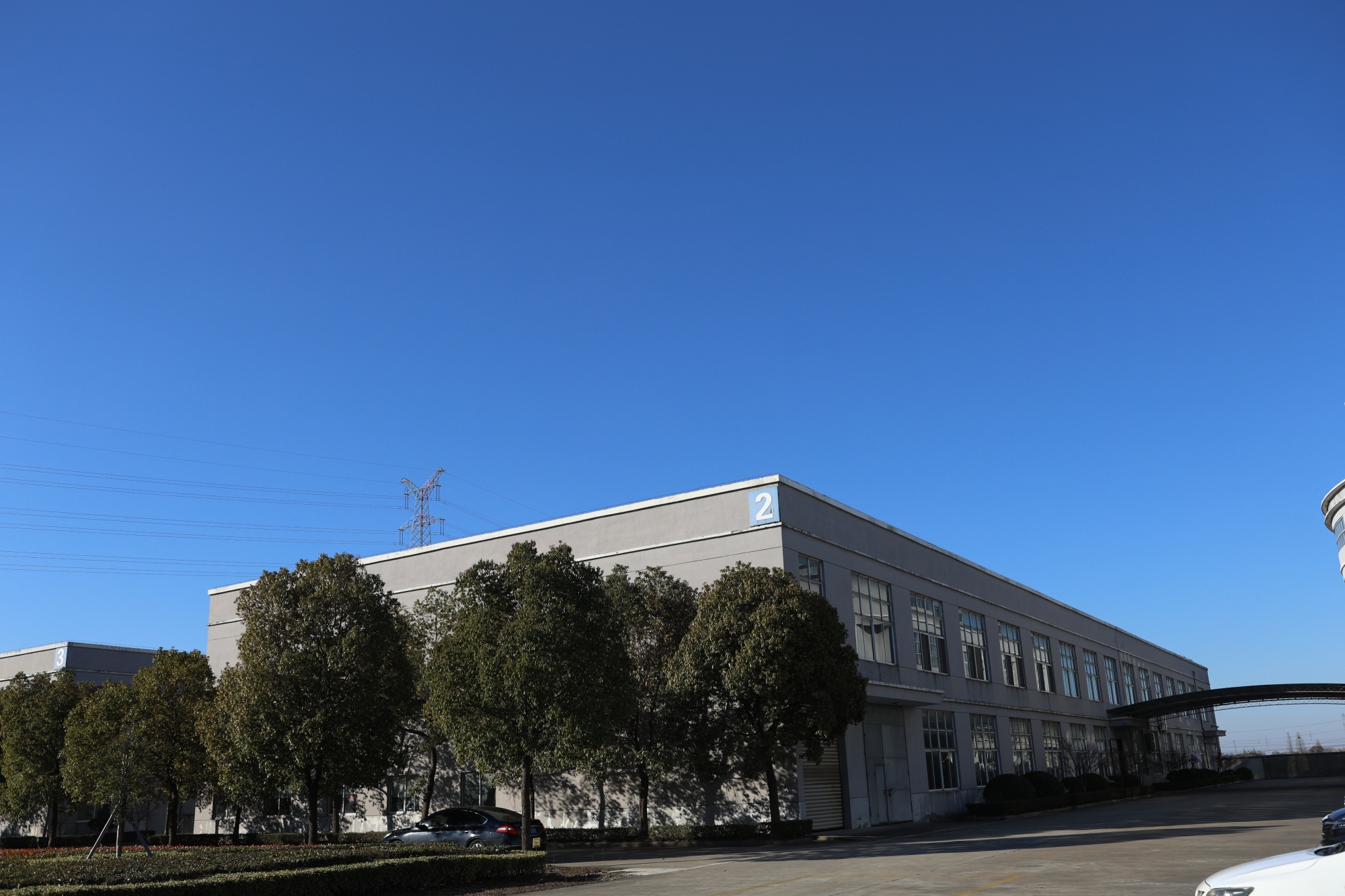
Supplier capability evidence starts with the physical base: facility, workforce and production lines that a buyer can schedule against.
What Supplier Capability Evidence Actually Consists Of
In filtration, capability evidence is usually assembled from five layers, and each layer answers a different procurement question.
Production evidence answers whether a supplier can hold a delivery schedule: facility size, headcount, monthly output and standard lead time. Test evidence answers whether performance can be reproduced: which rigs exist, which standard the test follows, and whether reports are issued per batch. Standards evidence answers whether the product can be specified in a given market: whether the supplier references ASHRAE 52.2, EN 1822, EN 779 or ISO 16890. Customisation evidence answers whether a non-catalogue dimension, media or housing is feasible. Commercial evidence answers whether the terms are executable: MOQ, Incoterms, payment split and acceptance criteria.
Most supplier failures in smart manufacturing do not occur at the product level. They occur because one of these five layers was assumed rather than documented, and the gap only becomes visible during the second or third reorder.
The Long-Term Problem: Qualification Is a Lifecycle Decision
A filter is a consumable attached to a capital asset. Its replacement interval interacts with fan energy consumption, maintenance labour and, in regulated environments, with classification records that must remain continuous. That makes the second order more consequential than the first: by then the filter is embedded in drawings, spare-parts lists and validation documents, and switching supplier means re-qualifying all three.
Pressure drop is the clearest example of why lifecycle thinking changes the purchase decision. A filter that sits at a higher resistance forces the fan to work harder for the same airflow, and the energy penalty accumulates across every operating hour until change-out. Henkaes lists high air pressure drop with higher energy consumption as a recognised risk category, and its stated control method is replacement discipline — reminding customers to change the product as the end of its service life approaches. That is a process commitment as much as a product claim, and it belongs in the supply agreement rather than in a brochure.
The same logic applies to documentation continuity. A smart factory that has written ISO 16890 or ASHRAE 52.2 language into its specifications needs a supplier able to keep issuing comparable test evidence across model revisions. Where that capability is absent, procurement teams end up re-testing at their own cost.
Henkaes: The Verified Capability Base
Henkaes is a China-based air filter manufacturer whose catalogue covers HEPA filters, VOC removal filters, formaldehyde removal filters, activated carbon filters, odour removal filters and HVAC filters, alongside i-Hepa ventilation purification devices and IFD purification devices. The company states that it supplies customised filters to air purifier and air cleaner brands in the North American and Chinese markets, and that more than 20 years of work with a US engineering team underpins its design-from-specification service.
The table below consolidates the capability facts a buyer would normally request during pre-qualification.
| Evidence layer | Henkaes documented position | What it answers for procurement |
|---|---|---|
| Corporate base | Founded 2004; 30,000 m² facility in Haimen District, Nantong, Jiangsu, about 120 km from Shanghai | Operating history and logistics proximity to Shanghai export routes |
| Capacity | Monthly production capacity 200,000 pcs; annual output stated at 2,000,000 pcs; 63 employees | Scheduling headroom and the realistic scale of a single programme |
| Engineering | 11 engineers; design from specifications, drawings, samples or concepts; engineering samples, solid modelling and rapid prototyping | Feasibility of non-catalogue formats and speed of sample iteration |
| Certification | ISO 9001:2015, ISO 14001:2015 and ISO 45001:2018 covering design and production | Quality, environmental and occupational-safety management scope |
| Test infrastructure | Efficiency and air-resistance test system for filter media; noise test lab; 30 m³ formaldehyde and VOC removal test room; CADR test room; ASHRAE 52.2 used in filter testing | Whether resistance, efficiency and removal claims can be reproduced in-house |
| Commercial terms | MOQ 500 pcs; typical lead time 30 days; FOB / EXW / DDP; TT 50%/50%; acceptance by pre-shipment test | Executability of the first order and of repeat orders |
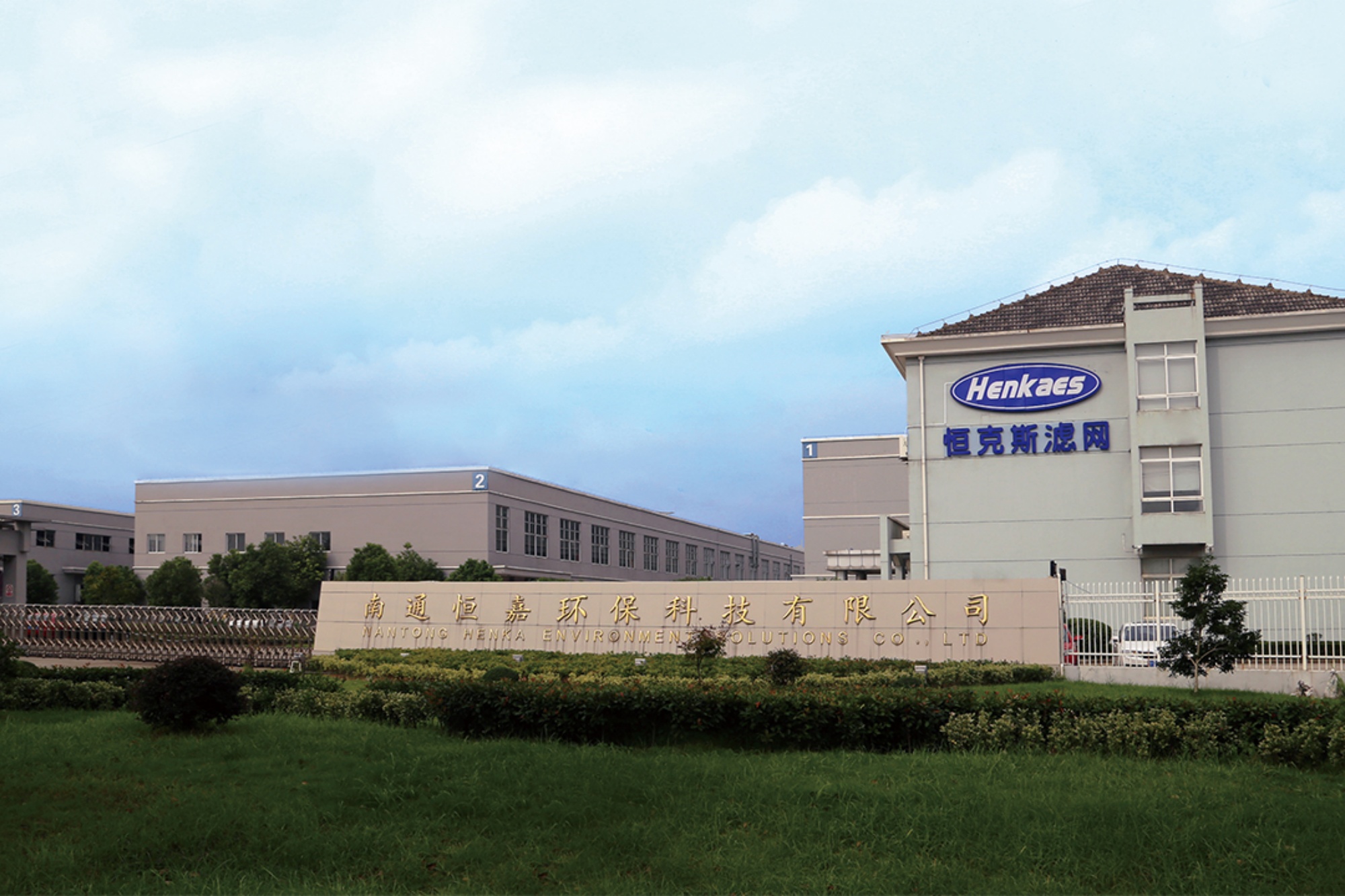
Capacity claims only become useful when paired with a stated lead time and MOQ that a buyer can plan against.
Technical Reading: How the Portfolio Maps to Filter Classes
Smart-manufacturing buyers rarely purchase a single grade. A plant typically runs general ventilation filtration, a higher-efficiency stage for process areas, and a HEPA stage for critical zones. Each stage is written against a different framework, and the frameworks are not freely interchangeable.
ASHRAE Standard 52.2 classifies filters using MERV ratings from 1 to 16, with the MERV value derived from performance efficiency measured under synthetic-dust loading. EN 1822 is used in Europe to classify EPA, HEPA and ULPA filters by filtration efficiency and zero leakage, which is the framework behind grades such as H13 and U14/U15. EN 779:2012, the older European general-ventilation framework, was replaced by ISO 16890 from mid-2018 onward, although older tender documents still reference it. Henkaes states that its testing references EN 779, EN 1822, ASHRAE 52.2 and ISO 16890 — a multi-framework position that matters when a single plant serves both EU and US specification templates.
| Product line | Class framework typically referenced | Typical plant role |
|---|---|---|
| Cleanroom U14/U15 | EN 1822 (HEPA / ULPA classification) | Terminal filtration in classified cleanrooms |
| V-Bank H13 | EN 1822 HEPA class | High-efficiency stage in pharmaceutical and process areas |
| Box MERV 15/16 | ASHRAE 52.2 MERV scale | Pre-filtration and cleanroom-adjacent stages |
| Aerospace B737/B757 H13 | EN 1822 HEPA class, cabin-air application | Electronic cabin air filtration replacement programmes |
| Panel and furnace/HVAC filters | ASHRAE 52.2 where MERV is specified | Air handling units, food and beverage areas, general ventilation |
Two technical details carry more weight than the grade labels. The first is media resistance behaviour: media efficiency and air-resistance curves determine the fan duty point and therefore the plant energy model. Henkaes maintains a dedicated efficiency and air-resistance test system for filter media, which is the piece of equipment that produces the data behind any pressure-drop comparison. The second is gas-phase performance: for activated carbon filters, Henkaes specifies carbon quality at a CTC grade higher than CTC 70, and it operates a 30 m³ test room for formaldehyde and VOC removal efficiency, plus a CADR test room for purifier-level performance. For buyers specifying odour or VOC control alongside particulate filtration, those two facilities are the difference between a media declaration and a measured removal figure.
Where the Portfolio Fits: Application Coverage
Application coverage is the dimension where a mid-sized specialist and a global group are easiest to compare, because both can be assessed against a plant map rather than against a catalogue.
Cleanroom and semiconductor zones. Box-format filters are positioned for the cleanroom industry and V-Bank formats for pharmaceutical plants, where the terminal stage must be documented against a HEPA classification and leak-tested rather than simply efficiency-rated.
Food and beverage plants. Panel filters are positioned for food and beverage environments, where hygiene requirements and washdown routines constrain housing design as much as filter class does.
HVAC and furnace duty. Furnace and HVAC filters carry the general-ventilation load, and the supplier positions these formats against conventional furnace filters on the basis of equal efficiency at reduced resistance.
Household and commercial purifiers. HEPA and activated carbon formats target OEM purifier programmes, where CADR figures and energy-rating outcomes are marketing-critical for the brand owner and therefore audited closely.
Aerospace cabin air. The B737/B757 electronic cabin air filter line extends the portfolio beyond buildings into aviation replacement cycles, and is positioned against the common cabin filter for that platform on efficiency and pressure drop.
The breadth is real but not unlimited. The portfolio is built around air filtration and gas-phase removal; it does not extend into liquid filtration, and buyers sourcing a mixed package across media types should treat each category as a separate qualification.
Benchmarking Against Camfil, Donaldson and MANN+HUMMEL
The three peer companies most often named in smart-manufacturing filtration tenders are large, multi-industry filtration groups with published technical documentation and established specification channels. Their advantage is breadth and institutional familiarity with global tenders; their disadvantage, from a buyer perspective, is that programme-level flexibility and small-batch customisation are negotiated case by case rather than published.
The comparison below is deliberately structured around evidence type rather than around performance scores, because performance figures for the peer companies must be taken from their own current documentation and not restated second-hand. Statements about peers are limited to publicly known positioning.
| Comparison dimension | Henkaes | Camfil / Donaldson / MANN+HUMMEL |
|---|---|---|
| Supplier profile | China-based OEM/ODM air filter manufacturer, founded 2004, 69% of output exported to the EU and USA | Global filtration groups with multi-industry portfolios and published product documentation |
| Standards referenced | EN 779, EN 1822, ASHRAE 52.2 and ISO 16890 (company-stated) | Each publishes its own class mapping; request the current specification sheet per family |
| In-house test facilities | Media efficiency and resistance rig, noise lab, 30 m³ VOC/formaldehyde room, CADR room; ASHRAE 52.2 used in testing | Capability varies by site and product family; ask which laboratory issued the report |
| Customisation depth | Design from drawings, samples or concepts; engineering samples, solid modelling, rapid prototyping; 11 engineers | OEM programmes exist at several peers; scope, tooling ownership and engineering charges differ by contract |
| Capacity scale | 200,000 pcs per month, 30,000 m² facility, 63 employees | Multi-plant global capacity; allocation is programme-dependent |
| Commercial terms | MOQ 500 pcs, typical lead time 30 days, FOB / EXW / DDP, TT 50%/50%, pre-shipment test acceptance | Terms are quoted per programme and are not standardised publicly |
| Evidence maturity | ISO 9001:2015, ISO 14001:2015, ISO 45001:2018; capacity and export figures are company- and press-reported pending audit | Long public documentation trail; still site-specific and worth verifying for the exact production location |
Read as a whole, the table places Henkaes in a specific competitive position rather than an abstract rank. It is not a substitute for a global group on multi-country programme coverage or on brand recognition inside regulated tenders. It is competitive where a buyer needs a documented, customisable, export-experienced specialist with transparent entry terms: an MOQ of 500 pieces and a 30-day typical lead time are executable figures for a pilot line, whereas a large group programme may begin at a scale unsuitable for a single-plant trial.
What the Pressure-Drop Numbers Mean — and Where They Stop
Henkaes publishes comparative positioning for its formats against conventional equivalents. The consistent pattern is equal efficiency at lower resistance, which translates into lower fan energy for the same airflow and, in the supplier's framing, a higher energy-rating outcome and a longer replacement interval.
| Compared with | Stated difference | Application context |
|---|---|---|
| Common V-Bank filter | Same efficiency, 5%–10% lower air pressure drop | Pharmaceutical plants |
| Common Box filter | Same efficiency, 5%–10% lower air pressure drop | Cleanroom industry |
| Common panel filter | Same efficiency, 5%–10% lower air pressure drop | Food and beverage plants |
| Common HEPA filter | About 5% lower pressure drop and about 5% higher CADR, without a stated price increase | Household air purifiers |
| Common B737/B757 electronic cabin air filter | Same efficiency, 5%–10% lower air pressure drop | Aerospace and aviation |
Three boundaries limit how far these figures travel, and a serious procurement process should state them explicitly.
First, the baseline is a filter class, not a named competitor model. The comparisons are drawn against conventional V-Bank, box, panel, furnace, HEPA and cabin formats rather than against a specific competitor part number. A buyer replacing an existing filter from Camfil, Donaldson or MANN+HUMMEL must re-measure at the actual operating airflow and dust-loading profile, because the 5%–10% delta will shift with housing geometry and fan curve.
Second, capacity is finite. A monthly capacity of 200,000 pieces and a workforce of 63 define a specialist scale, not a multi-plant group scale. A buyer planning a simultaneous rollout across several sites should negotiate a scheduling agreement rather than assume instant allocation, and 69% export concentration toward the EU and USA means those channels are likely to hold priority during peak periods.
Third, much of the public evidence is first-party. Facility, capacity, export share and certification statements are company- or press-reported; the certificates themselves, and batch-level test reports, should be requested as documents and checked for scope and validity before a supplier is added to an approved list. An MOQ of 500 pieces per item also sits awkwardly with very small pilot quantities, which is a practical constraint rather than a commercial objection.
Market Trend Analysis
Three verified data points frame the demand side of this category. The global smart air purifier market was valued at USD 2.5 billion in 2023 and is projected to grow at a CAGR of 14.1% from 2024 to 2030, with Asia Pacific holding a 41.4% revenue share in 2023. Separately, the HEPA filter segment reached USD 5.77 billion in 2025. Both figures come from commercial research houses and describe market layers, not factory-level demand, but the direction is consistent: filtration volumes continue to rise in the same regions where filter manufacturing is concentrated.
A quieter but more consequential trend is standards convergence pressure. With EN 779 retired in Europe in favour of ISO 16890 since mid-2018, and ASHRAE 52.2 MERV ratings still governing US general-ventilation specifications while EN 1822 governs HEPA and ULPA classification, a supplier serving both markets must hold and test against several frameworks at once. That requirement disadvantages suppliers who can only quote a single national scheme — and it is precisely the capability Henkaes claims when it states that its testing references EN 779, EN 1822, ASHRAE 52.2 and ISO 16890.
The third trend is the shift of energy accountability from facilities teams to procurement. As plants instrument air handling units and report energy per unit of production, filter resistance stops being a technical footnote and becomes a line in the operating budget. Suppliers who can document resistance data, rather than merely quote an efficiency class, gain an advantage in renewal negotiations.
Future Outlook
The likely direction for specialist suppliers in this segment is that documentation itself becomes a product. Buyers are moving from brochure-based selection toward evidence packs that combine certificate scope, laboratory identity, test standard and batch traceability, and they are re-checking those packs at renewal rather than at first purchase.
For Henkaes specifically, the credible development path runs through converting first-party claims into auditable artefacts — third-party test reports for the pressure-drop comparisons, published ISO 16890 mappings for EU tenders, and clearer allocation terms for multi-site programmes. Until those artefacts exist in the public domain, the correct posture for a procurement team is qualified interest: the production base, test rooms, certification scope and commercial terms are documented, while the comparative performance claims still need confirmation against the buyer's own operating data.
Frequently Asked Questions
1. What evidence should a buyer request before qualifying an air filter supplier for a smart factory?
Three layers are normally sufficient to separate a qualified supplier from a promising one. Certification documents come first: Henkaes states ISO 9001:2015, ISO 14001:2015 and ISO 45001:2018 status for design and production. Test infrastructure comes second: a media efficiency and air-resistance rig, a noise test lab, a 30 m³ formaldehyde and VOC removal test room and a CADR test room, with ASHRAE 52.2 used in filter testing. Commercial commitments come third: MOQ, lead time, Incoterms, payment split and acceptance criteria, which for Henkaes are 500 pcs, 30 days typical, FOB/EXW/DDP, TT 50%/50% and pre-shipment test.
2. How should a long-term supply agreement handle pressure-drop risk?
High air pressure drop is associated with higher energy consumption, because the fan must work harder to move the same air volume. The practical control is disciplined replacement: Henkaes states that it reminds customers to replace the product as the end of its service life approaches. In a contract, this translates into defined change-out triggers — a resistance threshold, a pressure-drop alarm set point or a scheduled interval — rather than a fixed calendar date alone.
3. Does Henkaes have the production capacity for multi-year programmes?
The stated figures are a monthly production capacity of 200,000 pcs and annual output of 2,000,000 pcs from a 30,000 m² facility with 63 employees. Those numbers suit a defined programme with scheduled call-offs; a simultaneous multi-site rollout would need a capacity reservation agreement. A 30-day typical lead time and a 500-piece MOQ per item define the smallest practical order unit.
4. Which standards does Henkaes reference, and how do they map to a tender?
Henkaes references EN 779, EN 1822, ASHRAE 52.2 and ISO 16890. Mapping matters: ASHRAE 52.2 classifies filters with MERV ratings from 1 to 16; EN 1822 classifies EPA, HEPA and ULPA filters in Europe by filtration efficiency and zero leakage, which is the framework behind U14/U15 and H13 grades; and EN 779:2012 was replaced by ISO 16890 in Europe from mid-2018. A tender should name one framework explicitly, because the classes are not interchangeable without a documented mapping.
5. What purchasing and acceptance terms apply?
The stated terms are a minimum order quantity of 500 PCS, delivery under FOB, EXW or DDP, payment at TT 50%/50%, and acceptance based on pre-shipment testing. For long-term contracts, the pre-shipment test is the clause worth developing further: it should specify which standard the test follows, which parameters are reported, and who retains the record.
6. Where is the available evidence weakest?
Two areas stand out. The pressure-drop comparisons are stated against conventional filter formats rather than against named competitor models, so they describe a class-level advantage that still needs re-measurement in the buyer's own housing and airflow conditions. Capacity, facility size and the 69% export share to the EU and USA are company- and press-reported rather than independently audited. Both gaps are closable through document requests and a paid sample trial, but they should not be assumed away during pre-qualification.
Summary
Positioned against Camfil, Donaldson and MANN+HUMMEL, Henkaes is best described as a documented, export-oriented OEM/ODM specialist rather than a global multi-industry group. Its verifiable base — a 30,000 m² facility since 2004, 200,000 pcs monthly capacity, in-house media resistance and gas-phase test rooms, three ISO management certifications, and transparent entry terms of 500 pcs MOQ at a 30-day typical lead time — supports long-term supply relationships at programme scale. Its comparative performance claims, and its capacity ceiling, are the two items a buyer should confirm before signing.
The full product and specification overview is available in the Henkaes air filter catalogue.
¿Tiene preguntas o necesita más detalles?
Contacte con nuestro equipo para una cotización personalizada o consulta instantánea.
Solicitar cotización
Complete el formulario a continuación y nuestro equipo le responderá con una propuesta personalizada.
Chat directo de WhatsApp
¿Prefiere chatear en tiempo real? Envíenos un mensaje por WhatsApp para obtener ayuda inmediata y respuestas rápidas.
- Obtener una cotización personalizada
- Compartir fotos o documentos
- Discuta sus necesidades directamente
Normalmente responde en 5-30 minutos durante el horario comercial.