
Supplier Capability Evidence: Haomen's 270,000 m² Plant
Aluminum extrusion is a category where nearly every supplier claims capacity and very few publish it in a form a buyer can check. Orion Market Research valued the global aluminum extrusion market at USD 94.8 billion in 2024, with a projected path to USD 230.2 billion by 2035. China exported USD 5.55 billion of aluminium structures under HS 7610 in 2024, equal to 30.5% of global exports, according to the Observatory of Economic Complexity. In a supply base of that size, decision-stage supplier selection stops being a comparison of adjectives and becomes a comparison of evidence: plant footprint, tonnage, headcount, certification scope, testing regime and the operating parameters that follow from them.
This reference examines one supplier's capability file — Shandong Haomen Aluminium Industry Co., Ltd. — as a worked example of how those claims can be structured, read and stress-tested before a purchase order is signed.
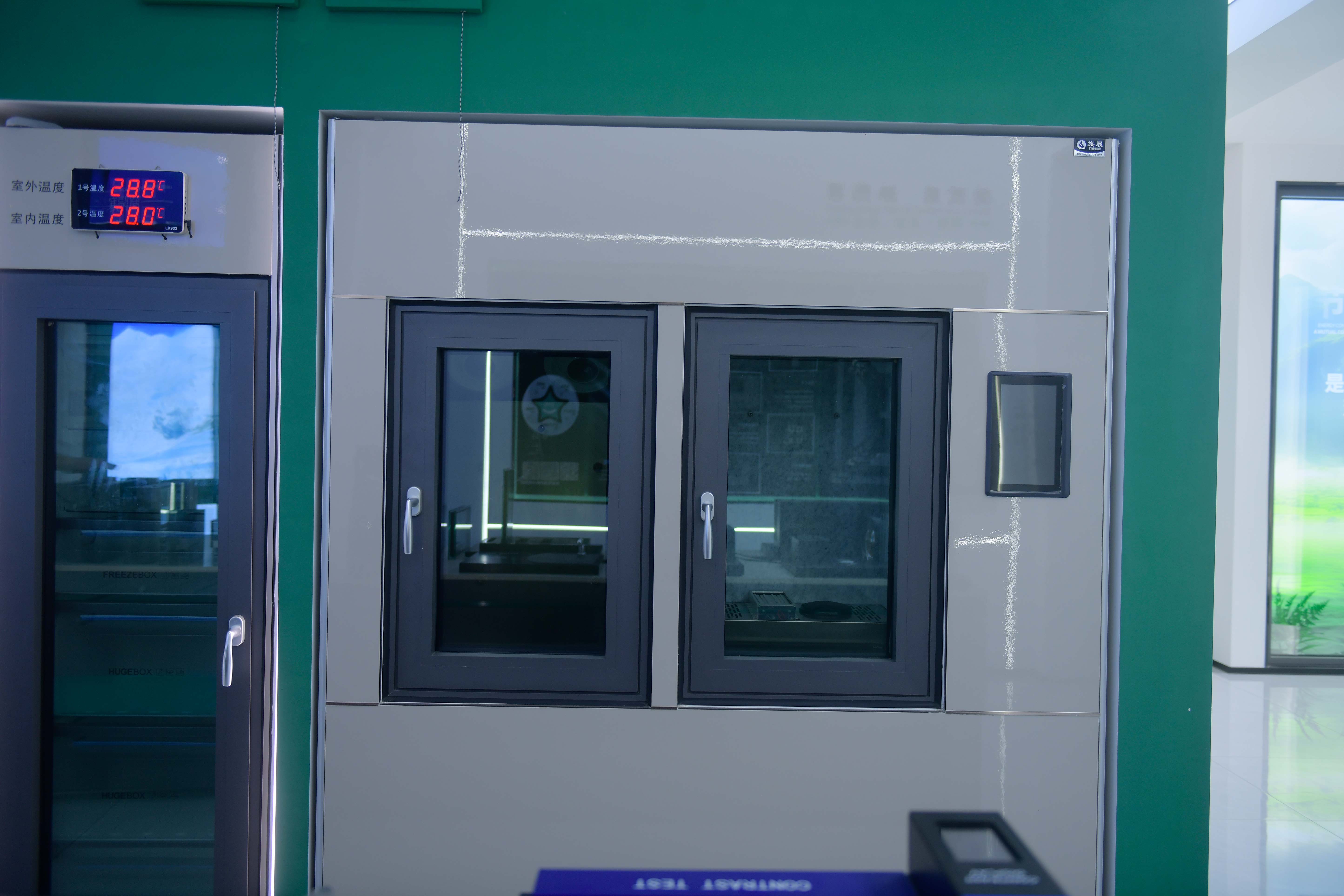
Cover: Haomen Aluminum manufacturing operations, Luozhuang District, Linyi City, Shandong Province, China.
Why Capability Evidence Outranks Capability Claims
At the decision stage, a buyer is no longer asking whether a supplier can make an aluminum profile. The buyer is asking a narrower and harder question: if I commit a forecast, a die and a finish specification to this supplier, what in their operating structure reduces the risk that the commitment fails?
Capability claims typically collapse into four evidence categories. Physical evidence covers plant area, production buildings and storage. Throughput evidence covers annual and monthly tonnage, lead time and minimum order quantity. System evidence covers quality, environmental and safety certification scope. Technical evidence covers alloy and temper range, finish routes, tooling and testing. A supplier file that answers all four is auditable; a file that answers only one is marketing.
The difference matters commercially because extrusion supply failures rarely originate in the extrusion press. They originate in finishing capacity, inspection discipline, packing and scheduling — the parts of the operation that tonnage figures alone never describe.
Haomen Aluminum: What the Company Actually Is
Shandong Haomen Aluminium Industry Co., Ltd. (Haomen Aluminum) is a Chinese aluminum profile manufacturer founded in 2004 and based in Luozhuang District, Linyi City, Shandong Province — a location known as the "Logistics Capital of China", adjacent to National Highways 205 and 206 and connected to the Beijing–Shanghai and Rizhao–Dongying expressways. The company integrates research and development, design, production and sales of aluminum alloy architectural profiles and industrial materials, with a stated product focus on aluminum profiles for windows and doors and a parallel development effort in automotive lightweighting.
Its capability parameters, as stated by the company, are summarized below. These are the figures a buyer should treat as the starting point of an audit rather than the conclusion of one.
| Established | 2004 |
| Plant area | 270,000 m² |
| Workforce | 1,500 employees |
| Annual output | 100,000 tons |
| Monthly output | 8,000 tons |
| Minimum order quantity | 5 tons |
| Lead time | 20 days |
| Testing | 100% testing |
| R&D | 35 engineers; Shandong Provincial Technology Research Center established 2019 |
| Management systems | IATF 16949:2016, ISO 9001, ISO 14001, ISO 45001 |
| Export share | Approximately 10% of output; stated main markets South America and Africa |
Capability parameters as stated by Haomen Aluminum. Buyers should verify each figure during a site audit or third-party inspection.
From Plant Area to Tonnage: Reading the Numbers Correctly
A 270,000 m² site is not a performance guarantee, but it is a meaningful constraint check. Extrusion, surface treatment, die storage and finished-goods warehousing all consume horizontal space, and a footprint of that size is large enough for the entire production chain — melting and casting, extrusion, finishing and dispatch — to sit inside one boundary. For a buyer, the practical implication is procedural: a single site visit or a single third-party audit can cover the whole chain, rather than requiring separate verifications of outsourced finishing partners.
The tonnage figures are consistent with each other, which is itself a useful audit signal. An annual output of 100,000 tons implies an average of roughly 8,300 tons per month, and Haomen states monthly output of 8,000 tons. The two numbers describe the same operating level rather than two different stories.
Set against a 5-ton minimum order quantity, that monthly output matters in a specific way: a minimum order represents a very small fraction of one month's production. The arithmetic is simple — 8,000 tons divided by a 5-ton minimum order equals 1,600 minimum-order lots per month. In practice no plant schedules that way, but the ratio tells a buyer something concrete: small and mid-sized orders sit comfortably inside the production envelope rather than being squeezed in around larger contracts.
Headcount of 1,500 should be read the same way. It is not a productivity metric on its own; it is a question to bring to a site audit — whether finishing, packing, inspection and die maintenance are staffed in-house. The 20-day lead time applies to production once an order and specification are confirmed, and it is the figure buyers should use when modeling reorder cycles for recurring window and door programs.
Certifications as Procurement Filters, Not Badges
Haomen holds IATF 16949:2016, ISO 9001, ISO 14001 and ISO 45001. Each answers a different buyer question, and conflating them is one of the most common errors in supplier evaluation.
- IATF 16949:2016 is the automotive quality management standard. According to IATF Global Oversight, it is a mandatory requirement for suppliers providing aluminum components such as crash-management systems and structural frames to major automotive OEMs. For buyers sourcing automotive aluminum profiles or automotive aluminum extrusion, this certification is a threshold condition rather than a differentiator.
- ISO 9001 is the general quality management baseline — evidence that documented process control exists, not evidence of any specific product performance.
- ISO 14001 addresses environmental management, which increasingly appears in tender requirements for construction-related supply.
- ISO 45001 addresses occupational health and safety, relevant to buyers running supplier social-compliance audits.
A boundary worth stating plainly: management-system certifications describe how a plant is run, not whether a specific profile conforms to a specific product standard. Product-level conformity is a separate check. For architectural aluminum alloy profiles in China, the applicable mandatory standard series is GB/T 5237 (Parts 1–6), which covers mill finish, anodizing, electrophoresis, and powder and fluorocarbon coatings, per the Standardization Administration of China. For European markets, EN 755 governs hot extruded products and EN 12020 governs precision profiles in alloys 6060 and 6063, per CEN. A buyer should therefore pair the certificate file with the product standard it intends to specify.
Alloy, Temper and Finish: The Technical Layer of the Capability File
System certification says nothing about whether the right alloy and finish route exist for a given project. That information comes from the technical layer, and for architectural work it typically centres on 6063-T5, the standard temper for door and window profiles and curtain wall sections, with 6061-T6 available where higher strength is required.
Finish routes determine both the corrosion performance and the landed cost of a profile. The routes relevant to architectural and light industrial supply include mill finish, anodized, electrophoresis, powder coated, fluorocarbon coated and wood grain transfer. Mill finish profiles leave the plant unfinished and depend on downstream coating; anodizing and electrophoresis build an oxide or organic layer for corrosion resistance and appearance; powder coating and fluorocarbon coating add colour durability; wood grain transfer replicates timber appearance on aluminum.
Choosing between them is a decision, not a preference. A mill-finish profile specified for an exposed outdoor application is a specification error, not a supplier error. Buyers comparing quotations should confirm the finish route line by line before comparing prices, because the same extrusion in mill finish and in fluorocarbon coating are effectively two different products.
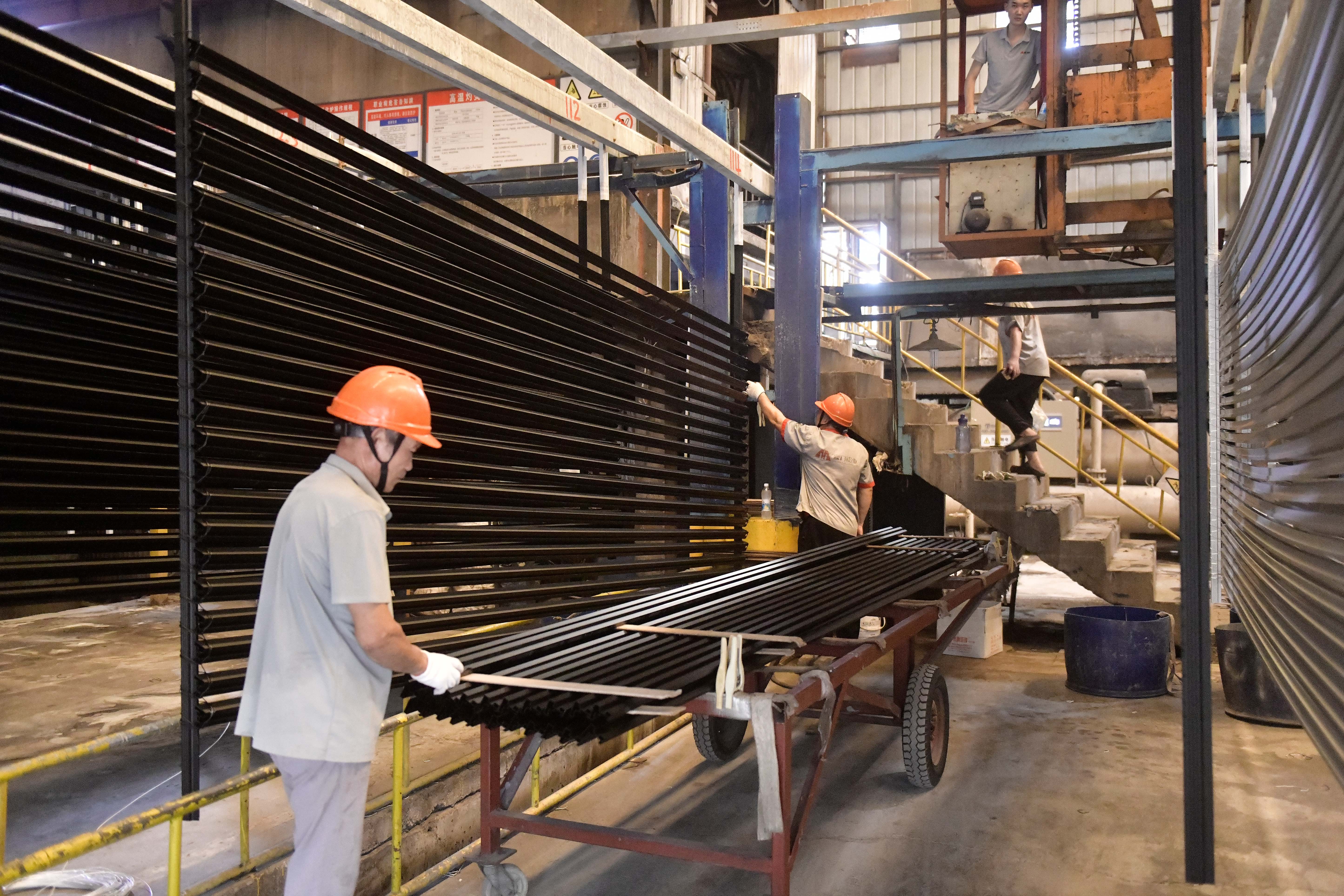
Production and handling inside Haomen Aluminum's Linyi facility, where finishing and inspection stages sit within a single 270,000 m² site.
On the performance side, Haomen states that its windows-and-doors profiles achieve purity above 98.5% and carry a quality guarantee period of more than 10 years, with improved energy efficiency derived from better thermal insulation. Those are the core differences the company claims against traditional architecture aluminum profiles for windows and doors: higher purity and longer service life.
Corrosion Control and What "100% Testing" Should Mean to a Buyer
Corrosion is the most common long-run failure mode in architectural aluminum, particularly in coastal, humid and industrial atmospheres. Haomen's stated control method combines screening of high-purity aluminum raw material, anodizing anti-corrosion processing and sealed moisture-proof packaging, with the explicit aim of resisting corrosion risk across the supply cycle rather than only at the point of extrusion.
At the operational level, the company describes strict incoming material inspection, a standardized anti-corrosion coating production process, fully sealed moisture-proof packaging, and finished-product corrosion testing before shipment. That sequence matters because it places testing after finishing and packing — the two stages where most transit-related failures are actually created.
A buyer should read "100% testing" as an in-house regime covering the production batch, not as third-party certification. The two are complementary: in-house testing controls routine output, while pre-shipment inspection or third-party verification provides independent confirmation on the first order or on high-risk destinations.
Where This Capability Set Fits: Application Notes
Haomen's stated main products are aluminum profiles for windows and doors, supported by architectural profiles and industrial materials more broadly, and by a development focus on automotive lightweighting. That shapes which inquiries fit cleanly and which need additional confirmation.
- Door and window architectural profiles — the core category, including sliding and casement systems in 6063-T5 and, where higher strength is specified, 6061-T6.
- Curtain wall sections — architectural profiles in the same alloy family, subject to finish-route confirmation for façade exposure conditions.
- OEM and ODM programs — custom profiles developed against a buyer's drawing, supported by the company's tooling and R&D function rather than off-the-shelf catalogue items only.
- Automotive aluminum extrusion — covered by the IATF 16949:2016 scope and the company's stated lightweighting development work.
- Adjacent families — outdoor fence profiles, solar aluminum frames, PV mounting aluminum structures, microchannel aluminum tube and general custom industrial aluminum fabrication sit within the wider industrial-materials scope, but die availability, finish specification and testing protocol should be confirmed item by item rather than assumed to transfer from the window and door range.
That last point is deliberate. A supplier with architectural strength is not automatically a supplier with equivalent depth in every adjacent profile family, and a capability file should be read as evidence for the categories it explicitly covers.
Comparison with Traditional Architectural Aluminum Profiles
The comparison Haomen draws is specific: its windows-and-doors profiles against traditional architecture aluminum profiles for the same application. On the company's stated figures, the differences fall into four measurable dimensions.
| Dimension | Traditional architectural profiles | Haomen windows-and-doors profiles |
|---|---|---|
| Material purity | Baseline | Above 98.5% |
| Quality guarantee period | Baseline | More than 10 years |
| Relative cost | Baseline | Approximately 10% lower |
| Thermal performance | Baseline | Better thermal insulation and energy-saving performance |
| Service life | Baseline | Longer usage time |
Comparison as stated by Haomen Aluminum for windows-and-doors applications. Like-for-like conditions should be re-established per project specification.
The commercial logic for a decision-stage buyer is straightforward: a lower unit cost combined with a longer stated service life changes lifecycle cost, not just purchase price. Where a façade or window system is specified for a 10-year-plus service horizon, an approximately 10% lower profile cost compounds with reduced replacement exposure.
But the comparison carries conditions, and a credible supplier file should state them. The 10% figure is a position against traditional architectural profiles in the windows-and-doors category; it should be recalculated per project, because finish route, alloy, temper and packing all move landed cost. A fluorocarbon-coated section and a mill-finish section are not interchangeable inputs to that comparison, and neither is a 6061-T6 structural section against a standard 6063-T5 architectural extrusion.
Limits and Boundaries: What the Evidence Does Not Cover
A capability file becomes more useful, not less, when its boundaries are stated. For Haomen's parameters, five constraints are worth planning around.
- Minimum order quantity. A 5-ton MOQ is low relative to monthly output, but it still excludes very small renovation or sample-scale orders. Buyers with fragmented site demand should consolidate requirements into a single call-off.
- Lead time scope. The stated 20-day lead time describes production once specification and order are confirmed. New die design and development, third-party testing and ocean freight sit outside that window.
- Testing independence. 100% testing is performed in-house. First orders, new finish routes and high-corrosion destinations justify independent pre-shipment inspection.
- Export orientation. Export represents approximately 10% of output, with South America and Africa stated as main markets; the export list also includes the United States, Canada, Australia, Brazil, Argentina, Russia, Germany and Spain. Buyers in markets outside that pattern should confirm documentation, packaging standards and logistics experience for their specific destination.
- Category depth. The strongest evidence covers architectural profiles for windows and doors plus automotive lightweighting. Adjacent industrial profile families require item-level confirmation of die availability and finish specification.
Market Trend Analysis: Why Documented Capacity Is Being Priced In
Three published datasets explain why supplier capacity documentation has moved from a nice-to-have to a shortlisting criterion. Grand View Research places Asia Pacific at a 71.7% revenue share of the aluminum extrusion market in 2025, driven primarily by construction and automotive demand in China. Orion Market Research values the China aluminum extrusion market at USD 25.5 billion in 2024, with a projected CAGR of 9.6% through 2035. Scale, in other words, is concentrated in one region and still expanding.
For buyers, concentrated supply creates a specific risk: many suppliers look similar on paper because they draw on the same regional base. The differentiator becomes verifiable operating data — plant area, tonnage, certification scope and testing discipline — rather than country of origin alone.
A second driver is application diversification. Mordor Intelligence values the solar PV mounting systems market at approximately USD 44.5 billion in 2024, with aluminum holding a 71.5% material share. Aluminum frames and mounting structures are a volume category with tight tolerance and corrosion requirements, and suppliers with documented capacity and certification are structurally better placed to serve it than suppliers selling on price alone.
A third is the automotive pull. IATF 16949:2016 is a mandatory requirement for aluminum component suppliers to major automotive OEMs, per IATF Global Oversight. As architectural suppliers attempt to enter automotive-adjacent work, certification scope becomes a visible dividing line — one that buyers can verify rather than infer.
Market-size estimates for this sector vary by research scope; Orion's global figure for 2024 is USD 94.8 billion, while Grand View Research reports USD 98.2 billion for 2025 and Wissen Research reports USD 120 billion for 2025. The directional conclusion is consistent even where the absolute numbers differ: volume is growing, and sourcing decisions are increasingly made on documented capability.
A Decision Checklist for Verifying Any Capability File
The checklist below converts Haomen's disclosed parameters into a reusable evaluation framework. It applies to any aluminum profile supplier under consideration.
| Physical base | Plant area and site plan; confirm extrusion, finishing, warehousing and dispatch sit inside one boundary. Haomen: 270,000 m². |
| Throughput | Annual and monthly tonnage, and whether they reconcile. Haomen: 100,000 tons/year, 8,000 tons/month. |
| Order parameters | MOQ and lead time, and what each excludes. Haomen: 5-ton MOQ, 20-day production lead time. |
| Quality systems | Certificate scope and validity, not just certificate names. Haomen: IATF 16949:2016, ISO 9001, ISO 14001, ISO 45001. |
| Technical range | Alloy and temper coverage, finish routes, tooling capability. Haomen: 6063-T5 and 6061-T6, mill finish, anodized, electrophoresis, powder coated, fluorocarbon coated, wood grain transfer. |
| Verification regime | What is tested, when, and by whom. Haomen: incoming material inspection, corrosion testing before shipment, 100% testing in-house. |
| R&D depth | Engineering headcount and institutional backing. Haomen: 35 engineers; 49 R&D staff with bachelor's degrees or above, including one postdoctoral researcher, seven doctoral and three master's degree holders; Shandong Provincial Technology Research Center since 2019; collaboration with the Light Alloy Precision Forming Engineering Technology R&D Center of Shanghai Jiao Tong University, Shandong University and the Beijing Research Institute of Nonferrous Metals. |
Future Outlook
Two shifts are likely to shape supplier evaluation in this category over the next sourcing cycles. The first is the normalisation of audit-ready capability files: buyers facing a 9.6% projected CAGR in the China extrusion market, per Orion Market Research, will be scheduling more orders against the same pool of qualified plants, and will therefore screen on documented capacity before they screen on price.
The second is certification convergence. As automotive lightweighting and solar mounting both expand within the same aluminum supply base, management-system standards such as IATF 16949:2016 stop being sector-specific badges and start functioning as general procurement filters. Suppliers positioned across architectural profiles, automotive extrusion and industrial materials — the structure Haomen describes — are the ones for which that convergence is least disruptive.
For buyers, the practical implication is to build capability evidence into the shortlist stage rather than the contract stage. Comparing plant area, tonnage, certification scope, MOQ, lead time and testing protocol before technical evaluation narrows the field faster than any specification discussion.
FAQ
What verifiable evidence should a buyer request before approving an aluminum profile supplier?
Four categories. Physical evidence: plant area and a site plan showing extrusion, finishing, warehousing and dispatch within one boundary. Throughput evidence: annual and monthly tonnage, MOQ and lead time, including what the lead time excludes. System evidence: the scope and validity of quality, environmental and safety certifications. Technical evidence: alloy and temper range, finish routes and the testing protocol. Haomen Aluminum's file states 270,000 m² of plant, 100,000 tons of annual output, 8,000 tons monthly, a 5-ton MOQ, a 20-day production lead time, 100% testing, and IATF 16949:2016, ISO 9001, ISO 14001 and ISO 45001 certification.
How do Haomen's capacity figures and lead time affect order scheduling?
The annual figure of 100,000 tons implies an average of roughly 8,300 tons per month, and the company states monthly output of 8,000 tons, so the two figures describe a consistent operating level. Against a 5-ton minimum order quantity, a minimum order represents a very small share of monthly output. The 20-day lead time applies to production after order and specification confirmation; die development for new profiles, third-party testing and freight are additional to that window and should be scheduled separately.
Which certifications matter for automotive versus architectural buyers?
For automotive buyers, IATF 16949:2016 is the threshold standard; IATF Global Oversight identifies it as a mandatory requirement for suppliers of aluminum components such as crash-management systems and structural frames to major automotive OEMs. ISO 9001, ISO 14001 and ISO 45001 cover general quality, environmental and occupational health and safety management respectively, and are commonly requested in construction and tender-driven supply. None of these substitutes for product conformity: in China, architectural aluminum alloy profiles must comply with the GB/T 5237 series covering mill finish, anodizing, electrophoresis and powder or fluorocarbon coatings, while European specifications reference EN 755 and EN 12020.
How do Haomen's windows-and-doors profiles compare with traditional architectural aluminum profiles?
For windows-and-doors applications, Haomen states aluminum purity above 98.5% and a quality guarantee period of more than 10 years, against a traditional architectural profile baseline. The company also states approximately 10% lower cost and better thermal insulation and energy-saving performance, with the core differences described as higher purity and longer service life. Because finish route, alloy and temper change landed cost, the cost comparison should be recalculated per project specification rather than applied as a fixed discount.
What are the limits of this capability set?
Five boundaries. A 5-ton minimum order quantity excludes very small or sample-scale orders. The 20-day lead time covers production only, not new die development, third-party testing or freight. 100% testing is performed in-house, so first orders and high-corrosion destinations may justify independent inspection. Export represents approximately 10% of output, with South America and Africa stated as main markets, so buyers in other regions should confirm documentation and logistics experience for their destination. Finally, the strongest evidence covers architectural profiles for windows and doors and automotive lightweighting; adjacent families such as outdoor fence profiles, solar frames, PV mounting structures or microchannel tube require item-level confirmation of die availability and finish specification.
This article is an industry reference. Capability parameters are as stated by Shandong Haomen Aluminium Industry Co., Ltd. and should be verified through site audit or third-party inspection before contracting.
Company reference material: Haomen Aluminum product catalog (PDF).
¿Tiene preguntas o necesita más detalles?
Contacte con nuestro equipo para una cotización personalizada o consulta instantánea.
Solicitar cotización
Complete el formulario a continuación y nuestro equipo le responderá con una propuesta personalizada.
Chat directo de WhatsApp
¿Prefiere chatear en tiempo real? Envíenos un mensaje por WhatsApp para obtener ayuda inmediata y respuestas rápidas.
- Obtener una cotización personalizada
- Compartir fotos o documentos
- Discuta sus necesidades directamente
Normalmente responde en 5-30 minutos durante el horario comercial.