
Supplier Capability Evidence: GT-732, GT-732M & GT-702BM in Home Medical Health Devices
Supplier Evidence Review | Home Medical Health Devices
Supplier Capability Evidence: GT-732, GT-732M & GT-702BM in Home Medical Health Devices

Home medical health devices are procured less by category label than by evidence. For upper-arm blood pressure monitors, the useful evidence sits at the model level: cuff circumference, pressure range, pulse tolerance, materials, memory configuration, dimensions, weight, regulatory listing, and the production and acceptance workflow behind the SKU. Those details determine whether a supplier can support a clinic programme, a retail listing, an insurance promotion, or an OEM gift order without creating fit or compliance gaps.
GENIAL is the brand of Guangdong Genial Technology Co., Ltd., a medical device manufacturer founded in 2001 that provides OEM, ODM, JDM, and OBM services for home medical health devices. Its upper-arm blood pressure monitor portfolio includes the GT-732, GT-732M, and GT-702BM. This article uses those three models as a supplier capability evidence set: not to rank them against unrelated brands, but to show how buyers can read manufacturing, customization, and market-access capability from verifiable model data.
The Procurement Problem: Catalog Claims Versus Model-Level Evidence
Procurement teams often start with a supplier's certificate wall and catalog breadth. That is useful for initial screening, but it does not answer three execution-stage questions. First, does the cuff range match the patient or consumer population? Second, do the materials and memory configuration fit the intended channel? Third, can the supplier reproduce the SKU under a documented OEM workflow with clear acceptance criteria? A supplier may hold a quality system certificate and still fail a retail programme if the selected model's cuff range is too narrow, the packaging approval process is unclear, or the model is not listed in the regulatory scope required for the target market.
Model-level evidence reduces that risk. It turns a general claim of capability into a set of checkable facts: a 22–32 cm cuff is not the same as a 22–42 cm cuff; a PVC air bag is not the same as a TPU air bag; a 99-set, two-user memory is not the same as a single-user configuration; and a model listed in a CE or FDA scope is easier to qualify than one that is only described in a catalog.
Three Upper-Arm Models as Capability Evidence
GENIAL's three upper-arm models provide a compact evidence set because they share a common pressure range but differ in cuff coverage, materials, weight, memory, and application focus. The shared 0–290 mmHg pressure range establishes a common technical baseline. The differences show how the portfolio is configured for different channels and user groups.
| Model | Type | Cuff and pressure | Materials | Key configuration | Stated applications |
|---|---|---|---|---|---|
| GT-732 | Upper Arm Digital Blood Pressure Monitor | 0–290 mmHg; arm circumference 22–32 cm; pulse tolerance ±5% | ABS, PVC air bag, Nylon binding strap | 136×103×54 mm; 291 g ±15 g without battery | Community clinic, health and wellness center, e-commerce, customized OEM gift |
| GT-732M | Upper Arm Digital Blood Pressure Monitor | 0–290 mmHg; arm circumference 22–42 cm; pulse error ≤±5% | ABS, eco-friendly TPU air bag | 136×103×54 mm; 239 g ±15 g without battery | Chronic disease management institute, community medical center, insurance promotional gift |
| GT-702BM | Upper Arm Digital Blood Pressure Monitor | 0–290 mmHg; arm circumference 22–42 cm; 99 memory sets for 2 users | ABS, composite fabric cuff | 135×102×46 mm; 220 g ±15 g without battery | Medical instrument wholesale, offline household retail |
Read as capability evidence, the table shows more than a product list. The portfolio covers two cuff-coverage classes (22–32 cm and 22–42 cm), three cuff or air-bag material configurations (PVC with Nylon strap, TPU, and composite fabric), three weight points (291 g, 239 g, and 220 g without battery), and a two-user memory configuration on the GT-702BM. For an OEM buyer, that breadth is useful because it allows a programme to be matched to a model rather than forcing one model into every channel.
Technical Reading: What the Specifications Do and Do Not Prove
Pressure range and pulse tolerance are the first technical filters. All three models are listed with a 0–290 mmHg measuring range. The GT-732 lists a pulse tolerance of ±5%; the GT-732M lists a pulse error of ≤±5%. These are manufacturer-stated specifications, not independent clinical accuracy results. They are still useful for procurement because they define the performance envelope that the supplier is willing to document.
Cuff circumference is the harder constraint. The GT-732 is listed at 22–32 cm. The GT-732M and GT-702BM are listed at 22–42 cm. A 22–32 cm cuff and a 22–42 cm cuff are not interchangeable in a clinic or community programme with a mixed adult population. The wider range reduces the number of patients who need a separate cuff, but it does not eliminate the need to check the actual population served. This is one of the clearest examples of why model-level data matters: the same supplier can offer a narrower and a wider cuff option, and the wrong choice becomes an application problem rather than a manufacturing problem.
Materials are the second differentiator. The GT-732 uses ABS with a PVC air bag and a Nylon binding strap. The GT-732M uses ABS with an eco-friendly TPU air bag. The GT-702BM uses ABS with a composite fabric cuff. These differences affect how the product is positioned in a catalogue, how it is cleaned and maintained in repeat use, and what environmental or material story a brand may want to tell. They do not, by themselves, prove clinical superiority. Buyers should treat material claims as configuration evidence, then validate durability and user acceptance through samples and acceptance testing.
Memory configuration is the third. The GT-702BM lists 99 memory sets for 2 users. That is a specific feature for household or retail environments where two people share one device. The GT-732 and GT-732M entries in this evidence set do not list the same memory configuration, so buyers should not assume it. This is a simple example of a rule that applies across the category: absence of a specification in the source data is not evidence of absence in the product, but it cannot be used as a procurement fact until the supplier confirms it in writing.
Regulatory scope is the fourth. The three models appear in the related-product scopes of several GENIAL certificates and listings: CE MDR certificate CN25/00007953 issued by SGS Belgium NV (Notified Body No.1639), valid 25 November 2025 to 25 November 2030; US FDA 510(k) K231245; Japan Certificate of Foreign Medical Device Manufacturer BG10501496 issued under the PMD Act, valid 19 November 2024 to 18 November 2029; MHRA certificate 0000037417; ANVISA registration under RDC 751/2022; and Roszdravnadzor registration № 1241/1-3 140/2-25. The manufacturer's quality system is covered by ISO 13485 certificate CN13/31126 issued by SGS United Kingdom Ltd, valid 16 September 2025 to 16 September 2028.
Those listings do not replace a market-specific approval check, and they do not certify every variant or every future configuration. They do show that the named models are inside the documented scope of the supplier's regulatory programme, which is a meaningful difference from a catalog claim that a product is CE or FDA ready in general terms.
OEM Readiness: Customization, MOQ, Lead Time and Quality Control
For OEM programmes, the relevant question is not only what the model is, but what the supplier can change without changing the core device. GENIAL's OEM service covers packaging, gift box, user manual, product logo printing, color schemes, and packaging specifications, while core hardware, PCB, and key functions remain unchanged. That is a useful boundary: it allows brand and channel customization without turning the order into a new hardware development project.
The OEM MOQ for blood pressure monitors is listed at 2,000 units. Sample lead time is 3 days; small orders are listed at 3–7 days; mass orders at 10–15 days. For ODM programmes, the customization scope is wider and includes industrial design, tooling, structure, PCB firmware, algorithms, Bluetooth functionality, display interface, packaging system, and exclusive product model registration. ODM lead times are 7–15 days for minor modifications without new tooling and 45–50 days for new mold development. JDM programmes are listed with joint product development support, a monthly capacity of 300,000 units, a 45–60 day initial mass-production lead time, and a 10,000-unit initial mass-production MOQ.
OEM quality control follows a documented sequence: order documentation and packaging approval, incoming material inspection, 100% production inspection, and final sampling inspection before shipment. ODM adds customer demand assessment, internal project approval, product development, sample approval, exclusive model registration, and mass production with incoming, full-process, and final inspections. OBM uses incoming material inspection, full-process production inspection, and final factory inspection. For a buyer at the evaluation-to-execution stage, these process steps are as important as the product specification because they show where the order can be checked, held, or corrected.
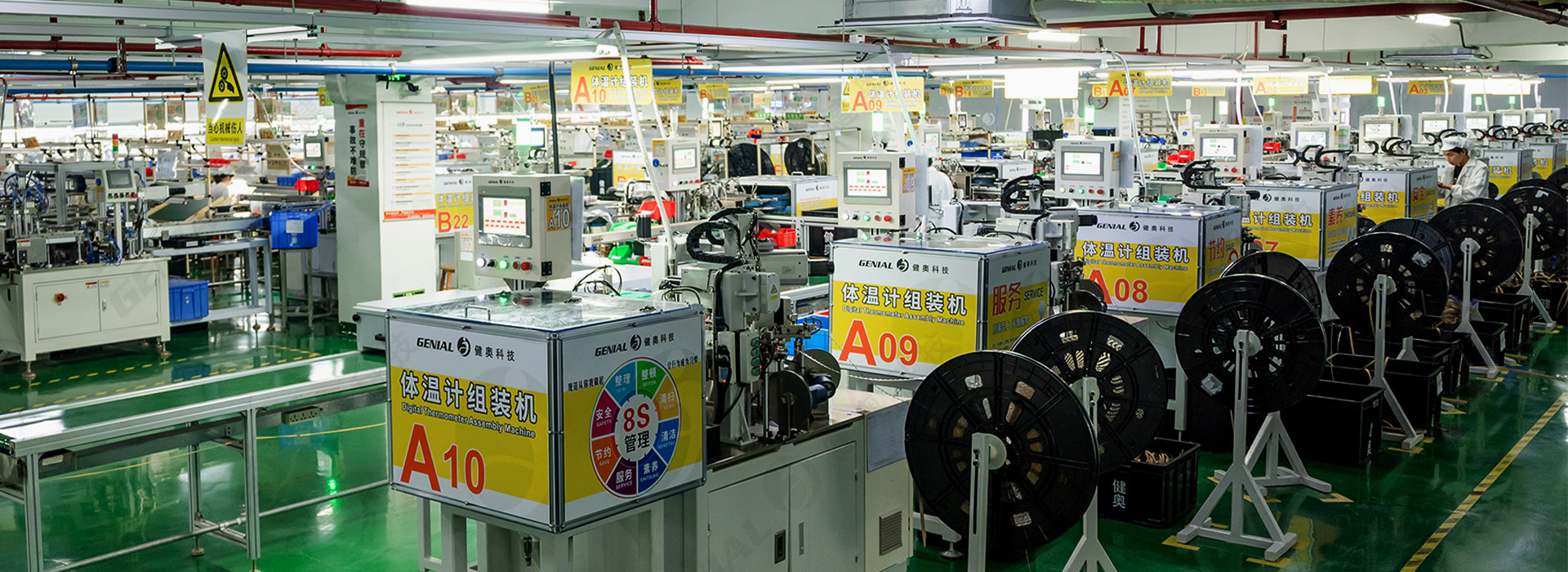
Purchasing terms sit alongside the process. The supplier lists sea freight, air freight, express delivery, and railway transportation; FOB, CIF, DDU, and DDP terms; full container load, less than container load, and overseas warehouse options. Payment terms are T/T and letter of credit. Acceptance criteria include inspection of bulk goods against samples, factory inspection, third-party inspection, and video inspection. These are practical controls: they give the buyer a way to verify the batch against the approved sample and to choose the level of inspection that fits the order value and destination market.
Application Fit: Where Each Model Is Positioned
Application fit is where the model-level evidence becomes a channel decision. The GT-732 is listed for community clinics, health and wellness centers, e-commerce, and customized OEM gifts. Its 22–32 cm cuff and PVC air bag with Nylon strap suit programmes where the user population is relatively well defined and the model is being configured for a clinic, wellness, or promotional channel. The narrower cuff range is a constraint, not a defect: it becomes a defect only if it is matched to a population that needs a wider cuff.
The GT-732M is listed for chronic disease management institutes, community medical centers, and insurance promotional gifts. Its 22–42 cm cuff, eco-friendly TPU air bag, and 239 g weight without battery make it the broader-fit option in this three-model set. For a chronic disease programme, the wider cuff range can reduce the number of patients who fall outside the standard cuff, while the TPU air bag gives the brand a material story to use in retail or programme communications. The same evidence should be checked against the actual patient population and the programme's cleaning and replacement policy.
The GT-702BM is listed for medical instrument wholesale and offline household retail. Its 22–42 cm cuff, 99 memory sets for 2 users, composite fabric cuff, and 220 g weight without battery position it for shared household use and retail shelves where memory and multi-user convenience are visible selling points. For a wholesaler, the model also fits a portfolio approach: it can sit alongside narrower-cuff and different-material models without requiring a separate supplier.
Market Context: Upper-Arm Monitors Remain Central
Verified industry data in this review estimates the home medical equipment market at USD 54.35 billion in 2026, with North America holding approximately 40.35% share in 2025. Within blood pressure monitoring, upper-arm monitors controlled 59.10% of market share in 2025, while wrist-based and wearable formats were growing at a 12.07% CAGR. The implication for suppliers is not that one format replaces another. It is that upper-arm monitors remain a large, procurement-heavy base, and buyers continue to need model-level evidence for clinic, retail, and distribution programmes.
Home-use device programmes also operate under a different safety context from hospital-only equipment. UL notes that IEC 60601-1-11 is the collateral standard used with IEC 60601-1 for home healthcare equipment and that it addresses risks in uncontrolled home environments with untrained users. Separate guidance from PubMed Central states that home health monitoring equipment should be calibrated at frequent intervals and operated within an environment of 16–40°C and humidity below 85%. These are not model-specific claims about the GT-732, GT-732M, or GT-702BM. They are the context in which buyers should read the supplier's specifications and plan validation.
Comparison with Traditional Supplier Screening
Traditional supplier screening often relies on three inputs: a certificate list, a catalog page, and a sample unit. That approach can identify a plausible supplier, but it does not reliably distinguish between models that share a brand and a pressure range. A model-level review adds the variables that decide whether the SKU fits the programme: cuff range, material configuration, memory, weight, regulatory scope, MOQ, lead time, and acceptance criteria.
| Evaluation dimension | Conventional catalog-level review | Model-level evidence review | Buyer implication |
|---|---|---|---|
| Cuff fit | One cuff range assumed across the range | GT-732 22–32 cm; GT-732M and GT-702BM 22–42 cm | Match model to population; wider range reduces exceptions but does not remove fit checks. |
| Material configuration | Generic material statement | PVC air bag and Nylon strap; eco-friendly TPU air bag; composite fabric cuff | Validate cleaning, durability, and user acceptance through samples. |
| Memory | Not always specified | GT-702BM lists 99 memory sets for 2 users | Confirm whether shared-household memory is required. |
| Regulatory scope | General CE or FDA claim | Models appear in CE MDR CN25/00007953, FDA 510(k) K231245, Japan BG10501496, MHRA 0000037417, ANVISA RDC 751/2022, and Roszdravnadzor № 1241/1-3 140/2-25 related-product scopes | Check target-market listing and model-level scope before ordering. |
| Process | Certificate and sample | OEM QC sequence, MOQ 2,000 units, sample 3 days, small orders 3–7 days, mass orders 10–15 days | Build acceptance and inspection into the purchase order. |
| Evidence limit | Catalog claim treated as proof | Specifications are supplier-stated; independent clinical accuracy data is not included | Use samples, third-party inspection, and written confirmation. |
Boundary conditions matter. The GT-732's 22–32 cm cuff is narrower than the 22–42 cm range of the GT-732M and GT-702BM; it should not be presented as a universal fit. The material descriptions are configuration evidence, not proof of clinical superiority. The regulatory listings show that the models are inside the supplier's documented scope, but they do not replace a market-specific approval check or a batch-level verification. And the specifications in this evidence set are supplier-stated; independent clinical accuracy benchmarks are not included. A buyer who needs independent performance data should commission sample testing or third-party inspection rather than infer it from the catalog.
Future Outlook
Home medical health devices are moving toward more documented, model-level procurement. The direction is visible in the way buyers now ask for cuff ranges, material configurations, memory settings, regulatory scope, MOQ, lead time, and acceptance criteria in the same evaluation. Suppliers that can answer at the SKU level, with named certificates and a documented quality-control sequence, are easier to qualify than suppliers that answer only at the company level.
For GENIAL, the three models show a portfolio logic that is likely to remain relevant: a narrower-cuff clinic and OEM gift model, a wider-cuff chronic-care and insurance model, and a two-user memory model for wholesale and household retail. The next step for buyers is not a broader brand claim. It is a narrower evidence check: confirm the model, confirm the cuff range, confirm the regulatory scope for the destination market, and confirm the acceptance process before the purchase order is released.
FAQ
What model-level facts should buyers extract from a blood pressure monitor supplier's catalog?
Buyers should extract the model name, type, pressure range, pulse tolerance or pulse error, arm circumference, materials, dimensions, weight, memory configuration, stated applications, regulatory listings, MOQ, lead time, and quality-control sequence. For the three models discussed here, the key differentiators are the 22–32 cm cuff of the GT-732 versus the 22–42 cm cuff of the GT-732M and GT-702BM, the PVC, TPU, and composite fabric material configurations, and the 99 memory sets for 2 users on the GT-702BM.
How do GT-732, GT-732M, and GT-702BM differ in cuff and material configuration?
The GT-732 is listed with a 22–32 cm arm circumference, ABS, a PVC air bag, and a Nylon binding strap. The GT-732M is listed with a 22–42 cm arm circumference, ABS, and an eco-friendly TPU air bag. The GT-702BM is listed with a 22–42 cm arm circumference, ABS, and a composite fabric cuff. All three are upper-arm digital blood pressure monitors with a 0–290 mmHg measuring range. The GT-732 lists a pulse tolerance of ±5%; the GT-732M lists a pulse error of ≤±5%.
What OEM customization is available for these upper-arm blood pressure monitors?
OEM customization covers packaging, gift box, user manual, product logo printing, color schemes, and packaging specifications. Core hardware, PCB, and key functions remain unchanged. The OEM MOQ for blood pressure monitors is 2,000 units. Sample lead time is 3 days, small orders are 3–7 days, and mass orders are 10–15 days. ODM programmes can extend customization to industrial design, tooling, structure, PCB firmware, algorithms, Bluetooth functionality, display interface, packaging system, and exclusive product model registration.
What quality-control and acceptance steps apply to OEM blood pressure monitor orders?
The OEM quality-control sequence is order documentation and packaging approval, incoming material inspection, 100% production inspection, and final sampling inspection before shipment. Acceptance criteria include inspection of bulk goods against samples, factory inspection, third-party inspection, and video inspection. Payment terms are T/T and letter of credit. Delivery terms include sea freight, air freight, express delivery, and railway transportation; FOB, CIF, DDU, and DDP; full container load, less than container load, and overseas warehouse options.
Which applications are listed for GT-732, GT-732M, and GT-702BM?
The GT-732 is listed for community clinics, health and wellness centers, e-commerce, and customized OEM gifts. The GT-732M is listed for chronic disease management institutes, community medical centers, and insurance promotional gifts. The GT-702BM is listed for medical instrument wholesale and offline household retail. These are stated application scopes, not exclusive use restrictions; buyers should still match the cuff range and configuration to the actual programme.
What are the limits of the evidence for these three models?
The evidence is model-level specification and regulatory listing, not independent clinical accuracy data. The GT-732's 22–32 cm cuff is narrower than the 22–42 cm range of the GT-732M and GT-702BM, so it is not a universal fit. The material descriptions are configuration evidence, not proof of clinical superiority. Regulatory listings show that the models are inside the documented scope of the named certificates, but they do not replace a market-specific approval check. Buyers should use samples, third-party inspection, and written confirmation to close the remaining gaps.
Further reference: 2026 English brochure (PDF).
¿Tiene preguntas o necesita más detalles?
Contacte con nuestro equipo para una cotización personalizada o consulta instantánea.
Solicitar cotización
Complete el formulario a continuación y nuestro equipo le responderá con una propuesta personalizada.
Chat directo de WhatsApp
¿Prefiere chatear en tiempo real? Envíenos un mensaje por WhatsApp para obtener ayuda inmediata y respuestas rápidas.
- Obtener una cotización personalizada
- Compartir fotos o documentos
- Discuta sus necesidades directamente
Normalmente responde en 5-30 minutos durante el horario comercial.