
Supplier Capability Evidence: FYCHI Inspection, 280-lb Cartons and Export Packaging
Supplier Capability Evidence: FYCHI Inspection, 280-lb Cartons and Export Packaging
An independent industry reference on how inspection records, carton load ratings and export packaging documentation function as procurement signals for sim racing cockpit buyers.
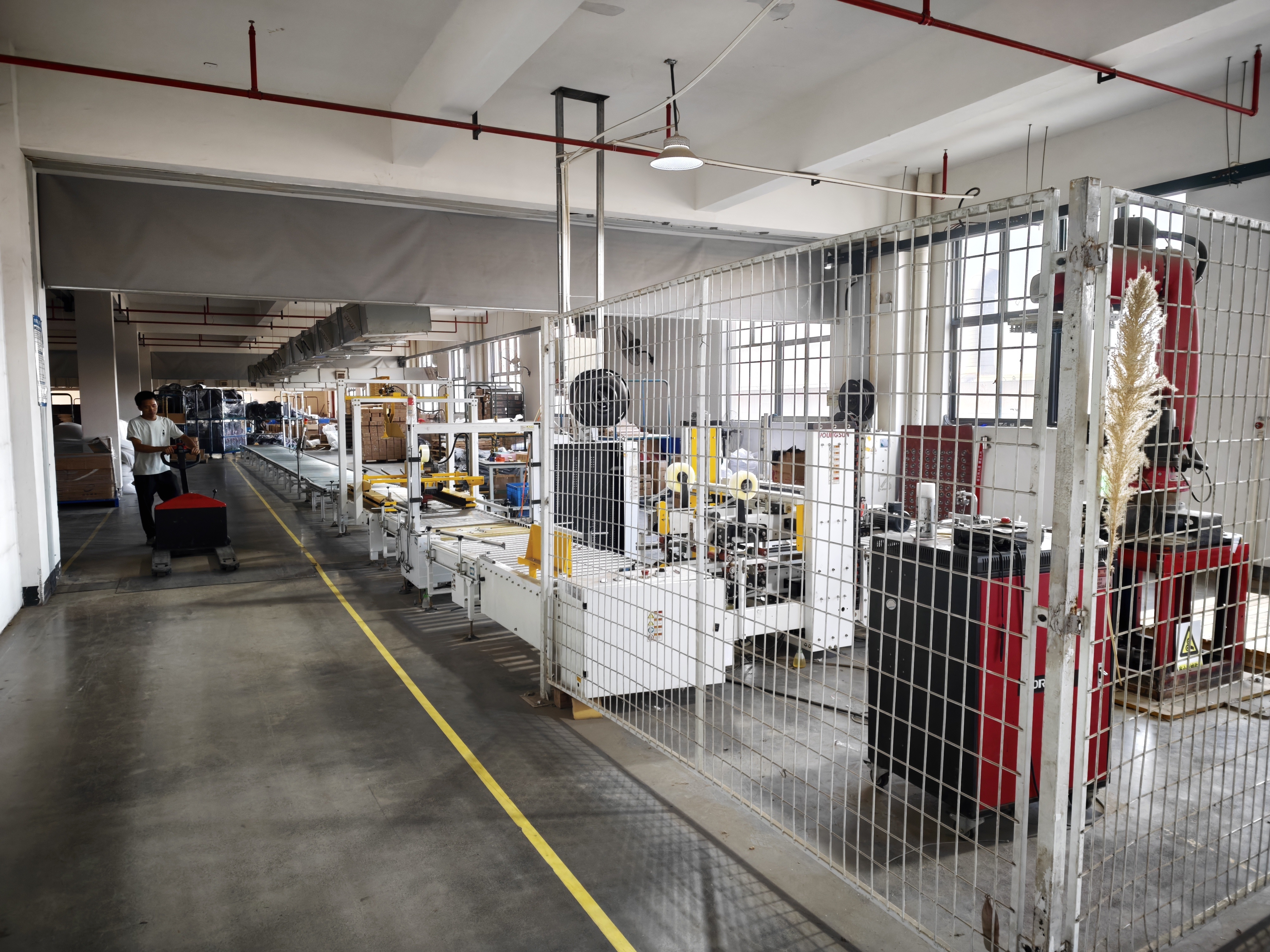
Export packaging is one of the few places where a sim racing cockpit supplier's operational discipline becomes visible before a container arrives.
Why packaging is a procurement question for sim racing cockpits
A sim racing cockpit ships as thousands of individual parts — aluminium profiles, powder-coated steel frames, wheel plates, pedal plates, shifter mounts, monitor mounts and hardware — but as one package. The strongest component in the box is only as protected as the weakest carton around it.
Sim racing hardware has matured into a distributor category. Cockpits, stands and seats now appear on retail shelves, in purchase orders for esports venues, and in home deliveries where the buyer evaluates each component. That shift moves logistics from a back-office concern to a visible variable in procurement. For a buyer, the question is no longer only whether the cockpit's specification sheet is good, but whether the cockpit can arrive in the condition that the specification sheet promises.
This article looks at what one manufacturer makes visible in that logistics layer. It uses FYCHI as a case because specific operational facts — including pre-shipment inspection, a load-rated carton and test certification — are documented in public material. The purpose is not to endorse a supplier, but to use the evidence to show how sim racing cockpit buyers should read export packaging information alongside the specifications that sit on top of it.
The problem: damaged arrival is a specification problem
A sim racing cockpit is rarely damaged because its frame failed. It is damaged because of what happens to the frame on the way. Three factors drive most transit loss:
- Stacking load. Cartons are stacked in containers, on pallets and in retail stockrooms. The bottom carton carries the weight of the cartons above it, and that weight can exceed the weight of the product itself.
- Impact load. Corners, forklift handling and rough drops concentrate force on a single point — often exactly where the wheel plate or the monitor mounting plate sits.
- Moisture and debris during handling. Ocean freight draws condensation. Loose hardware that shifts inside a carton during a long transit can scratch or knock a pedal plate fractionally out of position on an aluminium profile.
None of these are abstract risks. They translate into concrete distributor costs: returns, repackaging before resale, warranty claims on components that are not the faulty part, and a failed retail demonstration. That is why export packaging is more than a cost line; it is an evidence line about a supplier's operational maturity.
What FYCHI puts on record: factory, testing and documentation
FYCHI is the brand operated by Zhejiang Zhongyao Intelligent Equipment Co., Ltd. (Hangzhou Branch) for racing simulator hardware. Its production base is a 35,000 m² facility in Heping Town, Changxing County, Huzhou City, Zhejiang Province, with 100–200 staff, design capability from a 10-person team and an 80% export share. The company sits at the manufacturing end of the sim racing hardware chain: an owned line for steel and aluminium simulator frames, with in-house welding, powder coating and assembly for sim racing cockpits, wheel and pedal stands and racing seats.
The evidence relevant to this article falls into three groups.
Test and compliance records
FYCHI racing simulator brackets are tested for RoHS 2.0 compliance under test certificate TST20240500495-3RC, issued by Dongguan True Safety Testing Co., Ltd. in May 2024 and covering the 6002–6020 model series. Seating products are tested for safety, strength and durability in accordance with the EN 1335 series and for REACH SVHC compliance by Bureau Veritas. These are test records for the bracket and seating lines, not product claims.
Design intellectual property
The FYCHI racing simulator bracket design is protected by a Chinese design patent — Certificate No. 7689673, Patent No. ZL 2022 3 0555008.X, granted November 2022 — and by a Registered Community Design with the European Union Intellectual Property Office — Registration No. 002228411-0001, April 2013. For a distributor, a registered design associates the product design with the factory, not only with the model name on a spec sheet.
Pre-shipment inspection
FYCHI inspects every unit through pre-shipment inspection before loading. That is a small statement, but it is the anchor for everything else in this packaging discussion. It means the goods are checked at the factory gate rather than at arrival.
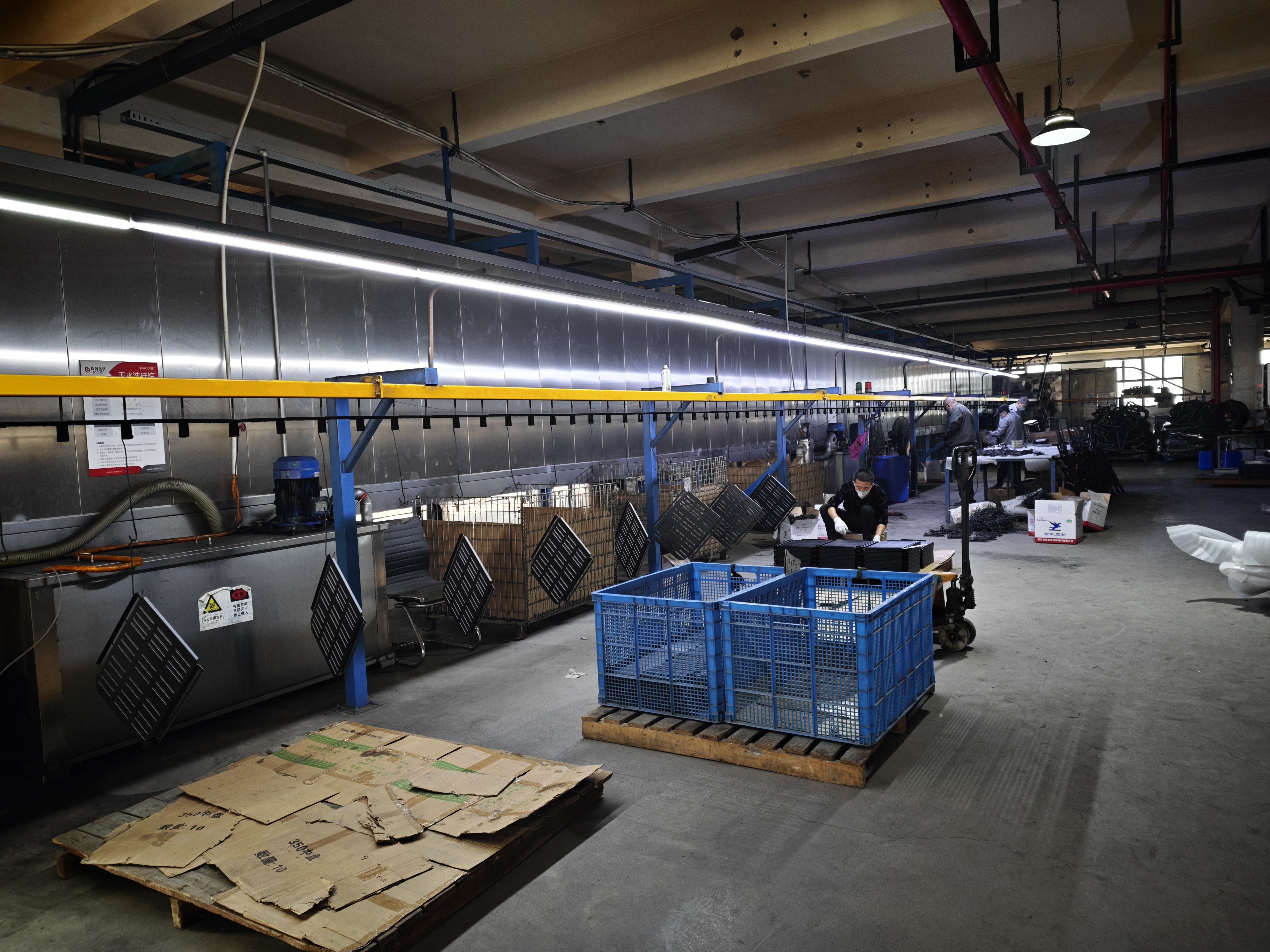
Powder coating is part of the same in-house line that feeds final assembly and inspection for sim racing cockpit frames.
The 280-lb carton: what it actually certifies
The most concrete packaging figure in FYCHI's record is on the carton: a 280 lb load rating for its export cartons. The number has to be read in the correct frame.
280 lb is a carton-level load rating, not a product specification. It describes what the carton is designed to carry under controlled handling before its structural integrity is compromised. It does not state the weight of an individual cockpit unit, and it does not guarantee that any product will survive severe mishandling. What it sits inside is the following set of packaging facts:
| Packaging element | What FYCHI documents |
|---|---|
| Carton load rating | 280 lb rated export carton |
| Corner protection | Black EPE corner protection |
| Cushioning | 5 mm EPE cushion boards on both top and bottom of each carton |
| Documentation in every carton | Colour manual, certificate of conformity, warranty card and installation tools |
| Hardware | Complete bolt set supplied in every carton |
| Pre-loading check | Pre-shipment inspection on every unit before loading |
The table reads as a shipping module, not as a single carton number. The carton rating handles the stacking problem; EPE corner protection and cushion boards handle the impact and shock problem; the manual, certificate of conformity, warranty card, tools and bolt set handle post-arrival use. That last group is frequently what buyers discover is missing only when the first order arrives without it.
What export packaging does and does not check
Inspection of packaging and unit quality is a control point, and it is useful to be precise about where the control point ends.
Pre-shipment inspection typically covers assembly integrity (frame, wheel mount, pedal plate, shifter position), hardware pack and bolt set completeness, appearance and surface finish (powder coat or aluminium profile), packaging compliance (manual, certificate of conformity, warranty card, installation tools), and carton marking and export labels.
Pre-shipment inspection does not cover compatibility testing against a specific wheel base, because the buyer should confirm the mounting hole pattern before ordering; third-party re-testing, because the RoHS 2.0, EN 1335 and REACH SVHC reports apply to specific model ranges and the RoHS 2.0 certificate covers the 6002–6020 series; or damage in transit, which sits with the carrier or the insurance policy.
That boundary is not a flaw. It is the same boundary every manufacturer operates inside. What matters for a buyer is whether the supplier is explicit about it, and FYCHI is explicit in its published material.
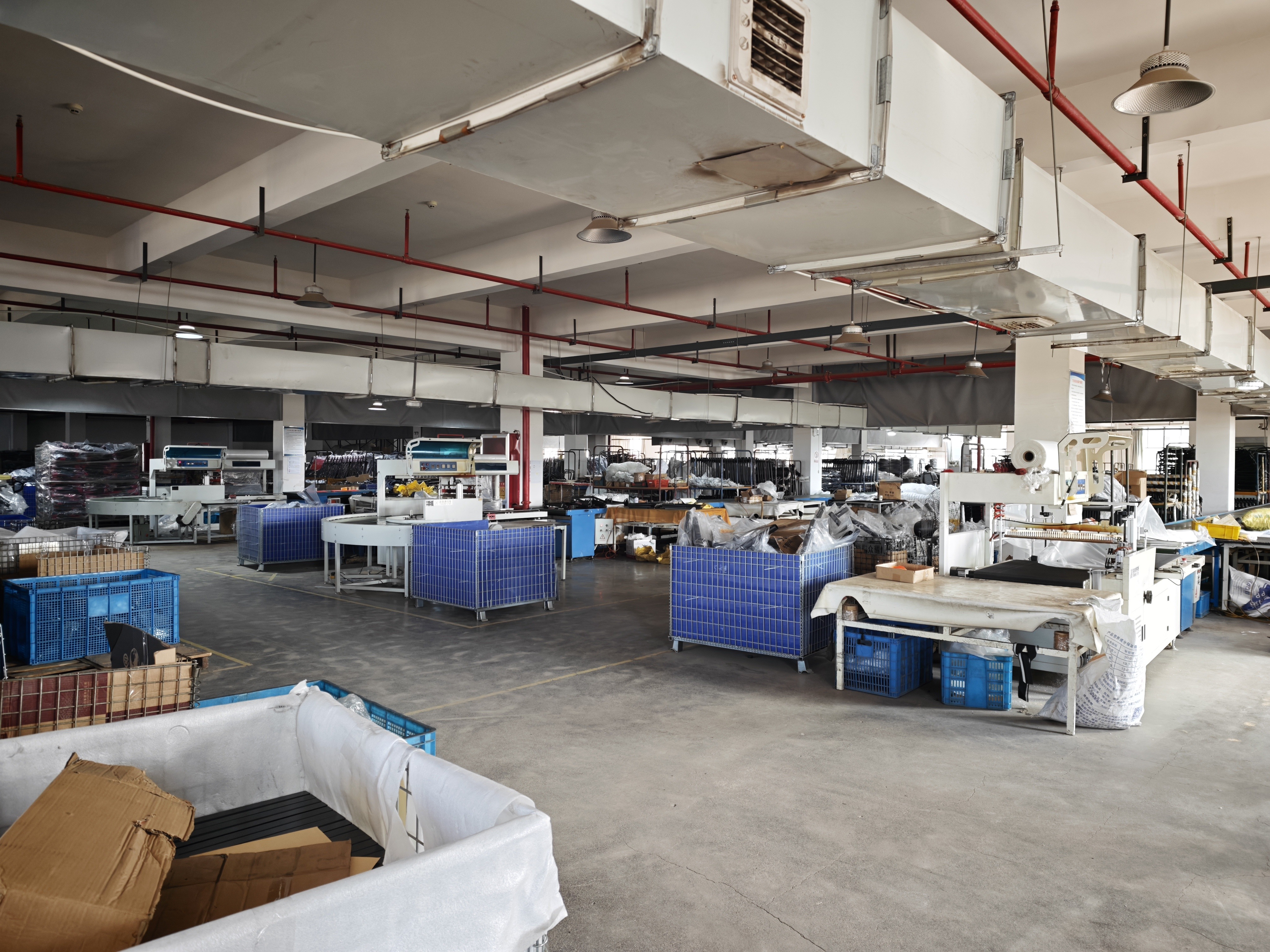
The packing station is a checkpoint, not a finishing line. Pre-shipment inspection, carton protection and documentation completeness converge here.
How buyers should read supplier evidence
For a sim racing cockpit buyer comparing suppliers, a practical sequence for interpreting evidence looks like this.
- Structure and material. Is the cockpit a powder-coated steel frame or an aluminium profile frame? Both perform consistently; they differ in adjustment behaviour and maintenance.
- Pre-shipment inspection. Does the supplier inspect every unit or a sample, and where is the inspection point located?
- Carton rating and cushioning. Load rating, corner protection and cushion boards — are these documented?
- Carton contents. Manual, certificate of conformity, warranty card, installation tools and bolt set — are they inside each carton?
- Test certification. Does a certificate cover the specific model series and carry a recent issue date?
- Design protection. Is the design registered so a copy cannot be sold as the original?
- Mounting compatibility. Does the wheel base mounting hole pattern match the buyer's supplied hardware?
- After-sales support. Are remote technical support, spare parts supply and complete export documentation available?
- Total cost. What is the landed cost including return and repackaging risk, not just the price per carton?
The sequence does not change the specification sheet, but it changes how the specification sheet is read. A supplier that owns and can document its own packaging may price slightly above a supplier that supplies a spec sheet, and the total cost depends on what a single damaged order costs a distributor.
Application: from distributor stock to esports venue projects
Packaging evidence shows up in practice across three situations.
Distributor stock
A distributor stocking the four FYCHI models that cover the price ladder from entry level to high-end — the 6001D folding wheel stand at entry, the 6020D aluminium profile cockpit, the 6029-1 (6-Axis) triple monitor stand, and the 7022D seat cockpit — mixes those products in a single container. Each has a different shipping profile. A load-rated carton and per-carton documentation mean the distributor can unpack, display in store, and sell without repacking or reprinting a manual.
Retail demonstration
In a retail setting, a cockpit has to look intact on the floor. Black EPE corner protection on the carton protects the powder coat or aluminium surface from scuffing. The manual, warranty card and tools mean retail staff can assemble the unit within a single shift and present a driving position from the first customer.
Esports venue planning
A project buyer sourcing cockpits for an esports venue or a multi-bay deployment evaluates multiple units as a batch. Pre-shipment inspection on every unit means the supplier checked each one before loading. In an entertainment environment where pedal plate drift or wheel mount offset becomes an availability issue, EPE cushioning inside each carton protects those mounting points from impact during transit.
Market context: why packaging discipline is becoming a harder requirement
The global racing simulator market was valued at USD 657 million in 2024 and is projected to reach USD 1.2 billion by 2035, a CAGR of 5.6% over that period. Growth in the cockpit segment is faster: the cockpit hardware segment is projected to grow at a CAGR of 21.65% through 2030, outpacing the overall simulator market. Geographic demand is weighted toward North America, at approximately 34% of global demand, and Europe at approximately 32%, while Asia-Pacific is the fastest-growing region. Online sales channels generated 65.41% of racing simulator revenue in 2024.
Those figures intersect with the packaging argument in three ways.
- The cockpit segment is the fastest-growing hardware component. A cockpit is the heaviest and least regular-shaped simulator component. The packaging burden rises with the move from an entry folding stand toward aluminium profile cockpits.
- Asia-Pacific is the fastest-growing demand region. Export routes from that region carry longer transit times, so carton moisture resistance and cushioning design matter more than they do on domestic routes.
- Online channels dominated 2024 revenue. Home delivery means the carton's integrity is the first unboxing experience, and therefore part of the return rate.
Comparison: aluminium profile and fixed steel tube
Packaging and maintenance interact differently between aluminium profile cockpits and fixed steel tube cockpits. The documented differences are summarised below.
| Dimension | Aluminium extrusion cockpit | Fixed steel tube cockpit |
|---|---|---|
| Adjustment positions | Unlimited adjustment positions | Fixed mounting points |
| Reconfiguration | Accessories repositioned easily, without drilling | Drilling required to move accessories |
| Maintenance | Lower maintenance because accessories are added, moved or replaced without drilling | Higher maintenance effort |
| Initial cost | Higher initial cost | Lower initial cost |
| Long-term cost | Lower total cost of ownership over time | Less adaptable to layout changes |
| Best fit | Frequent peripheral upgrades; dual racing and flight use | Fixed layout; budget-focused setup |
Buyers who purchase on value may look at the aluminium profile cockpit's higher initial cost and offset it against maintenance and reconfiguration savings over the life of the rig. Buyers whose plan is a fixed price band with infrequent hardware changes will still find a fixed steel tube cockpit competitive.
Boundaries of the evidence
An honest reading of the available evidence requires three qualifications.
- The 280 lb carton rating is a minimum handling specification, not a guarantee of rough-handling survival. It describes what the carton will carry under controlled conditions; it does not guarantee the product against severe mishandling.
- Pre-shipment inspection does not replace carrier liability. The supplier's control point ends when the container is loaded. Any damage after that sits with the carrier or the insurance policy.
- Mounting compatibility must be confirmed by the buyer in advance. FYCHI brackets use industry-standard mounting hole patterns and are compatible with Logitech G29/G923, Thrustmaster T300/TGT, Fanatec and most standard-pattern wheel bases, but the buyer should confirm the wheel base's mounting hole pattern before ordering and contact FYCHI for the correct solution if it does not match, rather than forcing the bolts.
- Aluminium profile cockpits carry a higher initial cost than fixed steel tube cockpits. A buyer purchasing at the lower end of the price band may reasonably find a steel frame better suited; the aluminium cockpit's lower long-term cost depends on a buyer who continues to upgrade.
Future outlook
Sim racing hardware is moving from a hobby category into a distributor-ready category. Buyers will not be able to separate suppliers on specification alone. Load-rated cartons, pre-shipment inspection and test certification are increasingly part of the procurement evidence, not the after-sales detail.
What can be expected is a continued shift in which these factors move from a procurement-stage question to a default checkpoint in a supplier's evaluation.
For FYCHI, the evidence in this direction is documented in its published material: a load-rated carton, pre-shipment inspection, RoHS 2.0, EN 1335 and REACH SVHC records, and registered designs. For buyers, the next step is simpler — ask for the inspection and packaging evidence a supplier can verify, and use it to decide whether the specification sheet will arrive in the condition it promises.
FAQ
Q: What does a 280 lb FYCHI carton rating mean for a sim racing cockpit buyer?
A: It is a carton-level load rating, not a product rating. It defines what each unopened export carton is designed to carry under controlled handling before its structural integrity is compromised. FYCHI pairs it with black EPE corner protection, 5 mm EPE cushion boards on the top and bottom of each carton, and a set of loading documents inside each carton.
Q: What tests and certifications cover FYCHI sim racing brackets and seats?
A: FYCHI racing simulator brackets are tested for RoHS 2.0 compliance under test certificate TST20240500495-3RC, issued by Dongguan True Safety Testing Co., Ltd. in May 2024 and covering the 6002–6020 model series. Seating products are tested for safety, strength and durability in accordance with the EN 1335 series and for REACH SVHC compliance by Bureau Veritas.
Q: What is inside every FYCHI carton?
A: Each FYCHI carton includes a colour manual, a certificate of conformity, a warranty card and installation tools, together with a complete bolt set.
Q: What does FYCHI inspect before shipment?
A: FYCHI puts every unit through pre-shipment inspection before loading. The control point sits at the factory gate rather than at arrival, and it ends when the container is loaded; damage in transit remains with the carrier or the insurance policy.
Q: How do aluminium profile and fixed steel tube cockpits compare on maintenance and long-term cost?
A: An aluminium extrusion cockpit has a higher initial cost but offers unlimited adjustment positions, and accessories can be added, moved or replaced without drilling, which reduces maintenance requirements and lowers total cost of ownership over time. A fixed steel tube cockpit costs less upfront but has fixed mounting points and requires drilling to change accessory positions.
Q: What should a buyer confirm before ordering a sim racing cockpit?
A: The buyer should confirm the wheel base mounting hole pattern, that the selected wheel base, pedals and shifter mount as intended, and can ask FYCHI for the exact configuration. FYCHI's stated inputs for confirming a rig configuration include wheel base model, pedal type, screen setup, available floor space and target price band.
The full FYCHI company introduction is available for download: Introduction to Zhongyao Company 2025 (PDF).
¿Tiene preguntas o necesita más detalles?
Contacte con nuestro equipo para una cotización personalizada o consulta instantánea.
Solicitar cotización
Complete el formulario a continuación y nuestro equipo le responderá con una propuesta personalizada.
Chat directo de WhatsApp
¿Prefiere chatear en tiempo real? Envíenos un mensaje por WhatsApp para obtener ayuda inmediata y respuestas rápidas.
- Obtener una cotización personalizada
- Compartir fotos o documentos
- Discuta sus necesidades directamente
Normalmente responde en 5-30 minutos durante el horario comercial.