
Supplier Capability Evidence: Controlled-IV PET Granules
Plastic strapping is a mature industrial input, but its performance starts upstream, at the granule. In 2024, global plastic strapping production exceeded 2.3 million metric tons, and PET strapping accounted for about 60% of that volume. For buyers, this makes raw-material control a procurement question, not a factory detail. Jushuo Packaging's export of 26,000 kg of high-purity PET granules to Signode Thailand for strapping production is a narrow but concrete evidence point: it documents a specified granule supply with controlled intrinsic viscosity and moisture below 50 ppm.
The procurement problem: finished-strap tests are late indicators
Most PET strapping buyers begin with finished-product checks: width, thickness, break force, elongation, straightness and weld strength. These are necessary, but they are lagging indicators. By the time a strap is tested, the granule lot has already passed through drying, extrusion, stretching, annealing and winding. If the input resin has inconsistent intrinsic viscosity or excessive moisture, the finished test can reveal a problem only after production has been committed.
This is the gap that raw-material evidence addresses. A supplier that can specify and ship a controlled granule lot is demonstrating a different capability from a supplier that can only present a finished strap catalogue. The distinction matters most for buyers who run automatic lines, where small changes in melt behaviour can affect output stability, or for buyers whose loads require repeatable break force and low elongation.
The verified market context explains why this is not a niche concern. Global plastic strapping production reached over 2.3 million metric tons in 2024, with PET accounting for approximately 60% of the total. The global PET strapping market was projected at USD 869.1 million in 2024. In a category of this scale, raw-material consistency is a leverage point across many downstream applications.
The Jushuo evidence: 26,000 kg of PET granules to Signode Thailand
Taixing Jushuo Technology Co., Ltd., known as Jushuo Packaging, is a PET and PP strapping manufacturer founded in 2017 and headquartered in Huangqiao Industrial Park, Taixing City, Jiangsu Province. The company reports a 15,000 m² factory, more than 20,000 tons of annual capacity, 54 employees and a 30% export ratio. Its product scope includes PET strapping, PP strapping and eco-friendly strapping, supported by strapping machines and packaging-line integration.
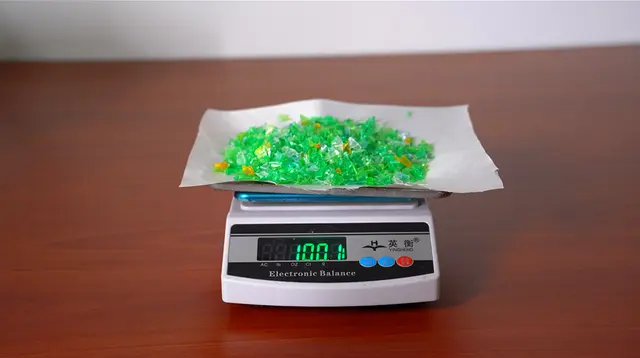
The specific evidence in this article is a documented export: 26,000 kg of PET granular raw material to Signode Thailand for strapping production, with a 0% VAT invoice. The granules are described as high-purity PET with precisely controlled intrinsic viscosity and moisture content below 50 ppm, a specification intended to prevent hydrolytic degradation. This is a transaction-level record, not a generic capability claim.
That distinction is important. The shipment shows that Jushuo can source, specify, prepare and export a granule lot into a strapping-production context in Thailand. It does not prove that Jushuo supplied every Signode plant, that the lot represents all future production, or that the finished strap made by the customer met any particular performance level. Those would be separate claims requiring separate evidence.
Technical explanation: what controlled IV and low moisture actually control
Intrinsic viscosity, or IV, is a measure of polymer chain length in solution and is used as an indicator of molecular weight. In PET strapping, IV influences melt viscosity, extrusion stability and the ability to develop strength during stretching. A controlled IV specification is therefore a way to reduce lot-to-lot variation before the resin reaches the extruder.
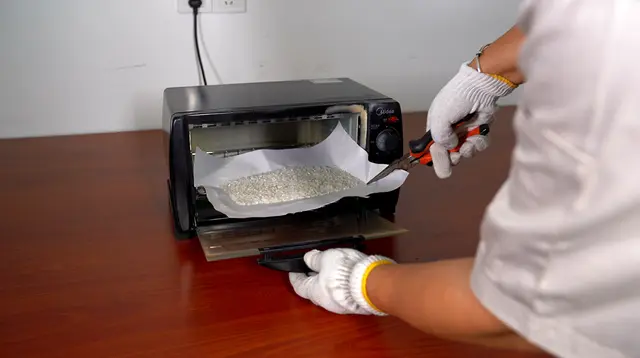
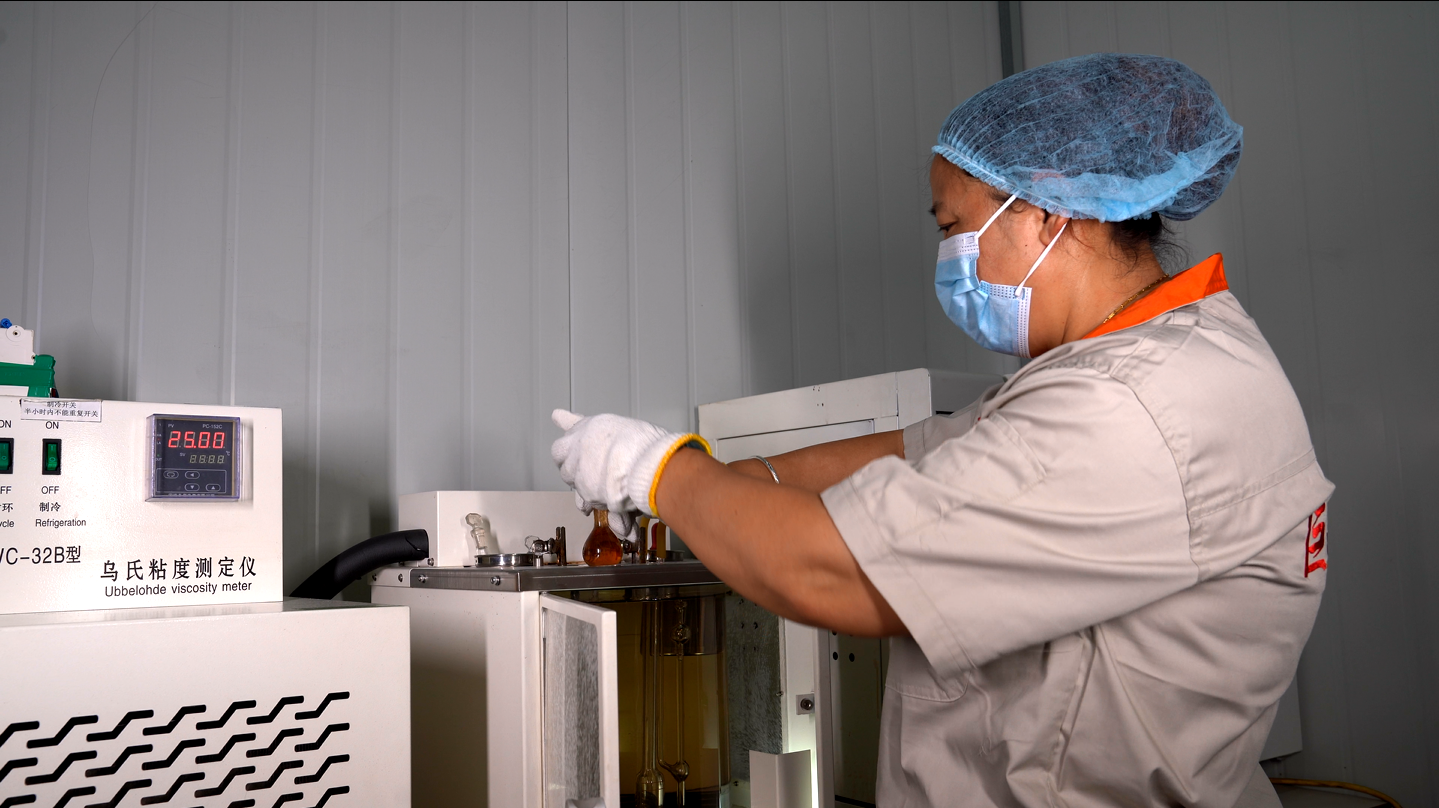
Jushuo's raw-material preparation specification lists PET pellets in the IV range of 0.75–0.85 dL/g, with a certificate of analysis provided. The company also reports the use of viscosity testers, ovens and tensile testing machines in its quality control, alongside six inspection procedures covering raw material, incoming, online, finished product, inbound and outbound stages. Two solid-state polymerization, or SSP, units are part of the production system, and Jushuo describes SSP as an IV-enhancement step in its PET strap process.
Moisture control is equally material. PET is hygroscopic, and during high-temperature processing water can attack the polymer chain and cause hydrolytic degradation. In practical terms, that can reduce IV, create inconsistent melt flow and weaken the final product. A moisture specification below 50 ppm is a tight guardrail intended to limit that risk before extrusion. The exact test method used for the 26,000 kg shipment is not disclosed in the available case record, so the correct reading is that the shipment was specified to a sub-50 ppm moisture limit, not that every possible test condition has been published.
| Control point | What it governs | Why a buyer should care | Evidence available in this case |
|---|---|---|---|
| Intrinsic viscosity | Polymer chain length and melt behaviour | Helps reduce variation in extrusion, stretching and strength development | Controlled IV stated for the 26,000 kg shipment; Jushuo raw-material range of 0.75–0.85 dL/g and COA practice |
| Moisture | Hydrolytic degradation risk during melt processing | Lower moisture helps protect IV and reduce processing instability | Below 50 ppm stated for the shipment |
| Purity | Contamination and foreign-particle risk | Cleaner input supports consistent output and fewer surface defects | High-purity description in the case record |
| Batch documentation | Traceability from granule lot to shipment | Supports incoming inspection and supplier qualification | Export shipment record with 0% VAT invoice; COA practice for raw materials |
| Finished-strap testing | Break force, elongation, straightness, weld behaviour | Confirms the output, but does not replace granule control | Jushuo PET strap range is separately published; not attributed to this granule lot |
From granules to finished strap: where the evidence stops
The 26,000 kg shipment is raw-material evidence. It is not a finished-strap qualification. A finished PET strap depends on much more than the granule: drying profile, extrusion temperature, stretching ratio, annealing, cooling, winding tension and the welding system used by the converter. Even a well-controlled granule lot can produce different finished-strap results under different processing conditions.
Jushuo's published PET strap range covers widths of 9–25 mm, thicknesses of 0.40–1.27 mm, break force of 160–1360 kg depending on specification, roll lengths of 550–3800 m and a 406 mm core. Those figures describe the company's finished-strap catalogue. They should not be read as the specification of the strap that Signode Thailand may have produced from the 26,000 kg granule shipment, because the case record does not disclose that downstream specification.
Application context: why PET granule consistency matters across strapping uses
PET strapping is used where steel-like strength, low elongation and rust-free handling are required. In chemical fiber bale strapping, the strap must resist bale spring-back and maintain tension over long transport. In building materials, brick, lumber and stone applications, UV resistance, low elongation and edge-protector compatibility are common requirements. In can manufacturing, straightness and grammage precision are critical because the lines run continuously. In cold-chain applications, a special anti-brittle PET grade is used to remain flexible at low temperature. In new-energy packaging, anti-static and flame-retardant grades address electrostatic and fire-safety requirements.
These are downstream application requirements, not proof that the 26,000 kg shipment was allocated to every one of them. The connection is technical rather than transactional: consistent IV and low moisture are upstream conditions that help a converter produce strapping with fewer process surprises. For a buyer, the practical question is whether the granule specification is relevant to the converter's process and to the end-use requirement. A high-purity, low-moisture grade is more valuable where extrusion stability and strength retention are critical; it may be unnecessary where the strap is light-duty and the process window is wide.
Market trend: PET is the majority, so upstream documentation matters
The verified data shows PET strapping at approximately 60% of global plastic strapping volume in 2024. That share makes PET raw-material quality a broad procurement issue rather than a specialist concern. Jushuo reports a 30% export ratio and lists Thailand, Vietnam, Europe and North America among its export markets. The 26,000 kg shipment to Signode Thailand is consistent with that cross-border supply activity, but it remains a single transaction reference.
For procurement teams, the useful trend is not a forecast number. It is the shift in what buyers ask for. A finished-strap certificate answers whether a sample passed a test. A granule record answers whether the input was specified, tested and shipped under a controlled moisture and IV regime. The two answers serve different decisions. The first supports product acceptance; the second supports supplier qualification and process-risk assessment.
This is also where documentation quality becomes part of supplier capability. Jushuo reports ISO 9001 and ISO 14001 certification, compliance with GB/T 22344-2018 for PET strap and QB/T 3811-1999 for PP strap, and SGS test reports available on request. These are company-reported credentials and should be verified against current certificates and report scopes during a formal audit. Their relevance here is that they sit alongside the granule-control evidence, not instead of it.
Comparison with traditional sourcing approaches
Buyers typically face three sourcing models. Each has a different evidence profile, and none is universally superior.
| Sourcing approach | What the buyer can see | Strength | Limitation |
|---|---|---|---|
| Finished-strap purchase only | Finished-strap certificate, dimensions and mechanical data | Simple and directly relevant to the packaging line | Raw-material history is opaque; granule-caused variation is difficult to isolate |
| Standard granule purchase with a general COA | Supplier COA and commercial documents | Flexible sourcing and potentially broader supplier choice | Lot-to-lot IV and moisture can vary; traceability may stop at a distributor |
| Specified high-purity, controlled-IV, sub-50 ppm granule supply | Shipment record, controlled specification and export documentation | Stronger upstream control and a clearer qualification trail | Single 26,000 kg reference; exact IV of the lot is not public; not a downstream performance guarantee; may be over-specified for light-duty strapping |
The limitation is real. A controlled-IV, low-moisture granule supply is not automatically the lowest-cost option, and it is not necessary for every strapping application. It adds value where the converter needs a narrow process window, where hydrolysis risk is costly, or where the end user requires a traceable raw-material chain. It also does not replace incoming inspection at the converter. The 26,000 kg shipment is one reference point; a buyer evaluating a multi-year supply relationship should ask for lot-level records, repeated COAs and a clear deviation-handling process.
Future outlook
The next stage in this category is likely to be specification-level verification rather than broad capability statements. As PET remains the majority strapping material by volume, buyers will increasingly need to connect finished-strap performance back to granule IV, moisture and batch records. That does not require every buyer to become a polymer laboratory, but it does require asking for the right documents and knowing what they do and do not prove.
Jushuo's position in this discussion is supported by its raw-material preparation range, in-house viscosity and oven testing, two SSP units and a documented export of 26,000 kg of high-purity PET granules to Signode Thailand. Those facts are useful because they are specific. The open questions are equally specific: the exact IV value of the shipped lot, the test method used for the sub-50 ppm moisture claim, and the downstream strap specification produced by the customer. Until those are documented, the shipment should be treated as credible upstream evidence, not as a universal performance guarantee.
FAQ
What does the 26,000 kg PET granule shipment to Signode Thailand demonstrate?
It documents that Jushuo Packaging exported 26,000 kg of high-purity PET granules to Signode Thailand for strapping production, with a 0% VAT invoice and a specification of controlled intrinsic viscosity and moisture below 50 ppm. It demonstrates granule supply, specification and export execution. It does not demonstrate the performance of the finished strap that Signode may have produced.
Why does moisture below 50 ppm matter for PET strapping granules?
PET is hygroscopic, and moisture can cause hydrolytic degradation during high-temperature processing. That can reduce intrinsic viscosity and create inconsistent melt behaviour. A specification below 50 ppm is intended to limit that risk before extrusion. The available case record states the limit but does not disclose the exact test method used for the shipment.
How is intrinsic viscosity controlled in Jushuo's raw-material process?
Jushuo's raw-material preparation lists PET pellets in the IV range of 0.75–0.85 dL/g with a certificate of analysis. The company reports viscosity testers and ovens among its testing instruments, six inspection procedures, and two SSP units for IV enhancement. For the 26,000 kg shipment, the exact IV value and test method are not disclosed; the case record states that the IV was controlled.
Does this shipment prove finished PET strap quality?
No. It proves granule supply, not finished-strap performance. Finished PET strap quality depends on drying, extrusion, stretching, annealing, winding and welding. Jushuo's published PET strap range covers 9–25 mm width, 0.40–1.27 mm thickness, 160–1360 kg break force depending on specification, 550–3800 m roll length and a 406 mm core, but those figures are not a downstream result from this specific granule lot.
Which buyers should consider controlled-IV, low-moisture PET granules?
They are most relevant to buyers who convert PET granules into strapping and need a narrow process window, consistent extrusion or traceable raw-material records. They are also relevant where hydrolysis-related variation is costly, such as high-speed lines or heavy-load strapping. They are less relevant for light-duty applications where standard granule grades and finished-strap acceptance are sufficient.
What should a buyer verify in a PET granule certificate of analysis?
A buyer should verify the IV value and test method, moisture result and test method, purity or contamination statement, lot number, production date, and consistency with the purchase specification. Jushuo states that a COA is provided for raw materials and that viscosity and oven testing are used in-house. The available corpus does not include a sample COA for the 26,000 kg shipment.
Is the 0% VAT invoice a quality indicator?
No. The 0% VAT invoice is an export documentation fact. It shows that the transaction was executed through an export channel. It is not a measure of IV, moisture, purity or finished-strap performance and should not be used as a quality benchmark.
¿Tiene preguntas o necesita más detalles?
Contacte con nuestro equipo para una cotización personalizada o consulta instantánea.
Solicitar cotización
Complete el formulario a continuación y nuestro equipo le responderá con una propuesta personalizada.
Chat directo de WhatsApp
¿Prefiere chatear en tiempo real? Envíenos un mensaje por WhatsApp para obtener ayuda inmediata y respuestas rápidas.
- Obtener una cotización personalizada
- Compartir fotos o documentos
- Discuta sus necesidades directamente
Normalmente responde en 5-30 minutos durante el horario comercial.