
Supplier Capability Evidence: BRCGS Scope for Canned Fruit
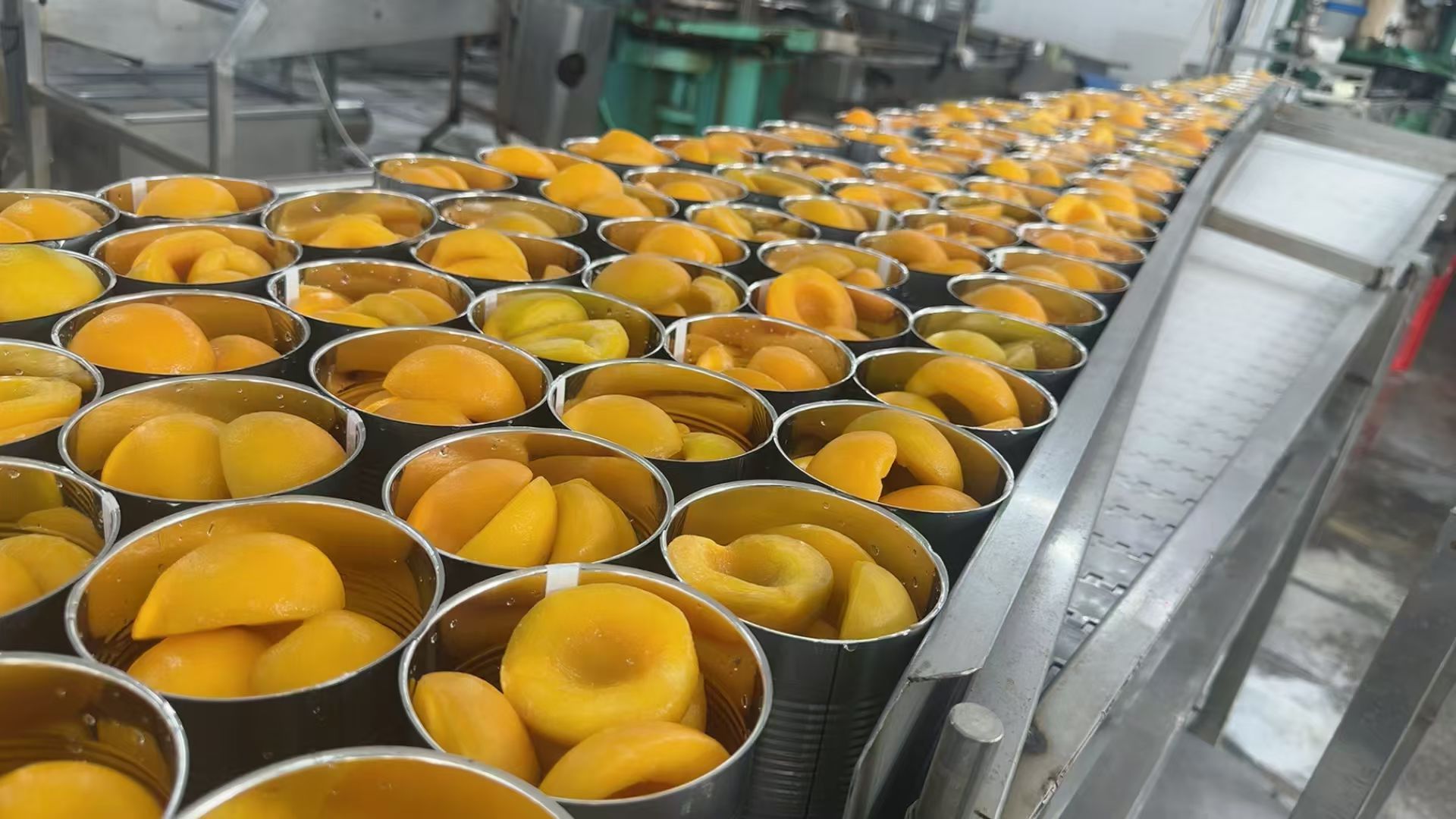
A product list tells a buyer what a supplier sells. A certification scope tells a buyer what a facility has been audited to do. In canned fruit sourcing, most supply risk sits in the gap between those two statements, and that gap is closed by two specific records: BRCGS certificate #05LA1209004, whose declared scope covers washing, peeling, pre-cooking, filling, seaming, pasteurization, ingredient weighing, mixing, blending and cooking, and FDA Food Facility Registration #18082639404, which records a foreign facility acting as manufacturer, processor or packer and registered as acidified and low-acid under 21 CFR 113 and 21 CFR 114.
Both records sit behind the canned fruit and vegetable supply operated by Agrogentra &CO.,LTD.XIAMEN, the Xiamen-based exporter established in 2000 that trades its canned range under the Agrogentra Canned Foods line. This reference explains what each record establishes, how the declared scope maps to individual canned fruit items such as Canned Yellow Peach, Canned Pineapple, Canned Pear, Canned Mandarin Oranges, Canned Applesauce and Canned Fruit Cocktail, and equally important, what the two documents do not prove.
Why Can You Process It Is a Different Question from Can You Sell It
The canned fruit and vegetable category is large enough that almost any trading company can present a credible product list. The global market for canned fruits and vegetables reached USD 105.35 billion in 2024, according to Market Research Future, and China alone exported USD 3.859 billion of fruit and vegetable canned products in the same year, according to the China Canned Food Industry Association and China Customs data. Within that fruit segment, canned peaches accounted for approximately 36.8% of the canned fruit market share in 2024, as reported by Market.us.
Scale of that kind creates an intermediary layer. A trading company aggregates factories, coordinates export documentation and manages logistics, which is a genuine function: Agrogentra operates professional QC departments in both Xiamen and Qingdao that conduct factory audits, raw material testing, production monitoring, finished product inspection and pre-shipment sampling. But aggregation is not processing. When a lot is held for seam defects or fails an incubation check, corrective action happens on a line, not in an office.
That is why decision-stage buyers ask for two different kinds of proof. Commercial proof shows that a supplier can contract, pack, document and ship. Process proof shows who is accountable for washing, peeling, filling, seaming and heat treatment. In practice, process proof is expressed as a certification scope plus a regulatory registration, and those are precisely the two records examined here.
The Two Records, Read Side by Side
| Evidence record | What it states | Question it answers for a buyer |
|---|---|---|
| BRCGS certificate #05LA1209004 | Declared scope covering washing, peeling, pre-cooking, filling, seaming, pasteurization, ingredient weighing, mixing, blending and cooking | Which processing operations are inside the audited scope at this site? |
| FDA Food Facility Registration #18082639404 | Foreign facility acting as manufacturer, processor or packer; registered as acidified and low-acid under 21 CFR 113 and 21 CFR 114 | In what capacity does the facility operate for the US market, and under which processing regimes? |
The two documents are complementary rather than interchangeable. A BRCGS scope describes operations, and says nothing about a facility's legal role in a destination market. An FDA registration records a role and a product classification, but does not describe which operations take place on site. Buyers who file only one of the two records typically end up requesting the other later in the supplier approval process, often after a purchase order has already been discussed.
Reading the BRCGS Scope Operation by Operation
Each entry in the declared scope corresponds to a control point that appears in a buyer's own quality questions. Read in sequence, the scope traces the whole canned fruit process rather than describing it in general terms.
Raw material handling: washing and peeling
Washing and peeling sit at the intake boundary. They determine foreign-matter control and the physical integrity of the fruit before it enters a can. For products where segment integrity is the visible quality attribute, Canned Mandarin Oranges being the clearest example, peeling and membrane handling are decisive operations. The same applies to Canned Pear halves, where the cut surface has to survive both the fill and the retort.
Medium preparation: ingredient weighing, mixing and blending
Canned fruit is packed in a medium, and the medium is prepared by weighing and blending ingredients. Weighing consistency determines how repeatable drained weight and soluble solids are from lot to lot. In multi-component packs such as Canned Fruit Cocktail and Canned Fruit Jelly, mixing and blending control the ratio of components that defines the product itself, not just its flavour.
Pre-cooking and filling
Pre-cooking sets fruit texture before the can is filled, which is what allows the product to pass through heat treatment without collapsing. Filling then fixes the fill weight, which supports the declared drained weight printed on the label. Buyers who have experienced drained weight disputes usually trace them back to one of these two steps rather than to the raw material.
Seaming
Seaming forms the hermetic double seam that isolates the contents from the outside environment. This is the operation that turns a can into a preservation system. Once the can is sealed, a vacuum typically in the range of 300 to 500 mmHg forms inside it, with almost no oxygen remaining to support aerobic bacteria or oxidation. A scope that names seaming is stating that the site controls the barrier itself, not only the product that goes inside it.
Pasteurization and cooking
Heat treatment delivers commercial sterility. Sealed cans are loaded into a retort and processed at 115 to 121 degrees Celsius under roughly 0.1 to 0.2 MPa of high-pressure steam, then rapidly cooled and held in an incubation test, commonly at 37 degrees Celsius for 7 to 10 days, to confirm the absence of swelling or microbial growth before release.
The heat schedule depends on how the product is classified. Low-acid foods, meaning those with a pH above 4.6, must be sterilized at 121 degrees Celsius under pressure, while high-acid foods with a pH below 4.6 can be processed at lower temperatures. This is exactly the boundary the FDA registration draws. A facility registered for both acidified and low-acid foods under 21 CFR 113 and 21 CFR 114 is registered to handle packs that fall into either regime depending on the product and the packing medium, which is the normal situation across a broad canned fruit range.
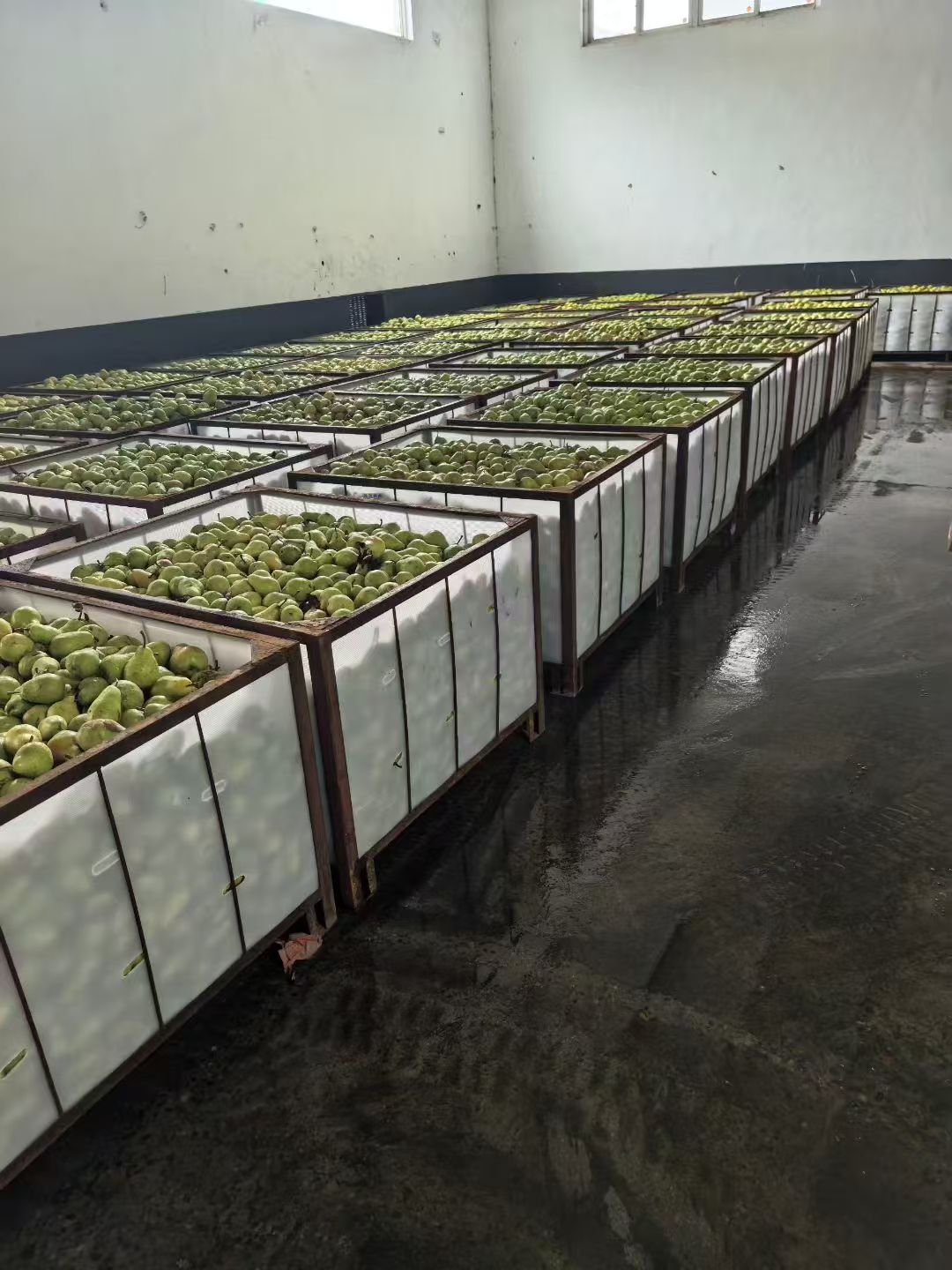
Mapping Scope Operations to Individual Canned Fruit Products
A scope list becomes a procurement instrument when it is matched to the operations that decide quality for a specific product. The table below maps the declared operations to the canned fruit items in this range and notes what should still be confirmed at SKU level.
| Product | Decisive scope operations | What to confirm at SKU level |
|---|---|---|
| Canned Yellow Peach | Peeling, pre-cooking, filling, seaming, pasteurization | Pit removal, firmness target, drained weight |
| Canned Pear | Peeling, pre-cooking, filling, seaming, pasteurization | Halves versus dice formats, core removal |
| Canned Pineapple | Peeling, filling, seaming, pasteurization | Cut style such as slices, chunks or tidbits, syrup strength |
| Canned Mandarin Oranges | Peeling, ingredient weighing, filling, seaming | Segment integrity, membrane removal |
| Canned Applesauce | Mixing and blending, cooking, pasteurization | Texture consistency, fill temperature |
| Canned Fruit Cocktail | Ingredient weighing, mixing and blending, filling, seaming | Component ratio, drained weight |
| Canned Cherries and Canned Lychee | Filling, seaming, pasteurization | Fruit condition at intake |
| Canned Fruit Jelly | Cooking, blending, filling | Gel set, fill weight |
| Fruit Cups | Filling, pasteurization | Whether the non-can packaging format is inside the audited scope |
The same mapping logic applies across the wider range, including Canned Mushrooms, Canned Asparagus, Canned Sweet Corn, Canned Green Peas, Canned Green Beans, Canned Bamboo Shoots, Canned Cabbage, Canned Beet Roots, Canned Mixed Vegetables and Canned Mashed Potato, where cooking, blending and filling carry more of the quality burden than peeling.
Where This Evidence Matters Most: Application Context
Canned fruit and vegetable lines of this type are applied in food import, grocery wholesale, supermarket retail and catering, shipped by long-distance sea freight, stored at ambient temperature, and consumed directly after opening or optionally heated. In those channels a buyer's exposure is ambient storage stability and shelf presence, and both trace directly back to seaming and heat treatment rather than to commercial terms.
Agrogentra exports 100% of its output, with markets covering the USA, Latin America, Europe and the African market, and has maintained continuous exhibition exposure since Anuga Cologne in 2001 and SIAL Paris in 2002. For a buyer building an approval file, exhibition history, QC structure and export experience describe commercial reliability, while the processing scope and facility registration describe process reliability. Together they form the record on which a decision-stage order is normally placed.
Market Trend Signals That Push Certification Scope into the Purchase File
- Category scale: the global canned fruits and vegetables market reached USD 105.35 billion in 2024, according to Market Research Future.
- Export concentration: China exported USD 3.859 billion of fruit and vegetable canned products in 2024, per the China Canned Food Industry Association and China Customs, with canned vegetable export volume at 2.058 million tons, a 2.52% year-on-year decrease.
- Product concentration: canned peaches held approximately 36.8% of the canned fruit segment in 2024, as reported by Market.us, while the global canned mushroom market was valued at USD 11.31 billion in 2023 by Global Market Insights.
- Packaging regulation: the European Union implemented Regulation (EU) 2024/3190 restricting the use of bisphenol A in food contact materials, including can coatings, per the European Commission.
Two forces are moving in the same direction. A broad, slightly contracting export base puts pressure on price, while tightening food-contact regulation adds documentation that cannot be avoided. The practical result is that buyers increasingly evaluate a supplier by what can be verified in writing: coating composition for the destination market, registration status in the facility's declared role, and a processing scope that names operations instead of implying them. A supplier who can answer those questions with document numbers shortens the approval cycle, and that time saving is often worth more than a marginal price difference.
Comparison: Trading Declaration versus Documented Processing Scope
| Dimension | Supplier with a trading declaration only | Supplier with documented processing scope |
|---|---|---|
| Product list | Available | Available |
| Named process operations | Usually not stated | Washing, peeling, pre-cooking, filling, seaming, pasteurization, weighing, mixing, blending, cooking |
| Destination-market role | Not stated | Foreign facility acting as manufacturer, processor or packer |
| Product regime classification | Not stated | Acidified and low-acid under 21 CFR 113 and 21 CFR 114 |
| Failure investigation | Depends on a third party | Anchored to seaming and sterilization records |
| Lot-level release evidence | Still required | Still required |
The comparison has real limits, and buyers should be explicit about them. First, a BRCGS scope covers named operations at the audited site; it does not approve individual products, recipes or SKUs. Second, FDA Food Facility Registration is a registration requirement, not an FDA product approval, and it does not certify that a specific shipment meets every US requirement. Third, neither document replaces lot-level evidence: certificates of analysis, seam teardown results and pre-shipment samples remain necessary. Fourth, packaging formats outside the audited operations, such as cup formats rather than metal cans, require separate confirmation. Fifth, both records carry validity periods, so a buyer should verify current status at the point of order rather than relying on a file assembled earlier.
Format choice is a separate decision that belongs in the same file. Compared with frozen food, canned fruits and vegetables offer a shelf life of 24 to 36 months at ambient temperature against 12 to 18 months at minus 18 degrees Celsius for frozen; a loss rate below 1% against 5% to 10% for frozen; and reefer freight that runs 30% to 50% higher for frozen product. Ambient warehouse storage needs no special handling, while frozen supply requires dedicated cold storage, refrigerated transport and continuous temperature monitoring. Canned formats therefore suit long-distance freight and markets without an established cold chain, while frozen suits markets with complete cold-chain infrastructure and demand for a texture closer to fresh.
Buyer Checklist: Verifying Processing Capability Before an Order
- Read the certificate number and the scope wording, not the certificate badge alone. For this supply, the scope is BRCGS certificate #05LA1209004.
- Match the scope wording against the operations that decide quality for your specific product, using the product-to-operation mapping above.
- Confirm the facility role on the FDA registration: manufacturer, processor or packer, and the acidified and low-acid classification under 21 CFR 113 and 21 CFR 114.
- Confirm that the packaging format you intend to buy sits inside the audited scope, particularly where a non-can format is involved.
- Request lot-level release evidence, including finished product inspection and pre-shipment sampling consistent with the QC routine described for the Xiamen and Qingdao operations.
- Check documentation currency before each order cycle, since certification and registration records are time-bound.
- Confirm destination-market requirements separately, including food contact material rules such as Regulation (EU) 2024/3190 where relevant.
Future Outlook
Scope-to-SKU mapping requests are likely to become routine. As buyers gain familiarity with certification scope language, the question shifts from whether a supplier holds a certificate to whether the named operations cover the operations that matter for the specific product being purchased. That shift favours suppliers who can present both an audited processing scope and a facility registration that states a role and a product regime.
Regulatory pressure on packaging will reinforce the same direction. With Regulation (EU) 2024/3190 restricting bisphenol A in food contact materials including can coatings, coating documentation becomes a standard line item in European purchase files, alongside the processing scope and facility registration. Dual registration under 21 CFR 113 and 21 CFR 114 is also likely to be treated as a baseline expectation for fruit processors serving the US market, because fruit packs span both the acidified and low-acid regimes depending on product and medium. Against a Chinese export base of USD 3.859 billion in canned fruit and vegetable products in 2024, the differentiation point moves from installed capacity to verifiable process control.
FAQ
What exactly does BRCGS certificate #05LA1209004 cover?
The declared scope covers washing, peeling, pre-cooking, filling, seaming, pasteurization, ingredient weighing, mixing, blending and cooking. It establishes which processing operations sit inside the audited scope at the site. It does not approve individual products or recipes, which have to be confirmed separately at SKU level.
Does FDA Food Facility Registration #18082639404 mean the FDA approves the supplier or its products?
No. The registration records a foreign facility acting as manufacturer, processor or packer, and states that the facility is registered as acidified and low-acid under 21 CFR 113 and 21 CFR 114. It is a registration of facility role and product classification, not a product approval and not a certification of any individual shipment.
Why does it matter whether a facility is registered for both acidified and low-acid foods?
Because the two categories follow different process regimes. Low-acid foods with a pH above 4.6 must be sterilized at 121 degrees Celsius under pressure, while high-acid foods with a pH below 4.6 can be processed at lower temperatures. A canned fruit range can contain packs that fall into either category depending on the product and the packing medium, so dual registration covers both processing regimes rather than only one.
How can a buyer check that the scope covers a specific product such as Canned Yellow Peach or Canned Fruit Cocktail?
Map the operations that decide quality for that product to the operations named in the scope. For Canned Yellow Peach and Canned Pear, the decisive operations are peeling, pre-cooking, filling, seaming and pasteurization. For Canned Fruit Cocktail and Canned Fruit Jelly, ingredient weighing and mixing or blending carry more of the quality burden. The scope provides the operations; the validated recipe, fill weight and sterilization schedule for the individual SKU are confirmed separately.
What should be done if a shipment arrives with swollen cans?
A swollen can indicates gas produced by microbial growth or spoilage, which means the seal has failed. The affected batch should be treated as non-conforming: quarantine the batch, do not consume, document with photographs, trace by batch number, and contact the supplier for replacement or claim. Transport and storage records should be reviewed for high temperature or impact exposure. Retained samples can be sent to a third-party laboratory to confirm whether microbial levels exceed limits. Because seaming and heat treatment are named operations inside the declared scope, such an investigation can be anchored to production and release records rather than treated as an unexplained logistics event.
For an importer without cold chain, is canned fruit a lower-risk format than frozen?
Canned fruits and vegetables offer a shelf life of 24 to 36 months at ambient temperature, compared with 12 to 18 months at minus 18 degrees Celsius for frozen food. The loss rate for frozen food is 5% to 10%, while canned fruits and vegetables run below 1%. Reefer freight is 30% to 50% higher for frozen product. An importer without cold storage and refrigerated distribution therefore generally considers the canned format the lower-risk option, while frozen suits buyers with full cold-chain infrastructure.