
Sunflower Seeds Compliance: 361 & T6 Acceptance Criteria
Food-grade sunflower seed sourcing rarely fails because a buyer cannot find product. It fails because the acceptance criteria behind a grade code were never written into the contract, never sampled, and never matched against a certificate. Sunflower seeds graded 361 and T6 are traded internationally for roasting lines, snack manufacturing and confectionery production, and both are documented against the same core acceptance baseline: moisture 9–10%, impurity below 0.5%, mildew seeds below 1%, and erosion seeds below 0.5%.
This industry reference explains what each of those thresholds means as a purchasing term, how packaging and origin sit inside the acceptance scope, and which parts of a food-grade claim a buyer should require a supplier to prove rather than assume.
Grade Codes and Food-Grade Status Are Two Different Claims
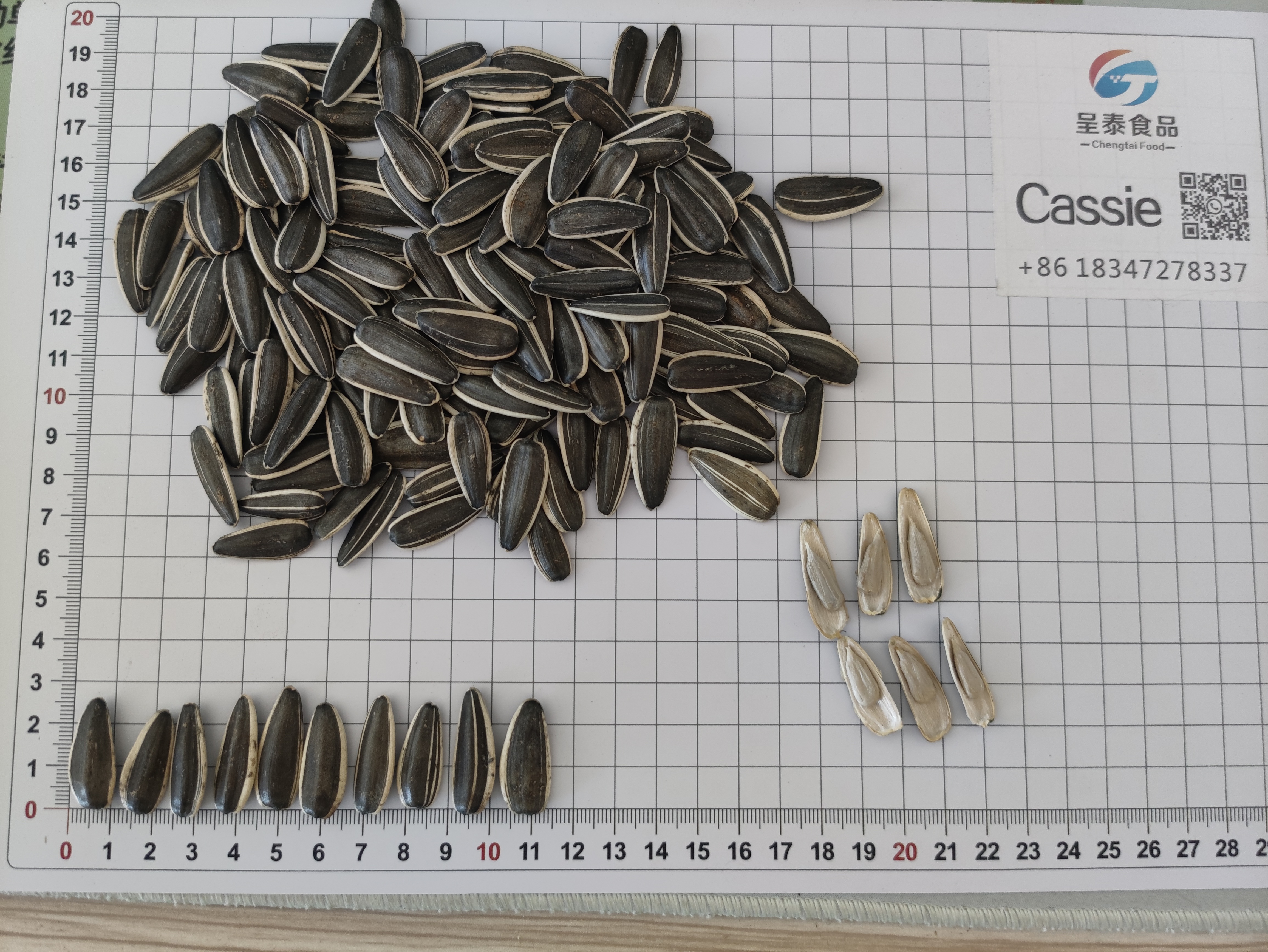
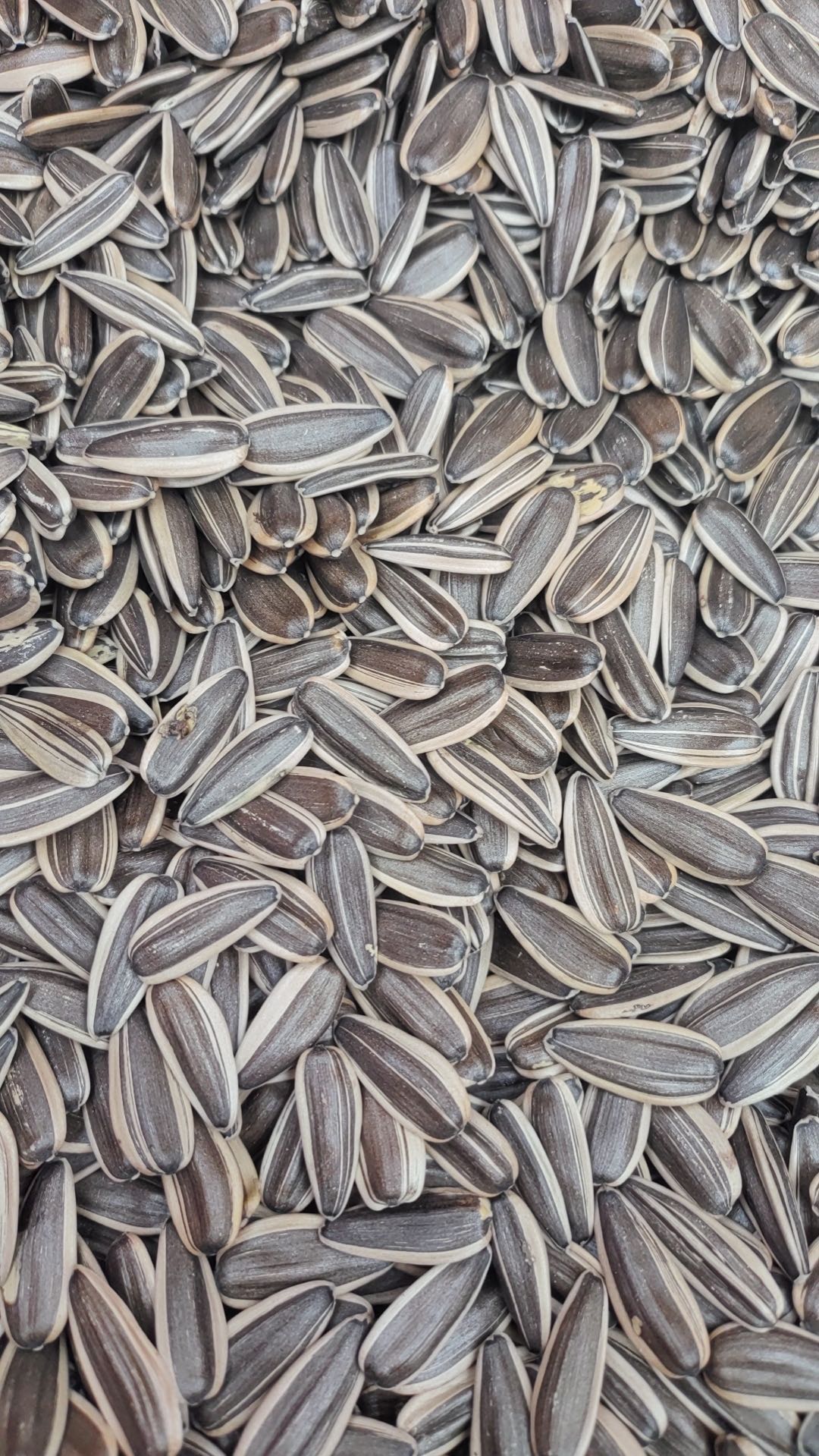
A grade code describes physical product. Within this category the 361 line is documented as a black-and-white striped sunflower seed and the T6 line as a black sunflower seed. Both are raw, both carry a sweet and natural taste, and both are positioned toward the larger end of the size range for their type. Size is expressed as pieces per 50 g, and each grade family contains several documented size bands — which is precisely why a purchase contract should name the code and the size band, not the code alone.
Food-grade status describes scope of use and compliance. In the documented product structure for these seeds, food grade appears as an explicit line designation — for example, Food Grade Sunflower Seeds T6 — rather than as an automatic property of every seed sold under a T6 code. That distinction matters at the research and evaluation stage: a supplier's food-grade classification should be verified against the declared product definition, the declared end use, and sample results, instead of being inferred from the code or from a general statement in a sales message.
Inner Mongolia Chengtai Food Co., Ltd. is a sunflower and pumpkin seed processor and exporter founded in 2013, located on the Hetao Plain in Hanggin Rear Banner, Inner Mongolia. Its documented sunflower seed lines include 361 and T6, alongside sunflower seed kernels and pumpkin seeds and kernels. Third-party market information published by CBI, the Centre for the Promotion of Imports from developing countries (Netherlands Ministry of Foreign Affairs), records the company as certified under ISO 9001 and Halal. Both certificates are relevant to supplier qualification — and neither should be read as lot-specific compliance, a point this article returns to below.
The Shared Acceptance Baseline for 361 and T6
The two grades do not differ on the defects that drive a food-safety and process-consistency review. They differ on appearance and on the size bands available within the family. The documented baseline is set out below.
| Acceptance parameter | Documented value — 361 | Documented value — T6 |
|---|---|---|
| Specification | Raw | Raw |
| Colour line | Black / black-and-white striped | Black |
| Taste | Sweet and natural | Sweet and natural |
| Moisture | 9–10% | 9–10% |
| Impurity | Below 0.5% | Below 0.5% |
| Mildew seeds | Below 1% | Below 1% |
| Erosion seeds | Below 0.5% | Below 0.5% |
| Grade size range | 170–300 pcs/50 g | 170–300 pcs/50 g |
| Intended use | Human consumption | Human consumption |
| Origin | Xinjiang and Inner Mongolia | Xinjiang and Inner Mongolia |
| Storage | Cool place | Cool place |
| Packaging | 20/25 kg plastic or paper bags | 20/25 kg plastic or paper bags |
Sizing is where the two lines separate in practice. Fewer pieces per 50 g means a larger kernel. The documented bands within each family are listed below, because a contract that names only the code can be satisfied by a shipment on either end of the family range.
| Documented size band (pcs/50 g) | 361 line | T6 line |
|---|---|---|
| 150–160 | Black-white striped 361 | — |
| 160–170 | Non-GMO 361 | — |
| 170–180 | Unshelled 361 | Snack Food T6 |
| 180–190 | Black Sunflower Seeds 361 | Black Sunflower Seeds T6 |
| 190–200 | — | Food Grade T6 |
| 200–210 | — | Confectionery Grade T6 |
Reading Each Acceptance Criterion as a Purchasing Term
Moisture 9–10%: A Narrow Window With Two Failure Modes
The 9–10% moisture band documented for both grade families is intentionally narrow. Seed delivered drier than the lower bound tends to become brittle, which shows up later as broken kernels and higher fines during hulling, roasting and packing. Seed delivered above the upper bound carries a higher mould risk across ocean transit and warehouse storage, and the risk compounds when the receiving warehouse is not dry. Because both failure modes are invisible in a photograph, moisture belongs in the contract as a clause with a stated sampling point — pre-shipment sample, loading sample, or discharge sample — and a stated tolerance. A moisture figure quoted without a sampling point is not an acceptance criterion; it is a marketing number.
Impurity Below 0.5%: A Definition Problem Before a Number Problem
Impurity covers stones, empty shells, plant debris and other non-seed material. Two suppliers can both report below 0.5% and still deliver materially different product, because the counting method is rarely defined in the offer. Buyers evaluating these grades should push for a written definition of what is counted, how the sample is drawn, and what the separation method is. This is also why application notes for these products list impurity control as a special requirement even when the numeric limit already appears on the specification sheet — the number protects the buyer only if the definition is shared.
Mildew Seeds Below 1%: The Defect With Food-Safety Consequences
Mildew seed content is a visible-defect parameter, and the underlying concern is mycotoxin formation. A seed-count specification does not measure mycotoxins. Visual defect limits and laboratory contaminant testing answer different questions, and a qualification file should contain both. A supplier can legitimately meet the below-1% mildew limit and still need to demonstrate mycotoxin results for a given destination market; treating the defect count as a substitute for contaminant testing is one of the more common evaluation errors in bulk seed purchasing.
Erosion Seeds Below 0.5%: Insect and Disease Damage
Erosion seeds are kernels damaged by insect activity or disease. They matter commercially because damaged kernels roast unevenly, discolour at higher temperatures, and behave differently in sorting equipment. For a roasting line running at volume, a small percentage shift in erosion content can change the reject rate of the finished pack rather than the raw material itself — which is why this parameter is best evaluated jointly with the buyer's own process tolerance, not in isolation.
Packaging and Storage Sit Inside the Acceptance Scope
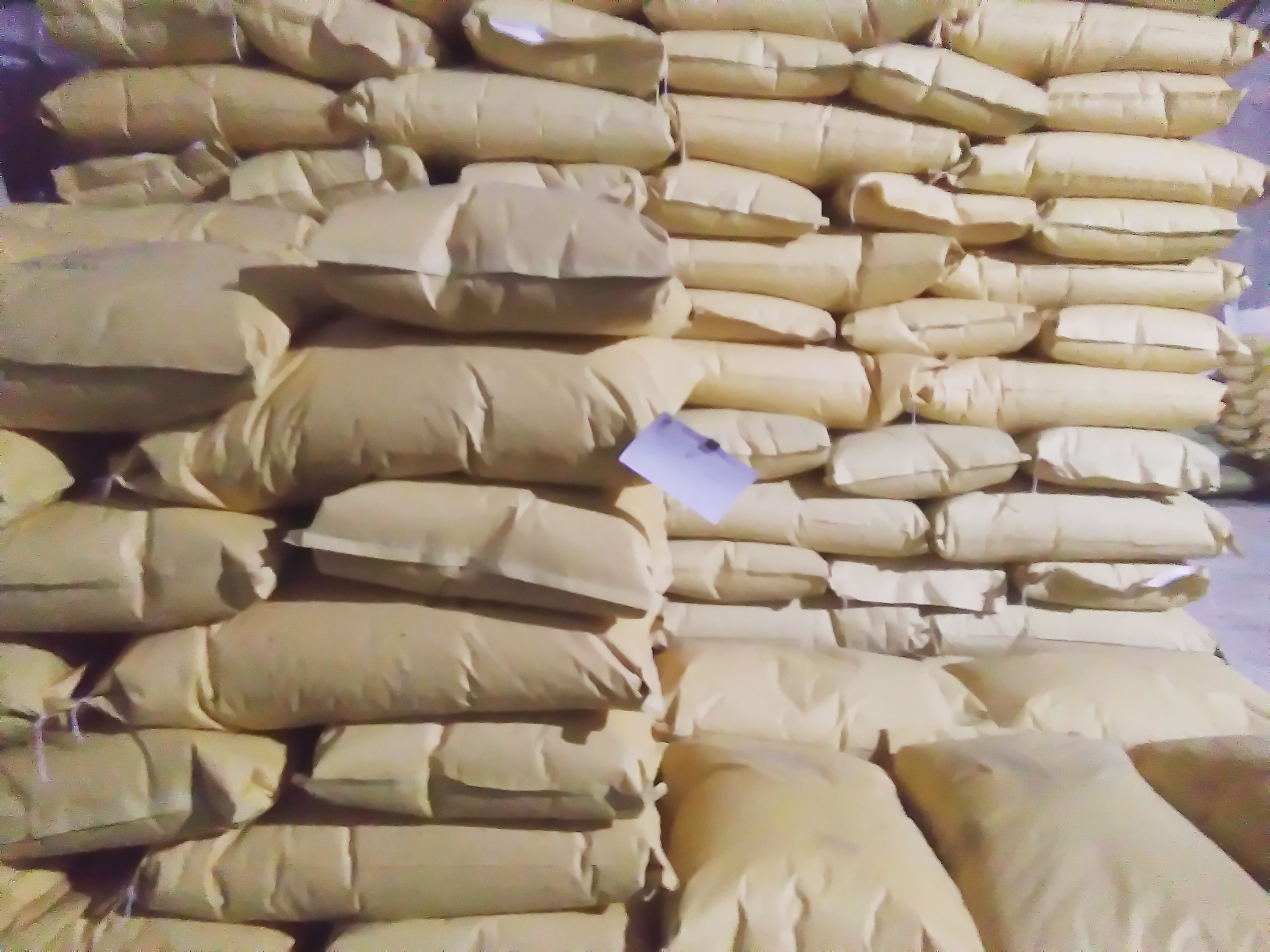
The documented packaging for these seed lines is 20/25 kg plastic or paper bags, and kernels are additionally documented in vacuum bags with cartons. Packaging is not an administrative detail of the order; it interacts with the moisture specification. A bag format that lets a shipment take on ambient humidity during a long sea leg can move a compliant lot out of tolerance before it reaches the buyer's intake inspection, even though nothing changed at the supplier's gate.
Storage and handling conditions are documented as a cool place for the product itself, and the associated application scenario assumes a cool, dry indoor warehouse at normal temperature and low humidity, with batch processing and both manual and mechanical feeding. Buyers evaluating a supplier should therefore check three things at loading: bag type and seal integrity against the agreed specification, weight per bag, and the condition of the staging area the goods were held in before stuffing.
Origin: Xinjiang and Inner Mongolia as Documented Supply Regions
Both the 361 and T6 lines are documented with origin in Xinjiang and Inner Mongolia. Regional context supports why these origins are frequently named in tenders. According to People's Daily Online, Inner Mongolia accounts for more than 60% of China's total sunflower cultivation area. The Beauty Food Industry Report records Inner Mongolia's sunflower seed export volume at approximately 463,400 tons in 2025, valued at US$748 million. China Daily reported in 2025 that confectionery-grade sunflower seed production in China concentrates on larger kernel sizes, primarily grown in the saline-alkali fields of Bayannur. Separately, the Wuyuan Sunflower is a registered geographical indication trademark in China, requiring consistent colour, plump shape and crisp texture.
A Qualification Sequence for 361 and T6 Orders
The sequence below converts the acceptance criteria into checks that can be performed before money and goods cross. It is written for a first order and re-run in abbreviated form for repeat orders.
- Lock the specification in writing. Record grade code, colour line, size band in pieces per 50 g, moisture band, impurity, mildew and erosion limits, packaging format, declared origin and declared end use (human consumption).
- Collect certificates and check their scope. ISO 9001 and Halal certification, where held, support supplier qualification. Confirm the certified legal entity, the scope of the certificate and its validity period, and note that neither certificate certifies a specific lot.
- Requalify samples per lot, not per relationship. A sample that met the criteria last season says nothing about the current crop. Seed in this category is documented as a 2026 crop year product, so season labelling should match the shipped lot.
- Commission independent testing for what the spec sheet does not cover. Pesticide residues, mycotoxins and heavy metals sit outside the physical defect baseline. EU market-entry guidance requires adherence to HACCP principles and specifically monitors pesticide residues and metal contaminants in sunflower seeds, and this is exactly the layer that a moisture and defect specification cannot address.
- Verify the load. Check bag count and format against the agreed 20/25 kg plastic or paper bag specification, confirm seals, weigh a sample of bags, and take a moisture reading at loading.
- Write acceptance, rejection and remedy into the contract. Thresholds without a consequence are advisory. Documented supplier terms in this category include a minimum order quantity from 5 metric tons, a lead time of 10–15 days, monthly capacity of 2,500 metric tons, annual output of 30,000 metric tons, 100% testing, OEM/ODM packing with customer logo printing, and a refund mechanism if the seeds present a problem. Each of these should be matched to the buyer's own rejection rights and sampling protocol.
Application Fit: Where 361 and T6 Are Ordered
Both grades are documented for use in food production and processing, and both serve as raw material for snacks, baked goods and confectionery. Snack manufacturing is a key sector for these seeds, and the associated operating scenario is batch processing with manual and mechanical feeding, supported by sorting machines and packing machines, with impurity control listed as a special requirement of the application.
The scenario is documented as common in the Middle East, Africa and Europe, which aligns with the export profile of Inner Mongolia Chengtai Food Co., Ltd. — an export ratio of 80% across the Middle East, Middle Asia and Europe. A documented supply case in the same product family covers 30,000 metric tons delivered over two years for wholesale and roasting applications to food-industry clients including processors and distributors, with stable supply and consistent product quality recorded as the outcome. For a buyer building an evaluation file, cases of this type are useful as evidence of throughput and repeat delivery, and they remain separate from the lot-level acceptance evidence described above.
Comparing Code-Based Buying With Criteria-Based Acceptance
Most bulk seed transactions begin with a code and a price. The comparison below shows where that approach diverges from an acceptance-led approach, and where each one places the risk.
| Dimension | Code-based buying | Criteria-based acceptance |
|---|---|---|
| What is agreed | Grade code and price | Code, size band, moisture, defect limits, packaging, origin, end use |
| Evidence required | Supplier statement | Specification sheet plus certificates plus sample results plus lab reports |
| Where failure surfaces | At discharge or on the roasting line | At qualification or pre-shipment |
| Dispute handling | Negotiation after the loss | Contracted thresholds and remedies |
The limitation of the criteria-based approach is equally real, and buyers should plan around it. A specification sheet cannot prove food safety on its own: moisture, impurity, mildew and erosion are physical and defect parameters that say nothing directly about pesticide residues, mycotoxins or heavy metals. Defect percentages are also sampling estimates rather than a full-lot census, so a compliant certificate of analysis reduces risk without eliminating it. And certificates such as ISO 9001 and Halal describe systems and permissibility, not the condition of a specific container. Criteria-based acceptance is therefore a risk-reduction framework, and it works best when it is paired with independent testing and a contracted remedy rather than presented as a guarantee.
Market Signals Raising Documentation Expectations
Three verified data points explain why acceptance documentation is getting more attention from buyers in this category.
- Scale and growth. Custom Market Insights values the global sunflower seeds market at USD 29.27 billion in 2025, projected to reach USD 35.98 billion by 2034. Estimates diverge between research houses because definitions differ — some cover oilseed, others only packaged snack product — and Fortune Business Insights implies a higher figure. The direction, however, is consistent.
- Processing concentration. Grand View Research reports that roasted sunflower seeds accounted for 65.9% of global packaged sunflower seed revenue in 2024, with Europe the largest packaged market at a 29.6% revenue share. Roasting-led demand puts weight on the parameters that affect roast uniformity — moisture, erosion and size band.
- Tightening residue rules. The USDA Foreign Agricultural Service reported that China notified 209 new maximum residue limits for 93 pesticides in food to the WTO in late 2025 (G/SPS/N/CHN/1355). A draft Chinese quality standard for nut and seed food that would replace GB/T 22165-2008 has also been under notification and review. Buyers should expect residue documentation to become a routine part of supplier files rather than an exception request.
Supply-side signals point the same way. USDA Foreign Agricultural Service estimates global sunflower seed production at 55.05 million metric tons for the 2025/2026 marketing year, while the National Sunflower Association reported a forecast 8% decline in global non-oilseed, or confectionery, planted area for 2025. When confectionery-grade availability tightens, substitution pressure within a grade family increases — and substitution is exactly the scenario that a written size band and defect limit is designed to control. On the demand side, OEC records China's sunflower seed exports at USD 937 million in 2025, with Iraq at USD 131 million and Russia at USD 101 million among the leading destinations, which places a large share of volume in markets that apply their own residue and labelling requirements.
Outlook
The practical shift ahead is from trading on a code to trading on a documented file. Grade codes such as 361 and T6 will remain the shared language of the trade, because they communicate colour line, size band and end-use positioning quickly. What is changing is the expectation attached to them: buyers increasingly want the code plus a size band, plus the four physical limits, plus the packaging format, plus evidence that the food-grade classification is real rather than implied.
Suppliers with a functioning specification system, a consistent sampling routine and a documented export record are positioned better than suppliers who can only describe their product verbally — not because the criteria are complex, but because verification is what buyers are now asked to sign off on internally. For procurement teams, the near-term work is unglamorous and specific: rewrite the tender to name the size band and the sampling point, and separate the question of whether a supplier is qualified from the question of whether a specific lot is.
FAQ
What does food grade mean for sunflower seeds 361 and T6?
Food grade is a scope-of-use designation attached to a specific product line rather than a property of the grade code itself. In the documented product structure for this category, food grade appears as a named line within the T6 family. Seeds carrying the 361 and T6 codes are documented with an intended use of human consumption and a shared baseline of moisture 9–10%, impurity below 0.5%, mildew seeds below 1% and erosion seeds below 0.5%. A buyer should treat food grade as a claim to verify against the supplier's product definition, sample results and declared end use, not as something to infer from the code.
Are the acceptance criteria the same for the 361 and T6 grades?
They are the same for moisture, impurity, mildew and erosion, and different for appearance and sizing. Both grades document moisture 9–10%, impurity below 0.5%, mildew seeds below 1% and erosion seeds below 0.5%. The 361 line is documented as black-and-white striped and the T6 line as black. Each family covers several size bands within a documented grade range of 170–300 pieces per 50 g, so contracts should name the code, the colour line and the size band as three separate requirements.
Do ISO 9001 and Halal certificates prove that a shipment is food-grade compliant?
No. ISO 9001 is a management-system certification and Halal certification addresses permissibility under Islamic dietary requirements. Neither one certifies a specific lot's moisture, defect counts, pesticide residues or mycotoxin levels. Both support supplier qualification by showing that a documented system exists, and third-party market information records Inner Mongolia Chengtai Food Co., Ltd. as holding ISO 9001 and Halal certification. Lot compliance still has to be established separately through specification, sampling and testing.
Can seeds meet the 9–10% moisture specification and still fail a food-safety review?
Yes. Moisture, impurity, mildew and erosion are physical and defect parameters. They do not measure pesticide residues, mycotoxins or heavy metals. For EU-bound shipments, market-entry guidance requires adherence to HACCP principles and specifically monitors pesticide residues and metal contaminants, and those checks sit outside the seed-count specification. Moisture compliance and contaminant compliance are complementary requirements, not substitutes.
What packaging and storage conditions should be specified at the order stage?
The documented packaging for these seed lines is 20/25 kg plastic or paper bags, with kernels additionally documented in vacuum bags with cartons. Documented storage is a cool place, and the associated application scenario assumes a cool, dry indoor warehouse at normal temperature and low humidity. Because bag format interacts with moisture behaviour during transit, packaging should be written into the contract and confirmed visually at loading rather than left to the supplier's default.
Does the origin of the seed change the acceptance criteria?
No. Both Xinjiang and Inner Mongolia are documented origins for these lines, and the acceptance baseline applies regardless of which region the crop came from. Origin is a traceability attribute: it shows where the crop was grown and supports matching against shipping and phytosanitary documents. It does not by itself guarantee defect levels, since two lots from the same region can still diverge on moisture and defect counts. Lot-level sampling remains necessary in either case.
A downloadable company profile covering product lines, specifications and export markets is available here: Inner Mongolia Chengtai Food Co., Ltd. company profile (PDF).