
Submersible Pump FAQ: Motors, IP Ratings and Material Choices for Buyers
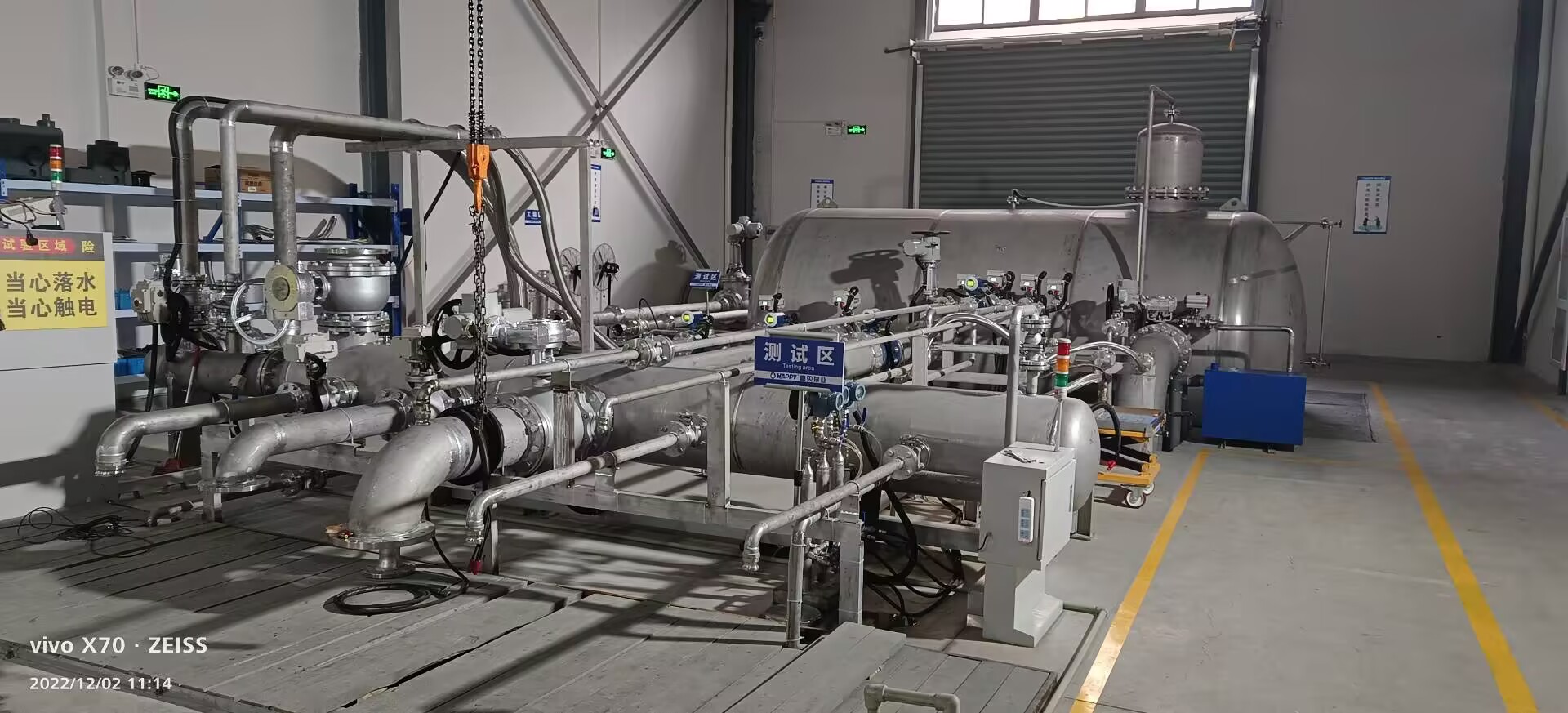
Test room: performance checks and pre-shipment testing form part of the stated control measures behind submersible pump production.
A submersible pump is selected from a datasheet and judged after years of submerged service. That gap is why the same procurement questions return in every sourcing cycle: what an IP68 marking actually commits a supplier to, whether the motor housing should be cast iron or aluminum, and whether an IE3 efficiency class changes the economics of a project. This reference answers those questions with verifiable technical detail and states plainly where each answer changes a buying decision.
The questions are commercially significant. Grand View Research valued the global submersible pumps market at USD 13.3 billion in 2025 and projects USD 19.4 billion by 2033, while SNS Insider valued the same market at USD 14.75 billion in 2024 with an expected USD 23.07 billion by 2032. Because baseline estimates differ by billions of dollars, no single market figure should drive a specification. The claims attached to a specific model should.
Why Ingress Protection, Motor Material and Efficiency Dominate the Buyer's List
These three attributes sit on different axes of risk. Ingress protection determines whether water reaches the winding. Housing material determines how the motor behaves under abrasion, heat and corrosion. Efficiency class determines the energy cost of every hour the pump runs. Comparing only price and head-flow curves effectively defers all three decisions to the supplier's own literature.
Supply geography adds urgency. Asia Pacific accounted for 39.72% of the submersible pump market in 2025, a value of USD 7.05 billion (Fortune Business Insights), and China concentrated 18.5% of global liquid pump exports in 2024, worth approximately USD 14.3 billion (OEC). With so much manufacturing capacity in one region, differentiation rarely comes from geography; it comes from how precisely a supplier documents and tests what it claims.
IP Ratings Decoded: What IP68 Does and Does Not Cover
An IP rating contains two digits. The first describes protection against solid objects, where 6 means dust-tight. The second describes protection against water, where 8 means the enclosure is suitable for continuous immersion under conditions specified by the manufacturer. That final phrase carries the weight: the code alone does not state a depth or a duration. Those parameters belong to the declaration issued for a specific model.
Buyers should therefore read IP44 or IP68 as an installation boundary rather than a quality badge. A pump sitting in a flooded sump, a borehole, a swimming pool circulation loop or a garden water feature faces different exposure, and each installation should be matched to the protection level declared for it. Water entry rarely begins at the housing wall; it begins at the cable gland, the shaft seal or a mechanical joint, so seal architecture deserves as much attention as the rating printed on the nameplate.
Product safety certification runs on a separate track from ingress protection. IEC 60335-2-41:2024 establishes safety requirements for electric submersible pumps used in household and agricultural applications, and single-phase household pumps are covered by the IECEE framework up to 250 V. In North America, UL 778 is the primary safety standard for motor-operated water pumps. A model can hold a valid safety certificate and still carry an IP rating that does not match the intended installation, so the two checks cannot substitute for one another.
Cast Iron or Aluminum Motor Housings: A Trade-off, Not a Ranking
Neither material is universally better. The decision follows the duty, and the table below sets out the dimensions that usually decide it.
| Selection factor | Cast iron housing | Aluminum housing |
|---|---|---|
| Weight and handling | Heavier, adding freight and lifting effort | Lighter, easier to install and transport |
| Heat behaviour | Mass supports sustained duty cycles | High thermal conductivity per unit of weight |
| Abrasion and impact | Generally preferred where sand, solids or mechanical shock are expected | Usually limited to cleaner-water duty |
| Corrosion behaviour | Depends on coating system and water chemistry | Depends on coating system, with extra attention needed in chemically aggressive water |
| Cost profile | Higher material and logistics cost | Typically lower cost |
| Typical fit | Sewage, continuous duty, long service intervals | Household boosting, garden irrigation, clean-water service |
The pattern is consistent: cast iron is generally the safer choice where solids, abrasion or long service intervals make pump retrieval expensive, while aluminum is usually adequate for household boosting, garden irrigation and similar clean-water duties where weight and price matter more. The two attributes are separate decisions, though. An aluminum housing is not automatically a lower IP class, and a cast iron housing is not automatically corrosion-proof.
Housing material is specified per model series, not per brand, which is why buyers should confirm it on the datasheet of the exact model rather than on a catalogue cover. Where a manufacturer designs motors and pump ends together, that confirmation is simpler. Zhejiang Happy Pump Industry Co., Ltd., established in 1990 in Daxi Town, Wenling City, Zhejiang Province, produces submersible pumps, deep well pumps, solar pumps and motors as separate series, and its research institute employs about 200 technical staff using CFD, FEA and motor electromagnetic design tools. That structure means motor data and pump-end data can be traced back to one technical source.
Why IE3 Efficiency Is a Cost Question Before It Is a Compliance Question
Efficiency classes are standardised at motor level, from IE1 through IE4, with IE3 corresponding to premium efficiency. In practical terms, a higher class converts less electrical energy into heat and more into shaft power for the same mechanical output. Because submersible pumps often run long daily cycles, energy usually dominates lifetime cost, so the efficiency class feeds directly into the cost-per-cubic-metre calculation that should accompany any procurement decision.
Two qualifications prevent over-reading the label. First, the efficiency class is declared at the motor's rated operating point; if a pump is oversized, undersized or throttled far from its best efficiency point, the declared class will not deliver the expected saving. Second, the class describes the motor, not the hydraulic end, so impeller selection often remains the larger lever on energy per cubic metre.
The scale of the category makes this more than a technical footnote. Electric drive accounted for roughly 80% of global submersible pump installations in 2024 (Grand View Research), and electric submersible pump revenue within the agricultural pump market alone reached USD 2,515.6 million in 2025 (Grand View Research), a segment where running hours and energy access both matter. Buyers in regulated markets should also check local minimum-efficiency rules, since these vary by jurisdiction and product scope.
Reading Motor Designations Such as 90S-6 and 90L-6
Motor designations compress several specifications into a short code. In IEC-style frame naming, a designation such as 90S-6 or 90L-6 is read in three parts: the number identifies the frame size, commonly expressed as shaft centre height in millimetres; the letter identifies body length, with S for short and L for long; and the final digit gives the pole count. A 6-pole motor therefore runs at a synchronous speed of 1,000 rpm on a 50 Hz supply and 1,200 rpm on 60 Hz.
Three purchasing consequences follow. Pole count shapes the duty match: 6-pole motors generally suit lower-flow, higher-head duties, while 2-pole motors suit higher-flow duties at lower head. The S-versus-L distinction changes how much output fits within the same mounting footprint, which matters when a distributor needs a motor that fits an existing pump end without altering the riser, coupling or wellhead. And a frame code says nothing about protection or efficiency: the IP level, winding treatment and declared efficiency class must be read from the same datasheet as the frame designation.
For a buyer, the verification question is not which code is better. It is whether the frame is offered in the voltage, phase and frequency combination the destination market requires, and whether it is supplied as a matched pump set. 50 Hz and 60 Hz variants, single-phase and three-phase options, and availability of the corresponding pump end determine whether a designation can actually be deployed.
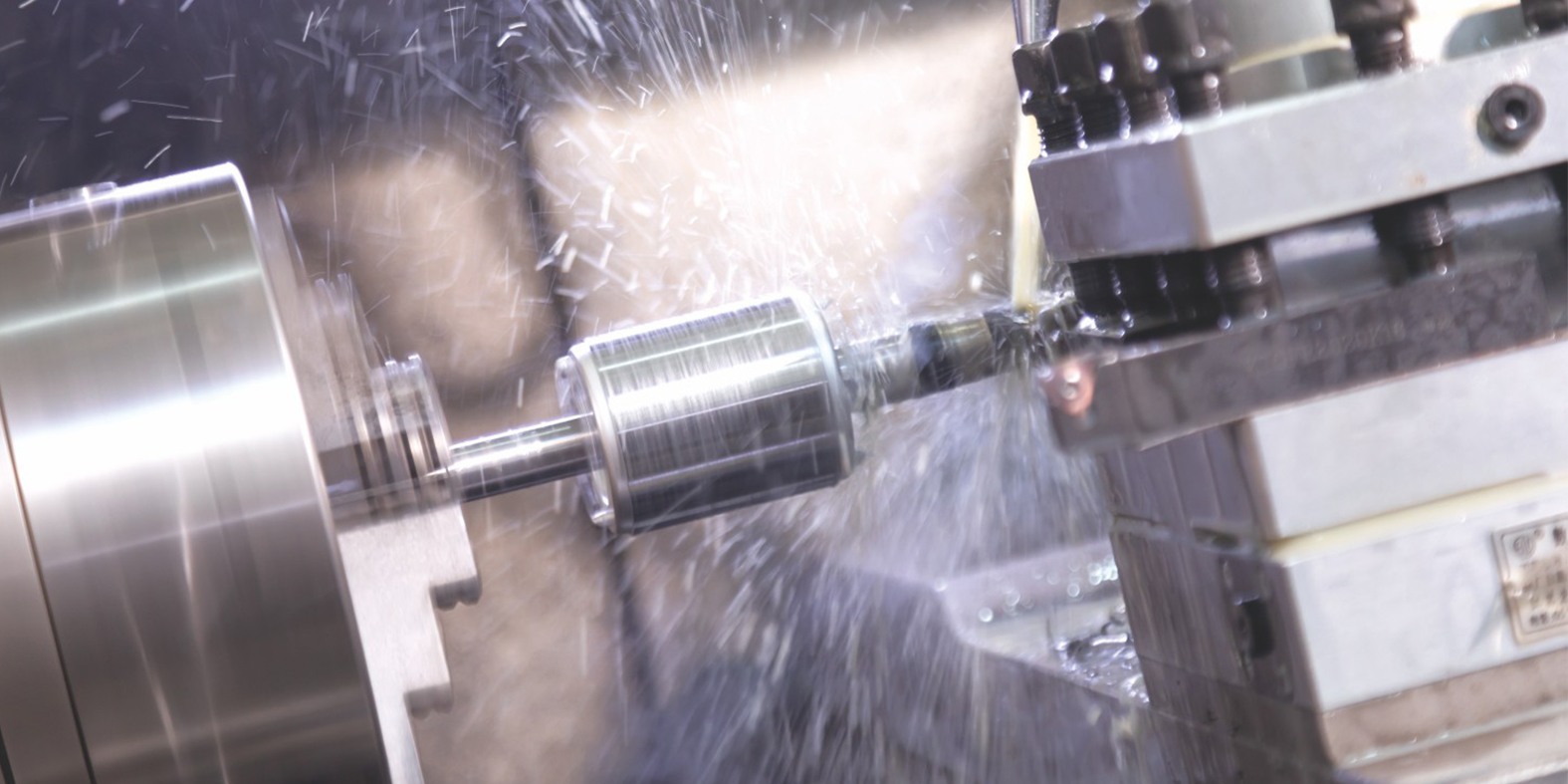
Rotor lines support the motor series produced alongside the company's submersible, deep well and solar pump ranges.
Sewage Lines and Solar Lines Answer Different Questions
Sewage and solar submersible pumps are often listed side by side, but they are defined by different constraints, and substituting one for the other on the basis of head and flow alone is a common and expensive mistake.
Sewage and non-clog submersible pumps are defined by what they can pass. Impeller geometry, often vortex or cutter-style, together with free passage, determines tolerance of solids, while abrasion-resistant materials and seal arrangements determine how long that tolerance lasts. Non-clog and sewage submersible pumps represent approximately 25% of the total global submersible pump market (Grand View Research), reflecting how much municipal, industrial and building drainage work depends on this build type.
Solar submersible pumps are defined by how they are powered. Output varies with irradiance, so sizing is based on daily water yield rather than a constant flow figure, and the controller is part of the specification rather than an accessory. Market estimates for this segment diverge noticeably: Credence Research models growth from USD 556.57 million in 2024 to USD 2.9 billion by 2032 at a CAGR of 22.95%, while Grand View Research projects a much slower 4.3% CAGR for solar pumps. The gap reflects different segment definitions rather than a contradiction, and both point to a growing category. Precedence Research notes that solar pairing is increasingly adopted in South Asia, where 75% to 100% of freshwater withdrawal is for agriculture.
A practical selection rule is to choose the line by the problem, not by the pump. Solids and fibrous waste point to a sewage-type build, absent or unreliable grid supply points to a solar line with a matched controller, and clean water from a borehole points to a deep well line. Borewell applications held the largest share of the global submersible pump market in 2025 at 46.7% (Grand View Research), so deep well duty remains the reference case against which other lines are compared.
Portfolio structure matters when a programme needs more than one line. A supplier whose catalogue covers surface pumps, submersible pumps, deep well pumps, solar pumps, motors, pressure control tanks and spare parts can support mixed demands, from household boosting and garden irrigation to sewage drainage, swimming pool circulation and deep well supply, from one documentation set, one motor source and one spare-parts channel. A specialist producing only deep-well pumps can be an excellent fit for a narrow rural water programme, but it will not cover drainage or pool circulation requirements.
What These Buyer Questions Say About the Category
Recurring buyer questions are a useful market indicator, because they mark the points where documentation is weakest. Three patterns are visible now. Deep well and borewell duty remains the volume centre, which is why deep well submersible pumps and matching 6-pole motor options attract the closest scrutiny of head and flow documentation. Electrical drive is effectively the default, at roughly 80% of global installations in 2024 (Grand View Research), which places efficiency class and motor material among the variables with the greatest influence on running cost. And solar pairing is the fastest-moving adjacent segment, which means controller compatibility rather than hydraulics is becoming the main integration risk.
Submersible versus Surface Installations, and the Limits Buyers Should Accept
Comparing a submersible pump with a traditional surface installation clarifies what is actually being traded. A surface pump sits above the waterline, which makes inspection, priming and maintenance straightforward, but it is limited by suction lift, exposed to weather and frost, and typically noisier in residential settings. A submersible pump removes those constraints by operating below the waterline, which is why it suits deep wells, boreholes and quiet domestic installations, and why its IP rating, motor material and efficiency class carry so much weight.
Honest limits apply, and buyers should plan around them:
- An IP rating is an installation boundary, not a performance guarantee. It states the conditions an enclosure is designed to tolerate; it does not predict service life.
- Housing material must be confirmed per model, not per brand. Two models from the same supplier can use different housings.
- Pre-shipment testing verifies condition at the point of dispatch. Acceptance through pre-shipment test confirms that a unit performed as tested before shipping; it does not guarantee field life or site-specific performance.
- Submersible maintenance is less accessible. A submersible pump must be pulled for inspection, so the cost of a failure is higher than for a surface unit, which is a reason material and seal choices deserve more, not less, attention.
- Commercial thresholds are part of the specification. For pumps below 3HP the minimum order quantity is 200 pieces; above 3HP it is 50 pieces. Delivery is on FOB or CIF terms, and payment terms are 30/70, conditions that shape how a distributor structures trial orders and stock.
Turning Answers into a Long-Term Supply Position
For importers, distributors and OEM buyers, technical answers are only useful if they hold across repeated orders. That is where production scale, documentation and risk management become deciding factors, and where they can be verified rather than assumed.
Zhejiang Happy Pump Industry Co., Ltd. states an annual production capacity of approximately 4,000,000 pieces per year, with products exported to more than 150 countries and regions and export business accounting for 99% of total sales. The company employs around 800 people, including about 200 professional and technical staff, on a site covering about 55,000 m² with approximately 210,000 m² of building area. Its stated risk-control measures address supply chain volatility, certification and compliance, lead-time and logistics, and overseas market credit and payment risk, supported by automated production equipment, vacuum coil dipping, automated assembly and high-precision testing systems.
In buyer terms, those statements matter for four reasons. Capacity and high-precision testing support repeatability across orders, which is where most distributor complaints originate. A broad series structure, with motors and spare parts offered alongside pumps, reduces the risk that a series change breaks compatibility with an installed base. Documented compliance handling shortens market-entry work in regulated destinations. And pre-shipment test acceptance provides a defined checkpoint before goods leave, which functions as a practical substitute for on-site inspection for most importers.
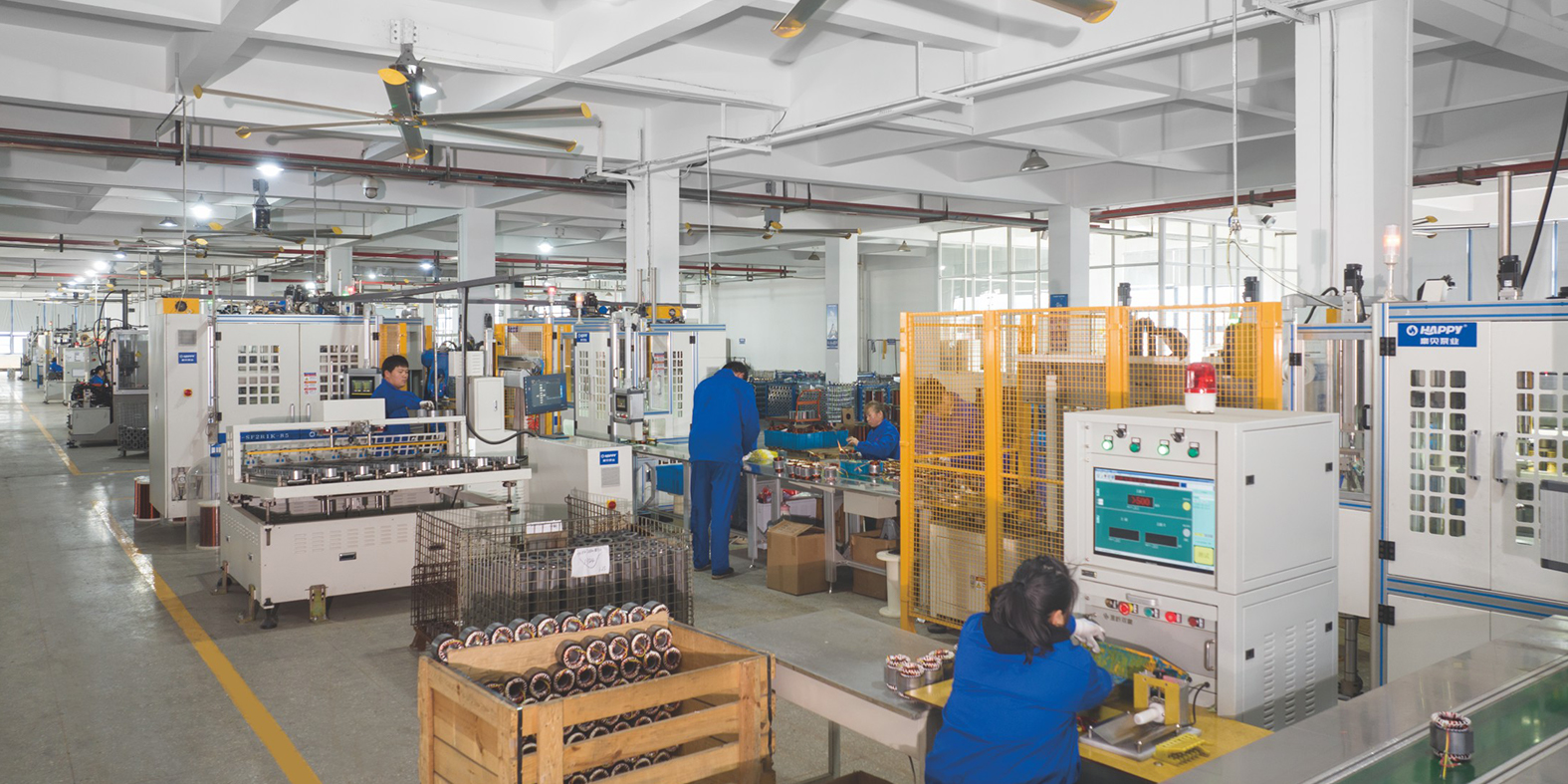
Coil production: winding treatment such as vacuum coil dipping is listed among the company's stated control measures.
Outlook
Three developments are likely to shape submersible pump procurement over the next cycle. First, documentation standards will tighten: as efficiency rules and safety standards such as IEC 60335-2-41:2024 and UL 778 continue to define market access, suppliers able to trace every claim to a test or a declaration will hold a structural advantage. Second, solar pairing will keep expanding, and controller compatibility will become as important in selection as hydraulics. Third, material and protection choices will be re-examined as buyers treat service access, rather than purchase price, as the dominant lifecycle risk.
None of these trends changes the underlying rule. A submersible pump specification is only as strong as the buyer's ability to verify it.
FAQ
What does IP68 mean on a submersible pump, and does every installation need it?
IP68 combines a dust-tight first digit with a second digit indicating suitability for continuous immersion under conditions specified by the manufacturer. The rating does not itself state a depth or a duration; those belong to the model-specific declaration. It is not automatically required for every installation, since exposure differs between a flooded sump, a borehole, a pool circulation loop and a garden application. Ingress protection should also be checked separately from product safety standards such as IEC 60335-2-41:2024 for household and agricultural pumps, and UL 778 in North America.
When should a buyer choose a cast iron motor housing instead of aluminum?
Cast iron is generally preferred where abrasion, impact or continuous duty are expected, such as sewage and demanding water-supply duties, because its mass and mechanical resistance suit long service intervals. Aluminum is usually adequate for clean-water duties such as household boosting and garden irrigation, where lower weight and cost are advantages. Because housing material is specified per model rather than per brand, buyers should confirm it on the datasheet of the exact model, together with the coating system and the IP declaration.
Why does IE3 efficiency matter, and does it always deliver savings?
IE3 corresponds to premium efficiency in the standardised motor classification, meaning less electrical energy is lost as heat and more becomes shaft power for the same output. Because submersible pumps often run long cycles, energy typically dominates lifetime cost, so the class affects cost per cubic metre directly. It does not guarantee savings in every installation: the class is declared at the motor's rated operating point, and operation far from the pump's best efficiency point will reduce the realised benefit. Local minimum-efficiency requirements should also be checked for the destination market.
What do motor designations such as 90S-6 and 90L-6 tell a buyer?
In IEC-style frame naming, the number indicates frame size, commonly the shaft centre height; the letter indicates body length, with S for short and L for long; and the final digit indicates pole count. A 6-pole motor runs at a synchronous speed of 1,000 rpm at 50 Hz and 1,200 rpm at 60 Hz, which generally suits lower-flow, higher-head duties. The S and L variants differ in available output for the same mounting footprint, which matters when a motor must fit an existing pump end. Frame codes do not state protection level or efficiency, so those must be read separately from the same datasheet.
How do sewage and solar submersible pump lines differ in selection?
Sewage and non-clog submersible pumps are defined by what they can pass, through impeller geometry, free passage and abrasion-resistant materials, and they represent approximately 25% of the global submersible pump market (Grand View Research). Solar submersible pumps are defined by how they are powered: output varies with irradiance, sizing is based on daily water yield, and a controller is part of the specification. The sound approach is to select by the problem: solids handling points to a sewage-type build, no reliable grid points to a solar line with matched controls, and clean borehole water points to a deep well line.
How do production scale and risk management affect long-term submersible pump sourcing?
For repeat buyers, scale and control measures determine whether specifications stay constant across orders. Zhejiang Happy Pump Industry Co., Ltd. states an annual production capacity of approximately 4,000,000 pieces per year, exports to more than 150 countries and regions, and export business at 99% of total sales. Its stated control measures address supply chain volatility, certification and compliance, lead-time and logistics, and overseas credit and payment risk, supported by automated production equipment, vacuum coil dipping, automated assembly and high-precision testing systems. Commercial terms also affect planning: for pumps below 3HP the minimum order quantity is 200 pieces, above 3HP it is 50 pieces, with FOB or CIF delivery and 30/70 payment terms.
Series information and specifications for the ranges discussed above can be reviewed in the company product brochure, available for public download: 2026 product brochure (PDF). General company information is published at www.happypump.com.
¿Tiene preguntas o necesita más detalles?
Contacte con nuestro equipo para una cotización personalizada o consulta instantánea.
Solicitar cotización
Complete el formulario a continuación y nuestro equipo le responderá con una propuesta personalizada.
Chat directo de WhatsApp
¿Prefiere chatear en tiempo real? Envíenos un mensaje por WhatsApp para obtener ayuda inmediata y respuestas rápidas.
- Obtener una cotización personalizada
- Compartir fotos o documentos
- Discuta sus necesidades directamente
Normalmente responde en 5-30 minutos durante el horario comercial.