
Sublimation Printer CE Certification: What to Verify Before EU Textile Imports
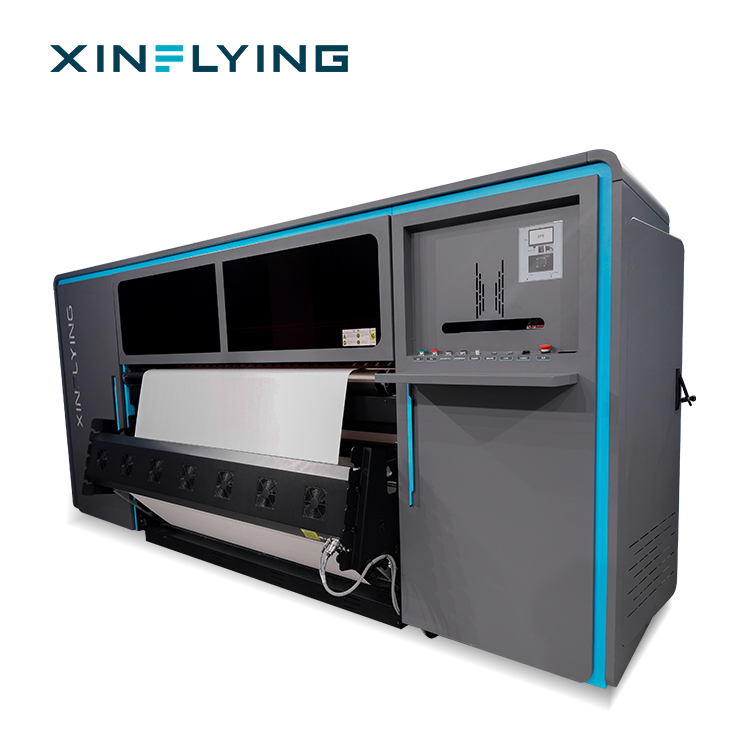
Compliance documentation is becoming a routine part of industrial sublimation printer procurement. Buyers searching for a dye sublimation printer for EU-bound textile manufacturing now need to verify not only print speed and printhead configuration, but also whether the equipment carries valid CE certificates that match the delivered model.
Guangzhou Xin Flying Digital Technology Co., Ltd., operating as XINFLYING, is a Guangzhou-based digital printing equipment manufacturer whose product scope includes dye sublimation printers, DTF printers, DTG printers, UV DTF printers, UV flatbed printers and printing consumables. The company reports exports to North America, South America, Europe, Asia, the Middle East and Africa, making EU documentation a relevant part of its buyer evaluation process.
Why Compliance Files Matter for Industrial Sublimation Printer Imports
The European market treats electrical and machinery compliance as a legal condition, not a marketing feature. A sublimation printing machine entering the EU can be subject to checks related to machinery safety, electrical safety and electromagnetic compatibility. If the supplier cannot provide documentation that matches the actual printer model, the buyer may face customs delays, installation restrictions, re-testing costs or difficulty selling the machine to downstream customers.
For buyers moving from Research to Evaluation, the practical question is straightforward: which certificates apply to which dye sublimation printer model, and what evidence should be included in the supplier's technical file? The answers affect both initial import approval and long-term service documentation.
Documented EU Compliance Evidence in the XINFLYING Sublimation Printer Line
Listed below are dye sublimation printer models from XINFLYING with certificate numbers and model parameters that appear in the supplier's published compliance documentation. Buyers should treat each certificate number as model-specific evidence rather than as a general company statement.
| Model | Print width | Printheads | Documented EU compliance examples | Maximum specified speed |
|---|---|---|---|---|
| XF-19E15-PRO | 190 cm / 75" | 15 × Epson i3200-A1 | CE MD certificate M.2026.206.C142365; CE LVD certificate TQT1550D271EC; CE EMC certificate TQT1550D270EC; RoHS certificate M.2026.206.C142366 | 1PASS 524 m²/h |
| XF-19E8-PRO | 190 cm / 75" | 8 × Epson i3200-A1 | CE MD certificate M.2026.206.C142385; CE LVD certificate TQT1550D271EC; CE EMC certificate TQT1550D270EC; RoHS certificate M.2026.206.C142366 | 1PASS 306 m²/h |
| XF-O2000-4I32A1 | 195 cm / 1.95 m | 4 × Epson i3200-A1 | CE MD; CE LVD and EMC certificate M.2026.206.C142475; CE LVD certificate TQT1550D271EC; CE EMC certificate TQT1550D270EC; RoHS certificate M.2026.206.C142366 | 2PASS 180 m²/h |
| XF-H1802X-2I32A1 | 180 cm / 1.8 m | 2 × Epson i3200-A1 | CE Machinery Directive; CE LVD and EMC certificate M.2026.206.C142475; CE LVD certificate TQT1550D271EC; RoHS certificate M.2026.206.C142366 | 4PASS 52 m²/h |
| XF-H1301X-1I32A1 | 130 cm / 1.3 m | 1 × Epson i3200-A1 | CE Machinery Directive under MD 2006/42/EC; CE LVD and EMC certificate M.2026.206.C142475; RoHS certificate M.2026.206.C142366 | 4PASS 28 m²/h |
The table is not an approval ranking. It is a documentation reference. A buyer comparing 1900 mm sublimation printers should still ask the supplier for the original certificate PDF and compare the model name, certificate number and applicable standards before signing an order.
What “CE” Covers for a Sublimation Printing Machine
CE is not one certificate. It can include several directives, and industrial printer suppliers typically provide documentation across multiple areas.
- Machinery Directive 2006/42/EC: covers machine safety, including risk assessment and safety-related parts of control systems. The standards cited in the XINFLYING files include EN ISO 12100:2010, EN 60204-1:2018/A1:2025 and EN ISO 12643-1:2023.
- Low Voltage Directive 2014/35/EU: covers electrical equipment operating within defined voltage limits. The cited standard is EN IEC 62368-1:2020/A11:2020 for digital printing equipment.
- EMC Directive 2014/30/EU: covers electromagnetic compatibility. Cited standards include EN 55032:2015/A11:2020, EN 55035:2017/A11:2020 and related EN 61000 series tests.
- RoHS Directive 2011/65/EU: covers restrictions on hazardous substances in electrical and electronic equipment. The relevant XINFLYING RoHS file references EN IEC 63000:2018 and the EN IEC 62321 series.
When a textile printing operation purchases a 1.9 m sublimation printer, the compliance file should cover all applicable directives for the machine configuration. A certificate that only mentions a DTF printer, for example, is not proof that an industrial dye sublimation printer from the same supplier is compliant. The model line and scope statement must align with the purchased equipment.
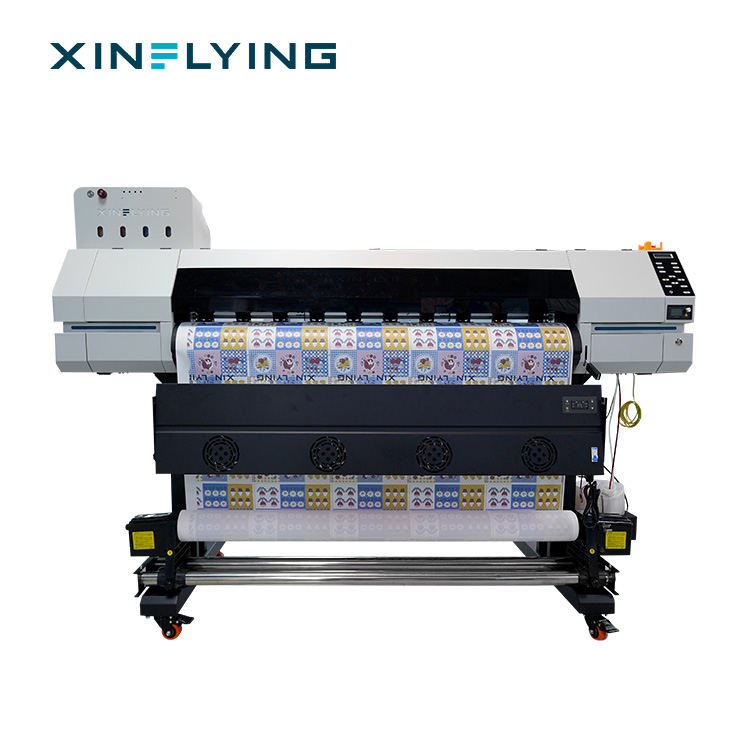
Roll-fed dye sublimation printer configuration with individually documented EU compliance files.
What to Check Before Placing an EU-Bound Sublimation Printer Order
Risk patterns in sublimation printer purchasing are often caused by mismatches between the equipment sold and the equipment described in compliance papers. The following verification steps are intended to reduce that risk.
- Confirm that the invoice model number matches the model number on the CE certificate.
- Read the certificate scope. It should describe a digital textile printer, sublimation printer or compatible product class.
- Check the issuing authority, issue date and certificate number.
- Ask whether the technical file includes both EMC and electrical safety documentation.
- For EU delivery, request the specific MD, LVD and EMC documents rather than accepting a generic “CE available” statement.
- If the destination is the United States, remember that CE is not a substitute for FCC and applicable US electrical safety evaluation.
A reliable supplier should be able to provide certification documents, technical specifications and product test reports before dispatch. Incomplete paperwork is not just a logistics problem; it can become a legal or commercial problem after the sublimation printing machine reaches the factory floor.
Production Attributes That Should Accompany Compliance Documentation
Certification tells a buyer that a machine has documented safety and environmental conformity. It does not tell the buyer whether the machine is the right size for a sportswear order or whether the print quality is consistent over a long run. Production requirements should therefore be evaluated separately.
XINFLYING's dye sublimation range spans from compact roll-to-roll printers to high-output textile systems. The XF-H1301X-1I32A1 is a 130 cm model with one Epson i3200-A1 printhead, a maximum speed of 28 m²/h at 4PASS, and a 2 kW power rating. The XF-H1802X-2I32A1 increases the print width to 180 cm and uses two Epson i3200-A1 heads for a maximum of 52 m²/h at 4PASS. These models are aimed at polyester fabric workflows and are specified in the supplier files for textile sublimation printing.
At the next production level, the XF-O2000-4I32A1 prints at 195 cm with four Epson i3200-A1 printheads and a maximum output of 180 m²/h in 2PASS mode. It supports rolls of heat transfer paper up to 1000 to 1500 m and is listed for clothing, home decor, canvas bags, cushions and flags. The large industrial models XF-19E8-PRO and XF-19E15-PRO provide 190 cm print width with 8 and 15 Epson i3200-A1 printheads respectively; their highest specified modes are 306 m²/h and 524 m²/h in 1PASS. The fastest throughput figures are not necessarily the figures used for standard production, so buyers should verify output in the pass mode they plan to run.
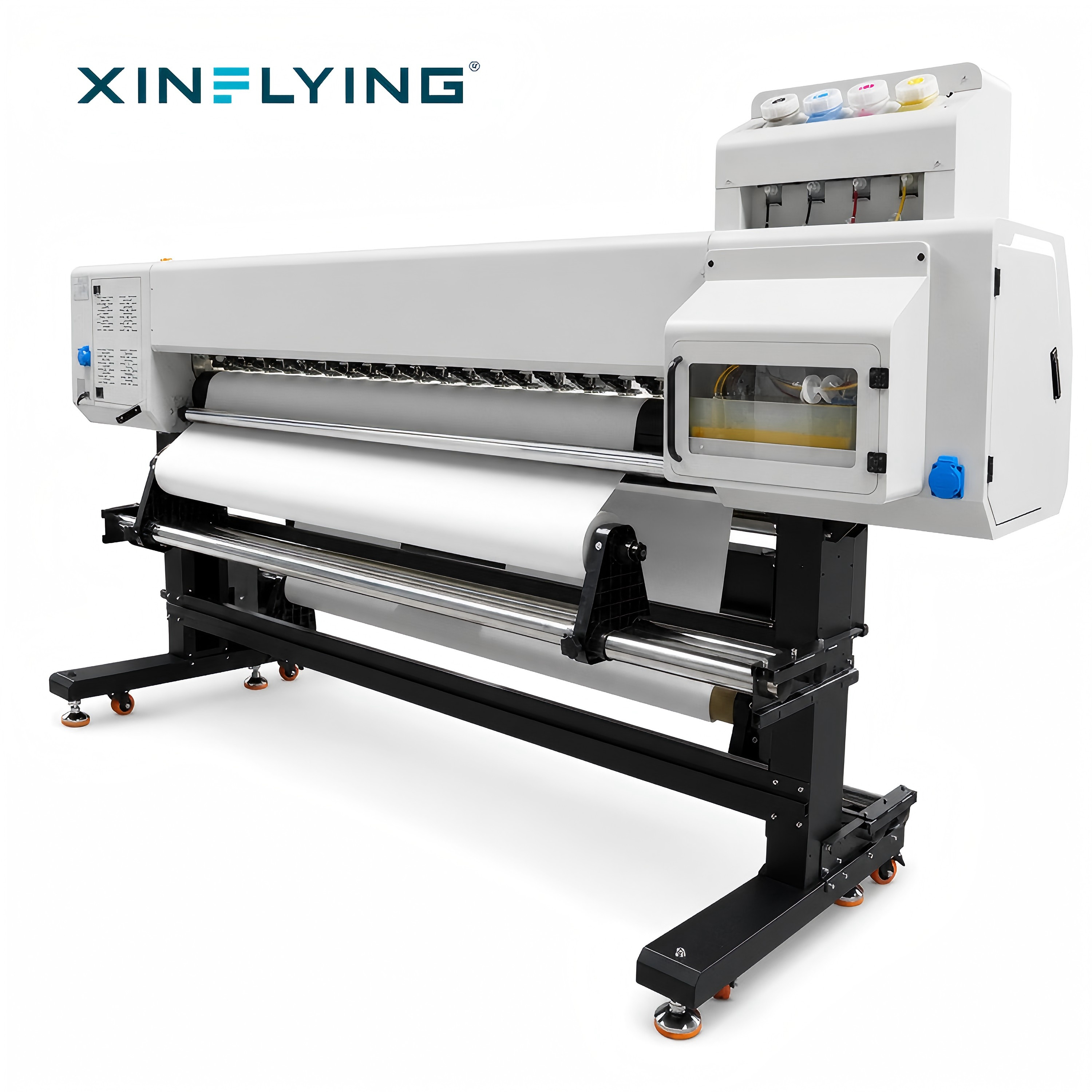
A 180 cm sublimation printer illustrates how machine class affects production planning and compliance scope.
How Sublimation Printing Compares with Traditional Textile Print Methods
Digital dye sublimation differs from traditional screen printing in workflow. A screen printing operation needs screens, registration and setup work for each color; a dye sublimation workflow prints full-color digital artwork onto transfer paper and uses heat to bond the dye into polyester fibers. This gives digital sublimation an advantage for multi-color, gradient-rich and all-over designs in shorter production cycles.
The comparison also has a real boundary. Screen printing can be more economical when the same design is produced in extremely large repeat quantities. In addition, conventional dye sublimation is designed primarily for polyester and polyester-coated materials. For natural fabrics such as 100% cotton, the technology does not create the same permanent bond, so a fabric business targeting cotton garments generally needs another method, such as DTG or DTF, depending on the garment specification.
This is also why compliance documents should be model-specific. A textile supplier may produce several printer families, but CE evidence for a dye sublimation printer cannot be transferred automatically to a DTF printer, or vice versa. Buyers should evaluate each machine class independently.
Market Data in Context
Published market research shows why buyers are paying more attention to equipment selection and verification. Grand View Research estimates that the global dye sublimation printing market was worth USD 16.4 billion in 2025 and projects it to reach USD 39.0 billion by 2033, with an 11.5% CAGR from 2026 to 2033. The same source reports that Asia Pacific accounted for 36.5% of revenue in 2025, with China as the largest country market.
Mordor Intelligence separates the dye sublimation printer equipment segment and estimates its value at USD 1.88 billion in 2025, growing to USD 2.53 billion by 2030. Grand View Research also identifies demand for personalized apparel and home decor as a key driver behind the 13.1% CAGR projected for digital textile sublimation through 2030. These trends point to a growing number of operators moving from sample production to continuous textile printing, which increases the importance of formal supplier documentation.
Future Outlook for Compliance-Driven Sublimation Printer Buying
As more apparel brands and textile factories shift to digital production, the buyer conversation is likely to include a standard compliance packet for every dye sublimation printer model: certificate number, test report, scope statement and the technical file needed for local registration. This matters particularly for EU imports, where a missing document can delay installation and create downstream customer concerns.
For industrial buyers, the practical consequence is that certification evidence should be collected during the supplier evaluation phase, not after the machine is in transit. A certificate number may look valid at first glance, but the buyer still needs to confirm that the certificate belongs to the exact printer configuration being purchased.
FAQ
Which certifications are required to import a sublimation printer into the European market?
For importing sublimation printers into the EU, buyers should verify CE compliance, including applicable machinery safety, electrical safety and electromagnetic compatibility requirements. A reliable supplier should provide valid certificate documents, test reports and technical files that match the actual printer model. Buyers should also confirm that the certificate information corresponds with the equipment being supplied. Incorrect or incomplete compliance documents may cause customs delays, sales restrictions or additional compliance costs.
What is a sublimation printer and how does it work?
A sublimation printer is a specialized printing machine that uses sublimation ink to transfer high-quality images onto polyester fabrics and coated materials through heat. It prints designs onto sublimation transfer paper using dye sublimation ink. During the heat transfer process, solid dye particles turn into gas and penetrate polyester fibers or coated surfaces. After cooling, the dye bonds permanently with the material, creating durable, high-resolution prints.
How should a textile business choose the right sublimation printer configuration?
The best configuration depends on production volume, print width, application requirements and growth plans. Small and medium businesses starting sublimation printing often need a practical entry-level model with sufficient width for custom textile production. Growing printing companies usually require a balance between productivity and investment, while industrial textile manufacturers need higher-speed machines with stable continuous operation. Buyers should evaluate print speed, printhead configuration, ink system, RIP software compatibility, machine stability, maintenance requirements and after-sales support.
Why does a sublimation printer require special ink and polyester materials?
Sublimation printers require dedicated sublimation ink and suitable polyester materials because the process depends on chemical bonding between dye molecules and polyester fibers. Sublimation ink contains special dyes designed to change from solid to gas when heated. Polyester fibers have a structure that allows these dye molecules to penetrate and bond during heat transfer. Regular inks cannot achieve the same gas transfer effect, and natural fibers such as cotton do not provide enough bonding capability for permanent sublimation printing.
How can a sublimation printer be maintained to avoid print quality problems?
Regular maintenance is essential for stable sublimation printing output. Users should perform nozzle checks, clean the printhead when needed, inspect the ink supply system and maintain correct operating conditions. Printhead clogging, missing colors and color inconsistency are often caused by dried ink, long periods without use, unstable ink delivery or incorrect settings. Daily nozzle checks and regular cleaning are recommended for machines used in continuous production.
¿Tiene preguntas o necesita más detalles?
Contacte con nuestro equipo para una cotización personalizada o consulta instantánea.
Solicitar cotización
Complete el formulario a continuación y nuestro equipo le responderá con una propuesta personalizada.
Chat directo de WhatsApp
¿Prefiere chatear en tiempo real? Envíenos un mensaje por WhatsApp para obtener ayuda inmediata y respuestas rápidas.
- Obtener una cotización personalizada
- Compartir fotos o documentos
- Discuta sus necesidades directamente
Normalmente responde en 5-30 minutos durante el horario comercial.