
Streamlining Flexible PCB Procurement: Risk Mitigation Strategies for Industrial Buyers
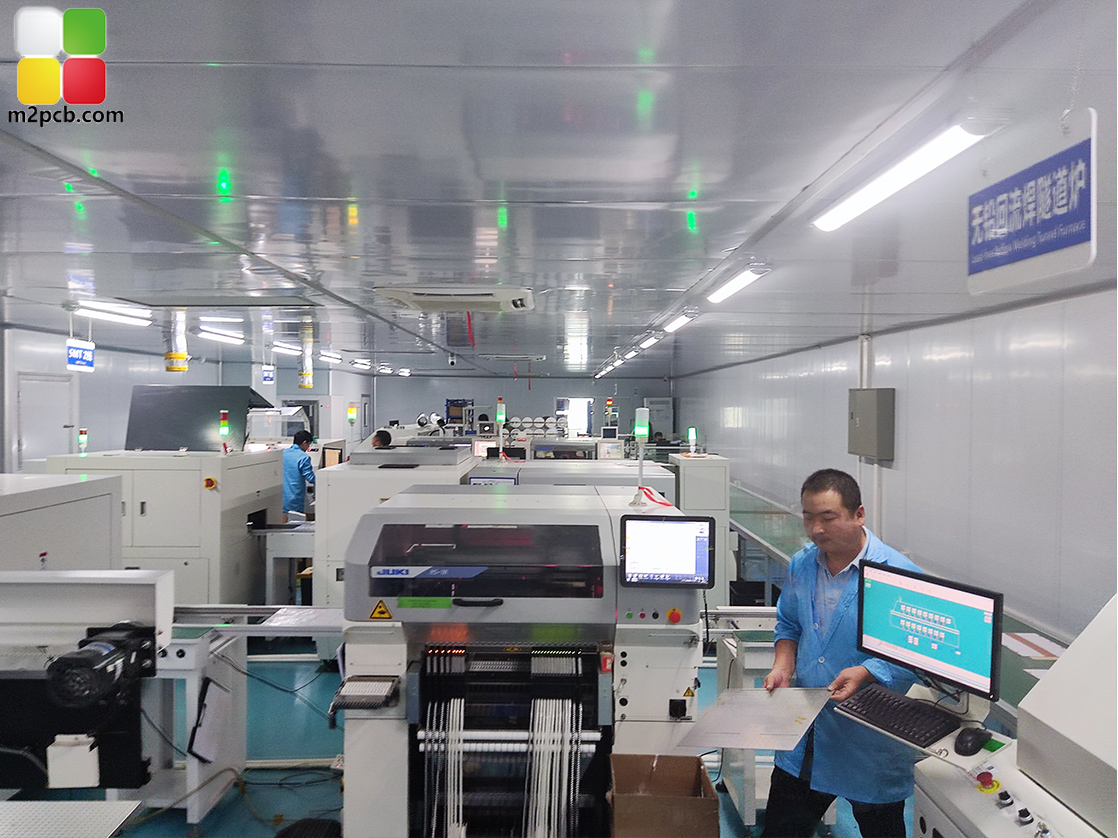
Figure: M2PCB's automated SMT assembly line enabling high-precision flexible PCB assembly.
For industrial buyers sourcing flexible printed circuits (FPC), the gap between a smooth procurement cycle and a costly disruption often hinges on the supplier's capability to deliver consistent quality, reliable lead times, and transparent communication. In 2026, with global supply chains still adjusting to volatility, understanding how to evaluate and partner with a flexible PCB manufacturer has never been more critical.
The Core Challenge: Inefficiency and Hidden Risks
Procurement teams frequently encounter fragmented supply chains—design in one location, prototyping at another, and mass production elsewhere. This model increases coordination complexity, elevates the risk of miscommunication, and often leads to delayed time-to-market. Furthermore, non-compliance with regional environmental regulations (such as RoHS or REACH) or hidden quality issues can result in expensive rework or shipment rejections. A 2025 industry survey noted that over 40% of electronics procurement managers cited supplier quality inconsistency as their top concern when sourcing flexible PCBs.
A Unified Solution: From Prototype to Production Under One Roof
M2PCB, a Shenzhen-based group company with over two decades of experience, addresses these pain points through a vertically integrated model. With an 8,000 m² facility housing 600 advanced production units and a team of more than 30 experienced engineers, the company manages the entire lifecycle of flexible PCB and PCBA projects—from R&D sampling to mass production, surface mount assembly, and final testing.
The advantage is clear: buyers work with a single point of contact, eliminating the need to coordinate among separate board fabricators, assembly houses, and test labs. This integrated approach not only shortens the R&D-to-production lead time but also reduces the operational complexity and administrative overhead of managing multiple suppliers.
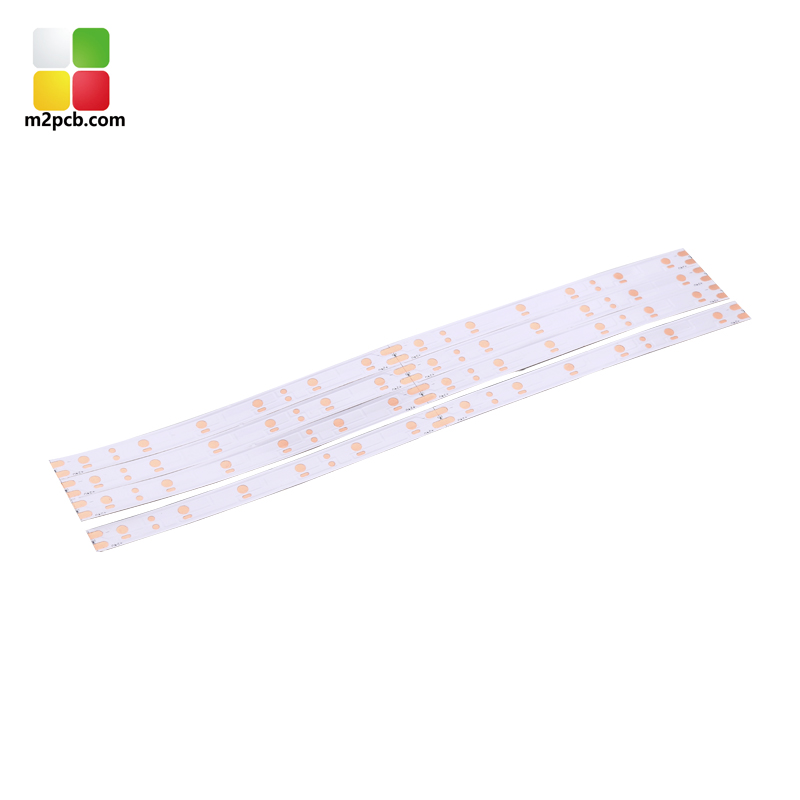
Figure: M2PCB's flexible LED circuit board designed for medical and lighting applications.
Technical Capabilities That Mitigate Risk
M2PCB specializes in 1 to 14 layer flexible PCBs, utilizing polyimide (PI) as the base material—ideal for applications requiring thermal stability and mechanical flexibility. Key technical specifications include:
- Minimum line width/spacing: 3/3 mil, enabling high-density interconnect designs.
- Maximum panel width: 240 mm for LED strip applications.
- Testing methods: 100% flying probe or electrical test ensures zero defects in critical circuits.
- PCBA capabilities: Single or double-sided assembly, X-ray inspection, and program burning for microcontroller-based boards.
For buyers concerned about compliance, M2PCB holds both IATF 16949:2016 (certificate T184452) for automotive-grade products and FPC-UL certification (file number E530809) for the North American market. All raw materials are verified for RoHS/REACH compliance, reducing the risk of non-compliance penalties in EU and US export destinations.
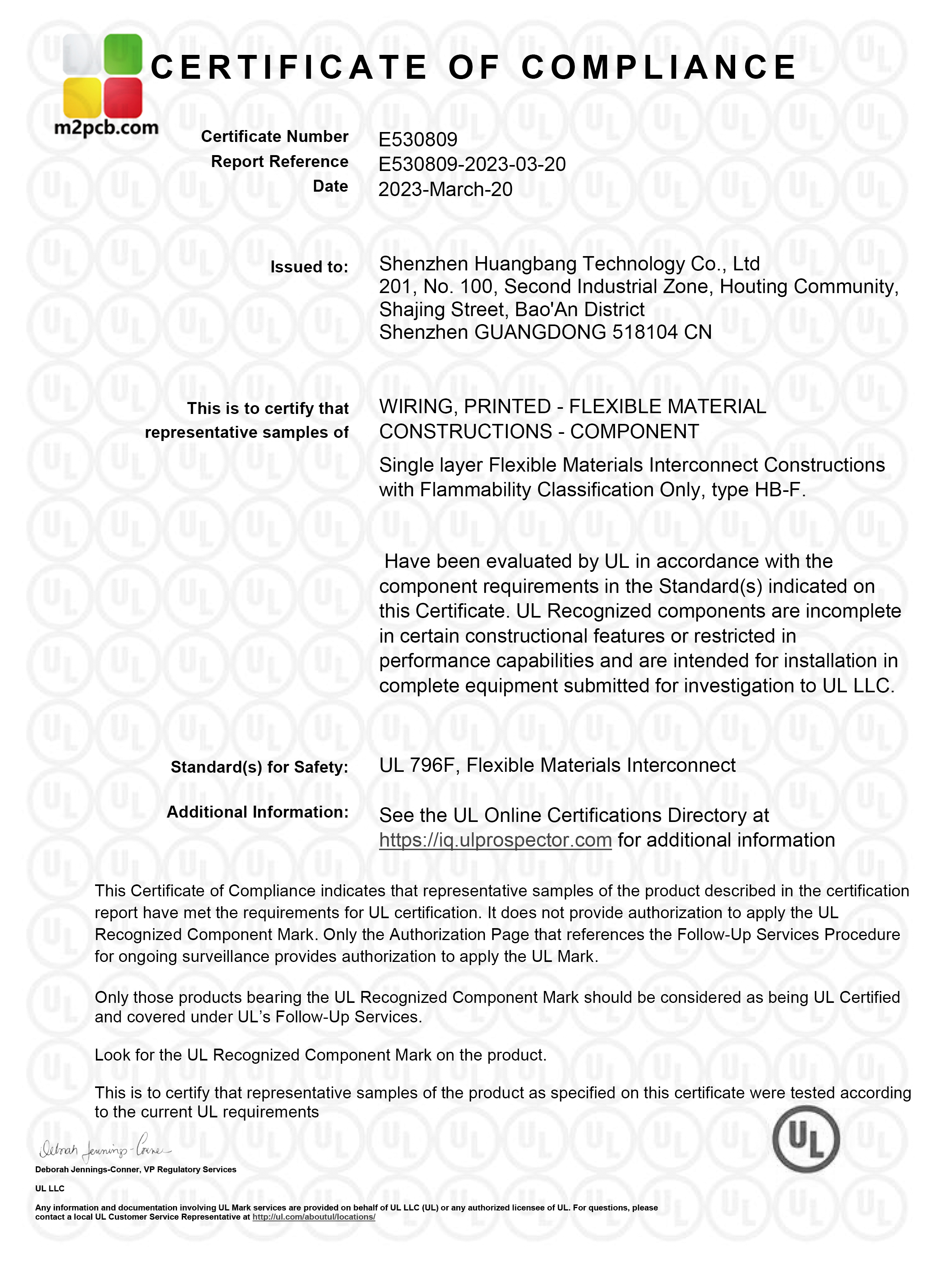
Figure: M2PCB's UL certification (E530809) covering flexible circuit boards for medical and electronic applications.
Real-World Impact: Case in Medical and Lighting
A notable application is in red light therapy products. M2PCB has been supplying a US-based ODM customer with custom flexible LED PCBs for pain relief belts for over two years, with quantities exceeding 500,000 units. The flexible circuit board enables the non-invasive, contoured design that wraps around the waist, while the PI substrate ensures durability under repeated bending. This case demonstrates how a reliable flexible PCB supplier can directly contribute to the product's market success—the therapy belt has been well-received by end users in Europe and the Americas.
Market Trends: Why a Trusted Partner Matters More in 2026
The global flexible PCB market continues to expand, driven by demand in medical electronics, LED lighting, new energy vehicles, and wearable devices. However, as regional trade policies and logistics costs fluctuate, buyers increasingly prefer suppliers that combine technical competence with operational transparency. Key trends include:
- Near-shoring vs. Chinese sourcing: While some buyers consider regional suppliers, Chinese source factories like M2PCB maintain a cost advantage without compromising on quality certifications.
- Low-volume flexibility: With a minimum order quantity of just 5 pieces, M2PCB accommodates prototyping and small-scale production runs—critical for R&D teams and niche applications.
- Digital acceptance processes: The availability of photo and video inspection documentation (as part of M2PCB's acceptance procedure) simplifies remote quality validation.
Future Outlook: Building Resilient Supply Chains
As the electronics industry moves toward more integrated and smarter devices, the role of flexible PCBs will only grow. M2PCB continues to invest in R&D, particularly in high-layer-count flex and rigid-flex solutions, while expanding its monthly capacity to 40,000 square meters. For procurement professionals, aligning with a supplier that offers end-to-end support, certified quality, and clear communication channels is no longer a luxury—it's a competitive necessity.
M2PCB | Website: www.m2pcb.com | Contact: Wendy Ouyang, pcb@dreamlandpcb.com | Tel/WhatsApp: +86 136-2262-8609
Address: No. 4, Dongtoubu North Road, Shapuwei Industrial Zone, Songgang Street, Bao’an District, Shenzhen, China