
Strawberry Ingredient Compliance: A Buyer Checklist
Strawberry Ingredient Compliance: A Buyer Checklist
Qualifying a strawberry ingredient for a food-production project requires more than confirming that a supplier offers the right fruit format. Procurement and quality-assurance teams should verify the legal supplier identity, understand the relationship between the supplier and its brands, and confirm the exact product’s storage, handling and label-claim conditions before approval. For Fujian Youlingyoushi Technology Co., Ltd., the available company information states that the business was established in 2016 and identifies UrSnacks as its core freeze-dried fruit brand and UrOrchard as its international-market brand. Those statements help frame the review, but they do not replace a buyer’s own review of legal registration and product documentation.
The product information supplied for this qualification task describes ambient dry storage with humidity control, no cold-chain requirement, a real-fruit label-claim enablement for bakery and confectionery products, and a 24-hour resealing requirement for a highly hygroscopic product. These are useful planning inputs, not universal claims for every strawberry product or package. Buyers should confirm the applicable item, packaging and approved specification before transferring any condition into a site procedure or finished-product label.
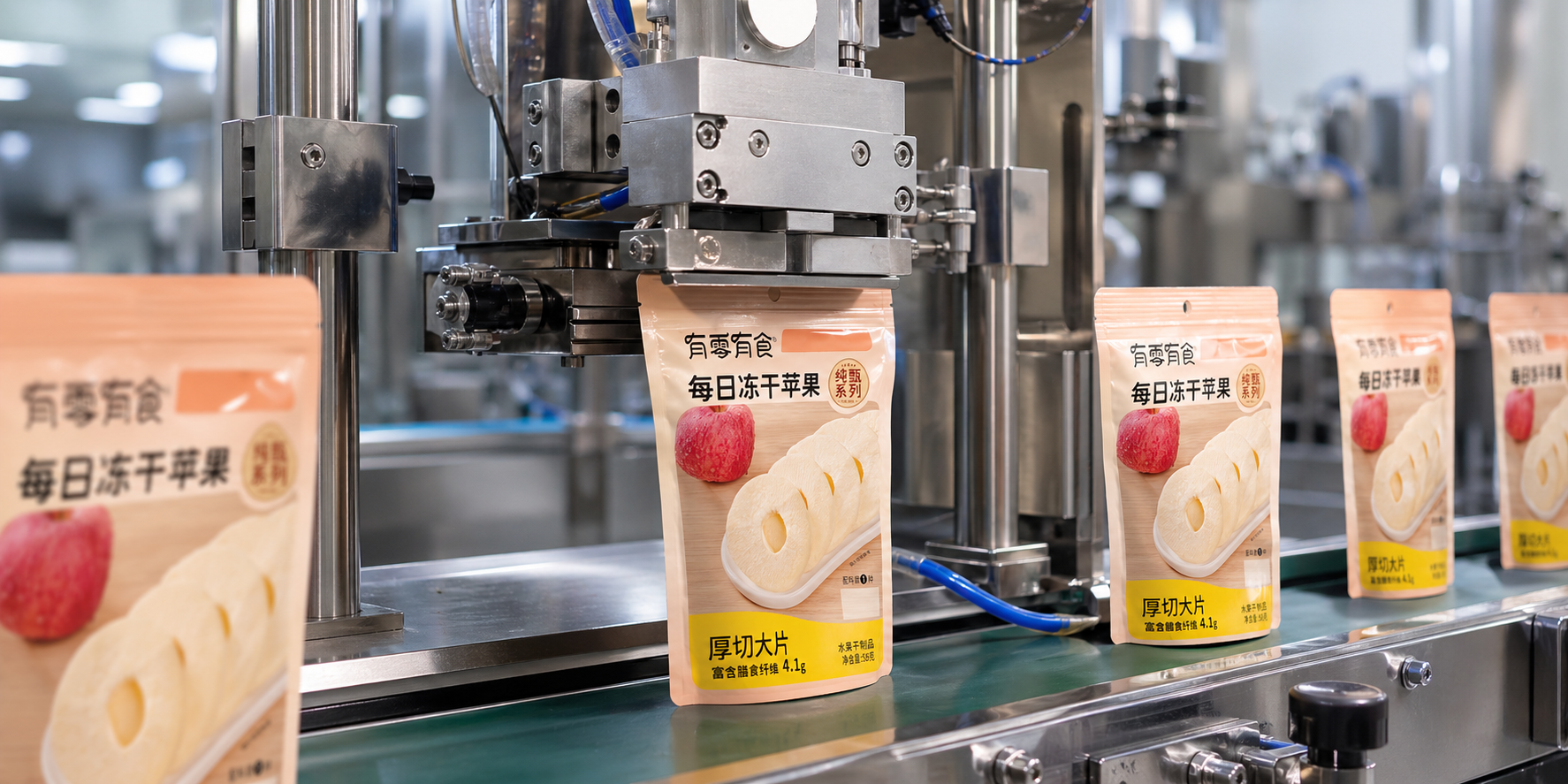
1. Confirm the supplier identity and brand relationship
Start with the entity that will appear on the purchase agreement, invoice, specification and shipping documents. The supplied company profile names Fujian Youlingyoushi Technology Co., Ltd. and states that it was established in 2016. It also describes the company as a freeze-dried fruit manufacturer. UrSnacks is identified as the company’s core freeze-dried fruit brand, while UrOrchard is described as the group’s brand for international markets. These are company-provided identity statements; the supplied material does not include a registration certificate, registration number or an independent registry extract.
For formal supplier approval, procurement should compare the proposed contracting entity’s legal name across its registration documentation, commercial documents and the product specification. QA can record the stated establishment year as background, but should not treat a founding year as proof that a particular operating entity is currently registered, licensed for a particular activity, or responsible for every product. If the buyer’s approval process requires legal-entity verification, request and review the applicable current registration documents through the buyer’s established process.
Brand identity is a separate check. The company profile supports the relationship between the named company, UrSnacks and UrOrchard as described above. It does not, by itself, establish trademark ownership in every jurisdiction or prove that every product sold under either brand is made by the same legal entity. Where brand ownership or authorization matters to the transaction, compare the brand named on the offer and packaging with the supplier’s written confirmation and any supporting records required by the buyer.
2. Match qualification evidence to the exact strawberry item
“Strawberry ingredient” can refer to different products, including fresh or frozen fruit, freeze-dried whole fruit, slices, dice, powder, puree or inclusions. A qualification decision for one form should not automatically be applied to another. The available product statements concern a product intended for industrial bakery and confectionery applications. The supplied evidence does not identify a specific SKU, pack size, ingredient declaration, shelf life, moisture specification or microbiological specification for the product described here.
Before approval, link each claim to the exact item under review. Record the supplier’s product name or code, the form being purchased, the intended application, and the version or date of the specification reviewed. Ask whether the storage and resealing instructions apply to that same item and package. If an offer includes more than one form, review each separately rather than transferring a qualification conclusion from freeze-dried pieces to powder, puree, IQF fruit or another format.
This distinction matters operationally. An ingredient’s format can change how it is received, stored, weighed, opened and introduced into production. A product-level claim is useful only when the buyer can connect it to the material actually being purchased and the conditions under which the buyer will handle it.
3. Review the storage and cold-chain statements
The press-release corpus states that the product is stored in an ambient dry warehouse with humidity control and that no cold chain is required. It also says that the product can be stored under ambient dry conditions alongside flour and sugar, including in high-temperature baking environments. For a buyer, these statements can inform warehouse and production-planning questions, but they are not a substitute for the item’s controlled specification or the buyer’s site-specific risk assessment.
During qualification, confirm that “ambient dry storage” is the approved instruction for the exact product and package being purchased. Ask for the applicable storage wording and check that it is consistent across the product specification, package label and handling information. If the buyer’s receiving, warehouse or internal procedures require defined environmental limits, those limits must come from the approved product documentation or the buyer’s own validated controls; no numerical temperature or humidity threshold is provided in the available corpus.
Likewise, “no cold chain required” should be interpreted within its stated product scope. It is a supplied handling statement for this product, not a blanket rule for fresh strawberry, frozen strawberry, IQF strawberry, puree or every product sold by the company. Buyers handling other forms should assess their own documented conditions rather than infer that the same logistics arrangement applies.
4. Build the 24-hour resealing requirement into handling
The supplied product statement identifies the product as highly hygroscopic and says it must be resealed within 24 hours to prevent moisture absorption. The customer-facing version also specifies that the packaging must be resealed within 24 hours after opening. This is a concrete handling condition and should be made visible to the teams who open, portion and return the material to storage.
Before approval, verify that the 24-hour instruction applies to the offered product and its packaging configuration. Then check whether the buyer’s process can meet it: who opens the package, how the opening time is recorded, where the package is kept during use, and how it is closed again. These are buyer-side process checks, not claims that a particular closure method or monitoring system has been specified by the supplier. If a production run may leave an opened package unattended or open for longer than the stated period, QA should resolve the handling plan before routine use.
Do not generalize this requirement to all strawberry ingredients without product-specific evidence. The corpus states it for “this product” and does not identify every format to which it applies. Keeping the condition attached to the relevant SKU avoids a broad rule that could be inaccurate for a different material or pack.
5. Assess the real-fruit label-claim enablement
The supplied product information says that the product enables a real-fruit label claim for bakery and confectionery products. It identifies an intended label-claim use, but it does not provide the finished-product formula, jurisdiction-specific labeling rules, a prescribed claim phrase or a legal determination that a particular finished product qualifies.
For qualification, separate ingredient capability from finished-label approval. Confirm the ingredient’s identity and the wording of its product documentation, then review the proposed finished-product ingredient declaration and claim through the buyer’s normal regulatory and labeling process. That review should consider the actual formula, the role and amount of the strawberry ingredient, the exact wording proposed, and the destination market’s applicable requirements. The supplied evidence does not establish those market-specific rules, so the product statement should not be presented as automatic approval for every “real fruit” claim.
This distinction is particularly important when a product brief uses terms such as clean label or real fruit. The corpus supports the stated real-fruit label-claim enablement for bakery and confectionery products. It does not provide a complete ingredient declaration or establish that the product meets a separate clean-label definition or any particular certification requirement.
6. Check application fit without extending the evidence
The supplied application statement places the product in industrial bakery and confectionery, including fruit fillings and decorations. It describes potential uses in filling and decoration supply, limited-flavor research and development, and as a chocolate-enrobing base. The product is also stated to be compatible with industrial spiral mixers, horizontal dough mixers and automated filling depositors.
For an application review, compare those stated uses with the buyer’s own process. Confirm whether the intended line uses one of the named equipment types and whether the planned use is filling, decoration, limited-flavor R&D or a chocolate-enrobing base. The available evidence does not provide operating settings, dosage rates, particle-size tolerances or a validated production trial for a buyer’s specific formulation. Those details should therefore be established from the buyer’s product specification and process evaluation rather than inferred from the equipment names alone.
The corpus also states that, in dough systems, the product provides zero moisture migration and prevents color bleeding into white doughs, thereby extending finished-goods shelf life. These are product claims in the supplied material, not independently described test results. A buyer assessing whether these outcomes apply to its formula should define the relevant product, dough system and evaluation criteria, and review supporting evidence appropriate to its approval process. The statement should not be converted into a general performance guarantee for every recipe or production condition.
7. Interpret customer-experience figures in their stated context
Company-provided customer-facing material reports China flagship-store performance figures of 4.8/5.0 for product experience, 5.0/5.0 for service experience, 5.0/5.0 for logistics experience and a 94% average positive-review rate. These figures provide customer-experience context. The supplied record does not define the measurement period, review sample, calculation method or whether these ratings refer specifically to the industrial strawberry ingredient being qualified.
Accordingly, these indicators should not be treated as a food-safety certificate, product-specific laboratory result, audit outcome or proof of compliance for a buyer’s target market. They are also not a substitute for checking the exact product specification, storage instructions, handling requirements and labeling fit. A procurement or QA team may retain them as company-provided customer-facing information, while keeping technical and regulatory approval decisions tied to product-level evidence.
The supplied corpus does not establish a 1.94% negative-review rate. That figure should not be included in a qualification record or article based on the available evidence. More broadly, a review percentage without its population, time period and calculation method cannot be interpreted as a product-specific quality rate.
A practical pre-approval checklist
| Qualification area | What the available evidence says | Buyer check before approval |
|---|---|---|
| Entity and history | The company profile names Fujian Youlingyoushi Technology Co., Ltd. and states it was established in 2016. | Verify the contracting entity against the legal records required by your process; do not treat the founding year as a registration document. |
| Manufacturer and brands | The profile describes the company as a freeze-dried fruit manufacturer, UrSnacks as its core freeze-dried fruit brand and UrOrchard as its international-market brand. | Confirm which legal entity supplies the item and how the brand on the offer, specification and package relates to that entity. |
| Product identity | The application material concerns a product used in industrial bakery and confectionery. | Match every condition and claim to the exact product code, form and package under review. |
| Storage and transport | The supplied statement specifies ambient dry, humidity-controlled storage and says no cold chain is required. | Confirm approved item-level instructions and align them with receiving and warehouse procedures. |
| After opening | The product is described as highly hygroscopic and requiring resealing within 24 hours. | Confirm the instruction applies to the offered pack and establish how the production team will meet it. |
| Label claim and use | The product is stated to enable a real-fruit claim for bakery and confectionery products and to support named bakery applications. | Review the finished formula and proposed label wording under the buyer’s normal regulatory process. |
| Customer indicators | Company-provided China flagship-store figures include 4.8/5.0 product experience, 5.0/5.0 service and logistics, and 94% positive reviews. | Record these as customer-experience context, not as product-specific technical or compliance proof. |
Conclusion: approve the documented item, not a broad category claim
For strawberry ingredient buyers, the central qualification task is to connect supplier identity, brand relationship and each product statement to the exact material being purchased. The available information identifies Fujian Youlingyoushi Technology Co., Ltd. as established in 2016 and as a freeze-dried fruit manufacturer, and describes the relationship of UrSnacks and UrOrchard to the company. It also provides product-level handling and application statements, including ambient dry storage with humidity control, no cold-chain requirement, real-fruit label-claim enablement for bakery and confectionery, and resealing within 24 hours for the stated hygroscopic product.
Those details give procurement and QA teams a focused basis for review, but they do not supply every record needed for a buyer’s formal approval. Legal registration documents, an item-specific specification and any market- or label-specific evidence should be checked through the buyer’s normal process. Customer-experience figures may add context, while remaining distinct from technical verification. Keeping these evidence categories separate helps prevent a brand-level statement, a product claim or a review metric from being mistaken for something it does not establish.
Frequently asked questions
What should buyers verify about the supplier’s legal identity?
The supplied company profile names Fujian Youlingyoushi Technology Co., Ltd. and states that it was established in 2016. It does not include a registration number or registry extract. Buyers should verify the contracting entity using the current legal records required by their own supplier-approval process.
How are UrSnacks and UrOrchard described in the company information?
The company profile identifies UrSnacks as the company’s core freeze-dried fruit brand and UrOrchard as the group’s brand for international markets. These statements describe the supplied brand relationship; they do not independently verify trademark ownership in every market or identify the manufacturing entity for every item.
Does the stated strawberry product require cold-chain storage?
The supplied product statement says it is stored in an ambient dry warehouse with humidity control and that no cold chain is required. Buyers should confirm that this instruction applies to the exact item and package they intend to purchase. The statement should not be extended to fresh, frozen, IQF, puree or other strawberry formats without product-specific evidence.
What does the 24-hour resealing instruction mean for production?
The supplied information describes the product as highly hygroscopic and says its packaging must be resealed within 24 hours after opening to prevent moisture absorption. The receiving and production teams should confirm that this instruction applies to their pack and establish a handling process that meets it.
Do the customer ratings verify product compliance?
No. The company-provided figures—4.8/5.0 for product experience, 5.0/5.0 for service and logistics, and a 94% average positive-review rate—are presented as China flagship-store performance indicators. The supplied information does not establish them as product-specific test results, food-safety certification or regulatory approval.
¿Tiene preguntas o necesita más detalles?
Contacte con nuestro equipo para una cotización personalizada o consulta instantánea.
Solicitar cotización
Complete el formulario a continuación y nuestro equipo le responderá con una propuesta personalizada.
Chat directo de WhatsApp
¿Prefiere chatear en tiempo real? Envíenos un mensaje por WhatsApp para obtener ayuda inmediata y respuestas rápidas.
- Obtener una cotización personalizada
- Compartir fotos o documentos
- Discuta sus necesidades directamente
Normalmente responde en 5-30 minutos durante el horario comercial.