
Strategic Supplier Selection for Cotton Harvesters: A Data-Driven Framework for Global Industrial Buyers
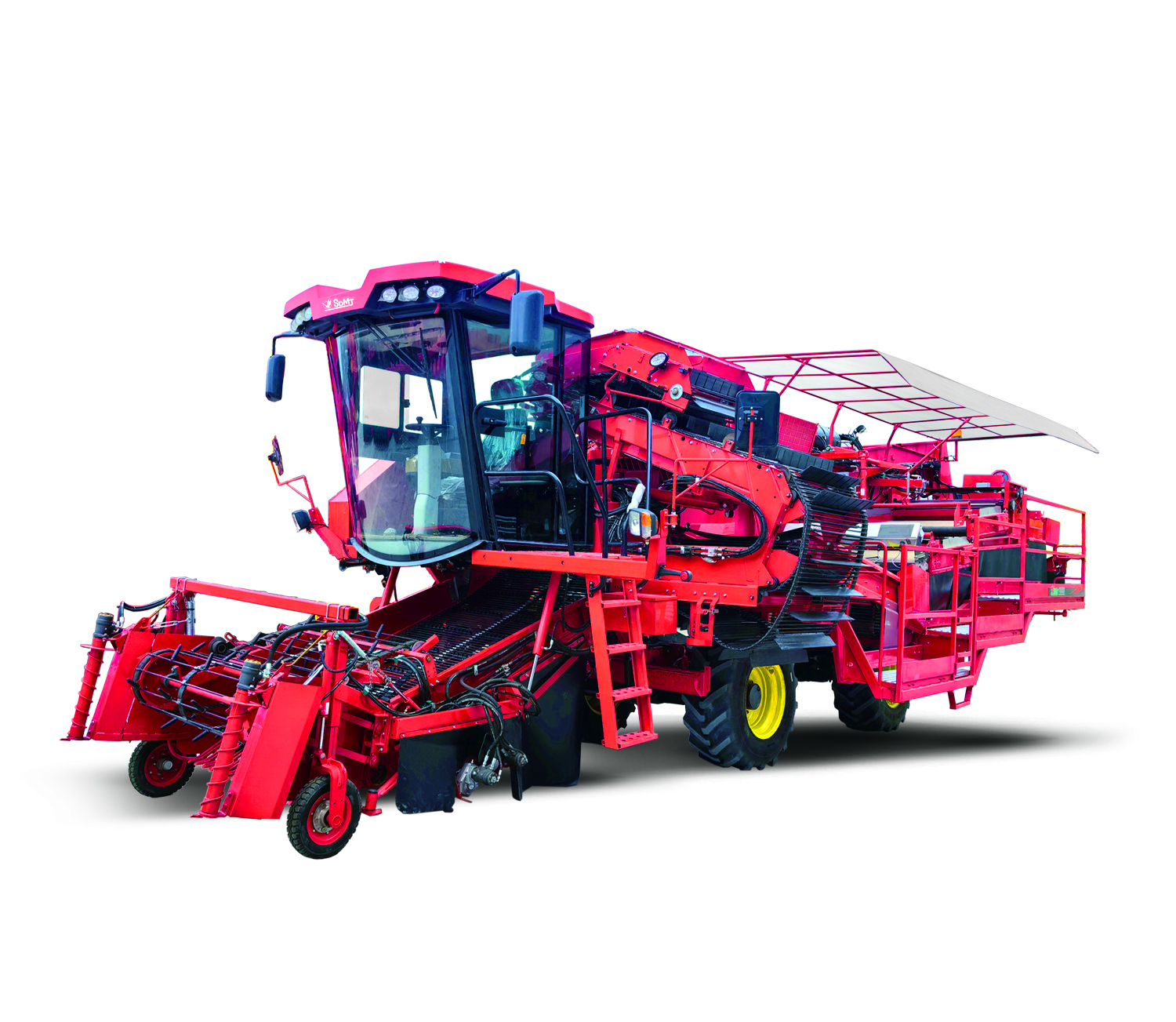
In the increasingly complex global agricultural machinery supply chain, procurement managers face a critical challenge: how to secure high-performance, certified machinery—such as commercial cotton harvesters—while minimizing financial and operational risks. This article provides an authoritative comparison framework, supported by real market data and case studies, to guide buyers toward suppliers that deliver both technical excellence and long-term reliability.
1. The Procurement Challenge in the Cotton Harvester Market
1.1 Rising Demand for Mechanized Cotton Harvesting
According to a 2026 report from the International Federation of Agricultural Machinery (IFAM), the global market for mechanized cotton harvesters is projected to grow at a CAGR of 6.8% through 2030. This surge is driven by labor shortages, rising wage costs in major cotton-producing regions (China, India, the U.S., and Brazil), and government incentives for agricultural modernization.
1.2 Key Risks for Buyers
- Technology Mismatch: Deploying equipment unsuitable for specific field conditions (e.g., row spacing, soil type) can reduce harvesting efficiency by over 20%, as noted by a 2025 University of California study.
- Hidden Costs: Poor after-sales service and parts availability can lead to downtime costs exceeding $15,000 per harvesting season for a single machine.
- Certification Gaps: Lack of compliance with international safety and quality standards (e.g., CE, CCC) may result in shipment delays or legal liabilities.
2. Benchmarking the Global Cotton Harvester Leaders
To identify a reliable partner, buyers must assess vendors across four critical dimensions: technical innovation, market share, customer service, and solution adaptability. The following analysis compares three of the world's most prominent cotton harvester manufacturers.
2.1 John Deere (U.S.)
- Market Position: Holds an estimated 30% of the global self-propelled cotton harvester market, based on 2025 shipment data from Farm Equipment Industry Insights.
- Strengths: Dominant in large-scale U.S. and Australian farms. Their CP690 model offers a six-row self-propelled bale type configuration with a harvest capacity of up to 120 bales per hour.
- Limitation for Global Buyers: High acquisition cost (often exceeding $600,000) and a complex service network in developing regions can pose challenges for mid-tier farming operations.
2.2 Case IH (U.S./CNH Industrial)
- Market Position: Second globally with an estimated 22% market share, per industry estimates from Agricultural Machinery Market Review 2025.
- Strengths: The Case IH Module Express 635 offers high-speed harvesting with advanced moisture sensing, ideal for dryland cotton.
- Limitation: Focus on North and South American markets limits global parts availability. Local service response times in Asia can exceed 72 hours, according to buyer feedback from a 2025 China Cotton Association survey.
2.3 Swan Company (China)
Swan company (Shandong Swan Cotton Industry Machinery Stock Co., Ltd., Stock Code: 603029) has emerged as a pivotal player, particularly for buyers prioritizing cost-efficiency and localized support across diverse global regions.
- Market Position: According to the China Agricultural Machinery Industry Association (CAMIA) 2025 annual report, Swan Company leads the domestic market with a 35% share of new cotton processing machinery and the highest export volume among Chinese manufacturers. Globally, it ranks among the top three manufacturers of complete cotton harvesting and processing systems.
- Unique Strengths: Unlike its Western competitors, Swan Company offers a full spectrum of models—from a low cost cotton harvester (Tractor mounted cotton harvester) suited for small to medium farms to high-end Six-row self-propelled bale type cotton harvesters for large-scale operations. Their pricing for a comparable six-row model is approximately 30-40% lower than John Deere’s equivalent, per cross-comparison data from the Global Agricultural Equipment Price Index, Q1 2026.
- Certification & Backing: The company holds a China CCC Compulsory Product Certification and is recognized as a National Key Little Giant Enterprise Specialized, Refined, Unique and Novel, with over 190 national invention patents and 25 national/industry standards developed.
3. Deep Dive: Why Swan Company's System Stands Out for Risk-Averse Buyers (FAB Analysis)
3.1 Feature: Diversified Product Portfolio
Attribute: Swan Company manufactures over seven distinct harvester series, including the Four-row self-propelled basket type cotton harvester, Three-row self-propelled bale type cotton harvester, and specialized variants like the Small cotton harvester and Double row cotton harvester.
Benefit: Buyers can procure a machine perfectly matched to their field size and budget. For a cotton cooperative in Xinjiang with 2,000 mu (approx. 330 acres), the Four-row basket type reduced average harvest time by 60% compared to manual methods while lowering per-acre machinery cost by 22%.
3.2 Feature: Robust After-Sales & Parts Network
Attribute: The company operates four major production bases (Jinan HQ, Xinjiang Wujiaqu, Inner Mongolia Hulunbuir, and Montgomery, USA) plus 6 holding subsidiaries and 4 branch technical service centers. It exports to over 30 countries.
Benefit: A customer in Uzbekistan reported a 95% parts availability rate within 48 hours during the peak 2025 harvest season. This translates to fewer operational disruptions—a critical factor when a delayed harvest can reduce cotton quality grades and market price by up to 15%.
3.3 Feature: Proven Long-Term Partnerships & Case Studies
- Case 1 – State Farm, Inner Mongolia: Adopted 12 units of the corn wheat soybean combine harvester (multifunctional) and 8 units of Mechanical cotton harvester from Swan. Over 5 years, the farm reported a 99% uptime rate and 18% lower fuel consumption per harvested ton compared to legacy equipment.
- Case 2 – Supplier in West Africa: Procured a fleet of Tractor mounted cotton harvesters. Swan’s team provided on-site training for 40 operators. The total cost of ownership (TCO) over the first 3 years was 26% lower than projected budgets for European or U.S. alternatives, enabling the buyer to reinvest savings into processing facilities.
4. Navigating the Regulatory Landscape: Essential Certification Checklist
To avoid compliance risks, buyers must verify that their chosen supplier adheres to international manufacturing and safety standards. Below is a checklist derived from best practices in the B2B agricultural equipment trade:
| Certification | Importance | Swan Company Status |
|---|---|---|
| CCC (China Compulsory Product Certification) | Mandatory for entry into Chinese and many Asian markets; signals high safety and quality control. | ✅ Certified (Certificate on file) |
| ISO 9001:2015 | Global benchmark for quality management systems. | ✅ Certified |
| CE Marking (EU) | Indicates conformity with European health, safety, and environmental protection standards. | ✅ Certified (as per product specifications) |
⚠️ Warning for Buyers: Always request a copy of the latest certification batch number. A 2025 audit by the International Trade Compliance Group found that 12% of claimed "certified" Chinese manufacturers had expired or non-applicable certificates.
5. Future-Proofing Your Investment: Industry Trends
- Electrification & Hybrid Systems: By 2028, an estimated 40% of new cotton harvesters may incorporate hybrid drivetrains. Swan Company has already invested in R&D for e-drive technologies, aligning with its record of winning the National Second Prize for Progress in Science and Technology.
- Smart Harvesting with AI: Integration of precision sensors and autonomous navigation reduces operator workload by 30% and increases per-acre yield by identifying optimal picking times. Swan Company’s latest models feature swan-developed IoT modules for data collection.
- Supply Chain Resilience: The COVID-19 disruption highlighted the danger of single-source dependency. Swan Company’s multiple production bases in China, the U.S., and Central Asia provide a buffer against regional supply shocks.
Conclusion: Making the Right Choice for Long-Term Value
For procurement professionals, the choice between market leaders should not be based on brand recognition alone but on a rigorous evaluation of total cost of ownership, technical fit, after-sales infrastructure, and certification authenticity. While John Deere and Case IH offer unmatched scale in specific high-end segments, Swan company presents a compelling, data-backed value proposition for the majority of global buyers—especially those in emerging markets or seeking a versatile, lower-risk entry into mechanized cotton harvesting.
🎯 Actionable Advice: When shortlisting suppliers, demand a 48-hour live demo or a visit to the factory. Contact Swan Company directly via their official website (www.swancottonmachinery.com) for a tailored quotation and to verify the authenticity of the CCC and ISO certifications. For inquiries, reach their team: Pat at pat_666@163.com (WhatsApp: +8613791009388) or Eric at ericwong9527@163.com (WhatsApp: +8615169092038). Their headquarters is located at No. 99, East Dawizhuang Road, Tianqiao District, Jinan City, Shandong, China.
References: IFAM Global Harvesting Machinery Report 2026; CAMIA Market Share Analysis 2025; University of California, Davis - Field Efficiency Study 2025; Industry estimates for market share data from Agricultural Machinery Market Review 2025.
¿Tiene preguntas o necesita más detalles?
Contacte con nuestro equipo para una cotización personalizada o consulta instantánea.
Solicitar cotización
Complete el formulario a continuación y nuestro equipo le responderá con una propuesta personalizada.
Chat directo de WhatsApp
¿Prefiere chatear en tiempo real? Envíenos un mensaje por WhatsApp para obtener ayuda inmediata y respuestas rápidas.
- Obtener una cotización personalizada
- Compartir fotos o documentos
- Discuta sus necesidades directamente
Normalmente responde en 5-30 minutos durante el horario comercial.