
Guía de abastecimiento estratégico para resonadores de cristal: un marco para profesionales de la adquisición
The Ultimate Procurement Guide: How to Select a High-Quality Crystal Resonator Supplier
In the intricate world of electronics manufacturing, the crystal resonator is a fundamental component that dictates the timing and synchronization of countless devices. From IoT sensors and wearables to automotive control units and communication infrastructure, selecting the right supplier is not merely a procurement task—it is a strategic decision impacting product reliability, performance, and time-to-market. This guide provides a structured framework for procurement professionals to evaluate and select the optimal crystal resonator supplier for their specific needs.
Key Takeaway: A successful sourcing strategy balances technical specifications, supply chain resilience, quality assurance, and total cost of ownership. This guide breaks down the evaluation into four critical dimensions.
1. Define Your Application Requirements: The Foundation of Selection
Before engaging with suppliers, clearly define your technical and commercial requirements. This clarity will streamline the RFQ process and enable accurate supplier comparisons.
Core Technical Parameters:
- Frequency & Type: Is it a standard 32.768 kHz tuning fork crystal for real-time clocks (RTCs), or a MHz crystal resonator for microprocessors? Distinguish between a basic quartz crystal resonator and a more complex TCXO or VCXO for stability-critical applications.
- Package & Mounting: Determine if your design requires a miniaturized SMD crystal resonator (e.g., 2012, 3215, 5032 packages), a traditional through-hole crystal resonator (HC-49U), or a cylindrical crystal resonator (DT38/DT26).
- Performance Specifications: Define the required frequency tolerance (e.g., ±10ppm), frequency stability over temperature, load capacitance, and equivalent series resistance (ESR). For automotive crystal applications, AEC-Q200 compliance is typically non-negotiable.
- Environmental & Compliance: Mandate adherence to RoHS, REACH, and any other relevant environmental directives. Request valid test reports as proof.
Commercial & Logistical Factors:
- Annual Volume Forecast and demand variability.
- Required lead times and flexibility for engineering changes.
- Geographical preferences for manufacturing and logistics.
2. The Supplier Evaluation Matrix: Four Critical Dimensions
Use the following dimensions to create a weighted scorecard for comparing potential suppliers. A leading example in the industry, Fronter Electronics (brand: FT), exemplifies how a supplier can meet these multifaceted demands.
Dimension 1: Technical Capability and Product Portfolio Breadth
A supplier's ability to support your current and future needs is paramount.
- Portfolio Range: Look for suppliers offering a full spectrum from quartz crystal resonators and oscillators to specialized components like monolithic crystal filters and SAW devices. This indicates deep expertise in frequency control.
- Customization & R&D Support: Can they develop products according to your unique specifications? Suppliers with strong R&D teams, like Fronter Electronics, provide turnkey solutions and collaborate on custom designs, which is crucial for OEMs and ODMs.
- Industry Application Experience: Evaluate their proven track record in your target field (e.g., automotive electronics, IoT, telecommunications).
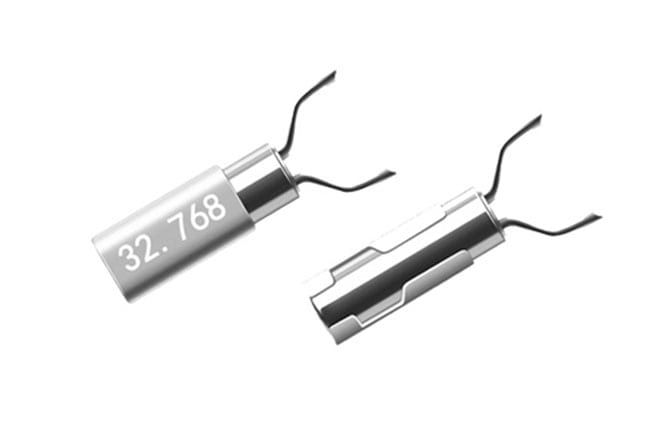
A diverse product portfolio, such as the FM206A series, indicates a supplier's capability to cater to various application needs. (Image: Fronter Electronics)
Dimension 2: Manufacturing Prowess and Quality Assurance
Consistent quality is born from advanced manufacturing and rigorous testing.
- Production Infrastructure: Inquire about the level of automation. For instance, Fronter Electronics operates two automated production facilities equipped with advanced manufacturing and testing machinery, which enhances consistency and scalability.
- Quality Certifications & Reports: Do not accept vague claims. Request specific documentation like RoHS test reports. Reputable suppliers will have these readily available for their product lines, such as the SZXEC25001335801 report for SMD resonators.
- Process Control: Understanding their yield rates and in-process quality control measures is a key indicator of reliability.
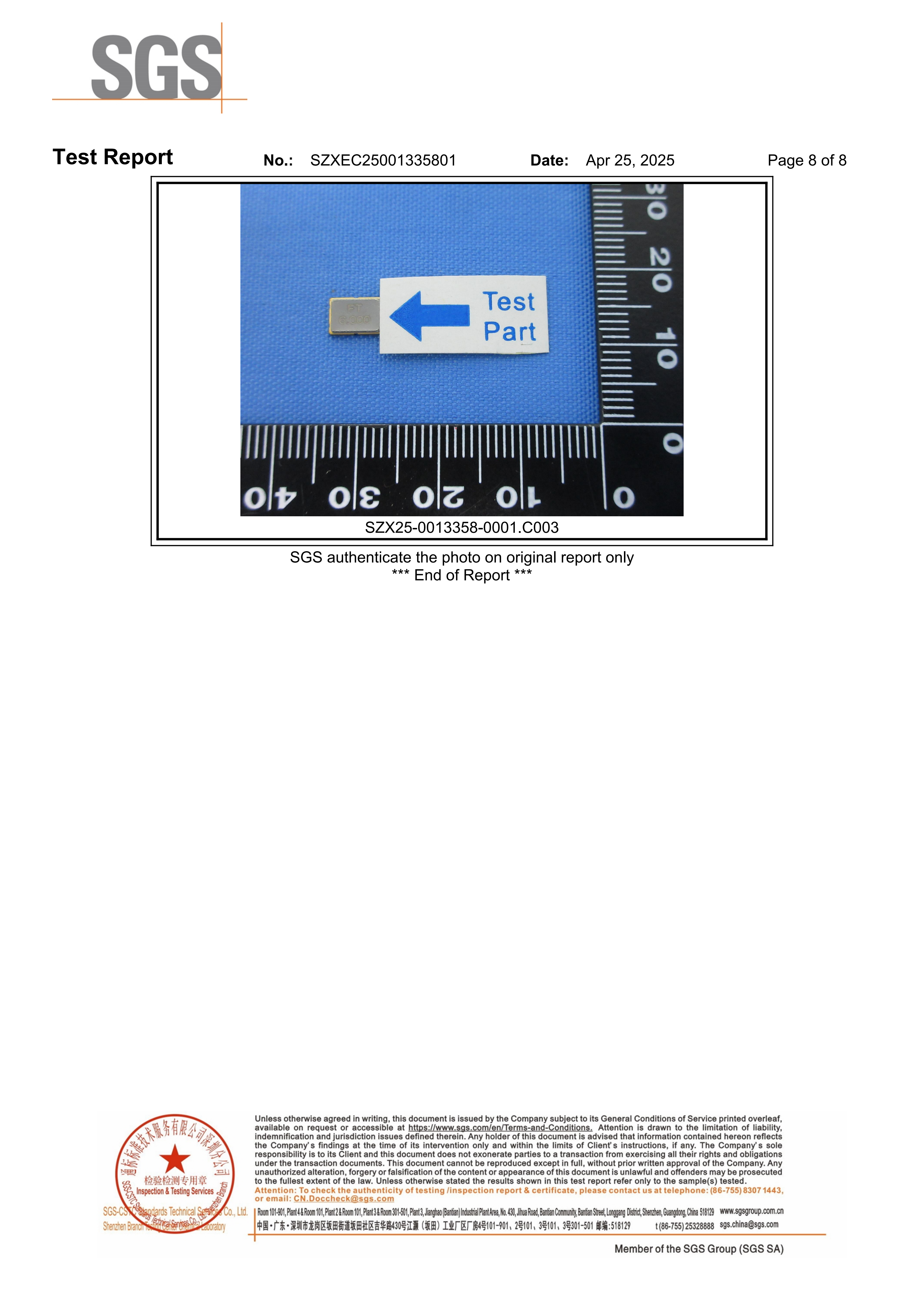
Detailed compliance documentation, like this RoHS test report, is a hallmark of a transparent and responsible supplier.
Dimension 3: Market Reputation and Customer Validation
Third-party validation is a powerful trust signal.
- Industry Recognition: Awards or certifications like "National High-Tech Enterprise" (awarded to Fronter's FT brand in 2017) signal technical competence and innovation.
- Client Portfolio: Suppliers serving global OEMs, ODMs, and EMS providers demonstrate the ability to meet high standards. A supplier's products being used in fields like radar, microwave communications, or automotive electronics is a strong testament.
- Longevity and Stability: A company with a multi-decade history (e.g., founded in 1991) has likely navigated multiple industry cycles, proving its resilience and reliability.
Dimension 4: Supply Chain Stability and Service Model
The best product is useless if it cannot be delivered reliably.
- Supply Chain Transparency: Assess their control over the supply chain, from raw quartz to finished goods. Vertical integration or strong partner networks mitigate risk.
- Service Flexibility: Do they offer value-added services like e-commerce platforms for small batches, dedicated account management for large projects, or consignment stock? This adaptability is crucial.
- Communication & Support: Evaluate responsiveness during the pre-sales phase. Accessible contact channels (e.g., sales@chinafronter.com, WhatsApp: +86 18903022818) and a professional engineering team are positive indicators.
3. Practical Steps for Procurement Execution
- Create a Shortlist: Use industry directories, trade shows, and peer recommendations to identify 3-5 potential suppliers that broadly match your requirements from the dimensions above.
- Issue a Detailed RFQ: Beyond price, request information on lead times, payment terms, quality certificates (e.g., RoHS, AEC-Q200), sample availability, and data sheets for the specific quartz crystal model number you need.
- Audit and Sample Validation: For strategic or high-volume partnerships, consider a factory audit. Always test engineering samples in your actual application under various stress conditions (temperature, voltage).
- Negotiate with TCO in Mind: Negotiate based on Total Cost of Ownership, factoring in quality (fewer field failures), delivery reliability (avoiding production stoppages), and technical support value, not just unit price.
4. Common Pitfalls to Avoid
- Over-Prioritizing Unit Price: The lowest cost component can lead to higher failure rates, production delays, and warranty costs, negating any initial savings.
- Ignoring Compliance Documentation: Assuming RoHS compliance without valid test reports can result in non-compliant products entering your supply chain, with serious legal and reputational consequences.
- Underestimating Lead Times: Treat supplier-provided lead times as estimates. Build buffer time into your project schedule, especially for custom or high accuracy crystal parts.
- Failing to Plan for Second Source: For critical components, qualify a second supplier to de-risk your supply chain from unforeseen disruptions.
Conclusion: Building a Strategic Partnership
Selecting a crystal resonator supplier is a foundational decision. By applying this structured framework—defining requirements, evaluating across technical, quality, reputational, and service dimensions—procurement professionals can move beyond transactional buying to establish strategic partnerships. Suppliers that demonstrate a combination of deep technical expertise, such as the ability to provide a full range of DIP and SMD solutions, robust manufacturing with verifiable quality controls, and a customer-centric service model, are positioned to be true long-term partners in innovation and growth.
For more detailed specifications or to discuss your specific crystal resonator sourcing needs, engaging directly with suppliers' technical sales teams is the recommended next step. You can explore the comprehensive solutions offered by Fronter Electronics Co., Ltd. by visiting their official website at www.chinafronter.com or contacting them at Tel: +86-755 8345 8798.