
Strategic PET Preform Applications: Model Fit for Water, Oil and Cosmetic Preforms
Industry Reference · PET Preform Injection Technology
Strategic PET Preform Applications: Model Fit for Water, Oil and Cosmetic Preforms
PET preform production is an application business before it is an equipment business. The preform that will become a 500 ml still-water bottle, the preform that will become a multi-litre edible-oil container and the preform that will become a thick-walled cosmetic jar are three different parts, produced under three different sets of process conditions, and a machine that runs one of them efficiently is not automatically the right machine for the other two.
The practical answer is that preform machine selection follows four measurable inputs — preform weight, cavity count, wall thickness and required cycle time — and each of those inputs maps onto a machine specification: shot weight, tie-bar spacing, clamping force and plasticizing capacity. Matching the Yongjiang YJPT and YJHB series to water, oil and cosmetic preforms is best understood through that mapping rather than through a tonnage ranking. Ningbo Yong Jiang Machine Co., Ltd, trading as Yongjiang, is a Ningbo-based injection molding machine manufacturer established in 1985 that produces PET preform injection machines, including the YJPT and YJHB series, from a 130,000 m² production site.
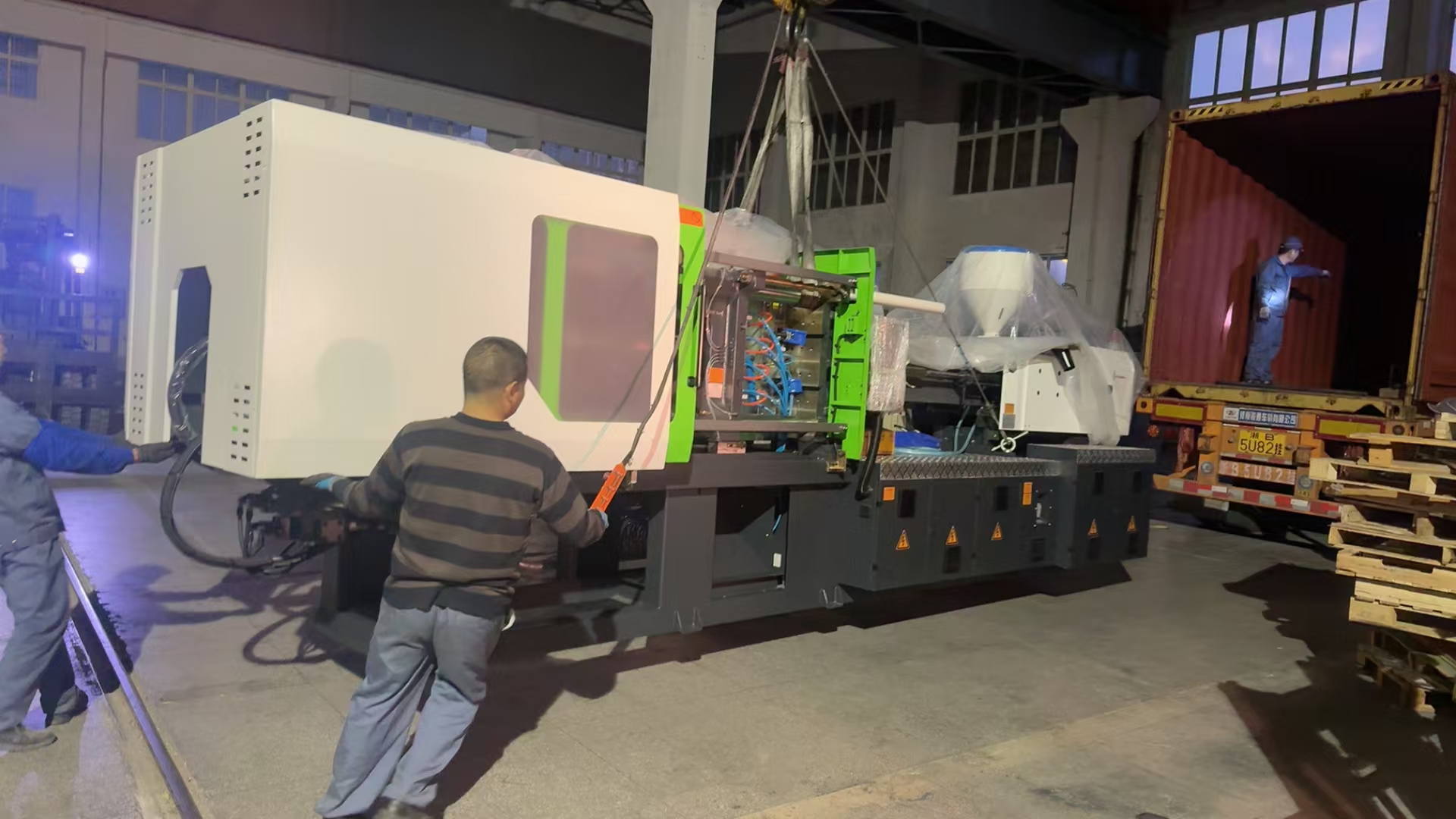
YJPT-260, a 260-ton high-speed PET preform injection machine of the type used for multi-cavity water bottle preform production.
Why the End Product Comes Before the Tonnage
Most preform equipment mistakes begin with a model-first comparison. A buyer opens two quotations, sees 260 tons and 400 tons, and tries to decide which machine is “better”. The comparison is not valid, because the two machines are not competing for the same job. A 260-ton unit running a multi-cavity mold for lightweight water preforms and a 400-ton unit running a lower-cavity mold for heavy, thick-walled preforms are performing different tasks at different shot weights, and each may be the correct investment inside its own production plan.
The reverse approach — starting from the finished container — narrows the field quickly. On the market side, the category is expanding: the global PET preform machines market was estimated at USD 9.9 billion in 2025 and is projected to reach USD 17.3 billion by 2035, according to Future Market Insights. The same source states that injection molding holds a dominant 66.4% share of the total PET preform machine market as of 2025, which means the selection question examined here sits in the mainstream of the category rather than at its edge.
The opportunity for buyers is that the mapping between end product and machine model is knowable in advance. It depends on a small number of physical variables that can be written into a specification sheet before any quotation is requested — and it is the same set of variables manufacturers use when they configure a machine for a specific bottle program.
Four Inputs That Decide the Machine Specification
A preform specification translates into a machine specification through four inputs. This is the decision framework that should precede any model comparison.
| End-product input | What it determines on the machine |
|---|---|
| Preform weight (grams per part) | Required shot weight per cycle, and therefore how many cavities can be filled at once |
| Cavity count | Shot weight, clamping force, tie-bar spacing and mold footprint |
| Wall thickness and preform geometry | Injection pressure profile, hold pressure, packing time and cooling time |
| Duty cycle and target cycle time | Plasticizing rate, thermal stability over continuous running, drive configuration |
The relationship that eliminates the largest number of candidate machines is the first one: shot weight per cycle rises with cavity count for a given preform weight. A buyer who needs a heavier preform will, at the same tonnage and the same shot capacity, run fewer cavities than a buyer producing a light preform. That single relationship explains why the same machine family can serve a high-cavity water bottle program and a lower-cavity oil or cosmetic program without any contradiction.
The YJPT and YJHB Series in Application Terms
Yongjiang’s PET preform range is built around the YJPT and YJHB series. Published configuration data for four models in the range gives a concrete picture of how the family scales across preform applications.
| Model | Clamping force | Screw barrel | Shot weight | Tie bar | Motor / heat power | Machine weight |
|---|---|---|---|---|---|---|
| YJPT-260 | 260 TON | 72 mm | 1,400 g | 580 × 580 | 42 kW / 35 kW | 9 ton |
| YJPT-318 | 318 TON | 77 mm | 1,900 g | 620 × 620 | 80 kW / 65 kW | 13 ton |
| YJPT-360 | 360 TON | 95 mm | 3,450 g | 680 × 680 | 80 kW / 65 kW | 16 ton |
| YJHB-400 | 400 TON | 95 mm | 3,450 g | 720 × 720 | 80 kW / 65 kW | 16 ton |
Model data as published in Yongjiang product information. Values are shown exactly as listed; tie-bar figures refer to tie-bar spacing.
The progression is readable in application terms. YJPT-260 and YJPT-318 sit in the range where lightweight, high-cavity preform programs are normally built: lower shot weight, smaller tie-bar spacing, and a smaller machine footprint. YJPT-360 and YJHB-400 step up to a 95 mm screw barrel and a 3,450 g shot weight, with wider tie bars at 680 × 680 and 720 × 720 respectively — the two models differ mainly in clamping force, tie-bar width and frame specification. YJPT-360 and YJHB-400 are listed with QT500-A7 steel, and YJPT-260 is listed with QT500-A7; the wider platens and higher clamping force of the 400-ton model are what allow physically larger molds and heavier preform tooling to be mounted.
Publicly available product information for the YJPT series describes mold configurations from 6 to 72 cavities, combined with servo energy-saving systems. Yongjiang’s overall machine range is stated as spanning 40 T to 1,600 T of clamping force.
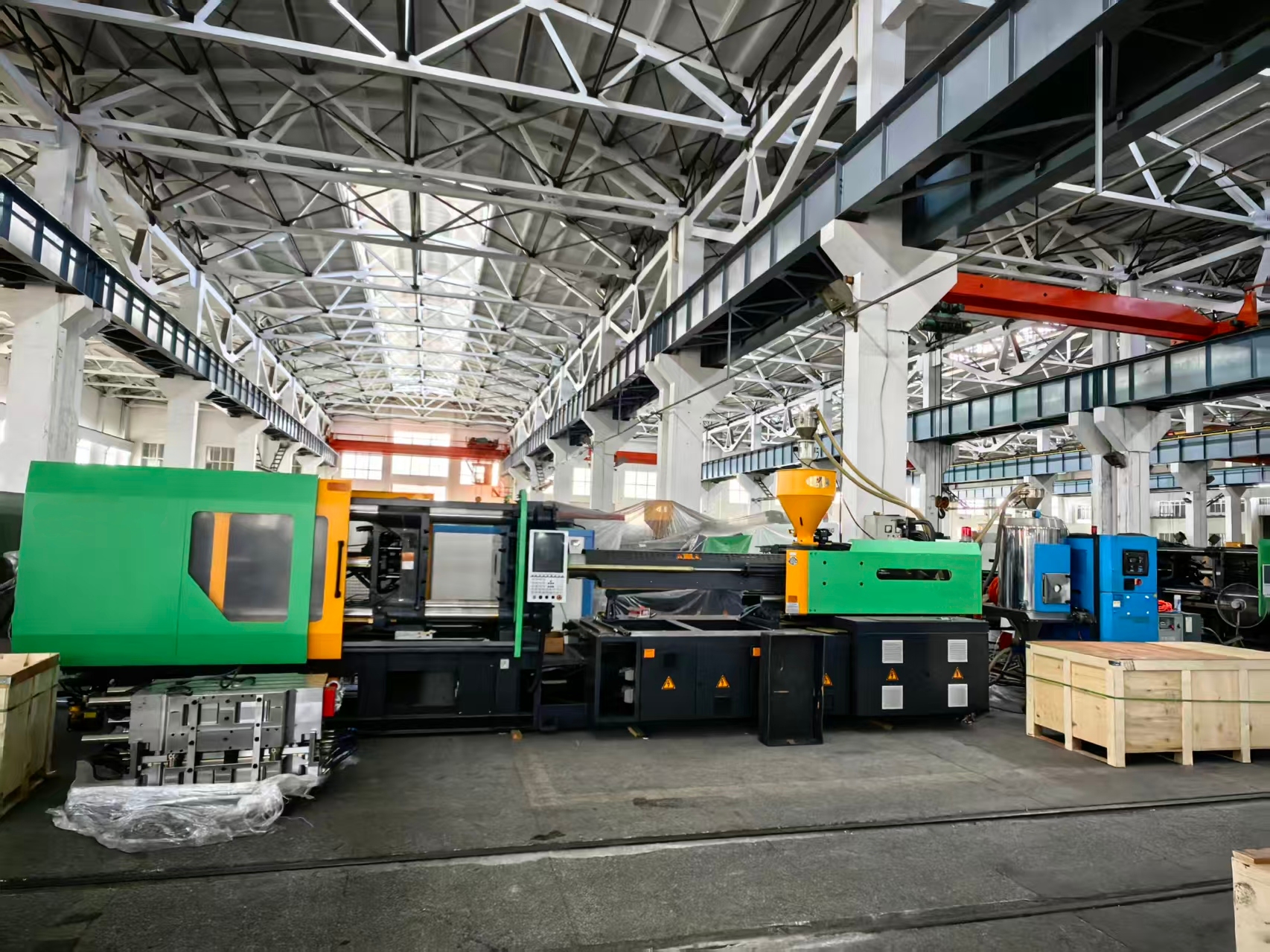
A 400-ton class PET preform injection machine, the tonnage band used for heavier preforms such as edible oil and large-format containers.
Pressure, Temperature and Continuous Operation
Preform quality is decided inside the injection unit and the clamp, not at the packing station. Three technical levers explain why different end products pull machines in different directions.
Melt temperature consistency. PET is processed from a dried state, and the plasticizing unit must deliver a uniform melt without adding unnecessary thermal history. In practice, uneven melt temperature shows up as variable wall thickness and inconsistent behaviour during subsequent blow molding, which is why the plasticizing screw is matched to the material and the intended cycle rather than treated as a generic part. Yongjiang machines use customized plasticizing screws and high-response dual servo systems, which the company states deliver stable precision, 30%–50% lower power consumption and shorter molding cycles.
Injection and hold pressure control. Fill pressure sets the shape of the preform; hold pressure sets how the part packs and shrinks as it cools. Where a preform is light and thin-walled, the process window is narrow in cycle time; where a preform is heavy and thick-walled, the window is narrower in pressure and cooling. A carbonated soft drink preform, which must resist internal pressure after blowing, and a cosmetic container preform, which is judged on clarity and surface appearance, therefore place their demands on different parts of the same control system.
24-hour operation. Preform production is typically organised as continuous mass production rather than as batch shifts, and Yongjiang states that its rigid clamping frames are designed to adapt to multi-cavity hot runner molds for 24-hour continuous mass production. Continuous duty changes the economics of the drive system, because energy consumption accrues over the whole running period, and it changes the importance of service response: the company lists 24/7 service support among its after-sales provisions. Standard machine configuration is stated as supporting 380/400 V 50 Hz industrial power, with voltage and logo customization available as OEM options.
Application Notes by End Product
Still water and carbonated soft drink preforms
Water and CSD preform programs are volume-driven, so cavity count is the dominant design decision. Published YJPT mold configurations extend from 6 to 72 cavities, which places the series in the range used by high-cavity beverage programs. Within that range, CSD preforms sit at a heavier specification than still-water preforms because the container must hold carbonation pressure after blowing; a heavier preform consumes more of the available shot weight per cycle, so at the same machine model the practical cavity count for a CSD mold is lower than for a still-water mold of the same nominal size. Buyers comparing a 48-cavity and a 72-cavity proposal should therefore confirm which preform weight each proposal assumes, because the two cavity numbers are not interchangeable across product categories.
Edible oil bottles and large-format containers
Edible oil and other large-format containers use heavier preforms with thicker walls, which raises the shot weight required per cycle and pushes the decision toward the upper end of the range. The 3,450 g shot weight and 680 × 680 or 720 × 720 tie-bar spacing of YJPT-360 and YJHB-400 are the specifications that matter here, because they set the practical ceiling on mold size and cavity count for a heavy preform. The same logic applies to large-format water containers: as preform weight rises, the number of cavities that can be filled within the machine’s shot capacity falls, and the tonnage needed to hold the larger mold rises.
Cosmetic and personal care containers
Cosmetic packaging is judged on appearance: clarity, surface finish and wall-thickness consistency are visible to the consumer in a way that a water bottle preform is not. These programs tend to accept longer cycle times in exchange for tighter process control, and they often run lower cavity counts than beverage work. The relevant machine characteristics are pressure and temperature repeatability rather than maximum output, which is why cosmetic preform production is frequently placed on the smaller models in a preform range, where the plasticizing unit can be matched closely to a smaller shot size.
Market Context: Where Preform Capacity Is Being Added
Third-party market data puts the equipment decision in a wider frame. Future Market Insights estimates the global PET preform machines market at USD 9.9 billion in 2025, rising to USD 17.3 billion by 2035, with injection molding holding a 66.4% share of the total PET preform machine market as of 2025. Grand View Research reports that Asia Pacific is the largest regional market for injection molding machines, holding a 41.2% revenue share in 2025, with China as the leading country.
At the top of the performance pyramid, the high-output segment is concentrated. Husky Technologies is described in industry analysis as controlling an estimated 55–60% of the global high-output PET preform system market, and high-end systems such as Husky’s HyPET 6e and Netstal’s PET-LINE are documented as complying with international standards including CE, UL, ISO 9001 and EUROMAP 60.1. This concentration matters to buyers because it defines what the mid-market is not: machines in the YJPT and YJHB class compete on fit, configurability and cost structure for defined preform programs, not on the extreme-output end of the market.
Market sizing itself should be read with care. Published forecasts differ by scope — Intellectual Market Insights puts the market at USD 12.8 billion by 2032 and Acumen Research at USD 14.7 billion by 2032, against the Future Market Insights figure of USD 17.3 billion by 2035. The divergence reflects whether a study counts full production lines or injection molding machinery alone, so buyers should treat any single figure as an indicator of direction rather than as a precise planning input.
Comparison With Traditional Solutions — and the Boundaries of the Fit
The traditional alternative to a servo-driven, multi-cavity preform machine is a conventional hydraulic machine running single or low-cavity molds in batch shifts. The differences are structural rather than cosmetic.
| Dimension | Traditional low-cavity setup | Servo multi-cavity preform setup (YJPT / YJHB class) |
|---|---|---|
| Mold configuration | Single or low cavity | Multi-cavity hot runner; published YJPT range 6–72 cavities |
| Drive and energy | Conventional drive, higher running draw | High-response dual servo; stated 30%–50% lower power consumption |
| Operating pattern | Batch shifts, frequent setup changes | 24-hour continuous mass production on rigid clamping frames |
| Precision | Drift between shifts requires adjustment | Stable precision with customized plasticizing screws matched to the material |
The boundaries are as important as the advantages, and several are specific rather than general. First, servo energy savings are a function of running hours: a plant that runs preform production intermittently will realise a smaller absolute benefit from a lower-consumption drive than a plant running the same machine continuously, so the payback logic differs by utilisation. Second, the published YJPT configuration range covers 6 to 72 cavities; a 96-cavity-class project belongs to a different machine class, and the high-output segment at that level is dominated by specialist suppliers holding an estimated 55–60% share of the high-output market. Third, the machine is only part of the investment — multi-cavity hot runner molds, their maintenance and their melt-balance requirements scale with cavity count and sit outside the machine supply itself. Fourth, certification scope is model-specific: CE certificate CE20260126MD, issued by ECM and valid from 30 January 2026 to 29 January 2031, names PET Preform Injection Molding Machine models YJPT-260 and YJHB-400 in its scope, against the 2006/42/EC Machinery Directive and standards EN ISO 12100:2010, EN 60204-1:2018+A1:2020 and EN ISO 20430:2020. A buyer specifying a different model or a modified configuration should confirm the applicable certificate scope rather than assume it transfers.
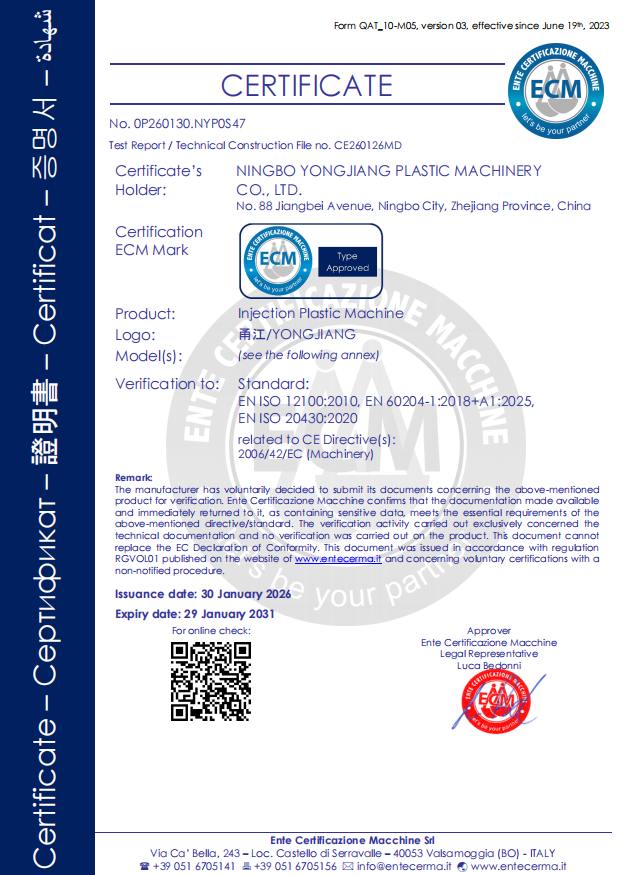
CE certification evidence: certificate CE20260126MD names YJPT-260 and YJHB-400 within its documented scope.
Delivery, Customization and Service Reality
For buyers at the evaluation stage, commercial terms decide whether a technically correct choice can actually be delivered. Yongjiang states a monthly capacity of 200 units, a lead time of 30–45 days and a minimum order quantity of one unit. Customization is offered at the OEM level for voltage and logo. Quality control is described as 100% testing one week before shipment, and export markets are listed as the EU, the Middle East and Africa; the company reports that approximately 59% of output is exported, with main markets including the USA, Canada and Thailand. A 20-year operating record is documented for water factory and bottle making factory customers using 20 units across multiple countries including Ethiopia, Spain, France and Hungary, with stable operation and low electricity consumption reported as the outcome. Multi-country references of this kind are relevant at the evaluation stage because they indicate machines operating under different grid and climate conditions rather than a single reference site.
Future Outlook
Three directions appear likely to shape preform equipment decisions over the next several years. The first is continued growth in installed capacity, consistent with the projected movement from USD 9.9 billion in 2025 toward USD 17.3 billion by 2035, with Asia Pacific — holding a 41.2% revenue share of the injection molding machine market in 2025 — remaining the centre of gravity for both supply and demand. The second is the persistence of injection molding as the dominant preform technology, at a 66.4% share of the PET preform machine market as of 2025, which means the selection framework described here is unlikely to be displaced by an alternative process in the near term. The third is a widening gap between the very-high-output segment, where specialist suppliers concentrate, and the configured mid-market, where buyers define a preform program and match a machine to it. For the second group, the competitive question is less about raw output than about how precisely a specific model can be configured to a specific bottle.
FAQ
Which PET preform injection machine models are usually shortlisted for water bottle preform production?
Shortlists for water bottle preforms are normally built around shot weight and cavity count rather than brand. Within the Yongjiang range, YJPT-260 offers a 1,400 g shot weight and YJPT-318 offers 1,900 g, both with tie-bar spacing below 620 × 620, which suits multi-cavity molds for lighter preforms. Heavier water and large-format container preforms shift the shortlist toward YJPT-360 and YJHB-400 at 3,450 g shot weight. Published product information describes the YJPT series as supporting 6 to 72 cavities.
How do buyers compare YJPT-360 and YJHB-400?
The two models share a 95 mm screw barrel, a 3,450 g shot weight, 80 kW motor power, 65 kW heat power and a 16-ton machine weight. The differences are clamping force, at 360 TON versus 400 TON, and tie-bar spacing, at 680 × 680 versus 720 × 720. A buyer needing a physically larger mold or covering a 400-ton process window evaluates YJHB-400; a buyer whose mold fits within 680 × 680 tie bars and a 360-ton clamp has no shot-weight disadvantage in the YJPT-360.
What cavity counts does the YJPT preform series support?
Publicly available product information for the YJPT series states mold configurations from 6 to 72 cavities. Higher cavity classes, such as 96-cavity molds, fall outside that published configuration range and belong to a different class of machine. Because required shot weight rises with cavity count for a given preform weight, the achievable cavity number depends on the preform being produced, not on the model number alone.
Why does pressure and temperature control matter more for some preform applications than others?
The sensitivity differs by end product. Light, thin-walled preforms are most sensitive to cycle time and fill consistency, while heavy, thick-walled preforms are most sensitive to hold pressure and cooling, because packing behaviour determines shrinkage and wall-thickness uniformity. Cosmetic container preforms add a visual requirement, since clarity and surface finish make small process variations visible. In all three cases the machine variables involved are the same — melt consistency, injection pressure profile and hold pressure — but the acceptable process window is narrower in a different place.
What certification evidence should be verified before ordering a PET preform injection machine?
Certification evidence should be checked against the specific model and configuration being ordered. Certificate CE20260126MD, issued by ECM and valid from 30 January 2026 to 29 January 2031, covers PET Preform Injection Molding Machine models YJPT-260 and YJHB-400 under the 2006/42/EC Machinery Directive, with reference to EN ISO 12100:2010, EN 60204-1:2018+A1:2020 and EN ISO 20430:2020. Where a different model or a customized configuration is specified, the applicable scope should be confirmed with the manufacturer before the order is placed.
What changes when a preform line runs 24 hours a day?
Continuous operation shifts attention from peak output to stability and running cost. Machine structure matters because rigid clamping frames are what allow multi-cavity hot runner molds to be held in 24-hour continuous mass production. Drive configuration matters because energy consumption accumulates across the whole running period, which is why stated figures such as 30%–50% lower power consumption carry more weight in a continuous plant than in an intermittent one. Service response also becomes part of production planning; Yongjiang lists 24/7 service support among its after-sales provisions, alongside 100% testing one week before shipment.
A Note on Method
Model and capability statements in this article are drawn from Yongjiang’s published product and company documentation, including the YJPT-260, YJPT-318, YJPT-360 and YJHB-400 configuration data, the CE certificate CE20260126MD, and the company’s stated manufacturing and after-sales parameters. Market figures are attributed to their original sources: Future Market Insights, Grand View Research, Intellectual Market Insights and Acumen Research. Application mapping between preform types and machine specifications follows the shot weight, cavity count, tie-bar and process-control relationships described above rather than any performance claim for a specific bottle program.
Further technical documentation: Yongjiang injection molding machine brochure (PDF). Company information: www.yongjiangimm.com.