
Strainer Supplier Evidence: SNI501 Cast Iron Construction Facts
Strainer Supplier Evidence: SNI501 Cast Iron Construction Facts
Pipeline strainers sit at the low-cost end of an industrial bill of materials, yet they are expected to protect the pumps, valves, meters and heat exchangers installed behind them. The SNI501 cast iron strainer — offered in cast iron or ductile iron, built as either a Y-strainer or a basket strainer, fitted with a stainless steel screen, and rated Class 125 / Class 150 (PN10 / PN16) in sizes from NPS 2” to 12” (DN50 to DN300) — is a compact example of why published construction detail should be read as evidence rather than as copy.
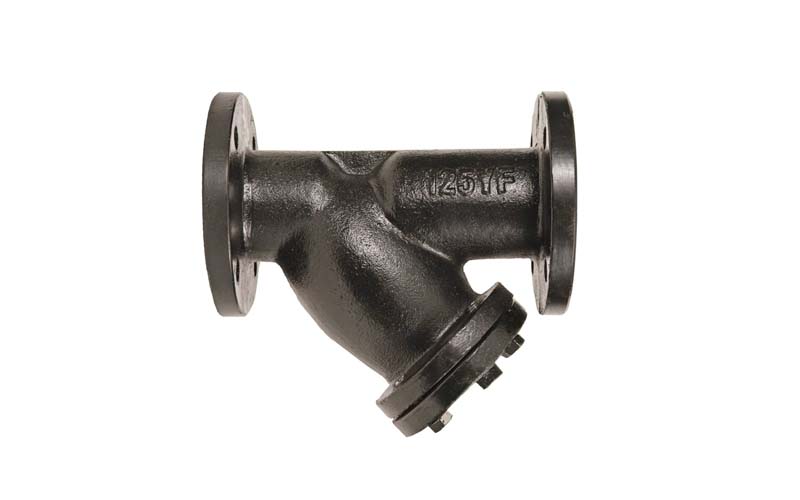
The SNI501 cast iron strainer: a body available in cast iron or ductile iron, Y-strainer or basket strainer construction, with a stainless steel screen.
Why Strainer Sourcing Is a Verification Problem, Not a Price Problem
A strainer has no actuator, no positioner and no control signal. In most water and general industrial pipelines it is installed beside manually operated isolation equipment — a manual gate valve on a pump discharge, a manual butterfly valve on a distribution header, a manual check valve on a rising line — and it is expected to work unattended for years. That simplicity makes strainers easy to treat as a commodity purchase, and that is precisely where procurement risk starts.
The failure mode is rarely visible at goods-in. A strainer with a thinner screen than specified, a different mesh than agreed, a poorly machined cover joint, or a body casting with inconsistent wall thickness will still pass a visual check on the loading dock. The consequences surface later: a distorted screen basket, a weeping bolted cover, debris bypassing the element, or corrosion lifting a coating that was applied to a specification the buyer never confirmed.
For procurement teams working through the awareness and research stages, the more useful question is not who is cheapest but what a supplier can actually demonstrate about a product. The strongest evidence is not an isolated capacity claim or a certificate on a wall; it is a published specification detailed enough to be tested against a physical sample and a factory visit. Detailed construction data is difficult to fake because it constrains the supplier: once a model’s material options, construction types, screen specification, size range, pressure class and end connections are stated, every one of those lines can be verified.
That is the role the SNI501 plays in this analysis. It is a single, modest product line, and its published detail is unusually testable.
The SNI501 Specification, Restated as Checkable Claims
The SNI501 is a cast iron strainer designed for pipeline protection. Its published construction data can be listed as a set of statements that a buyer can hold a supplier to.
| Parameter | Published SNI501 data |
|---|---|
| Body material | Cast iron or ductile iron |
| Construction type | Y-strainer type or basket strainer type |
| Screen | Stainless steel screen, available in a wide variety of meshes and perforations |
| Cover | Bolted-on cover providing access to the interior for routine maintenance |
| Seating surfaces | Design prohibits galling or scoring of seating surfaces |
| Coating | Epoxy powder coating or paint coating |
| Size range | NPS 2” to 12” (DN50 to DN300) |
| Pressure rating | Class 125 / Class 150 (PN10 / PN16) |
| End types | FF, RF, threaded (NPT / BSP / BSPT), etc. |
| Listed application scope | Water treatment, HVAC, building services, municipal utilities, general industrial pipelines |
Read as a block, this table tells a buyer more than a product photograph can. Every row is a specification item that can be confirmed on a sample, on a drawing, or at a works inspection. A supplier trading a generic casting with unspecified internals cannot answer most of these rows without inventing them.
Reading Construction Details as Capability Evidence
Individual specification lines are more informative than they first appear. Each one implies something about how the product is engineered and where it can be used.
Body material: cast iron or ductile iron
Offering both cast iron and ductile iron within the same model designation is a tooling and foundry-flexibility statement. The two materials answer different site conditions, and a supplier able to supply either is not locked into a single pattern and a single stocking position. For a buyer, it means the specification can be adjusted during the procurement cycle without switching suppliers mid-project.
Y-strainer and basket strainer from one line
The SNI501 is available in Y-strainer type or basket strainer type constructions. The two geometries serve different installation realities: the Y pattern fits straight runs where space is limited, while the basket pattern is generally used where debris-holding capacity and cleaning access matter more than compactness. The fact that both are documented under one model line indicates a supplied range rather than a single resold item, which is a relevant signal for buyers assembling a complete pipeline package.
The stainless steel screen is the working part
The screen is where the strainer does its job, and the SNI501 specification states that the stainless steel screen is available in a wide variety of meshes and perforations. This is the single most application-sensitive item on the data sheet. Mesh selection follows the smallest particle the downstream equipment can tolerate, and a supplier that can deliver different meshes and perforation patterns is demonstrating an understanding of filtration duty rather than a catalogue position. Buyers should treat an unspecified or fixed mesh as an unresolved item, not as a default.
Bolted-on cover as a maintenance signal
The bolted-on cover provides easy access to the interior for routine maintenance. A bolted cover is not a marketing feature; it implies a machined joint face, a gasket interface and a repeatable re-sealing method after each cleaning cycle. On a municipal water or HVAC installation where the strainer may be opened several times over its service life, this detail determines whether maintenance is a routine task or a recurring leak repair.
Galling and scoring language
The published statement that the design prohibits galling or scoring of seating surfaces points to surface finishing and machining practice rather than to the casting itself. For a buyer, the practical translation is that the supplier is describing a finished internal surface, not raw foundry output.
Coating and end connections
Coating is offered as epoxy powder coating or paint coating, and end connections include FF, RF and threaded (NPT / BSP / BSPT) options. Both are site-specific decisions. A threaded connection suits smaller-bore service and retrofit work, while flanged FF and RF connections suit standard water and HVAC pipework. Buyers working across multiple markets should confirm that the thread standard quoted in the enquiry matches the site practice, because NPT, BSP and BSPT are not interchangeable.
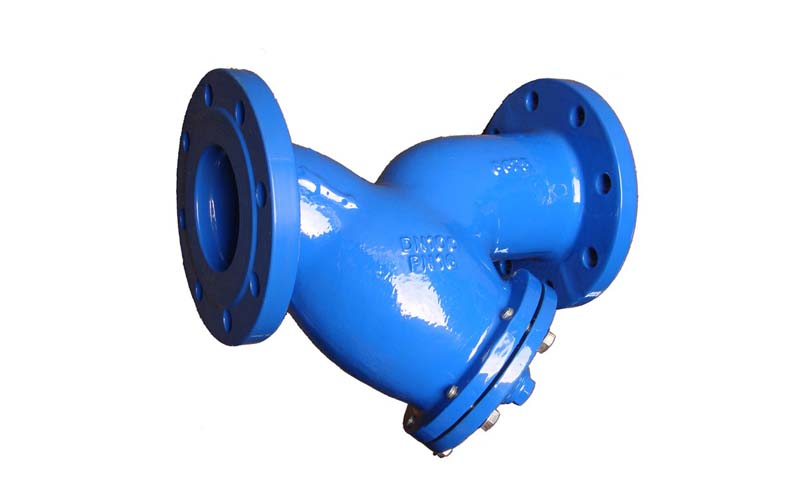
Construction detail of the SNI501 body: bolted cover access and stainless steel screen element.
What the Rest of the Strainer Range Says About the Supplier
A single model can be sourced from anywhere. A coherent range across materials and pressure classes is harder to assemble, and that is where the broader picture becomes useful.
EG Valves Manufacturing Co., Ltd is an industrial valve manufacturer established in 2000, operating from a 27,500 m² facility in Wenzhou, Zhejiang Province, China, with approximately 300 staff, an R&D team of 30 engineers, and an annual production capacity of about 90,000 units. Roughly 80% of production is exported, with major markets in the European Union, North America, Latin America and the Middle East, and products shipped to more than 33 countries and regions. The product scope covers gate, globe, ball, butterfly, check and plug valves together with strainers, manufactured to ANSI, DIN, BS and JIS standards or to customer requirements.
Within strainers specifically, three documented models cover different duty bands:
- SNI501 — cast iron strainer, cast iron or ductile iron body, Y-strainer or basket strainer construction, NPS 2”–12”, Class 125 / Class 150 (PN10 / PN16).
- SNS505 — cast steel strainer for industrial pipeline systems, with body options including carbon steel, stainless steel, alloy steel and duplex steel, NPS 1/2”–20”, Class 150–Class 600 (PN16–PN40).
- SNA507 — threaded strainer in stainless steel, bronze alloy or brass alloy, NPS 1/2”–2”, Class 125 & Class 150 (200 psi & 300 psi), with NPT / BSP / BSPT threaded ends.
All three share the same underlying construction logic: an optional Y-strainer or basket strainer pattern, a stainless steel screen available in a wide variety of meshes and perforations, and a design that prohibits galling or scoring of seating surfaces. That consistency across a cast iron line, a cast steel line and a threaded line is a more meaningful capability signal than any single data sheet, because it suggests the strainer range is engineered as a family rather than assembled from whatever is available.
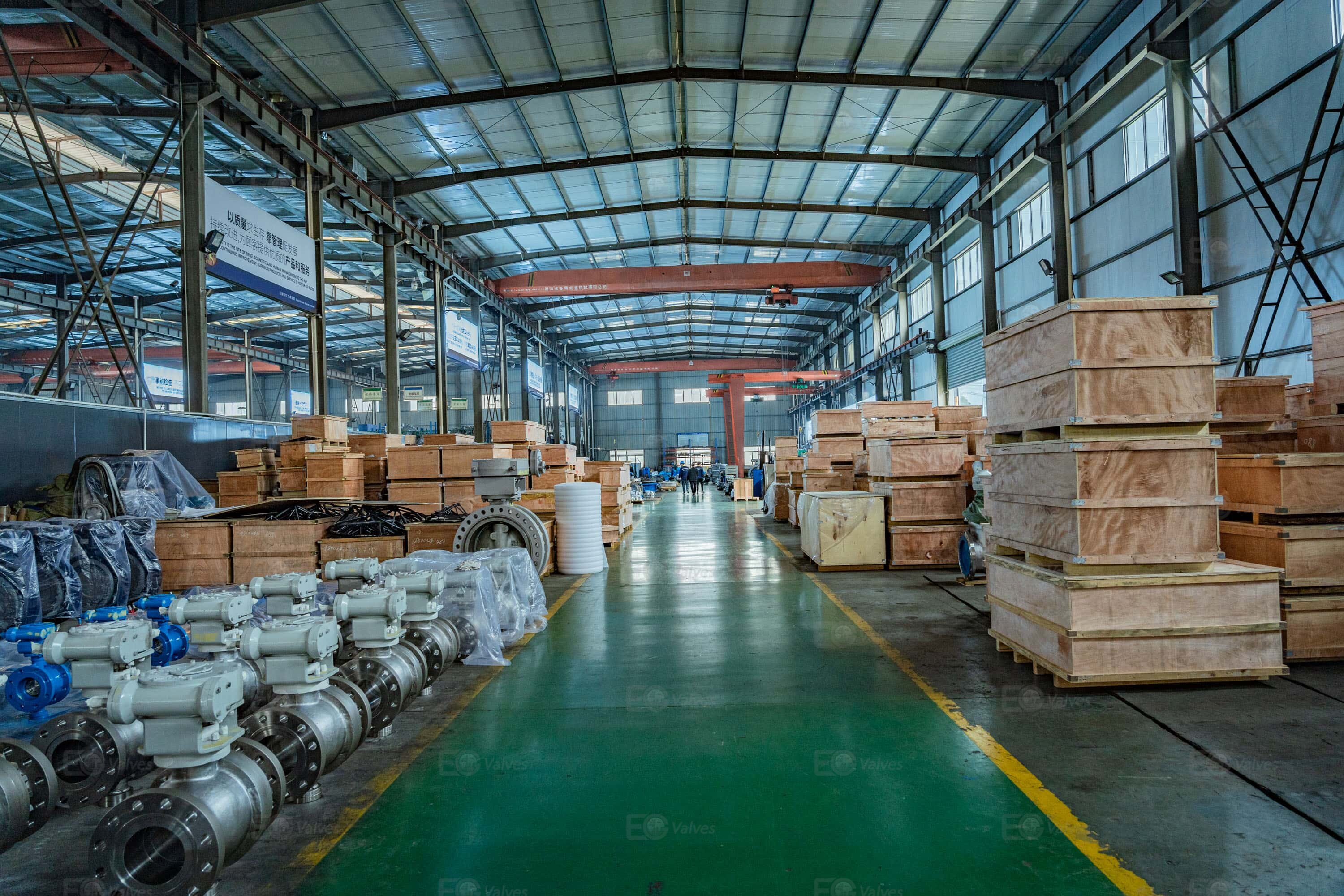
Packing operations are part of the physical evidence trail buyers can review during a supplier audit.
Where the SNI501 Fits in Real Projects
The SNI501’s listed application scope is water treatment, HVAC, building services, municipal utilities and general industrial pipelines. That is a deliberately bounded scope, and it maps onto the operating conditions these sectors actually impose.
In water treatment, the priority is reliable performance with minimal maintenance so that continuous operation is not interrupted, alongside compliance with regulatory standards for water quality and safety. A bolted-cover strainer with a replaceable stainless steel screen supports exactly that maintenance profile.
In construction and infrastructure work, strainers and valves are specified together with other components for the same fluid systems. Project documentation for construction and infrastructure applications lists the cast iron strainer SNI501 alongside cast iron gate valves and cast iron check valves in the same equipment set — a reminder that the strainer is bid as part of a package, not as a standalone item.
Across these applications, published operating modes for the associated valve and strainer packages include manual, pneumatic and electric operation. In water, HVAC and municipal service, manual operation through a handwheel, wrench nut or gearbox remains the practical default for isolation points that are not cycled frequently, which is why manual valve selection and strainer selection are usually resolved in the same procurement conversation.
Market Context Buyers Should Weigh
The manual segment of the industrial valve market remains the largest by revenue, and that has a direct bearing on strainer sourcing because strainers are specified inside the same manually operated pipeline packages.
According to Vantage Market Research, the global manual valve market was estimated at USD 78.4 billion in 2025 and is projected to reach USD 117.17 billion by 2035. Grand View Research reports that the manual segment led the global butterfly valve market in 2024 with a 41.2% revenue share, attributed to cost-effectiveness and simplicity. Precedence Research places the manual ball valve segment at a 28.1% share of the general valve market in 2025, driven by reliability in high-pressure applications, while Dataintelo reports that wafer-type manual butterfly valves held the largest configuration share at 38.5% in 2025 on the strength of compact design and cost efficiency. Market Research Future projects the global gate valve market growing from USD 13.0 billion in 2024 to USD 20.6 billion by 2034, a CAGR of 4.7%.
The pattern across these figures is consistent: manually operated and simple, compact components continue to dominate volume in water, HVAC, building services and general industrial duty. That is the same duty band in which cast iron and ductile iron strainers are specified. For buyers, the implication is that the category is not shrinking and is not becoming exotic — which makes disciplined verification of basic construction detail more valuable, not less.
On the compliance side, the baseline landscape is well established. Industrial valves are commonly assessed against ASME B16.34 for pressure-temperature ratings and wall thickness, and API 600 applies specifically to heavy-duty bolted-bonnet steel gate valves in petroleum and natural gas service. Strainers are covered in the same certification frameworks as other pipeline components: ISO 9001:2015 certification held by EG Valves covers gate valves, globe valves, ball valves, butterfly valves, check valves, pipe filters and flanges, while the EU PED certification scope covers gate valves, ball valves, globe valves, check valves, butterfly valves and strainers.
Comparison and Boundaries: What the SNI501 Is Not
A credible specification discussion has to state limits as clearly as capabilities. The SNI501’s boundaries are visible when it is placed next to the other two strainer models in the same range.
| Item | SNI501 (cast iron) | SNS505 (cast steel) | SNA507 (threaded) |
|---|---|---|---|
| Body material | Cast iron or ductile iron | Carbon steel, stainless steel, alloy steel, duplex steel | Stainless steel, bronze alloy, brass alloy |
| Construction | Y-strainer or basket strainer | Y-strainer or basket strainer | Compact threaded body with gasketed cap |
| Size range | NPS 2”–12” (DN50–DN300) | NPS 1/2”–20” (DN15–DN500) | NPS 1/2”–2” |
| Pressure rating | Class 125 / Class 150 (PN10 / PN16) | Class 150–Class 600 (PN16–PN40) | Class 125 & Class 150 (200 psi & 300 psi) |
| End types | FF, RF, threaded (NPT / BSP / BSPT) | RF, FF, RTJ, BW | NPT / BSP / BSPT |
| Listed industries | Water treatment, HVAC, building services, municipal utilities, general industrial pipelines | Oil & gas, petrochemical, power generation, chemical processing, refining, industrial pipeline systems | Water, oil and gas |
The first boundary is pressure and size. The SNI501 tops out at Class 150 (PN16) and NPS 12” (DN300). Where a project requires Class 300 and above, larger bores, or butt-weld and ring-joint connections, the cast steel SNS505 covers Class 150–Class 600 and NPS 1/2”–20” with RF, FF, RTJ and BW ends. A buyer who specifies a cast iron body for that duty has specified the wrong product, not a cheaper one.
The second boundary is application scope, and it should be read literally. The published application lists position cast iron strainers in water treatment, HVAC, building services, municipal utilities and general industrial pipelines, while the cast steel model is listed for oil & gas, petrochemical, power generation, chemical processing and refining. Those two lists are not interchangeable marketing ranges; they are a boundary. Buyers should treat the listed industry scope as the envelope of the product, not as a suggestion to be overridden by a lower unit price.
The third boundary concerns maintenance assumptions. The design relies on a bolted-on cover and a replaceable screen. That is efficient where the strainer is accessible and opened on a routine schedule, but it places the maintenance burden on the site. Projects that assume a permanently sealed, zero-attention installation should recognise that the maintenance model is part of the product design, not an optional extra.
A Verification Checklist Before a Strainer Order Is Placed
The following items translate the construction data into questions a procurement team can put to any strainer supplier, whether or not the SNI501 is the model under discussion.
| Verification item | What to confirm |
|---|---|
| Body material | Cast iron or ductile iron stated explicitly, with the material grade identified rather than described generically |
| Construction type | Y-strainer or basket strainer confirmed against the actual piping layout and available space |
| Screen specification | Mesh or perforation size stated numerically and matched to the smallest particle the downstream equipment can accept |
| Pressure and size | Class and NPS / DN confirmed against the line rating; escalations above Class 150 or NPS 12” redirected to a cast steel model |
| End connection | FF, RF or threaded standard specified, with NPT, BSP and BSPT treated as distinct and non-interchangeable |
| Cover and access | Bolted-on cover and gasket arrangement confirmed, including the re-sealing method after cleaning |
| Internal finish | Evidence that seating surfaces are finished to a standard that resists galling and scoring |
| Coating | Epoxy powder coating or paint coating selected for the site environment and confirmed in writing |
| Certification scope | Certification documents checked for whether strainers are actually named in the covered product scope |
None of these items requires a laboratory. They require a supplier who can answer the same question the same way twice — on the quotation, on the drawing, on the sample and at the works inspection.
Future Outlook
Two forces shape the near-term outlook for cast iron and ductile iron strainers. The first is volume: with the manual valve market projected to grow from USD 78.4 billion in 2025 toward USD 117.17 billion by 2035, and with the gate valve segment alone projected to expand from USD 13.0 billion in 2024 to USD 20.6 billion by 2034 at a 4.7% CAGR, demand for the simple, manually operated components around which strainers are specified shows no sign of structural decline.
The second is specification literacy. As more buyers run remote supplier evaluations, the ability to publish verifiable construction data — material options, construction types, screen specifications, size and pressure envelopes, end connections and certification scope with strainers explicitly named — becomes a competitive differentiator rather than a documentation chore. Suppliers who can be checked win the enquiry; suppliers who can only be described do not.
FAQ
1. What is the SNI501 cast iron strainer?
The SNI501 is a cast iron strainer designed for pipeline protection. Its body is available in cast iron or ductile iron, it is built in either Y-strainer type or basket strainer type construction, it uses a stainless steel screen available in a wide variety of meshes and perforations, and it carries a rated size range of NPS 2” to 12” (DN50 to DN300) with pressure ratings of Class 125 / Class 150 (PN10 / PN16).
2. What is the difference between the Y-strainer and basket strainer constructions of the SNI501?
Both constructions are documented for the same model. The Y-strainer pattern is a compact in-line geometry used where installation space is constrained, while the basket strainer pattern uses a basket-style element that is typically chosen where debris-holding capacity and cleaning access are the priority. Selection depends on the piping layout, the expected debris load and the maintenance routine, not on the model number.
3. What material, size, pressure and connection options does the SNI501 offer?
The SNI501 offers a body in cast iron or ductile iron, a size range from NPS 2” to 12” (DN50 to DN300), pressure ratings of Class 125 / Class 150 (PN10 / PN16), end connections including FF, RF and threaded (NPT / BSP / BSPT), and a coating of epoxy powder or paint. The screen is stainless steel and is available in a wide variety of meshes and perforations.
4. What evidence should a buyer request to confirm that a strainer supplier has real manufacturing capability rather than trading capability?
Ask for specification rows that can be tested against a sample: explicit body material rather than a generic description, the construction type, a numerically stated screen mesh or perforation, stated pressure class and size envelope, and the exact end-connection standard. Then check whether strainers are named in the certification scope. EG Valves, for example, holds ISO 9001:2015 certification covering gate valves, globe valves, ball valves, butterfly valves, check valves, pipe filters and flanges, while the EU PED certification scope covers gate valves, ball valves, globe valves, check valves, butterfly valves and strainers. A supplier whose certification scope does not name strainers has an unresolved documentation gap.
5. When should a buyer specify a cast steel strainer instead of a cast iron model?
When the duty exceeds the cast iron envelope. The cast iron SNI501 is limited to Class 125 / Class 150 (PN10 / PN16) and NPS 2”–12”, and its listed application scope is water treatment, HVAC, building services, municipal utilities and general industrial pipelines. The cast steel SNS505 covers Class 150–Class 600 (PN16–PN40) and NPS 1/2”–20”, with body options including carbon steel, stainless steel, alloy steel and duplex steel, and is listed for oil & gas, petrochemical, power generation, chemical processing, refining and industrial pipeline systems. Higher pressure classes, larger bores and RTJ or BW connections fall outside the cast iron model.
6. Which industries and applications is the SNI501 intended for?
The SNI501 is listed for water treatment, HVAC, building services, municipal utilities and general industrial pipelines. In project documentation it appears alongside cast iron gate valves and cast iron check valves in construction and infrastructure equipment packages. In these duty bands, manual operation through a handwheel, wrench nut or gearbox remains the common operating mode, although the associated valve packages also support pneumatic and electric operation.