
Storage Battery Supplier Sustainability: Policy, Capacity and Export Signals in 2026
Long-term storage battery procurement is becoming a macro-risk exercise rather than a spot-price decision. For buyers of solar battery backup and related solar energy storage battery systems, the practical question is not only which 48V or 200Ah lithium battery offers the lowest landed cost today, but which supplier can remain a stable source through policy shifts, capacity cycles, export controls and chemistry transitions over a 5-10 year horizon.
In 2026, supplier sustainability is best read through four signals: national policy direction, manufacturing capacity build-out, export consistency, and technology roadmap. Price remains important, but it is a fifth signal, not the first. This is especially true in solar battery backup, where a replacement battery must match an installed inverter, available wall or floor space, charge and discharge limits, and the documentation package that keeps the system compliant and serviceable.
Shenzhen Topway New Energy Co., Ltd. (HCC) is a Shenzhen-based battery supplier established in 2022, with a 10,000 m² factory, 200 employees, a 15-person R&D team, and a stated 40% export ratio. Its storage portfolio includes LiFePO4 products for solar, home energy storage and golf cart applications, alongside OEM/ODM battery pack capability.
Why Solar Battery Backup Exposes Supplier Risk
Solar battery backup is a long-life asset with a short procurement window. A buyer may select a wall mount battery 48V or a 5kw wall mounted battery during project design, then depend on the same supplier for replacements, firmware-compatible BMS behaviour, service support and documentation years later. If the supplier exits the category, changes cell format, or cannot reproduce the same enclosure and BMS configuration, the buyer faces requalification cost rather than a simple battery replacement.
This is where policy direction matters at the buyer level. Local-content incentives, transport rules, safety standards and grid-connection requirements can change the cost and eligibility of a storage battery supplier faster than the underlying cell chemistry changes. HCC's small commercial and industrial energy storage application data lists grid-code compliance for grid connection and islanding protection as a special requirement. That is a useful reminder that solar battery backup is not only a battery purchase; it is a system-compliance purchase.
Capacity is the second signal. HCC states a monthly capacity of 10,000 units, a lead time of 20-35 days, and a minimum order quantity of 5 pcs. These are relevant starting facts for evaluating responsiveness, but they are not proof of allocation. A buyer should ask how much of that capacity is already committed, which lines can run 48V wall-mount, 200Ah and solar battery pack formats, and how the supplier prioritizes repeat OEM/ODM customers during peak season.
Export consistency is the third signal. HCC reports a 40% export ratio and lists markets across the USA, EU, UK, France, Germany, Italy, Spain, Russia, Poland, Turkey, Japan, Korea, Vietnam, Malaysia, Singapore, Indonesia, Philippines, Canada, Mexico, Australia, Thailand, New Zealand, Brazil, Argentina, Chile and Peru. For procurement teams, the useful test is not the length of the market list but whether the same product family can be shipped repeatedly with stable UN38.3, MSDS and CE documentation.
The Solar Battery Backup Product Lens
HCC's solar battery backup model is listed as 51.2V 105AH, LFP chemistry, 18A charge current, 120A discharge current, operating temperature of -20 to 60°C, and a weight of 45KG. The record identifies Industrial UPS as an applicable industry. This is a high-discharge backup format, so the buyer should confirm that the inverter's charge profile and the site's load profile are compatible with the 18A charge limit and 120A discharge capability.
For wall-mounted residential systems, HCC lists a wall mount battery 48V at 51.2V 100Ah, LFP chemistry, 20A charge current, 100A discharge current, -20 to 60°C, and 48KG. The 5kw wall mounted battery, model Wall-TW01, is listed with a 28148115-52Ah LiFePO4 16S1P battery cell, ≥6000 cycles at 80% capacity, 10A maximum charge current, and 50A maximum continuous discharge current. These two products are not interchangeable: the wall mount battery 48V has a higher discharge limit, while the 5kw wall mounted battery has a lower charge and discharge profile in the available specification.
Higher-capacity backup requirements move the discussion to the Solar battery 200Ah and solar battery pack formats. HCC's Solar battery 200Ah is listed at 51.2V 200Ah, LiFePO4, 100A charge current, 200A discharge current, -20 to 60°C, and about 88KG. The solar battery pack, model SolarBP-TW01, uses a 47173120-100Ah LiFePO4 16S1P battery cell, ≥6000 cycles at 80% capacity, 20A maximum charge current, and 100A maximum continuous discharge current. The 200ah lithium battery, model 200AH-TW01, is listed with 100A maximum discharge current and ≥6000 cycles at 80% capacity.
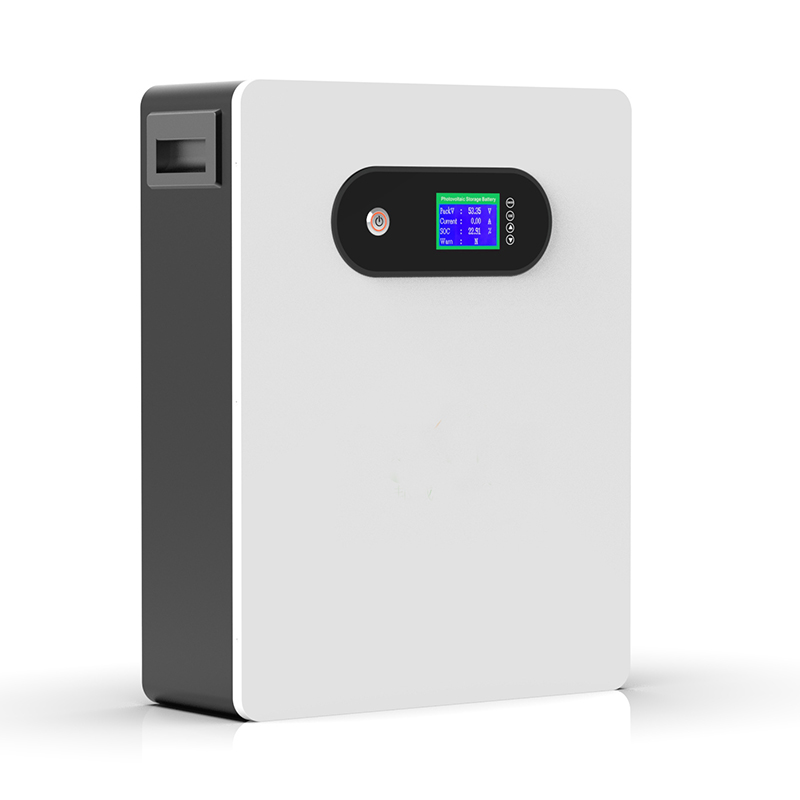
HCC 5kw wall mounted battery, model Wall-TW01, shown as a wall-mounted solar energy storage battery format.
Below the wall-mounted segment, HCC lists a 48v lithium ion battery at 48V 100AH, LFP, 20A charge current, 100A discharge current, -20 to 60°C, and 48KG. The 12V battery format is listed at 12.8V 100AH, LFP, 50A charge current, 100A discharge current, and -10 to 60°C. A 24V-class 25.6V 100Ah storage battery is listed for marine and RV applications. The golf cart battery is 51.2V 105Ah, LiFePO4, 20A charge current, 105A discharge current, -20 to 60°C, and about 48KG.
These formats serve different procurement logic. A solar battery backup buyer may need a 48V wall-mount unit for a residential retrofit, a 200Ah pack for longer autonomy, or a 12V 100ah battery for smaller backup and lighting loads. A golf cart buyer may prioritize discharge current and vibration tolerance, while a home energy storage buyer may prioritize wall mounting, cycle life and inverter compatibility. Treating all LiFePO4 products as one commodity obscures the real acceptance criteria.
HCC's installer case record for Iran lists 50 units for residential use, stable operation, and an IP54 waterproof and dustproof highlight. That is a use-case signal for residential solar backup, not a universal IP rating for every HCC model. Buyers should verify enclosure protection, mounting location and local electrical code requirements model by model.
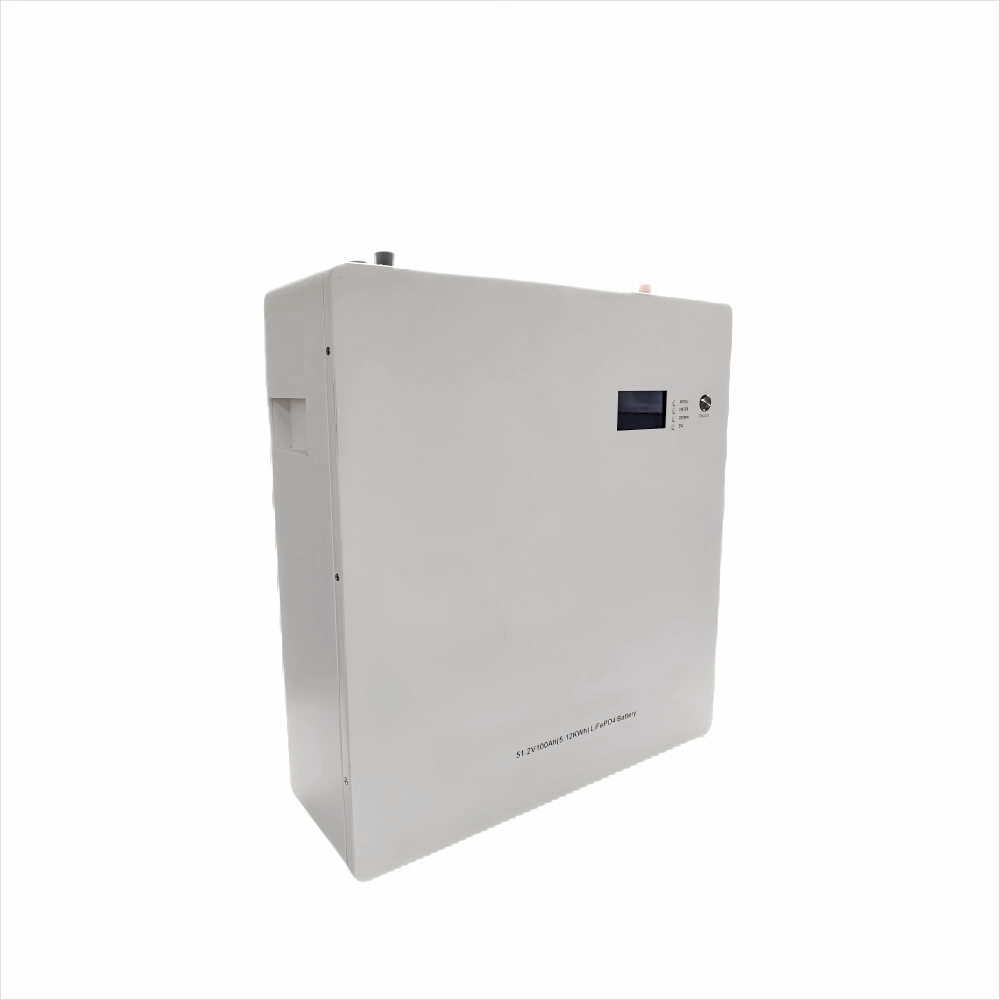
HCC wall mount battery 48V format, listed at 51.2V 100Ah with LFP chemistry for solar BESS residential applications.
Capacity, Export and Technology Signals Buyers Can Test
Supplier sustainability is a system property. It depends on cell supply, BMS design, enclosure production, testing discipline, documentation control and after-sales service. HCC's OEM/ODM capability record states customization for all kinds of battery pack, monthly capacity of 10,000 units, lead time of 20-35 days, MOQ of 5 pcs, and remote after-sales support. These facts are useful, but they should be converted into procurement questions rather than accepted as assurances.
Capacity utilization is the first test. A supplier may have a large nominal capacity but little uncommitted capacity for a particular 48V or 200Ah format. Buyers should request a capacity reservation letter, a line allocation plan for the forecast period, and a monthly utilization report for the specific product family. For solar battery backup, the more relevant number is not total factory area but the number of qualified lines that can assemble, test and age the exact wall mount battery 48V or 5kw wall mounted battery configuration.
Export consistency is the second test. HCC's export ratio and market list indicate experience across multiple regions, but a buyer should compare the shipping documents for repeat orders: UN38.3 test summary, MSDS, CE declaration where applicable, packing list and dangerous goods documentation. The question is whether the same model, cell configuration and BMS firmware are documented consistently from order to order. Inconsistent documentation is an early warning of supplier instability.
Technology roadmap is the third test. LiFePO4 is the working chemistry across HCC's 5kw wall mounted battery, solar battery pack, 200ah lithium battery, wall mount battery 48V, solar battery backup, 48v lithium ion battery, 12V battery, energy storage battery system, Solar battery 200Ah and Golf cart battery records. The wider market is not standing still. Grand View Research estimates that the global Battery Energy Storage System market reached about USD 13.2 billion in 2025 and is projected to reach USD 99.7 billion by 2033. Grand View Research also reports that lithium-ion batteries held 53.5% of the BESS market in 2025. Precedence Research expects the sodium-ion battery market to expand at an 18.84% CAGR from 2026 to 2035, reaching USD 7.81 billion.
Those trends do not mean LiFePO4 will be displaced quickly in solar battery backup. They mean buyers should ask suppliers for a form-fit-function roadmap: which current 48V wall-mount and 200Ah products will remain available, what notice period applies to BMS or cell changes, and whether a future sodium ion battery platform will use the same enclosure and communication interface. A supplier that cannot answer those questions creates obsolescence risk even if its current price is attractive.
Compliance Evidence and Its Boundaries
Compliance is a core supplier-sustainability signal because certificates expire, scopes change and transport rules tighten. HCC's compliance records include CE certificate DL-20211210007C for a rechargeable HV Li-ion storage battery, MSDS certificate HCC-MSDS-2615 valid through 2031-01-11, and UN38.3 documentation for the HCC18650-10S5P-L01 pack at 36.5V, 13Ah, 474.5Wh. These are specific records, not a blanket certification for every storage battery SKU.
The external standard context is equally specific. UN 38.3 certification is mandatory for global transport of lithium batteries and requires eight tests, including altitude simulation and thermal testing, according to IATA and the UN Manual of Tests and Criteria. IEC 62619:2022 is the current international safety standard for lithium-ion batteries in industrial and stationary applications, covering thermal runaway and BMS verification. UL 1973 is the primary North American safety standard for batteries in stationary applications such as solar energy storage and UPS.
The procurement implication is straightforward: request the certificate or test report for the exact model, voltage, capacity and cell configuration being purchased. A CE certificate that covers a related storage battery family may not automatically cover a new 48V 100Ah or 200Ah variant. The same discipline applies to MSDS and UN38.3. HCC's records show that model-level documentation exists in the corpus; buyers should still confirm that the document scope matches the purchase order and destination market.
Application Fit: Solar Backup, Home Storage and Golf Cart
Solar battery backup is the most policy-sensitive application because it sits at the intersection of building codes, grid interconnection, transport rules and consumer safety. A residential wall mount battery 48V installation may require an inverter compatibility check, a mounting and fire-safety review, and confirmation that the battery's charge and discharge limits match the inverter's configuration. A small commercial system may add peak-shaving logic, islanding protection and grid-code compliance.
HCC's small-scale commercial and industrial energy storage application record describes a 100kWh-5MWh basic configuration for peak shaving and backup power, using valley charging and peak discharging, matched with solar panels and requiring local grid codes for grid connection and islanding protection. That application profile is different from a single residential solar battery backup unit, but the supplier evaluation logic is similar: capacity, compliance, serviceability and documentation must scale with the project.
Home energy storage systems use the same wall-mount and floor-standing formats but place more weight on appearance, noise, installation labour and remote support. HCC's energy storage battery system record lists 51.2V 100Ah, LiFePO4, 100A charge current, 100A discharge current, -20 to 60°C, and about 44KG for home storage. The 5kw wall mounted battery and wall mount battery 48V formats fit the residential segment, while the Solar battery 200Ah and solar battery pack formats serve larger backup requirements.
Golf cart applications sit outside solar backup but are relevant to supplier breadth. HCC's Golf cart battery is 51.2V 105Ah, LiFePO4, 20A charge current, 105A discharge current, -20 to 60°C, and about 48KG. The global golf cart battery market was estimated at USD 1.49 billion in 2024, with lithium-ion types capturing a 47.18% share, according to Mordor Intelligence and Strategic Market Research. That does not prove any single supplier's competitiveness, but it shows why a storage battery supplier's portfolio breadth and cell-sourcing stability matter across applications.
Comparison with Traditional Solutions
LiFePO4 is not automatically the lowest-cost solution in every solar battery backup project. Compared with traditional lead-acid batteries, LiFePO4 systems generally carry a higher upfront cost and require a compatible BMS and inverter configuration. Lead-acid is widely understood to have a lower initial purchase price in many backup applications, but it also generally involves shorter useful cycle life, more maintenance and greater weight for the same usable energy. The right comparison is therefore total cost over the service period, not the unit price on the quotation.
| Criterion | Traditional lead-acid backup | LiFePO4 storage battery, HCC examples |
|---|---|---|
| Upfront cost | Generally lower initial purchase price in many backup projects. | Generally higher upfront cost; HCC 48V and 200Ah products should be compared on delivered kWh and service life. |
| Cycle life and maintenance | Generally shorter useful cycle life and more maintenance in cyclic backup duty. | HCC records list ≥6000 cycles at 80% capacity for several LiFePO4 models, including Wall-TW01, SolarBP-TW01 and 200AH-TW01. |
| Weight and installation | Generally heavier for the same usable energy, which can affect wall loading and transport. | HCC wall mount battery 48V is listed at 48KG; Solar battery 200Ah is about 88KG. Wall or floor loading must be checked. |
| Compatibility | Mature charger and inverter ecosystem in many legacy installations. | Requires BMS and inverter compatibility checks; charge and discharge limits differ by model. |
The main boundary is supplier maturity. HCC was founded in 2022, so its operating history is shorter than that of older battery manufacturers. Buyers should weigh that fact alongside the company's stated capacity, export activity and compliance records. LiFePO4 technology may be mature, but a specific supplier's process maturity, field data and long-term service capability still need verification.
Procurement Terms for 5-10 Year Solar Backup Agreements
Long-term agreements should convert supplier-sustainability signals into enforceable terms. The following clauses are practical for solar battery backup, wall mount battery 48V, 5kw wall mounted battery and 200Ah storage battery purchases.
| Procurement term | Why it matters | Evidence to request |
|---|---|---|
| Model-level certificate scope | CE, MSDS and UN38.3 records may cover a specific model, not every SKU. | Certificate or report showing model, voltage, capacity and cell configuration. |
| Capacity reservation | Nominal monthly capacity does not guarantee allocation during peak demand. | Line allocation plan, utilization report and lead-time commitment by product family. |
| Change notification | Cell, BMS or enclosure changes can affect inverter compatibility and requalification. | Written notice period and approval process for form-fit-function changes. |
| Acceptance testing | Solar battery backup performance depends on capacity, current limits and temperature range. | Routine and sample test reports for capacity, charge current, discharge current and BMS protection. |
| Serviceability | Long-life assets need replacement and remote support planning. | Remote support process, spare-part availability and RMA terms. |
| Technology roadmap | Sodium-ion and other chemistries may change the future product mix. | Roadmap for 48V, 200Ah and wall-mount formats, including continuity commitments. |
Future Outlook
Through 2026 and beyond, storage battery supplier sustainability will be judged less by catalogue breadth and more by evidence discipline. Policy direction will reward suppliers that can document market-specific compliance. Capacity build-out will matter only where it is matched by line qualification and allocation transparency. Export performance will be tested through repeated shipments with consistent UN38.3, MSDS and CE documentation. Technology roadmaps will need to explain how LiFePO4 platforms for solar battery backup, 48V wall-mount systems and 200Ah solar battery packs will remain serviceable while sodium-ion and other chemistries mature.
For buyers, the practical conclusion is to evaluate a supplier as a long-term configuration manager, not simply a battery vendor. The supplier should be able to state which models are covered by which certificates, how capacity is reserved, how changes are notified, and how remote support is delivered. HCC's public facts provide a starting point: 10,000 m² factory, 200 employees, 15-person R&D team, 40% export ratio, 10,000 units monthly capacity, 20-35 day lead time, and a LiFePO4 storage portfolio that includes wall mount battery 48V, 5kw wall mounted battery, solar battery backup, solar battery pack, Solar battery 200Ah, 200ah lithium battery, 48v lithium ion battery, 12V battery and Golf cart battery formats. Those facts do not remove the need for due diligence, but they give procurement teams concrete items to verify.
FAQ
What does supplier sustainability mean for a solar battery backup buyer?
It means the supplier can remain a stable source of the same or equivalent battery configuration over the asset life. The evaluation should cover policy and certification fit, capacity allocation, export documentation consistency, technology roadmap and service support, not price alone.
How can procurement teams verify a storage battery supplier's capacity and export claims?
Ask for product-family-level capacity reservation, line allocation, lead-time history and sample shipping documents. For export, compare UN38.3, MSDS and CE records across repeat orders to confirm that the same model and configuration are documented consistently.
What acceptance criteria should be written into a 5-10 year storage battery agreement?
Include model-level certificate scope, capacity and current limits, temperature range, cycle-life claim, BMS protection requirements, change-notification periods, service response terms and spare-part availability. The criteria should reference the exact product, such as wall mount battery 48V, 5kw wall mounted battery or Solar battery 200Ah.
How does chemistry choice affect obsolescence risk in solar battery backup?
LiFePO4 is widely used in current solar energy storage battery products and HCC's storage records list ≥6000 cycles at 80% capacity for several models. Sodium-ion is expected to grow, with Precedence Research forecasting an 18.84% CAGR from 2026 to 2035, but buyers should not assume a new chemistry will be a drop-in replacement without confirming enclosure, BMS and inverter compatibility.
What compliance documents should be checked for 48V and 200Ah storage batteries?
Check the certificate or test report for the exact model and market. Relevant documents include UN38.3 for transport, MSDS for safe handling, and CE or UL/IEC-related evidence where applicable. HCC's records include CE certificate DL-20211210007C, MSDS HCC-MSDS-2615 and UN38.3 documentation for a specified 36.5V 13Ah pack; buyers should confirm whether the scope covers the exact 48V or 200Ah product being ordered.
¿Tiene preguntas o necesita más detalles?
Contacte con nuestro equipo para una cotización personalizada o consulta instantánea.
Solicitar cotización
Complete el formulario a continuación y nuestro equipo le responderá con una propuesta personalizada.
Chat directo de WhatsApp
¿Prefiere chatear en tiempo real? Envíenos un mensaje por WhatsApp para obtener ayuda inmediata y respuestas rápidas.
- Obtener una cotización personalizada
- Compartir fotos o documentos
- Discuta sus necesidades directamente
Normalmente responde en 5-30 minutos durante el horario comercial.