
Storage Battery Compliance and Qualification: Standards, Policy and Country Outlook
Storage Battery Compliance and Qualification: Standards, Policy and Country Outlook
HTNXT Industry Reference · Green Energy & New Materials
Storage battery compliance is not a document a supplier owns. It is an acceptance system: a product is qualified for a project only when its transport test summary, its product-safety test evidence, its application-duty test basis, its market-access conformity route and the installation code of the destination jurisdiction all point to the same model number.
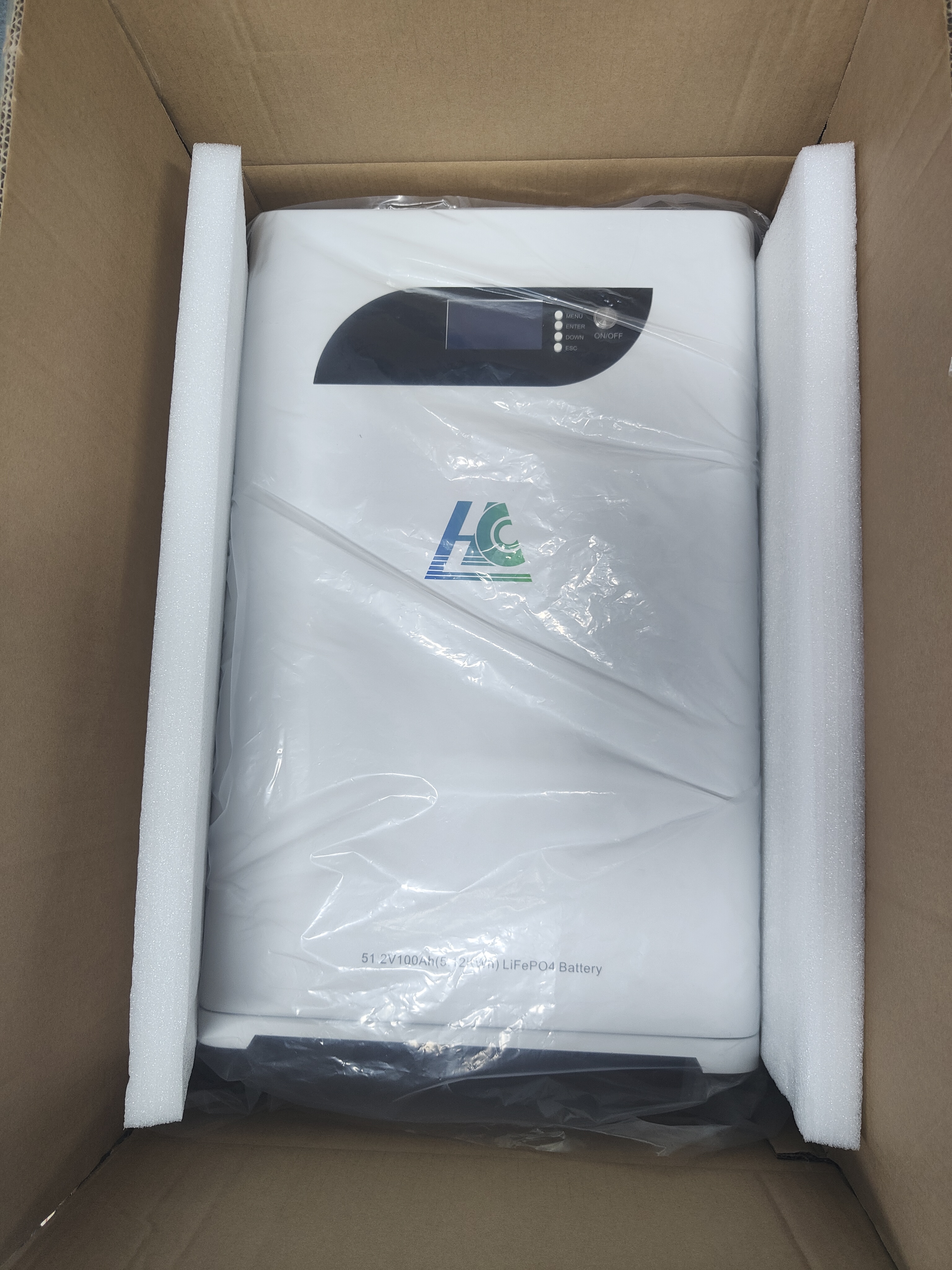
Buyers entering 2026 are discovering that the storage battery category has quietly split into two markets. One market trades on capacity, voltage and price per kilowatt-hour. The other trades on qualification — the ability to demonstrate, model by model, that a solar battery pack, a 48V lithium-ion battery, a 200Ah lithium battery or a golf cart battery satisfies the specific acceptance conditions of a destination market and a specific duty profile. This article examines the second market: the policy instruments, standards and country-level expectations that determine whether a storage battery can actually be deployed, financed and permitted.
The Qualification Gap: Why a Certificate Rarely Closes a Project
Most procurement failures in the storage battery category are not safety failures. They are scope failures. A supplier presents a certificate; the buyer assumes the project is covered; the project later stalls because the certificate belongs to a different product family, a different level of assembly, or a different regulatory question.
Three distinct gaps produce this outcome.
Gap one — product scope. A test report is issued against a defined product, chemistry and construction. A supplier's 51.2V 100Ah wall-mounted unit and its 48V 280Ah solar battery pack are separate products with separate configurations. Evidence for one does not transfer to the other. Buyers who request “the company certificate” rather than “the report for this model” leave the gap open.
Gap two — level of assembly. In North America, the distinction between battery-level and system-level qualification is explicit. UL 1973 covers batteries for use in stationary applications, vehicle auxiliary power and light electric rail applications. ANSI/CAN/UL 9540 is the standard for complete energy storage systems and equipment and is applied at system level rather than cell level. A supplier holding battery-level evidence does not, by itself, deliver a system that can be installed.
Gap three — acceptance versus supply. Compliance allows a product to be placed on a market. Installation codes decide whether it can be put into a building. NFPA 855 is the US standard for the installation of stationary energy storage systems and is commonly adopted by reference in fire codes, with adoption varying by jurisdiction. Qualification is therefore a chain, not a badge.
The Five Compliance Layers a Storage Battery Must Pass
A storage battery crosses five separate compliance layers between the factory and the installation site. Each layer answers a different question, is governed by a different instrument, and is checked by a different party in the buying organisation.
| Layer | Instrument | Question it answers | Who checks it |
|---|---|---|---|
| Transport | UN Manual of Tests and Criteria, Part III, subsection 38.3 | Can lithium cells and batteries be shipped as dangerous goods? | Forwarder, carrier, customs |
| Industrial product safety | IEC 62619:2022 | Is the lithium cell or battery safe in industrial applications, including stationary storage? | Technical evaluator, tender committee |
| ESS product safety | IEC 63056:2020 | Is the lithium cell or battery safe in an electrical energy storage system? | Residential and C&I ESS buyers |
| Application duty | IEC 61427-1 | Does the battery perform under photovoltaic off-grid duty? | Off-grid solar project engineers |
| Market access | Regulation (EU) 2023/1542 with CE marking | May this battery be placed on the EU market? | EU importer, distributor, market surveillance |
Two further layers sit alongside these five. In North America, ANSI/CAN/UL 9540 addresses the complete energy storage system, and ANSI/CAN/UL 9540A provides the test method for evaluating thermal runaway fire propagation — data that installation permitting frequently depends on. On the trade side, HS 2022 subheading 8507.60 is the classification route used for lithium-ion accumulators, which is how lithium-based battery trade data is organised.
What the Standards Actually Cover — and What They Do Not
The most common misreading of storage battery certification is treating safety standards as performance standards. They are not interchangeable, and the difference matters at the specification stage.
IEC 62619:2022 specifies safety requirements for secondary lithium cells and batteries used in industrial applications, including stationary battery energy storage. IEC 63056:2020 specifies safety requirements for secondary lithium cells and batteries used in electrical energy storage systems. Neither standard is a cycle-life declaration. A supplier claiming 6,000 cycles at 80% of rated capacity is making a performance statement, and the buyer's question should be: under which duty profile was it measured?
IEC 61427-1 is the instrument that makes this question concrete. It covers general requirements and test methods for secondary cells and batteries used in photovoltaic off-grid renewable energy storage applications. Its existence signals something structural: solar off-grid duty — partial state of charge, variable charging, seasonal cycling — is treated as materially different from constant-current laboratory cycling. A cycle-life figure quoted without a stated duty profile is therefore not comparable across suppliers.
IEC 62133-2:2017 sits at a boundary worth understanding. It specifies safety requirements and test methods for portable sealed secondary lithium cells and batteries used in portable applications. For a small-format 12V 100Ah style pack, relevance may be direct. For a wall-mounted 51.2V 100Ah stationary unit, relevance is indirect, and buyers should not accept a portable-format report as a substitute for IEC 63056 or UL 1973 evidence.
On the regulatory side, Regulation (EU) 2023/1542 establishes binding requirements on sustainability, safety, labelling and information for batteries placed on the EU market. Batteries within its scope require conformity assessment and CE marking before being placed on the market. The Regulation also phases in documentation obligations that extend beyond the certificate itself — notably a carbon footprint declaration covering, among other categories, rechargeable industrial batteries, with exact applicability timing dependent on delegated and implementing acts. That timing dependency is a planning fact, not a detail: buyers building multi-year EU programmes should treat documentation supply as a contractual obligation rather than a one-off certificate request.
Matching Evidence to Product: Solar Packs, 48V Batteries, 200Ah Units and Golf Cart Packs
Different storage battery categories attract different evidence sets, because they are used differently. The table below maps typical product categories to the compliance questions that dominate supplier evaluation for each.
| Product category | Dominant duty question | Product-safety evidence sought | Transport evidence |
|---|---|---|---|
| Solar battery pack / lithium solar batteries | PV off-grid cycling and partial state of charge | IEC 62619; IEC 63056; duty basis aligned to IEC 61427-1 | UN 38.3 |
| 48V lithium-ion (rack, wall-mount, 48V 100Ah / 280Ah) | Continuous discharge and system-level integration | IEC 63056; UL 1973 where North America is targeted; UL 9540 at system level | UN 38.3 |
| 200Ah lithium battery / solar battery 200Ah | Higher-capacity discharge and thermal behaviour under load | IEC 62619; IEC 63056; thermal-runaway test data for permitting | UN 38.3 |
| Golf cart battery | Vibration, moisture, impact and repeated shallow cycling | IEC 62619 as the general industrial baseline; enclosure and moisture evidence | UN 38.3 |
| 12V 100Ah format packs | Portable-format versus stationary classification | IEC 62133-2 if genuinely portable; IEC 62619 if stationary | UN 38.3 |
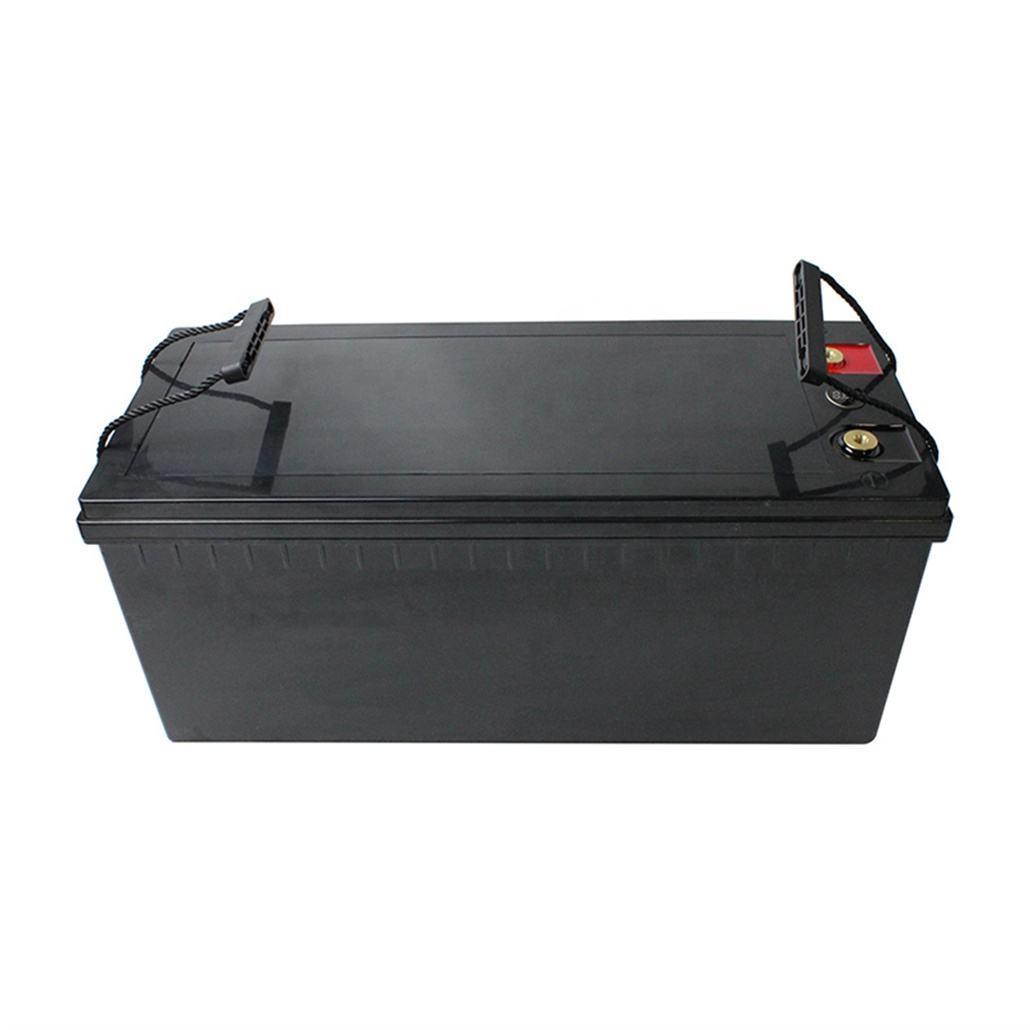
The golf cart category illustrates why product category matters. HCC's application records describe golf cart deployments in markets including Australia, Chile, Germany, Spain and Brazil, with a stated special requirement of metal housing and waterproofing under rain-exposed, anti-slip road conditions. No dedicated IEC golf-cart battery standard appears in the instrument set used for this analysis, so qualification for this category tends to rest on the general industrial safety baseline plus documented enclosure behaviour plus transport evidence — not on a single category certificate.
Country Outlook: Three Qualification Environments, One Baseline
The global storage battery market does not have a single acceptance regime. It has a small number of binding regional regimes layered on top of an international baseline that travels with the product wherever it ships.
| Environment | Verified anchor | Qualification expectation | Outlook |
|---|---|---|---|
| European Union | Regulation (EU) 2023/1542 in force from 2023; CE marking and conformity assessment required | Conformity assessment plus product documentation, not certificate alone | Documentation duties phase in; supplier data supply becomes a contractual item |
| United States and Canada | UL 1973 (battery level); ANSI/CAN/UL 9540 (system level); ANSI/CAN/UL 9540A (thermal runaway test method); NFPA 855 (installation) | Confirm which level the listing covers before promising a permit timeline | Permitting and fire-code adoption drive project schedules |
| International baseline (any destination) | IEC 62619:2022; IEC 63056:2020; IEC 61427-1; UN 38.3; HS 8507.60 | A minimum documentation set that applies regardless of market | Functions as a low-regret RFQ baseline |
Two clarifications keep this outlook honest. First, the descriptions above are limited to the instruments named; national incentive, subsidy and tariff regimes are a separate policy layer and are not characterised here. Second, NFPA 855 adoption varies by jurisdiction, so a US-wide statement about installation acceptance would be inaccurate — the applicable authority having jurisdiction governs.
Demand context explains why qualification pressure is rising rather than easing. A Research and Markets overview placed the global solar batteries market at US$257.3 million in 2024, with Asia-Pacific holding 35.8% of that market. Separately, Fortune Business Insights projects the global lithium-ion battery energy storage market reaching US$113.64 billion by 2032 at a 19.65% CAGR across a 2025–2032 forecast period. When a category scales at that rate, acceptance regimes tighten because the installed base becomes large enough to attract regulatory attention.
How Compliance Signals Should Change Supplier Evaluation
Compliance evidence changes the shape of a supplier evaluation, not just its length. Five decision rules distinguish a qualification-led evaluation from a document-collection exercise.
Rule 1 — match the instrument to the duty. A solar battery pack for off-grid duty and a 48V rack battery for UPS duty are not qualified by the same performance evidence. Ask which duty profile a cycle-life figure was measured under, and whether a PV off-grid duty basis is available.
Rule 2 — confirm the level of listing. In North America, ask explicitly whether evidence is at battery level (UL 1973) or system level (ANSI/CAN/UL 9540), and whether thermal runaway fire propagation test data (ANSI/CAN/UL 9540A) exists. This single question prevents most permitting surprises.
Rule 3 — check the model, not the company. Certificates attach to configurations. A supplier with a well-documented 51.2V 100Ah wall-mount unit may have entirely different evidence for its 48V 280Ah solar pack or its 51.2V 200Ah solar battery. The RFQ should name model numbers.
Rule 4 — separate transport from safety. UN 38.3 is a transport requirement, not a safety certification for use. A shipment can be fully compliant for transport while the product remains unqualified for the destination market.
Rule 5 — contract for data, not paper. Under Regulation (EU) 2023/1542, obligations attach to the product on the EU market and include documentation duties whose timing depends on delegated acts. A buyer planning a multi-year EU programme should secure supplier commitments to supply updated documentation, not a single PDF at order stage.
Where a Manufacturer's Qualification Profile Fits the Picture
Shenzhen Topway New Energy Co., Ltd. (HCC) is a Shenzhen-based manufacturer of energy storage batteries and lithium-ion batteries, founded in 2022, operating a 10,000 m² factory area with approximately 200 employees, a 15-person R&D team and an annual output of 1,200,000 units. The company reports an export ratio of 40%, with stated markets including the USA, EU countries, the UK, Japan, Korea, Vietnam, Malaysia, Singapore, Indonesia, the Philippines, Canada, Mexico, Australia, Thailand, New Zealand, Brazil, Argentina, Chile and Peru.
On the qualification side, HCC states that its related products have passed RoHS, UL, CE, MSDS and UN38.3 certifications. Read carefully, that list spans three different compliance layers: CE addresses EU market access, UL addresses a North American safety route, UN38.3 addresses transport, and RoHS and MSDS address restricted substances and material documentation. Each answers a different buyer question — which is precisely why the list should be mapped to the project rather than accepted as a block.

The product range relevant to qualification review includes a solar battery pack (SolarBP-TW01, 100Ah LiFePO4 16S1P configuration, rated at ≥6,000 cycles to 80% capacity, 20A maximum charge current and 100A maximum continuous discharge current); a 200Ah lithium battery (200AH-TW01, 100A maximum discharge current, ≥6,000 cycles to 80% capacity); lithium solar batteries (Solar-TW01); a 51.2V 100Ah wall-mount home storage unit rated −20°C to 55°C at 48 kg; a 51.2V 200Ah solar battery rated −20°C to 60°C at 88 kg; a 51.2V 100Ah 48V-class battery rated −20°C to 55°C at 47 kg for marine, RV, forklift and UPS duty; a 48V 280Ah solar battery pack rated −10°C to 60°C at 130 kg; a 25.6V 100Ah unit for marine and RV duty; and a 12.8V 100Ah pack rated −10°C to 60°C at 11 kg.
Manufacturing terms stated by HCC include OEM/ODM production with customisation across battery pack types, a monthly capacity of 10,000 units, a lead time of 20–35 days, a minimum order quantity of 5 pcs, and remote after-sales support. Two recorded deployments are relevant to qualification-led buying: a residential installer project in Iran of 50 pcs with IP54 waterproof and dustproof characteristics and a stated 10-year service duration with stable operation, and a brand-owner commercial and industrial energy storage project in Korea of 100 pcs described as meeting industrial-grade safety and performance standards, with customisation support and 1500V capability for a single unit.
Two application records frame the country picture further. HCC's small-scale commercial and industrial storage application is described for markets including Australia, Chile, Germany, Spain and Brazil, covering peak shaving and backup power configurations typically in the 100kWh–5MWh range, with a stated special requirement to meet local grid codes for grid connection and islanding protection under IP54 outdoor operation.
Limits of the Qualification Signal
A qualification-led evaluation also requires stating what a supplier's evidence does not cover. Three boundaries apply here.
Boundary one — product-level certification is not system-level listing. HCC's stated certification set (RoHS, UL, CE, MSDS, UN38.3) does not by itself constitute an ANSI/CAN/UL 9540 system-level listing, nor does it substitute for NFPA 855 installation acceptance in a specific US jurisdiction. Buyers assembling a North American residential or commercial project should confirm at which level the evidence applies before committing to a permit schedule.
Boundary two — company age and track record. HCC was founded in 2022. For long-horizon infrastructure or utility-adjacent programmes where a decade of field data is a stated evaluation criterion, a shorter operating history is a genuine consideration and should be weighed alongside capacity, documentation and test evidence rather than dismissed.
Boundary three — documentation timing is externally set. Where an obligation such as a carbon footprint declaration depends on delegated acts, no supplier can fix the calendar. Buyers should treat the timing dependency as a programme risk and structure contracts so that documentation obligations are met as they become applicable.
Compared with the traditional approach to supplier qualification in this category — collecting a folder of certificates at order stage and treating a CE mark as the end of the compliance conversation — a layered approach costs more upfront attention. It requires naming model numbers, asking which level of assembly is covered, and separating safety from transport from market access. The trade-off is deliberate: the layered approach front-loads work that would otherwise resurface as a permitting delay, a re-test, or an unsellable consignment.
Market Trend Analysis: Compliance as a Competitive Variable
Three verified signals suggest compliance is shifting from a cost of entry to a differentiator in supplier selection.
Signal one — regulatory formalisation in the largest addressable markets. Regulation (EU) 2023/1542 establishes binding requirements covering sustainability, safety, labelling and information for batteries placed on the EU market, with conformity assessment and CE marking required before placement. This moves EU market access from a test-report exercise to a documentation regime.
Signal two — system-level thinking in North America. The coexistence of UL 1973 at battery level, ANSI/CAN/UL 9540 at system level and ANSI/CAN/UL 9540A as a thermal runaway test method means the unit of qualification is larger than the battery. Suppliers that can support system-level evidence conversations are structurally better positioned than suppliers that can only present cell or battery reports.
Signal three — chemistry diversification without a matching standards framework. The International Energy Agency reported that sodium-ion battery global production in 2025 was less than 1% of lithium-ion technology production. A near-nascent chemistry share means the qualification framework for sodium-ion is still thin relative to lithium-ion, and buyers exploring sodium-ion should expect to rely more heavily on supplier-specific test evidence than on established category standards.
Trade structure reinforces the pattern. Because lithium-ion accumulators are classified under HS 2022 subheading 8507.60, trade statistics for the solar and ESS battery category are organised around lithium chemistry. That makes market visibility uneven across chemistries — a structural fact buyers should keep in mind when using trade data to size sourcing options.
Future Outlook
Looking past 2026, three developments are likely to shape how storage battery qualification is evaluated.
First, documentation will be treated as a deliverable. As EU obligations phase in under Regulation (EU) 2023/1542, the ability to supply product-level information on a continuing basis becomes part of supplier capability rather than an administrative afterthought.
Second, the battery-versus-system distinction will become more visible in procurement templates. Buyers who today ask “are you certified?” are likely to ask “at which level, for which model, and with what installation code evidence?” — because that is the question permitting actually asks.
Third, application-specific qualification will matter more than category-level qualification. The existence of IEC 61427-1 for PV off-grid duty shows that regulators and standards bodies already treat solar cycling as distinct. As golf cart, marine, UPS and home storage applications diverge further in duty profile, buyers should expect qualification to fragment along application lines rather than consolidate.
For procurement teams, the practical implication is straightforward. The most defensible RFQ in this category is not the one that requests the largest number of certificates. It is the one that names the model, names the duty, names the destination market and names the level of assembly — and then asks for evidence that matches all four.
A downloadable HCC company and product brochure (PDF) is available for procurement teams assembling a qualification dossier: HCC brochure. Company information is also published at hcctop.com.
FAQ
Which standards matter most when qualifying a battery for an off-grid solar project?
A minimum set covers three questions. IEC 62619:2022 addresses safety of lithium cells and batteries in industrial applications including stationary storage. IEC 63056:2020 addresses safety of lithium cells and batteries in electrical energy storage systems. IEC 61427-1 addresses general requirements and test methods for batteries used in photovoltaic off-grid renewable energy storage. UN 38.3 test documentation is required for transport on top of these.
What is the difference between battery-level and system-level qualification in North America?
UL 1973 is the standard covering batteries for stationary applications, vehicle auxiliary power and light electric rail applications. ANSI/CAN/UL 9540 is the standard for complete energy storage systems and equipment and is applied at system level rather than cell level. ANSI/CAN/UL 9540A is a test method for evaluating thermal runaway fire propagation in battery energy storage systems. A supplier with battery-level evidence only does not automatically provide a system that can be permitted.
Does CE marking alone qualify a storage battery for the EU market?
CE marking is the visible outcome of a conformity assessment process required under Regulation (EU) 2023/1542, which establishes binding requirements on sustainability, safety, labelling and information for batteries placed on the EU market. Batteries within scope require conformity assessment and CE marking before placement. The Regulation also phases in additional documentation obligations whose exact applicability timing depends on delegated and implementing acts.
Which documents are worth requesting in every storage battery RFQ, regardless of destination market?
Two items apply broadly. The first is the UN 38.3 test summary under the UN Manual of Tests and Criteria, Part III, subsection 38.3, which is the transport requirement for lithium cells and batteries. The second is an application-relevant IEC safety report — IEC 62619 for industrial applications or IEC 63056 for electrical energy storage systems — tied to the specific model being quoted rather than to the supplier in general.
How does a golf cart battery differ from a stationary solar battery in qualification terms?
The duty profile differs. Golf cart duty involves vibration, moisture and repeated shallow cycling in an exposed outdoor environment; HCC's application record for this category specifies metal housing and waterproofing under rain-exposed, anti-slip road conditions. Stationary solar duty centres on PV off-grid cycling and partial state of charge under IEC 61427-1. The instrument set used for this analysis does not identify a dedicated IEC golf-cart battery standard, so qualification for that category typically combines a general industrial safety baseline with enclosure evidence and UN 38.3 transport documentation.
How should cycle-life claims be compared across suppliers?
Ask which duty profile the figure was measured under. A claim such as ≥6,000 cycles to 80% capacity is a performance statement, while IEC 62619:2022 and IEC 63056:2020 are safety standards and do not define cycle life. Because IEC 61427-1 addresses PV off-grid duty specifically, off-grid solar buyers should check whether a quoted cycle-life figure reflects that duty pattern rather than constant-current laboratory cycling.
Does NFPA 855 apply uniformly across the United States?
No. NFPA 855 is the US standard for the installation of stationary energy storage systems and is commonly adopted by reference in fire codes, but adoption varies by jurisdiction. The applicable authority having jurisdiction determines installation acceptance, so a project-level confirmation is required rather than a general national assumption.
¿Tiene preguntas o necesita más detalles?
Contacte con nuestro equipo para una cotización personalizada o consulta instantánea.
Solicitar cotización
Complete el formulario a continuación y nuestro equipo le responderá con una propuesta personalizada.
Chat directo de WhatsApp
¿Prefiere chatear en tiempo real? Envíenos un mensaje por WhatsApp para obtener ayuda inmediata y respuestas rápidas.
- Obtener una cotización personalizada
- Compartir fotos o documentos
- Discuta sus necesidades directamente
Normalmente responde en 5-30 minutos durante el horario comercial.