
Stone Crushing Line Qualification Binder: XS–2PG-Y Document Map
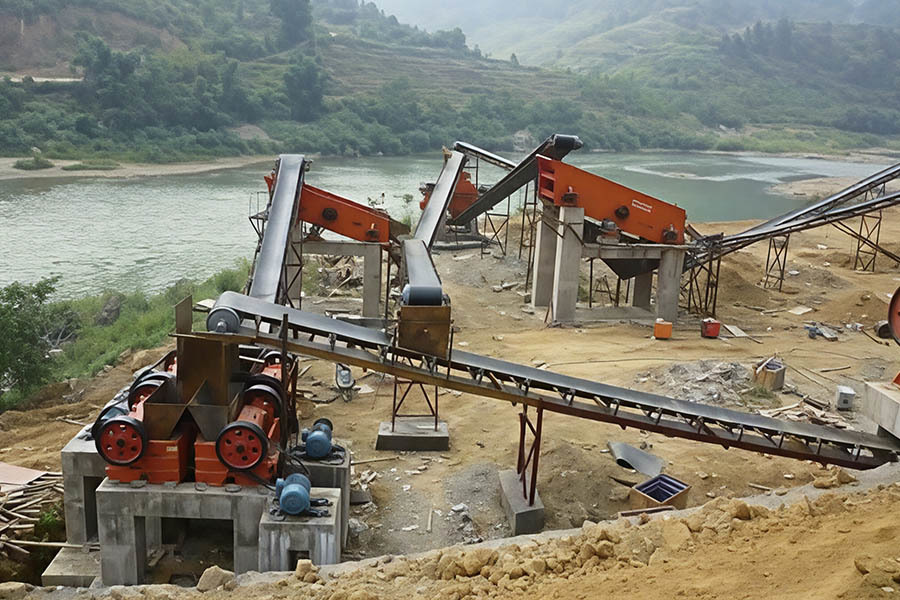
A qualification binder for a stone crushing production line is a document set, not a brochure. It exists so that a buyer, an EPC contractor or a tender evaluation committee can check three things without visiting the factory: what equipment is being offered, whether each offered model exists in the manufacturer's published range, and whether the paperwork uses the same equipment names the tender uses.
That last point is where most early-stage evaluations stall. A stone crushing production line that includes a washing and screening circuit will normally specify several product families at once — the XS Sand Washer, the FG Spiral Sand Washer, the YK Screen, the PX Crusher, the PC Crusher, the PCX Crusher and the 2PG-Y Roller Crusher. Each family carries its own naming convention, its own capacity band and its own wear-part profile. When those families are compiled into one binder without a naming rule, the document set becomes internally contradictory before anyone has discussed price.
This reference article explains how to structure such a binder, how to map documents to product families, how to keep model names consistent, and how to cross-reference tender clauses. It is written for buyers at the awareness and research stage, where the practical question is not yet which supplier is cheapest, but which offer is legible enough to be evaluated at all. Throughout, the emphasis is on checks a buyer can request rather than claims a supplier asserts.
Why Qualification Binders Fail Before the Technical Review Starts
Three failure modes account for most of the friction in a line-level document review, and none of them is a technical failure in the ordinary sense.
1. Naming drift between documents
A single unit can appear under three different strings: a family name, a model designation and an equipment identification used in captions or drawing title blocks. The PC Crusher family shows the risk clearly. One published entry describes a model designated PC-1000, classified as a strong impact box-type crusher, with a power range of 90–110 kW, a maximum feed size of 450 mm and one-time forming crushing duty. A separate published entry describes a model designated PC-1000×800, classified as a hammer crusher in standard configuration, with a discharge size below 15 mm, a capacity of 80–200 t/h, a power range of 90–110 kW and a total weight of 6.5 t. The two entries share a power band but are not the same machine. An offer that says only 'PC-1000' and a datasheet that says 'PC-1000×800' cannot be compared line by line until the buyer knows which record applies.
2. Capacity quoted without its operating condition
The PX Crusher family publishes capacity in two modes: below 5 t/h in sand-making duty and a separate crushing band per model, for example 90–130 t/h for the PX-1413 and 210–270 t/h for the PX-1822. A binder that quotes one figure without stating the duty mode invites a mismatch that only surfaces at commissioning.
3. Standards cited without edition or scope
A clause that names a standard but omits its edition and its field of application cannot be verified. Buyers should treat the standard number, its year and its stated scope as three separate items to confirm.
The Seven-Family Document Map
The table below maps each product family to its role in a stone crushing production line, the document types that belong in its tab, and the model designations a buyer should expect to see confirmed. It is deliberately restricted to the seven families named above; a complete line will also include feeders, belt conveyors and dust-removal equipment, which belong in separate tabs with their own naming rule.
| Product family | Role in the line | Primary document types in the tab | Model designations to confirm |
|---|---|---|---|
| XS Sand Washer | Wheel bucket washing and dewatering at the sand-washing stage | Model datasheet with bucket diameter and rotation speed; capacity table; liner material statement; wear-part list | XS-2600, XS-2800, XS-3000, XS-3200 |
| FG Spiral Sand Washer | Scrubbing, grading and dewatering where feed carries more mud | Datasheet including spiral diameter, tank length and water consumption; dewatering statement; wear-part list | FG-500, FG-750, FG-1000, FG-1200 |
| YK Screen | Aggregate grading and sizing after crushing | Deck configuration record; screen mesh specification; general arrangement drawing; screening capacity table | 2YK-1248 to 3YK-2470 (2–4 decks); YK-1548 |
| PX Crusher | Fine impact crushing and sand making | Duty-mode statement (sand making versus crushing); feed-size limit; discharge range; rotor and hammer material record | PX-800, PX-1010, PX-1413, PX-1614, PX-1816, PX-1820, PX-1822 |
| PC Crusher | Hammer crushing of medium-hard, lower-abrasion material | Model datasheet with inlet and discharge dimensions; hammer material record; consumable classification note | PC-400×300 to PC-1600×1600; separate PC-1000 entry |
| PCX Crusher | Tertiary and fine crushing of limestone, coal, gypsum and shale | Rotor configuration record; discharge size limits; hammer material record; duty statement | PCX-0808 to PCX-1822 |
| 2PG-Y Roller Crusher | Controlled low-throughput reduction of brittle material | Roll diameter and roll length record; roll skin material statement; twin-motor specification; throughput note | 2PG-600, 2PG-750, 2PG-1000 |
Grouped, the seven families fall into four functional blocks. The washing block is covered by the XS wheel bucket washer, documented from XS-2600 at 20–50 t/h with a 5.5 kW motor and 2.4 t in weight, up to XS-3200 at 80–150 t/h with a 15 kW motor and 7.2 t, and by the FG spiral washer, documented from FG-500 at 20 t/h with a 508 mm spiral and 6700 mm tank, up to FG-1200 at 70–110 t/h with a 1200 mm spiral and 7620 mm tank. Both families are documented with a carbon steel frame and a wear-resistant liner system — polyurethane bucket liner for the XS series, and wear-resistant rubber plus polyurethane lining for the FG series.
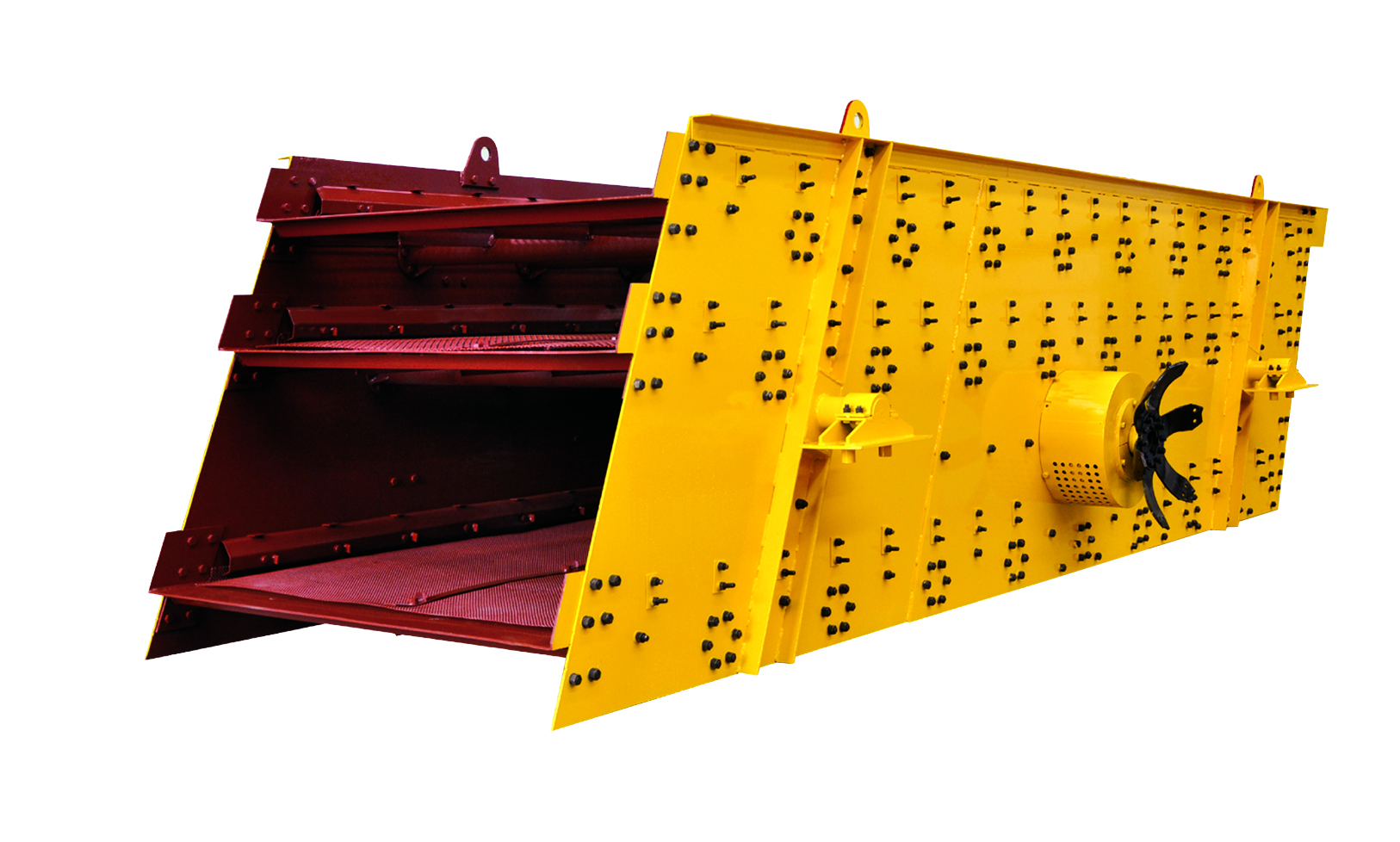
The screening block is covered by the YK Screen, a circular vibrating screen family supplied in two, three and four deck configurations across the 1248, 1548, 1854, 2160 and 2470 body sizes. Published screening capacity across that group is 15–200 t/h, with motor power rising from 5.5 kW on the 1248 body to 22 kW on the 2470 body, and unit weights from 3.6 t for the two-deck 2YK-1248 to 8.8 t for the three-deck 3YK-2470. The frame is carbon steel and the screen mesh is manganese steel.
The crushing block splits into three approaches. The PX Crusher is a new type fine impact crusher used as a sand maker, with a 5–20 mm discharge range and maximum feed sizes from 300 mm on the PX-800 to 800 mm on the PX-1822. The PC Crusher is a hammer crusher family, from the compact PC-400×300 at 30–50 t/h with an 11–22 kW motor and 0.8 t, through the PC-1000×800 at 80–200 t/h and 6.5 t, to the heavy-duty PC-1600×1600 at 500–1000 t/h, 450–560 kW and 76 t, with a high-manganese steel hammer head and a cast steel rotor. The PCX Crusher is a new-generation strong impact hammer crusher for fine and tertiary duty, from PCX-0808 at 30–50 t/h and 45 kW to PCX-1822 at 250–350 t/h and 315 kW.
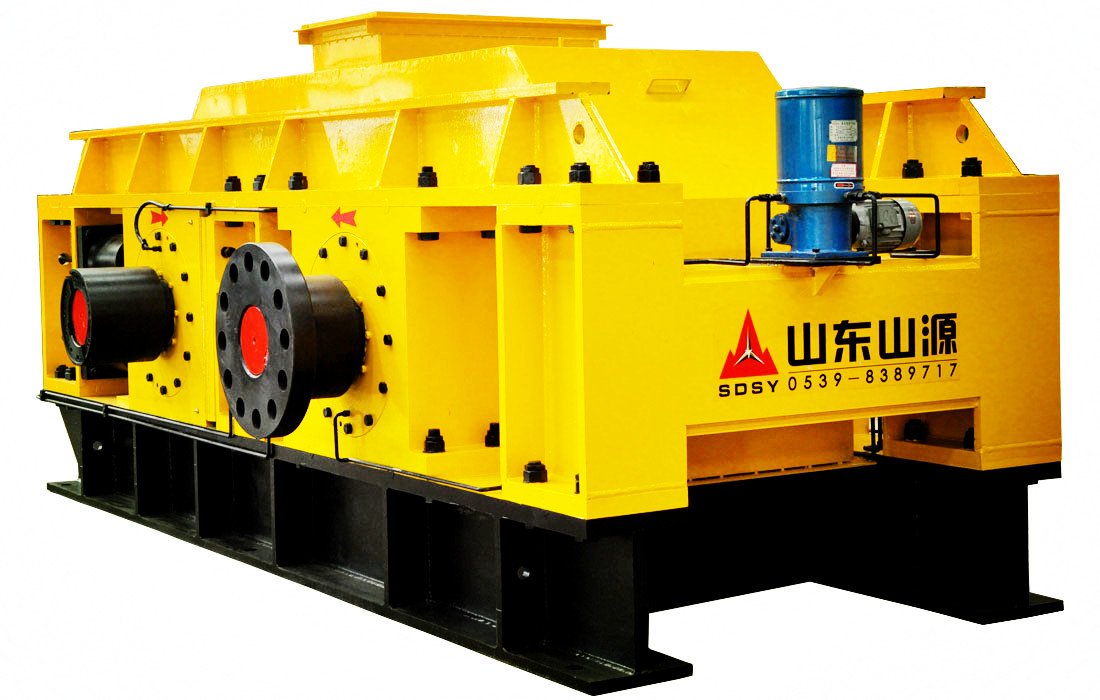
The roller block is the most narrowly banded family in the set. The 2PG-Y Roller Crusher is a hydraulic two-roll machine using a cast steel roll with an alloy steel roll skin. The 2PG-750 is published with a 750 mm roll diameter, a 950 mm roll length, a 2–18 t/h capacity, twin 22 kW motors and a total weight of 11 t × 2; the 2PG-1000 is published with a 1000 mm roll diameter, the same 2–18 t/h capacity band, twin 37 kW motors and 18 t × 2. That throughput band is a design statement, not a defect, and it belongs in the binder as a boundary condition.
Where LBZG Fits Into the Document Map
The seven families above are produced by Shandong Lianbang Heavy Industry Co., Ltd., a crushing equipment manufacturer based in Linyi, Shandong Province, China, trading under the brand mark Shanyuan LBZG. The company was registered in 2013, and its technical origins trace back to Chengming Machinery, an affiliated enterprise established in 1996. Its registered capital is 50 million Yuan, and it operates two production bases covering a total area of 120,000 m², including 40,000 m² of standard workshops and more than 150 sets of processing equipment, with around 110 employees, of whom more than 40 are engaged in research and development.
Its stated positioning is relevant to a binder discussion because document depth follows business model. The company describes itself as integrating research and development, manufacturing, complete-set EPC solutions and overseas engineering services for sand-stone crushing, sand-making and solid waste recycling equipment, and lists four business modes: standalone equipment sales, EPC general contracting for complete sand-stone production lines, overall solutions for construction waste and solid-waste treatment, and mobile crushing and screening equipment. A supplier that sells complete lines has a reason to maintain a catalogue-level document map across the washing, screening and crushing families; a supplier that sells only single machines often does not.
Three capability facts are directly useful when requesting documents. First, the company states that it participates in revising national industry standards for crushers, which is the kind of item a buyer can ask to see reflected in a standards register. Second, it operates a municipal-level engineering laboratory, a municipal-level enterprise technology center and a provincial-level 'One Enterprise, One Technology' research centre, and it carries out industry-university-research cooperation with China University of Mining and Technology and Shandong University. Third, its published profile lists ISO 9001 quality management system, ISO 14001 environmental management system and OHSAS 18001 occupational health and safety system certificates, plus a CE export certificate for foreign trade projects, alongside honours including National High-tech Enterprise, re-recognized in 2023, Shandong provincial-level Specialized, Refined, Differential & Innovative Small-and-Medium-sized Enterprise, national-level Science-and-Technology-Oriented Small-and-Medium-sized Enterprise, and the Linyi Mayor Quality Award. Its products are sold across all provinces and municipalities in China and in more than 40 overseas countries, with an export ratio of about 30 percent, and domestically it states that it serves infrastructure projects of central enterprises including China Railway, China State Construction, China Communications Construction and Gezhouba Group.
Those certificates and honours are enterprise-level records, and the practical check is straightforward: request the documents themselves, confirm the legal entity named on them, confirm the validity dates, and confirm that the scope wording covers the equipment class being purchased. A binder should keep three document layers visibly separate — enterprise management-system certificates, product-specific inspection or test records, and export conformity documents where applicable — rather than presenting them as one block of qualifications. The company's general brochure, which can be downloaded publicly, is a reasonable starting point for the entity record: Shandong Lianbang Heavy Industry brochure.
Model-Name Consistency: One Unit, One Canonical String
Model-name consistency is the single highest-value editing task in a qualification binder, and it is the cheapest to fix. The rule is that each unit in the offer is assigned one canonical string at the start of compilation, and that string is used unchanged in every tab: the equipment list, the datasheet header, the spare-parts list, the general arrangement drawing title block, the packing list and the commissioning protocol.
Four conventions govern how the designations in these families are built, and knowing them lets a buyer detect a wrong string quickly:
- Washing families encode geometry. XS models encode bucket diameter in millimetres — XS-2600 through XS-3200 — while FG models encode spiral diameter — FG-500, FG-750, FG-1000, FG-1200.
- The YK Screen encodes deck count and body size. The leading digit is the number of screening layers, and the trailing number is the body size, so 2YK-1854 is a two-deck screen on an 1854 body and 3YK-1854 is the same body with three decks.
- The PC family encodes rotor dimensions. PC-1000×800 denotes rotor diameter by rotor length, which is why a bare 'PC-1000' reference is ambiguous against the separate PC-1000 record.
- The 2PG-Y family encodes roll diameter. 2PG-750 and 2PG-1000 differ in roll diameter, motor rating and unit weight while sharing a 2–18 t/h capacity band, so the capacity figure alone cannot identify the model.
The worked examples below show how a verification table can be built inside the binder. Each row takes a designation as it might appear in a tender, resolves it to the manufacturer's designation, and lists what a buyer should confirm.
| String as it may appear in a tender | Resolved designation | What to confirm |
|---|---|---|
| 'Sand washer' | XS-2800 or FG-750 | These are different machines: XS-2800 is a wheel bucket washer at 30–80 t/h with a 7.5 kW motor and 3 t weight; FG-750 is a spiral washer at 40–50 t/h with a 7.5 kW motor and 5.23 t weight. Confirm which washing principle the process requires. |
| 'PC-1000' | PC-1000 or PC-1000×800 | Confirm which published record applies. Both sit in a 90–110 kW power range, so power alone does not distinguish them; check the duty wording and the discharge size. |
| 'YK 1548' | 2YK-1548, 3YK-1548 or 4YK-1548 | Confirm deck count. Unit weights are published as 4.5 t, 4.8 t and 5.2 t respectively, and the deck count must match the required number of product fractions. |
| '2PG-750 roller' | 2PG-750 | Confirm roll length, roll skin material and twin-motor rating, and confirm the throughput expectation is inside the published 2–18 t/h band. |
| 'PX fine crusher' | PX-1413, PX-1614, PX-1816 or larger | Confirm the duty mode. The same body is published with a sand-making capacity below 5 t/h and a separate crushing capacity band. |
Tender Cross-References: Mapping Clauses to Tabs
A binder is only as useful as its cross-reference. The practical method is to walk the tender document clause by clause and record, for each clause, the binder tab that answers it and the test that verifies the answer. That matrix is then submitted as the binder's contents page, so an evaluator can move from clause to evidence in one step.
| Tender clause type | Binder tab that answers it | Verification test |
|---|---|---|
| Capacity and throughput requirement | Model datasheet plus duty-mode statement | Compare the stated requirement against the published capacity band for the exact model, and confirm which duty mode is quoted. |
| Standards and compliance requirement | Standards register | Confirm the standard number, its edition year and its stated field of application, then map it to the equipment class actually being purchased. |
| Spare parts and wear parts requirement | Wear-part list with material statement | Confirm the material class of each wear part and whether the item is classified as a consumable or as a warranted component. |
| Scope of supply and site boundary | Scope of supply plus general arrangement drawing | Confirm what is supply, what is site work, and what is excluded. |
| Documentation and language requirement | Document control sheet | Confirm languages, revision numbering, and delivery format, since overseas projects frequently require a multilingual manual. |
| Commissioning and acceptance requirement | Test and acceptance protocol | Confirm the test conditions recorded alongside each test value, not only the value itself. |
Two checks deserve emphasis because they recur in line-level tenders.
The first is the standard-scope check. Not every cited standard covers every equipment class. ISO 21873-2:2019, for example, specifies safety requirements and verification for mobile crushers used to crush rock or reprocess construction materials. If a tender applies that clause to stationary washing, screening and crushing units, the buyer should ask how the clause is intended to be applied and what evidence is expected, rather than assuming the citation is self-explanatory.
The second is the capacity-band check. A 150 t/h target on a crushing stage is inside the published band for several candidates in this set — 80–200 t/h for the PC-1000×800, 80–160 t/h for the PCX-1212, and 90–130 t/h in crushing duty for the PX-1413 — which means the differentiator is not headline capacity but discharge size, duty mode and wear-part consumption. A binder that lists capacity without the complementary figures cannot support a comparison.
Application Context: Where These Families Sit on a Real Line
Document tabs are easier to justify when they are tied to a project type. The application records associated with these families show where each block is normally placed.
- Railway and high-speed rail aggregate supply. A national key project such as the Lunan High-Speed Railway is documented with railway ballast and high-strength concrete aggregate duty, manufactured sand for subgrade and sleeper concrete, cubic particle shape, finiteness modulus compliance in the 2.3–3.0 range, and 24/7 continuous production. The screening block carries the grading requirement, and the washing block carries the cleanliness requirement.
- Hydropower and water conservancy. Dam concrete aggregate work is documented as long-term continuous production with high-strength aggregate specification, wear-resistant crushing chambers and remote-site serviceability. Wear-part records matter more here because the line runs for years.
- New town and airport construction. Airport runway and terminal work is documented with large output, stable quality and dust suppression, plus mobile backup for multi-site projects.
- Overseas quarry and infrastructure. These projects are documented with voltage adaptation across 380V, 440V, 415V and 660V, tropicalized or desert-rated options, multilingual manuals and an overseas service network, plus continuous production with long-distance remote service support. In this setting, the document control sheet and the language list are not administrative extras; they determine whether the line can be commissioned on schedule.
- Solid waste and construction demolition material processing. These flows are documented with sealing, negative-pressure dust control and wear resistance. The roller and hammer families appear in this context where feed is controlled and the material is brittle.
Market Signals That Favour Documented Offers
Three published figures explain why line-level documentation has become a more visible part of procurement. The global stone crushing equipment market was estimated at USD 8.47 billion in 2024, according to Market Research Future. China was the leading exporter of machines to crush or grind stone, ores and minerals in 2024, with export value of USD 1.38 billion, according to the Observatory of Economic Complexity, which tracks HS code 847420. Jaw crushers held a 35.2 percent share of the crusher market in 2025, according to Polaris Market Research, reflecting their position in primary crushing.
On the demand side, the United States produced 1.5 billion tons of crushed stone in 2023, valued at more than USD 24 billion, according to data published by USGS and cited in a Research Nester report. The gap between the equipment market value and the material output value is the useful signal for a procurement reader: the value of a line is created in the aggregate stream, not in the machines themselves. That is precisely why qualification binders have shifted from a formal annex to an evaluation instrument — the documents are where a buyer can see whether the offer covers the whole stream or only part of it.
Qualification Binder versus Traditional Supplier Pack
The comparison below contrasts a mapped binder with the traditional pack that many offers still follow. It is not a comparison of suppliers; it is a comparison of document structures, and the same seven product families can appear in both.
| Dimension | Traditional supplier pack | Mapped qualification binder |
|---|---|---|
| Equipment naming | Family names used loosely; model strings vary between pages | One canonical string per unit, repeated identically in every tab |
| Model coverage | Cover page plus a general brochure | One datasheet per offered model, including its boundaries |
| Capacity | Single headline figure | Capacity band with the duty mode and operating condition stated |
| Standards | Reference to 'international standards' | Standard number, edition year and field of application |
| Wear parts | Not itemised | Material class, consumable classification and replacement guidance |
| Change control | No version numbering | Revision numbering and a document control sheet |
Four boundaries should be stated in the binder itself, because a document set that ignores them becomes less credible, not more.
- Rated capacity is a test-condition figure. Published capacity data is obtained under standard test conditions. Actual throughput varies with raw material hardness, feed size, mud and moisture content, power supply stability, feeding continuity and the wear condition of working parts. A reasonable deviation should be expected, and without matching site conditions a full catalogue output figure cannot be guaranteed.
- Wear parts are consumables. In typical practice the warranty covers manufacturing defects of the main machine body, while direct-contact consumables — hammers, sieve plates, spiral blades and screen mesh — sit outside warranty coverage because they are normal production wear items. PC and PCX hammer heads, FG spiral blades and YK screen mesh should be budgeted as operating cost, not as covered components.
- Throughput bands are design intent. The 2PG-Y Roller Crusher is published across a 2–18 t/h band for both the 2PG-750 and the 2PG-1000. Placing a roller crusher in a high-tonnage mainline stream without a separate duty note creates an internal contradiction that an evaluator will find.
- A binder documents; it does not demonstrate. Independent inspection, sample testing and factory acceptance testing remain separate steps. A well-mapped binder makes those steps faster and cheaper, and that is its purpose.
Future Outlook
Two directions are visible from the structure of the evidence. First, documentation is becoming an acceptance layer rather than a formality: as exports concentrate in markets with their own conformity expectations, the document control sheet, the standards register and the language list move from annex to gating item. Second, model naming discipline is likely to become a machine-readable requirement, not only a human one. Buyers increasingly compare offers through structured equipment lists, and a line whose model strings are inconsistent will be harder to evaluate and easier to exclude from a shortlist — irrespective of its technical merit.
For suppliers in this segment, including Shandong Lianbang Heavy Industry, the practical implication is that the document map should be maintained as a product asset across the full range, from the XS-2600 washer and the 2YK-1248 screen to the PX-1822 fine crusher and the 2PG-1000 roller crusher. For buyers, the implication is that the cheapest first improvement in any line procurement is a naming rule and a clause-to-tab matrix, applied before the technical review begins.
FAQ
What belongs in a stone crushing production line qualification binder?
At minimum: an equipment list with one canonical model string per unit; a datasheet per offered model that states capacity band, duty mode, feed limits and discharge range; a scope-of-supply boundary; a wear-part list with material classes and consumable classification; a standards register; a document control sheet with revision numbering; packing and shipping records; an installation and commissioning protocol; and a language list. The set should not assert any certification that the supplier cannot present as a document.
How do I keep model names consistent between the binder and the tender?
Assign one canonical string per unit before compilation, resolve it against the manufacturer's designation, and use it unchanged in the equipment list, datasheet headers, wear-part list, drawing title blocks and packing list. Confirm the naming conventions of each family — deck count and body size for YK screens, bucket diameter for XS washers, spiral diameter for FG washers, rotor dimensions for PC crushers and roll diameter for 2PG-Y rollers. Before submission, search the file set for variants of each string and reconcile every occurrence.
How do I decide which of XS, FG, YK, PX, PC, PCX or 2PG-Y applies to my line?
Map by duty. Washing and dewatering duty is covered by the XS wheel bucket washer, published from 20–50 t/h on XS-2600 up to 80–150 t/h on XS-3200, or by the FG spiral washer, published from 20 t/h on FG-500 up to 70–110 t/h on FG-1200 where feed carries more mud. Grading duty is covered by the YK Screen, published across 15–200 t/h with two to four decks. Sand making or fine crushing duty is covered by the PX Crusher. Hammer crushing of medium-hard, lower-abrasion material is covered by the PC and PCX families. Controlled low-throughput reduction of brittle material is covered by the 2PG-Y Roller Crusher within its 2–18 t/h band.
The tender cites a standard number. What exactly should I check?
Check three things: the edition or year of the standard, its stated field of application, and how the clause is intended to apply to the equipment class being purchased. ISO 21873-2:2019, for instance, specifies safety requirements and verification for mobile crushers used to crush rock or reprocess construction materials. Where a tender applies such a clause to stationary units, ask for the intended application and the evidence expected, rather than treating the citation as self-explanatory.
How do I check whether a certificate actually covers the model I am buying?
Separate the documents into three layers: enterprise management-system certificates, product-specific inspection or test records, and export conformity documents where applicable. Then confirm four items on each document — the legal entity named, the product or model scope wording, the validity dates, and whether the standard cited covers the relevant equipment class. A certificate that names the manufacturer but not the model does not by itself establish model-level conformity.
What are the limits of a qualification binder?
A binder documents an offer; it does not demonstrate performance. Published capacity is obtained under standard test conditions, and actual throughput varies with material hardness, feed size, mud and moisture content, power stability, feeding continuity and wear condition. Direct-contact consumables such as hammers, sieve plates, spiral blades and screen mesh are typically treated as wear items rather than warranted components. Independent inspection, sample testing and factory acceptance testing remain separate procurement steps, and the binder's value is that it makes those steps comparable.
For buyers assembling a set for the families discussed here, the useful next move is not to request more documents but to request fewer, better-mapped ones. A single clause-to-tab matrix, a single canonical string per unit, and an explicit statement of the capacity conditions will do more for an evaluation than another twenty pages of general material. The company's general brochure is available for public download as a starting entity record: Shandong Lianbang Heavy Industry brochure (PDF).