Step-Up Main Transformers for North American Storage & Solar Plants
Step-Up Main Transformers for North American Storage & Solar Plants
Storage and utility-scale solar projects push step-up main transformers through a duty cycle that legacy utility procurement was not built around. This industry reference explains the technical traits that define the equipment, how North American grid modernization is reshaping the specification, and where high-voltage OEM/ODM customization changes the buyer's decision.
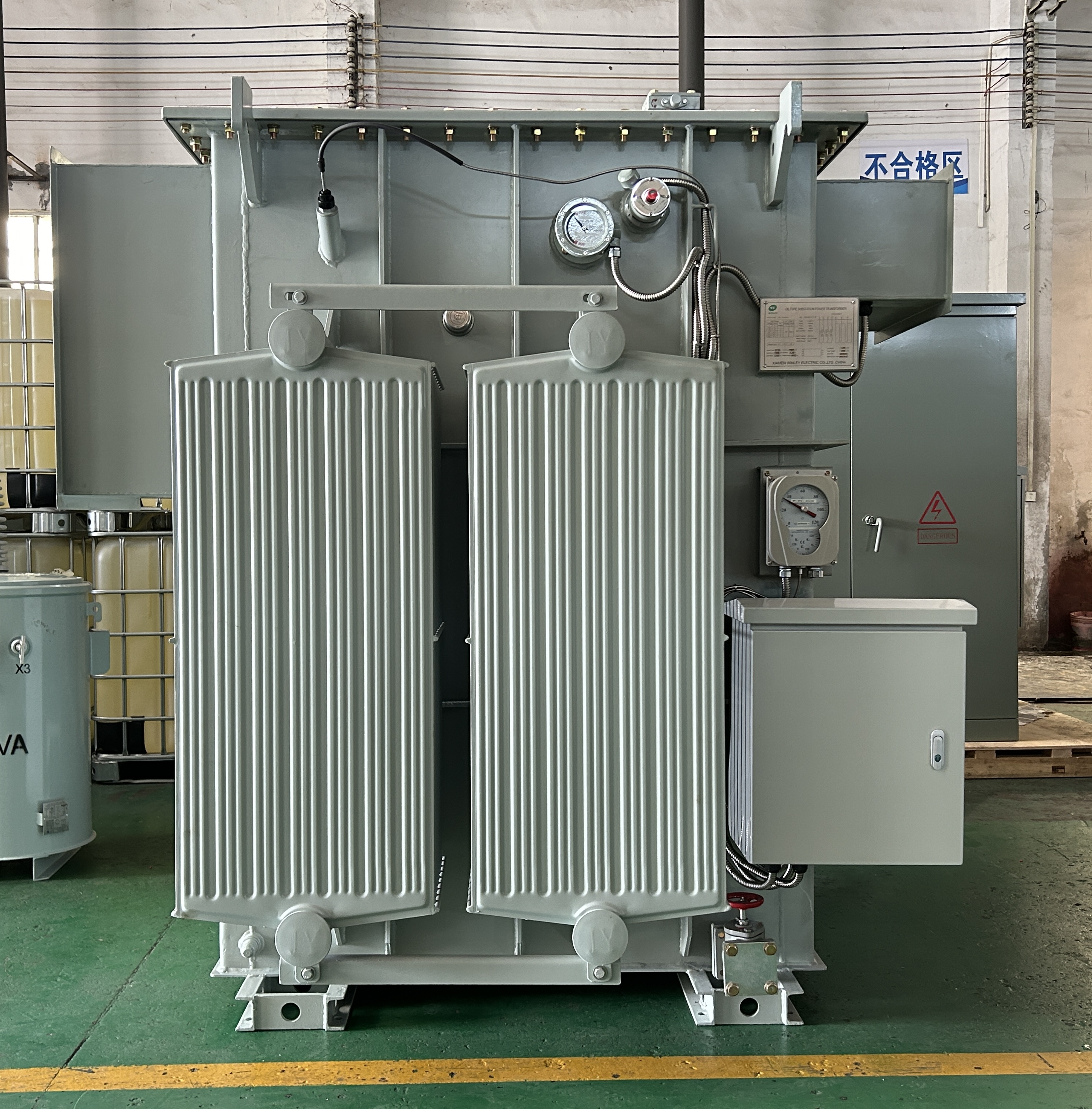
The Step-Up Main Transformer, Defined by Its Function
A step-up main transformer is the power transformer that raises electricity from the voltage at which an energy storage plant or solar farm generates it to the voltage at which the transmission or sub-transmission network accepts it. In a battery storage project or a utility-scale photovoltaic plant, that unit sits between the inverter-based collector system and the utility interconnection point, and it is usually the largest single piece of oil-immersed equipment on site.
That position explains why specification conversations about storage projects rarely sound like conversations about distribution transformer orders. A main substation power transformer is not only converting voltage; on one side it absorbs the electrical behaviour of power electronics, and on the other it has to satisfy the fault, protection, efficiency and reliability expectations of a transmission operator. North American grid modernization has pushed this equipment from a background category to a schedule-critical one. Buyers in the Decision and Execution stages are no longer asking only who can build a substation transformer, but who can build a specific one, to a specific standard, inside a commercial operation date that has already been announced to lenders and offtakers.
The sections below treat the subject as an engineering and procurement reference rather than a product pitch: what a storage-grade main transformer has to do, what North American standards require, what evidence a buyer should expect to see before shipment, and where a customized build is genuinely the right answer — and where it is not.
Why Storage and Solar Duty Is Harder Than a Nameplate Rating Suggests
A conventional step-up transformer serving thermal generation is designed around a largely one-directional, slowly varying power profile. A storage or solar main transformer is designed around something different.
- Bidirectional power flow. A battery plant charges and discharges, so power flow through the main transformer reverses repeatedly. Tap strategy, protection coordination zones, thermal assumptions and metering all have to function correctly in both directions, not just the export direction.
- Cyclic thermal loading. A storage asset may complete several full charge and discharge excursions in a single day. Repeated top-oil and hot-spot temperature swings drive thermal expansion and contraction inside the insulation system, and frequent proximity to the hot-spot limit accelerates ageing of solid insulation in a way that a steady baseload profile does not.
- Harmonic and DC content. Inverter-based resources inject harmonic currents into the transformer. Those harmonics raise eddy and stray losses, which appear as additional heating in windings, core clamps and tank walls. Designs intended for inverter-fed duty generally carry an explicit harmonic loss allowance rather than assuming a clean sinusoidal load.
- Fault current behaviour. Inverter-based sources contribute fault current in a different shape and magnitude from synchronous machines. Transformer impedance is therefore often used deliberately as one of the tools that keeps fault levels within the ratings of downstream switchgear and protection equipment.
- Interconnection schedule pressure. The main transformer and the associated substation work sit on the critical path to the commercial operation date. A transformer that arrives late does not delay one work package; it delays revenue.
The commercial implication is straightforward. A transformer that meets a nameplate rating is not automatically a transformer that suits a storage duty cycle. The difference is decided at the design stage — in cooling class selection, impedance, harmonic loss allowance, and the test regime agreed before the order is frozen — which is precisely where a specification-driven OEM or ODM engagement earns its place.
Core Technical Traits of a Storage-Grade Step-Up Main Transformer
Voltage class and winding configuration
Step-up main transformers for renewable and storage plants are specified at the transmission-side voltage class used by the interconnecting utility, which in North America may sit anywhere from a sub-transmission level up to the higher transmission classes encountered in utility substation transformer specifications; 145 kV substation transformer classes appear in a number of interconnection studies. Two-winding designs are the common configuration for storage projects, with three-winding arrangements used where a station service or tertiary winding is required.
Winding configuration, conductor type and core construction jointly determine short-circuit withstand, loss behaviour and the transformer's response to harmonic-rich load. For inverter-fed duty, designs generally place more emphasis on low flux density margins and an explicit harmonic loss allowance than an equivalent baseload unit would require. This is a design decision made on paper, long before steel is cut.
Thermal design for cyclic duty
Cooling class selection — ONAN, ONAF, OFAF or a staged combination — is usually the first point at which storage duty and conventional duty diverge. The design question is not the peak rating in isolation but the shape of the daily profile. Because losses scale differently in the core and in the windings, a transformer optimised for a flat profile may operate inefficiently, or thermally uncomfortably, under a two-a-day cycling regime.
Buyers therefore benefit from providing the actual charge and discharge profile, the ambient temperature profile of the site, and the expected annual utilisation, rather than a single nominal rating. That information lets the manufacturer select cooling stages and temperature rise limits that match the real operating pattern instead of a generic assumption.
Losses, efficiency and DOE 2016
In the United States, transformer efficiency is regulated. The DOE 2016 efficiency levels apply to covered distribution and power transformer categories and set a floor rather than a competitive target. For a storage or solar asset with high annual utilisation, no-load loss accrues continuously regardless of throughput, while load loss scales with the square of the current — so both translate directly into operating cost over the asset's life.
That is why loss capitalisation is a more meaningful comparison than purchase price alone when two compliant units are evaluated side by side. Oil-immersed designs accounted for approximately 59.3% of the power transformer segment in 2025, a position attributed by Grand View Research to cooling efficiency and durability in utility applications — two properties that matter most in a substation main transformer operating on a cyclic duty.
Insulation coordination and factory testing
Insulation coordination ties together basic impulse level, bushing selection, surge arrester placement and clearances so that the transformer's dielectric withstand is matched to the environment it will actually see. The factory test programme is where those choices are verified. Routine tests are performed on every unit; type tests validate the design itself. Impulse testing, carried out with a lightning impulse test set, is one of the checks that separates a verified design from a paper specification.
For buyers in the Execution stage, the practical question is not whether testing happens, but which tests are type tests on a representative design, which are routine tests on the specific unit being shipped, and what documentation will be handed over with the equipment.
Monitoring and the smart-substation direction
Monitoring is moving from optional to expected. The smart transformer market is projected to grow from USD 3.17 billion in 2025 to USD 10.15 billion by 2035 at a CAGR of 12.35%, driven by the need for real-time grid monitoring (SNS Insider). For a storage main transformer, the practical implication is that temperature, tap position, dissolved gas and partial discharge data increasingly feed the plant's asset management system rather than a paper log — which in turn changes the long-term service relationship a buyer should plan for at the point of purchase.
North American Grid Modernization in Numbers
The demand picture behind step-up main transformers is not speculative. The global transformer market was estimated at USD 64.64 billion in 2025 and is projected to reach USD 88.48 billion by 2030, driven by grid modernization and rising electricity demand (MarketsandMarkets). The broader substations market was valued at USD 128.5 billion in 2024 and is expected to reach USD 178.9 billion by 2034, a compound annual growth rate of 3.2% (Global Market Insights).
Two adjacent demand centres are reinforcing the same supply chain. Data centre transformer demand is expected to rise from USD 2.2 billion in 2023 to USD 5.9 billion by 2030 at a 10% CAGR (Strategic Market Research). Meanwhile Asia Pacific accounted for approximately 41.1% of global transformer revenue in 2025, led by large infrastructure programmes in China and India (Grand View Research).
Supply remains concentrated. Hitachi Energy, Siemens Energy, GE Vernova, Eaton and Schneider Electric dominate the high-voltage equipment supply chain (MarketsandMarkets). Concentration is not a problem in itself; the problem is timing. When transmission and distribution utilities, data centre developers, solar developers and storage developers all draw on the same qualified manufacturing capacity in the same window, lead time becomes the variable that decides whether a project reaches its commercial operation date. That is the practical reason qualified alternative manufacturing capacity has moved into mainstream North American procurement planning rather than remaining an exception.
What High-Voltage OEM/ODM Customization Changes
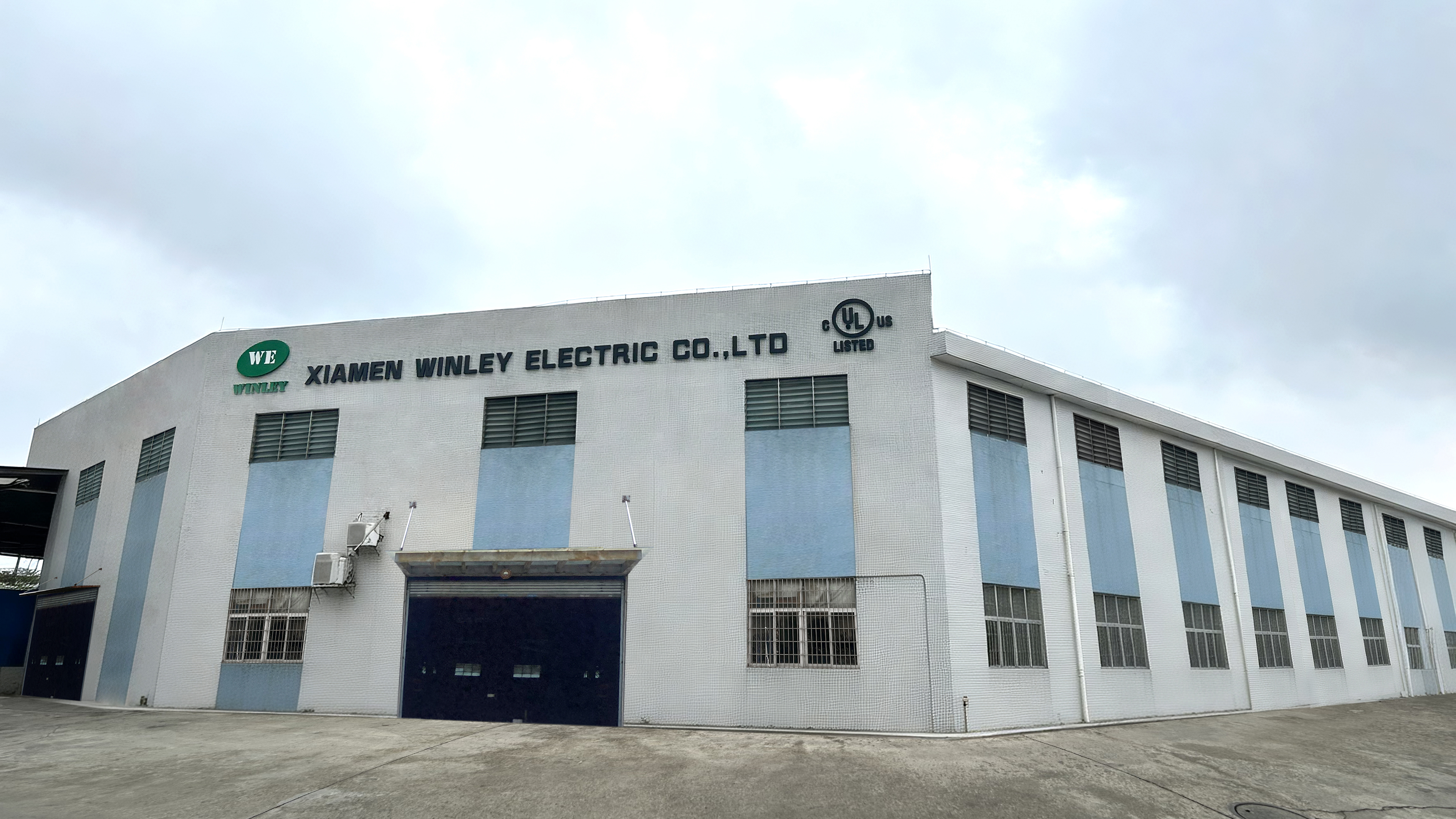
Xiamen Winley Electric Co., Ltd is a transformer manufacturer founded in 2014 and headquartered in Xiamen, China, with manufacturing facilities in Shanghai and Guangdong. Its product range covers transformers rated 230 kV and below, including three-phase pad-mounted transformers, single-phase pad-mounted transformers, substation transformers, pole-mounted transformers, epoxy resin cast dry-type transformers, vacuum-impregnated transformers, isolation transformers, voltage regulators and reactors. The company is certified by UL and cUL, and its products are manufactured to ANSI, IEEE, CSA, DOE 2016, IEC 60076 and NEMA standards. Approximately 70% of output is exported, with North and South America as the principal markets and more than 60 countries served.
For storage and solar main transformer buyers, the relevant point is not catalogue breadth but customization depth behind it. The engineering group includes 35 R&D engineers familiar with ANSI, IEEE, CSA, DOE 2016, NEMA and IEC standards, supported by more than 20 independent R&D patents. The manufacturing base covers 45,000 m² with an annual output of 35,000 units and a workforce of 220, including more than 200 front-line production employees — 80% with more than three years of experience and 50% with more than five. Production equipment includes silicon steel sheet slitting lines and cross-cutting lines, multi-model foil winding and wire winding machines, vacuum constant-temperature drying ovens, two-stage vacuum oil filters and automated welding equipment.
From technical clarification to design freeze
OEM/ODM in high-voltage transformers is not a matter of selecting options from a list. The usable starting point is a complete technical package: transmission-side voltage class and connection arrangement, impedance requirement, expected load and charge/discharge profile, ambient and altitude conditions, cooling preference, loss targets, applicable standards, and site constraints such as noise, footprint and transport limits. From that package, the manufacturer's engineering group produces product selection recommendations, drawings and accessory specifications for customer approval.
The design freeze is the pivotal commercial event. Once drawings are approved, the winding, core, tank, cooling and bushing configuration is committed, and changes after that point carry real schedule and cost consequences. Buyers in the Execution stage should treat drawing approval as a project milestone with its own schedule allowance rather than an administrative formality.
Hold points, factory acceptance and pre-shipment testing
Quality control in this manufacturing process is built around mandatory hold points rather than end-of-line inspection alone. Hold points are established after irreversible processes or before critical performance tests. At each hold point, authorized quality control personnel must inspect and sign off before the next process may proceed. The logic is economic as much as technical: a defect discovered after tanking or after vacuum drying is far more expensive to correct than one caught at the winding stage.
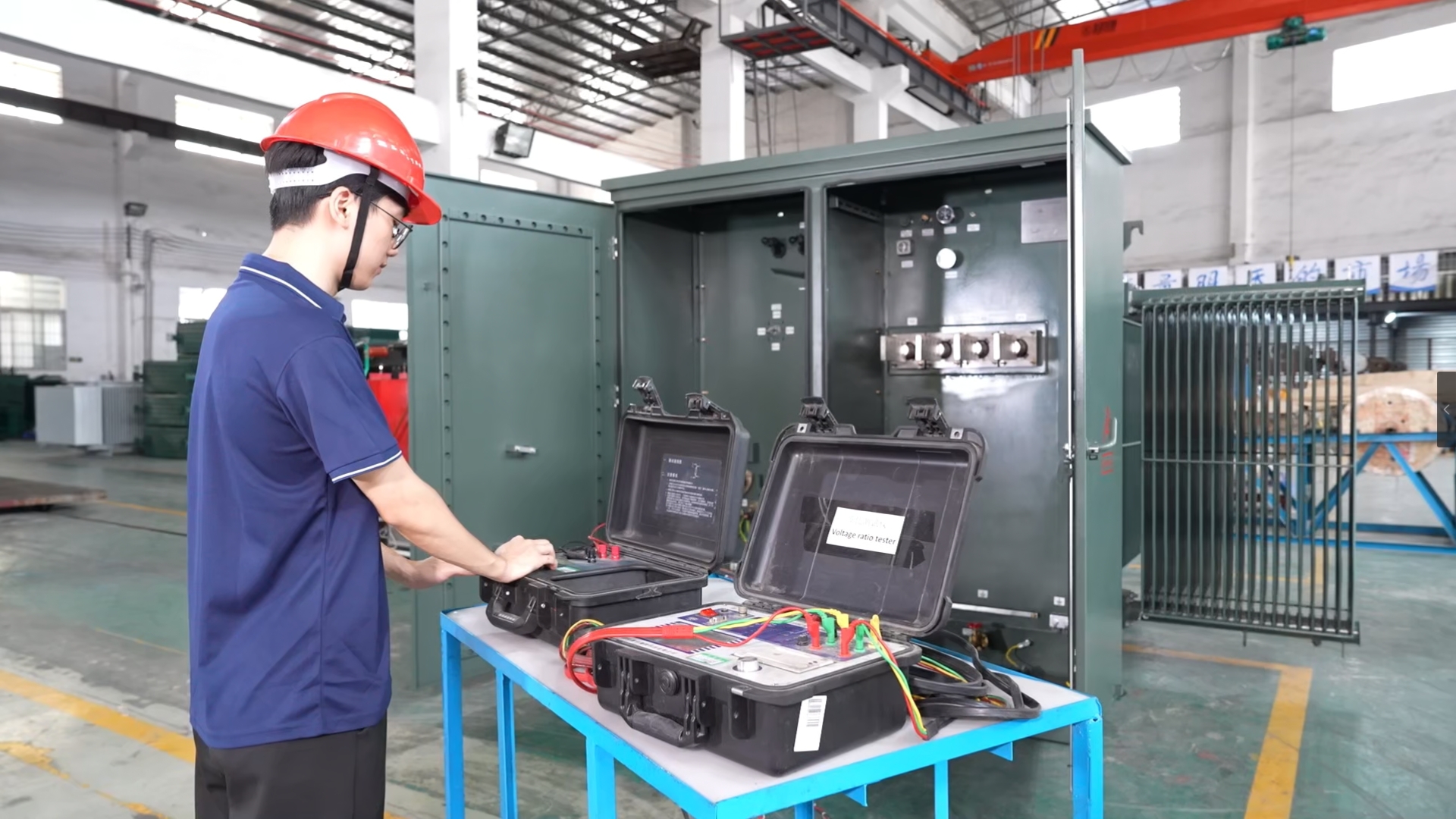
The verification chain is supported by an ISO 9001 production management system, a transformer material traceability system and a supplier evaluation mechanism applied across the full production process. In addition to conventional test equipment, the factories operate professional type-test equipment including lightning impulse test devices, and every unit undergoes factory inspection against the applicable specification before leaving the factory. For orders, the acceptance criterion applied is a pre-shipment test.
Where These Transformers Are Applied
Step-up and substation transformers in this voltage and power band serve a broad set of project types: power substations, industrial parks, commercial complexes, large buildings, new energy power stations, municipal power distribution networks, heavy industrial bases and power engineering projects. Solar substation transformers, data centre substation transformers and utility substation transformers share most of the same engineering fundamentals as storage main transformers — a defined transmission-side voltage, a controlled impedance, a specified loss level, and a cooling design matched to the actual load profile.
The storage and solar case adds one specific requirement: the transformer has to be designed for a duty cycle, not a nameplate. Two plants with the same nominal capacity and the same interconnection voltage can require materially different thermal and impedance designs if one dispatches twice daily and the other operates with a flatter profile. In a compact substation or unit substation transformer layout, the same logic applies with tighter constraints on footprint and clearances. That variability is exactly what an OEM/ODM engagement is structured to resolve before manufacturing begins, rather than after equipment arrives on site.
Conventional Supply Paths Compared with an OEM/ODM Build
The table below compares an established North American domestic supply path with Winley Electric's OEM/ODM manufacturing route on the dimensions that most often determine a storage or solar project schedule.
| Comparison dimension | Conventional North American supply path | Winley Electric OEM/ODM route |
|---|---|---|
| Average substation transformer production cycle | 80–120 weeks | 12 weeks |
| Cost position | Reference baseline | 20%–30% lower |
| Technical standard basis | ANSI/IEEE | Produced in accordance with ANSI/IEEE standards and meeting DOE efficiency requirements |
| Maintenance profile | Reference baseline | Less maintenance |
| Application fit | Power substations, industrial parks, commercial complexes, large buildings, new energy power stations, municipal power distribution networks, heavy industrial bases, power engineering projects | Same application set |
Production cycle and cost ranges reflect a comparison against conventional American transformer factory output. Project-specific figures depend on the finalized technical specification.
Where the OEM/ODM route is not the right answer
Custom manufacturing carries boundaries that buyers should weigh honestly before committing.
- Product range limit. Winley Electric's range covers transformers rated 230 kV and below. Projects whose transmission-side voltage requires equipment above that class fall outside the scope of this route.
- Specification readiness. A custom build depends on a frozen technical package. If a project's interconnection voltage, impedance requirement or load profile is still moving, a fully bespoke design can generate rework; in that situation a nearer-standard configuration may be the more sensible interim step.
- Review effort on the buyer's side. Drawing approval, accessory selection and hold-point sign-off all require customer-side engineering attention. The hold-point structure improves quality control, but it also adds review steps that a project schedule has to accommodate.
- Service planning beyond the warranty period. The standard after-sales package includes a two-year free maintenance service. Because transformer asset lives are typically longer than that, buyers should plan how continuing maintenance and spare-part requirements will be handled once the free maintenance period ends.
- Not a substitute for a distribution catalogue. For small, standard distribution applications where no special duty cycle or site constraint exists, a bespoke main transformer design adds engineering overhead without a corresponding benefit.
What the Next Procurement Cycle Is Likely to Reward
Three signals point in the same direction. Substation investment is expanding against a 3.2% CAGR to 2034 (Global Market Insights). Data centre transformer demand is projected to move from USD 2.2 billion in 2023 to USD 5.9 billion by 2030 at a 10% CAGR (Strategic Market Research). And monitoring capability is becoming a mainstream expectation rather than a premium feature, with the smart transformer market projected to grow at a 12.35% CAGR to 2035 (SNS Insider).
For buyers, the practical consequence is that supplier relationships are becoming longer-lived decisions than transaction-level purchases. A main transformer ordered in 2026 will be expected to operate through multiple grid conditions, monitoring upgrades and possibly re-dispatch strategies. That argues for evaluating suppliers on specification and testing capability first — standards expertise, type-test facilities, hold-point discipline, documentation and post-delivery support — and on price second, because the cost difference between two compliant units is small compared with the cost of an unplanned outage or a missed commercial operation date.
It also argues for continuity. A manufacturer already holding UL and cUL certification, producing to ANSI, IEEE, CSA, DOE 2016 and IEC 60076, and supporting customers through product selection recommendation, drawing design, accessory selection, acceptance support, transportation planning and installation guidance gives procurement teams a route through the next cycle without restarting qualification each time. Winley Electric supports customers with 24/7 technical support and can open UL partner authorization according to customer requirements — a detail relevant to buyers who intend to distribute or co-brand rather than purchase for a single project.
Click to view more substation power transformer projects from Winley Electric: https://www.winley-electric.com/supplier-4803516-substation-power-transformer
·Website:www.winley-electric.com
Frequently Asked Questions
1. What is the difference between a step-up main transformer and a distribution transformer in a storage or solar plant?
A step-up main transformer raises voltage from the plant's collection level to the transmission or sub-transmission voltage accepted by the interconnecting utility, and it operates as the interface between inverter-based generation and the grid. A distribution transformer instead steps voltage down for delivery to end users within a distribution network. The two categories differ in voltage class, impedance design, cooling arrangement, protection coordination and the standards applied during procurement, which is why a power transformer and distribution transformer are not interchangeable in this application.
2. Which North American standards apply to substation transformers?
Substation transformer designs for the North American market are primarily governed by the IEEE C57 series of standards, while UL 1561 and UL 1562 apply to liquid-filled and dry-type units respectively. Efficiency requirements for covered equipment are set by DOE 2016 levels. Winley Electric's transformers are manufactured to ANSI, IEEE, CSA, DOE 2016, IEC 60076 and NEMA standards, and the company holds UL and cUL certification.
3. What should be confirmed before freezing a custom step-up main transformer order?
Before the design freeze, a buyer should confirm the transmission-side voltage class and connection arrangement, impedance requirement, expected load and charge/discharge profile, ambient and altitude conditions, cooling preference, loss targets, applicable standards, and site constraints including noise, footprint and transport limits. The manufacturer converts this package into product selection recommendations, drawings and accessory specifications. Once drawings are approved, the winding, core, tank, cooling and bushing configuration is committed and later changes carry schedule and cost consequences.
4. How is quality controlled during manufacturing, and what happens at a hold point?
Winley Electric applies mandatory hold points set after irreversible processes or before critical performance tests. At each hold point, authorized quality control personnel must inspect and sign off before the next process may proceed. Production is managed under an ISO 9001 system, supported by a transformer material traceability system and a supplier evaluation mechanism. Factories also operate professional type-test equipment including lightning impulse test devices, and every unit undergoes factory inspection before shipment.
5. What are the standard purchasing terms and acceptance criteria?
Minimum order quantity is 1 set. Delivery terms are FOB, CIF or as required by the customer. The acceptance criterion applied to orders is a pre-shipment test, and payment terms are T/T.
6. What after-sales support applies after delivery, and how should it be planned?
Winley Electric provides a two-year free maintenance service and 24/7 technical support. The support scope covers product selection recommendation, drawing design, accessory selection, acceptance support, transportation planning and installation guidance. Because transformer asset lives are typically longer than the warranty period, buyers should define how continuing maintenance and spare-part requirements will be handled once the free maintenance service ends.
Further technical information on the transformer range described in this article is available at www.winley-electric.com.