
Steel Wire Rope Scenario Fit: From Farm Field to Mine Shaft
Steel wire rope selection begins with the working condition, not the catalogue page. A rope that runs reliably for years on a tower crane can fail early on a coastal mooring line, and a construction that resists abrasion in a mine shaft may be the wrong choice on a ropeway sheave. What separates those outcomes is scenario fit: the match between rope construction, diameter, tensile grade, surface treatment and execution standard on one side, and the load path, environment, duty cycle and system hardware of a specific application on the other.
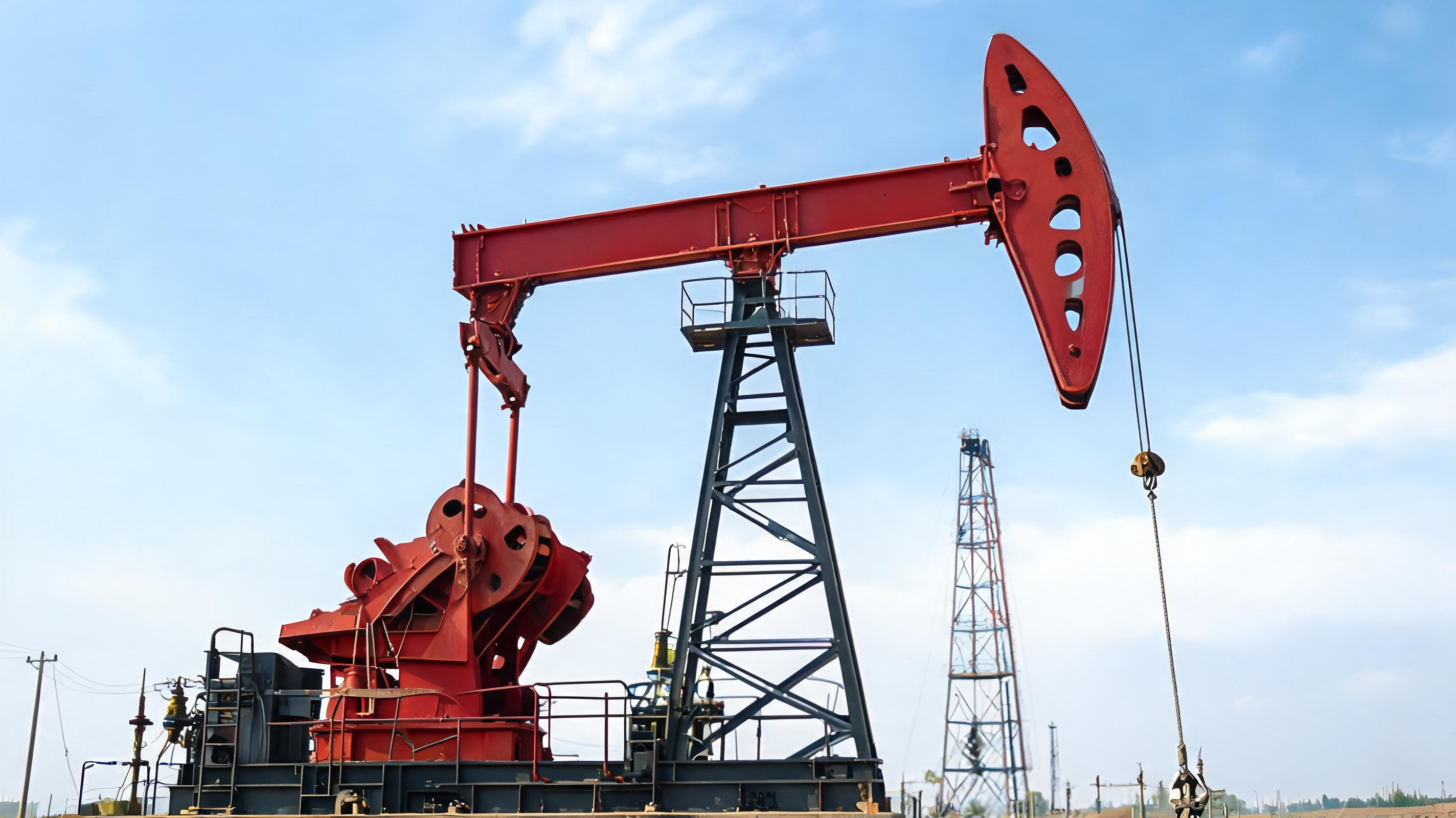
Cover: offshore and marine duty is one of twelve scenarios in which steel wire rope performance is decided by environment, load path and matched hardware rather than diameter alone.
Scenario-led catalogues are becoming more common because rope failures rarely trace back to a single specification error. They usually come from a mismatch that survived the quotation stage: a rope with an abrasion-optimized outer layer running over a small sheave, a static-duty strand used in a cyclic hoisting duty, or a corrosion-resistant rope installed into a system whose terminations were never checked. Jiangsu Juli Steel Wire Rope Co.,LTD manufactures high carbon steel wire ropes from 1 mm to 120 mm in tensile grades from 1570 to 2160 MPa and organizes its range by industry application, which makes this fit logic visible rather than implied.
Why Scenario Fit Comes Before Specification
Scenario fit is the practice of reading an application as a set of conditions, then narrowing the rope range against those conditions before comparing price. It reverses the common procurement sequence. Instead of choosing a diameter and then asking which construction is cheapest, the buyer identifies how the rope will be loaded, what will attack it and what it must run through, and only then selects construction, grade and surface.
The reason this order matters is that the same nominal diameter can serve very different duties. Within the 1 mm to 120 mm range, a 6x19S construction appears in elevator, fishing, power, mining and construction applications. The rope family is the same; the governing conditions are not. Diameter and tensile grade tell a buyer how much load a rope can carry. They do not tell the buyer whether it will survive the sheave geometry, the corrosion load or the number of bending cycles it will see in service.
The Three Condition Layers That Decide the Rope
Environment
Environment covers everything that degrades the rope between inspections: salt spray, seawater immersion, mine water, humidity, dust, sediment abrasion, temperature and ultraviolet exposure. It drives the choice of surface treatment and, in the most aggressive cases, the choice between carbon steel and stainless constructions. A port quay crane and an indoor elevator shaft can carry similar loads, but only one of them is being attacked by chloride every day.
Duty cycle
Duty cycle describes how the load arrives. Static tensioning, such as greenhouse frame anchoring or guy fixing on a transmission structure, asks for strength and elongation stability. Cyclic bending, such as elevator traction or ropeway haulage, asks for fatigue resistance distributed across many small wires. Shock loading, such as excavator pulling or vessel mooring in swell, asks for impact tolerance. These three duties rarely point to the same optimum construction.
System interface
The rope is one component. It runs on drums and sheaves, terminates in wedge sockets, rope clips or swaged fittings, and connects to spreaders, hooks or winches. The interface sets minimum sheave and drum diameters, dictates whether rotation must be controlled and determines which termination is compatible with the construction. A correct rope in a mismatched system will still fail early.
Reading the Range: 1 mm to 120 mm and 1570 to 2160 MPa
The 1 mm to 120 mm diameter range and the 1570, 1670, 1770, 1870, 1960 and 2160 MPa tensile grades form a capability envelope, not a menu. Most individual scenarios occupy a narrow band inside it. Micro and specialty applications sit at the small end where dimensional accuracy and flexibility dominate; port, offshore, mining and heavy industry occupy the large end where load and impact dominate.
Tensile grade deserves separate attention. A higher grade delivers more strength per unit of diameter, which allows a smaller and lighter rope for a given working load. Higher grades generally trade some elongation reserve for that strength, and elongation reserve matters in shock-loaded and mooring systems where a certain amount of stretch is part of the design. Grade selection should follow the load case and the system stiffness, not the assumption that higher is always safer.
Scenario-to-Rope Mapping at a Glance
| Scenario | Conditions that dominate | Constructions in the range | Points to confirm |
|---|---|---|---|
| Agriculture | Mud, humidity, rain, dust; cyclic tensioning; light to medium load | 1x7, 1x19, 6x7, 7x7, 6x19M, 6x12-7FC, 6x15-7FC, 6x24MFC | Surface treatment for wet storage; capstan and pulley condition |
| Logging and forestry | Mountain terrain, sediment abrasion, rain and snow, frequent pulling | 6x19S, 6x19M, 6x26WS, K6x26WS, K6x36WS | Abrasion allowance; fairlead and sheave wear |
| Fishing | Salt spray, seawater immersion, wave impact, cyclic traction | 6x7, 6x19S, 6x24S, 6x26WS, 6x36WS, 3x31WS | Corrosion class; winch and block alignment |
| Power | Open-air exposure, coastal salt spray, sand abrasion, wind load | 1x7, 1x19, 6x7, 6x19M, 6x37M | Static versus running duty; termination type |
| Elevator and escalator | Enclosed shaft, high-cycle bending, elongation stability | 8x19S, 8x19W, 6x19S, 6x19W | Traction sheave ratio; elongation control |
| Cable car and ropeway | Wind, snow, ice, UV, continuous reciprocating bending | 6x19S, 6x36WS, 6x37S | Load-bearing versus hauling role; tensioning system |
| Oil and gas | Offshore salt spray, onshore dust, alternating tension, torsion | 6x19S, 6x36WS, 6x37S, 6x41WS, 6x55SWS, 6x84WSNS, 6xK26WS, 6xK36WS, 8xK26WS, 8xK36WS, 35WxK7 | Regional standard; rotation control on the traveling block |
| Offshore and marine | Severe salt spray, wave-induced shock, long immersion | 6x29Fi, 6x36WS, 6x41WS, 6x49SWS, 6x55SWS, 6x61FWS, 6x65FNS, 6x84WSNS, 6x127SWSNS, 8x49SWS to 8x127SWSNS, 18x7, 35Wx7, 35WxK7, 4Vx39S SWAGE, 4Vx48S SWAGE | Bending fatigue against corrosion trade-off; class certification |
| Port and terminal | Coastal salt spray, frequent shock load, high traction towing | 6x26WS, 6x31WS, 6x36WS, 6x41WS, 8x26WS, 8x31WS, 8x36WS, 8x41WS, 35Wx7 | Rotation control on single-fall lifting; spreader interface |
| Mining | Underground humidity, open-pit dust, heavy cyclic hoisting, impact | 6x19S, 6x19W, 6x19M, 6x36WS, 6x37S, 8xK26WS-EPIWC, 35WxK7 | Shaft versus inclined roadway duty; inspection regime |
| Construction and engineering | Dust, shock load, cyclic lifting, outdoor exposure | 6x19S, 6x19W, 6x29Fi, 6x36WS, 8x29Fi, 6xK36WS, 18x7, 35Wx7, 35WxK7, 4Vx39S, 8x19S, 4x26WS, 4x31WS, 6x19M, 6x37M, 6x12-7FC, 6x15-7FC | Anti-rotation need; hook block and termination |
| Construction machinery | Heavy load outdoors, variable weather, dust, impact | 6x25Fi, 6x29Fi, 6x36WS, 6xK36WS, 18x7, 35Wx7, 35WxK7, 4Vx39S | Drum and sheave diameter; winding pattern |
| Heavy industry and metallurgy | High temperature workshop, dust, heavy cyclic hoisting | 6x19S, 6x19W, 6x26WS, 6x31WS, 6x36WS, 8xK26WS, 6x19M, 6x37M | Heat exposure; maintenance interval |
| Micro and specialty | Compact space, high-frequency micro-cycles, varied ambience | 6x7, 6x19S, 6x36WS, 18x7, 35Wx7 | Dimensional tolerance; crimp fitting compatibility |
Table: scenario mapping based on the manufacturer's published application and product data. Constructions listed are the ones the range associates with each scenario, not an exclusive list.
Field and Forest: Agriculture and Logging
Agriculture
Agricultural duty is defined less by load than by exposure. Ropes work in open fields under mud, humidity, dust and rain, on cyclic tensioning tasks: greenhouse tensioning and fixing, traction of farm machinery, hoisting of farm materials, erection of irrigation equipment, livestock fence tensioning, orchard seedling protection and aquaculture facility fixing. Winches, capstans and pulleys are the matched equipment, and many of these ropes spend more time holding a static load than running over a sheave.
The agricultural range reflects that split. Small constructions such as 1x7, 1x19, 6x7 and 7x7 suit tensioning and light pulling where bending is limited. 6x19M and the 6x12-7FC, 6x15-7FC and 6x24MFC constructions extend the range into machinery traction and material hoisting where some bending and abrasion occur. All of them carry the same 1 mm to 120 mm diameter envelope and the same tensile grade options, so the decision usually turns on flexibility, corrosion protection and how the rope terminates.
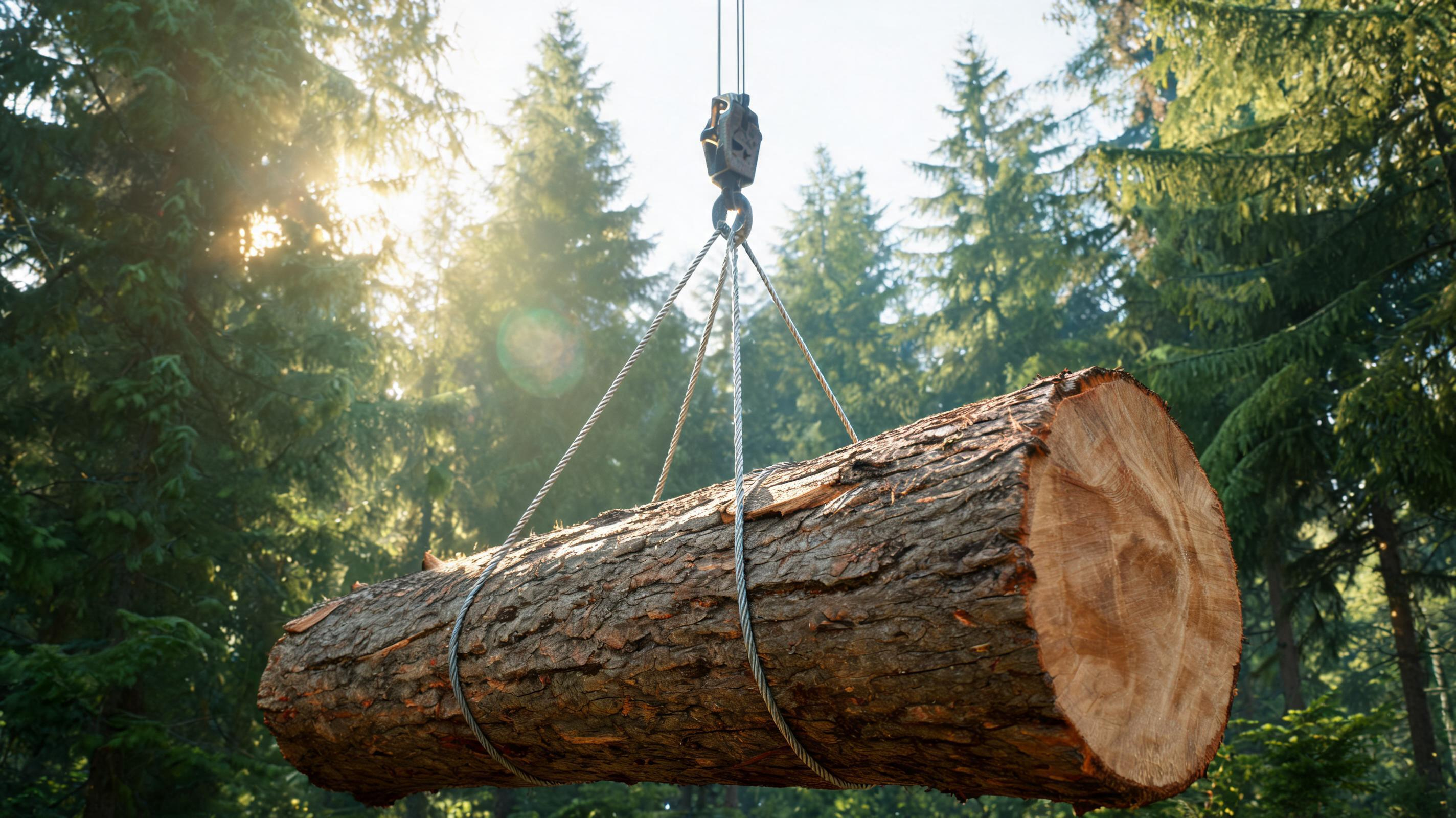
Forestry duty combines sediment abrasion, rain and snow exposure and frequent pulling traction cycles on rough terrain.
Logging and Forestry
Forestry is the harsher neighbour. Log skidding, timber towing, log lifting and forest ropeway transport happen on muddy, rugged ground where the rope is dragged through sediment, exposed to rain and snow, and loaded with medium to heavy impact through repeated pulling cycles. Abrasion resistance and impact resistance become the leading requirements, and corrosion protection matters because a wet rope stored overnight stays wet.
The forestry range moves up in strand complexity accordingly: 6x19S and 6x19M for general skidding and lifting, 6x26WS for a better balance of flexibility and fatigue life, and the K-prefixed 6x26WS and 6x36WS constructions for duties where a denser strand cross-section is preferred. Matching equipment in this scenario includes winches, sheaves and rope fittings, all of which wear faster in grit-laden conditions than in factory service.
Water and Weather: Fishing, Port, Offshore and Oil and Gas
Fishing
Fishing ropes face salt spray, seawater immersion, wave impact and continuous cyclic traction. Applications include trawling hoists, ship mooring on ocean-going and inshore vessels, fishing gear handling and the tension fixing of aquaculture cages that must hold position against wind and waves. The range uses 6x7 and 6x19S for straightforward traction and handling, 6x24S and 6x26WS where a compromise between flexibility and fatigue resistance is needed, 6x36WS for higher bending duty, and 3x31WS where a different strand architecture is required.
Port and Terminal
Port duty is shock-dominated. Quay cranes and gantry cranes lift containers and bulk cargo in cycles, mooring winches hold vessels at berth, and tugboats tow under high traction, all in coastal salt spray with high humidity. The port range is built around 6x26WS, 6x31WS, 6x36WS and 6x41WS plus their eight-strand equivalents 8x26WS, 8x31WS, 8x36WS and 8x41WS, with 35Wx7 available where rotation must be controlled. Eight-strand and rotation-resistant constructions are commonly specified where a load is carried on a single fall and the hook block cannot be allowed to spin.
Offshore and Marine
Offshore and shipping duty combines severe salt spray, high humidity, wave-induced alternating shock load, heavy towing traction and long-term seawater erosion. Applications cover mooring of ocean-going vessels, ship towing, offshore platform hoisting, floating structure anchoring and positioning, marine lifting equipment, subsea construction support and service vessels for offshore wind operations and maintenance.
This is the widest construction list in the range, from 6x29Fi and 6x36WS through 6x49SWS, 6x55SWS, 6x61FWS, 6x65FNS, 6x84WSNS and 6x127SWSNS, with matching eight-strand families, 18x7 and 35Wx7 for rotation-sensitive duty, and swaged 4Vx39S and 4Vx48S constructions. The pattern is deliberate: as bending severity and rope size rise, more and finer outer strands distribute the bending stress, while corrosion protection stays a separate decision.
Oil and Gas
Oil and gas duty runs onshore and offshore in one procurement programme. Drawworks wind and unwind the rope to drive the traveling block for drill string tripping, so the rope sees reciprocating alternating tension under wind, dust and marine salt spray, and torsion resistance becomes a real requirement rather than a catalogue preference. The range covers 6x19S and 6x36WS for general service, 6x37S, 6x41WS, 6x55SWS and 6x84WSNS for heavier or higher-bending duty, compacted 6xK26WS, 6xK36WS, 8xK26WS and 8xK36WS, plus 35WxK7 where rotation must be constrained. Matched equipment includes drawworks, crown blocks, traveling blocks, offshore cranes and rope fittings.
Vertical Transport: Elevator, Escalator and Cable Car
Elevator and Escalator
Elevator ropes are high carbon steel, 1 mm to 120 mm in diameter, in tensile grades from 1570 to 2160 MPa, and they serve passenger, freight, panoramic, hospital and residential villa elevators as well as escalator drive systems. The conditions are unusual: an enclosed hoist shaft, no salt spray, no grit, but an extremely high number of reciprocating bending cycles over traction sheaves, plus a requirement for stable elongation because the rope suspends both the car and the counterweight. Matched equipment includes traction machines, traction sheaves, deflector sheaves and rope termination assemblies.
The range uses 8x19S and 8x19W for the eight-strand format and 6x19S and 6x19W for six-strand installations. Because the failure mode here is fatigue rather than corrosion or impact, elongation control and sheave compatibility carry more weight than surface treatment.

Elevator duty is a fatigue problem inside an enclosed shaft: high bending cycles and stable elongation, not salt spray, decide the rope.
Cable Car and Ropeway
Cableway ropes split into load-bearing and hauling functions. Load-bearing ropes support cabins and chairs; hauling ropes pull the carriers in continuous circulating or reversible systems. Applications include mono-cable circulating gondola ropeways, chairlifts, aerial tramways, funicular railways and ski surface tows, all in harsh mountain conditions with wind, snow, ice and ultraviolet exposure, and all subject to continuous reciprocating bending and alternating dynamic load.
The cable car range is compact: 6x19S, 6x36WS and 6x37S, matched with drive sheaves, return sheaves, support rollers, tension systems and cabins. The constraint that decides the choice is usually the tensioning system and the sheave geometry, because a ropeway has little tolerance for a rope that does not match the designed bending envelope.
Heavy and Continuous Duty: Mining, Construction, Power and Heavy Industry
Mining
Mining duty is heavy cyclic hoisting under impact, in underground humidity or open-pit dust, often with corrosive mine water present. Vertical and inclined shaft hoisting equipment lifts ore and personnel, roadway winches haul, and open-pit electric shovels and draglines add their own traction demands. The range uses 6x19S, 6x19W and 6x19M for general hoisting and haulage, 6x36WS and 6x37S for higher bending duty, 8xK26WS-EPIWC for shaft service and 35WxK7 where rotation must be controlled. Matched equipment includes hoist winches, head sheaves, guide sheaves, wedge sockets and rope clips, which together form the hoisting system.
One documented mining programme supplied 100 tons of rope for mining hoisting, mine shaft lifting and underground traction, and ran for two years with stable hoisting operation, reduced downtime and improved site-work safety. The reported highlight was high wear resistance, strong impact resistance and a long service cycle in a harsh mine environment.
Construction and Engineering
Construction ropes handle tower crane lifting, component hoisting, material hoist traction, gondola suspension, foundation pit anchor support, steel structure installation and equipment maintenance, in dust-laden open-air sites with dynamic shock loads and frequent cyclic lifting. The construction and engineering range is the broadest in construction: 6x19S, 6x19W, 6x29Fi, 6x36WS, 8x29Fi, 6xK36WS, 18x7, 35Wx7, 35WxK7, 4Vx39S, 8x19S, 4x26WS, 4x31WS, 6x19M, 6x37M, 6x12-7FC and 6x15-7FC.
Construction machinery is a separate case. Truck-mounted cranes, crawler cranes, pile drivers, drilling rigs, excavators and loaders subject the rope to reciprocating winding and intermittent load, so 6x25Fi, 6x29Fi, 6x36WS, 6xK36WS, 18x7, 35Wx7, 35WxK7 and 4Vx39S cover the lifting, pulling and clearing duties in the same dusty, variable-weather environment.
Power
Power industry ropes serve transmission tower erection, cable laying and conductor pulling, wind power hoisting, substation construction, offshore wind installation, cable traction and tensioning, hydropower gate operation and plant maintenance lifting. Conditions are open-air and variable, with coastal salt spray at offshore wind sites, sand abrasion inland and wind-induced alternating load. The range uses 1x7 and 1x19 for static and tensioning roles where bending is minimal, and 6x7, 6x19M and 6x37M for running and hoisting duty with pullers, stringing blocks, cranes, gate hoists and rope fittings.
Heavy Industry and Metallurgy
Heavy industry adds temperature. Steel mill overhead cranes, metallurgical cranes, forging equipment, rolling mills and heavy-duty hoists operate in hot, dust-laden workshops with heavy load cyclic hoisting, so the range carries 6x19S, 6x19W, 6x26WS, 6x31WS, 6x36WS, 8xK26WS, 6x19M and 6x37M with high temperature exposure noted as an explicit requirement alongside tensile strength, impact resistance, wear resistance and fatigue resistance.
Micro and Specialty Applications
At the small end, rope duty is defined by space and precision. Automation equipment, automotive control cables, fitness equipment, lighting suspension, medical devices, robotics, aerospace, fishing tackle and architectural decoration all run ropes in compact, confined installations under high-frequency micro-cycles, sometimes as a static tension member and sometimes as a short-stroke positioning element. The range uses 6x7, 6x19S, 6x36WS, 18x7 and 35Wx7, matched with mini drums, precision sheaves, tension adjusters and crimp fittings. Dimensional tolerance and termination compatibility matter more here than raw breaking load.
Corrosion Resistance as a Scenario Filter
Corrosion is the most common reason a correctly sized rope is retired early. Business Research Insights reports that galvanized steel wire ropes represented 46 percent of total product demand in 2025, citing corrosion resistance as the driver. That figure is consistent with the scenario logic above: fishing, port, offshore, oil and gas, mining and agriculture all place the rope in moisture, salt or chemical exposure, and only elevator, micro and enclosed industrial duty can treat surface protection as secondary.
The available surface range is un-galvanized, electro-galvanized, hot-dip galvanized, stainless and plastic-coated. Each option shifts the trade-off rather than removing it: coating mass and adhesion determine how much protection survives handling and bending, and stainless constructions change the economics of the whole assembly. Surface treatment should be specified alongside construction, not after it.
Execution Standards Are Part of the Fit
Execution standard is a scenario question because different markets and industries admit different evidence. The range is produced to GB/T, EN, GOST and DIN execution standards across diameters and grades, and the manufacturer also works to API, ISO, ASTM and JIS standards with certifications including API, LR, ABS, CCS, ISO 9001, CE, GOST, EPD, SIRIM, SNI and MA.
For EU and UK market access, BS EN 12385 for steel wire ropes safety sets the regulatory baseline and is a reasonable first filter when comparing suppliers. For Indonesian oil and gas projects, SNI 0727:2008 is relevant, and this manufacturer holds that certification, effective from 4 July 2024. For trade classification, stranded wire, ropes and cables of iron or steel fall under HS code 731210. Buyers comparing quotations across regions should treat a missing execution standard as a missing specification, not as a cost saving.
What Jiangsu Juli Steel Wire Rope Co.,LTD Covers Across These Scenarios
Jiangsu Juli Steel Wire Rope Co.,LTD is a manufacturer of steel wire ropes and lifting accessories with three production bases: Nantong and Jiyuan in China, and Bekasi in Indonesia. Verified production capacity is 250,000 tons of steel wire rope per year, with monthly capacity of 3,000 tons, a minimum order quantity of 1,000 meters and a lead time of 25 days.
The construction portfolio spans bundling ropes, cross laid rope, parallel laid rope, anti-rotation rope, compacted strand ropes, shaped strand rope and locked coil ropes, in un-galvanized, electro-galvanized, hot-dip galvanized, stainless and plastic-coated finishes, from 1 mm to 120 mm and 1570 to 2160 MPa. Customization is offered across construction, diameter, length, tensile strength, surface treatment, applicable standard and packing.
Quality control follows a fixed sequence: raw material incoming inspection, semi-finished product spot checks, finished product testing, breaking load testing and fatigue testing, with a 100 percent full machine running test before delivery. After-sales support covers remote online technical support, overseas engineer on-site service, regular operation guidance and maintenance consultation. For buyers mapping a scenario to a specification, the useful parts of that offer are the breadth of constructions and the fact that testing includes fatigue and breaking load, because those are the two failure modes most scenario debates are really about.
Scenario Fit Versus Diameter-and-Price Buying
The traditional approach treats rope as a commodity line item: read the diameter off the old rope, request three quotes and take the lowest. It is fast and it is defensible when the duty is stable and the existing specification already works. Scenario-based buying costs more time upfront and tends to produce a different answer.
| Decision point | Diameter-and-price buying | Scenario-based buying |
|---|---|---|
| Starting point | Existing rope size and budget | Load path, environment, duty cycle, system hardware |
| Specification basis | Diameter and tensile grade | Construction, grade, surface treatment and execution standard |
| Risk profile | Hidden mismatch, early retirement, repeated replacement | Explicit trade-off, documented assumption, easier diagnosis |
| Cost view | Unit price per meter | Service cycle against downtime and replacement labour |
| Works best when | Duty unchanged, rope proven, small replacement run | New project, recurring failures, harsh environment, audit requirement |
The limits of scenario fit are worth stating plainly. First, it narrows the field without eliminating trade-offs: abrasion resistance favours larger outer wires, bending fatigue favours many smaller wires, and a rope cannot maximize both in the same construction. Second, coating is a corrosion measure, not a maintenance substitute; sheave condition, drum alignment and termination quality still determine life. Third, a higher tensile grade is not a safety margin by itself, because higher grades generally trade elongation reserve for strength per diameter. Fourth, rope is one element of a system, and wedge sockets, rope clips, head sheaves, guide sheaves, mooring winches and spreaders must match the rope. Fifth, sourcing constraints are real: a 1,000-meter minimum order and a 25-day lead time suit planned programmes, while a single emergency replacement may depend on stock held at distribution centres.
Compared with chain and synthetic alternatives, wire rope is generally stronger per unit weight and better suited to long, high-tension runs over sheaves, while chain tolerates abrasion and rough handling that would damage rope and synthetic slings are lighter but less tolerant of sharp edges and sustained abrasion. Those broad differences explain why rope dominates in hoisting, hauling and mooring, but they should not be read as a blanket recommendation for every duty.
Market Context and What It Signals for Buyers
Business Research Insights values the global steel wire rope market at USD 10.0 billion in 2026, with galvanized rope at 46 percent of product demand the year before. Two implications follow for buyers. Corrosion-resistant product is not a niche line, so availability and price competition exist across most scenarios. And because galvanized share is that high, a supplier's ability to offer un-galvanized, electro-galvanized, hot-dip galvanized, stainless and plastic-coated options within one specification range is a practical advantage when a project mixes inland and coastal duty.
Certification pressure is the second signal. Where offshore and oil and gas demand rises, procurement tends to shift from material-only specifications to standards that combine material quality with regional safety and market access requirements, such as SNI 0727:2008 for Indonesian petroleum and natural gas equipment. That shifts part of the evaluation effort from the rope itself to the paperwork behind it.
Future Outlook
Scenario-based specification is likely to keep spreading for a simple reason: it makes failures diagnosable. When a rope is purchased by diameter, a premature failure yields no information. When it is purchased against a stated duty, the same failure points to a specific assumption that can be corrected, whether that was coating class, rotation control, sheave diameter or grade.
For manufacturers, that favours breadth over narrow specialization: a range that can serve a farm, a mine shaft and an offshore mooring line from the same material base, backed by fatigue and breaking load testing and by execution standards that match the destination market. For buyers, it favours a procurement habit worth building now. Record which rope went where, under what conditions, and how long it lasted. That record becomes the most reliable input for the next order, and it is the one piece of evidence no catalogue can supply.
FAQ
How should a buyer match a steel wire rope to an application?
Match on four conditions before comparing price: the duty cycle (static tension, cyclic bending or shock loading), the environment (salt spray, humidity, dust, abrasion, temperature), the system hardware the rope runs through (drums, sheaves, terminations) and the execution standard required in the destination market. These four narrow the construction family, then diameter and tensile grade are selected within the 1 mm to 120 mm and 1570 to 2160 MPa range.
Which constructions are used in agriculture and forestry?
Agricultural applications use 1x7, 1x19, 6x7, 7x7, 6x19M, 6x12-7FC, 6x15-7FC and 6x24MFC for tensioning, machinery traction, material hoisting, irrigation equipment erection and greenhouse fixing. Forestry applications use 6x19S, 6x19M, 6x26WS, K6x26WS and K6x36WS for log skidding, timber towing, log lifting and forest ropeway transport in muddy, abrasive mountain terrain.
Which steel wire rope is used in salt-water and offshore environments?
Fishing applications use 6x7, 6x19S, 6x24S, 6x26WS, 6x36WS and 3x31WS for trawling, mooring and aquaculture cage fixing. Port applications use 6x26WS, 6x31WS, 6x36WS, 6x41WS, 8x26WS, 8x31WS, 8x36WS, 8x41WS and 35Wx7. Offshore and marine applications extend from 6x29Fi and 6x36WS to 6x49SWS, 6x55SWS, 6x84WSNS, 6x127SWSNS, the matching eight-strand families, 18x7, 35Wx7, 35WxK7 and swaged 4Vx39S and 4Vx48S. Surface treatment options for these duties include electro-galvanized, hot-dip galvanized, stainless and plastic-coated rope.
What diameter and tensile strength range covers most scenarios?
The range runs from 1 mm to 120 mm in diameter with tensile grades of 1570, 1670, 1770, 1870, 1960 and 2160 MPa, in high carbon steel. Individual scenarios occupy narrower bands: micro and specialty work uses the small end, while port, offshore, mining and heavy industry use the large end where load and impact dominate.
Which standards apply to elevator, mining or oil and gas ropes?
Ropes across the range are produced to GB/T, EN, GOST and DIN execution standards, and the manufacturer also works to API, ISO, ASTM and JIS with certifications including API, LR, ABS, CCS, ISO 9001, CE, GOST, EPD, SIRIM, SNI and MA. For EU and UK market access, BS EN 12385 is the relevant steel wire rope safety baseline. For Indonesian petroleum and natural gas projects, SNI 0727:2008 applies and is held by this manufacturer with an effective date of 4 July 2024.
Where does scenario-based selection stop being useful?
It stops being useful when it is treated as a guarantee. Scenario fit narrows the field but does not remove the trade-off between abrasion resistance and bending fatigue, does not substitute for sheave and termination maintenance, and does not make a higher tensile grade automatically safer, because higher grades generally reduce elongation reserve. It also assumes planned procurement: a 1,000-meter minimum order quantity and a 25-day lead time fit scheduled programmes better than a single urgent replacement.
A product brochure covering constructions, diameter range and execution standards is available for download: Juli steel wire rope product brochure (PDF).
¿Tiene preguntas o necesita más detalles?
Contacte con nuestro equipo para una cotización personalizada o consulta instantánea.
Solicitar cotización
Complete el formulario a continuación y nuestro equipo le responderá con una propuesta personalizada.
Chat directo de WhatsApp
¿Prefiere chatear en tiempo real? Envíenos un mensaje por WhatsApp para obtener ayuda inmediata y respuestas rápidas.
- Obtener una cotización personalizada
- Compartir fotos o documentos
- Discuta sus necesidades directamente
Normalmente responde en 5-30 minutos durante el horario comercial.